I don’t know about you but I’m in the mood for a reggae-flavored cover of Led Zeppelin’s Immigrant Song, hopefully one that’s performed by a 300-pound Elvis impersonator.
Fortunately, when you get those type of cravings, you can turn to Dread Zeppelin. Dread Zeppelin is certainly not the only band to cover Led Zeppelin but they are probably the best known. Actually, it’s somewhat unfair to describe Dread Zeppelin as being only a Led Zeppelin cover band. They’ve actually covered a wide variety of artists and I believe they’ve released some original material as well. They even did a disco record at one point.
Dread Zeppelin is one of those bands where members come and go. As of this writing, the band is still recording and touring but bassist Gary Putnam is the only member who has appeared on every recording and taking part in every tour.
It’s a safe bet that we’ve all been there — somebody’s having a party at their place, and your ex might be there, mutual friends being what they are and all that. There’s no one you’re more terrified of seeing on the one hand, but there’s no one you’re dying to see more on the other. What’s a forlorn “20-something” to do — besides drink to excess, of course?
Welcome to the familiar world of Lauren Monger’s Sleepwalking, a frankly amazing full-color mini originally published by an outfit called Space Face Books in 2015 and re-printed in a more widely-available edition of 2000 by Silver Sprocket last year. And as far as “work deserving of a bigger audience” goes, this one was right at the top of the list for some time, so I’m glad that such a situation has finally come to pass.
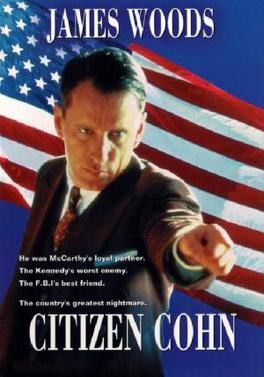
The year is 1986 and the powerful attorney Roy Cohn (James Woods) is dying. The official story is that Cohn has liver cancer but the truth is that he’s dying of AIDS. As he lies in his hospital bed, he thinks about his past and the events the led to him becoming one of the most feared and powerful men in America. He is haunted by the ghosts of his many enemies, people like communist spy Ethel Rosenberg (Karen Ludwig) and his former colleague, Bobby Kennedy (David Marshall Grant).
Not surprisingly, a good deal of Cohn’s memories center around his association with Sen. Joseph McCarthy (Joe Don Baker), a charismatic alcoholic who, in the 50s, charged that he had a list with the names of communist spies deep within the government. Cohn and Kennedy served as the counsels on McCarthy’s committees. Cohn is with McCarthy from the beginning and he’s with him until the end of the senator’s career. In fact, it’s Cohn’s own shadowy relationship with an army private that ultimately leads to McCarthy’s downfall.
Except for one aspect of the film, Citizen Cohn is one of the best films to ever be produced by HBO. The film covers a lot of history in a little less than 2 hours and it does so in a way that is always interesting and easy to follow. By including incidents from every phase of Cohn’s life, as opposed to just focusing on his time as McCarthy’, the film also shows how someone like Roy Cohn can become a behind-the-scenes power player despite the majority of the country having no idea who he is. James Woods gives one of his best performances as the hyperactive and unapologetically corrupt Cohn while Joe Don Baker is perfect as the self-pitying Joseph McCarthy.
The problem with the film, and your mileage may vary on how big an issue this is, is that it almost presents Cohn’s final days — dying of AIDS in a lonely New York hospital room — as being some sort of deserved fate for everything that he did wrong in life. For me, even in the case of someone like Roy Cohn, that’s a step too far and it comes very close to presenting AIDS as some sort of divine punishment (which, itself, comes dangerously close to mirroring the homophobic statements that were made — and still are being made — by anti-gay activists). That may not have been the film’s intention but, with the flashback structure and all of his dead enemies materializing to taunt Cohn as he lies dying, it’s still a very valid interpretation.
Some of that is perhaps unavoidable. Cohn, in both real life and the film, died largely unrepentant for anything he did during his life. As the central character of a biopic, Cohn never has the type of big moment that you would hope for, where he would realize that it was wrong for him to destroy so many lives and show at least a hint of contrition for his past behaviors. That Roy Cohn is even a compelling character is a testament to the talent of James Woods because it’s certainly not due to any sort of hidden goodness lurking underneath the surface of Cohn’s snarling personality. The lack of apologies and regrets that made Cohn a powerhouse in real life also makes him an ultimately unsatisfying subject for a movie.
“So be it,” journalist Helen Grant dramatically announces as she lifts up her camera and starts snapping pictures of a body in a casket, “I’m …. a ….. WHORE!”
That is just one of the many wonderfully, over-the-top moments that can be found in the 1985 film, Scandal Sheet. Directed by David Lowell Rich, Scandal Sheet stars Burt Lancaster as Harold Fallen. If this movie were being made today, Fallen would be in charge of a TMZ-style website. Since this movie was made in the 80s, Fallen is the publisher and editor of a sleazy tabloid magazine. He specializes in stories about aliens and ghosts. When someone brings him in a story about the ghost of Grace Kelly haunting the beaches of Malibu, he announces, “Front page!” When someone else tells him about a woman who wants to marry a man from outer space but who can’t find anyone to perform the ceremony, Fallen arranges to get the woman a lawyer.
When Fallen isn’t tracking down ghosts and arranging for interplanetary marriages, he’s trying to destroy celebrities. When the film begins, he’s obsessed with taking down Ben Rowan (Robert Urich). We’re told that Ben Rowan is one of the world’s top movie star. (It’s important that we’re told this because there’s nothing about Urich’s bland performance that would lead us to suspect that to be the case.) Ben’s career is in trouble because he’s got a drinking problem. He just got out of rehab but no insurance company is willing to insure him. His wife, Meg North (Lauren Hutton), is demanding that Ben be cast in her latest movie. Everyone in Hollywood is like, “No way.”
It has the potential to be a big story and Fallen wants to be the first to break it. But to do so, he’s going to need an inside source. That’s where Helen Grant (Pamela Reed) comes in. Helen was Meg’s college roommate and she’s still friends with both her and Ben. Fallen decides to hire Helen to work for his magazine. The only problem is that Helen is a serious journalist. She writes stories about homeless children. She has no desire to work for a tabloid.
“I’ll pay you more than you’re making right now,” Fallen tells her.
Helen’s not interested.
“I’ll pay you $80,000 a year.”
Helen’s interested.
Against her better judgment, Helen accepts Fallen’s offer. At first, things seem okay. She’s a bit annoyed with having to work with a sleazy photographer named Simon (Peter Jurasik, giving a wonderfully reptilian performance) but she’s got a nice house and her son is going to a good school and she gets to use the company credit card and she even gets a housekeeper out of the deal!
Then Fallen tells her that her next assignment is to write about Meg and Ben. Helen refuses but she soon discovers that Howard Fallen is not an easy person to refuse. Not when he’s got people watching your every move, along with paying your housekeeper to spy on you. When her former boss (Max Wright) angrily tells her that no reputable magazine will ever work with her again, Helen is left with only two options: Become a whore or starve.
Scandal Sheet is a lot of fun. Just the fact that the main bad guy is named Howard Fallen should tell you almost everything you need to know about this movie. He’s Fallen — as in a fallen angel. At the end of the movie, he even wears all black with a white tie, which we all know is the typical modern-day costume of demons pretending to be human. (At one point, Fallen even says that he’s going to make someone an offer that they can’t refuse, giving us all a chance to see what The Godfather would have been like if Burt Lancaster had played Don Vito.) Lancaster gives a charismatic performance and he’s so effortlessly manipulative that it’s hard not to enjoy watching him, even if he is destroying innocent people. The rest of the cast is okay. As I said earlier, Robert Urich was a bit too bland to be a convincing film star but Pamela Reed does a good job of capturing Helen’s struggle to decide whether to side with good or evil and Lauren Hutton tears into the scenery with just the type of ferocity that a film like this requires. Late in the film, when she spits in Helen’s face, it’s the most dramatic spitting that you’ll probably ever see.
Scandal Sheet is an enjoyably over-the-top, anti-press melodrama. Watch it with someone who you would be willing to sell out for $80,000 a year.
Today, the Shattered Lens wishes a happy 84th birthday to Ursula Andress!
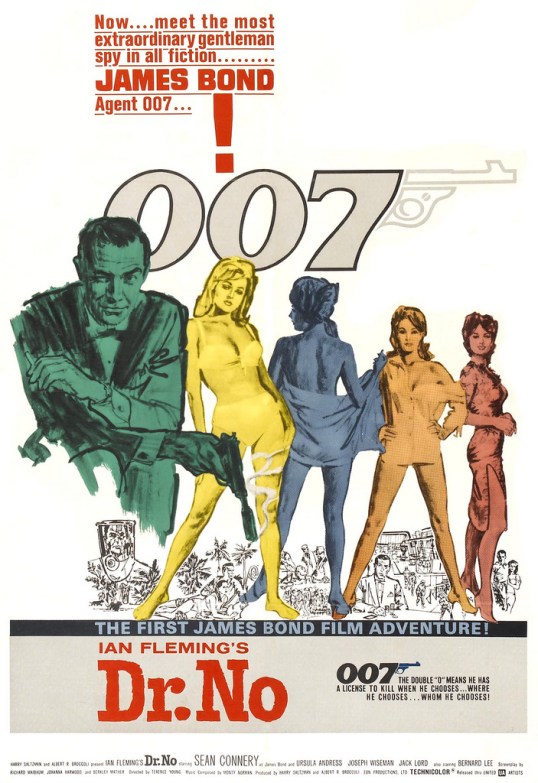
Ursula Andress was one of the very first Bond girls, appearing opposite Sean Connery in Dr. No. Andress played the role of Honeychile Ryder, who was good with a knife and totally willing to trespass on Dr. No.’s beach. Andress set the standard by which almost all future Bond girls would be judged and the scene where Bond and Ryder first meet remains one of the most famous in the Bond franchise. It was such a culturally-defining moment in 1962 that it apparently led to rocketing sales of bikinis. Up until this film came out, bikinis were apparently considered to be too risque to be worn anywhere other than France.
(Personally, I’m thankful that Andress and Dr. No made bikinis popular. I look good in a bikini and, even if I don’t swim, I do like lying out by the pool and pretending like I’m capable of tanning as opposed to just burning.)
Of course, in the original novel, Honey Ryder is naked (except for a belt and a knife) when Bond first sees her. Personally, I think that’s a bit much. I prefer the scene as it plays out in the movie, where everyone is flirtatious and fashionable.
Though Dr. No is best known for turning Sean Connery into a star, it also did wonders for Ursula Andress’s career. Whereas she had previously been best-known for briefly dating Jams Dean and being married to John Derek, Andress was now an actress who was able to pick her roles and to become financially independent, a development she would later tell the Daily Independent that she owed to “that white bikini.” Andress also appeared in Playboy several times, even after becoming a star. When she was asked why, she replied, “Because I’m beautiful,” and I have to say that I absolutely love that answer.
Everyone knows that Bruce Willis is the film star who, late in his career, turned out to be an unexpectedly good character actor. Quentin Tarantino once said that Willis as one of the only modern stars who seemed as if he could easily step into an old gangster movie or film noir and not seem like he was out of place. Tarantino was right.
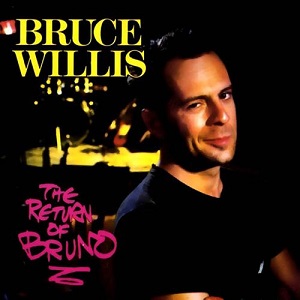
What is often forgotten is that, early on his career, Willis also pursued musical stardom. He released two albums of R&B covers, the best known of which was the first, The Return of Bruno. Released by Motown, The Return of Bruno was critically dismissed as being a vanity project but Bruce got the last laugh when the album exceeded expectations commercially and Willis went on to appear in movies like Pulp Fiction and 12 Monkeys. Meanwhile, his critics had to settle for appearing in Rolling Stone.
When the album was released in 1987, HBO aired a concert film of Willis performing. The video above is taking from that concert film and it features Bruce singing Under The Boardwalk with The Temptations. Willis’s cover of Under The Boardwalk did not chart in the U.S. but it was hugely popular in the UK, where it reached the second spot on the charts.
Ray (Armand Assante) is a formerly viscous ex-con who has just gotten out of prison and is now determined to go straight and live on the right side of the law. After spending nearly a decade behind bars, all he wants to do is to reunite with his girlfriend, Lacy (Marcia Gay Harden), and make her his wife. However, there’s a problem. While Ray was locked up, Lacy moved on. She’s now engaged to Elliott (Sam Neill), a liberal attorney who, unlike Ray, is a pacifist. Even though Lacy is still attracted to Ray, she does not want to get back together with him.
Unfortunately, there’s a second problem. Ray may have gone straight but his former criminal associates don’t believe him. They want Ray to help them pull off a major crime and when Ray says that is no longer his thing, they react by kidnapping Lacy. If Ray ever wants to see Lacy again, he’s now got to return to his life of crime.
There’s also a third problem. Ray may be an experienced criminal but Elliott insists on tagging along with him while he’s following the kidnappers’s orders. So now, Ray not only has to commit several crimes but he has to do it with an inexperienced partner who doesn’t even believe in firing guns!
Fever is one of those HBO films that used to show up all the time on cable in the 90s. I watched it a few times back in the day, just because I was a teenage boy and the movie featured a good deal of nudity. Even at that time, though, I thought it was a slow and frequently boring movie. Rewatching it for this review, I was shocked to discover that it was even slower than I remembered. It seems like it takes forever for Ray and Elliott to finally team up and for the movie to get going. Though the plot description may make it sound like a buddy comedy, it’s actually a very tough and grim picture. Armand Assante and Sam Neill are not actors known for their light touch and they both give very serious and gritty performances. Unfortunately, the film’s pace never really matched the intensity of its stars and the film’s storyline isn’t strong enough to hold up under scrutiny. Once you start to wonder if Ray would really let Elliott tag along with him, the movie itself falls apart.
Armand Assante is a good actor who rarely seems to appear in good films. Fever is a good example of that. Assante gives an excellent and complex performance (and both Sam Neill and Marcia Gay Harden are pretty good too) but Fever itself never really clicks.
No one seems to be sure. In the 50s and 60s, the covers of several Pan paperbooks were credited to “J. Oval.” While almost every source that I’ve found seems to agree that J. Oval was a pseudonym, there does not seem to be much agreement on who the real J. Oval was or even whether or not there was actually only one artist using the J. Oval name. The most convincing argument that I’ve found online was at Little Owl Ski, where a good case was made that J. Oval was a British illustrator named Ben Ostrick.
Regardless of who he was in the real life, J. Oval was prolific and talented cover artist. Here are a few of his covers:
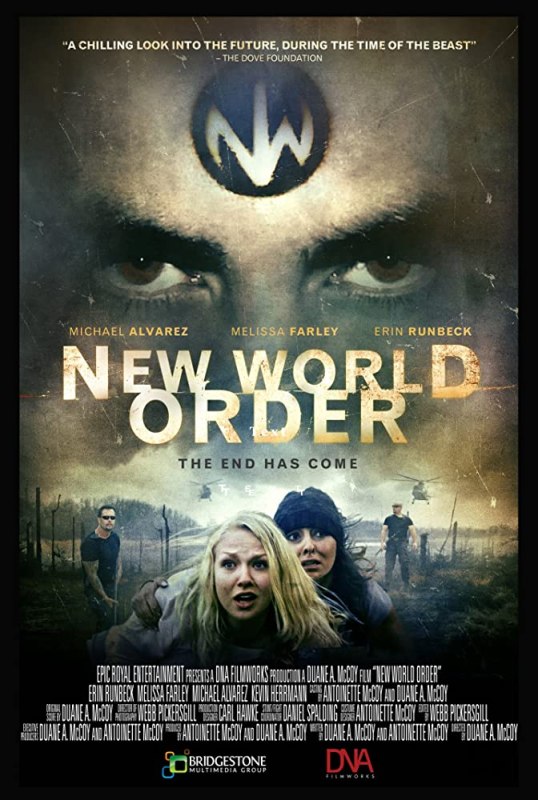
Welcome, everyone, to the end of the world (again). Today, the world ends in the 2013 film, New World Order: The End Has Come!
Demi (Melissa Farley) sits in a park, reading the Bible. She’s reading the Book of Revelation or, as she calls it, “the scary one.” As she gets in her car, she calls her friend, Christen (Erin Runbeck) and assures her not to worry. “I don’t think we’re there yet.” Then she puts the car in reverse and promptly runs over Jason (Daniel Spaulding).
Fear not! Jason’s not injured and his career as an exotic dancer (I’m not kidding, it’s a plot point) is not damaged in the least. In fact, Jason is so enchanted by Demi and her lack of driving skills that soon, they’re a couple! And, fortunately, Jason has a single friend named Cedric (Will Roberts) so that means that Cirsten doesn’t have to be a third wheel whenever everyone goes out for the night.
Cristen and Demi may be good friends but we quickly discover that there are differences between the two of them. Cristen doesn’t drink. Demi gladly accepts a beer when Jason offers it. Cristen likes to stay home and look after her younger brother. Demi is all, “So, we’re going to that party, right?” One thing that both of them do have in common is that, on Sunday morning, they giggle in church and check their messages instead of listening to the preacher. I’m sure that won’t come back to haunt them….
Flash-forward by a few years or so and — oh no! The world has totally changed! Iran briefly conquered Europe and there was a huge war but, fortunately, a man named Aldo DeLuca, not only brokered peace but also come back to life after being shot in the head. Some people think that Aldo didn’t really come back to life but instead, that his body was possessed by Satan. Those people are threats to the New World Order and you can tell who they are because they’re the only people who refuse to get NWO tattooed on either their forehead or their hand….
“Wait a minute!” Demi says, as she thinks about everything that’s happened over the past year, “I’ve read this somewhere!”
That’s right, Demi. You should have paid more attention to the Book of Revelations. But you didn’t and now, everyone’s getting the mark except for you, Cristen, and a few others. And, in order to eliminate people who refuse to get themark, the black-clad soldiers of the New World Order are now gunning people down in the streets while the brainwashed, soulless masses cheer.
The majority of this film is told in flashback, while Demi and Cristen are sitting in a prison area. They’ve been given one final chance to either get the mark and live or to refuse and die. Can you guess who sacrifices their soul and who willingly gives up their life? In order to maitainn some suspense, I will not tell you who. These are the things that I do for you.
Watching New World Order while on lockdown because of the Coronavirus was an interesting experience. On the one hand, the film’s low budget is obvious in every frame and the acting is particularly amateurish. (Just check out the scene where the Supreme Chancellor is greeted by a jubilant crowd of about 20 extras.) On the other hand, any movie about a totalitarian state using a crisis to come to power and destroy individual liberty is going to feel oddly compelling if you watch it while the country is literally shut down by government order. I actually found myself falling under the film’s spell. Normally, I’d make fun of the cartoonish NWO tattoos but instead, I found myself thinking, “What if they do decide to mark those of us who have been tested negative for Coronavirus in a different way from those who are sick? And what if they do say that only people with the mark can enter a grocery store or see a movie? And what if the mark eventually becomes a way of determining not who is healthy but instead of identifying people who never question the government? What do we do then?” I felt kind of silly after I wondered all that but …. well, not really. I imagine that, right now, a lot of people are probably having reactions to films like this that they wouldn’t normally have.
Anyway, as a Christian scare film, New World Order will probably be best appreciated by scared Christians. As a portrait of a society where people have sacrificed their freedom for a false sense of security, it feels like it could be dangerously prophetic.








 Through the Shattered Lens