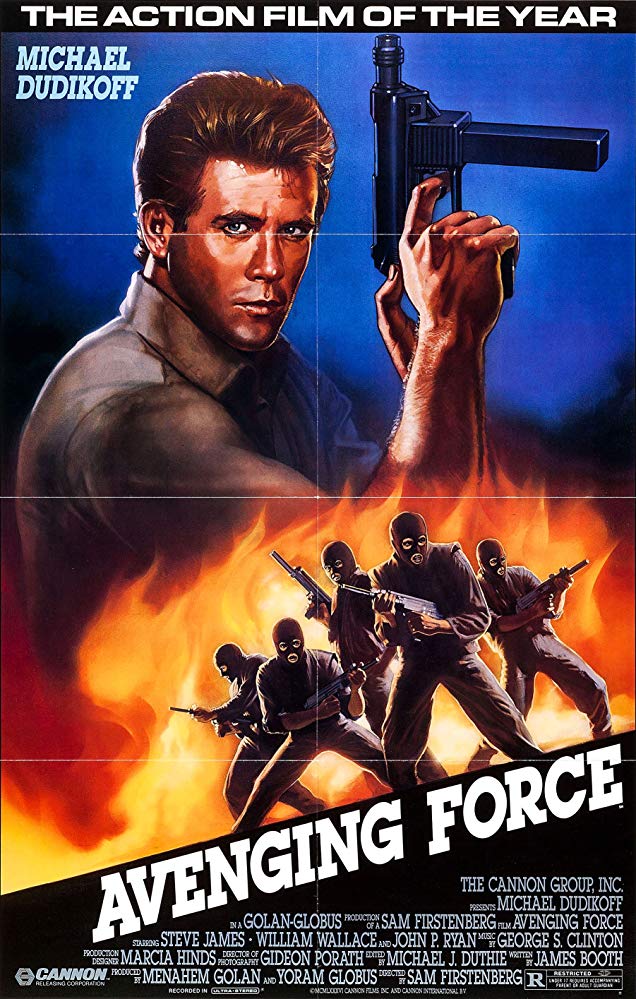
Avenging Force (1986, directed by Sam Firstenberg)


If you think this year’s elections are messed up, just watch Avenging Force and see what happens when two martial artists run against each other for a seat in the U.S. Senate.

Steve James plays Larry Richards, a former military commando who is now running for the Senate in Louisiana.  His opponent is Wade Delaney (Bill Wallace), who is described as being “the South’s youngest senator” and who is also secretly one of the world’s greatest martial artists.  Wade is a member of Pentangle, a Neo-Nazi cult that is made up of wealthy businessmen and other politicians.  When Larry and his family are invited to ride a float in the most sedate Mardi Gras parade of all time, the Pentangle attempts to assassinate him.  While Larry escapes injury, his oldest son does not.

Larry’s best friend, Col. Matt Hunter (Michael Dudikoff), is also in town and Hunter just happens to be another one of the world’s greatest martial artists.  (This film leave you wondering if there’s anyone in Louisiana who isn’t secretly a ninja.)  Matt tries to protect Larry and the remaining members of his family from Pentangle.  Matt fails miserably.  With Larry and the entire Richards family now dead, Matt goes deep into the Louisiana bayou, seeking both to rescue his sister (who has been kidnapped and is set to be sold at some sort of Cajun-run sex auction) and avenge Larry’s death.

As you probably already guessed, Avenging Force is a Cannon Film and it’s crazy even by that company’s fabled standards.  It’s not often that you come across a movie about a U.S. Senator who is also a neo-Nazi ninja who spends his spare time stalking people through the bayous.  What makes this plot point even more memorable is that no one in Avenging Force seems to be shocked by it.  Matt isn’t surprised in the least when an elected official suddenly lunges out of the fog and attempts to drown him in swamp water.  Of course, Senator Delaney isn’t the only villain in the film.  In fact, he’s not even the main bad guy.  That honor goes to Prof. Elliott Glastenbury (John P. Ryan), who lives in a huge mansion and who sees himself as a real-life version of The Most Dangerous Game‘s General Zaroff.  He not only wants to secretly rule the world but he also wants to hunt human prey in the bayou.  When Matt shows up at Glastenbury’s mansion, he is greeted by a butler who complains that Matt hasn’t bothered to wipe the blood off his shirt before showing up.

Avenging Force was originally planned as a sequel to Invasion U.S.A., with Chuck Norris reprising the role of Matt Hunter.  When Norris declined to appear in the film, the connection to Invasion U.S.A. was dropped and Michael Dudikoff of the American Ninja films was cast in the lead role.  (Of course, they didn’t bother to change anyone’s name in the script so the hero of Avenging Force is still named Matt Hunter, even if he’s not meant to be the same Matt Hunter from Invasion U.S.A.)  What Dudikoff lacked in screen presence, he made up for in athleticism and Avenging Force features some Cannon’s best fight scenes.  The plot may be full of holes but the idea of ninjas in the bayou is so inherently cool that it carries the film over any rough patches.

The critics may not have loved Avenging Force when it was first released but it holds up well as a fast-paced and weird action film.  It is perhaps the best Cajun ninja film ever made.

Lisa Reviews An Oscar Nominee: In Which We Serve (dir by Noel Coward and David Lean)


“This is the story of a ship….”

The 1942 British war film, In Which We Serve, opens with footage of the HMS Torrin, a destroyer, being constructed in a British shipyard.  When the Torrin is finally finished, the men who worked on it cheer as it leaves on its maiden voyage.  The film then abruptly jumps forward to the year 1941.  The Torrin is sinking, the victim of German bombers.  The surviving members of her crew float in the ocean, holding onto debris and watching as their home for the past few years capsizes and slowly goes underneath the surface of the water.  Even as the Torrin sinks, German planes continue to fly overhead, firing on the stranded men and killing several of them.

As the men fight to survive both the ocean and the Germans, they remember their time on the Torrin.  Captain Kinross (Noel Coward, who also wrote the script and co-directed the film) thinks back to 1939, when he was first given command of the Torrin.  He remembers the early days of the war and the time that he spent with his wife (Celia Johnson) before leaving to do his duty.  As the captain of the ship, Kinross was a tough but compassionate leader.  He expected a lot out of the men but he also came to view them as his second family.  Meanwhile, Shorty Blake (John Mills) thinks about his wife and his newborn son back in London.  Everyone on the Torrin has left their families behind.  Some of them even lose their loved ones during the war, victims of the relentless German Blitz.  But, even as they float in the ocean, everyone continues to fight on, knowing that there will be bigger ships to replace the Torrin and that Britain will never surrender.

In 1942, British film producer Anthony Havelock-Allan approached Noel Coward and asked him if he would be interested in writing the screenplay for a morale-boosting propaganda film.  Coward agreed, on the condition that he be given complete control of the project and that the film deal with the Royal Navy.  Though one might not immediately think that the author of drawing room comedies like Easy Virtue and Private Lives would be the obvious choice to write a war film, Coward’s family actually had a long tradition of serving in the Navy and Coward based a good deal of the film’s action on the wartime exploits of his friend, Lord Mountbatten.  Though there was initially some concern about Coward’s insistence that he should play the lead role on top of everything else, the Ministry of Information fully supported the production of In Which We Serve.

However, Corward knew that he would need help directing the film.  He asked his friend, John Mills, for advice and Mills suggested that Coward should bring in, as co-director, “the best editor in Britain,” David Lean.  Though Lean was initially only meant to handle the action scenes, Coward quickly discovered that he didn’t particularly enjoy all of the detail that went into directing a film.  As a result, David Lean ended up directing the majority of the film.  This would be Lean’s first film as a director and he would, of course, go one to become one the top British directors of all time.

(Also of note, frequent Lean collaborator Ronald Neame served as the film’s cinematographer.  Neame later went on to have his own career as a director.  In 1972, Neame directed another film about a capsized ship, The Poseidon Adventure.)

As for the film itself, In Which We Serve is an unapologetic propaganda film, carefully crafted to inspire the British people to support the war effort and also to win over the sympathy of American viewers.  (During the film’s production, America had finally entered the war but there were still skeptics, at home and abroad.)  Along with being a war film, In Which We Serve is also a rather touching and heartfelt tribute to the strength and determination of the British people.  Though it’s a rather grim film at times and it doesn’t shy away from the fact that lives are going to be lost in the battle to defeat Hitler, it’s also a rather inspiring film.  The sacrifice will be great, In Which We Serve tells us, but it will also be worth it.  The entire ensemble — including future director Richard Attenborough, making his film debut as a frightened sailor — does an excellent job of creating memorable characters, some of whom only appear for a few fleeting moments before meeting their fate.

In Which We Serve was a box office hit in both the UK and the US.  It was Oscar-nominated for Best Picture of the year, though it ultimately lost to another film about World War II, Casablanca.

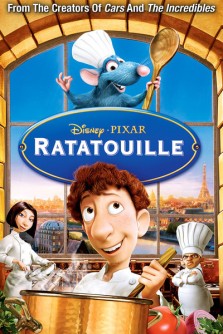
Quick Review: Ratatouille (dir. by Brad Bird)


The following is a Mini Review for Ratatouille, written on June 17, 2007,  taken word forratatouille word from my old Livejournal.
“The absolute worst thing I could ever say about Disney / Pixar’s “Ratatouille” is that I have to wait 2 whole weeks until I can see it again at the official release.”

The Movie: “Ratatouille”

Starring:
(cast list borrowed from the IMDB)
Patton Oswalt … Remy (voice)
Ian Holm … Skinner (voice)
Lou Romano … Linguini (voice)
Brian Dennehy… Django (voice)
Peter Sohn … Emile (voice)
Peter O’Toole … Anton Ego (voice)
Brad Garrett … Gusteau (voice)
Janeane Garofalo … Colette (voice)

This review may be biased, as I’m a Pixar Nut. I have no idea how they do it. Right now, they’re 8 for 8 in my opinion (or maybe 7 for 8 only because anyone who hates or doesn’t understand Nascar may have had problems relating to Cars, like myself).

This place has to be the most enjoyable and creative working establishment on the planet. The absolute worst thing I could ever say about Disney / Pixar’s “Ratatouille” is that I have to wait 2 whole weeks until I can see it again at the official release. Yesterday, Disney hosted a Special Sneak Peek around the country of the film. A one time showing that didn’t quite fill all of the seats in the theatre (and I think that’s only because not too many people were aware of it – about 20 -30 in my audience), but amused and amazed everyone who did show. We had laughter, applause and even a few happy murmurs in the audience. 🙂

Ratatouille is the story of Remy, a rat who adores food. Not just eating it, but actually creating meals with it. Walking in the footsteps of a great and renowned chef Gusteau, Remy wants to cook (with the assistance of his brother Emile), but his father feels that his place is with the rats he lives with. After finding himself in need of job, Linguini is brought on as the newest worker at the famous Gastau’s restaurant, which has seen better days. Linguini wants to fit in, but the staff have regulated him to something of a low position. Together, Remy and Linguini are able to help one another, in quite a few funny ways.

Like all of the Pixar stories before it, the themes are universal. One of Ratatouille’s themes is a “being brave enough to go after what you want most, despite the changes that may occur” and under director Brad Bird’s leadership (who also directed “The Incredibles” and my favorite Amazing Stories episode, “The Family Dog”), this comes across really well. All of the main characters are made to grow in some way (even the ones that appear to not really have a sense of direction).

The graphics (if you can even call them that) are wonderful, and Paris is rendered in a near picture perfect look. According to the film, it’s 100% animation, without any motion capturing whatsoever (which makes sense, considering that Brad Bird has gone on record as stating that animation is an art form and not a genre). The food looks great, and the a lot of the smoke effects (fire, steam, hair getting wet) have improved since The Incredibles. The sound (at least my theatre) was also very good, sounds typically jumped around the speakers for the most part.

As a kids film, Ratatouille works, but parents may want to be on the lookout. The word ‘dead’ comes up quite a bit, and if you’re one of those parents that haven’t had that talk with your kids, I’m just warning you now. There’s some animated violence throughout, but considering my movie theatre had parents that were taking their kids to see Hostel II, I don’t think it’s too bad. It’s up for the viewer to really decide.

Also note that before the movie starts, the animated short “Lifted” also appears, which was hilarious and may cause one to remember their first few driving lessons. I’ll leave it at that. ☺ “Ratatouille” is a marvelous triumph by Disney and Pixar, who always seem to remember that that the story (above all), comes first.

The film doesn’t contain any ACP’s (I call them After Credit Pieces – those little snippets of film that show up right after the credits are done – see Pirates of the Carribean (any one of them) to understand what I mean), though the credits themselves are cute, complete with a new set of Pixar Babies. Michael Giacchino was also on board with the Soundtrack, which is a mix of mostly french violin/piano pieces. Quite a jump from the Incredibles and Mission Impossible III for him, but sweet, nonetheless.

Ratatouille opens in theatres June 29.

4 Shots From 4 Films: Happy Birthday Lee Van Cleef!


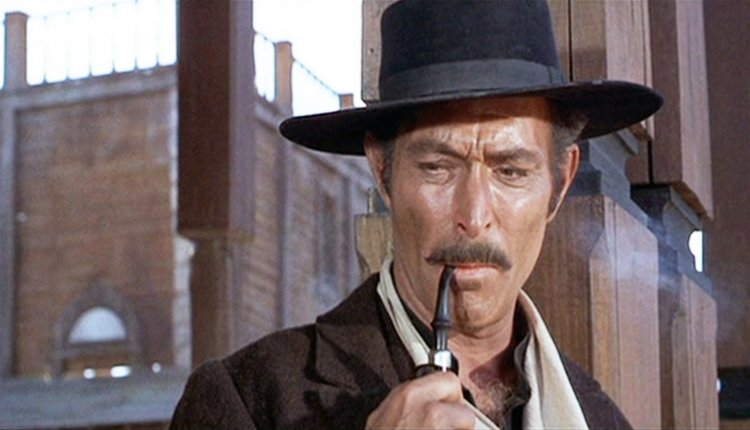
Lee Van Cleef in The Good, The Bad, and the Ugly

4 Shots From 4 Films is just what it says it is, 4 shots from 4 of our favorite films. As opposed to the reviews and recaps that we usually post, 4 Shots From 4 Films lets the visuals do the talking.

Today is the 95th birthday of the great, late Lee Van Cleef!  Van Cleef got his start playing western outlaws in Hollywood westerns like High Noon and The Man Who Shot Liberty Valance.  In the 1960s, Van Cleef did what many American actors of the time.  He went overseas to find better roles and bigger paychecks.  A series of roles in Spaghetti westerns made Van Cleeef one of the biggest stars in Europe and it also made him a timeless film icon.

In honor of the career and legacy of Lee Van Cleef, here are 4 shots from 4 films.

 4 Shots From 4 Lee Van Cleef Films

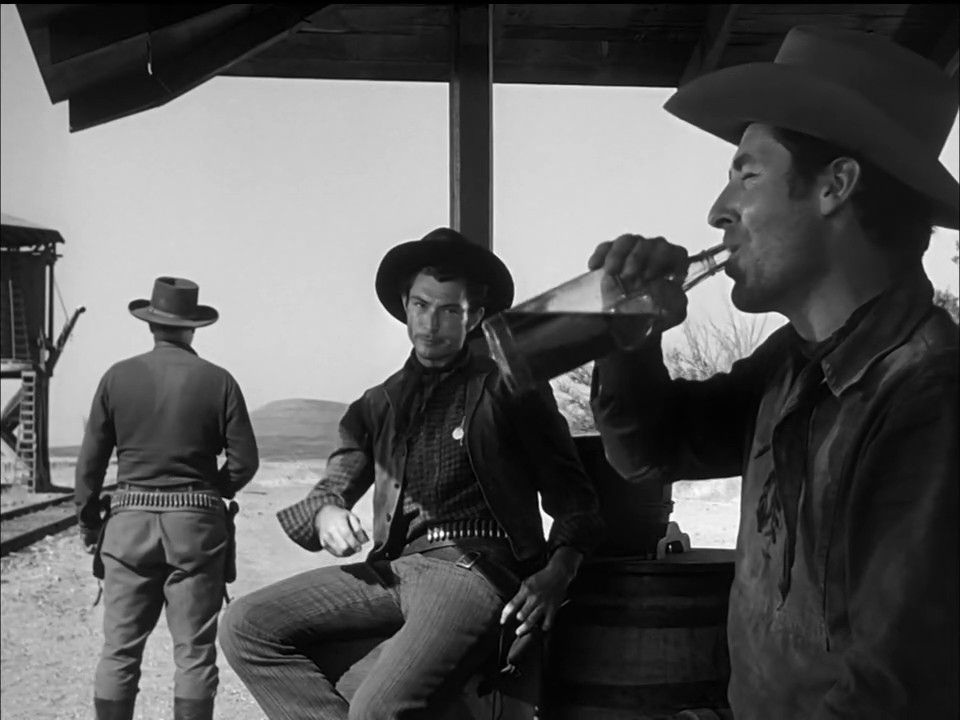
High Noon (1952, directed by Fred Zinnemann)

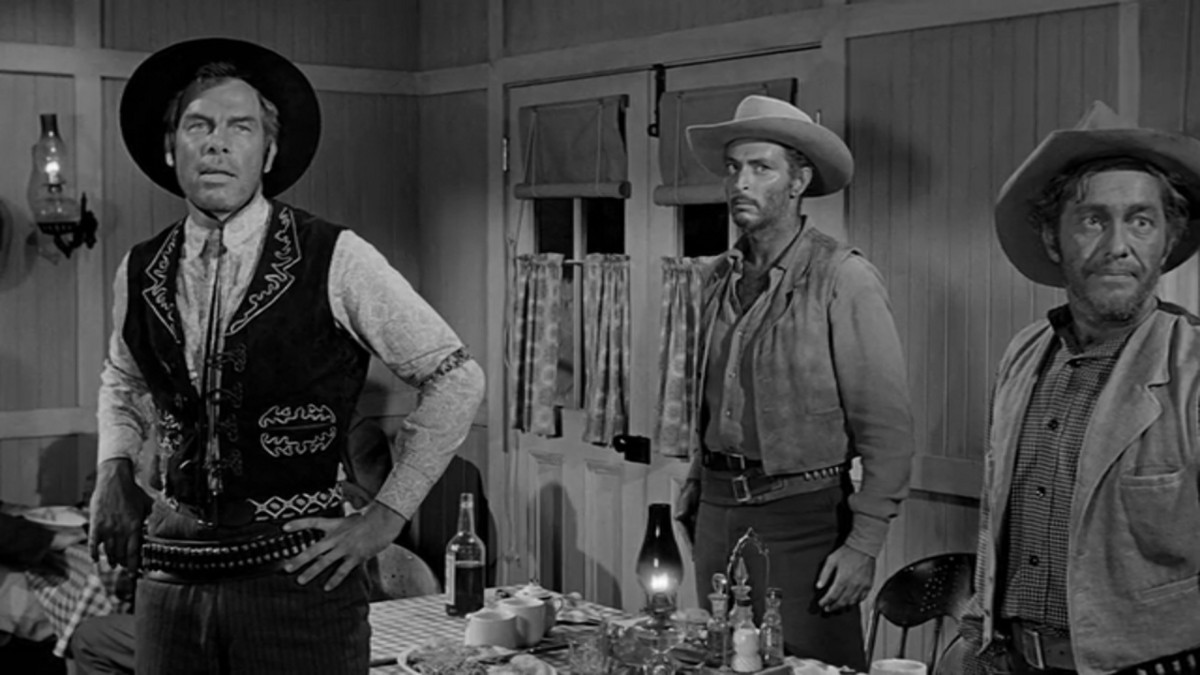
The Man Who Shot Liberty Valance (1962, directed by John Ford)

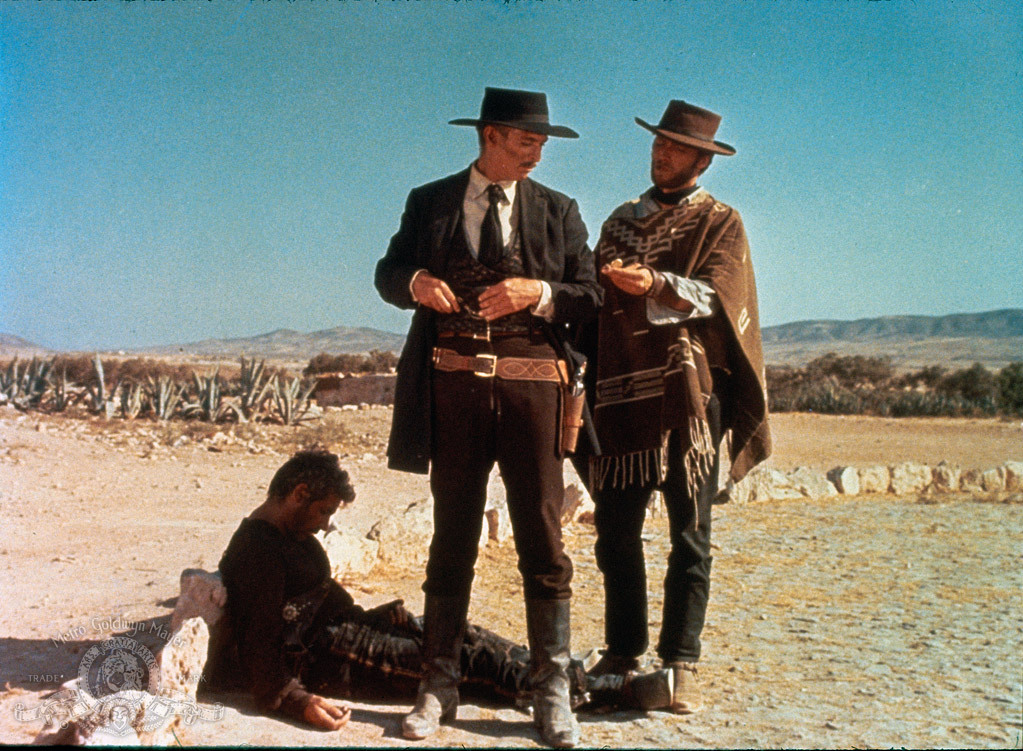
For A Few Dollars More (1965, directed by Sergio Leone)

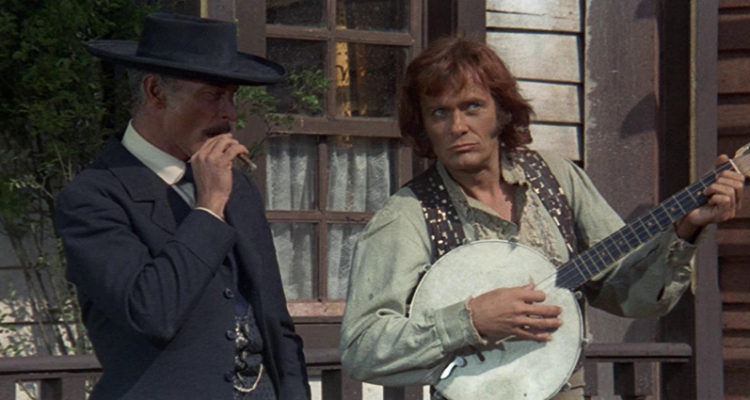
Sabata (1969, directed by Gianfranco Parolini)


Music Video Of The Day: I Can’t Dance by Genesis (1992, directed by Jim Yukich)


“It’s not about being unable to dance.  It’s about guys that look good but can’t string a sentence together. Each verse is a piss-take at the scenario of a jeans commercial. It was good fun, but the audience thought, ‘What does he mean that he can’t dance?’ They didn’t see the humor, and it killed the fun.”

— Phil Collins on I Can’t Dance

Ok, Phil.  Whatever you say.

Tony Banks, Genesis’s keyboardist, has said that the song actually came about because he and Mike Rutherford were fooling around with various sounds in the recording studio and Phil, hearing what they were doing, suddenly sang out, “I can’t dance!” The song started out as an improvised joke but then went on to become one of the band’s biggest hits.  It was also nominated for a Grammy.

The end of the video is meant to be a parody of the original ending of Michael Jackson’s video for Black or WhiteBlack or White originally ended with Michael Jackson’s dancing erratically and destroying a car.  I Can’t Dance ends with Tony and Mike dragging Phil away before can do too much damage.

Enjoy!

Buck Henry, R.I.P.


I just heard that Buck Henry died tonight of a heart attack.  He was 89 years old.

It’s hard to know where to start with Buck Henry.  He did a little bit of everything.  He started out as a comedian in the 50s, appearing on talk shows and claiming to be G. Clifford Prout, the president of the Society for Indecency to Naked Animals (SINA).  SINA was an organization dedicated to clothing animals in order to prevent their “indecency.”  Buck Henry’s delivery was so deadpan that many people thought he actually was G. Clifford Prout and a some even tried to send him donations to help out his cause.  (The donations were always returned.)

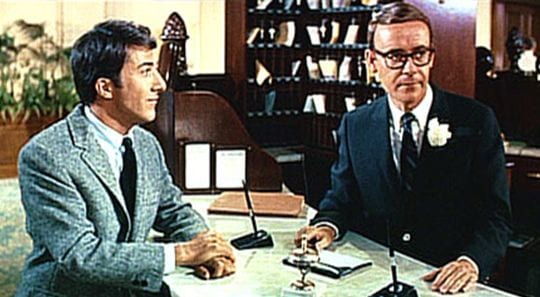
Henry went on to work extensively in both television and film.  He wrote the script for The Graduate and played the helpful hotel clerk.  He co-created Get Smart with Mel Brooks.  With Warren Beatty, he co-directed Heaven Can Wait and received an Oscar nomination.  In Nicolas Roeg’s The Man Who Fell To Earth, he had a rare serious role as the gay patent lawyer who helps alien Thomas Jerome Newton set up his corporation and who ultimately gets tossed out of a window by government agents.

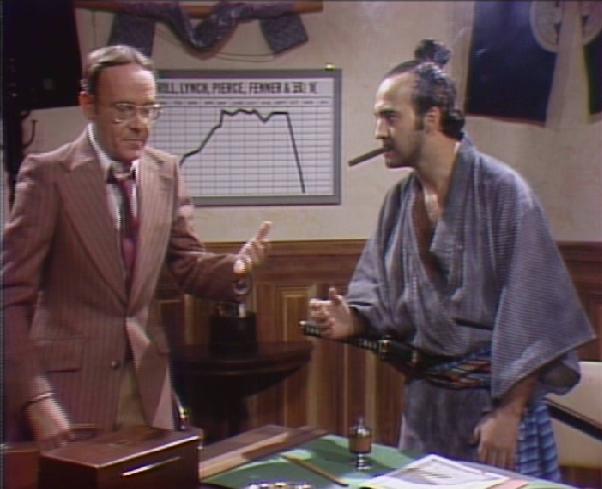
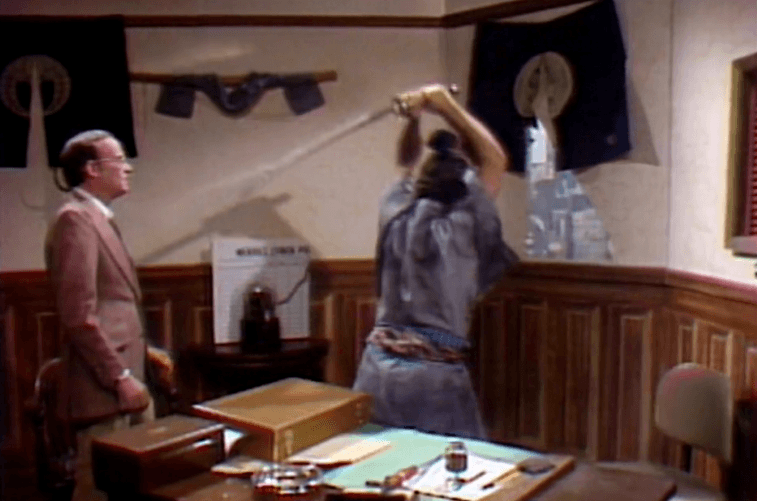
During the first few season of Saturday Night Live, Buck Henry hosted a total of ten times.  By many, he was considered to be an unofficial member of the cast.  He was a frequent foil to John Belushi’s samurai character.  Henry’s button-down persona provided the perfect contrast to Belushi’s frenetic performance.  During the October 30th, 1976 episode, Henry was accidentally struck by Belushi’s katana and he ended up with a deep cut on his forehead.  Henry not only continued the skit but he also hosted the rest of the show with a bandage on his forehead.  All of the other members of the cast put bandages on their foreheads as a show of solidarity.

Buck Henry kept working into the new century, appearing on shows like Will and Grace, The Daily Show, and 30 Rock.  He will be missed.

Buck Henry, R.I.P.


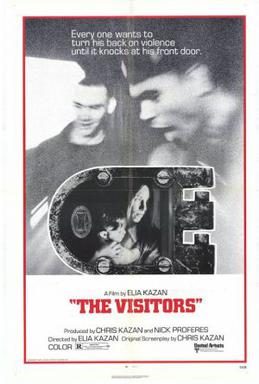
The Visitors (1972, directed by Elia Kazan)


Haunted by his experiences in Vietnam, Bill Schmidt (James Woods) lives in an isolated farmhouse with his girlfriend, Martha (Patricia Joyce), their young son, and Martha’s tyrannical father, Harry Wayne (Patrick McVey).  Harry is a hard-drinking writer who is proud of his previous military experiences and who is frustrated by Bill’s reluctance to talk about his time in Vietnam.  Harry views Bill as being a wimp who lost a war that America should have won.

One wintry night, two visitors show up at the house.  Mike (Steve Railsback) and Tony (Chico Martinez) served in Bill’s platoon.  The three of them were once friends but then something happened in Vietnam that changed all that, something that Bill refuses to talk about.  Harry is happy to welcome Mike and Tony into the household and he enjoys hearing their war stories.  While the hapless Bill watches, Mike flirts with Martha.  However, as the night continues, it becomes obvious that Mike and Tony aren’t paying an innocent visit on a friend.  Instead, they’re looking for revenge.  Bill testified against Mike at a court-martial and, in the process, ruined both of their lives.

The idea of “bringing the war home” was a popular one in the late 60s and the early 70s.  Radical groups like the Weathermen justified their terroristic actions by saying that they were forcing complacent Americans to face what every day was like in Vietnam.  Books like David Morrell’s First Blood featured psychologically damaged vets waging war on an America that they felt had abandoned them while the new wave of counterculture filmmakers made films that were groundbreaking in their portrayal of death and violence.  The Visitors, which features one traumatized vet being victimized by two other angry vets, was one of those films that was meant to bring the war home.

Directed by Elia Kazan and written by Kazan’s son, Chris, The Visitors is a simple film that sometimes seems more like a stage play than a movie.  The script is talky and heavy-handed, the characters are thinly drawn, and the film’s portrayal of Martha comes close to being misogynistic.  Chris Kazan’s script is openly critical of the United States’s role in the Vietnam War but Elia Kazan is more concerned with presenting Bill as a martyr.  Elia was a former communist who infamously named names during the McCarthy era and, from On the Waterfront on, every film that he made was more or less an attempt to justify his actions.  Like Waterfront‘s Terry Malloy. Bill loses everything because he testifies.  Unlike Malloy, no one comes to Bill’s aid afterwards, which suggests Kazan’s bitterness only grew over the years following his testimony.

The Visitors is a lesser film in Kazan’s filmography but notably, it was the first film for both James Woods and Steve Railsback.  Railsback plays Mike as a charismatic brute, giving a performance that owes more than a little to Marlon Brando’s performance as Stanley Kowalski in Kazan’s A Streetcar Named Desire.  James Woods brings his nervous intensity to the role of Bill, making him a far more intelligent but no less victimized version of Brando’s Terry Malloy.  Though The Visitors was Kazan’s second-to-last film, both Woods and Railsback would go on to emerge as two of the most interesting character actors in Hollywood.

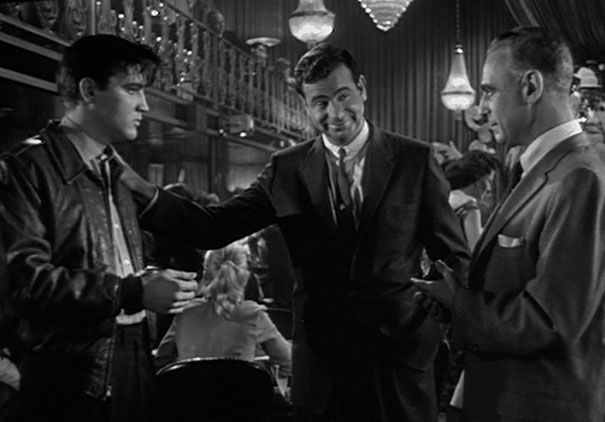
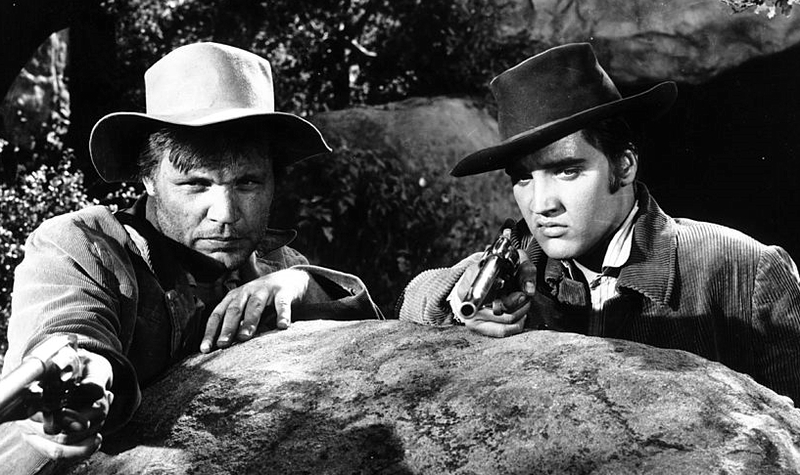
4 Shots From 4 Elvis Films: Love Me Tender, Loving You, Jailhouse Rock, King Creole


4 Shots From 4 Films is just what it says it is, 4 shots from 4 of our favorite films. As opposed to the reviews and recaps that we usually post, 4 Shots From 4 Films lets the visuals do the talking.

Today is not just David Bowie’s birthday.  It’s also Elvis’s!  If he was still with us, Elvis Presley would be 85 years old today.

During his lifetime, Elvis was as well-known for his movies as his music.  Elvis, who admired James Dean and Marlon Brando and wanted to be known as a serious actor, hated the majority of his films.  After 1960’s G.I. Blues, almost all of Elvis’s films were musical comedies that provided him with little opportunity to show off his dramatic skills.  Elvis preferred his first four films, Love Me Tender, Loving You, Jailhouse Rock, and King Creole, all of which gave him a chance to not just sing but to do some serious acting as well.

In honor Elvis’s birthday, here are 4 shots from those 4 films.

4 Shots From 4 Elvis Films

Love Me Tender (1956, directed by Robert D. Webb)

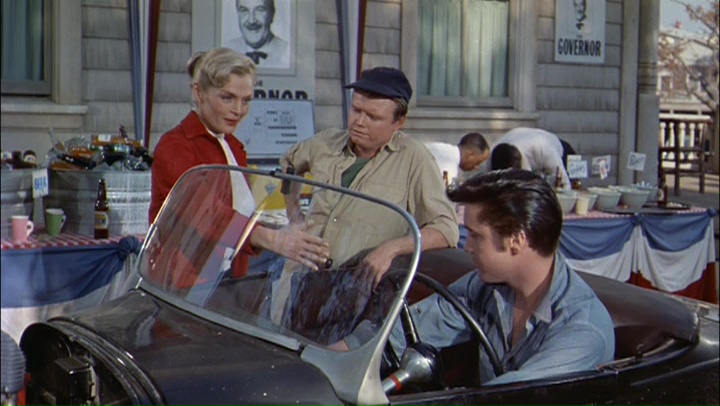
Loving You (1957, directed by Hal Kanter)

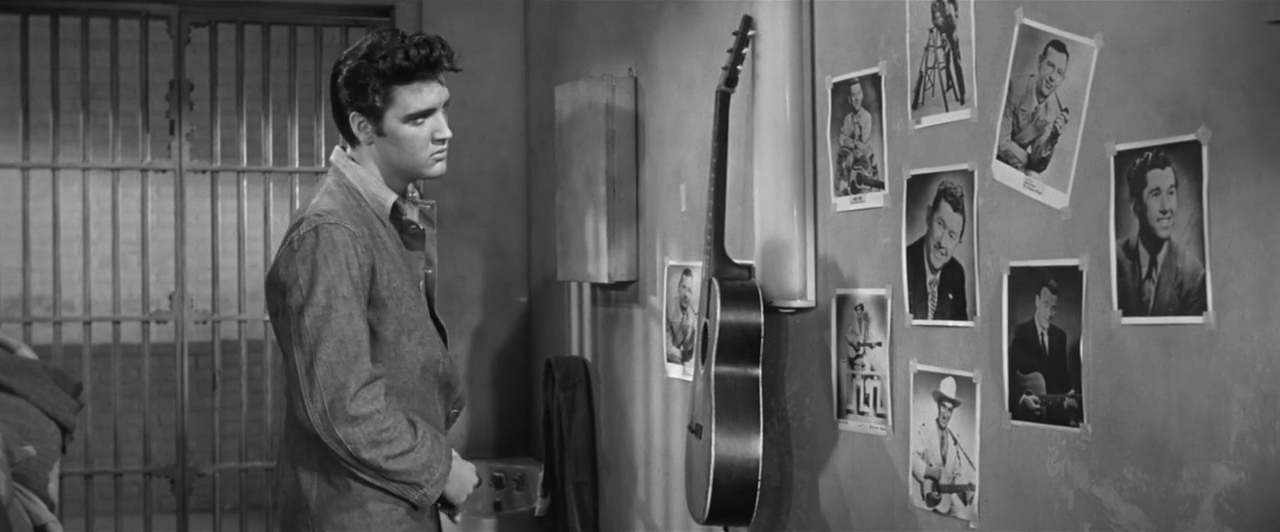
Jailhouse Rock (1957, directed by Richard Thorpe)

King Creole (1958, directed by Michael Curtiz)

The Covers of Startling Detective Adventures


How startling were the stories in Startling Detective Adventures Magazine?  They were startling enough to keep the magazine running for ten years, from 1930 to 1939.  As you can tell from looking at the covers below, Startling Detective offered up the usual stories of crime, gangsters, murder, prison, and guns.  Each cover promised readers “the truth from police records.”

Unfortunately, I haven’t been able to discover who did the covers below.  Sadly, some of the best work of the pulp era went uncredited.