Tuesday was a very, very long day and you’ll have to excuse me if my brain is a little bit flat right now.
Instead of my usual explanation about why I like the apocalyptic tone of this video, I’m just going to share it and wish a happy birthday to the one and only Skrillex. Sonny John Moore, the music genius who is also known as Skrillex and whose music has been a consistent soundtrack to every worthwhile event of the past 16 years, is 32 years old today!
I’m also going to point out that this song features the amazing Alvin Risk. Love you, Alvin!
I’m also going to wish all of you a good and happy Wednesday! I’m about to pass out here but hopefully, I will wake up in a few hours and I’ll be prepared to basically conquer Wednesday and use it as a base camp for the rest of the week. Sorry if my metaphors are lacking in coherence. I haven’t had much sleep.
And, finally, I’m going to invite all of you to …. enjoy!
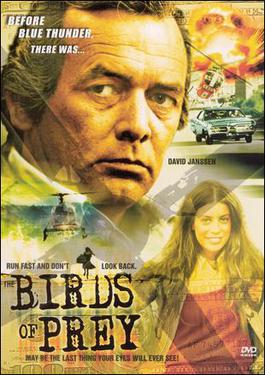
When three disgruntled Vietnam vets rob Zion’s Bank in downtown Salt Lake City and take a bank teller (Elayne Heilveil) hostage, they’re spotted by traffic reporter Harry Walker (David Janssen). A World War II vet who is going through a mid-life crisis and who feels unappreciated by the country that he risked his life to defend, Harry chases after the robbers in his helicopter. With Harry’s help, the police corner the robbers on the roof of a parking garage.
That’s when they discover that the robbers have a helicopter of their own! After abandoning their car, the robbers and their hostage take off in their helicopter, heading into the Oquirrh Mountains. Though he’s running low on fuel and has been ordered to back off by Police Captain Jim McAndrew (Ralph Meeker), Harry continues to pursue the other helicopter into the wilderness.
A made-for-TV movie from 1973, Birds of Prey is a chase movie, with the usual cars replaced by helicopters. What makes this movie so exciting is that it was directed in the days before CGI so, when you watch the two helicopters dangerously pursuing each other over Salt Lake City and taking daredevil risk over the mountains of Utah, you’re watching the real thing. David Janssen was a trained pilot who actually was flying the helicopter and doing his own stunts for the majority of the film. When the two helicopters nearly collide, you’re aware that you’re seeing a real near-miss, one that could have gone tragically wrong if not for the talents of the men piloting those helicopters.
Despite all of the action in the air, the film does occasionally touch ground. Harry and McAndrew talk about why some vets can move on and others can’t. Harry briefly lands on the freeway and gets some help from a passing motorist. Finally, Harry gets to know the kidnapped teller, who has never been outside of Salt Lake City and who shares Harry’s love of old movies. David Janssen was the go-to guy for gruff and grizzled heroes in 1970s made-for-TV movies and he’s pretty good as Harry. But the real stars of the film are the helicopters and the still-impressive aerial footage of them chasing each other above Utah.
Unfortunately, I have never seen a good print of Birds of Prey. Even the version on Amazon Prime is grainy, scratchy, and sometimes washed-out. (It also features a promo for a television station in Phoenix, suggesting that it was transferred straight from a VHS tape.) I hope that, at some point in the near future, someone will restore this minor chase classic.
Way back when the Academy first started to hand out awards to honor the best films of the year, they actually gave out two awards for best picture. One of the awards was called Oustanding Production and it’s assumed by most Oscar historians that it was meant to go to the most “entertaining” film of the year. The other award was called Best Unique and Artistic Picture and it was meant to honor the type of films that might not make a huge amount of money at the box office but which did the most to move cinema forward as an art form.
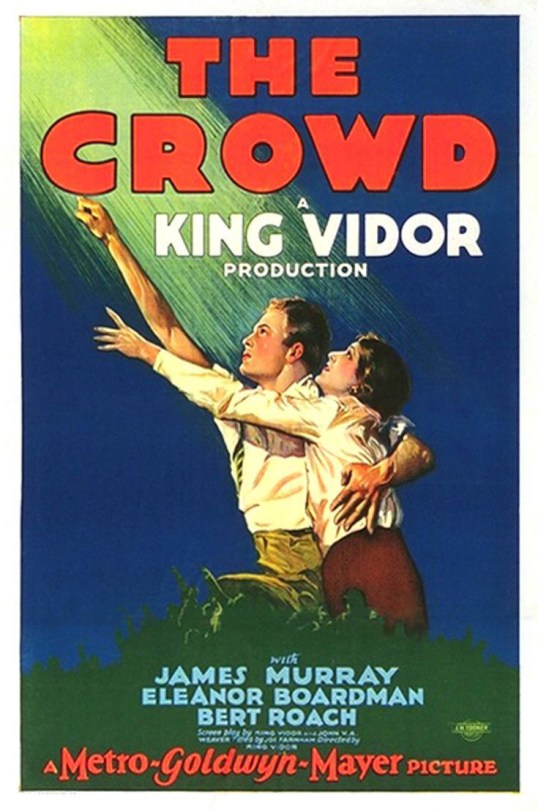
As a result, when the very first Academy Awards were awarded at the Hollywood Roosevelt Hotel on May 16th, 1929, a popular war film named Wings was named Outstanding Production while F.W. Murnau’s Sunrise was named Best Unique and Artistic Picture. Sunrise defeated two other nominees, a documentary called Chang and King Vidor’s The Crowd.
It’s long been rumored that, when the votes were first counted, The Crowd originally won Best Unique and Artist Picture but that Louis B. Mayer insisted that the award should go to Sunrise instead. The head of MGM, Louis B. Mayer reportedly disliked The Crowd, even though it was distributed by his own studio. Mayer felt that the film was too downbeat and he also resented that King Vidor had resisted Mayer’s demand that the film have a traditionally happy ending. It’s also been suggested that, since the Academy was largely Mayer’s idea, he felt that, if an MGM film won the initial reward, it would lead to his enemies claiming that Mayer had too much influence over the organization. That may or may not be true, no one can say for sure. What we can say for sure, however, is that both The Crowd and Sunrise continue to be recognized as classics of the silent era.
The Crowd tells the story of John Sims (James Muray), who goes to New York when he’s 21, convinced that he’s destined to be someone important. Sims gets a job at Atlas Insurance, where he’s one of many faceless office workers. He meets and, after one date, marries Mary (Eleanor Broadman). They live in a tiny apartment next to an elevated track. Over the next five years, they raise a family. They fight often. Occasionally, they beak up but they always get back together. Throughout it all, John struggles to prove himself as an individual, just to be continually reminded that he’s only a member of the faceless crowd.
It’s not a particularly happy film. John starts the film as a member of the crowd and he’s still a member of the crowd when it ends. If there is anything positive to be found in the film, it’s that John’s family loves him but, even taking that in to consideration, it’s obvious that he and Mary are going to spend their entire lives struggling and that the same fate probably awaits their children. Knowing that the film was made on the verge of the start of the Great Depression makes John’s story all the more poignant. If he thinks things are bad now, they’re about to get even worse.
Seen today, The Crowd is still a visually striking film. Influenced by German expressionism (particularly the work of Sunrise‘s director, F.W. Murnau), Vidor presents New York as being a menacing and frequently surreal world of towering skyscrapers and unfriendly faces. (Vidor even used the then-unheard of technique of using a hidden camera to capture actual documentary footage of star James Murray dealing with real New Yorkers.) The Crowd is probably best remembered for the shot where the camera pans up the length of a skyscraper, finally entering the building and showing us the anonymous office workers within. It’s a shot that perfectly captures the film’s theme of being lost and ignored in an impersonal world. It’s also a shot that’s been duplicated in a countless number of films. The Crowd may be 92 years old but its legacy lives on.
Sadly, things did not turn out well for James Murray, the former extra who Vidor cast in the lead role. The success of The Crowd did not translate into success for Murray. An alcoholic, Murray ended up living on Skid Row, where he once asked King Vidor for money and reacted with anger when Vidor offered him a role in a new film. In 1936, Murray was found floating in the Hudson River. He was 35 years old.
As for the Oscar for Best Unique and Artistic Motion Picture, it was only awarded once. Starting with the second Oscar ceremony, the Academy merged the two best film awards into one. Interestingly, the idea of giving out two Best Picture awards was briefly revived in 2018 but the response to the idea was so negative that it was quickly abandoned.
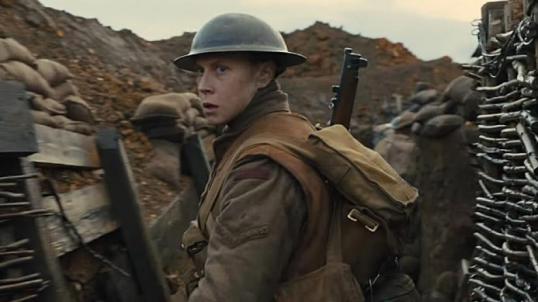
The Denver Film Critics have become the latest group to honor 1917 as the best of 2019!
Here are their winners:
Best Picture: 1917
Best Director: Sam Mendes, 1917
Best Actor: Joaquin Phoenix, Joker
Best Actress: Scarlett Johansson, Marriage Story
Best Supporting Actor: Brad Pitt, Once Upon a Time in Hollywood
Best Supporting Actress (tie): Laura Dern, Marriage Story and Florence Pugh, Little Women
Original Screenplay: Rian Johnson, Knives Out
Adapted Screenplay: Greta Gerwig, Little Women
Best Animated Film: Toy Story 4
Best Documentary: Honeyland
Best Foreign Language Film: Parasite
Best Score: Hildur Guðnadóttir, Joker
Best Original Song: “Glasgow” from Wild Rose
Best VFX: 1917
4 Shots From 4 Films is just what it says it is, 4 shots from 4 of our favorite films. As opposed to the reviews and recaps that we usually post, 4 Shots From 4 Films lets the visuals do the talking.
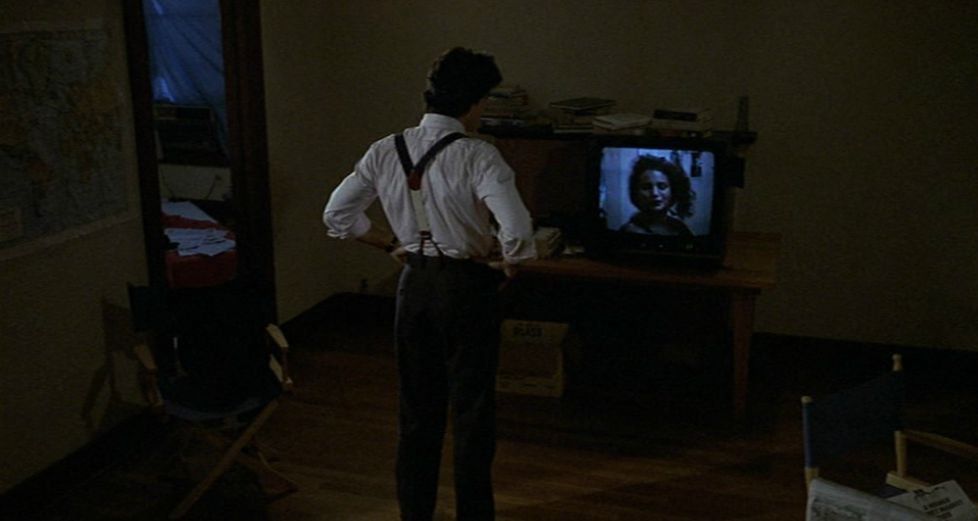
Today, we wish a happy birthday to one the early pioneers of independent film, Steven Soderbergh. Soderbergh was 26 years old in 1989, when he became the youngest director to ever win the Palme d’Or at Cannes. Soderbergh went on to become one of the busiest and most interesting director in Hollywood, working in all genres and inspiring filmmakers the world over.
4 Shots From 4 Films
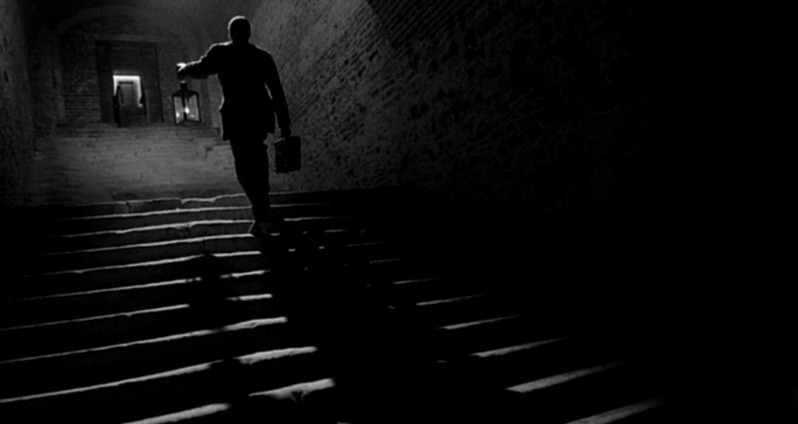
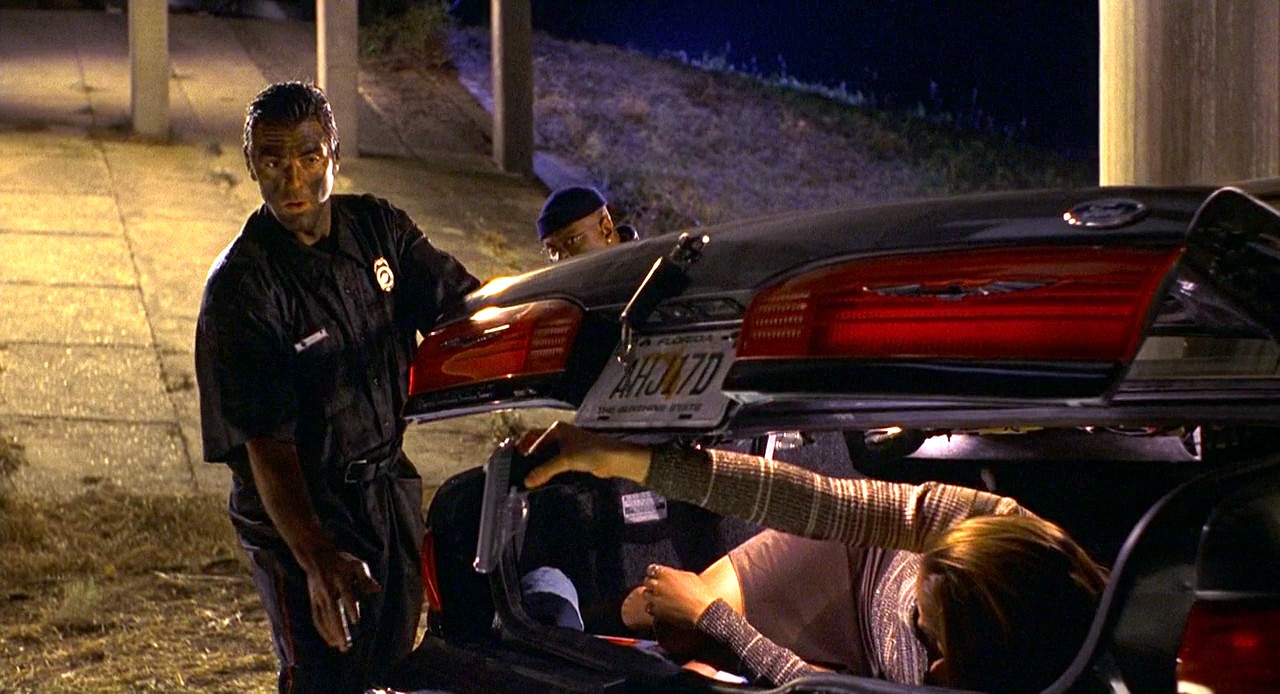
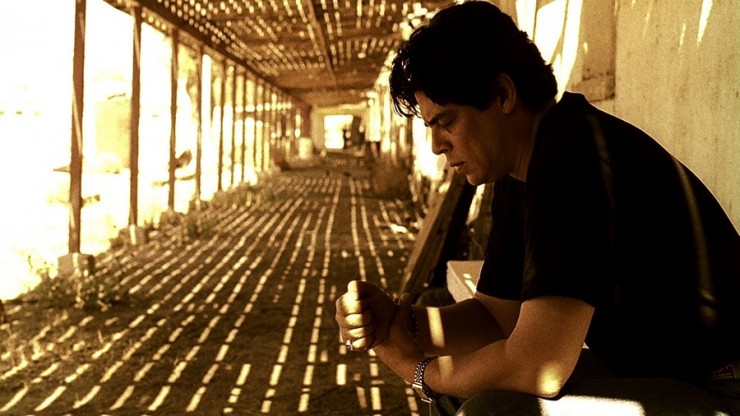
sex, lies, and videotape (1989, directed by Steven Soderbergh)
Kafka (1991, directed by Steven Soderbergh)
Out of Sight (1998, directed by Steven Soderbergh)
“I felt for sometime that the motivating energy, or the captivating energy, or the engrossing energy available to us today is the energy coming from the extremes. That’s why we have Malcolm X. And somehow it’s only these extremist positions that can compel our attention. And I find in my own mind that I have to resist these extremist positions when I find myself drifting into a mystical fascism in regards to myself.
So this song, ‘First We Take Manhattan,’ what is it? Is he serious? And who is we? And what is this constituency that he’s addressing? Well, it’s that constituency that shares this sense of titillation with extremist positions. I’d rather do that with an appetite for extremism than blow up a bus full of schoolchildren.”
— Leonard Cohen, on the meaning of First We Take Manhattan
Well, that clears everything right up, doesn’t it?
Because his music was embraced by the counterculture and the folksies, Leonard Cohen has often be mischaracterized as some sort of hippie troubadour. In reality, his lyrics were frequently dark and threatening, which is one reason that a whole generation of listeners first discovered Cohen as a result of several of his song being included on the Natural Born Killers soundtrack. In First We Take Manhattan, he sings from the point of view of someone who is ready to give up music and love and go to war. “First we take Manhattan, then we take Berlin.”
Though Cohen wrote this song, it was first recorded by Jennifer Warnes in 1986. Cohen would not release his own version until two years later, when it was the first track on his album, I’m Your Man. The music video for Cohen’s version was directed by French photographer Dominique Isserman, who was in a romantic relationship with Cohen at the time. The video features Cohen on the beach, with the ocean standing in the way of his promise to take Manhattan and then Berlin.
In 2009, Cohen’s version of the song later played over the end credits of Watchmen.
I just saw that it’s been announced that Julie Strain died yesterday. She was only 57 years old but had been in poor health for a while.
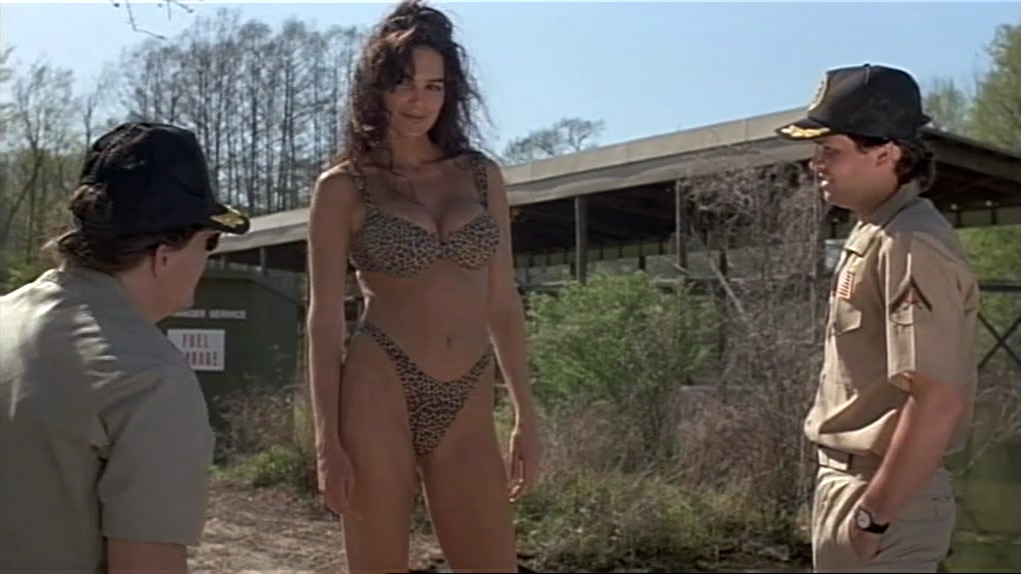
Julie Strain was known as the Queen of the B-Movies and anyone who grew up watching late night Cinemax in the 90s knows that she deserved the title. She was 6’1 and her natural athleticism made her a natural for playing strong women who knew how to throw a punch, swing a sword, or shoot a gun. She always seemed to be having as much fun appearing in the movies as we were having watching them. It was said that Ginger Rogers could do everything that Fred Astaire did while wearing heels. Julie Strain could do everything Steven Seagal did while wearing a bikini and she could actually act as well!
Rest in peace, Julie Strain. Thank you for being good even when the movies were sometimes bad.
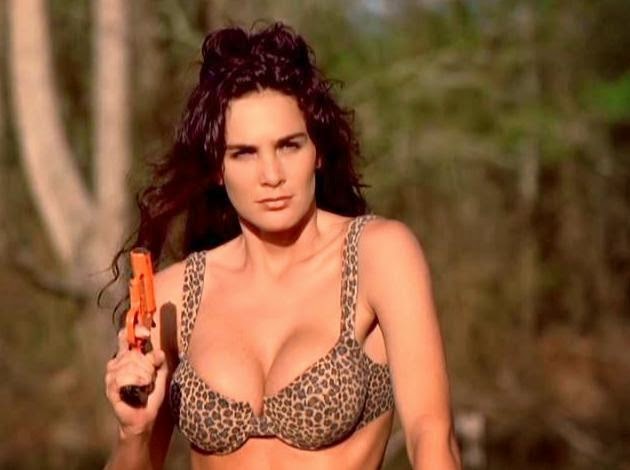
4 Shots From 4 Films
Enemy Gold (1993, directed by Andy Sidaris)
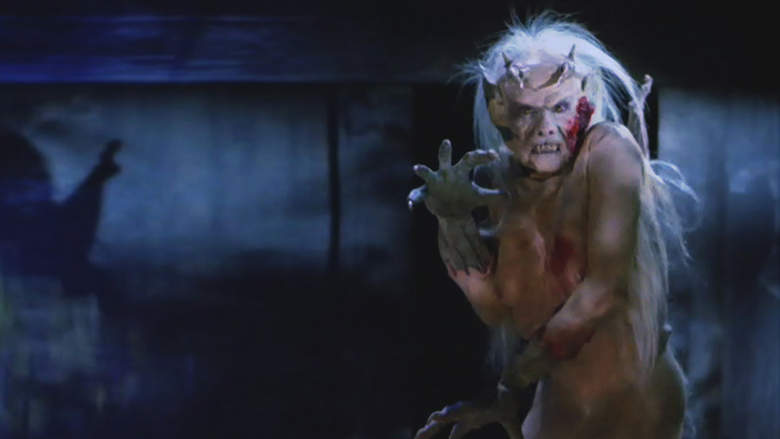
The Unnamable II: The Statement of Randolph Carter (1993, directed by Jean-Paul Ouellette)
Bikini Hotel (1997, directed by Jeff Frey)
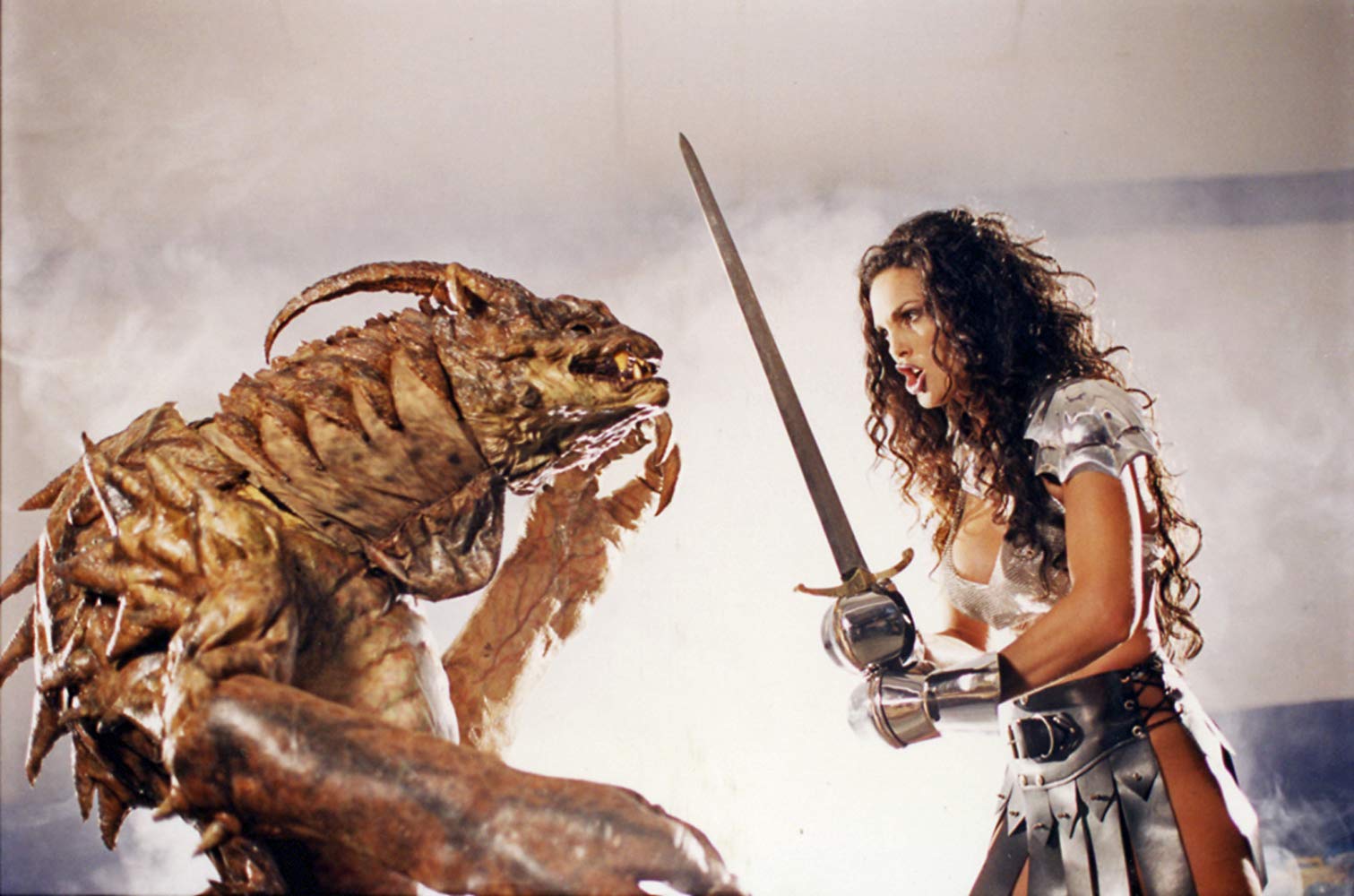
Guns of El Chupacabra (1997, directed by Donald G. Jackson)
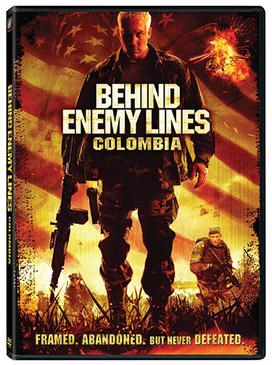
After 40 years of war, the Colombian military and FARC, the cocaine-funded guerrilla insurgency, are finally meeting to discuss peace. A group of Navy SEALS, led by Lt. Macklin (Joe Manganiello), have been sent into the Colombian jungle to secretly keep an eye on the peace talks and make sure that things don’t get out of hand. However, as soon as they arrive, the conference is attacked by yet another group of terrorists. Led by Alvaro Cardona (Yancy Arias), this third group kills the leaders of the Colombian military and FARC and attempts to frame the entire attack on the SEALS! Now, Macklin and Carter Holt (WWE superstar Mr. Kennedy) are trapped behind enemy lines. With the Colombian military, FARC, and Cardona after them and the CIA disavowing any knowledge of their existence, the two SEALS have to rescue a captured comrade and prove their innocence before all of South America plunges into war.
This film, which features Keith David recreating his commanding officer role from Behind Enemy Lines II: Axis of Evil, is a standard action movie. Some of the action scenes are exciting but all too often, BEL: Colombia is done in by its own low budget. This is especially obvious when the SEALS are parachuting into the jungle and the cheap green screen effects make the movie look like an old 80s tv show, with the SEALS clumsily superimposed over a picture of the sky. Watching that scene, I wouldn’t have been surprised if the original Magnum P.I. or Simon and Simon suddenly appeared as a member of the team. Even Jessica Fletcher wouldn’t have been out of place.
On the plus side, the acting actually isn’t bad and Cardona has a little more depth than the usual action movie villain. This is really not the type of film that you would expect to be directed by Otter from Animal House but Tim Matheson doesn’t do a bad job. Again, the low budget hurts but he gets some decent performances and he shows that he can adequately handle an action scene. BEL: Colombia isn’t terrible but it’s still not hard to feel that it would have been better if it had been made in 1988 by Chuck Norris and Menahem Golan.
The Oscar nominations were announced earlier today and, as happens every year, some of the nominations were met with acclaim while others left observers scratching their heads. Right now, on twitter, there’s a fierce debate going on between those who think Joker deserved all of its nominations and those who believe that the Academy has once again deliberately snubbed women and people of color.
As for me, I’m just shaking my head at all the nominations for Marriage Story. I get the feeling that, out of all of the recently unveiled best picture nominees, Marriage Story is the one that we will have forgotten about within the next year. It’s an acclaimed film and I’m happy that Scarlett Johansson finally got a nominations (two nominations, as a matter of fact, as she was also nominated for Best Supporting Actress for Jojo Rabbit) but, in the end, Marriage Story feels rather hollow.
Marriage Story is about the end of a marriage. Charlie Barber (Adam Driver) is a New York-based theatrical director. Nicole Barber (Scarlett Johansson) is his wife. Nicole is an actress who, before she married Charlie, was best known for appearing topless in a teen comedy. Charlie is often credited with having resurrected her career. On the surface, they’re the perfect New York couple. However, when we first meet them, their marriage is coming to an end. Charlie, we learn, cheated on Nicole with a production assistant. Nicole wants to go to Los Angeles so that she can star in a television series and have a career that’s not dependent upon her husband. Caught in the middle of all this is their son, Henry (Azhy Robertson).
At first, Charlie and Nicole agree to an amicable split, one with no lawyers and no accusations. That doesn’t last. Nicole hires the cheerfully ruthless Nora Fanshaw (Laura Dern). Charlie, after moving out to Los Angeles, finds himself torn between hiring either the the kindly (but ineffectual) Bert Spitz (Alan Alda, in a role he was born to play) or the somewhat sinister (but definitely effective) Jay Marotta (Ray Liotta, also in a role that he was born to play). While both Charlie and Nicole try (and often) fail to maintain a civil relationship for Henry’s sake, their attorneys go to war.
There’s a lot of good things to be said about Marriage Story. Though I think that his truly award-worthy work for 2019 was not in this film but instead in The Report, Adam Driver does a good job with role of Charlie. Scarlett Johansson, who has so often been unfairly overlooked at awards time, again proves herself to be one of the best actresses around. Dern, Alda, and Liotta are well-cast as three very different (but very recognizable) attorneys. Noah Baumbach’s script has several good lines. The scene where Nicole’s sister is awkwardly recruited to serve Charlie with the divorce papers is both funny and cringey. The much-acclaimed scene where Charlie and Nicole go from having a polite (if awkward) conversation to yelling at each other is definitely effective even if it’s power has been diluted by it’s subsequent reinvention as a twitter meme.
That said, Marriage Story ultimately left me feeling dissatisfied. It’s pretty much an open secret that the film is based on Noah Baumbach’s divorce from Jennifer Jason Leigh and, watching the film, you can’t help but feel that you’re only getting one side of a very complex story. My first warning sign came when Nicole left for Los Angeles and the film cut to her on the set for her new television series. Marriage Story goes so overboard in portraying Nicole’s show as being vapid and silly that you can’t help but feel that we’re meant to look down on Nicole for abandoning Charlie’s avant-garde theater productions to star in it. We’re meant to say, “She gave up Broadway so she could star in some second-rate Marvel show!?” From the claim that no one took Nicole seriously until Charlie married her to it’s portrayal of her being easily manipulated by her attorney, there’s a pettiness to the film’s portrayal of Nicole.
As for Charlie, he’s presented as being flawed but, as the film progresses, it’s hard not to notice that almost all of his flaws can also serve as a humble brag. He’s a little dorky, He’s too intense. He works too hard. Sometimes, he has a hard time not being the director. Almost all of Charlie’s flaws are the type of stuff that people mention in job interviews whenever they’re asked to name their biggest weakness. “Well, I guess I am a bit of a perfectionist, sometimes….” It’s hard not to feel that, despite a few scenes where Nicole gets to open up, the film is really only interested in Charlie’s perspective. By the end of the film, Marriage Story reduces Nicole to merely being an obstacle standing in the way of Charlie and his son and it’s hard not to feel that both the character and the actress who plays her deserves better than that. The film goes from being Marriage Story to simply being Charlie’s Story.
While you’re watching the film, it’s easy to get swept up in Driver and Johansson’s performances. It’s only afterwards, when you really think about it, that you come to realize that Marriage Story doesn’t really add up to much. It’s a good acting exercise and I’m sure that it will be popular among community theater actors who have been asked to prepare a monologue for their next audition. But the whole is ultimately far less than the sum of its parts.



 Through the Shattered Lens