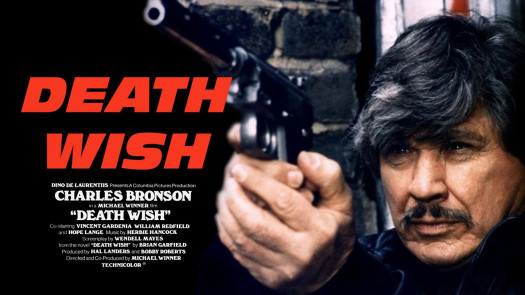
Bang, You’re Dead!: Charles Bronson in DEATH WISH (Paramount 1974)


gary loggins's avatarcracked rear viewer

Most people think of DEATH WISH as just another 70’s revenge/exploitation flick, right? Nope. Far from it. Sure, there’s loads of graphic violence, but this gem of a movie contains just as much political commentary as ALL THE PRESIDENT’S MEN, with an added dose of black comedy to boot. The film had its finger firmly placed on the pulse of 1970’s America, with all its fear and paranoia about rampant urban crime, and is among the decade’s best.

Director Michael Winner and star Charles Bronson had made three films together up to that time: the revisionist Western CHATO’S LAND, the actioner THE MECHANIC , and the cops-vs-Mafia drama THE STONE KILLER . All were hits with the drive-in crowd, and helped Bronson go from supporting player to major star. Strangely enough, Bronson wasn’t the first actor considered for the part of Paul Kersey. Jack Lemmon was original choice, and that…

View original post 826 more words

12 Images of D-Day From The Artists Who Were There


Today is the 75th anniversary of D-Day.

On this day, in 1944, the Allied forces landed at the beaches of Normandy and, against overwhelming odds, began the liberation of Nazi-occupied France and later all of Western Europe.  At least 4,400 Allied soldiers lost their lives on that day so that others could live free and, on this anniversary, we honor their sacrifice.

Not surprisingly, D-Day has inspired many artists, writers, and filmmakers over the years.  Below, for the 75th anniversary of the Normandy Landings, we have 12 paintings and illustrations inspired by D-Day.  These works were all done by men who were actually there on that historic day.  The majority of them can be found at the International War Museum in the United Kingdom.

by Albert Richards

by Albert Richards

by Anthony Gross

by Edward Ardizzone

by Edward Bawden

by Jack Heath

by Joseph Gary Sheahan

by Manuel Bromberg

by Manuel Bromberg

by Orville Norman Fisher

by Richard Eunich

by Thoms Hennell

Music Video of the Day: Sleeping Bag by ZZ Top (1985, directed by Steve Barron)


“Sleeping bags used to be a real drag to contend with, when you’re in the Boy Scouts and the best you can do is one of those Army sleeping bags. The old-timey kind that were heavy. Then in the late ’60s or ’70s, they came out with those down-filled bags that roll up into the size of a cantaloupe. It’s changed the whole idea of a sleeping bag. I had one of those that looks just like a mummy case. That’s where the line in the song comes from: ‘Sleep beside the pharoahs in the shifting sands.'”

— Billy Gibbons

“I used to own a sleeping bag. I used to go camping. But I don’t own a sleeping bag now. I own a sleeping bag in my mind.”

— Dusty Hill

Sleeping Bag was the first single to be released off of ZZ Top’s follow-up to Eliminator, Afterburner.  Both the band and Warner Bros. felt that the perfect way to transition from the Eliminator songs to the Afterburner songs would be to make one more video featuring the ZZ Top girls and Billy Gibbons’s car.  However, when director Tim Newman (who previously did Gimme All Your Lovin, Sharp Dressed Man, and Legs) was approached to direct the video, he wanted more money than the label was willing to pay.  As a result, Steve Barron was hired to direct instead and the end result was a video that was much different from the previous three Eliminator videos.

In this video, the band and the ZZ Top Girls go from giving makeovers to saving lives.  When a young couple (played by Heather Langenkamp and John Dye) is menaced by two rednecks in a monster truck, the Eliminator sacrifices itself to keep them safe.  Don’t worry, though.  Apparently, the ghosts of ZZ Top have been keeping a space shuttle in Egypt.  It all makes sense when you consider that this was the 80s and everyone was obsessed with space shuttles and monster trucks.

Heather Langenkamp made this video a year after starring in A Nightmare on Elm Street and, not surprisingly, several parts of the video seem like they could have been lifted from Wes Craven’s seminal horror film.  The shadows of the rednecks outside the tent seem like they are intentionally meant to bring to mind Freddy Krueger.

Steve Barron was another one of those directors who seemed to work with almost everyone.  He would go on to direct ZZ Top’s next video, Rough Boy, which we’ll look at tomorrow.

Enjoy!

Here’s The Trailer for Ad Astra!


It seems like we’ve been hearing about Ad Astra forever.

Well, it actually hasn’t been forever.  Director James Gray first announced that he would be going into production on Ad Astra in 2016.  The film was shot in 2017.  It was originally scheduled to be released in 2018 but then the date kept getting pushed back until, eventually, it was announced that the film would be released in January of 2019.

And we were all like, “Oh, January.  It must be really bad, then.”

But then the movie was pushed back again, to May.

And we were all like, “Oh, May.  It must not be terrible but it’s probably not particularly memorable.”

But then it was moved back again, to September.

And we were all like, “September?  Isn’t that when the Oscar movies start to come out?”

So, who knows what to expect?  Here’s what we do know: James Gray has directed some good movies (The Lost City of Z) along with some frustratingly uneven ones (We Are The Night).  Ad Astra stars Brad Pitt as an astronaut who goes into space in search of his father (Tommy Lee Jones).  With Gray directing, one can imagine that there’s probably a bit more to the story than just a father/son reunion.  Apparently, Pitt is also going to discover a secret that threaten humanity’s existence.  Gary has also said that he wanted to the film’s depiction of space travel to be 100% realistic.

So …. again, we’ll see.  When a movie’s release date gets shuffled around as much as Ad Astra‘s, it hard not to be a little skeptical.  But the talent involved is impressive enough that I’m definitely going to give the movie a chance.

Here’s the just-released trailer:

Music Video of the Day: Legs by ZZ Top (1983, directed by Tim Newman)


“I was driving in Los Angeles, and there was this unusual downpour. And there was a real pretty girl on the side of the road. I passed her, and then I thought, ‘Well, I’d better pull over’ or at least turn around and offer her a ride, and by the time I got back she was gone. Her legs were the first thing I noticed. Then I noticed that she had a Brooke Shields hairdo that was in danger of falling. She was not going to get wet. She had legs and she knew how to use them.”

— Billy Gibbons, on the inspiration behind Legs

With Legs, the third of their Eliminator videos (following Gimme All Your Lovin’ and Sharp Dressed Man), ZZ Top showed that they knew better than to mess with a good thing.  This video follows the same plot as the previous two videos, except this time it’s a young woman (played by Wendy Frazier) getting the help of the ZZ Top girls instead of a young man.  I don’t know how the video’s heroine ended up working in the Hellscape that opens this video but it’s a good thing that the ghosts of ZZ Top were around to help her.  As the video makes clear from the start, she does have legs and, after a trip in the Eliminator and a makeover, she knows how to use them.

The three ZZ Top girls were played by brunette Jeana Tomasino, blonde Daniele Arnaud, and Kymberly Herrin, who is identifiable by the red top she’s wearing.  Tomasino and Arnaud appeared in the previous Eliminator videos while Herrin made her first appearance in this video.

Like the previous two videos, Legs was directed by Tim Newman.  Though the girls and the Eliminator would return for one more video, Newman would not.  Sleeping Bag would be directed by Steve Barron and we’ll see how he did tomorrow.

Enjoy!

Film Review: Spirits In The Dark (dir by Jozsef Gallai)


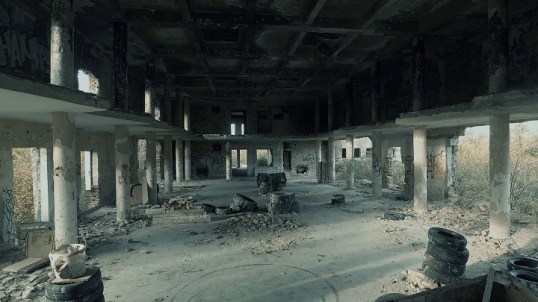
An abandoned building is just inherently creepy.

I mean, think about it.  Unlike a forest or a mountain or a canyon, a building is not something that forms naturally.  People actually have to build buildings.  Plans have to be drawn up.  Materials have to purchased.  Hours of backbreaking labor are required.  Creating a building requires work, resources, and time.  It’s not something that you do on a whim.  It’s something that’s done as a part of a larger plan.  With all of the effort that goes into creating the building, it’s always strange to come across one that has subsequently been abandoned.  You find yourself wondering what could have happened that made the inhabitants or the owners say, “We’d rather have all that hard work be for nothing than remain in this location?”

Walking through an abandoned building, it’s difficult not to think about the fact that, once upon a time, strangers that you’ll probably never meet moved through these now deserted hallways.  People worked in those empty rooms.  For a period of time, the building was probably the center of someone’s life.  Where are those people now?  Do they ever think about the past?  Do they still have memories of things that were said or thought while walking through those now-empty hallways?

Finally, there’s the constant reminders that even an abandoned building isn’t never truly abandoned.  There’s the animals that move in after the people leave.  There’s the plants the continue to grow around and, in some cases, consume the empty structure.  And, of course, there’s the reminders that you might not be the first person to have explored this empty building.  There’s the broken windows or the empty bottles or the crumpled cigarette pack, all of which remind you that others may even consider this building to be their home.  And, of course, there’s the graffiti.  Graffiti and abandoned buildings tend to go hand-in-hand.  For whatever reason, it’s often the graffiti that makes an abandoned building feel especially ominous.  Are those words on the wall a sign of ownership, an act of rebellion, or a warning?

Of course, the only thing more creepy than one abandoned building is when you come across an entire town of abandoned buildings….

And yet, as creepy as an empty building can be, it’s also hard not to be fascinated by them.  You look at them and you wonder why?  Why did everyone leave and how long will the building stand there deserted before it’s either torn down or destroyed by nature?  That’s one reason why ghost towns remains such a popular tourist destination.  They’re a reminder of just how short and fragile life can be.  You can build a home or an office but, once your time is up, it’s just going to be another abandoned building.

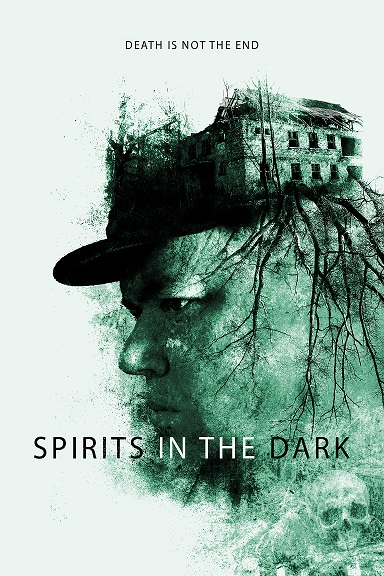
That’s something that Gil Spencer, the protagonist of Spirits in the Dark, understands.  Gil (played by the film’s director, Jozsef Gallai) used to love exploring abandoned buildings with his wife.  Ever since his wife’s death, Gil has struggled with being lonely and depressed.  But then, one day, something mysteriously appears on his laptop.  It appears to be a video shot by someone exploring an abandoned military complex.  The person shooting the video comes across a white pendant, one that looks exactly like the one that Gil’s wife used to wear.  While the person holds the pendant, we catch a glimpse of a ghostly figure standing a few feet away, watching.

Intrigued, Gil searches for and manages to track down the deserted complex.  As creepy as the abandoned and graffiti-covered buildings may be, Gil — who films his exploration — informs us that it’s nothing he hasn’t seen before.  Even when he spots blood on the wall, he figures that it was probably just someone shooting “an indie horror film.”  But then, he comes across a mask hanging in a corner.  And then his car’s horn starts honking for no reason.  And then, things start to get really creepy!

Spirits in the Dark is a haunting and moody exercise in atmosphere and genuine creepiness.  Wisely, instead of going for easy jump scares, the film takes its time to set up both the location and the situation.  We get to know Gil and, as he makes his way through them, we also get to know the abandoned building and the surrounding wilderness.  Like Gil, we find ourselves looking at every shadow, searching for some sort of explanation.  Just like Gil, we can feel the menacing atmosphere closing in on us and we become aware of every strange noise and every possible movement in the darkness.  When the scares do come, they’re all the more effective because the film has earned the right to frighten us.  It’s a wonderfully effective and creepy movie, one that has an intriguing plot and which is distinguished by the moody cinematography and the ominous score, both of which are credited to Gergo Elekes.

Wild Eye Releasing is going to be releasing Spirits in the Dark via DVD and VOD early in 2020 so keep an eye out for it!
Eurocomics Spotlight : “The Structure Is Rotten, Comrade”


Ryan C. (fourcolorapocalypse)'s avatarRyan C.'s Four Color Apocalypse

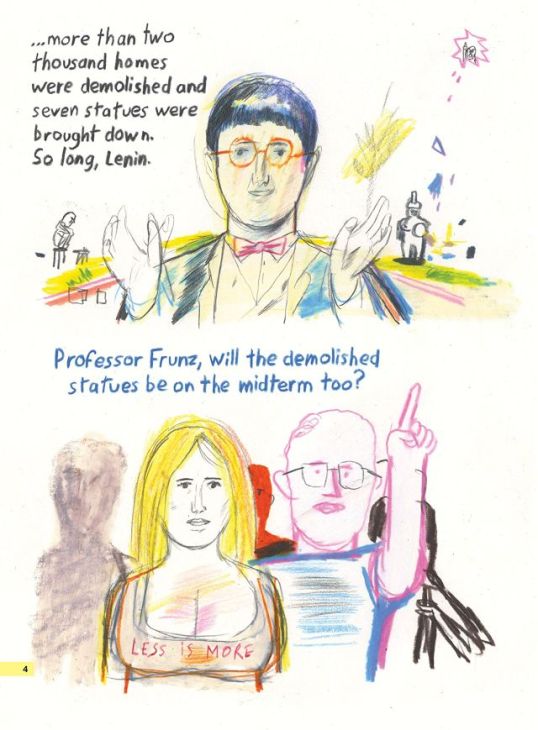
Don’t let the sheer physical size of writer Viken Berberian and artist Yann Kebbi’s The Structure Is Rotten, Comrade intimidate you — much. Yeah, it’s a hefty hardcover tome that Fantagraphics has published here, clocking in at 320 pages (I assume its original French-language edition is roughly the same, give or take a title page or two), but it reads reasonably quickly. Much of the real wok comes later, when one mentally “unpacks” everything that’s been absorbed at breakneck speed.

That’s because this is a conceptually dense book in the extreme — and yes, I most assuredly do mean that as a compliment. But perhaps I’m pre-disposed toward appreciating it given what’s been happening not in the Armenian capital city of Yerevan, where this story takes place, but in my own hometown of Minneapolis.

Like too many municipalities to mention — maybe even yours — we’ve been inundated here in…

View original post 533 more words

Eurocomics Spotlight : “Red Ultramarine”


Ryan C. (fourcolorapocalypse)'s avatarRyan C.'s Four Color Apocalypse

On the surface, Italian cartoonist Manuele Fior’s early-2000s graphic novel Red Ultramarine — just, and finally, released in a handsome, hardbound English translation by Fantagraphics — is a deceptively simple rumination on the dangers of ambition and obsession, creatively expressed by means of a dual-track narrative that juxtaposes a modern (I think, at any rate) Faust-derived cautionary tale revolving around a woman trying to save her architect love interest from his own OCD excess with a rather novel mash-up of the Greek myths of Daedalus/Icarus and Theseus/The Minotaur. Both stories are written in brisk and concise fashion, hitting just the right “beats” at just the right points to make the parallels between them obvious without belaboring matters, but Fior’s never been about “surface level” readings — and this is not only no exception, it’s the work that well and truly got the whole ball rolling in that regard.

You…

View original post 603 more words