Remember that sweet song your Mother sang to you as a child?
Cast:
Reine Swartas Chloe van Heerdon
Brandon Aruret as Dr. Timothy Reed
Shayla-Rae McFarlane as young Chloe
Preview:
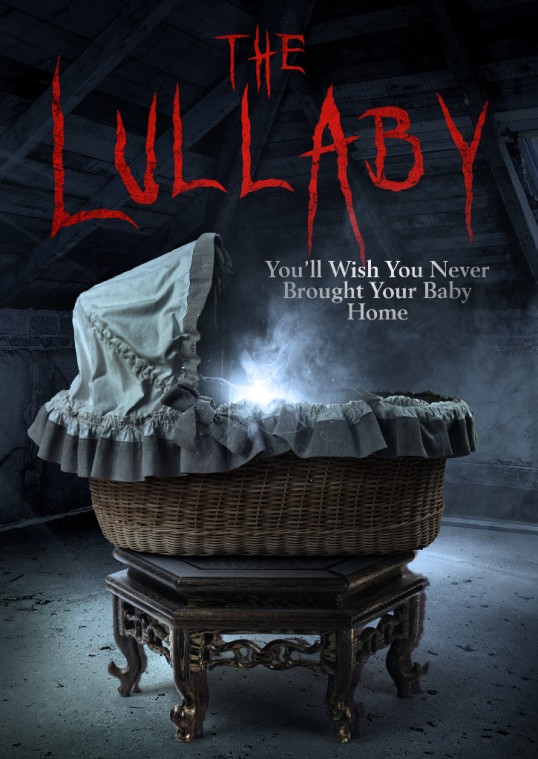
Chloe is overwhelmed by the birth of her first child. The incessant crying of her baby, the growing sense of guilt and paranoia sends her into depression. With a heightened urge to protect her son, Chloe sees danger in every situation. She starts to hear voices, the humming of a childhood lullaby and sees flashes of a strange entity around her child. Convinced that the entity is real, Chloe will do everything in her power to protect her son. Is she haunted by evil or is it just the baby blues?
Review:
Oh, Child, we got so much to talk about! Your Mama is not crazy, you are! Or are you? Or was you just twisting my mind?
Or is your Mom really crazy!
Or your Grandma?
That sweet little song you Mom sang to you as a child… you know… that comforting song that always puts you into dream land… yeah, this movie might make you sleep different tonight!
Credits:
Uncork’d Entertainment presents a Phoenix Film with Valhalla Productions Directed by Darrell James Roodt
Trailer:
Would I recommend this movie:
Yep, absolutely! One of the best horror/thriller movies I have seen this year!
Where can you see it?
The Lullaby is opening in theaters and on VOD March 2, 2018
It’s only a few hours until kickoff so I guess I should make my Super Bowl predictions.
The Eagles are a good team. Even people who hate Philadelphia have to admit that. They’ve earned their right to play in the Super Bowl this year. Ever since he stepped in and replaced the injured Carson Wentz as quarterback, Nick Foles has been defying the odds and proving the haters wrong.
But the New England Patriots are the best team in the league right now. The Patriots have got Tom Brady, perhaps the greatest quarterback of all time. I expect the Eagles will put a good fight but my final prediction is:
Patriots — 31
Eagles — 17
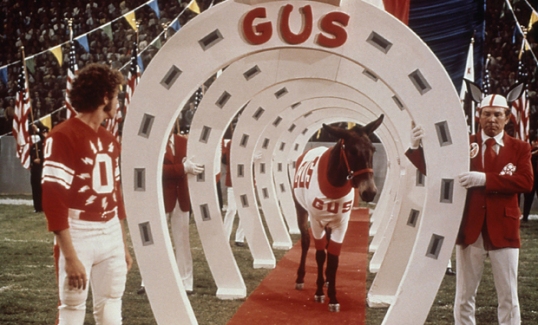
As always, the final field goal will be kicked by Gus, the field goal-kicking mule.
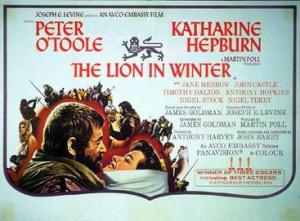
(With the Oscars scheduled to be awarded on March 4th, I have decided to review at least one Oscar-nominated film a day. These films could be nominees or they could be winners. They could be from this year’s Oscars or they could be a previous year’s nominee! We’ll see how things play out. Today, I take a look at the 1968 best picture nominee, The Lion in Winter!)
“I don’t much like our children.”
— Eleanor of Aquitaine (Katharine Hepburn)
“Oh God, but I do love being king.”
— King Henry II (Peter O’Toole)
“What family doesn’t have its up and down?”
— Eleanor of Aquitaine
To be honest, it’s tempting to just spend this entire review offering up quotes from this film. Based on a play by James Goldman and featuring a cast of actors who all specialized in delivering the most snarky of lines with style, The Lion In Winter is a film that is in love with the English language. As visually impressive as the film and its recreation of the 12th Century is, it’s tempting to close your eyes while watching The Lion In Winter and just listen to the dialogue.
The year is 1183. England has a king. His name is Henry II (Peter O’Toole) and he’s held power for a long time, through a combination of willpower and political manipulation. He’s married to Eleanor of Aquitaine (Katharine Hepburn), though he long since had her imprisoned. Before marrying Henry, Eleanor was the wife of Louis VII. Now, Henry’s mistress is Alais (Jane Merrow), the daughter of Louis and his second wife. In order to get Alais’s dowry, Henry has promised her half-brother, Philip II (Timothy Dalton), that she will be married to the next king of England. Philip, incidentally, is the son of Louis’s third wife. To be honest, it’s confusing as Hell to try to keep up with all of it but that’s medieval politics for you.
Of course, everyone knows that Henry II will not be king forever. He’s already 50 years old, which is quite an advanced age for 1183. Being king means that everyone, even his own family, is plotting against him. It also means living in a remarkably dirty and drafty castle. (If you’re looking for a film that celebrates the splendor of royalty, this is probably not the film to watch.) Henry has three sons, all of whom feel that he should be the rightful heir.
For instance, there’s Richard (a young Anthony Hopkins). Richard is Henry and Eleanor’s eldest son. He is a fierce, outspoken, and judgemental man. He describes himself as being a legend and a poet. He looks and acts like a future king. Of course, he’s also a bit of a pompous ass. Richard is Eleanor’s pick to be king, though Richard is always quick to equally condemn both of his parents.
And then there’s John (Nigel Terry). Early on, John is described as being “pimply and smelling of compost.” For some reason, John is Henry’s favorite. He’s also a sniveling weakling, the type who is never smart enough to know when his father is being honest or when his father is bluffing. Halfway through the film, he comes close to accidentally starting a civil war.
And finally, there’s Geoffrey (John Castle). Geoffrey is the smartest of the princes and the most manipulative. Of the three princes, he’s the only one who is as smart as both Henry and Eleanor. However, whereas Henry and Eleanor enjoy their complicated lives and manage to maintain a sense of (very dark) humor about it all, Geoffrey is bitter about his place as the middle child.
Christmas has arrived and Henry has temporarily released Eleanor from prison so that she can spend the holidays with him, his sons, and his mistress. Also coming over for the holiday is King Phillip II, eager to either take back his sister’s dowry or to attend her wedding to the next King of England. What follows is a holiday of politics, manipulation, and shouting. In fact, there’s lots and lots of shouting.
It’s a thoroughly enjoyable film, one that expertly mixes British history with domestic drama and dark comedy. Obviously, the film’s main appeal comes from watching two screen icons, Peter O’Toole and Katharine Hepburn, exchanging snappy dialogue. Hepburn deservedly won an Oscar for her performance as Eleanor. O’Toole should have won an Oscar as well but he lost to Cliff Robertson for Charly. In fact, O’Toole and Hepburn are so good that they occasionally overshadow the rest of the very talented cast. Anthony Hopkins and Nigel Terry both make indelible impressions as Richard and John but my favorite princely performance came from John Castle, who is a malicious wonder as Geoffrey. As easy as it is to dislike Geoffrey, it’s hard not to feel that he does have a point.
(Of course, in real life, both Richard and John would eventually serve as king while Geoffrey would die, under mysterious circumstances, in France. Reportedly, Philip II was so distraught over Geoffrey’s death that he attempted to jump on the coffin as it was being lowered into the ground.)
The Lion In Winter was nominated for seven Oscars and won three, for Best Actress (Katharine Hepburn), Best Adapted Screenplay (James Goldman), and Best Music Score (John Barry). It lost best picture to Oliver!
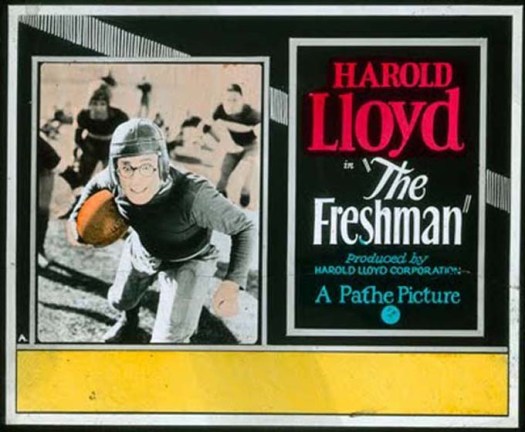
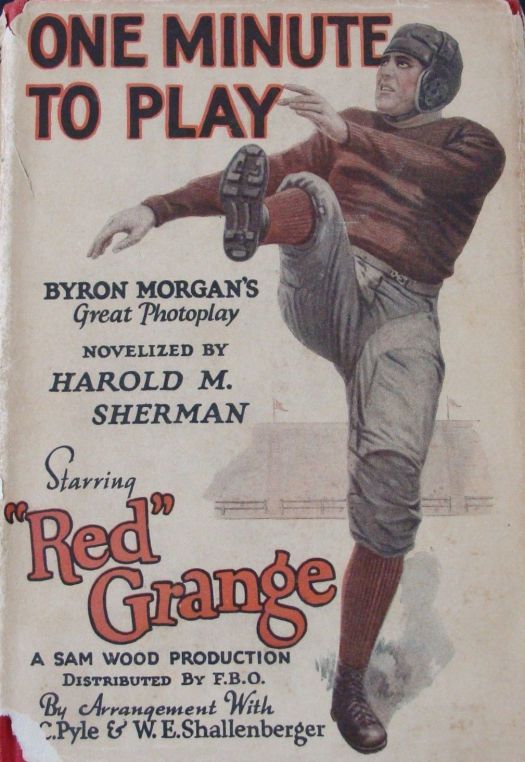
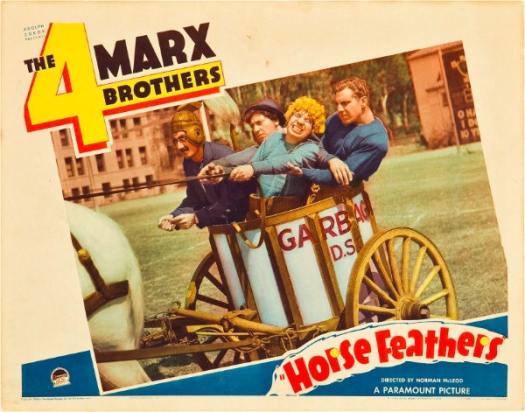
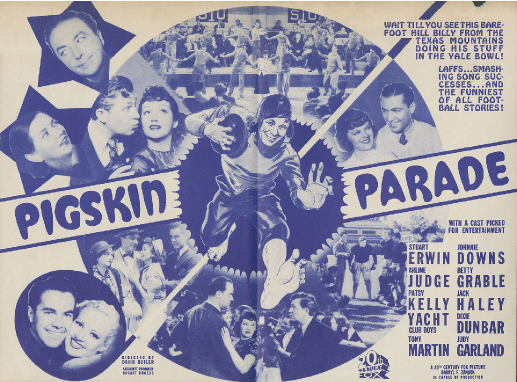
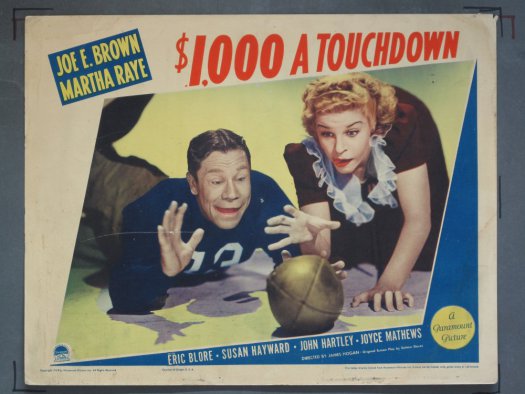
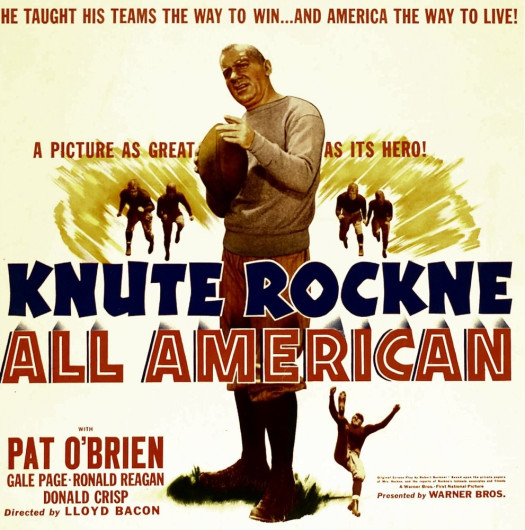
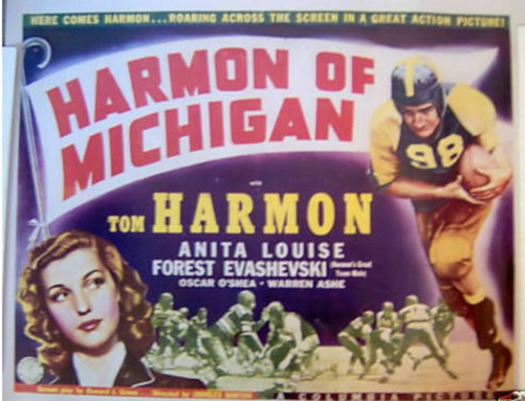
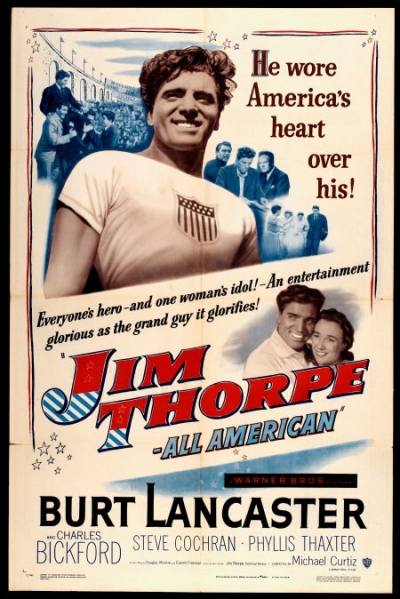
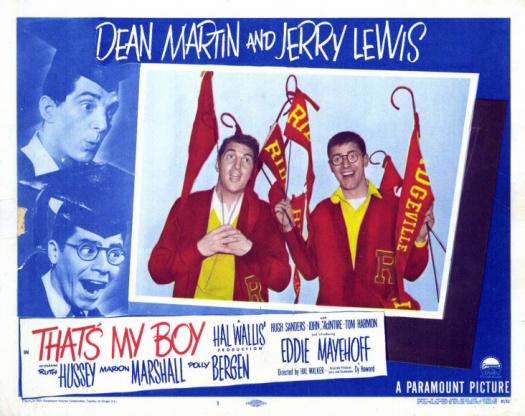
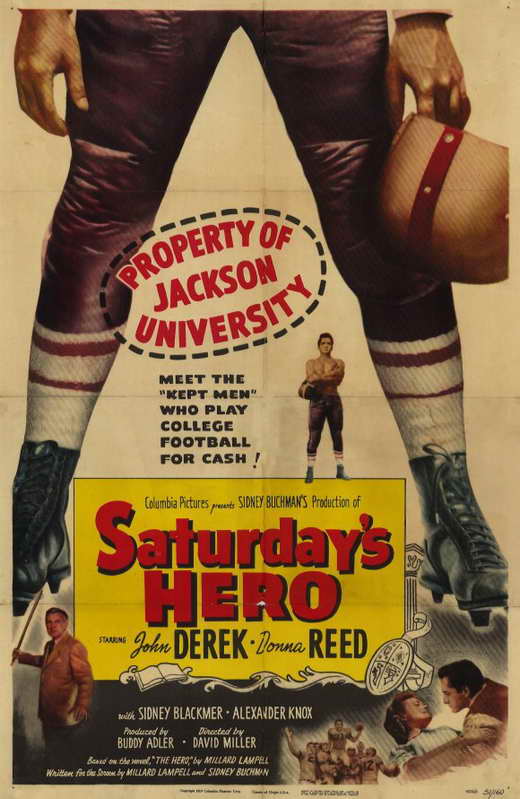
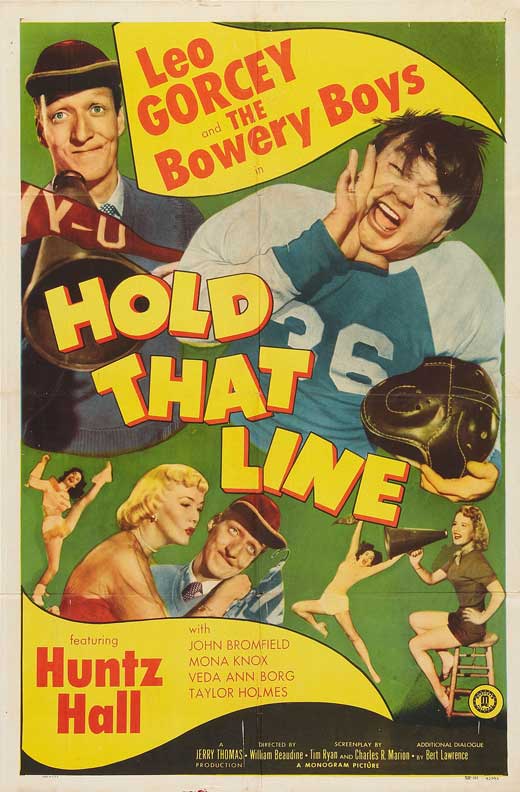
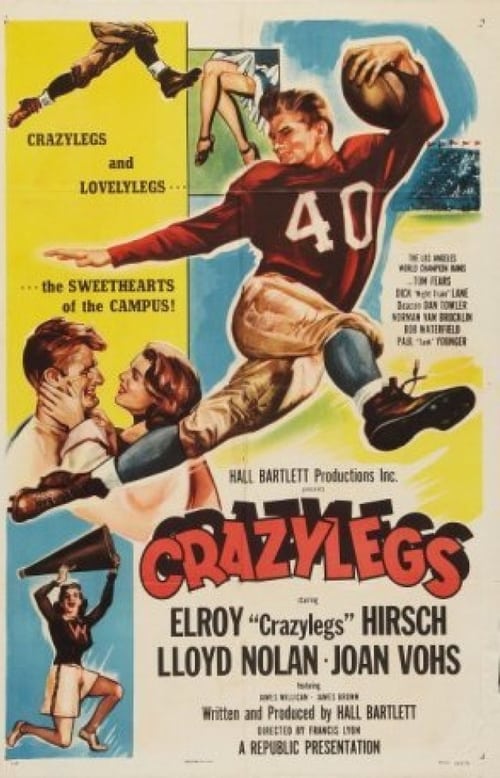
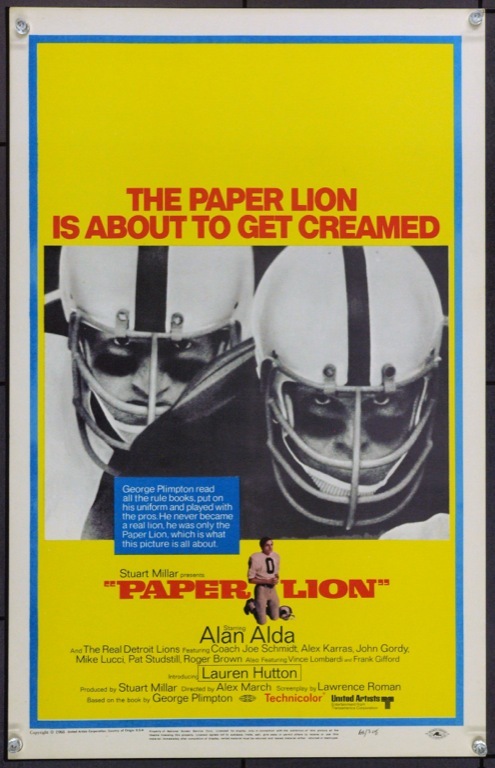
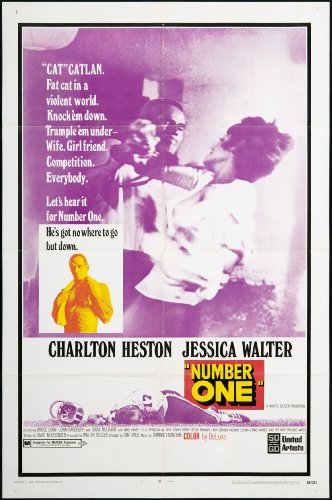
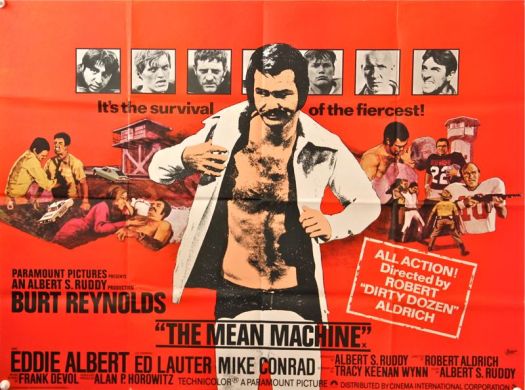
Tonight’s the night, when football fans will be glued to their sets watching The New England Patriots against The Philadelphia Eagles in Super Bowl LII while chowing down on tons of party food! In honor of America’s Biggest Game, I present to you a glutinous gallery of football-themed movie posters and lobby cards for your perusal (all films are pre-1980, classic movie lovers!):
The Winchester Mystery House stands in San Jose, California. The home of Sarah Winchester, construction began on the house in 1883 and continued nonstop until Sarah’s death in 1922. The result was a gigantic and maze-like mansion that was built without any master building plan.
Because Sarah was the widow of the treasurer of the Winchester Repeating Arm Company, it was rumored that her mansion was haunted with the ghosts of all the people who had been killed by a Winchester rifle and that, because new ghosts were always arriving, Sarah had no choice but to keep adding extras rooms to the house. Those legends served as the inspiration behind the new horror film, Winchester.
However, Winchester is not the first time that the supposedly haunted mansion appeared in popular culture. In the 45th issue of Swamp Thing, Alan Moore took readers on a trip to the Winchester Mystery House.
Swamp Thing #45 was a part of the American Gothic storyline. For 13 issues, John Constantine led Swamp Thing across America so that he could witness and sometimes battle modern versions of classic monsters. In the larger DC mythology, the events in American Gothic were due to the first Crisis on Infinite Earths. (While the rest of the DC Universe was worrying about whether they would live on Earth-1 or Earth-2, a South American cult was planning on using the crisis as their opportunity to take over the supernatural dimension.) In reality, American Gothic was an excuse for Swamp Thing’s writer, Alan Moore, to indulge his interest in both the occult and contemporary affairs. The Winchester Mystery House and its connection to gun violence was a natural subject for Moore to take on.
Entitled “Ghost Dance,” the story begins with two couples, David and Linda and Rod and Judy, arriving at the long abandoned Cambridge House. While David fills everyone in on the history of the mansion and the legends about the ghosts, Rod openly flirts with Linda and makes jokes about The Shining. Though the name may have been changed, the Cambridge House is drawn to look exactly like the Winchester House.
It does not take long for the four of them to get separated and lost inside the mansion. Rod starts to make love to a nude woman who he thinks is Judy until her wig falls off and he discovers that she is actually the ghost of Franny Mitchell, who was shot in the head by a scorned lover. Rod flees and, after opening a door that would have led to a room that was never actually built, he falls to his death. Judy dies when a herd of bison, all killed by a Cambridge Repeater Rifle, burst out of a closet and trample over her. After seeing two long-dead gunfighters reenacting their final gun battle, Linda faints while surrounded by the blind-folded spirits of people who were executed by shooting squads. As for David, he goes mad as he watches the spirits of everything ever killed by a rifle march through the house. It’s all the ghostly rabbits that finally cause him to snap.
Towards the end of the issue, Swamp Thing finally does show up, long enough to save both David and Linda and to send the spirits back into the chimneys of the Cambridge House. After Swamp Thing leaves with John Constantine, Linda finally regains consciousness and tells David that she wishes he had died instead of Rod.
Sometime later, David visits a gun shop and buys a Cambridge Repeater of his own. Feeling less alone now that he has a gun in his hands, David says he is going back home to see Linda and it is inferred that at least one more ghost will soon be moving into the Cambridge House.
Though controversial when it was first released, “Ghost Dance” is one of the high points of Moore’s run on Swamp Thing. At the time, several readers felt that the issue was too blatantly anti-gun and there were the usual complaints about the story’s violence and sexual content. Moore was one of the pioneers of the idea that comic books, even ones that featured “super heroes” (or swamp things), could deal with real issues and mature themes and that’s what he did with this story. Whether you agreed with his opinions or not, the unapologetic approach that Moore took in Swamp Thing was always far more interesting than the safe, middle-of-the-road approach taken by most of the other mainstream comics of the era.
Would’ja believe — there wasn’t too much that came in my mailbox this week and it was my LCS that kept me busy with new stuff to read? I swear, it’s true, so let’s have a look at some items of note that I picked up —
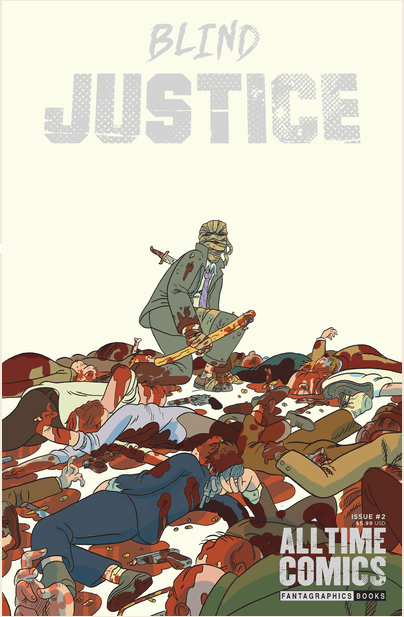
For a series/line that prides itself on being “old-school,” Josh Bayer’s All-Time Comics seems in some ways to hew pretty closely to modern publishing norms. Issues frequently ship late, for instance, and their latest release, the bumper-sized (and subsequently more expensive than usual) All-Time Comics : Blind Justice #2, marks the end of the first “season” of the range, with an Image-style gap of three or four months now on deck as they get their ducks in a row for their next not-exactly-an-arc. The script this time out is a Bayer solo endeavor, and frankly not the greatest — the last half of…
This song seems like a good one for Super Bowl Sunday. One team is going to win. The other team is going to have these boots walking all over them. Actually, I guess football player don’t wear boots. But maybe they’ll slip into some boots after the game is over. Who knows?
This song was written be Lee Hazlewood, who was originally planning on singing the song himself. Apparently, his version was meant to be even more aggressive than the version that was ultimately recorded by Nancy Sinatra. From Songfacts:
Hazlewood often drew inspiration for his songs from regular people. In a Blender magazine interview, he said he was in a Texas bar when some patrons started razzing an older guy about his younger girlfriend and how she controlled him. The man responded by putting his feet on a barstool and saying, “I know what you think – that she might be the boss. But I am the boss of my house, and these boots will walk all over her the day that I’m not.”
Lee had written the song for himself: “It was a party song I had written two or three years before that. It was a joke to begin with. I had written a beautiful song for her, ‘The City Never Sleeps At Night,’ and she wondered if it would sell. I replied, ‘Three times more than ‘So Long Babe,’ and that did 60,000. We’re building up your career.’ I changed my mind and put it on the back of ‘Boots’ and that sold 6 million.”
Nancy Sinatra recalled in the documentary The Wrecking Crew that Lee Hazlewood was going to record the song himself, but she talked him out of it. Said Sinatra, “When a guy sings it, the song sounds harsh and abusive, but it’s perfect for a little girl.”
Tomorrow’s the big night, as my New England Patriots go up against the tough defense of the Philadelphia Eagles in Super Bowl LII. Tom Brady and company will be going for Ring #6, and everyone here in Southern New England is super excited, looking forward to another victory celebration! I’ll be attending a huge party with plenty of food, big screen TV’s, raffles, squares, and like-minded fans, but before the festivities begin, let’s take a look at TROUBLE ALONG THE WAY, a football-themed film starring none other than Big John Wayne !
St. Anthony’s College is a struggling Catholic university run by sweet old Father Burke, who’s getting to be as decrepit as the school itself. The powers-that-be want to close his beloved St. Anthony’s, seeing how the school’s $170,000 in debt, but old Father Burke comes up with an idea. Citing Deuteronomy 32:15 (“The beloved grew fat and kicked”)…
(With the Oscars scheduled to be awarded on March 4th, I have decided to review at least one Oscar-nominated film a day. These films could be nominees or they could be winners. They could be from this year’s Oscars or they could be a previous year’s nominee! We’ll see how things play out. Today, I take a look at the 1937 best picture nominee, Grand Illusion!)
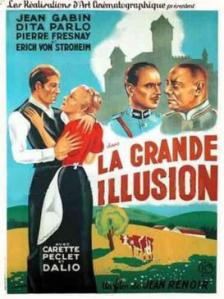
A few things to consider when watching Jean Renoir’s La Grande Illusion:
It is considered to be one of the greatest French films of all time and yet, at the outbreak of World War II, it was banned by France pour la durée des hostilités. It was also banned by Nazi Germany, with Joseph Goebbles declaring it to be “Cinematic Public Enemy No, 1.” Italy followed suit, banning the film as well.
It’s a pacifist film but all of the main characters are soldiers.
It’s a war film but we never see any battles. We hear about them, of course. Characters cheer when they hear that their country has taken another town. Towards the end of the film, when a gun finally is fired, it’s jarring because it’s the first gunshot that we’ve heard throughout the entire film.
It’s a film about change, specifically the change brought about by the First World War. Captain de Boeldieu (Pierre Fresnay) may be French and Major von Rauffenstein (Erich van Stroheim) may be German but they both share the bond of being aristocrats. (After Rauffenstein captures Boeldieu, the two of them have a friendly conversation about their shared acquaintances.) Both of them serve in the army, not for ideological reasons but because they consider themselves to be patriots and tradition holds that aristocrats go to war for their countries. At the start of the film, both Boeldieu and Rauffenstein seem to be above the fighting but, in the end, both realize that the old ways — their ways — will not survive in the new world that’s being created by the Great War.
(In another scene, a group of Russian soldiers are excited to receive a care package from “the Czarina,” just to open up the box and discover that, instead of Vodka, they’ve been sent used textbooks. The soldiers respond by setting the box on fire. For audiences in 1937, it would be impossible to watch this scene without reflecting on the fact that the Czarina herself would soon be dead, executed by revolutionaries.)
Grand Illusion tells the story of three French officers, prisoners of war who hope to somehow escape and make their way to neutral Switzerland. Unlike the aristocratic Boeldieu, Marechal (Jean Gabin) is a member of the working class, a mechanic. Lt. Rosnethal (Marcel Dalio) comes from a wealthy family but, as a Jew, he is still viewed as an outsider. (Reportedly, Renoir specifically made Grand Illusion‘s most sympathetic and generous character Jewish as a specific rebuke to Nazi Germany and their policies.) It’s Rosenthal who gives meaning to the film’s title when he says, regarding the belief that the great war will end all other wars, “That’s just an illusion.”
All three of them are moved from prison camp to prison camp, until they eventually find themselves at the camp commanded by the man who first captured both Boeldieu and Marechal, Major van Rauffenstein. Rauffenstein explains that he was given his new post after being seriously wounded in combat and his movements are sometimes so stiff that he almost resembles a marionette, suggesting that war has reduced this proud man to merely being a puppet for his government’s war machine.
Grand Illusion is a film about the forgotten people who get caught up in the madness of war. The French POWs may say they want to return to the front but, when they meet a woman who has lost her husband and three brothers to the war, they are reminded that even “victory” comes with a steep price. Rauffenstein and Boeldiue may share much in common but ultimately, the only thing that the world cares about is that one is French and one is German. Grand Illusion was Jean Renoir’s eloquent plea for peace, issued a mere two years before Europe plunged into World War II.
In 1938, Grand Illusion was the first foreign-language film to receive an Oscar nomination for best picture. However, it lost to Frank Capra’s You Can’t Take It With You.
 Oh, Child, we got so much to talk about! Your Mama is not crazy, you are! Or are you? Or was you just twisting my mind?
 Or your Grandma?




 Through the Shattered Lens