A Movie A Day #32: Number One (1969, directed by Tom Gries)


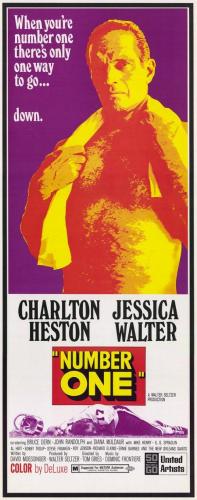
number-oneQuarterback Cat Catlan (Charlton Heston) used to be one of the greats.  For fifteen years, he has been a professional football player.  He probably should have retired after he led the New Orleans Saints to their first championship but, instead, the stubborn Cat kept playing.  Now, he is 40 years old and struggling to keep up with the younger players.  His coach (John Randolph) says that Cat has another two or three years left in him but the team doctor (G.D. Spradlin who, ten years later, played a coach in North Dallas Forty) says that one more strong hit could not only end Cat’s career but possibly his life as well.  Two of former Cat’s former teammates (Bruce Dern and Bobby Troup) offer to help Cat find a job off the field but Cat tells them the same thing that he tells his long-suffering wife (Jessica Walter).  He just has to win one more championship.

Number One is unique for being one of the first movies to ever take a look at the dark side of professional football.  At 40, Cat is facing an uncertain future.  His years of being a star have left him unprepared to deal with life in the real world.  He has no real friends and a wife who no longer needs him.  This would seem like a perfect role for Heston, who always excelled at playing misanthropes.  Heston is convincing when he’s arguing with his wife or refusing to sign an autograph but, surprisingly, he is thoroughly unconvincing whenever he’s on the field.  For all of his grunting and all the lines delivered through gritted teeth, Heston is simply not believable as a professional athlete, even one who is past his prime.  (When he played the 40 year-old Cat, Heston was 46 and looked like he was 56.)  Whenever Cat throws a football, he’s played by Heston in close-ups and very obviously replaced by real-life Saints quarterback Billy Kilmer for the long shots.  A football film is only as good and convincing as the football action and, on that front, Number One leaves much to be desired.
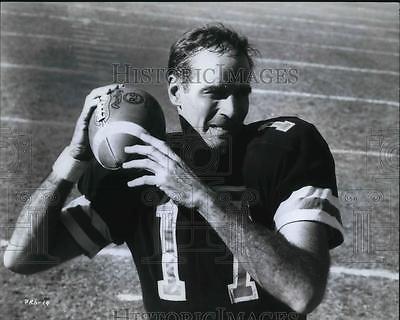
The 1969 press photo displays Heston's throwing technique.

This 1969 press photo displays Heston’s throwing technique.

Two final notes: For the scene in which Cat is tackled by three Dallas Cowboys (all played by actual players), Heston requested that the players actually tackle him.  Heston ended up with three broken ribs.

Finally, Number One was made the cooperation of the New Orleans Saints and features several players in the cast.  When Number One was filmed, the Saints were still a relatively new expansion team.  Cat is described as having already led the Saints to a championship but it would actually be another 40 years before the Saints would finally make their first trip to the Super Bowl.

Music Video of the Day: Magic by The Cars (1984, dir. Tim Pope)


According to my calendar, today is Imbolc that is celebrated by Pagans and Wiccans. I know that there is some sorta music video that does exist from 1979 for The Cars’ song Dangerous Type. All I can find are live performances. I could use the cover version that Letters To Cleo did for the movie The Craft (1996). I don’t want to. Especially not when there is this one called Magic, where Ric Ocasek walks on water. I’ve been itching to spotlight this music video.

I kind of wanna just say to simply sit back and enjoy, but there are a couple of things to point out:

  1. This is the obvious one. The song is about a relationship that makes you feel like you can walk on water, so they literally made it seem that Ocasek was walking on water. That’s at least what Songfacts tells me. It makes sense to me.
  2. To create the illusion of walking on water, they built a little platform for him to stand on in the pool that you can see in several shots. The platform collapsed the first time, and they had to adjust it to take his weight.
  3. This is best one. It was filmed at Paris Hilton’s family estate when she was little. I believe she would have been 2 or 3 at the time. She’s not in the video. According to Wikipedia, Kathy Hilton rented the band her house for the music video. The house would also be used a few years later for the movie Blind Date (1987).

I know one of the people is Uncle Sam and another is probably Jesus, but if you have a guess as to who the guy with the eyepatch is, then let me know. I would have thought Patch, of Patch Kayla from Days Of Our Lives. Unfortunately, their characters wouldn’t become a thing till 1986.

The video was produced by Beth Broday. She seems to have done about 20 music videos. A notable one being True Colors for Cyndi Lauper.

With that out of the way, sit back and enjoy!

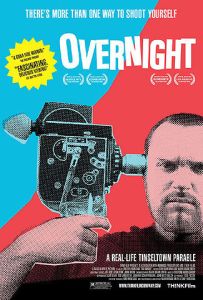
A Movie A Day #31: Overnight (2003, directed by Tony Montana and Mark Brian Smith)


overnightThe year is 1997 and Troy Duffy is on top of the world.  The Boston-bred Troy is a bartender and bouncer who has just sold his first script to Harvey Weinstein and Miramax.  Weinstein is not only going to give him fifteen million dollars to make The Boondock Saints but he is also going to help Troy buy his own bar.  Troy’s band, The Brood, is on the verge of signing a contract with Maverick Records.  Stars like Mark Wahlberg and Ewan McGregor are eager to meet with him, though Duffy offends McGregor with his outspoken support of the death penalty.  Miramax suggests that Duffy should cast Sylvester Stallone, Keanu Reeves and Ethan Hawke in his movie.  Duffy calls Keanu a “fucking punk.”
The year is 1998 and Troy Duffy is no longer on the top of the world.  He’s in his apartment, chain-smoking, drinking, and cursing Harvey Weinstein.  Duffy has managed to offend everyone at Miramax and The Boondock Saints has been put into turn around.  When Duffy finally does find someone willing to produce his film, he has to settle for a budget this is half of what Weinstein was originally willing to provide.  Jeff “Skunk” Baxter, the legendary Doobie Brother himself, is producing The Brood’s first album but he thinks that Troy’s brother, Taylor, is the band’s breakout star.  The other members of the Brood are growing tired of Troy’s ego.

The year is 2000.  The Boondock Saints goes unsold at Cannes.  When it finally does get a release, it only plays in five theaters and is pulled after a week.  Though the film finds success on video, the contract that Troy signed prevents him from making any money off of it.  The Brood’s debut CD sells less than 700 copies.  Consumed by paranoia, Troy drives away all of his family and friends.  When he’s invited to speak at a film class at Boston University, he ends up verbally assaulting even those who compliment him.  Convinced that he’s being targeted, Troy goes into semi-hiding.

It’s a familiar story, one that has happened to many aspiring filmmakers.  What made Troy Duffy unique was that he invited two of his friends, Tony Montana and Mark Brian Smith, to film him while it happened.  Duffy was hoping the end result would be a portrait of a genius at the start of his career but, instead, the documentary became a portrait of a talented man destroyed by a combination of ego and paranoia.

Overnight is usually described as being a cautionary tale but, as opposed to the filmmakers at the center of documentaries like American Movie and Hearts of Darkness, Troy Duffy comes across like he was probably an asshole even before he was discovered by Harvey Weinstein.  As a result, Troy Duffy is never a sympathetic figure but it’s still interesting to see how crazy things got.  If you’re a fan of either Boondock Saints or its sequel, Overnight is required viewing.


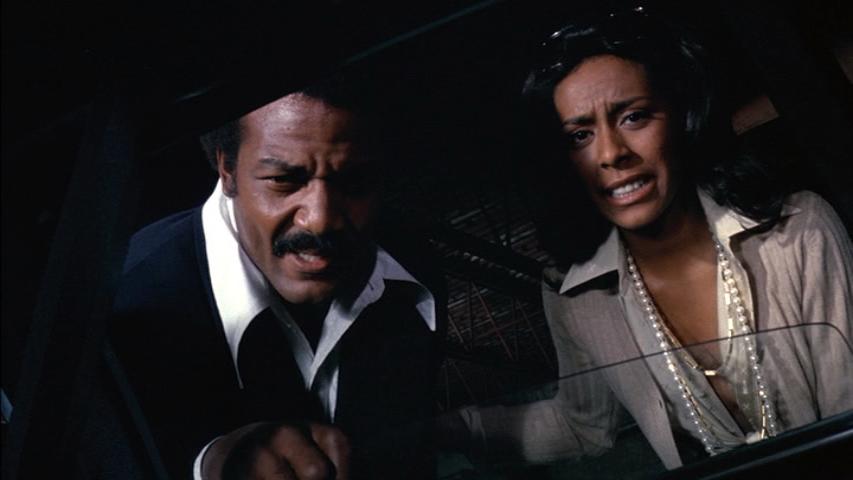
That’s Blaxploitation! 9: THREE THE HARD WAY (Allied Artists 1974)


gary loggins's avatarcracked rear viewer

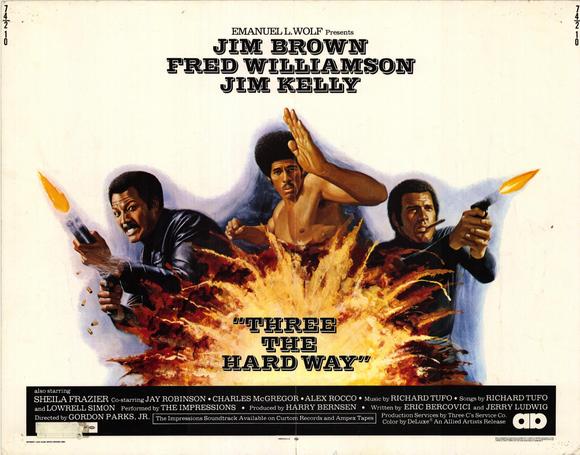
tthw1

An All-Star Blaxploitation cast barrels their way through THREE THE HARD WAY, director Gordon Parks Jr.’s ultra-violent classic that dives into action from jump street and rarely lets up on the gas pedal straight through til the end. It’s the quintessential 70’s action flick whose thin plot only serves to weave a tapestry of wild action set pieces and well-staged stunt work courtesy of stunt coordinator Hal Needham and his stellar stunt gang.

tthw2

We’re lured into the action right from the get-go in a pre-credits scene of a desperate young black man escaping from a concentration-camp-like compound. He makes it to L.A. and contacts his friend, the BMW-driving, hot-shot record producer Jimmy Lait, played by NFL great Jim Brown . The kid is then assassinated in his hospital bed and Jimmy’s girl Wendy (Sheila Fraser) is kidnapped. A scene change lets us in on the plot, as white supremacist Monroe Feather and evil scientist…

View original post 387 more words

Music Video of the Day: Det Kommer En Vår by Agnetha (1969, dir. ???)


According to Google Translate, the title of this song is “There Will Be A Spring”. I guess that explains the water and flowers. I have no idea how that explains the super low-angle though. Maybe they were trying to show the sky? Your guess is as good as mine.

Unless I am forgetting one, there are two more pre-ABBA videos before I can finally get back on track.

Enjoy!

ABBA retrospective:

  1. Bald Headed Woman by The Hep Stars (1966, dir. ???)
  2. Tangokavaljeren by Björn (1969, dir. ???)
  3. Vårkänslor (ja, de’ ä våren) by Agnetha & Björn (1969, dir. ???)
  4. Titta in i men lilla kajuta by Björn (1969, dir. ???)
  5. Nu Ska Vi Vara Snälla by Björn & Agnetha (1969, dir. ???)
  6. Finns Det Flickor by Björn & Sten Nilsson (1969, dir. ???)
  7. Nu Ska Vi Opp, Opp, Opp by Agnetha (1969, dir. ???)
  8. Att Älska I Vårens Tid by Frida (1970, dir. ???)
  9. Min Soldat by Frida (1970, dir. ???)
  10. Söderhavets Sång by Frida (1970, dir. ???)
  11. Ring, Ring by ABBA (1973, dir. Lasse Hallström)
  12. Ring, Ring by ABBA (1973, dir. ???)
  13. Love Isn’t Easy (But It Sure Is Hard Enough) by ABBA (1973, dir. ???)
  14. Waterloo by ABBA (1974, dir. Lasse Hallström)
  15. Hasta Mañana by ABBA (1974, dir. ???)
  16. I Do, I Do, I Do, I Do, I Do by ABBA (1975, dir. Lasse Hallström)
  17. I Do, I Do, I Do, I Do, I Do by ABBA (1975, dir. ???)
  18. Bang-A-Boomerang by ABBA (1975, dir. Lasse Hallström)
  19. SOS by ABBA (1975, dir. Lasse Hallström)
  20. Mamma Mia by ABBA (1975, dir. Lasse Hallström)
  21. Knowing Me, Knowing You by ABBA (1976, dir. ???)

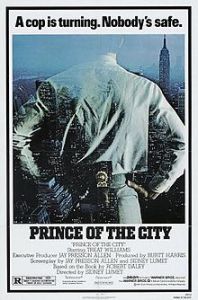
A Movie A Day #30: Prince of the City (1981, directed by Sidney Lumet)


220px-prince_of_the_city_foldedIn 1970s New York City, Danny Ciello (Treat Williams) is a self-described “prince of the city.”  A narcotics detective, Ciello is the youngest member of the Special Investigations Unit.  Because of their constant success, the SIU is given wide latitude by their superiors at the police department.  The SIU puts mobsters and drug dealers behind bars.  They get results.  If they sometimes cut corners or skim a little money for themselves, who cares?
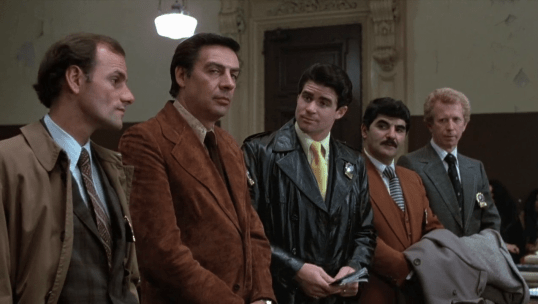
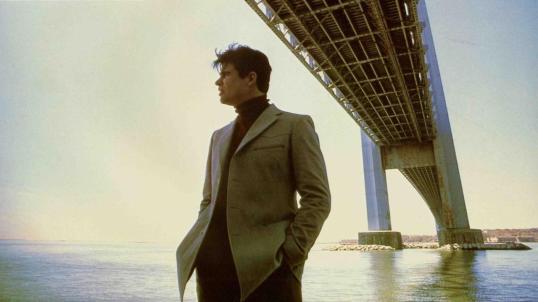
It turns out that a lot of people care.  When a federal prosecutor, Rick Cappalino (Norman Parker), first approaches Ciello and asks him if he knows anything about police corruption, Ciello refuses to speak to him.  As Ciello puts it, “I sleep with my wife but I live with my partners.”  But Ciello already has doubts.  His drug addict brother calls him out on his hypocrisy. Ciello spends one harrowing night with one of his informants, a pathetic addict who Ciello keeps supplied with heroin in return for information.  Ciello finally agrees to help the investigation but with one condition: he will not testify against anyone in the SIU.  Before accepting Ciello’s help, Cappalino asks him one question.  Has Ciello ever done anything illegal while a cop?  Ciello says that he has only broken the law three times and each time, it was a minor infraction.

For the next two years, Ciello wears a wire nearly every day and helps to build cases against other cops, some of which are more corrupt than others.  It turns out that being an informant is not as easy as it looks.  Along with getting burned by malfunctioning wires and having to deal with incompetent backup, Ciello struggles with his own guilt.  When Cappalino is assigned to another case, Ciello finds himself working with two prosecutors (Bob Balaban and James Tolkan) who are less sympathetic to him and his desire to protect the SIU.  When evidence comes to light that Ciello may have lied about the extent of his own corruption, Ciello may become the investigation’s newest target.

prince-of-the-city

Prince of the City is one of the best of Sidney Lumet’s many films but it is not as well-known as 12 Angry Men, Dog Day Afternoon, Network, Serpico, The Verdict, or even The Wiz.  Why is it such an underrated film?  As good as it is, Prince of the City is not always an easy movie to watch.  It’s nearly three hours long and almost every minute is spent with Danny Ciello, who is not always likable and often seems to be on the verge of having a nervous breakdown.  Treat Williams gives an intense and powerful performance but he is such a raw nerve that sometimes it is a relief when Lumet cuts away to Jerry Orbach (as one of Ciello’s partners) telling off a district attorney or to a meeting where a group of prosecutors debate where a group of prosecutors debate whether or not to charge Ciello with perjury.

Prince of the City may be about the police but there’s very little of the typical cop movie clichés.  The most exciting scenes in the movie are the ones, like that scene with all the prosecutors arguing, where the characters debate what “corruption” actually means.  Throughout Prince of the City, Lumet contrasts the moral ambiguity of otherwise effective cops with the self-righteous certitude of the federal prosecutors.  Unlike Lumet’s other films about police corruption (Serpico, Q&A), Prince of the City doesn’t come down firmly on either side.

(Though the names have been changed, Prince of the City was based on a true story.  Ciello’s biggest ally among the investigators, Rick Cappalino, was based on a young federal prosecutor named Rudy Giuliani.)

Prince of the City is dominated by Treat Williams but the entire cast is full of great New York character actors.  It would not surprise me if Jerry Orbach’s performance here was in the back of someone’s mind when he was cast as Law & Order‘s Lenny Briscoe.  Keep an eye out for familiar actors like Lance Henriksen, Lane Smith, Lee Richardson, Carmine Caridi, and Cynthia Nixon, all appearing in small roles.

Prince of the City is a very long movie but it needs to be.  Much as David Simon would later do with The Wire, Lumet uses this police story as a way to present a sprawling portrait of New York City.  In fact, if Prince of the City were made today, it probably would be a David Simon-penned miniseries for HBO.

image-w1280