
by Robert Bonfils
by Robert Bonfils
Happy Father’s Day!
I had this video picked out as far back as last year to do for today. What I didn’t know is that Wikipedia already has a nice article about it that pretty much covers anything I would say. Here are the two relevant passages from the article:
The song is about the very close relationship between psychologist and philosopher Wilhelm Reich and his young son, Peter, told from the point of view of the mature Peter. It describes the boy’s memories of his life with Reich on their family farm, called Orgonon where the two spent time “cloudbusting”, a rain-making process which involved pointing at the sky a machine designed and built by Reich, called a cloudbuster. The lyric further describes Wilhelm Reich’s abrupt arrest and imprisonment, the pain of loss the young Peter felt, and his helplessness at being unable to protect his father. The song was inspired by Peter Reich’s 1973 memoir, A Book of Dreams, which Bush read and found deeply moving.
The music video, directed by Julian Doyle, was conceived by Terry Gilliam and Kate Bush as a short film. The video features Canadian actor Donald Sutherland playing the role of Wilhelm Reich, and Bush in the role of his young son, Peter. The video shows the two on the top of a hill trying to make the cloudbuster work. Reich leaves Peter on the machine and returns to his lab. In flashback, he remembers several times he and Peter enjoyed together as Reich worked on various scientific projects, until he is interrupted by government officials who arrest him and ransack the lab. Peter senses his father’s danger and tries to reach him, but is forced to watch helplessly as his father is driven away. Peter finally runs back to the cloudbuster and activates it successfully, to the delight of his father who sees it starting to rain.
Filming took place at The Vale of White Horse in Oxfordshire, England. The hill on which the machine is positioned is Dragon Hill, immediately below the Uffington White Horse, a prehistoric hill carving which can be seen briefly in a couple of the shots. Bush found out in which hotel Sutherland was staying from actress Julie Christie’s hairdresser and went to his room to personally ask him to participate in the project. In the UK, the music video was shown at some cinemas as an accompaniment to the main feature. Due to difficulties on obtaining a work visa for Sutherland at short notice, the actor offered to work on the video for free. Although the events depicted in the story took place in Maine, the newspaper clipping in the music video reads “The Oregon Times,” likely a reference to Reich’s home and laboratory “Orgonon”.
The Cloudbusting machine in the video was designed and constructed by people who worked on the Alien creature and bears only a superficial resemblance to the real cloudbusters, which were smaller and with multiple narrow, straight tubes and pipes, and were operated while standing on the ground. In a reference to the source material of the song, Bush pulls a copy of Peter Reich’s “A Book of Dreams” out of Sutherland’s coat.
The full length video features a longer version of the song which is different from the Organon Mix released on 12 Inch.
If you go to the article and follow the cited sources, then it’s like taking a trip back to the 1990’s Internet. The most interesting thing I noticed in one of those sources is from an interview on SuicideGirls with Donald Sutherland:
DRE: How was it being in the video for Kate Bushs video for Cloudbursting?
DS: Shes such a stoner. She was great. She came out of this camper at eight in the morning smoking a joint and I said What are you doing? and she said, I havent been straight for eight years. I got into the video because Kate found out from Julie Christies hairdresser that I was staying at The Savoy. She came and knocked on my door. She was so small that when I opened the door I didnt see anybody. I looked down and there she was. She told me she wanted me to play Wilhelm Reich. I wanted to be able to create a character that could hold a child by his feet and hit him against the side of a building and turn his head into a squashed pumpkin, which is what we did. So it so profoundly impressed me that she wanted to do that. I adored her. I thought she was great.
There are two things I can add since they aren’t mentioned in the article.
The government agents going down the steps remind the audience of the Odessa Steps scene from Battleship Potemkin (1925).
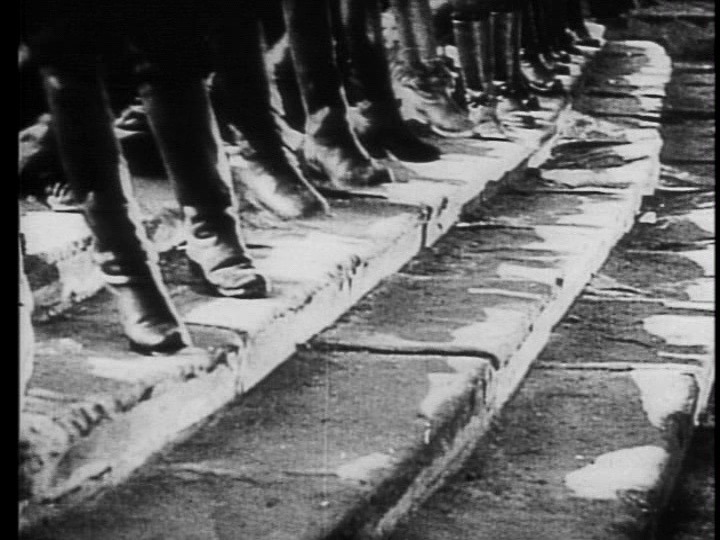
Battleship Potemkin (1925, dir. Sergei M. Eisenstein)
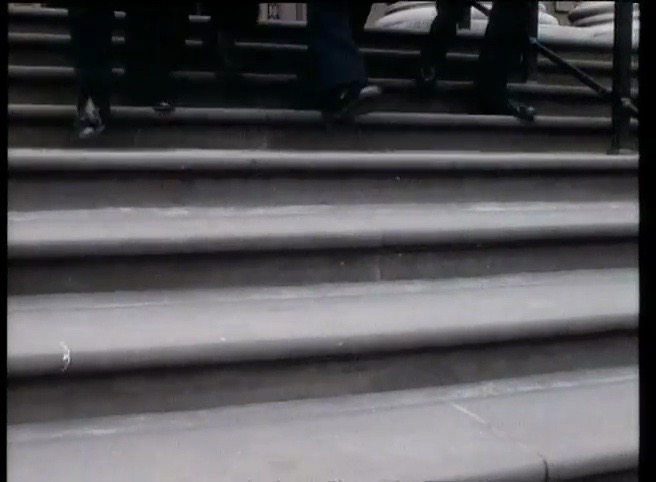
The other thing is that Wilhelm Reich did a lot of work in the area of sex, which included a 1936 book called The Sexual Revolution–the original title is Die Sexualität im Kulturkampf (“sexuality in the culture war”). Here is a comparison between an actual cloudbuster and the one in the video as it is shown at the emotional climax.

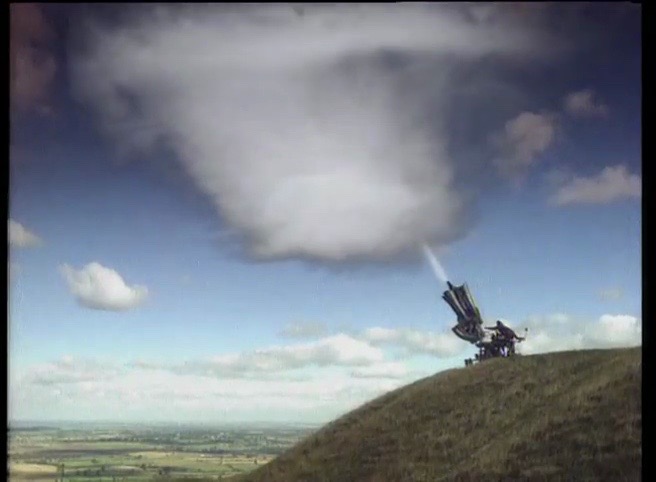
Reich also did work specifically on the orgasm, such as his book Die Funktion des Orgasmus (“The Function of the Orgasm”). The way the cloudbuster was supposed to work involved what Reich called “orgone energy”, that is from the word “orgasm.”
Here are a couple of interviews with Kate Bush from back when the video was released:
Assuming they are still up, note that J.J. Jackson slips up in the interview. That’s early MTV for you.
A fun fact about J.J. Jackson is that he was hired by mistake. Here’s the story from the book I Want My MTV:
John Sykes: The J.J. Jackson we hired wasn’t the J.J. we meant to hire.
Robert Morton: That’s true. Pittman’s one direction to us was “Find a black VJ.” He told us about a guy named J.J. Johnson, and said, “He’s really good. Track him down.” So I looked all over for J.J. Johnson. Subsequently, I found out who he was; a very good-looking black guy who had a great voice. But I couldn’t find him. I called every radio station in the country. Finally I called KMEL in San Francisco and said, “Do you have a guy named J.J. Johnson working for you?” They said, “No, but we have J.J. Jackson.” I said, “Well, let me talk to him.” We auditioned him and I said to Pittman, “Here’s your J.J.”
The video was directed by Julian Doyle who has worked on several Monty Python related films such as Life of Brian (1979), Time Bandits (1975), and Brazil (1985). He’s done other work as well. As for music videos, I can find six credits. He also played the police sergeant who puts his hand over the camera at the end of Monty Python and the Holy Grail (1975).
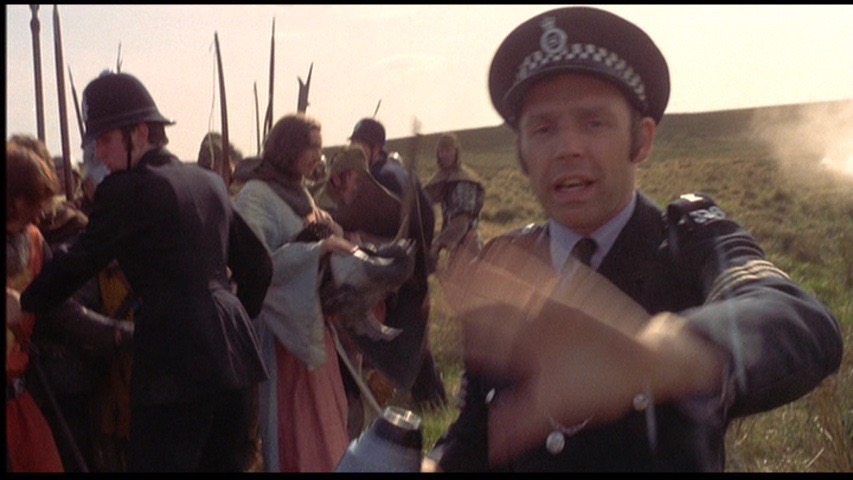
Monty Python and the Holy Grail (1975, dir. Terry Gilliam & Terry Jones)
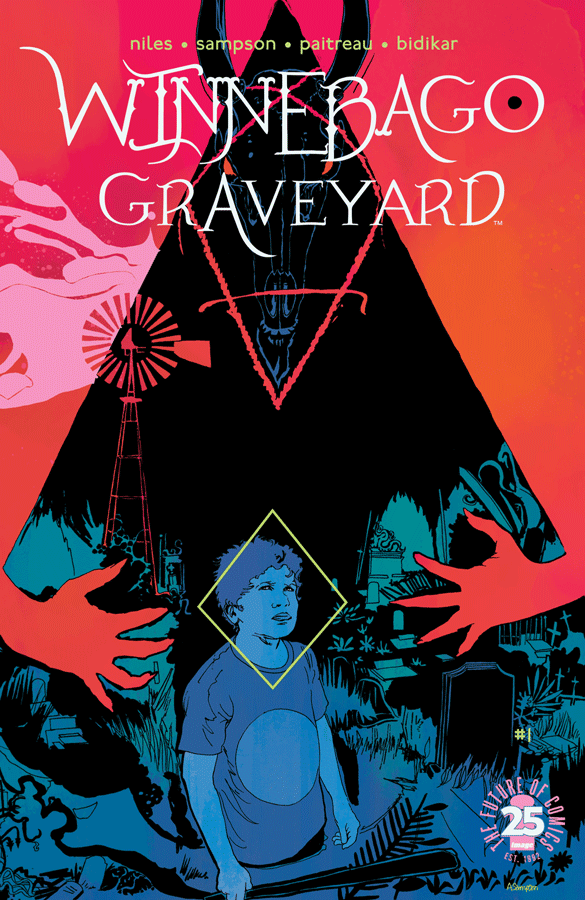
One nice thing about reviewing a new book a couple of days after it comes out rather than a couple of days before is that it gives you a chance to read what others have to say about it before sitting your ass down in front of the keyboard yourself. You can determine what other critics got right in their assessments, and what they got wrong. See what you agree with and disagree with. All that good stuff.
Take, for example, the first issue of the new Image Comics four-parter Winnebago Graveyard, which comes our way courtesy of veteran horror comics author Steve Niles (who created a little something you may have heard of called 30 Days Of Night before going on to, among other things, co-founding Black Mask Studios), architect-turned-artist Alison Sampson, and master of moody hues Stephane Paitreau. By and large people seem pretty pleased…
View original post 555 more words
4 Shots From 4 Films is just what it says it is, 4 shots from 4 of our favorite films. As opposed to the reviews and recaps that we usually post, 4 Shots From 4 Films is all about letting the visuals do the talking.
Today is the birthday of the Italian film director, Lucio Fulci! In honor of the big day, here are 4 shots from 4 films!
4 Shots From 4 Films

Beatrice Cenci (1969, dir by Lucio Fulci)

Four of the Apocalypse (1975, dir by Lucio Fulci)

Contraband (1980, dir by Lucio Fulci)

The Beyond (1981, dir by Lucio Fulci)
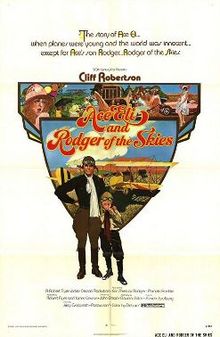
Sometimes, the story behind a movie is more interesting than the movie itself.
A young Steven Spielberg received a “story by” credit for Ace Eli and Rodger of the Skies but, at one time, he was going to be credited with much more. Spielberg wrote the treatment for Ace Eli and sold it to 20th Century Fox because he was hoping to make his directorial debut with the film. However, shortly after selling the story, there was an executive shakeup at the studio. Spielberg’s supporters were out and the men who replaced them gave the treatment to another screenwriter and director. Spielberg was so angered by his treatment that it would be close to thirty years before he ever again worked with 20th Century Fox. (In 2002, 20th Century Fox co-produced Minority Report with Dreamworks.) Ace Eli ended up being directed by television veteran John Erman, who was so upset by the studio’s final edit of the film that he demanded to be credited under a pseudonym.
The plot of Ace Eli and Rodger of the Skies is recognizably Spielbergian. Ace Eli (Cliff Robertson, who was a pilot in real life and who, after he won his Oscar of Charly, was involved in several flying films) is a stunt pilot in the 1920s. After his wife is killed in a crash, Eli and his 11 year-old son, Rodger (Eric Shea), set off on a barnstorming tour. Going from small town to small town, Eli deals with his pain through nonstop womanaizer. With Eli refusing to take any responsibility for his actions, Rodger is forced to grow up quickly. It is a typical Spielberg coming of age story, combining a nostalgia for the past with a clear-eyed portrayal of irresponsible adulthood.
In fact, it is easy to imagine the approach the Spielberg would have taken if he had been allowed to direct his story. Unfortunately, Spielberg did not get to direct the film and John Erman takes an impersonal approach to the material. Whereas Spielberg would have captured the excitement of both flying and life on the road, Erman keeps the audience at a distance. An underrated actor, Cliff Robertson is still miscast as the irresponsible Ace Eli. The reason why Cliff Robertson was perfect for the role of Uncle Ben in Spider-Man is the same reason why he feels all wrong as Ace Eli. He is just too upstanding a citizen to be as impulsive as Eli often is. An actor like Warren Oates would have been perfect for the role.
Steven Spielberg directing Warren Oates in Ace Eli and Rodger of the Skies? That would have been something worth seeing!
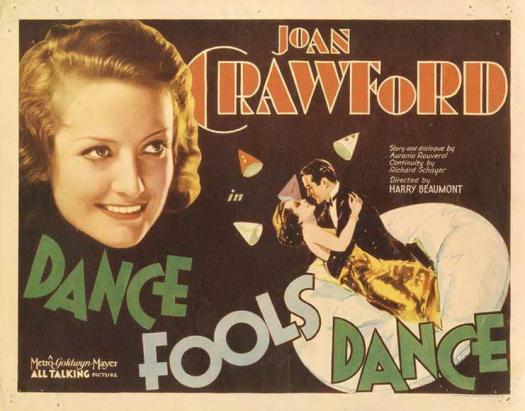
MGM co-starred Joan Crawford and Clark Gable for the first time with their 1931 gangland saga DANCE, FOOLS, DANCE. Well, not exactly co-starring; 27-year-old Joan was already a screen veteran and a star, while 30-year-old newcomer Gable was billed sixth in this, his third picture (not counting his extra work). Regardless of billing, the pair had a definite sexual dynamic between them onscreen (and offscreen as well, if you know your Hollywood history), and the studio would team them again in seven more films.

Joan is carefree Chicago socialite Bonnie Jordan, with a twit of a boyfriend (Lester Vail) and a wastrel brother named Roddy (William Bakewell) who’s got a penchant for booze. When the stock market crashes and their Pop croaks on the exchange floor, the kids are left with neither money or marketable skills. Bonnie’s upper-crust boyfriend Bob offers to do the honorable thing and marry her, but that horrified look on her face says it all! Rejecting the twit, Bonnie’s determined…
View original post 556 more words

by Harry Barton
I should be back tomorrow. Also, I will have to go for a couple days during the coming week because of a hospital procedure, but I’ll post before I do that. Thanks!
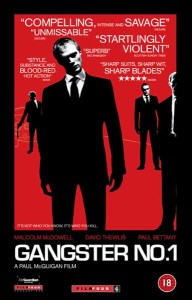 While at a boxing match, an aging gangster (Malcolm McDowell) learns that his former mentor and eventual rival, Freddy Mays (David Thewlis), is about to be released from prison. The gangster flashes back to when he was a young man (played by Paul Bettany) who worked as an enforcer for and eventually betrayed Freddy.
Gangster No. 1 came out at the height of America’s fascination with British gangsters but this is no Guy Ritchie heist film. Gangster No. 1 is brutal and violent, with little humor to alleviate the savagery. Even though Gangster No. 1 does a good job recreating and capturing the look and feel of the swinging London of the 1960s, it still does away with almost all of the romantic revisionism that made many British crime films so popular in the late 90s and early aughts. The gangster (who is nameless throughout the film) is not an eccentric anti-hero. He’s not a Kray brother. Unlike Freddy, who has integrity and is redeemed by his love for Karen (Saffron Burrows), the gangster is a violent sociopath who, when young, will do anything to be number one and who, when old, is disillusioned to discover just how empty life is at the top. As violent and uncompromising as it is, it may not be a film for everyone but it still an interesting twist on the typical gangster film.
Even though it is hard to imagine Bettany growing up to look like McDowell, they both contribute good and complimentary performances as the same character. David Thewlis also gives a good performance as Freddy Mays. Since Thewlis is usually typecast as a villain, it’s always interesting to see him play a hero (or as close as anyone in Gangster No. 1 can come to being a hero).
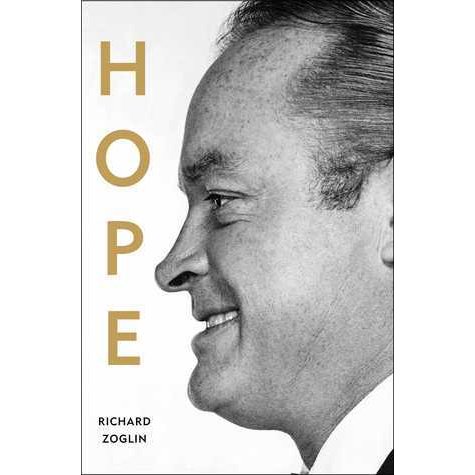
He was unquestionably one of the most famous, most recognized persons of the 20th Century, the father of what we now know as stand-up comedy, the first true multi-media star. A patriot and a philanderer, a giver and a taker, a smart-mouthed comic and a friend to presidents and generals. But who was Bob Hope, really? This ambitious 2014 biography by Richard Zoglin attempts to answer that question, a meticulously researched tome that tries to uncover the private man behind the public mask.
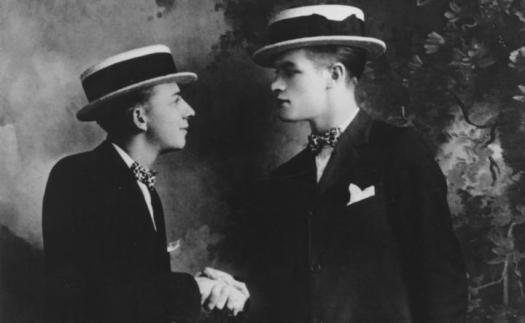 with vaudeville partner George Byrne
Zoglin digs deep into the available archives and uses interviews with those that knew him to paint his portrait of the notoriously reticent Bob Hope, reaching all the way back to his hardscrabble beginnings as an immigrant in Cleveland with six brothers, an alcoholic father who was an itinerant stone cutter, and a stern but loving mother who served as the de facto head…
View original post 422 more words


 Through the Shattered Lens