Song of the Day: Come And Get Your Love (by Redbone)


maxresdefault

My review of one of my favorite films of 2014 has been late in arriving, but it shall arrive soon. Soon, I says!

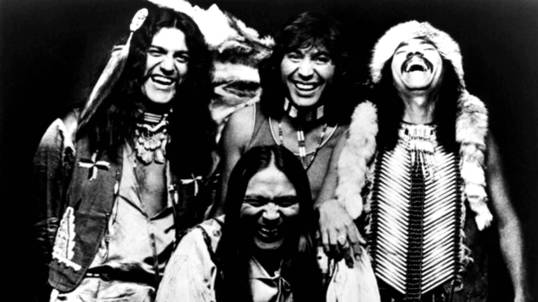
Until then here’s one of Lisa’s favorite songs from Guardians of the Galaxy. It plays pretty much early on in the film and, according to her, was the moment she fell in love with the film.

Alien lizard mic!

Come And Get Your Love

Hey (hey) What’s the matter with your head? yeah…
Hey (hey) What’s the matter with your mind and your sign?
And-a ooh-ohh
Hey (hey) Nothin’s a matter with your head, baby, find it
Come on and find it
Hell, with it, baby, ’cause you’re fine and you’re mine
And you look so divine

Come and get your love

Hey (hey) What’s the matter with your feel right?
Don’t you feel right, baby?
Hey, oh, yeah, get it from the main line, alright
I said-a find it, find it, darling, love it
If you like it, yeah-eh
Hey (hey) It’s your business if you want some
Take some, get it together, baby

Come and get your love

Come and get your love, come and get your love
Come and get your love, now
Come and get your love, come and get your love
Come and get your love, now
Come and get your love, come and get your love
Come and get your love, now
Come and get your love, come and get your love
Come and get your love, now

Come and get your love

Hey (hey) What’s the matter with your feel right?
Don’t you feel right, baby?
Hey, oh, yeah, get it from the main vine, alright

La,la,la,la,la,la, (come and get your love)
La,la.la,la,la,la,la,la,la (come and get your love)
La,la.la,la,la,la, (come and get

It’s Time For Lisa Marie’s Early Oscar Predictions for August!


theory-of-everything-new

Every month, around this time, I post my early Oscar predictions.  These predictions are based on random guesses, early buzz, and gut instinct.  Originally, I referred to these as being my way too early Oscar predictions but, now that we’re in August, they are merely early.

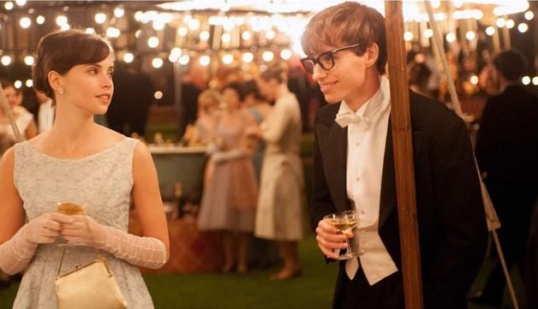
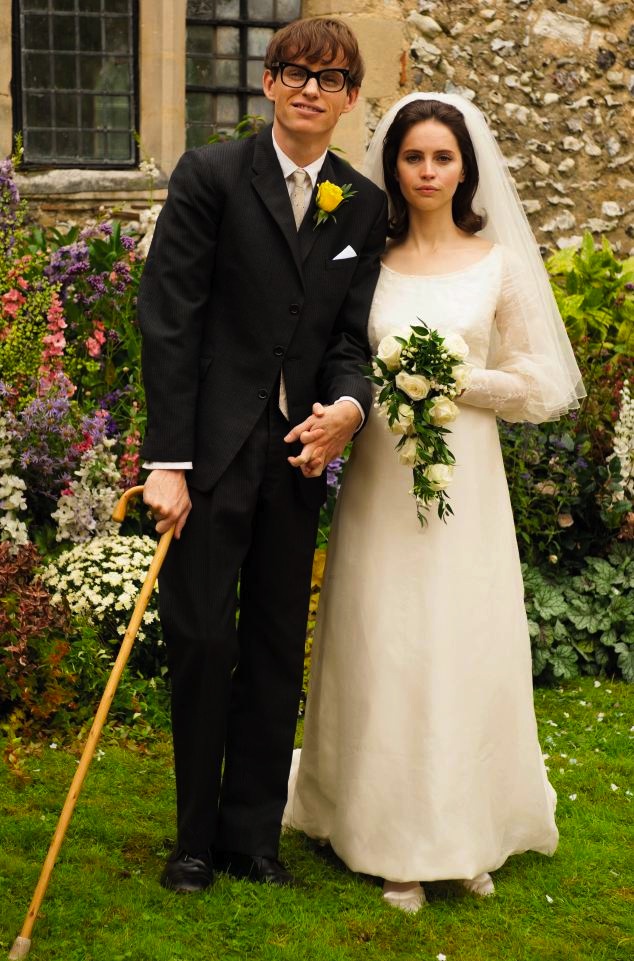
Below you can find my latest set of predictions.  The main change for this month is that I’ve factored in the fact that, based on the trailer, it looks like The Theory of Everything will be a definite contender.

And feel free to check out my predictions for March, April, May, June, and July!


Best Picture

Birdman

Boyhood

Foxcatcher

The Imitation Game

Interstellar

The Theory of Everything

Unbroken

Whiplash

Wild


Best Director

Alejandro Gonzalez Inarritu for Birdman

Richard Linklater for Boyhood

James Marsh for The Theory of Everything

Bennett Miller for Foxcatcher

Morten Tyldum for The Imitation Game


Best Actor

Steve Carell in Foxcatcher

Benedict Cumberbatch in The Imitation Game

Michael Keaton in Birdman

Eddie Redmayne in The Theory of Everything

Timothy Spall in Mr. Turner


Best Actress

Amy Adams in Big Eyes

Jessica Chastain in The Disappearance of Eleanor Rigby

Rosamund Pike in Gone Girl

Reese Whitherspoon in Wild

Shailene Woodley in The Fault In Our Stars


Best Supporting Actor

Ethan Hawke in Boyhood

John Lithgow in Love is Strange

Mark Ruffalo in Foxcatcher

J.K. Simmons in Whiplash

Tom Wilkinson in Selma


Best Supporting Actress

Patricia Arquette in Boyhood

Felicity Jones in The Theory of Everything

Julianne Moore in Map To The Stars

Kristen Stewart in The Clouds of Sils Maria

Emma Stone in Birdman

theory-of-everything-felicity-redmayne

Film Review: Into the Storm (dir by Steve Quale)


Forgettable.

If I had to sum up Into the Storm in just one word, that’s how I would do it.  It’s only been a few hours since Jeff and I sat through Into the Storm and, as I sit here now trying to write this review, I am surprised by just how little of an impression this film made on me.  Even the special effects, which did impress me while I was watching the film, are good without exactly being memorable.   There is only one scene that I can remember almost perfectly, in which a veteran storm chaser (Matt Walsh, who is wonderful on Veep) takes advantage of a small moment of calm to look at nature and allows himself one quick smile before Oklahoma gets hit by another tornado.  It’s probably the only genuinely human moment in the entire movie.  Unfortunately, it’s only a few seconds in an 89-minute film.

Into the Storm is a found footage film, in which the small town of Silverton, Oklahoma is struck by a few dozen tornadoes, which all eventually merge into one big tornado.  Fortunately, everyone in the film has an excuse to justify continually running towards the tornadoes while holding up their cell phones and shouting, “Are you getting this!?”

For instance, there’s Pete the storm chaser who needs to get some amazing footage of tornado mayhem, otherwise the whole storm  “season” will have been a waste for him.  Accompanying Pete are the usual gang of doomed cameramen and a meteorologist (Sarah Wayne Callies) who has left behind her five year-old daughter so she can chase wall clouds across the southwest.  And then there’s two dumbass rednecks (Jon Reep and Kyle Davis), who desperately want to be YouTube sensations.  And, of course, let’s not forget the graduating class of Silverton High School.  SHS’s principal (Scott Lawrence) is a dead ringer for Barack Obama, which is perhaps why he proves to be totally ineffectual when it comes to dealing with natural disasters in Oklahoma and Texas.  The vice-principal (Richard Armitage) is the father of two sullen teenagers (Jeremy Sumpter and Nathan Kress) and you better believe that the whole experience makes them into a stronger family unit…

None of the characters are particularly interesting or even likable but that’s really not supposed to matter, is it?  This is the type of film where you’re supposed to be so pleased with the special effects that you’re willing to overlook the bad dialogue and predictable plot, right?  Well, if that’s the case, then why does it take so long for the tornadoes to actually show up?  Why do we spend so much time getting to know these thoroughly vapid and uninteresting characters?  And why, oh why, does this film have to end with the survivors looking over the ruins of their city and talking about how this whole experience has inspired them to embrace life?  It seems like they could have just as easily learned the same thing from reading a greeting card.  Was it really necessary for a tornado to come down and probably kill 60% of the town just so they could be taught such an obvious lesson?

Trust me, I grew up and I live in Tornado Alley.  Not a year has passed that I haven’t had to spend at least one day stuck inside and waiting for word as to whether or not a tornado is going to dip down into my part of the world and potentially kill me and everyone I love.  (Just a few months ago, I literally spent an hour and a half huddled underneath a desk while listening to the mournful wail of the tornado sirens going off outside.)  I’ve also seen firsthand the unbelievable damage that tornadoes can do.  Walk up to real tornado survivors and tell them, preferably while they’re standing in front of the rubble that used to be their home, that their misfortune has inspired you to enjoy every day of your life.  Just see how they react.

The film is directed by Steve Quale, who first came to prominence working under James Cameron.  Perhaps we shouldn’t be surprised, therefore, that he seems to be more comfortable with CGI than with actual human beings.  But still, Quale’s debut as a director — Final Destination 5 — was actually a pretty effective little horror film that featured some surprisingly witty and clever moments.  Little of the skill that Quale displayed in Final Destination 5 is on display here in Into The Storm.  I’m not a huge fan of the whole found footage thing to begin with (occasionally you get a Devil’s Due but most found footage films are more like Paranormal Activity The Marked Ones) but if you are going to make a film in that style, at least play by the rules.  As directed by Quale, the majority of the film is directed to look like found footage and, hence, it suffers from all of the problems that we tend to associate with found footage.  But, jarringly and almost at random, Quale occasionally abandons the whole found footage conceit and suddenly, we’re just watching an ordinary film.  For found footage to work as a genre, you can’t remind the audience that it’s essentially a gimmick that’s often used to make excuses for sloppy filmmaking.  And, for too often, that’s exactly what this film does.

Now, don’t get me wrong.  I guess Into The Storm is okay for what it is.  After all, the film wasn’t advertised as being a great film.  It hasn’t been mentioned as a potential Oscar nominee or anything.  The commercials promised footage of tornadoes destroying a town and that’s what this film eventually gets around to showing.  Plus,  it didn’t feature any talking turtles and that’s definitely a plus.  But, at the same time, I think those of us in the audience are justified in occasionally asking for something more than merely okay.

hr_Into_the_Storm_5

Movie Review: Teenage Mutant Ninja Turtles {2014} (dir. by Jonathan Liebesman)


teenage_mutant_ninja_turtles_ver15_xxlg-720x1066Before I start, I’d like everyone in advance to understand I’m aware this is a kid’s movie. So, when I complain, feel free to throw it out there like the hula hoop in The Hudsucker Proxy (“You know…for kids”). I may be nitpicking about this movie, looking at it with eyes that are older than the intended audience. It may also be somewhat spoiler filled, so a little warning beforehand.

When it comes to Kevin Eastman and Peter Laird’s Teenage Mutant Ninja Turtles, I grew up on the 90’s Era cartoon. Truth be told, though, the Turtles started way back in the early 80s and the new movie may be closer to that in some ways. I can’t really say for sure due to my unfamiliarity with the comics.

I can say that while Jonathan Liebesman’s Teenage Mutant Ninja Turtles may not be my Ninja Turtles, but they may end up being someone’s Ninja Turtles. That’s really the kindest thing I can say about it. A number of kids in my audience seemed to really enjoy it, though the adults who came for the nostalgia factor (myself included) looked a little disappointed. It’s not a horrid movie. I had moments – particularly the snow sequence – that I truly enjoyed, but at best this Turtles feels like an action demo reel sliced together.

The beginning of the movie explains the Turtles, the Foot Clan, and The Shredder in the space of five minutes. This is helped along with some drawings down by Kevin Eastman himself. Everyone in the city is aware of the Foot Clan, and reporter April O’Neil (Megan Fox) is trying to crack her first big story with anything she can find about the Ninja groups criminal acts. This leads her to discovering the Turtles, Splinter and together they try to stop the Shredder’s master plan – one that involves poisoning all of New York City with a deadly mist from the top of a tower. This involves the Turtles because their blood still contains remnants of the Mutagen used to change them, which assists in their amazing healing factors. The Mutagen also acts as an antidote to the poison. It’s almost the same premise used in The Amazing Spider-Man and Batman Begins. Would it hurt to have a little creativity? Didn’t anyone in the writing department say “wait, we’ve seen this trend in movies about as much as we’ve seen the ‘Captured-Villian-taken-to-Hero’s-Base-who-Springs-Trap-that-Disables-Hero’s-Ability-to-do-Good’. Maybe we should try something different here?” Nope. Let’s simply take a tired plot line and do it again. Teenage Mutant Ninja Turtles deserves to be the final film that uses the Toxic Mist angle for a while.

A moment of silence, if you will:

R.I.P. “Toxic Mist, a.k.a. Mutagen Mist, a.k.a. Scarecrow Dust” – Born 2005 (Batman Begins) – Died 2014 (Teenage Mutant Ninja Turtles)

Here’s what I had a problem with:

Exposition by way of Explanation –
The rule of “Show, don’t Tell” states that it’s better to reveal information on screen – to the characters and the audience – than it would be to have someone just tell you what’s up. Most of Turtles moves in this fashion. When April witnesses a crime thwarted by Raphael, she runs to her boss, her room mate and pieces it all together, telling everyone exactly what we just saw – that a vigilante is fighting back against the Foot Clan. The argument could be made that the explanation is done to help kids understand what’s going on, but the scene before that already covered it.

Plot holes within plot holes-
Turtles also suffers from giving the audience information that the writers completely ignore later on. At one point, one of the members is wounded and the remaining Turtles have to get Mutagen to save them. Wait. The story already mentioned that they all had Mutagen in them – the “Mutant” part that accelerates their healing – so why would you need to administer more when what they have can already save them? It’s face palm moments like these that show how much focus was done on making the movie look good, compared to writing a solid plot. Some things don’t make sense here.

What did work:

Brian Tyler’s score for the film may be the best element of the entire movie. It may sound similar to Thor: The Dark World in some ways, but it’s a good theme for the heroes overall. I’ve had some of it on repeat on Spotify, truth be told.

The action is actually pretty good, though it takes some time to get there. Some of the fight scenes suffer from the Bourne Identity and Batman Begins blur effects, but overall, it works out. Again, I wouldn’t mind seeing that snow sequence again if I didn’t have to sit through the entire film. From that point forward, the action picks up. Each turtle (and Splinter) has their own moment in the spotlight and when it happens, it can cause a smile or two, however brief that may be. The Turtles themselves are huge and highly mobile, which make the fights look like Power Rangers battles before the enemy grows to a huge size. There aren’t as many Bay like explosions in this as you’d find in Transformers, but you can feel his influence on this. That could be considered a problem when you compare Turtles with Battle: L.A. (which I enjoyed).

The In Between:

The casting on this movie is a mixed bag. Megan Fox isn’t a bad April O’Neil by any means (she’s good), but April herself in this version isn’t the sharpest tool in the shed. By that, I mean she is as abbreviated in this as Lois Lane was in Man of Steel. In an age where we’re trying to see more well rounded female leads on screen, O’Neil becomes just another Lara Croft / Carol Marcus / Sydney Bristow with issues circulating around her father. Not saying it’s unlikely, but they could have found something else to work with as background. Again, it’s a kid’s movie. Maybe it doesn’t need to be that complex. Will Arnett felt like a sidekick in this, and I found it a little difficult to not hear his Lego Batman when he spoke, but that’s just me. The Turtles themselves could be voiced by anyone, really. I didn’t feel too much of a difference between them, save that they played to their archetypes. Raphael always seemed angry, Mike is playful and so on.

Overall, Teenage Mutant Ninja Turtles is a kid’s film and maybe only young kids will really enjoy it. There’s action for both old and new fans of the Heroes in a Halfshell, but it’s wrapped up in stories we’ve heard before. This probably one you’ll want to wait for video, at best.

Trailer: The Theory of Everything


Here’s the trailer for the Stephen Hawking biopic, The Theory of Everything.  The trailer pretty much speaks for itself so I’ll just say that it certainly looks like it could be a very powerful film.  Based on what I’ve seen here, I’ll be shocked if Eddie Redmayne doesn’t get an Oscar nomination for his performance here.

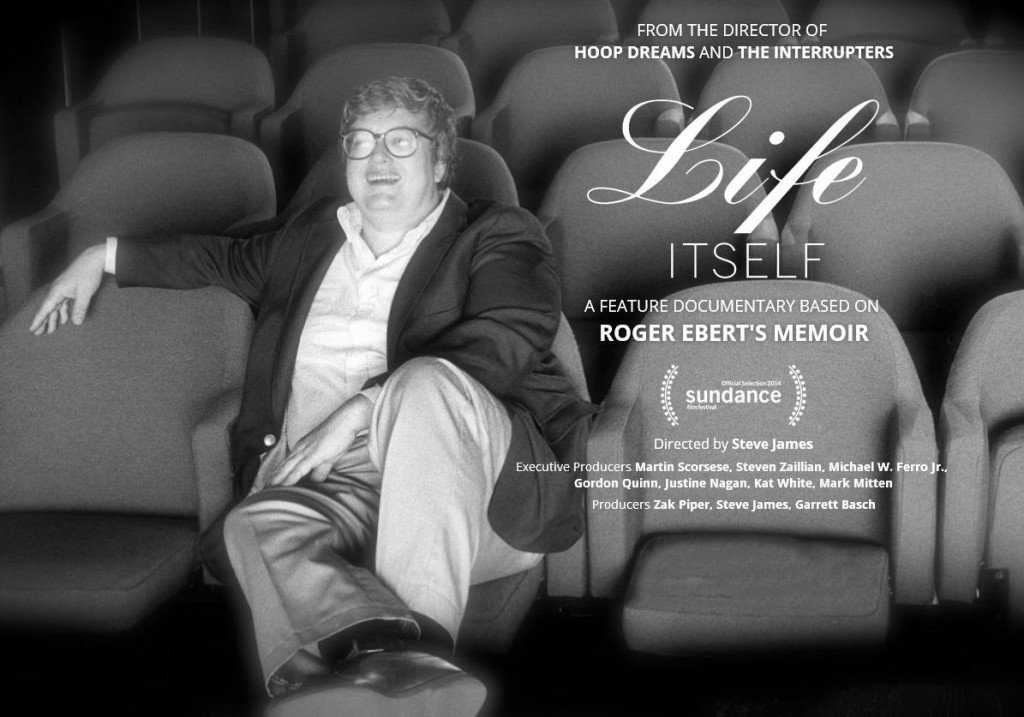
‘Life Itself’ Review (dir. Steve James)


Life-Itself-poster-1024x7171

“We all are born with a certain package. We are who we are: where we were born, who we were born as, how we were raised. We’re kind of stuck inside that person, and the purpose of civilization and growth is to be able to reach out and empathize a little bit with other people. And for me, the movies are like a machine that generates empathy. It lets you understand a little bit more about different hopes, aspirations, dreams and fears. It helps us to identify with the people who are sharing this journey with us.” – Roger Ebert

I’ve enjoyed film for pretty much all my life, but I didn’t truly come to appreciate and love it as an art form – as something more than simply entertainment – until my first year of college (I know, how cliché). I didn’t just come to love watching film, but (as you can obviously see as I write this) I came to love reviewing and discussing the medium with others as well. The first critic who introduced me to film criticism was Roger Ebert. His reviews were the first to really click with me. It wasn’t because I always agreed with him (because I definitely didn’t); but it was because I truly, truly admired his love of film. It was a contagious sort of love, a passion I never knew could be had for motion pictures. Following his example I too began writing about films and discussing them on forums and blogs. These discussions opened up the door really, and I charged head first, exploring the medium more deeply than I ever imagined I could.

It became a journey that I can honestly say made me the person I am today. Film was, and always will be, what I turn too when I am happy, bored and most importantly when I am sad. The best example I have of this was when my grandfather passed away years ago. It was a special sort of hurt, and no discussions with family or friends could do much to quell that pain. I remember sitting down the night it happened, alone in my dark room, and deciding to watch ‘Amelie’. It is a film I adored, one of the few films that truly moved me with every viewing. When it ended, as it had done many times before, I had a huge smile on my face. It did it again. Film did it again; it was once again one of the few things in my life that could heal, or overshadow, any hurt I happened to be feeling. I don’t think I would have known about or adored ‘Amelie’ if not for the journey my love for film had created – a love that wouldn’t have blossomed without the analysis and discussions I had about them – discussions I would never have started if I hadn’t read Roger’s reviews religiously and decided to start writing some myself.

That is why I was deeply saddened when Roger Ebert passed away. He is one of those rare people for me who although I never actually met or spoke with him, he still managed to have a profound effect on my life. An effect that still moves me, as I learned today as I finally watched ‘Life Itself’. I shamefully had put it off for far too long, partly because I think I knew the sort of emotional response I would have towards it. But as the quote I began this posts says, film helps us “identify with the people who are sharing this journey with us”, and it was about time I took a look at the journey that was the life of Roger Ebert.

And boy, was it rough. It did bring me to the verge of tears, as I expected, but I loved every minute of it. ‘Life Itself’ is an honest and in depth portrait of a man who wasn’t without his faults. But no matter what battles he encountered – either with alcohol, his colleagues, or cancer – he still faced everyday ready for what came next. He had a passion for life that was reflected in his passion for film – or maybe the other way around. This for me is what shined through the documentary, handled with such care and attention by Steve James. It is an affectionate tribute to a man who moved so many, generating the very same empathy that Ebert himself loved about film, and for that I think it deserves two big thumbs up.

———–

More of my nonsense on Twitter.

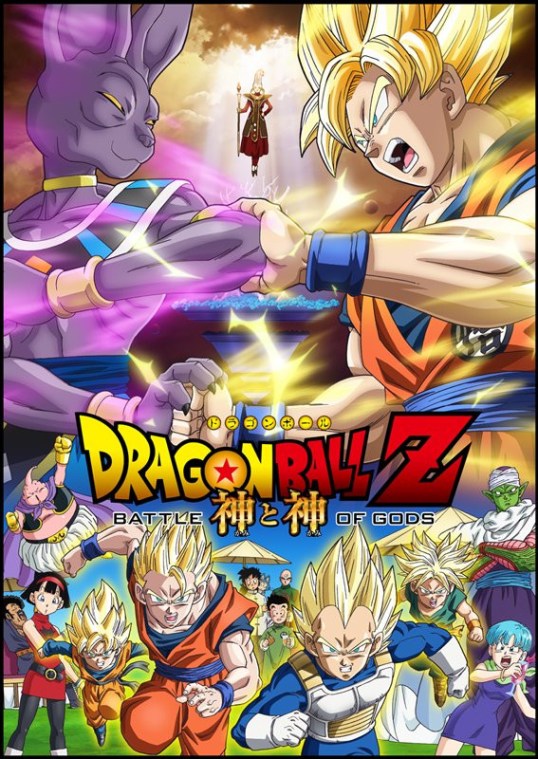
Dragon Ball Z: Battle of Gods


Dragon-Ball-Z-Battle-of-Gods-Poster

Yes, my friends, while the rest of you were off seeing high flying summer blockbusters with nearly universally positive reviews I took a slightly different approach… and saw one of the very few showings available in my area of Dragon Ball Z: Battle of Gods. You know, the first Dragon Ball Z film in 17 years to receive a theatrical release? That particular fact doesn’t really mean anything aside from highlighting the fact that Battle of Gods was, in fact, released theatrically. Depending on your location, you may still have a few days to see it. Let me get this out of the way right now: If you were – or are – a fan of Dragon Ball Z, you should see this movie.

Why? Well, let’s talk about the film a bit.

Events open with the introduction of Lord Beerus, also called Beerus the Destroyer. He’s smarmy and wicked, and he ordered Freeza to destroy the Saiyan world of Vegeta 39 years ago, before taking a nap. Now that he’s awakened, he is surprised to learn of Freeza’s death, and even more surprised to learn that it was at the hands of a Saiyan warrior. Abruptly, he recalls a prophecy he was interested in once about a “Super Saiyan God” (the film’s dialogue itself makes fun of this title. Don’t worry!). These opening scenes also give us a good sense of the tone of the film: Despite the fact that are no doubt headed to some mighty Dragon Ball Z action sequences later, the film is largely comic in tone.

First, our villain pays a visit to King Kai’s planet, where Goku is training. Most of this sequence is played for laughs, and it’s fairly brief, but Beerus does demonstrate to us his power by effortlessly defeating Super Saiyan 3 Goku in two almost delicate blows.

Disappointed by Goku, Beerus and his servitor, Whis, head to Earth to try and find the other remaining Saiyans, and this Super Saiyan God. Upon arriving, they interrupt Bulma’s birthday party. In a pleasant bit of fan service, all of the characters from the series are there. All of the fighters of course, like Piccolo and Tien Shinhan, but also supporting cast like Master Roshi, Mr. Satan, and Videl. The film runs only about 85 minutes, so most of these characters aren’t given a ton to do, but the middle part of the movie takes place primarily at this party. Here’s where things had the potential to really slow down and drag… because despite Lord Beerus arriving and demanding to meet his Super Saiyan God rival, he soon takes a shine to the buffet table instead. In no time, he and Whis are chowing down on Earth delicacies at Bulma’s invitation.

Meanwhile, a subplot involving a character from the original Dragon Ball anime (one whom I had to Google, but I’m sure there are fans who will better appreciate his appearance in the film). He’s there to steal the seven titular Dragon Balls, which Bulma has collected to give away as a prize on her birthday. Everyone should have a friend like her, I guess, because that’s quite the gift.

Lord Beerus eventually gets into a fight with Buu over pudding cups, and things start to head in the direction we always knew they were going to go: Beerus ultimately is here to challenge his new potential rival for fun and for profit, and unless the Super Saiyan God can prove stronger than he, he’s going to destroy the Earth. As you would expect, the lesser fighters all bounce off of him to no great impact, and even the mighty Vegeta is no match for Beerus, even after going berserk. Luckily, Goku arrives to save the day. Some complicated stuff happens that doesn’t really need a full rehashing. Suffice to to say that with the Saiyan characters pool their energy together, they literally transform Goku into a God in order to battle Beerus.

While I personally found a lot of the nonsense in the middle of the film to be very funny, I suspect it won’t play as well later on small screens as it did in what was actually a fairly crowded theater. What will play nicely on any high definition screen are the battle sequences that make up the last part of the film between Beerus and Vegeta and then, of course, between Beerus and Goku. One compliment that I would not pay to the original run of Dragon Ball Z was to its animation quality. Even the very coolest fights in Dragon Ball Z (say, some of the later ones against Perfect Cell) absolutely pale in comparison to what we get here.

Using modern animation techniques like blending some CGI in with the animation, incredible 3-D angles, and modern computer colouring, the battle sequences are awe-inspiring. Instead of endless series of rapid-fire punches and kicks that leave more to the imagination than we actually see, most of the battles play out with clear, decisive movements. Punches and kicks feel real and powerful. Energy blasts were given a little help from the CGI and seemed to crackle on the screen. Even if you found the central part of the movie a total slog (which would be a shame!) it’s probably worth it in the end!

I’ve seen other reviews cite the ending as underwhelming or disappointing, but I actually thought it was very suitable. While it’s true that the appeal of Dragon Ball Z wasn’t it’s complicated characters or sensible plotting, the spirit of the show and the characters is alive and well in this film, and to see the original voice cast return in so many different roles was pretty impressive… not to mention jumping up and down pretty hard on my nostalgia button. I remember when I used to be frustrated every afternoon by this show’s interminable filler episodes on the Cartoon Network. Battle of Gods might have been the way I’ve most enjoyed it since; in a single, digestible chunk that gave me a little of everything that ever made the show appealing.

A Glorious Fantasy: The Original Klingon


Columnist’s Note: This article has been edited from its original form to include some thoughts about the Master Calculator and the battle with Belias the Gigas in response to compelling arguments made in the comments. This was an important change, and it expands humankind’s capacity for growth.

Abbreviated boilerplate! Once again I return to this ongoing series, in which I attempt to play through every game in the Final Fantasy franchise that I can get my hands on, from FF1 through Lightning Returns, and a variety of the spinoffs and other titles not included in the ‘main series’. This list continues to undergo revision, and I seriously considered removing Final Fantasy 9 from it for personal reasons. In addition, no MMO titles will be played. Sorry, folks?

I think all of this is extremely important knowledge, and that the human race will be improved by my research. Let’s move on!

Previously in this series!

FFT

As is customary, let’s start with some mood music.

Version Played: “War of the Lions” PSP remake, complete with incredibly Shakespearian translation.

Final Fantasy Tactics is sort of the gold standard for tactical RPGs. It is also a game around which many PSX-era Final Fantasy fans rally together as a point of shared joy. In my entire life, I have never met someone who actively disliked this game. That, in and of itself, is incredible. I mean, who doesn’t know someone who dislikes Final Fantasy 7, 8, 9, 10, etc. ? Tactics rises above that crop to my mind for three major reasons.

1) The gameplay mechanics are deservedly the gold standard for tactical RPG play. Yes, I love Fire Emblem too. But there’s something about the job system and the customization available to the player in Tactics which hits the spot. Oh, and you get a variety of broken NPCs if you’d rather just use the cheater sword abilities the AI has been trying to best you with all game. I won’t blame you if that’s how you feel.

2) The story appeals to people in a kind of ‘Game of Thrones’ way. Despite all of the magic present, it’s not utterly fantastic. The focus of the story is on ambitious jackoffs who would sacrifice anything to advance their own ambitions… and one guy who is kind of the opposite. It’s a semi-kind-of-realistic middle ages type setting. It feels to the player like a place that could actually exist, which is simply not the case for other Final Fantasy titles.

3) Ramza Beoulve, despite ultimately not being that interesting, is a very easy protagonist to root for. He doesn’t have the capital-letter ISSUES that plague Cloud and Squall. He doesn’t have a bizarrely oversized head and a tail like Zidane. And he doesn’t narrate the whole game with inner monologues that caused some people to bleed into their brains like Tidus. No, Ramza is quite straightforward, and quite heroic.

But it’s mostly about #1. The mechanics are deep (sort of. They’re deep if you’re not just chasing the absolute optimum party, at any rate). They’re fun to play around with. They can make the game either embarrassingly easy or fairly challenging depending on which route you decide to go. It’s like the awesome job system from Final Fantasy V writ large in the PSX era! Only you also get many NPC characters with unique and interesting skill sets! I chose not to use any of them (except Agrias. I don’t hate myself) in this particular play through, but FFT certainly facilitates any style of play that you like.

The standout mechanic, of course, which you won’t find elsewhere – even in other incarnations of Final Fantasy’s own job system – is the Calculator or Master Calculator job. This job is very straightforward – it uses the battlefield metrics such as elevation, remaining wait time to act, and individual character level, and then devastates targets with magic. The Calculator need not spend MP to do his work, nor is he subject to the questionable charge times that render powerful spells like Holy of limited utility. Instead, the Calculator picks a metric to hit, then which multiple (3, 4, or 5) he wants to lash out at, and then gleefully rains fire down upon eligible targets… friend and foe alike. Because the Calculator class has abysmal stats and is unbelievably, unfathomably slow, I didn’t find it worth the time to train one of my party members in the skills this time around. But veteran players all know that the deployment of a Calculator’s skillset (preferably equipped on a better job: try Black Mage!) on the battlefield can easily win this war almost single-handedly.

Even using weak classes and abilities, and without the timely intervention of Count Orlandeau or the mighty Calculator, it’s perfectly possible to complete Final Fantasy Tactics. Once you have mastered the mechanics of the game and know what truly poses a danger to your group, I like to think the obstacles of this game are fairly easy to navigate. A standout, fairly brutal exception to this is a battle roughly halfway through the game at Riovanes Castle. You should save your game in a different slot before attempting it. In fact, keeping two different saves is always a good idea in this game, to avoid a possible soft lock of your file, where you’re locked into a battle that is too difficult for you to defeat, without the means to leave and level up or acquire better equipment.

There are a couple other possible exceptions, which revolve around a mechanic that simply doesn’t work as well as the designers probably intended. I consider it one of FFT’s flaws that several story battles involve “guest” characters. Early on, this takes the form of Delita and Algus, your supposed friends, who are there to make sure you can’t take a full party of 5 on a mission until the start of Chapter 2. They’re not always helpful, but they also can’t die, so they’re no liability either. Later, however, most such missions involve saving other “guest” characters from getting their dumb asses killed. Unfortunately, since guests are always under the control of the AI… this isn’t always possible. There is one battle (Castle Riovanes Roof. You know what I’m talking about) where the guest character routinely gets killed in the first round of action. Or any any subsequent round. In one shot. By some brazenly unfair enemy characters. This battle can be one of the most frustrating ones in the game because you have very little ability to impact its outcome. Either your “guest” behaves rationally and avoids the deadly enemy assassins… or she doesn’t… and it’s game over. Bummer.

One thing I want to mention in this space, before I get too far afield, is the translation. The original translation for FFT is in the same vein as the Ted Woolsey translations of earlier games. You still get the gist of it, but a lot of it is nonsense. It’s much worse than the original translations for Final Fantasy VII and VIII in this regard. Lots of stuff, even seemingly obvious stuff, is mistranslated, to the detriment of the story. PSP’s War of the Lions is heralded as a vast improvement, and in some ways that’s true. However, having now played both versions, I have to say, there’s a lot to dislike about the War of the Lions translation as well. It may simply be the original material to blame, which is fine, but this translation is insanely talky at times. We might as well be reading the original Shakespeare in some of the cutscenes. Melodrama and unnecessary wordiness abound, and the ultimate effect is a little bit off-putting to a modern player. Don’t misunderstand – by no means did I hate the War of the Lions treatment of the script. I just am not sure that it deserves the near-universal praise that it has received amongst gamers and critics alike. It’s talky. Often unnecessarily so.

By its nature, a game that you can play through with only Ramza and a party of generic characters (in fact, you can dismiss any of the story characters after they’ve formally joined) has to be light on character development. Characters like Agrias, who are central to the plot up until they join, disappear immediately upon doing so. As a result, the only meaty characterization is ultimately of the Beoulve family… Ramza, his sister Alma, and his two other brothers Zalbaag and Dycedarg. They are at the center of the conflict ripping Ivalice apart in any case, and they’re also the characters (along with Ramza’s best friend, Delita) who get the most screen time. Delita receives some additional attention in the War of the Lions, to where you could consider him one of the game’s better-explored characters. Still, you’ll actually find a lot of the most intriguing characterization actually belongs to the game’s various (and, boy, there are a lot of them) antagonists. This is definitely an intriguing reverse from the “norm”, but it works well here.

Ultimately, this is probably one that we can all still agree on. FFT kicks ass. It combines excellent and deep tactical gameplay with an intriguing story that might be a little less clear with the new translation… but certainly isn’t any worse. It might be one of the more cohesive FF plots around. It’s also got at least one more song I’ll share.

Join me next time, as I return to Final Fantasy’s roots, with Final Fantasy IX!

Artist Profile: Jim Starlin (1949– )


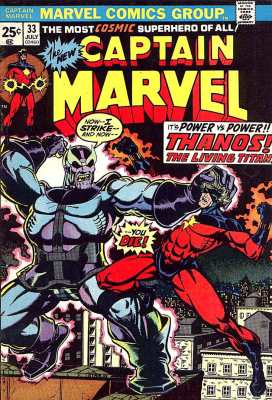
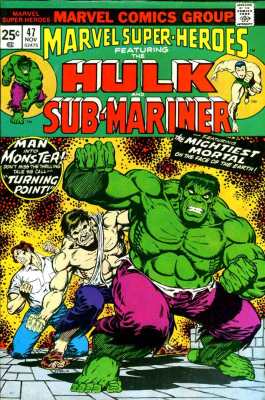
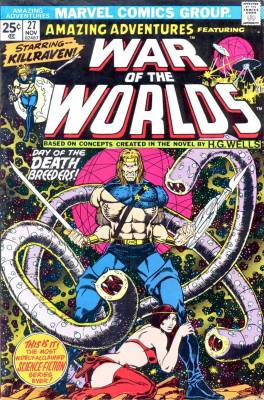
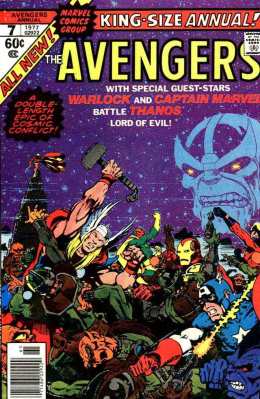
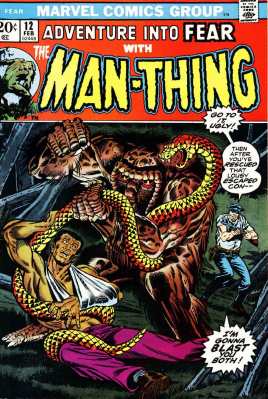
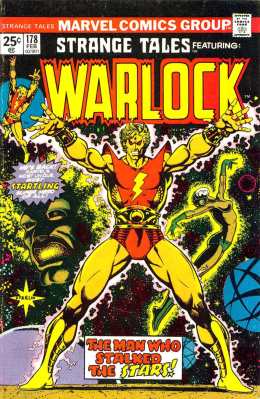
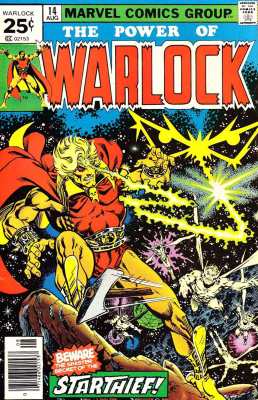
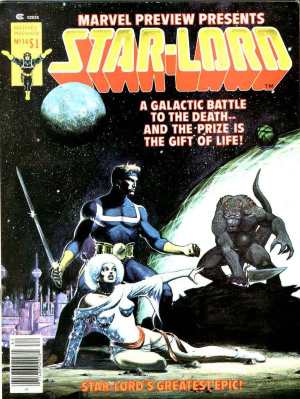
birth_of_death_starlin_1974The legendary comics artist Jim Starlin was born in Detroit, Michigan and served in the Navy from 1969 until 1971 as a photographer’s mate.  He started working at Marvel Comics in 1972 and has been involved in the comics industry ever since.  He is best known for his science fiction-themed stories and characters and helped to create several of the characters who are currently featured in the film Guardians of the Galaxy.  A small sampling of his work can be found below.Starlin 14Starlin 15Starlin 16 Starlin2 Starlin3 Starlin4 Starlin5 Starlin6 Starlin7 Starlin8 Starlin9 Starlin10 Starlin11 Starlin12 Starlin17 Starlin18 Starlin20

Starlin 1

Sailor Moon Crystal: Act 3 – Rei – Sailor Mars!


10565103_307437682768302_974437086713457249_n

It’s the big one. The apocalypse. The end times. It’s the introduction of my favourite anime character of all time … Sailor Mars! Yes! We are back. Back again. Sailor Moon Crystal, and the recapping and observations drawn from aren’t going anywhere! Yes, we all probably already know the story… but this is a wholly new treatment thereof. It deserves all the attention I’m giving it. It’s important, damnit!

This time, our cold open has us in the Dark Kingdom, the secret base of Queen Beryl and her generals. Jadeite is being berated for screwing up big time. Twice. Lord Vader would already have strangled him, but it appears that Queen Beryl is much more forgiving than he is. Nevertheless, we meet two of the other generals, Nephrite and Zoisite, who we all know are commanders two and three, respectively, to challenge the Pretty Guardians. As usual, they’re bickering and jockeying for favour. I really, really like the design and appearance of Queen Beryl in this new treatment of the material. She looks better than she did in the original, says I. Our villains are switching focus. Instead of just trying to gather energy, Jadeite’s new mission is to eliminate the Sailor Guardians. Unluckily for Jadeite, but luckily for everyone else in the entire universe, Sailor Mars is teased before we hit the opening theme.

And don’t worry, the insanely long intro with its crazy guitar riffs isn’t going anywhere. I find it as comforting as an old friend. Seriously, I love these opening credits. The song is funky, the animation that goes along with it is prosauce, and if the subtitles can be believed the lyrics really serve to hammer home the message that this show is about the girls. Girls who do not need the protection of men. And don’t need some mysterious prince. And are awesome. We also see Queen Beryl’s design more clearly in the opening credits than we have in the episodes so far… and I really like it. Her commanders look pretty much as they did before, albeit more like their original manga versions than their original anime versions. Something about Beryl’s design just tickles me though. I’ll pipe down about it now.

I really hate this esurance commercial. I think I’d actively avoid esurance because of it. So good work on that marketing campaign, esurance. As usual with Hulu, about 14 minutes of commercials interrupt this episode. It’s okay though, I’m so stoked about Sailor Mars’ arrival that I can sit through whatever. Even that esurance commercial.

As the show gets going properly, we’re introduced to the legend of the Sendaizakaue Demon Bus. Essentially, the 6:00 p.m. bus on this same route through Sendaizakaue every day… disappears. Along with everyone who is riding it. Seems ungood. At the arcade, Ami and Luna discuss the weightiness of being Sailor Guardians, and the continuing mission to protect their mysterious princess… and to obtain the Legendary Silver Crystal. That mystery will have to wait for another day, however, as Ami has to head to her cram school. Presumably one better run than the one from Act II. She lures Usagi along not because of the whole ‘studying for better grades’ but, oddly, with the promise of a beautiful girl who takes the same bus sometimes.

This girl, whom we see almost immediately, is of course Rei. She’s lovely in this treatment, with purplish-black hair and violet eyes, but she has severe eyebrows that make her look very serious compared to, say, Usagi. Speaking of Usagi, she can do nothing but stare at the beautiful stranger, who when meeting Usagi’s gaze has the same brief vision that Ami did in Act II. Despite Ami’s protestations that it’s rude to stare, Usagi is undeterred. In fact, she’s so obsessed, that she bails on Ami at Rei’s stop to follow the “beautiful girl” back to a shrine, where she is evidently a shrine maiden.

Rei apparently has psychic powers. She feels emanations of some kind. Mistaking Usagi for a source of evil, Rei slaps her with an evil-binding scroll, knocking her flat. Here we see another element not used in the original anime treatment, as Rei has befriended two ravens, whom she calls Phobos and Deimos (because of course she does). Some exiting soccer moms are talking about Rei’s strange gifts, as well as mysterious disappearances near the shrine. Of course, if we’ve been paying attention, we know that this is where the “Sendaizakaue Demon Bus” disappears people, or at least one such place it does so. I’m sure there’s a connection here somewhere.

Back at school the next day, everyone is talking about the “Demon Bus”. Usagi gives Ami a matching watch she won from an arcade game. Luna, oddly, is totally on board to pop in on Rei again. Apparently, Luna believes that Rei may be the princess that they are seeking because of her unusual gifts, and, apparently, because she looks like a princess. “She’s beautiful enough to be a princess,” says Usagi. On the bus, as Usagi rambles on to Luna, she finds herself seated next to Mamoru, in another random encounter. He’s nonplussed at the way that Usagi seems to be talking to herself, but we also learn that he’s a local high school student. Having his dialogue translated as “bun-head” isn’t nearly as funny as “meatball head” was in the English dub of the original treatment. This is, I think, a critical point.

Oh look. Esurance is back. Shouldn’t these advertisements be targeted? I’m not a homeowner. The Panera Bread looks good though.

As Usagi arrives for that second chat, the soccer moms are back. First, they want Rei to use her psychic powers to find a missing girl. Then they blame Rei for the girl’s disappearance. Usagi leaps to her new friend’s defense, then starts to wilt… before Rei kicks everybody out. Rei sees a vision of Jadeite grabbing Usagi, and misinterprets things a little. She goes sprinting off to warn her friend, only to run afoul of the Demon Bus. Its driver? Well, it’s Jadeite of course. He knocks Rei out, loads her on the bus, and begins to drive off into an alternate dimension or whatever. Usagi sees Rei, and races after, leaping onto the back bumper of the bus, barely missing a confused-looking Tuxedo Mask, presumably on his way to help.

In an alternate dimension, Jadeite’s hostages are all lying in comas on the ground. His plan is obvious: as people disappear, eventually the Sailor Guardians will have to seek out the Demon Bus, and be lured into his trap. Well, Usagi already has been. Luckily, the watches she and Ami share are actually communicators. Ami and Luna plan to track Usagi’s location by watching the energy from her transformation into Sailor Moon, then teleport to her location. That’s pretty handy stuff. Sailor Moon and Sailor Mercury are set to rescue Jadeite’s hostages… when the man himself appears. He identifies himself as Jadeite, one of the Four Kings (Kings!) of Dark Kingdom, and then attacks the Sailors. Sailor Mercury seeks to cause some confusion with her otherwise-seemingly-useless bubble attack… but Jadeite laughs at them, and begins to literally freeze them solid.

It’s about this time that Rei wakes up. She immediately senses Usagi within Sailor Moon, and challenges Jadeite herself. He freezes part of her too, but Rei breaks free with a power that she did not even suspect she had. The symbol of Sailor Mars blazes to life on her forehead. Luna recognizes it instantly, and Sailor Mars is born! Woo! Jadeite attacks her, but she shrugs his attack off, much to his astonishment. Sailor Moon traps Jadeite within the band of her tiara boomerang, and Sailor Mars tries to kill him with fire. Jadeite is beaten, but seems to teleport away at the last second. In the original treatment, he lasts quite a bit longer than this, but in the manga, this would be his exit. I guess it’s a cliffhanger for next episode. Assuming we care about Jadeite’s fate. Do we?

Now united, the Sailor Guardians are off to… you know. Find the princess. And the silver crystal. And we see a quick teaser of a man arriving in Tokyo with a lockbox, amid thousands of camera snaps. Hmm. I wonder what that could be? If we’re following the manga’s pattern, next week is a break between the arrival of the Sailor Guardians, and the introduction of Nephrite as the new enemy commander of record. I guess we’ll just have to wait and see. And no, I’m not forming any opinions based on the teaser. I’m content to simply bide my time.

Until next time, dear reader, when I continue to worship at the church of Sailor Moon Crystal. It’s a show so nice, I was willing to watch it twice.