VGM Entry 53: Soul Blazer


VGM Entry 53: Soul Blazer
(Thanks to Tish at FFShrine for the banner)

A personal SNES favorite of mine is Soul Blader (Soul Blazer in North America), composed by Yukihide Takekawa and released by Enix in January 1992. Takekawa is not a big name in the video game music industry, but he’s composed a number of other soundtracks for film and anime. I gather his main profession is as a vocalist. Whatever influences he brought to the table, Soul Blader is a much more diverse soundtrack than your standard orchestral-centric fantasy fair.

http://www.youtube.com/watch?v=UP5emCsGjSI

Quintet made a lot of amazing games for the Super Nintendo, but this one was probably their best. Like ActRaiser, the game revolves around a heaven and hell scenario, where The Master faces off against The King of Evil, in this case named Deathtoll. Basically, a powerful king corrupted by greed forces a scientist, Dr. Leo, to invent a portal to hell so that the king can strike a deal with the devil. Deathtoll agrees to give him all the riches in the world in exchange for all of the souls in his empire, and King Magridd promptly goes about replicating these hell portals all over the place and trapping pretty much all life and material connected to it within them. The Master sends you, his messenger, to earth to destroy the portals and set the Freil Empire free.

That’s the entire plot, really. There aren’t any major twists or turns. You just make your way across a fantasy realm freeing souls until you finally confront and defeat Deathtoll. As far as an actual story is concerned, yeah, it’s pretty bland, but Quintet manage to really turn it into something wonderful.

You may have heard of the “Soul Blazer” series, consisting of Soul Blader, Illusion of Gaia, and Terranigma. I never played Illusion of Gaia, and Terranigma was never released in North America, but I gather the unofficial series attribution is derived from subtle commonalities and returning side-characters rather than any overt consistency in plot or gameplay. If that is the case, then I think we can safely regard ActRaiser as an equal shareholder in the collection. But before I get into that, let’s look at this initial track compilation. It consists of:

(0:00) Intro Theme
(1:27) Lonely Town
(2:14) World of Soul Blader
(3:32) Solitary Island
(4:34) The Mines
(6:01) Into the Dream
(6:40) Dr. Leo’s Lab
(7:37) The Marshland of Lost Sight
(8:24) Lisa’s Song

Solitary Island, The Mines, Dr. Leo’s Lab, and The Marshland of Lost Sight are all combat zone themes, and perhaps the most obvious examples of what an amazing job Yukihide Takekawa did here. If you’re struggling to really define his style, I think the appropriate term is “video game music”. I mean, Takekawa transcends all style standards in precisely that way Super Nintendo music ought to. If you check out Solitary Island especially, you’re going to here an amalgamation of folk, orchestral, and rock elements so thoroughly intertwined that any attempt to distinguish between them would be simply misguided. The effect produced in the listener is what really counts at this point. Takekawa’s combat music, aside from the final boss theme, is never really intimidating. It’s adventurous and, as a consequence of the bass and drums, a little bit grimy, precisely as it ought to be. I mean, you’re God’s avatar here. You can’t ‘die’. There’s no serious danger, just work to be done. This is music for getting down to business, and your business is killing demons. If the regular boss battle music (“The Battle for Liberation”) is utterly generic and “Dr. Leo’s Lab” gets old quickly, I would still say Takekawa did an outstanding job over all.

http://www.youtube.com/watch?v=_cEa03NXtOY

And besides that, the combat music is all extraordinarily relevant. The sort of creatures you’ll be fighting in Dr. Leo’s lab is obvious enough through the music, and likewise “Solitary Island” has a sort of pirate vibe going on. “Icefield of Laynole” (or “The Icy Fields of Leinore”, or “Ice Field of Lanoyle”, depending on your source) is one of the best at this. Without ever devorcing the drum and bass style that ties the whole soundtrack together, it nails a snow and ice-themed zone sound. It doesn’t bend to any stereotypes of what a winter zone ought to sound like, but the jazzy overtones lend some real credence to the expression “smooth as ice”.

http://www.youtube.com/watch?v=b1YcMB9eK-c

Isn’t this just gorgeous? I think so. Takekawa let his imagination run wild with some of these, and you can hear the whole game in action even if you’ve never actually seen it. “Seabed of Saint Elle’s” (or “The Depths of the Sea of Saint Elle’s”) is obviously the water level. Like “Icefield of Laynole”, it doesn’t feel nearly as dirty as the other combat zone tracks, and it’s no coincidence that these are the two most fanciful zones in the game, inhabited by dolphins on the one end and gnomes on the other.

Dolphins? Really? Well, Quintet were a bit more creative about that than you might think. One of the big reoccurring themes throughout Soul Blazer is reincarnation, and as God you can communicate with anything that has a soul. So you’re not dealing with some weird anthropomorphic society here. They’re certainly a bit more, well, technologically advanced than real dolphins, but so are plenty of fictional human societies. The souls you encounter everywhere are all capable of more or less the same level of intelligence and are only restricted by their physical bodies. The gnomes, for instance, have an incredibly short lifespan, and their souls often reflect on how much they’d taken for granted in past lives as humans. You get used to this pretty quick; the first character you meet in the game is a tulip.

http://www.youtube.com/watch?v=8Wr6npVETxE

I’m not sure why these track titles are so screwy. I have this song as “Temple of Light”. RPGFan, who I consider reputable, have it as “A Temple in Ruins”, and the youtube video says “Rotting Temple”. Your guess is as good as mine. Anyway, here is one of the few combat zone tracks that sets aside the drum and bass drive. Aside from the simple fact that this made for a great song, the change of pace fits its situation in the game as a dungeon within a dungeon; you enter the temple from the “Marshland of Lost Sight” combat zone.

Anyway, the biggest parallel between Soul Blazer and ActRaiser is really in the whole city-building simulation appeal. Quintet didn’t give Soul Blazer an actual city simulation side, but each town does grow as a direct consequence of your actions. Each town zone starts out as an empty map, and it’s only as you release souls within the combat zones that their bodies reappear and their homes are rebuilt. You certainly don’t have to save every soul to beat the game, and a number of them are hidden, so you do retain a modest degree of control over how each town will ultimately appear. Any possibility of boredom with the game’s fairly basic combat mechanics is nullified by it; you essentially build cities by killing monsters, which is a perfect amalgamation of ActRaiser‘s two different modes.

http://www.youtube.com/watch?v=sUXL3xUoAAM

Did I mention Yukihide Takekawa was a vocalist? He might be the only video game composer to sing on his own score. This rendition of Lisa’s Song (also credited as A Night Without Lovers /Koibito no Inaiyoru) appeared on the official soundtrack released about a month after the game, and I think it’s safe to assume that it would have appeared in the game’s ending credits had the technology of the day allowed for it.

And now if you’ll go excuse me, I have a date with ZSNES. And I’d been so good about not wasting time on replays up to this point…

Faster Than Light


Entirely by accident, I discovered a game called Faster Than Light (FTL) while I was making my weekly perusal through the library over at Great Old Games. Because I like spaceships and bright shiny stars, I was instantly intrigued. Without really taking the time to learn a whole lot about the game, I went ahead and made the purchase. At $9, I didn’t feel like I had to get much return on my investment. After having sunk roughly a billion hours into FTL since that purchase, I’ve subsequently learned that FTL was funded by Kickstarter (another rousing success story! Go Kickstarter!), is actually new, despite having been on Great Old Games, and there was some buzz before it came out that I literally can’t believe that I didn’t hear even a single whisper about. I guess I haven’t been reading enough blogs after all.

My embarrassment over this game being news to me is a side issue, however. I have played Faster Than Light. Extensively. Allow me to tell you how it is, so you can decide whether that daunting $9 price point is worth it for you.

It’s great! Go buy it!

Well, alright. Let’s start with the premise. FTL is a Roguelike that stars you as the commander of a lone Federation starship with vital intelligence on the Rebel armada which you need to hustle across seemingly the entire galaxy to return to the last Federation fleet before they’re stomped by the aforementioned Rebels. Going against space type, we’re not rooting for the Rebels this time, as they are brutal, corrupt, jerks. On your journey, your ship will pick up space scrap which is used as currency. You need as much of this currency as possible in order to upgrade your single cruiser’s capabilities (the possibilities for this are extensive, including eight main ship systems, three subsystems, up to four weapon slots and three drone slots, three ‘augmentation’ slots for special systems, and your crew itself which starts small but can be expanded and include powerful alien species. So yeah.) You will need to upgrade your systems if you want to survive the long trek to the Federation fleet, and even more so if you intend to successfully defeat the final boss located there.

Your advance across the galaxy is star by star across multiple ‘sectors’ of space, with the Rebel armada in pursuit all the while, seeking to bring you down before you can bring your vital information to the Federation. Each star contains a random event, which can range from absolutely nothing, to running laser gun battles in asteroid fields, nebulae, or near stars that are experiencing solar flares. Suffice to say, given the random generation and the large range of customization options, no trek across the stars is ever exactly the same. Add in the fact that the game ultimately features about twenty unique ships each with its own unique interior layout and a unique starting loadout (some of which are much stronger than others) and you have a game that you can sink a great deal of time into.

The primary things that you, as a player, will need to do include managing your crew (crew members can be assigned to ‘man’ your ship systems. They can also be moved around to repair damaged systems, fight shipboard fires, repair hull breaches, board enemy craft, or repel boarders against your own), battling enemy ships with your craft’s weapons, drones, and boarding parties, and purchasing new upgrades and equipment to create a load-out that you feel like can go the distance. Finding combinations of weapons and special systems that work well for you is a big part of the game, and the only way that you will ultimately be able to experience any success against the final boss – an extremely difficult encounter, particularly if you are not prepared for it.

The downside for some players will be the difficulty. Faster Than Light is not an easy game. Not by a long shot. For those unfamiliar with Roguelikes, runs of horrific luck leading to catastrophe and death are incorporated by design. It is not a “problem” with the game that you might encounter a series of random events with no way out that lead to your ship exploding in the very first sector, or right before your confrontation with the boss. Death is deadly. There aren’t save points, folks, you’re back to the start if you go down in flames. This is, again, by design. It is not a “problem”, but it could be a reason why you would prefer not to play the game. So if the difficulty thing doesn’t appeal to you – and I didn’t even mention a learning curve that’s somewhat difficult to quantify – Faster Than Light may not be entirely to your liking. Of course, you may end up addicted anyway, and end up on a spiral of increasing frustration. I don’t personally recommend that path, but it’s your mouse to break, as they say.

The graphics “look like a flash game” as I’ve been told, which I suppose is true enough, but the game has spot-on sound effects and an excellent environmental music score that provides exactly the right touch of ambiance while you play. I found the graphics adequate, if nothing to rave about, and there’s something charming about the presentation, which is reminiscent of older video games and tugs at my nostalgia strings in a way that I find appealing. I definitely find myself recommending the game, even freely acknowledging that it may not be for everyone. After all, what game is?

For those who are interested, you can acquire FTL off of its official website or on Steam. You can also purchase the DRM-free version on GOG, but this version is only available for Windows platforms. Regardless, of where you get it, the game will be $9 until the sale price ends, after which it will price out at a whopping $10. So, act now, or whatever.

Which Way Forward For The “Batman” Movie Franchise ? Take Five : Should It Stay Or Should It Go? Part One


It’s funny how life works, isn’t it? Three weeks ago I said I’d be back here in a week to continue this series on how I think the Batman film franchise should be relaunched, and that week off became two, became three — anyway, I apologize, but I’m back. I could bore you with the usual litany of excuses as to why my absence was longer than expected, all of which are, in this case, true — busy at work, lots of shit going on outside of work, etc., but I’ll spare you all that (whoops!, guess I sort of subjected you to them in an off-handed manner already), and simply say for those of you who actually look forward to these little rants of mine, I sincerely apologize for the delay.

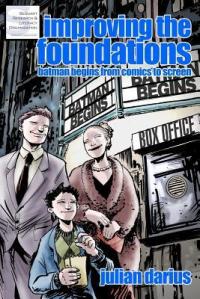
That being said, not all my time between posts has been wasted. For example, I had the good fortune to purchase, and subsequently read, an excellent little book by one Dr. Julian Darius, published under the auspices of his own imprint, Sequart Literacy & Research Organization, called Improving The Foundations : Batman Begins From Comics To Screen that’s set me to thinking about all this shit in a far more serious and cohesive manner than I had before.

Darius’ little tome essentially tracks back all the various threads that went into Christopher Nolan’s Batman Begins and while the whole book makes for some pretty fascinating reading, I have to admit that the stuff I found most interesting was in the section that covered the various version of Batman that didn’t make it to the big (and small) screens in the period between Joel Schumacher’s Batman & Robin debacle and Nolan’s first flick. I won’t rehash any of it here because I honestly want folks who are interested to read Darius’ book, as well as to support Sequart because they’re a fine bunch of folks, but I will say this much — reading through all that has given me a much better understanding of what won’t work when the time comes to relaunch Batman on celluloid and, more importantly perhaps, why it won’t work.

All of which brings me, rather neatly, full-circle in terms of where I’d been intending to take this series of posts anyway. I promised this next segment would deal with the elements I’d keep from the Nolan series, but before I delve into the nitty-gritty of the details, which I’ll do tomorrow, let me just state for the record the one overarching philosophical approach practiced by Nolan and screenwriter David S. Goyer that I would most definitely stick with : a “scattershot,” pick-n’-choose approach to adapting/borrowing material from the comics and reformulating all these disparate elements into a version that works best for cinema.

While a more literalist approach to translating the Dark Knight’s origins to the silver screen would have been to say “let’s just do a pretty faithful adaptation of Frank Miller and David Mazzuchelli’s Batman : Year One” — an approach the studio even tried by bringing in Miller himself to write a treatment based on his comic — the Nolan/Goyer tandem was happy to borrow some of the best, or at least best-suited-for-cinematic-adaptation, elements not only from Year One, but from the old 1970s Batman stories by Denny O’Neil and Neal Adams, from the previously-discussed-in-these-parts Batman : The Long Halloween by Jeph Loeb and Tim Sale, and even from Miller’s legendary, though-in-no-way-an-origin-story Batman : The Dark Knight Returns. And as the Nolan bat-series wore on, they continued this approach of borrowing liberally from disparate periods of the Caped Crusader’s history and adapting the stuff they were grabbing to better suit their overall vision (Bane certainly didn’t start out as a vigilante for the 99% crowd, for instance — he was just a typical 1990s ripped-on-‘roids villain in a wrestling mask).

So even more than any particular plot details, I think the most valuable lesson whoever Warners hires to helm the next chapter in the Caped Crusader’s cinematic exploits can take from Nolan is this overall “take what you want and put it all together in whatever way suits you best” approach. Details matter, to be sure, and we’ll delve into those a bit more tomorrow, but for the time being, since I promised to be almost painstakingly focused/ incremental here, I just wanted to set the stage beforehand by saying that approach is one that I think by and large served the last Bat-trilogy well, at least in terms of overall concept if not always in its execution, and that I can think of no coherent reason to chuck it overboard and go for a more “this must be just like the comics” approach that’s only going to make die-hard, long-time readers of Batman’s adventures on the printed page happy while alienating pretty much anyone and everyone else. And on that note, I’ll save the rest for tomorrow’s (I promise!) installment.

VGM Entry 52: Tim Follin’s Legacy


VGM Entry 52: Tim Follin’s Legacy
(Thanks to Tish at FFShrine for the banner)

The end of the NES era did not mark the end of the NES. Games would continue to appear on the system all the way up to February 1994, with Wario’s Woods (Nintendo) constituting the final licensed game for the system. Neil Baldwin was not the only classic chiptune artist to find refuge in the persistence of outdated systems. The underdog hero of my video game music series, Tim Follin, rode the third generation of gaming out to its end as well.

What’s more, the late transition of C64 chiptune artists to the NES brought out all kinds of amazing features on the system that were never realized during the system’s heyday. I did Tim Follin a terrible disservice by skipping over Silver Surfer (Arcadia Systems, 1990) for the Nintendo and Magic Johnson’s Basketball (Arcadia Systems, 1990) for the Commodore 64, having not really discovered either until it was too late to include them, but it’s not too late to touch on his 1991 masterpieces.

Treasure Master (American Softworks, December 1991) initially picks up right where Pictionary left off, and in this game you can really experience the climax of Follin’s NES pursuit, wherein groovy jam tracks took the place of progressive rock as a focal point. Just as Follin’s Commodore 64 works made a clean break from his original ZX Spectrum style, his NES compositions matured into a sound all of their own.

It’s not that prog elements were a thing of the past; Follin’s quintessential sound persists across every platform, and Treasure Master has its fair share. But on no two systems did he ever sound quite the same. He was ever and always a musician to place the system at the heart of the composition. It’s something I was criticizing other musicians for failing to do long before he was ever on my radar, and soundtracks like Treasure Master are vibrant proof of just how significant this sort of compositional mindset could be. This is the antithesis of Nobuo Uematsu’s eternally reinterpritable works; it is inconceivable in any other medium.

I don’t recall whether I actually made the observation before or simply thought it to myself, but I am inclined to believe that a lot of chiptune musicians struggled and faded away in the fourth generation because the lack of severe restrictions forced them to completely redefine their vision of what video game music should be. They were fundamentally musicians first and composers second, and the SNES, with its bountiful possibilities, simply could not function as an instrument. It was a means to an end, not an end itself, and that requires a whole different assortment of talents. Tim Follin struggled on the SNES, perhaps for the first time in his career. It’s no small triumph that he (and his brother Geoff, who likely contributed far more to the ‘Follin sound’ than I give him credit for) did ultimately overcome the challenge with Spider-Man and the X-Men in Arcade’s Revenge and Plok, which I will get to soon enough.

The majority of Tim Follin’s SNES works leave something to be desired however, and with the extraordinary exception of Ecco the Dolphin: Defender of the Future (Sega, 2000) for the Dreamcast, he would never really thrive as a video game composer again after the mid-90s. Suffice to say Tim Follin’s real glory days ended in 1991.

At least he went out with a bang. Gauntlet III (US Gold, 1991) was to be his final Commodore 64 title. Composed in collaboration with Geoff, it carried on in the spirit of Ghouls’n Ghosts.

A history of the development of Follin’s sound would make for an interesting mini-series all of its own. There’s certainly no linear progression to it, and I couldn’t pretend to establish one without ignoring quite a few games which defy conformity. (Even the suggestion that his NES soundtracks were inseparable from the system he wrote them for was a minor stretch if we consider similarities between Pictionary and Magic Johnson’s Basketball.) But the title theme to Gauntlet III most certainly follows from “Level 5” in Ghouls’n Ghosts, and trace signs of this thematic approach can, I think, be heard in the in-game theme from Black Lamp (Firebird, 1988) and the title theme from ChesterField: Challenge to Dark Gor (Vic Tokai, 1988). I make the observation to establish that this sound was emerging prior to Follin’s direct interaction with the original Ghouls’n Ghosts score by Tamayo Kawamoto. His outstanding cover of Level 2 aside, the C64 port shares little in common with the arcade music.

At any rate, that was only the title screen. Gauntlet III was one of those rare exceptions to the Commodore 64 rule of putting your best effort on the loader. To that credit goes the character select screen.

Was Tim Follin’s final C64 composition also his best? It’s definitely a contender. Gauntlet III lacked the quantity delivered in Ghouls’n Ghosts–I gather the actual gameplay was silent, though I’ve not been able to confirm this–but the quality is impeccable.

Tim Follin spent 1989 through 1991 breaking every mold and defying every standard ever set for what may well be considered the finest system in the history of video game music, and in so doing made his name inseparable from the final pages of the Commodore 64 legacy. Having simultaneously done the same thing for the Nintendo, and having single-handedly defined the ZX Spectrum as a system capable of a unique sound independent from both powerhouse competitors, he may well be rightly regarded as the most accomplished musician of the third generation era.

It’s a shame his time with the Amiga 500 was so brief. Underwhelming in comparison to the Ghouls’n Ghosts port, Tim and Geoff’s Amiga Gauntlet III music suffers merely from a lack of sound quality. I have been unable to find any copy of this song that delivers with the depth and clarity of Ghouls’n Ghosts, but I suspect this is more a consequence of a low bit rate in its modern conversion than a flaw in its original form. The bagpipes do seem to clash with the rest of the song from 1:40 on, but I’d rather not pass judgement until I’ve heard a higher quality recording. In any case, Follin was showing no signs of relenting on the Commodore Amiga, and it was surely decisions beyond his control at Software Creations that ultimately tied him into a Super Nintendo track from 1992 on.

Trailer: The Hobbit: An Unexpected Journey (2nd Official)


It just a littleunder 3 months before Peter Jackson takes us back to Middle-Earth with the first of three films that will make up The Hobbit trilogy.

There’s not much else to say other than this latest trailer for The Hobbit: An Unexpected Journeyjust continues to whet the appetite for all things Middle-Earth. It’s much more action-packed with some nice new scenes instead of just rehashing what was in the original teaser trailer from year ago.

Enough words. Just watch the trailer below and decide for yourself whether another trip to Middle-Earth (before all the War of the Ring brouhaha of the first trilogy) is worth your monies.

The Hobbit: An Unexpected Journey premieres worldwide on December 14, 2012.

VGM Entry 51: Neil Baldwin


VGM Entry 51: Neil Baldwin
(Thanks to Tish at FFShrine for the banner)

Who was Neil Baldwin? I have yet to even mention Neil Baldwin. In fact, I never even saw his name until quite recently, by a total accident of chain-clicking vaguely related youtube videos. It must be a gross oversight on my part. There’s no excuse for having missed Neil Baldwin.

I mean, his earliest works, like Shadow Skimmer (The Edge, 1987), might have been easily overlooked. They were fairly decent, but not groundbreaking in any sense, and in the glory days of Commodore 64 music ‘pretty good’ wasn’t going to stand out. Neil Baldwin was just learning the ropes in the late 80s, with the works of Rob Hubbard and Martin Galway serving as his main inspirations. His real legacy began when, much like Tim Follin, he brought the techniques of Commodore 64 composition to the NES.

http://www.youtube.com/watch?v=kp6T2YueKig

And much like Tim Follin, he put 90% of Nintendo composers to shame. Magician (Taxan), released for the NES in 1990, was the first game by British developers Eurocom. It was also Neil Baldwin’s first NES composition. It sounds more advanced than nearly anything else on the system.

What exactly distinguishes it–how Neil Baldwin (and Tim Follin) were capable of producing such better sound quality on the NES than indigenous composers with no Commodore 64 background–is technical and way beyond my understanding. But thankfully, those explanations have already been made. See, Baldwin did that one thing that we all wish every video game composer would do, and which hardly ever actually happens.

http://www.youtube.com/watch?v=vULnxUSM2I8

He went back and wrote about his own compositions in long, thorough detail, and provided mp3s of the lot of them.

http://dutycyclegenerator.com

How cool is that? It would be kind of silly for me to go about repeating everything that he says here, especially when I’ll never quite understand it unless I get my hands on the equipment and try to program some game music myself. So I’ll leave it for the original artist to explain.

This particular soundtrack is Ferrari Grand Prix Challenge, the NES port of F-1 Hero MD for the Genesis/Mega Drive, released by Acclaim in 1992. Neil Baldwin’s score for the NES port is an original composition, not a replica of the Genesis music. Yes, there was still some great NES music this late in the game.

Hero Quest and Erik The Viking both have pretty interesting stories. If you scroll down far enough on Baldwin’s site you can read them in full, but to sum it up briefly, both of these games were never officially released. Baldwin actually thought that the music to Hero Quest, written in 1991, had been lost, until he ran into vgm fans talking about it. A little investigation revealed that the author of the game, Chris Shrigley, had preserved a copy of it and released it independently long after the fact.

http://www.youtube.com/watch?v=_M7Lng2BbRI

Erik The Viking‘s story is the exact opposite. The actual game, which was fully completed in 1992 but, due to miscommunication between the developers and producer, never released, has been lost. Baldwin observes that it could quite possibly still exist somewhere, but it is certainly a lost artifact at the present. This time around, it was Baldwin that saved all of the original audio and released it independently years later.

Neil Baldwin has composed much else besides these five games, and his post-Commodore 64 work is consistently a cut above. I definitely recommend Erik The Viking first and foremost among his NES works. As for his later SNES compositions and beyond, I’ll definitely be keeping an eye out for them when I get there.

6 Trailers For A Million Views


Hi!  It’s time for yet another edition of Lisa Marie’s Favorite Grindhouse and Exploitation Film trailers so let’s just jump right into it, shall we?  I’m going on vacation next week and I’m currently attempting to do about a thousand things at once (and it’s not as easy as it looks) so I’m going to keep my commentary to a minimum for this edition.  Fortunately, these trailers speak for themselves.

1) The Castle of Fu Manchu (1968)

2) Zeder (1983)

3) Freeway (1996)

4) The Gumball Rally (1976)

5) Unhinged (1982)

6) Two Orphan Vampires (1997)

Regardless of how busy I may be, I will always find the time to let people know that this is one of my favorite films from one of my favorite directors, the great Jean Rollin.

 What do you think, Trailer Kitty?

Doc, the judgmental Trailer Kitty

One Million Hits and Counting!


Photograph by Erin Nicole Bowman

Just a few minutes ago, we reached a milestone here at Through the Shattered Lens.  What was that milestone?  Well, as you might have guessed from the picture above, this site has now been viewed over a million times!

YAY!

I can still remember the day that Arleigh first invited me to help him with his site.  Back then, the site was still known as Unobtainium 13 and I was so incredibly flattered to be asked to contribute.  My first review for this site was of the odd 1970s blaxploitation film Welcome Home, Brother Charles and I remember how nervous I was when I first posted it and how happy I was when I discovered that the old saying was indeed true: If you write it, someone will read it.  And, sometimes, if you’re really, really lucky, they’ll leave you a nice comment.

Back then, we had one subscriber* and we were excited if we just managed to get 500 views a day.  The site has grown a lot since then and, two years after I first wrote that review of Welcome Home, Brother Charles, I can truly say that I still love writing for this site just as much as I did during those first few months.  And I’m looking forward to continuing to write for this site for as long as Arleigh is willing to put up with me.

Finally, allow me to take a moment to thank two very special groups of people.

First off, thank you to my fellow Shattered Lens contributors for all that they’ve done and all that they continue to do for this site.  This site, which is a true labor of love, could never have grown without each and every one you.  On a personal note, I feel as if I’ve grown up along with this site and for that, I will always be beyond grateful.

Finally, thank you to everyone who has ever taken a chance and visited this site.

Whether you were looking for a film review, a music review, a comic review, a video game review, a grindhouse movie trailer, a pulp artist profile, the latest in anime, or a hottie of a day, thank you!

Thank you for visiting, thank you for reading, thank you for subscribing, thank you for voting, and thank you for commenting!

Thank you for giving all of us this moment.

I hope that, over the past two years, we’ve been able to entertain, enlighten, and engage you and I hope that we’ll continue to do so for the next two years as well!

Here’s to the next million views!

Photograph by Erin Nicole Bowman

—-

* Hi, KO!

VGM Entry 50: Final Fantasy Legend III


VGM Entry 50: Final Fantasy Legend III
(Thanks to Tish at FFShrine for the banner)

1991 might have been the finest year for classic Game Boy music. I really can’t say until I advance a bit further along in this project, but even beyond the best of the best, the average score seems to have really picked up the slack. I’d have rambled on about the virtues of such titles as Bomber King: Scenario 2 (Blaster Master Boy in North America) in 1990, but in 1991 their above-average quality isn’t quite enough to merit extensive discussion.

One soundtrack that definitely does not earn its keep is Final Fantasy Adventure by Koichi Ishii. A weak effort for such a lofty name, Final Fantasy Adventure did, unlike the Legend series, carry the classic monicker in its original Japanese version, at least as a subtitle. But if Seiken Densetsu: Final Fantasy Gaiden, that is, the prequel to Secret of Mana, was a musical disappointment, it wasn’t Square’s only Game Boy venture that year.

http://www.youtube.com/watch?v=9oTcZY5Zu6c

The other, Final Fantasy Legend III, or SaGa 3 in Japan, is my favorite Game Boy soundtrack, and one of my favorite game scores in general. Not all of the songs are original to it. The title theme for instance has been around since the start of the series. But it’s never sounded quite like this. Nobuo Uematsu sat this project out, as did Kenji Ito. Instead a new name in gaming music took the job: Ryuji Sasai. It was only his fifth video game composition, and I am fairly certain you’ve never heard of the first four. I hope you’ll remember this one.

http://www.youtube.com/watch?v=sF0m48CIT0I

Quality song-writing is certainly the first step. Ryuji Sasai was a rocker at heart, but unlike say, the earlier works of Yuzo Koshiro, his songs here are properly restrained. They all have a certain pep to them that the first two SaGa games lacked, but they never go overboard. But I think the most compelling part of his work here is the arrangement. A lot of video game soundtracks leave me wondering whether the quality or lack thereof of the youtube samples impacts the apparent quality of the original music to a significant degree: To some extent Final Fantasy Legend III almost sounds enhanced. But I noticed it on youtube; I noticed it on the ost; I noticed it on my own Game Boy when it first came out: There’s been no doctoring here. The sound quality in this game is just phenomenal.

http://www.youtube.com/watch?v=_rObe1xFLzI

I mean, plug in some headphones and just listen to the way these sounds lock into each other. Even the generic town theme is just massive. The drums pan all over the place without ever making it obvious as they do in say, Belmont’s Revenge. That accompaniment rolls in the left ear while the bass switches between the middle and the right, and the main melody prevails over all. With such rich and complementary tones, the actual effect is to create a sound that completely surrounds and encompasses you.

http://www.youtube.com/watch?v=90jEnCNIInw

Every track employs this same means to perfection. “Theme of Another Dimension”, the airship music, has an amazing amount of depth. All of the elements of the song have a physical position, and their motions are the driving forces behind the music. You can feel the engine running in the bass and the wind rushing by in the percussion, some clouds breezing past at the 15 second mark.

http://www.youtube.com/watch?v=8yjNftt7bNI

My favorite Final Fantasy Legend III song is “Holy Ruins”. I would like to think it speaks for itself. The music to this game impresses me as much now as it did twenty years ago, and I think if Ryuji Sasai had kept on composing for the Game Boy he would have really made a name for himself. As things turned out, he didn’t. This was his only Game Boy composition to the best of my knowledge, and after scoring Final Fantasy Mystic Quest the following year he would disappear until 1996. Why other Game Boy composers, even the best, largely failed to capitalize on the potential for depth that he achieved here is beyond me, but his innovative arrangements brought the system to life in a way I have never heard before or since–at least, outside of the modern day chiptune scene.

Song of the Day: Requiem (by Altan Urag)


The latest “Song of the Day” comes from a band that many haven’t heard of but should. It was fellow site writer necromoonyeti who first introduced me to their band of folk rock almost three years past now. It was their song “Requiem” that first got Altan Urag onto my music radar.

“Requiem” is a difficult song to categorize. It’s definitely traditional folk music in sound and gives hints of Altan Urag’s folk rock sound. It is also a song that cannot be called a ballad and too melodious to be a dirge despite the title. The video made for this song actually starts off with a young boy asking his grandfather a question. We don’t know what he asks but the song itself gives u s hints as to the answer. An answer that has notions of sorrow and hope, of death and rebirth.

We don’t get to hear the distinctive “throat singing” from the band in this song, but their use of traditional Mongolian folk music instruments like the morin khuur (horse head fiddle) and ikh khuur (grand horse head fiddle) could easily be heard throughout the song and gives the song it’s unique sound.

Altan Urag may not be a house hold name to the general public, but songs like this should give those who have never heard of them an idea why so many people hold them in such high regard.