Review: Night of the Living Dead – 1968 (dir. George A. Romero)


I wasn’t born yet when George A. Romero’s Night of the Living Dead was first released in theaters, but I’ve wished many a night that I was old enough to have seen this classic horror film on the big screen. Night of the Living Dead simply changed the film industry forever and showed that horror was taking an uncharted road toward realism, brutality, and true terror. Before Romero’s film, horror often echoed the classic 1940s Universal style or the technicolor Hammer Films. Night of the Living Dead became the torchbearer of what would soon evolve into the splatter and exploitation films of the following decades. The influence this film has had on horror filmmakers is still ongoing.

Zombie films existed long before Night of the Living Dead, but they mostly depicted the traditional Haitian voodoo variety—with zombies as heavily drugged victims forced into slave labor for merciless masters. Romero changed all that in 1968. Made on a shoestring budget even by the standards of the time, Romero and his friends decided to make their own horror movie. The premise was simple: radiation from a returning Venus probe (though later films in the series abandoned that explanation for something more vague) somehow reanimated the recently deceased—though these zombies only had the most basic motor skills. That alone was terrifying enough. But Romero took it further by giving the zombies a new motivation: an unending hunger for the flesh of the living. With this, Night of the Living Dead marked the birth of horror at its most extreme.

The story was heavily influenced by Richard Matheson’s apocalyptic vampire novel I Am Legend, and Herschel Gordon Lewis’ Blood Freaks and Two Thousand Maniacs. Matheson’s novel contributed the idea of an encroaching horror besieging the survivors, while Lewis’ films provided an unflinching portrayal of exploitative violence and gore. Lewis didn’t shy away from gore, but Romero was the first to put a solid story behind the carnage.

The film opens simply enough, with a brother and sister heading to a rural cemetery to visit their dead mother. Right away, it takes on a disturbing tone, as both siblings come under attack from what seems to be a transient. Barbara, played by Judith O’Dea, flees for her life, with her brother Johnny already down. The tension of the opening sequence still makes my pulse pound every time I watch it. Soon, the story introduces the strongest character: Ben, played by Duane Jones in what became his signature performance. But even as strong-willed and level-headed as Ben is, he shares flaws that lead to critical mistakes later. The rest of the cast follows: Harry Cooper (Karl Hardman), his wife Helen (Marilyn Eastman), their injured daughter Karen (Kyra Schon), and the local couple Tom (Keith Wayne) and Judy (Judith Ridley). As the farmhouse becomes surrounded by a growing horde of undead, attracted by their noise, you’d expect the group to band together to survive the night until help arrives. But instead, misunderstandings and bitterness divide them, escalating into open conflict and self-preservation without concern for others.

The infighting and inability to cooperate is Night of the Living Dead’s strongest message—a bleak reflection of human nature in times of upheaval. The characters are fully realized, complex, and rare for horror films of that era. Their realistic portrayal makes their conflicts hit harder. After watching them fall apart, it’s easy to judge them as foolish, but realistically, many others faced with the same pressure might behave just as destructively. Romero’s harsh commentary on humanity’s failure to unite has led to conflict throughout history, and the film points this out in the bluntest, most brutal way possible.

The horror of Romero’s film is intensified by an economic choice. Color film was available in the 1960s but still expensive; only major studios or wealthy independents could afford it. Romero instead used black and white, helped by his background in documentary filmmaking, which made film stock easier to procure. This gave Night of the Living Dead its signature cinéma vérité look—grainy, raw, and immediate, like 8mm home movies of the era. Combined with Romero’s economical editing and minimalist, bass-heavy soundtrack, the film gains a life of its own. Its creeping dread was so tangible, I’m surprised more viewers didn’t walk out when it first played. The horror lingered long after watching.

There really isn’t much to complain about this film. Horror fans were given a movie that went well beyond exploitation. It also opened the door for a new generation of filmmakers who saw that movies could be more than entertainment—they could express social, political, and economic truths of their era. Night of the Living Dead had it all. It told audiences young and old that the era of silly, fantastical horror was over, and a new wave of realistic horror was about to descend. It didn’t shy away from violence. Flesh was ripped from limbs; intestines and organs were shown being handled and devoured. This “Vietnamization” of film violence launched a new era in what filmmakers could depict. But in 1968, this was the kind of violence usually reserved for drive-in exploitation fare—and initial audiences were unprepared. Not just adults, but 11- and 12-year-olds saw this as part of Saturday morning double features. One moment they were watching Flash Gordon or Buck Rogers, the next they faced flesh-eating ghouls and damning social themes bombarding their minds.

1968 is now seen as a turning point in filmmaking history. Night of the Living Dead influenced not just horror directors but filmmakers in all genres. It’s no surprise the film lives in the Smithsonian National Film Registry as a work that reshaped filmmaking art. Decades later, it still shocks first-time viewers and delights devoted fans. Night of the Living Dead didn’t just usher in a new era of horror and cinema; it announced the arrival of a genuine guerrilla auteur, a master of his craft.
Review: The Wild Geese (dir. by Andrew V. McLaglen)


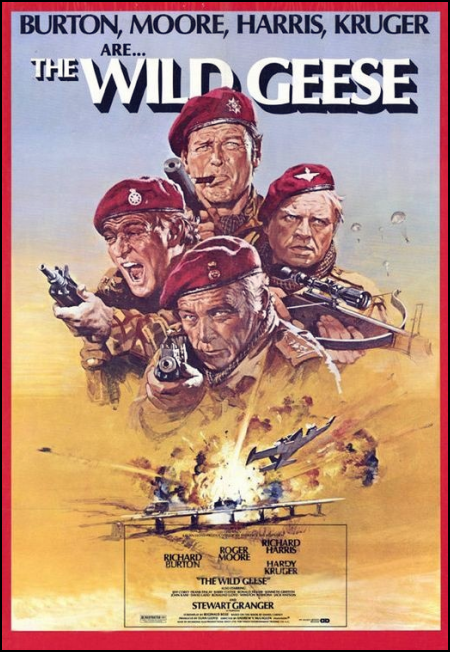
1978’s action war film The Wild Geese is an adaptation of Daniel Carney’s unpublished novel about a group of mercenaries on a mission during the turbulent revolutionary times that beset Central Africa during the 1960s and early 70s. The film features an all-star cast of British actors, a true who’s who of the era. Under the direction of Andrew V. McLaglen, The Wild Geese manages to be an action-packed and well-told film with memorable performances.

The character Colonel Allen Faulkner, played by Sir Richard Burton, is loosely based on the real-life mercenary legend Michael “Mad Mike” Hoare. Hoare not only inspired this central character but also served as the film’s military and technical advisor. Adding to the film’s authenticity, one of the actors portraying a mercenary, Ian Yule, had served with Hoare in his mercenary company. This infusion of real-life experience gives the film a vivid sense of art imitating life and lends credibility to its portrayal of mercenary warfare.

The story begins with a meeting between Faulkner and British banker Sir Edward Matheson about a rescue mission in the fictional Central African nation of Zembala. The first third follows Faulkner’s recruitment of a 50-man mercenary team, including his reluctant old friend Rafer Janders (Sir Richard Harris). The film portrays the mercenary company training and preparing for the mission before being inserted behind enemy lines. The second half details the rescue of their target: a deposed African leader about to be executed by the man who overthrew him.

During the second third of the film, the action intensifies. Though tame by today’s standards, the sequences were energetic and well-shot for their time. The mercenaries are shown not as idealized heroes but as pragmatic soldiers who use ruthless tactics—such as cyanide gas and poisoned crossbow bolts—that may shock modern audiences. This realism reflects Hoare’s influence and presents mercenaries as professionals doing a dangerous job for pay, blurring the moral lines of warfare. Betrayal during the mission tests their survival in enemy territory.

Burton and Harris deliver excellent performances as hardened war veterans, while a younger Sir Roger Moore adds roguish charm as the Irish pilot Shaun Fynn. Strong supporting roles include Hardy Kruger as Pieter Coetzee, an initially racist Afrikaner who gains new perspective on the continent’s upheaval, and Stewart Granger as the principled banker Matheson.

Though relatively small budgeted compared to other war epics of the era, The Wild Geese carries an epic feel and should have appealed more to American audiences. Unfortunately, financial difficulties with the production company affected its U.S. release. Over time, video and DVD releases built it a cult following among war and mercenary film fans, a subgenre often dominated by lesser films. McLaglen’s straightforward direction keeps the film’s pacing steady, and the story balances action with political and philosophical themes in its final act.

The Wild Geese stands as a rare gem in war cinema that delves into a little-known subgenre. With strong performances by knighted British actors, a former Hitler Youth, and real-life mercenaries as extras, the film distinguishes itself from the many flawed war movies flooding late-70s and early-80s cinema. Its roots in actual mercenary experiences, highlighted by Hoare’s real-life involvement and character inspiration, make it a compelling and underappreciated classic for aficionados of the genre.

Review: Night of The Hunted (dir. by Jean Rollin)


When, at that age of 22, I first saw Jean Rollin’s Night of the Hunted, I cried as much as the first time I saw Titanic at the age of 12.  In both cases, the tears were inspired by a “doomed” love story.  The main difference between the two films is that I don’t cry over Titanic anymore.  But Night of Hunted still brings me to tears every time I see it.

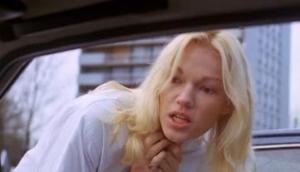
The film opens with the image of a terrified young woman (Brigitte Lahaie) running through a dark forest until she eventually reaches a highway.  She’s picked up by a young man (Vincent Gardere) who, being a guy, proceeds to take her back to his apartment in Paris.  She confesses that she can’t remember who she is, why she was running, or even being picked up by the young man in the first place.  Saying that she needs some sort of memory to fill the emptiness, she proceeds to make love to Gardere.  Gardere, being a guy, doesn’t object.

However, he does make the mistake of later leaving Lahaie alone in the apartment afterwards.  As soon as Gardere leaves, Lahaie forgets ever meeting him and why she’s even in the apartment in the first place.  Even as she tries to figure out what’s going on, the apartment is visited by a doctor who tells Lahaie that she is his patient and that she needs to go with him to a “clinic” where he can treat her.  No longer remembering her encounter with Gardere, Lahaie agrees.

Needless to say, the “clinic” turns out to be what Lahie was so desperately trying to escape just a few hours before.  We learn that Lahie is merely one of several hundred people who, months earlier, were exposed to a biological warfare experiment gone wrong.  Now, as a result, her brain is slowly dying one cell at a time.  The clinic is actually a government-run prison where she and her fellow victims have been sent to be forgotten about and to eventually die.  Lahie finds herself surrounded by men and women who, as they slowly lose everything that made them unique, revert back to their most primal instincts.  While Gardere tries to find her, Lahie struggles to survive just one final night in both the clinic and in the prison of her own fading mind.

Director Jean Rollin is best known for his sexually-themed vampire films but the Night of the Hunted is not as huge a departure for him as it may first seem.  One of Rollin’s reoccurring themes is the importance of our memories, no matter how idealized they may sometimes be and this theme is present in every frame of Night of the Hunted.

The lead role is played by Rollin’s frequent muse and collaborator, Brigitte Lahaie.  Because the majority of Lahaie’s career has been spent making adult films, she’s never gotten the due she deserves as an actress.  Playing a difficult role here, Lahaie is the movie’s greatest strength.  She brings a real sincerity and empathy to her role and its impossible to imagine this movie working without her.  If nothing else, this movie is a wonderful display of Lahaie’s often underrated talent. 

Rollin made the film for very little money and used a cast made up almost entirely of nonprofessionals and French adult film veterans.  So, yes the film does sometimes have a grainy look and the editing is definitely jagged.  When the characters shoot at each other, it is obvious that they’re firing toy cap guns.  To me, however, this works in the film’s favor.  The raw quality of the film perfectly mirrors that constant fear and confusion that Lahaie and her fellow prisoners live in.  No, the film is not technically perfect but a flawed masterpiece is preferable to uninspired technical perfection any day.

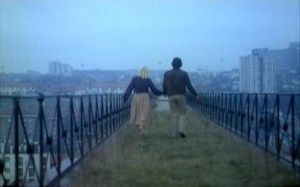
Despite working with a miniscule budget, Rollin captures some haunting images in this film.  Never has Paris looked as desolate as in this movie.  One of Rollin’s trademarks has always been his own fascination with architecture and, as a result, the cold skyscraper where Lahaie is held prisoner almost becomes a character itself.  I’ve always considered Jean Rollin to be horror cinema’s equivalent to Jean-Luc Godard and, with its images of a sterile city run by passionless autocrats, Night of the Hunted brings to mind Godard’s Alphaville.

 The film’s most haunting image comes at the end and it is this image that brings tears to my eyes every time.  Whatever flaws the film may have, Night of the Hunted has one of the best final shots in the history of cinema.  Even if everything preceeding it had been worthless, this movie would be worth sitting through just for the stark beauty of the final shot.  Night of the Hunted ends on a note that manages to be darkly sad and inspiringly romantic at the same time.  It’s an ending that makes Night of the Hunted one of the most romantic films of all time.

Night of the Hunted was released in 1980 and, like the majority of Rollin’s films, was never released in the States.  Redemption, however, has released it on DVD (which is how I first saw it in 2008.)   While the transfer is undeniably rough, that actually gives the movie a documentary-like quality that works in its favor.  The film is in French with English subtitles.   As is so often the case with subtitles, a lot of the film’s nuance is sacrificed in translation.  Fortunately, the combination of Rollin’s visual sense and Lahaie’s lead performance more than makes up for it.

The Walking Dead finally gets it’s Rick Grimes


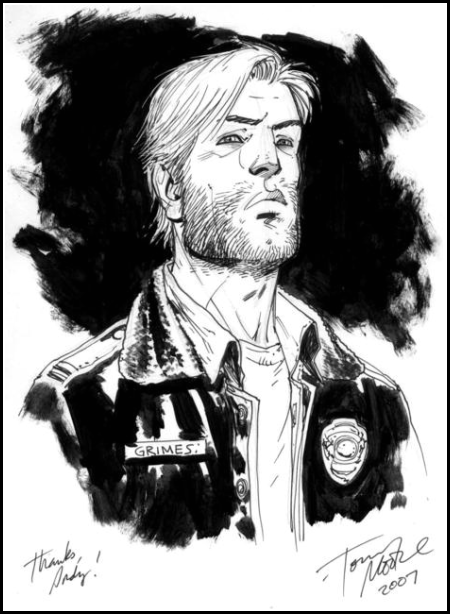
The good folks over at The Hollywood Reporter have reported that Frank Darabont’s tv series adaptation of Robert Kirkman’s award-winning comic book, The Walking Dead, have finally found the actor to play the series’ lead protagonist, Rick Grimes. The actor chosen came out of left field as his name was never even one people were clued in on. Fan favorites like Peter Krause and Mark Pellegrino were not even seen or heard having tried out for the lead role. Other names like Jamie Bamber (Battlestar Galactica’s Lee “Apollo” Adama) and Johnny Lee Miller (Eli Stone and Hackers) were also mentioned as having tried out for the role with the latter seen as the front-runner.

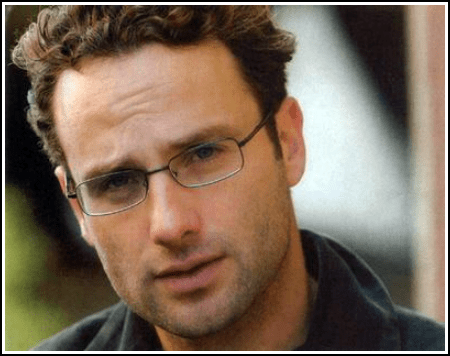
So, it’s seen as a surprise by many following the production of The Walking Dead to see the name Andrew Lincoln come up as the actor chosen to play Rick Grimes. The UK actor has worked in mostly shows and films in his native UK w/ Love Actually being the more recognizable of those he’s worked on. I think the choice was, and is, a good one. This is literally an unknown actor to US audiences so it will be easier for suspension of disbelief to be achieved for those watching.

While the reaction to this news is mostly one of guarded optimism there’s a very tiny but vocal group that seem to cry foul at this choice just for the fact that Andrew Lincoln will be a British-actor playing an American from the South. I think fans at times just think that dream choices for roles in their favorite stories should be the only ones chosen to play those roles whether they actually want to take on the role or not, or if they’re even good for the role.

For the detractors I say give the man a chance to get into the role before you put the man down. Oh yeah, one other thing…just be glad the show is actually being down and with strong creative people behind it. Put the fanboy/girl hat into storage.

Source: THR

My Top Ten Books About The Movies


I love movies and I love books so I guess it would stand to reason that I love books about movies the most of all.  (I also love movies about books but there are far fewer of those, unfortunately.)  Below are my personal favorites.  I’m not necessarily saying that these are the ten greatest film books ever written.  I’m just saying that they’re the ones that I’m always happy to know are waiting for me at home.

10) Soon To Be A Major Motion Picture by Theodore Gershuny — This is one of the great finds of mine my life.  I found this in a used bookstore and I bought it mostly because it only cost a dollar. Only later did I discover that I had found one of the greatest nonfiction books about the shooting of a movie ever written!  Gershuny was present during the filming of a movie called Rosebud in the early 70s.   I’ve never seen Rosebud but, as Gershuny admits, it was a critical disaster that managed to lose a ton of money.  The book provides a fascinating wealth of backstage gossip as well as memorable portraits of director Otto Preminger and actors Robert Mitchum (who was originally cast in the lead role), Peter O’Toole (who took over after Mitchum walked off the set), and Isabelle Huppert.   If nothing else, this book should be read for the scene where O’Toole beats up critic Kenneth Tynan.

9) Suspects by David Thomson — A study of American cinema noir   disguised as a novel, Suspects imagines what would happen if George Bailey from It’s a Wonderful Life fell in love with Laura from the movie of the same name.  Well, apparently it would lead to Sunset Boulevard’s Norma Desmond having an affair with Chinatown’s Noah Cross and to one of George’s sons, sensitive little Travis, getting a job in New York City as a Taxi Driver.  And that’s just a small sampling of what happens in this glorious mindfuck of a novel.

8 ) Profondo Argento by Alan Jones — Long-time fan Alan Jones examines each of Dario Argento’s films (even Argento’s obscure historical comedy The Five Days of Milan) and proceeds to celebrate and (in many cases) defend Argento’s career.  Jones also interviews and profiles several of Argento’s most frequent collaborators — Daria Nicolodi, Asia and Fiore Argento, Simon Boswell, Claudio Simonetti, Keith Emerson, George Romero, Lamberto Bava, Michele Soavi, and many others.  Jones’ sympathetic yet humorous profile of Luigi Cozzi is priceless.

7)  Spaghetti Nightmares by Luca Palmerini — Spaghetti Nightmares is a collection of interviews conducted with such Italian filmmakers as Dario Argento, Ruggero Deodato, Umberto Lenzi, Lucio Fulci, and others.  Among the non-Italians interviewed are Tom Savini (who, as always, comes across as appealingly  unhinged) and David Warbeck.  (Sadly, both Warbeck and Fulci would die shortly after being interviewed.)  What makes this interesting is that, for once, Argento, Fulci, et al. are actually being interviewed by a fellow countryman as opposed to an American accompanied by a translator.  As such, the subsequent interviews turn out to be some of the most revealing on record.

6) Sleazoid Express by Bill Landis and Michelle Clifford — Landis and Clifford’s book is both a history and a defense of the old grindhouse theaters of New York City.  Along with describing, in loving and memorable detail, some of New York’s most infamous grindhouses, they also write about some of the more popular movies to play at each theater.  Along the way, they also offer up revealing profiles of such legendary figures as David Hess and Mike and Roberta Findley.  Reading this book truly made me mourn the fact that if I ever did find myself in New York City, I won’t be able to hit the old grindhouse circuit.

5) Beyond Terror: The Films of Lucio Fulci by Stephen Thrower — Fulci has always been a terribly underrated director and, indeed, it’s easy to understand because, in many ways, he made movies with the specific aim of alienating and outraging his audience.  It requires a brave soul to take Fulci on his own terms and fortunately, Stephen Thrower appears to be one.  Along with the expected chapters on Fulci’s Beyond Trilogy and on Zombi 2, Thrower also devotes a lot of space to Fulci’s lesser known works.  Did you know, for instance, that before he became the godfather of gore, Fulci specialized in making comedies?  Or that he also directed two very popular adaptations of White Fang?  Thrower also examines Fulci’s often forgotten westerns as well as his postapocalyptic sci-fi films.  And, best of all, Thrower offers up a defense of the infamous New York Ripper that, when I read it, actually forced me to consider that oft-maligned film in a new light.  That said, Thrower does admit to being as confused by Manhattan Baby as everyone else.

4) Immoral Tales by Cathal Tohill and Pete Toombs — Tohill and Toombs offer an overview of European “shock” cinema and some of the genre’s better known masters.  The book contains perhaps the best critical examination of the work of Jean Rollin ever written.  The authors also examine the work of Jesus Franco and several others.  This is a great book that reminds us that the Italians aren’t the only ones who can make a great exploitation film.

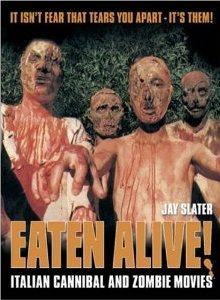
3) Eaten Alive by Jay Slater — This book offers an overview of the Italian film industry’s legendary cannibal and zombie boom.  Along with reviewing every Italian movie to feature even the slightest hint of cannibalism or the living dead (this is one of the few books on Italian cinema that discusses both Pasolini and Lucio Fulci as equals), Eaten Alive also features some very revealing interviews with such iconic figures as Catriona MacColl, Ian McCullough, and especially Giovanni Lombardo Radice.  Radice, in fact, also contributes a memorable “guest” review of one of the movies featured in the book.  (“What a piece of shit!” the review begins.)  Memorable reviews are also contributed by Troma film founder Lloyd Kaufman who brilliantly (and correctly) argues that Cannibal Holocaust is one of the greatest films ever made and Ramsey Campbell who hilariously destroys Umberto Lenzi’s infamous Nightmare City.

2) The Book of the Dead by Jamie Russell — If, like all good people, you love zombies then you simply must do whatever it takes to own a copy of this book.  Starting with such early masterpieces as White Zombie and I Walked With A Zombie, Russell proceeds to cover every subsequent zombie film up through George Romero’s Land of the Dead.  Russell offers up some of the best commentaries ever written on Romero’s Dead films, Fuci’s Beyond Trilogy, Rollin’s Living Dead Girl, and Spain’s Blind Dead films.   The pièce de résistance, however, is an appendix where Russell describes and reviews literally ever zombie film ever made.

1)  All The Colors Of the Dark by Tim Lucas  — This is it.  This is the Holy Grail of All Film Books.  If you’ve ever asked yourself if any book is worth paying close to 300 dollars, now you have your answer.  This one is.  Tim Lucas offers up the most complete biography of director Mario Bava ever written.  In fact, this may be the most complete biography of any director ever written!  Lucas examines not only Bava’s life but also every single movie that Bava was ever in any way connected to, whether as a director or as a cameraman or as the guy in charge of the special effects.  This is 1,128 pages all devoted to nothing but the movies.  This is the type of book that makes me thankful to be alive and I owe a huge debt of gratitude to Tim Lucas for writing it.

Hottie of the Day: Rosie Jones


ROSIE JONES

For our newest hottie of the day we travel from the Land of the Rising Sun over to the United Kingdom to meet the lovely Ms. Rosie Jones.

Ms.  Jones was born in July of 1990 in her hometown of Middlesex, UK. Rosie Jones is the latest in a long line of British Page 3 models who have gained quite the large fan following. Ms. Jones is still very young and still new to the game of glamour modeling over in the UK, but she has already been compared to past popular and successful British glamour models such as Keeley Hazell, Rhian Sugden and Lucy Pinder. Rosie has been busy modeling not just for the Sun as a Page 3 girl, but also for UK men’s magazines such as Loaded, Nuts and Front.

While her claim to fame is still her modeling work (most of which are topless) she’s got room to grow and her fast rising star in the glamour modeling world has many seeing her becoming one of the most sought after. It is more than likely that we will see her heavenly figure and natural beauty become more prevalent not just in the UK but in the US and the rest of the world.

Night of the Lepus (a.k.a. Watership Dead)


As another Easter draws to a close, consider what would happen if the rabbits of the world turned on us.

That clip is from a 1972 film entitled Night of the Lepus.  I saw it 13 years ago when, during a stormy Saturday afternoon, it showed up on one of the local stations.   Beyond the image of a bunch of bunnies hopping in slow motion (a bit like the zombie Templars from Amando De Ossorio’s Blind Dead films), I don’t really remember much about the actual movie.

Then again, when you’ve got killer bunnies, what else do you have to remember?

LisaMarieBowman: Welcome!


I am pleased to announce the arrival of a new contributor to the site. The lovely and smart LisaMarieBowman. Her love for foreign films and especially grindhouse films of the 70’s and 80’s match my own thus she’s automatically one of the coolest people on this planet. She’ll be posting her thoughts on foreign films and other things entertainment which catches her fancy.

So, for the regular visitors to the site plesse make her feel welcome and wish her good luck.

Review: Welcome Home, Brother Charles (dir. by Jaama Fanaka)


Recently, I decided to try to track down and watch every single movie featured in Synapse’s 42nd Street Forever DVD collection.  Some of these movies have been unexpectedly brilliant and quite a few have been the exact opposite.  But none have been quite as wonderfully odd as a low-budget blaxploitation film entitled Welcome Home, Brother Charles.  If ever I have to explain who I am, I’ll do so by stating that I hated Avatar but I loved Welcome Home, Brother Charles.

The plot of Welcome Home, Brother Charles is almost simplicity itself.  Charles (played by Marlo Monte) is a small-time criminal who is struggling to get by in the Los Angeles ghetto.  At the start of the movie, Charles is arrested by two, white policemen.  While making the arrest, the more racist of the two cops attempts to castrate Charles (or as Charles later puts it, “damn near cuts off my manhood”).  Unfortunately, this is America in the 1970s and that can only mean that Charles is destined to go to prison while the racist cop is proclaimed a hero. 

After doing the “man’s time,” Charles is released from prison and finds himself back out on the mean streets of L.A.  However, things have changed.  His former best friend has now set himself up as the local godfather and is none too happy to see Charles wandering around.  Even worse, Charles discovers that the man who “damn near cut off (his) manhood” is still being proclaimed a hero.  Charles responds the way anyone would.  He seeks revenge against his enemies by 1) seducing their wives and 2) strangling those who have betrayed him with his penis.

Yes, that’s right.  Charles goes into prison as a small-time criminal but he comes out as some sort of X-rated super hero.  Not only can he seduce women simply by kissing them but he can now mentally turn his penis into a boa constrictor.  Add to this, director Jaama Fanaka doesn’t shy away from showing us Charles’ penis stretching across the screen and strangling his enemies.  When you consider that this feat was accomplished without CGI, you can only conclude that either Fanaka is a very talented director or that Marlo Monte was a very lucky man.

Whether it’s Charles constantly lamenting the fact that he nearly lost his “manhood” or then using that manhood to kill his enemies, Welcome Home Brother Charles is a penis-obsessed film. 

(Strangely enough, that word is never actually uttered in the film.  Nor do we hear any other of the common terms for the male organ.  Instead, we just hear the term “manhood” a few hundred times.) 

What was especially odd was that the film took an almost nonchalant attitude towards the scenes involving Charles and his magic penis.  At no point are we offered any explanation of just how exactly Charles acquired this power.  Nobody seems to be all that shocked by it.  You would think at least one of his victims would, at some point, say, “Oh, c’mon, you’re not seriously going to strangle me with your penis, are you?” 

I found myself wondering if perhaps this was actually a common thing, maybe one of those guy things that I, as a result of gender, simply do not know about.  After I watched the movie, I called up my friend Jeff and I asked him, “If you concentrate really hard, can you use your penis to pick things up and maybe strangle people?”

He was quiet for a few minutes before saying, “Uhmm…sure.” 

What’s even stranger than the sight of grown men being strangled by a gigantic penis is that director Fanaka appears to be taking this story very seriously.  There’s little deliberate humor in the movie and the actors all play their roles with an admirable seriousness.  In the lead role, Monte is probably as a convincing as anyone could be while using their penis to strangle another human being.

The thing about this movie is that when Welcome Home, Brother Charles works, it truly does work.  Charles’ time in prison is represented by a series of grim, black-and-white stills that roll over a soundtrack composed of horrific screams.  This montage is surprisingly disturbing and, in a manner of minutes, let’s us know the Hell that Charles goes through as a convict.  When, after being released from prison, Charles visits his old neighborhood, Fanaka gives us a much more joyful montage of Monte interacting with the people living there.  Directed in a cinema verite style, there’s a lively energy to these scenes that actually adds a rather tragic dimension to the rest of Charles’ story. 

These are the type of scenes (along, of course, with the sight of Charles strangling people with his penis) that would never appear in a mainstream film.  The prison scenes would have been filled with stereotypical predatory homosexuals and shanks-in-the-shower scenes that would have served as traditional crowd pleasers but would have carried absolutely no emotional impact.  As for the montage of Charles in his old neighborhood, forget about it.  That sequence would have hit the cutting room floor, sentenced to maybe show up as a DVD extra if that.  If nothing else, this movie shows why the grindhouses were necessary and how much we’ve lost with their decline.

Like many grindhouse films, Welcome Home, Brother Charles was released under several different titles.  It’s been released on DVD under the title Soul VengeanceIf you’re the type of DVD snob who likes to show off by talking about “transfers,” the transfer here is a bit grainy but quite honestly, this is a movie that needs to be grainy.  For best viewing experience, invite several homeless drug addicts over to hang out as you watch the movie and turn your living room into your own private grindhouse.

The Human Centipede Official Trailer


2009 Fantastic Fest had one specific film which had a visceral effect on that film festival’s attendees. The fact that it won that festival’s Best Picture in the horror category gave it a boost in the buzz department. I am talking about the film directed by Tom Six titled simply, The Human Centipede: First Sequence.

Just watching the trailer and the sample clip below would be enough to sell the film for someone or just outright make them run straight to the bathroom. Either way it looks like this is one film which will not have a middle-ground when it comes to people’s reactions. If this film was released 25-30 years ago it definitely would be an example of what makes a grindhouse flick.