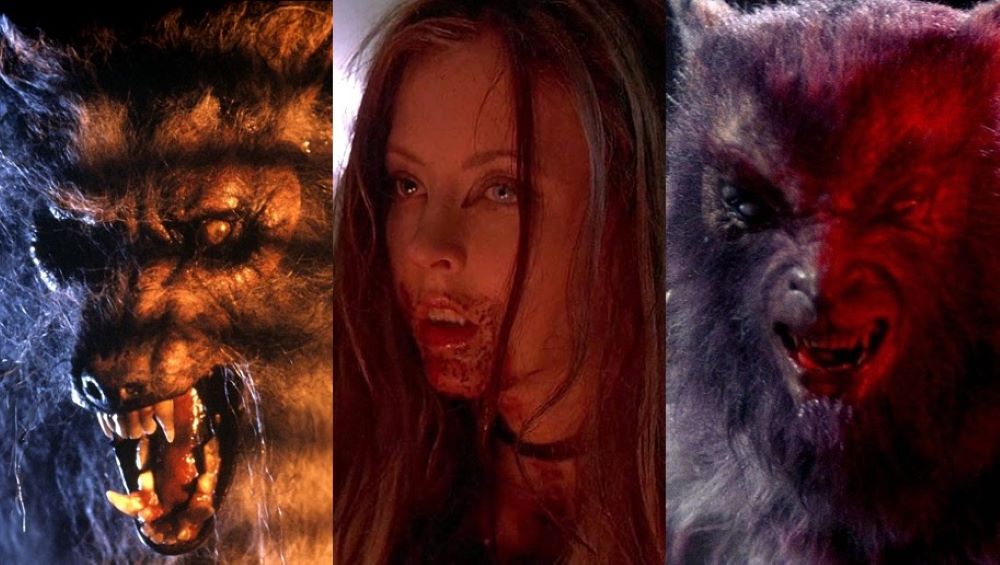
Wolf (1994, directed by Mike Nichols)


Will Randall (Jack Nicholson), the editor-in-chief of a New York Publishing house, doesn’t get much respect, not from his wife (Kate Nelligan), not from his boss (Christopher Plummer), and certainly not from Stuart Swinton (James Spader), the sleazy executive who is plotting to steal his job and destroy his marriage.  But then, one night, Will runs over a black wolf on a country road.  When he tries to helps it, the wolf bites him.  Soon after, Will starts to feel different whenever the moon is full.

I remember that, when Wolf came out in 1994, some people said that casting Jack Nicholson as a werewolf seemed like typecasting.  Nicholson apparently understood this as well so he actually downplays his usual mannerisms for the first part of the movie and gives a convincing performance as a harried executive who is worried he’s about to lose his job.  It’s only after he is bitten that Will Randall starts to come alive.  Not only does he develop the predator instinct necessary to survive in New York City but he also, without fear, pursues his boss’s daughter, Laura (Michelle Pfeiffer, at her most beautiful).  Typecast or not, Jack Nicholson is excellent in Wolf.  Equally good is James Spader as Will’s business rival, who starts to show some predator-like aspects of his own.

Director Mike Nichols was not normally a horror director and, around the midway point, his direction falters and there are times when he just seems to be going through the motions.  He gets good performances from his cast but doesn’t know how to craft a good jump scare.  The best parts of the movie are when Wolf uses lycanthropy as a metaphor for petty office politics, with Will “marking” his territory while talking to Stewart and showing a renewed killer instinct.  Wolf works better as a social satire than as a horror movie.

Fans of Frasier will be happy to see David Hyde Pierce in a small but key role.  He delivers the film’s best line.  Fans of Friends may also notice David Schwimmer in a small role.  He says nothing worth remembering.  Their presence, though, is a reminder of just how much American culture changed in 1994.  By the end of the year, both went from small roles in Wolf to co-starring in the two of the most popular sitcoms in America.

Under the Moon’s Shadow: The Many Faces of the Modern Werewolf in Cinema


“Beneath the full moon’s gaze, the werewolf’s howl reminds us that the monster we fear most lives within.”

Werewolves have been haunting movies for almost a century, capturing our deepest fears and hidden desires. But today’s werewolf films go beyond the classic horror formula, offering fresh takes that reflect different genres, tones, and cultural vibes. From the intense, action-packed Dog Soldiers to the emotionally charged coming-of-age story in Ginger Snaps, modern werewolf stories keep evolving. This piece explores five standout films—Dog Soldiers (2002), Ginger Snaps (2000), Wolfen (1981), The Howling (1981), and An American Werewolf in London (1981)—to see how they each put their unique spin on the age-old monster myth.

The Werewolf as Warrior: Dog Soldiers’ Brutal Siege

Neil Marshall’s Dog Soldiers breaks away from the lonely, tragic werewolf trope and cranks up the action. Set deep in the Scottish Highlands, it throws a squad of British soldiers against a ferocious pack of werewolves. This film turns the myth into a survival war story packed with tension and raw energy, reminiscent of classics like Aliens and Zulu. The werewolves here aren’t lonely victims—they’re terrifying predators, more beast than man, rarely fully shown to keep the suspense sharp. The movie focuses on the squad’s fight to survive and the bonds they share, putting teamwork and instinct front and center.

The werewolves are intentionally faceless threats, less about human drama and more about pure danger. Instead of personal transformation, Dog Soldiers is about external combat, the struggle between man and beast in its rawest form.

Adolescence Unleashed: Ginger Snaps and the Lycanthropic Metaphor

Ginger Snaps takes a totally different route, using werewolf transformation as a metaphor for female puberty and all the confusing emotions that come with growing up. The bridge between monster and metaphor is Ginger’s first period, which triggers her curse and mirrors the changes and fears of adolescence. The movie digs deep into sisterhood, identity crises, and the loss of control, wrapping its horror in psychological drama and dark humor.

Instead of flashy creature effects, Ginger Snaps keeps things subtle, focusing on emotional truth. It’s a personal story about change and fear of becoming “other,” making the monster symbolic of real-life struggles rather than just an external threat.

Urban Shadows: Wolfen’s Mystical Guardians of Decay

Wolfen stands apart for taking the werewolf myth into the world of urban decay and social unrest. Set in New York City’s rundown South Bronx, it follows detectives chasing a mysterious “Wolfen” creature tied to Native American spirituality. These aren’t just monsters—they’re ancient protectors fighting back against the destruction of nature by the city.

This movie trades fast-paced horror for slow-building atmosphere and social commentary. It uses the werewolf myth to reflect on displacement, environmental trauma, and the clash between nature and modern life.

Satire and Savagery: The Howling’s Shifting Tones

Joe Dante’s The Howling mixes body horror, camp, and satire in a way few horror movies do. The film tracks a journalist who stumbles upon a hidden werewolf colony and shifts effortlessly between chilling scares and self-aware humor. The transformation scenes set a new standard with unforgettable effects, and the movie sneaks in sharp critiques of media culture and cult mentality.

The werewolves in The Howling have a raw, animalistic design inspired by medieval art, which adds to the unsettling vibe. The film plays with expectations, flipping between serious horror and playful camp to keep viewers on their toes.

Tragedy and Humor: An American Werewolf in London’s Genre Fusion

An American Werewolf in London changed the game by blending horror, comedy, and tragedy all in one. It tells the bittersweet story of an American backpacker cursed after a werewolf attack in England. The special effects were groundbreaking, making the transformation scenes legendary. But more than the effects, its mix of sharp wit and real sadness gives it an emotional depth rare for horror films.

Unlike the external threats in Dog Soldiers or Wolfen, this film focuses on the inner turmoil of becoming a monster and the tragic human cost. The humor lightens the mood but never undercuts the emotional punch.

Thematic and Stylistic Divergence: A Closer Look

What stands out most when looking at these films is just how differently each approaches the werewolf myth, using it to tap into a wide variety of fears and ideas.

Tone and Mood

The films differ widely in tone. Dog Soldiers is intense and gritty, pulling viewers into a tense battle for survival marked by an unrelenting external threat. In contrast, Ginger Snaps is more reflective and symbolic, presenting the werewolf as a metaphor for adolescent change and identity struggles, especially in the context of female puberty. Its tone is intimate and emotionally charged.

Wolfen adopts a slower, more brooding atmosphere, emphasizing mystery and social critique through ecological and urban decay themes. The Howling fluctuates between genuine body horror and camp satire, challenging viewer expectations with its mix of fear and humor. Finally, An American Werewolf in London balances horror and comedy with a tragic undertone, creating an emotional complexity that few other werewolf films achieve.

Narrative Focus

The stories told by these films further highlight their differences. Dog Soldiers centers on a group dynamic, focusing on survival against a faceless external menace. Ginger Snaps is more inward-looking, exploring personal growth, family bonds, and the emotional upheaval of transformation.

Wolfen zooms out to look at social and environmental issues, making the werewolf a symbol of nature fighting back against urban chaos. Similarly, The Howling blends personal horror with cultural critique, exploring media obsession and cult psychology, all while keeping the story focused on its characters. An American Werewolf in London chooses to dive deep into one man’s tragic journey, showing the emotional impact of becoming a monster.

Cultural Themes

Together, these films show how the werewolf myth can reflect whatever fears or themes society is grappling with. Dog Soldiers taps into worries about survival and overwhelming outside forces; Ginger Snaps gets at the confusion and pain of growing up; Wolfen reflects alienation and environmental concerns; The Howling examines media hype and societal madness; and An American Werewolf in London highlights inner conflict and loss.

This broad range of themes and styles proves the werewolf legend is still incredibly adaptable—still a powerful way for films to engage with human experience in all its complexity.

Other Modern Werewolf Films in Context

Beyond these main works, many other films contribute to the werewolf legacy. The Company of Wolves (1984) explores gender and sexuality through fairy tale visuals. Silver Bullet (1985) adapts Stephen King for a small-town horror tale. Joe Johnston’s The Wolfman (2010) revives gothic horror with modern effects and includes standout makeup work by Rick Baker, delivering a visually rich yet emotionally complex take on the classic. Mike Nichols’ Wolf (1994) uses lycanthropy as a metaphor for aging and desire.

Most recently, Leigh Whannell’s remake of The Wolfman (2024) offers a fresh perspective on the myth, blending psychological horror with visceral transformation sequences. Whannell’s version emphasizes the protagonist’s internal struggle and familial curses within a contemporary setting, melding suspense with a nuanced character study and updated special effects to appeal to modern audiences while honoring the gothic roots.

Adding a lighter touch is The Monster Squad (1987), where a group of kids face off against classic monsters—including a reluctant Wolfman—in a mix of horror, adventure, and youthful courage. Its playful tone offers a nostalgic, fun take on the werewolf legend, proving that these creatures can captivate across genres and generations.

Together, these films highlight how the werewolf myth keeps evolving, adapting to reflect new cultural moments and storytelling styles.

Conclusion: Why the Werewolf Still Howls

The lasting power of werewolves in cinema lies in their extraordinary adaptability. These films show how the werewolf morphs to fit different narratives and cultural concerns: from brutal external threats in Dog Soldiers to metaphors for personal growth in Ginger Snaps; from mystical protectors in Wolfen to symbols of media mania in The Howling; and from tragic heroes in An American Werewolf in London to youthful adventurers in The Monster Squad.

The werewolf is not just a monster of flesh and fur but a cultural shape-shifter—malleable, symbolic, and endlessly fascinating. Its transformations mirror not only physical change but societal anxieties, personal struggles, and the complexities of human nature. This versatility guarantees the werewolf’s howl will echo across cinema for generations to come.

Payday 2


Payday2_logo_white

A little while back, a little studio called Overkill put a game on Steam called Payday: The Heist. The release completely passed me by. In fact, I was totally ignorant even of the existence of the title until a group of my friends all bought it and decided to start robbing banks together. They were so taken with it that they demanded that I join them, and I couldn’t have been happier with the purchase. We passed many nights (and into the early mornings, sometimes!) trying to grind our way through harder difficulties, and try to learn more advanced ways to stealth through the various ‘heists’, which included stuff ranging from your standard-issue bank job through a Left 4 Dead inspired hospital mission called, fittingly, No Mercy, where a shadowy anonymous buy was willing to pay bank in exchange for a sample of infected blood.

The game was marked by a number of good ideas. It includes minor RPG elements in that your account ‘levels up’ as you play more heists, granting access to useful abilities. In the original game, most of these bonuses were tied directly to weapons and armor and your ability to last in combat against the inevitable waves of police and SWAT forces that would attempt to keep you from escaping with your ill-gotten gains. Being stealthy at the start of a heist by using silenced weapons and preventing any civilian hostages in the area from escaping to summon help could pay significant dividends as you waited for your large thermal drill to bore its way into this vault or that one. A variety of weapons and gadgets rounded out your heisting arsenal, modeled off of real-life weapons augmented by just a bit of fancy. The game included multiple difficulty levels for every heist which would affect the number and types of enemies that spawn, and add other random factors that could make heists substantially more challenging. Indeed, that random AI Director feature of the game also helped its replayability dramatically, as heists could play out very differently if things went right – or very much wrong.

Payday 2 improves noticeably upon almost all of this. The heists are now more elaborate, including multi-day criminal enterprises (such as a ‘Watchdog’ mission where you must first secure a shipment of cocaine against an FBI operation, then in ‘day 2’ load the coke onto a drug boat at the docks, all while under police assault), and a wider variety of possible objectives – your crew are no longer strictly robbers, but rather highly skilled specialists for higher, men of limited principles and significant hardware.

The skill trees (Mastermind, Enforcer, Technician and Ghost, respectively) now include a wider variety of abilities, many of which can be directly employed for greater speed or stealth in the missions. Now, being a high level player with access to the best gadgets can make the simpler heists significantly easier, allowing the players to focus on the greater challenges of high difficulty level multi-day jobs. I personally find it very rewarding to try and work through missions in a stealthy way. Not only can some rewards become greater when you don’t have to battle you way through police lines, but the heists can also (often) be done cleaner and more quickly with the application of stealth. Returning is the oft-failing thermal drill which is the centerpiece of a number of missions where you try to gain access to a safe or other place you shouldn’t be, but this can now be circumvented if your technician is skilled enough to deploy shaped charges to blow off hinges, or if your ghost has an ECM Jammer that can bypass electronic security. The Mastermind can talk down inquisitive guards on the other end of the phone, easily intimidate and control civilians, and provide a slew of buffs to the group, and the Enforcer can (among so many other things) bring a powerful rotary saw to slice open less-imposing lockboxes, ATM machines, and encroaching enemies who draw too close.

Also notable in Payday 2 is a more credible electronic opponent. In the original game, the challenge was typically increased by sending more powerful units earlier in the mission, legions of ‘special’ units, and an unending stream of SWAT goons and their guns. To an extent, this is still completely true. However, the enemy now employs lesser raw numbers in favour of better tactics, and more threatening enemy units. Of course, stealth your way through the missions, and you may never have to suffer their wrath…

Payday 2 is not by any means a perfect game, however. The mission select is now done through an interface called Crime.net, which is a black and white overhead map of a city on which missions appear as ‘pings’ (as if the job just became available, complete with a timer before the job eventually disappears). Because of this system, if your crew is in favour of running a particular heist, it quite literally might take as long as half an hour of ‘browsing’ Crime.net for it to appear (or perhaps even longer!). In the most recent update, Overkill added some very basic filters to the Crime.net interface, allowing you to opt out of missions below a certain difficulty level… but this seems woefully inadequate. Though the game contains 10 heists, they re-use a couple of maps between them, and some of them are completely basic – there’s almost nothing to them. These are offset by some very complex heists higher up in pay scale, but some of them start to feel less replayable after a couple of solid nights with the group. This happened in the first game too, of course, but it’s much more annoying now with the obstacle of Crime.net possibly throwing you copy after copy of an undesirable heist that you are totally burned out on… instead of something you’d really like to do. I frankly do not understand the creative choice behind not offering better filters for this system.

While it is true that the police do not attack in such great numbers as before, they do still leave a lot of artifacts around the map, with corpses, piles of ammo, and miscellaneous gear (such as riot shields) strewn about, and I have seen the game start to chug on systems that are powerful enough to run many other contemporary games without issue. By its nature, this is probably something that’s hard for this game to overcome, but it’s a frustrating problem to have when the key resource that you need to enjoy this game to its fullest is friends who can also play it with you.

Yes, Payday 2 has in-game voice chat, and yes, you can jump into public games with strangers anytime you want. Some people might really enjoy doing so, in fact, and I don’t really mind it…. but I would much rather gather a group of 3 friends to roll with and work in tandem to complete heists. The AI team-mate can be valuable in combat because of their accuracy (though sometimes the team AI seems bewildered in a way the police AI rarely is… failing to respond even in a dire emergency) but is also frustratingly useless as they cannot transport filthy lucre, or drugs, or whatever, cannot advance mission objectives, and will occasionally blunder into unwinnable firefights against a legion of police in the middle of the street… where they can’t even be reached for a quick revive. As a result, you really want a full party, regardless of how you have to get it.

One thing to admire entirely about Payday 2 is its price point. At $29.99 on Steam (it’s also available on Xbox 360 and Playstation 3, the physical media involved means your price point will be $39.99 instead), this game has real value, though I can’t necessarily recommend it if you don’t have at least one friend who would be willing to buy the game as well and commit to playing it with you. Your mileage may vary with teaming up with strangers (I’ve had a mixed bag of results, myself) but I wouldn’t have purchased the game without friends I knew for certain would play, so I certainly won’t tell you to do it!

Lisa Marie’s 6 Favorite Super Bowl Commercials


Only one of these commercials made Lisa’s top six.

Yes, I did watch the Super Bowl this year.  I don’t really know much about football but my boyfriend’s from Baltimore so I cheered for Baltimore during tonight’s game and I made sure to wear my favorite purple bra and thong.  (Of course, I was  wearing more clothes than just those two items but apparently, the important thing was that I was wearing at least a little purple.)    However, I have to admit that I was mainly watching the game for the commercials!

Super Bowl commercials have become something of an American tradition, beyond the fact that most of them tend to be overproduced and kinda sucky.  But every year, after the game has been played, people spends weeks debating which commercial was the best.

With that in mind, here are my 6 favorite commercials of Super Bowl XLVII.

6) Samsung Mobile USA — The Next Big Thing

It goes on a little long but I still liked it.

5) E-Trade — Baby Gone Wild

I don’t care what anybody says, I like the E-Trade Baby.

4) Mercedes-Benz — Willem DaFoe is Satan.

It’s really not that much of a shock.

3) M&Ms — I Would Do Anything For Love

I love how upset the M&Ms get over the prospect of being eaten.  They’ve got a point, to be honest.

2) Budweiser — “Brotherhood”

This commercial made me cry.

1) Calvin Klein — “Concept”

You probably already knew this was going to be number one.  This commercial was the perfect antidote to years of creepy GoDaddy commercials.