There’s one rule in life that should never be forgotten.
Any movie that opens with Susan Lucci casting a hex that causes a man’s head to explode is going to be worth watching.
That’s certainly the case with Invitation to Hell, a 1984 made-for-TV movie that was directed by Wes Craven and which casts Lucci as Jessica Jones, an insurance agent who lives and works in an upper class suburb in Southern California. Jessica not only sells insurance but she also runs the ultra-exclusive Steaming Springs Country Club! Anyone who is anyone in town is a member of Steaming Springs! That include Matt Winslow (Robert Urich) and his family. Matt soon comes to suspect that something strange might be happening at the club. Fortunately, Matt’s spacesuit comes with a flame thrower, a laser, and a built-in computer that can determine whether or not someone is actually a human being. (Wearing the space helmet means viewing the world like you’re the Terminator.) Soon, it’s science vs. magic as Matt dons the suit and tries to rescue his family from country club living!
Totally ludicrous and a lot of fun, this is a film that has a little bit for everyone — familiar television actors, flamethrowers, space suits, demonic possession, exploding cars, and even a little bit of social satire as the film suggests that living in the suburbs is a terror even without weird country clubs and chic spell casters.
Today’s horror on the lens is a 1978 made-for-TV movie that was directed by Wes Craven. Originally entitled Stranger In Our House, it was retitled Summer of Fear when it was released into theaters in Europe. Personally, I think Summer of Fear is a better title. It has a fun R.L. Stine feel to it.
As for the film itself, it tells the story of what happens when the recently orphaned Julia (Lee Purcell) moves in with her distant relations in California. At first, Julia fits right in with her new family but, slowly and surely, her cousin Rachel (Linda Blair) comes to suspect that Julia might be a witch. And hey, who can’t relate to that? Seriously, everyone has that one cousin…
This October, I’m going to be doing something a little bit different with my contribution to 4 Shots From 4 Films. I’m going to be taking a little chronological tour of the history of horror cinema, moving from decade to decade.
Today, we continue the 90s!
4 Shots From 4 Horror Films
Dellamorte Dellamore (1994, dir by Michele Soavi)
In the Mouth of Madness (1994, dir by John Carpenter)
Scream (1996, dir by Wes Craven)
From Dusk Till Dawn (1996. dir by Robert Rodriguez)
In a base hidden away in the desert, a group of government scientists reanimate the corpse of a recent suicide victim with radiation. They bring Thor (Dan Blom) back to life but it turns out that Thor just wants to kill all of them.
Mind-numbingly dull, MindRipper is the same as a hundred other horror films with the same plot. Lance Henriksen plays the lead scientist and it’s always a pleasure to see him in even the worst movies but Mind Ripper underutilizes him in favor of Giovanni Ribisi, of all people.
Mind Ripper was executive produced by Wes Craven and sold in some markets as Wes Craven Presents Mind Ripper. Wes’s son, Jonathan Craven, did write the script and the movie was originally planned as being the third Hills Have Eyes movie. Wes Craven’s name undoubtedly helped this film get into production but the thing to remember is that Craven may have been the executive producer and his son may have written but Wes Craven did not direct the movie and that makes all the difference. Maybe Wes Craven could have done something with the limp story and the uninteresting characters. My guess is that Wes Craven was smart enough not to even try.
Don’t let this movie rip your mind. It’s not worth it.
This October, I’m going to be doing something a little bit different with my contribution to 4 Shots From 4 Films. I’m going to be taking a little chronological tour of the history of horror cinema, moving from decade to decade.
This October, I’m going to be doing something a little bit different with my contribution to 4 Shots From 4 Films. I’m going to be taking a little chronological tour of the history of horror cinema, moving from decade to decade.
Today, we start the savage 70s!
4 Shots From 4 Horror Films
The Shiver of the Vampires (1970, dir by Jean Rollin)
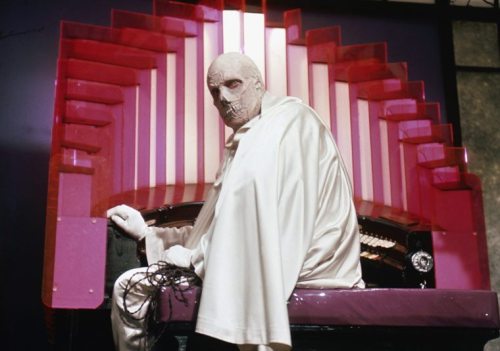
The Abominable Dr. Phibes (1971, dir by Robert Fuest)
The Last House On The Left (1972, dir by Wes Craven)
“Violence is a language written in blood; it tells the story of those who refuse to be silenced.”
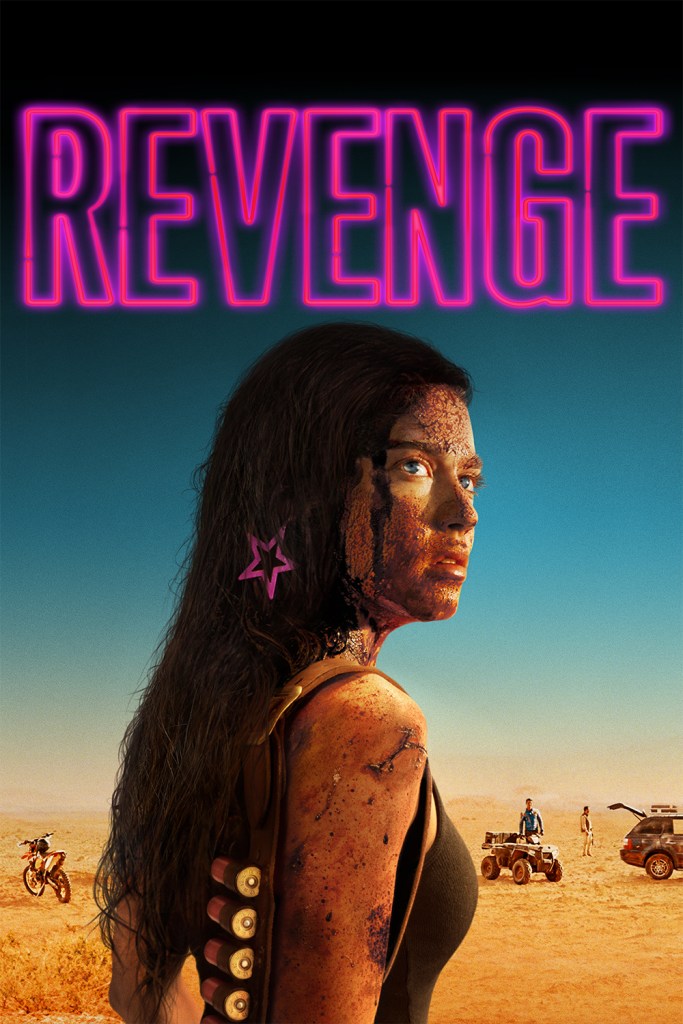
Coralie Fargeat’s 2017 film Revenge is an intense and striking blend of horror and thriller that refreshes the rape-revenge genre with a strong emphasis on female empowerment and resistance. At its core, the film follows Jen, a young woman who is brutally assaulted and left for dead in a desert. Against all odds, she survives and seeks brutal revenge on her attackers. What makes Revenge stand out is its blend of graphic, realistic violence and a striking, highly stylized visual approach, resulting in a film that is both visceral and symbolic.
Revenge sits within a long tradition of rape-revenge films that includes both grindhouse exploitation and serious art films. One of the earliest and most influential films in this tradition is Ingmar Bergman’s The Virgin Spring (1960), a somber and moral exploration of a father’s response to his daughter’s rape and murder in medieval Sweden. Bergman’s film inspired many later works, including Wes Craven’s famously brutal The Last House on the Left (1972), which reinterprets the same story through the lens of exploitation horror. Other notorious examples include I Spit on Your Grave (1978), known for its graphic depiction of sexual violence and violent retaliation. More recent films like Jennifer Kent’s The Nightingale (2018) revisit these narrative themes with psychological and political depth. Fargeat’s Revenge draws on this history, combining symbolic storytelling and thematic depth with the raw brutality and energy of grindhouse exploitation.
The narrative structure of Revenge is familiar: Jen, introduced as the mistress of a wealthy man, is assaulted by his friends. Her lover Richard tries to silence her by pushing her off a cliff, but Jen survives, severely injured and impaled on a tree. Her journey is one of intense physical suffering, but also resurrection and fierce empowerment. The film’s use of bright, vivid colors such as hot pinks and blues shifts the story into a surreal, symbolic space where gender roles are exaggerated and the desert becomes a mythic battleground where Jen fights to reclaim control.
Fargeat depicts Jen’s trauma and physical recovery through graphic and detailed body horror—not simply for shock, but as a visual metaphor for reclaiming agency. For example, Jen’s self-treatment of her impalement wound with a hot beer can brands her skin and symbolizes her rebirth and determination. These elements mark a clear departure from earlier rape-revenge films that sensationalized female suffering, shifting the focus to the survivor’s power and autonomy.
Cinematographer Robrecht Heyvaert’s work enhances this dynamic, contrasting the bright, harsh desert landscape with the cold, sterile luxury of Richard’s home. This contrast symbolizes the clash between raw survival and social control. The violence throughout the film is explicit and often hard to watch, but it is deeply rooted in the reality of trauma rather than fantasy.
Matilda Lutz’s performance as Jen is a key strength of the film. She transforms from a vulnerable, objectified figure into a fierce, focused avenger. The male antagonists are less developed, serving as archetypes of toxic male dominance—entitlement, violence, and cowardice—and their downfall reflects the collapse of that social order.
While Revenge maintains the fast pace and suspense of a thriller, its focus on graphic body horror and trauma places it firmly within the horror genre, aligning with the French Extremity movement known for its intense depictions of suffering and transgression. The source of horror here is not supernatural but very much rooted in the physical and psychological impact of violence.
The film has been praised for its technical skill and its focus on female resistance and empowerment. Instead of exploiting female suffering, it forces audiences to confront violence and trauma in a way that centers strength and rage. This is a clear reimagining of the revenge narrative through a modern lens that highlights resilience.
Revenge stands as both a tribute and a reinvention within its genre. It nods respectfully to the moral complexity of Bergman’s The Virgin Spring, the shock tactics of grindhouse staples like The Last House on the Left and I Spit on Your Grave, and the psychological depth of The Nightingale. Yet it simultaneously reinterprets these influences, making a statement that is both timely and provocative.
Coralie Fargeat’s Revenge is a powerful and contemporary entry into the rape-revenge genre, blending horror and thriller conventions with a focus on survival and agency. The film explores the physical and emotional effects of trauma and the possibility of reclaiming power through violence. Its vivid visuals, symbolism, and intense violence challenge audiences to rethink assumptions about gender, justice, and survival. It is a film that provokes strong reactions while delivering a deeply felt story of empowerment and resilience.
I always assumed that this song was specifically written for one of the Nightmare on Elm Street movies but actually, the Fat Boys were just fans of the movies and they decided to put a song about them on one of their albums. The song was included in The Freddy Krueger Special, which aired on CBS in 1988.
This video, which features several of Freddy’s victims and Robert Englund himself, was written by Wes Craven and directed by Harvey Keith. Keith directed a few films, including 1988’s Mondo New York and 1990’s Jezebel’s Kiss.
Today, the Shattered Lens wishes a happy birthday to actress Neve Campbell!
This horror scene that I love comes from 1996’s Scream. In this scene, Sidney Prescott (Neve Campbell) explains to Ghostface why she doesn’t like horror movies. Unfortunately, when you’re trapped in the middle of one, it really doesn’t matter whether you enjoy the genre or not.
The year is 1972 and the news is grim. The fighting continues in Vietnam. The protests continue at home. Crime is rising. The economy is struggling. Groups like the Weathermen and the SLA are talking about taking the revolution to the streets. In New York, the notorious murderers Krug Stillo (David Hess) and Fred “Weasel” Podowksi (Fred Lincoln) have broken out of prison and are one the run. They are believed to be traveling with Krug’s drug-addicted son, Junior (Marc Sheffler), and a woman named Sadie (Jeramie Rain), who is said to be feral and bloodthirsty.
However, Mari Collingwood (Sandra Cassel) doesn’t care about any of that. She’s just turned seventeen and she can’t wait to go to her first concert with her best friend, Phyllis (Lucy Grantham). Mari is naive, optimistic, and comes from from a comfortably middle-class family. Phyllis is a bit more worldly and tougher. As she explains it, her family works in “iron and steel.” “My mother irons, my father steals.”
While Mari’s parents (Richard Towers and Eleanor Shaw, though they were credited as Gaylord St. James and Cynthia Carr) bake a cake and prepare for Mari’s birthday party, Mari heads into the city with Phyllis. Before they go to the concert, they want to buy some weed. When they see Junior Stillo hanging out on a street corner, they assume he must be a dealer and they approach him. Junior takes them to an apartment, where they are grabbed by Weasel and Krug.
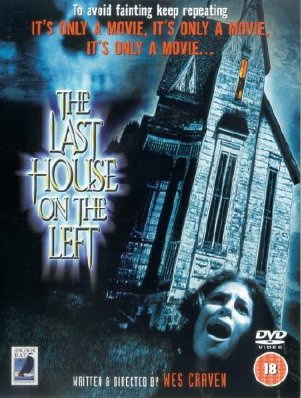
1972’s The Last House On The Left was advertised with the classic (and much-repeated line), “To avoid fainting, keep repeating, ‘It’s only a movie …. it’s only a movie…. it’s only a movie….” That advice is easy to remember during the first part of the film because, up until Mari and Phyllis approach Junior, the movie is fairly cartoonish, with Richard Towers giving an incredibly bad performance as Mari’s father. This film was Wes Craven’s debut as both a director and a writer. By his own admission, Craven had no idea what teenage girls would talk about and, as such, he just wrote a lot of dialogue in which Mari talked about her breasts and Mari’s mother complaining that young women no longer wore bras. (On the commentary that he recorded for the film’s DVD release, Craven succinctly explained, “I guess I was obsessed with breasts.”) This part of the film plays out like a weird counter-culture comedy. Even when we first meet Krug, he’s using his cigar to pop a little kid’s balloon.
The Last House On The Left (1972, dir by Wes Craven, DP: Victor Hurwitz)
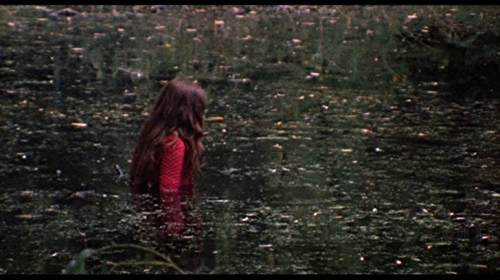
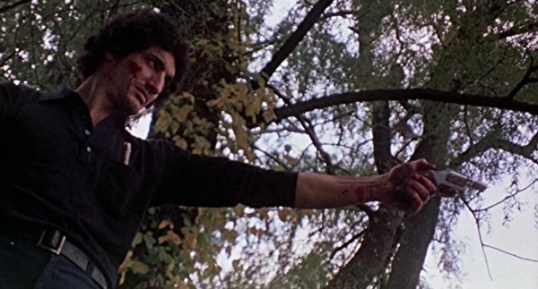
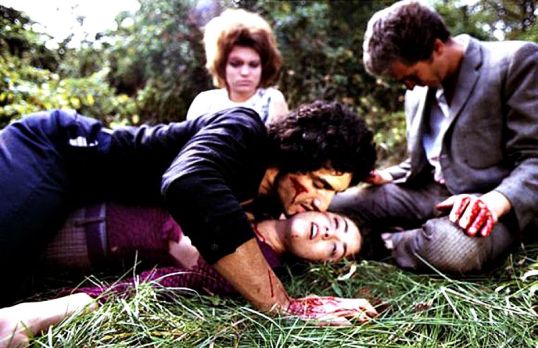
The tone of the film jarringly shifts the minute that Mari and Phyllis step into that apartment. That’s largely due to the performances of David Hess and Fred Lincoln, who are both so convincing in their roles that it can be difficult to watch them. In real life, Fred Lincoln was a stuntman (he’s in The French Connection) and an adult film actor. David Hess, meanwhile, was a songwriter who was looking to break into acting. (Hess’s songs — some of which are beautifully sad and some of which are disturbingly jaunty — are heard throughout the movie.) Hess, in particular, is so frightening as Krug that he spent the rest of his career typecast as sociopathic murderers. The middle part of the film alternates between disturbingly realistic scenes of Mari and Phyllis being tortured and humiliated and cartoonish scenes involving two incompetent cops (one whom is played by Martin Kove) and Mari’s parents. Phyllis is murdered and dismembered in a graveyard and the gore effects remains disturbingly realistic even when seen today. Mari, after being raped by Krug, recites a prayer, and then wades into a nearby lake. Krug shoots her three times. Afterwards, Krug, Weasel, and Sadie try to wash the blood off of themselves, the expression on their faces indicating that even they understand that they’ve gone too far.
Eventually, Krug, Weasel, Sadie, and Junior stop off at a nearby house, claiming to be salespeople who just had a little car trouble. What they don’t realize is that the people who are generously welcoming them to spend the night are also the parents of Mari Collingwood….
Basing his script on Ingmar Bergman’s The Virgin Spring, Wes Craven has often said that The Last House On The Left was meant to be a commentary on the Vietnam War and the way that other films had glamourized violence. That may or may not be true. (Craven has also said that, at the time, he was so desperate to direct a movie that he would have filmed almost anything.) What is true is that the violence in Last House On The Left is not easy to watch. Once it starts, it’s relentless and, at no point, is the audience given an escape. David Hess is so committed to playing a sadist that he never takes a moment to wink at the audience and say, “Hey, we’re just playacting here!” Craven shot the film in a guerilla style and the shaky camera, the natural light, and the grainy images leave you feeling as if you’re watching some sicko’s home movies. At the end of the movie, when Mari’s parents take the same joy in attacking her killers as Krug took in attacking their daughter, it’s hard not to feel that Mari has been forgotten. Everyone has been consumed by the violence that has erupted around them. Even though Richard Towers’s nearly blows the ending with a few hammy line readings, the film still leaves you exhausted.
The Last House on the Left (1972, dir. by Wes Craven, DP: Victor Hurwitz)
Not surprisingly, The Last House On The Left was attacked by most reviewers when it was originally released. The movie played the drive-in and grindhouse circuit for three years, with producer Sean Cunningham often taking out advertisements in local newspapers that read: “You will hate the people who perpetrate these outrages—and you should! But if a movie—and it is only a movie—can arouse you to such extreme emotion then the film director has succeeded … The movie makes a plea for an end to all the senseless violence and inhuman cruelty that has become so much a part of the times in which we live.” The film’s advertisements also contained a warning that no one under 30 should see the movie. Needless to say, The Last House On The Left was a huge hit, especially with viewers under 30.
(One of the great ironies of film criticism is that one of the few critics to defend Last House On The Left was Roger Ebert. Ebert, who would later be one of the slasher genre’s biggest attackers, gave Last House On The Left a very complimentary review and praised it for its political subtext.)
Seen today, The Last House On The Left still packs a punch. It’s a shocking and shamelessly sordid film, one that shows hints of the talent that would make Wes Craven one of the most important directors to work in the horror genre. It’s flawed, it’s exploitive, it’s thoroughly unpleasant, and yet it’s also a film that sticks with you. It’s powerful almost despite itself. It’s not a movie that I would necessarily chose to watch on a regular basis but, at the same time, I can recognize it as being a historically important film. For better or worse, much of modern American horror owes a debt to Wes Craven’s Last House On The Left. Even today, when one is regularly bombarded with horrific images, Last House On The Left still has the power to shock.



 Through the Shattered Lens