Horror Scenes That I Love: Klaus Kinski in Nosferatu


From the 1960s until his death in the early 90s, German actor Klaus Kinski was known for being the enfant terrible of world cinema.  Kinski was a volatile talent, an often angry and occasionally violent performer who specialized in playing extreme characters and who reportedly took pride in his ability to drive directors crazy.  Kinski appeared in good films and bad films and, in every one of them, he gave the type of unique performance that only he was cable of giving.

Kinski is best-remembered for his work with his frenemy, Werner Herzog.  When Herzog and Kinski weren’t making films together, they were often criticizing each other in the press and sending one another death threats.  In the documentary My Best Fiend, Herzog documented his partnership with Kinski.  Even while Herzog talked about the time that he went to Kinski’s home with the intent of killing him, Herzog’s affection for his frequent star was obvious.  Klaus Kinski was one of a kind.

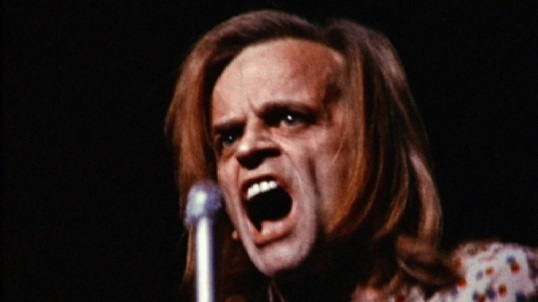
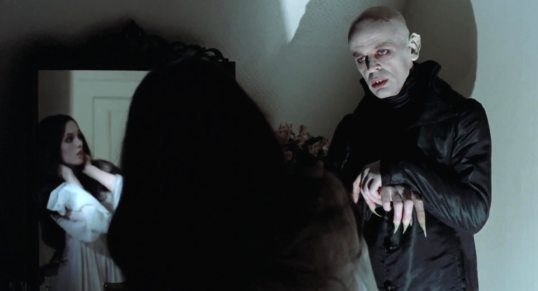
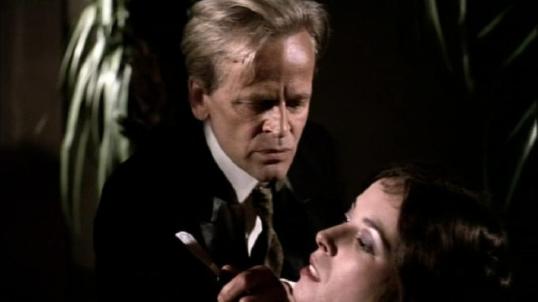
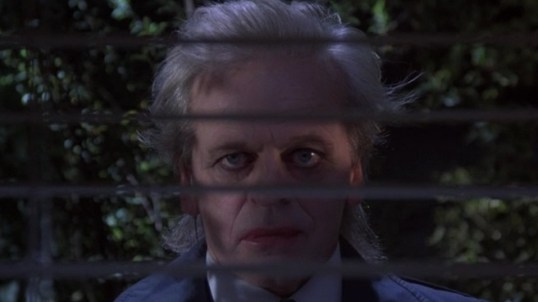
In Werner Herzog’s 1980 film, Nosferatu, Kinski played the role of Dracula.  In this scene, she comes to visit Isabelle Adjani’s Lucy.

Scenes That I Love: Aguirre Declares Himself To Be The Wrath of God


In honor of Werner Herzog’s birthday, today’s scene that I love comes from one of his best films.  1972’s Aguirre, The Wrath of God not only established Herzog as a major filmmaker but it also showed that he was the director who could get the best out of the notoriously difficult Klaus Kinski.

In this scene, Kinski plays the mad conquistador, Aguirre.  Lost with his men in the Amazon, Aguirre establishes control over the dwindling expedition.

4 Shots From 4 Films: Special Werner Herzog Edition


4 Or More Shots From 4 Or More Films is just what it says it is, 4 shots from 4 of our favorite films. As opposed to the reviews and recaps that we usually post, 4 Shots From 4 Films lets the visuals do the talking!

Today, the Shattered Lens wishes a happy birthday to one our favorite directors, the great Werner Herzog!  It’s time for….

4 Shots From 4 Werner Herzog Films

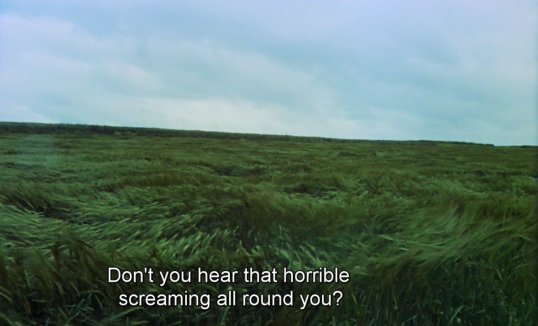
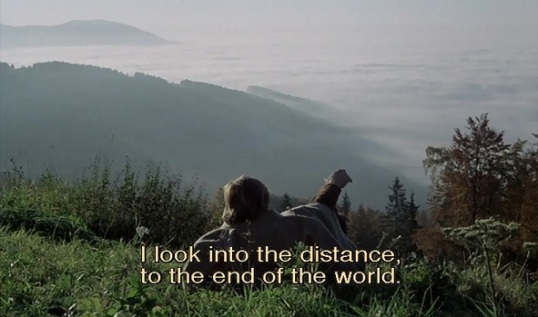
The Enigma of Kaspar Hauser (1974, dir by Werner Herzog, DP: Jörg Schmidt-Reitwein)

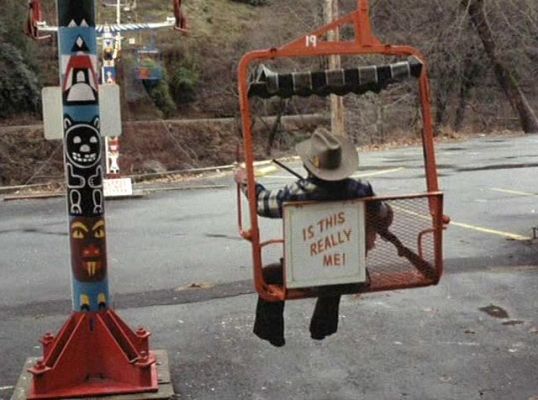
Stroszek (1977, dir by Werner Herzog, DP: Thomas Mauch)

Woyzeck (1979, dir by Werner Herzog, DP: Jorg Schmidt-Reitwein)

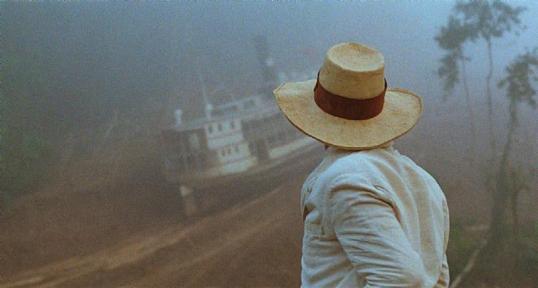
Fitzcarraldo (1982, dir by Werner Herzog, DP: Thomas Mauch)

6 Shots From 6 Horror Films: 1979


4 Or More Shots From 4 Or More Films is just what it says it is, 4 shots from 4 of our favorite films. As opposed to the reviews and recaps that we usually post, 4 Shots From 4 Films lets the visuals do the talking!

This October, I’m going to be doing something a little bit different with my contribution to 4 (or more) Shots From 4 (or more) Films.  I’m going to be taking a little chronological tour of the history of horror cinema, moving from decade to decade.

Today, we take a look at a very important year: 1979.

6 Shots From 6 Horror Films: 1979

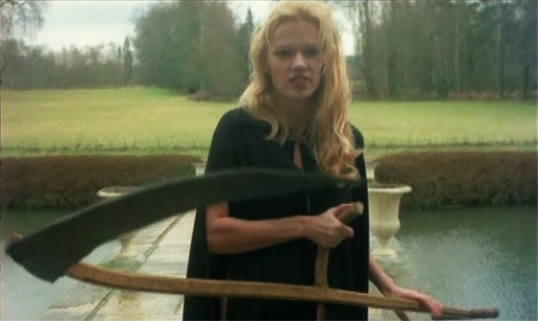
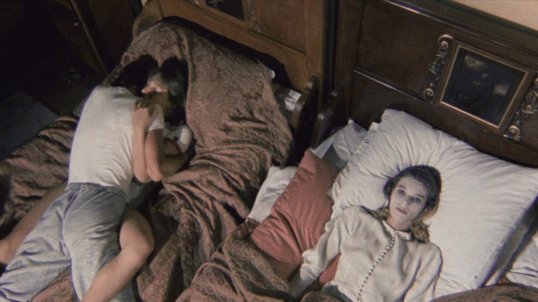
Fascination (1979, dir by Jean Rollin)

The Brood (1979, dir by David Cronenberg, DP: Mark Irwin)

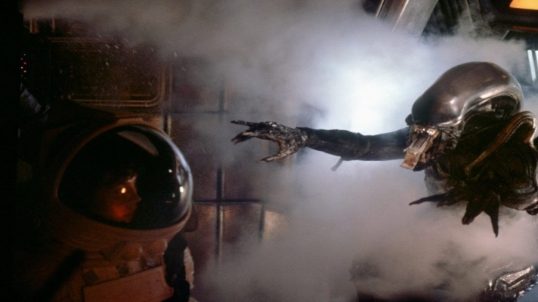
Alien (1979, dir by Ridley Scott, DP: Derek Vanlint)

Beyond the Darkness (1979, dir by Joe D’Amato, DP: Joe D’Amato)

Nosferatu The Vampyre (1979, dir by Werner Herzog, DP: Jörg Schmidt-Reitwein)

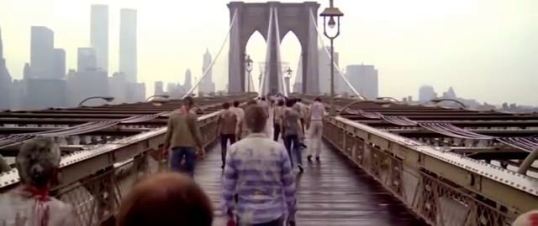
Zombi 2 (1979, dir. Lucio Fulci, DP: Sergio Salvati)

8 Shots From 8 Films: Special Werner Herzog Edition


4 Or More Shots From 4 Or More Films is just what it says it is, 4 shots from 4 of our favorite films. As opposed to the reviews and recaps that we usually post, 4 Shots From 4 Films lets the visuals do the talking!

Today, the Shattered Lens wishes a happy birthday to one our favorite directors, the great Werner Herzog!  It’s time for….

8 Shots From 8 Werner Herzog Films

Fata Morgana (1971, dir by Werner Herzog, DP: Jörg Schmidt-Reitwein)

Aguirre The Wrath of God (1972, dir by Werner Herzog. DP: Thomas Mauch)

The Enigma of Kaspar Hauser (1974, dir by Werner Herzog, DP: Jörg Schmidt-Reitwein)

Heart of Glass (1976, dir by Werner Herzog, DP: Jörg Schmidt-Reitwein)

Stroszek (1977, dir by Werner Herzog, DP: Thomas Mauch)

Nosferatu The Vampyre (1979, dir by Werner Herzog, DP: Jörg Schmidt-Reitwein)

Fitzcarraldo (1982, dir by Werner Herzog, DP: Thomas Mauch)

Bad Lieutenant: Port of Call New Orleans (2009, dir by Werner Herzog, DP: Peter Zeitlinger)

4 Shots From 4 Klaus Kinski Films


4 Shots From 4 Films is just what it says it is, 4 shots from 4 of our favorite films. As opposed to the reviews and recaps that we usually post, 4 Shots From 4 Films lets the visuals do the talking!

95 years ago today, Klaus Kinski was born in Poland.  Kinski was a brilliant actor who, by all accounts, was an absolute monster in his private life.  Werner Herzog worked with him on several films and reportedly considered murdering him on more than a few occasions.  Herzog, himself, wrote about the time that he had spent in a mental asylum and the time that was diagnosed as being a psychopath.  Because of his talent, he appeared in many great films.  Because of his reputation for being a literal madman, he also missed out on a lot of great roles and spent much of his career appearing in low-budget exploitation flicks.  Many of those films were in the horror genre.

Today, on the anniversary of Kinski’s birth, TSL presents….

4 Shots From 4 Klaus Kinski Films

Count Dracula (1970, dir by Jess Franco, DPs: Manuel Merino and Luciano Trasatti)

Jack the RIpper (1976, dir by Jess Franco, DPs: Peter Baumgartner and Peter Spoerri)

Nosferatu The Vampyre (1979, dir by Werner Herzog, DP: Jörg Schmidt-Reitwein)

Venom (1981, dir by Piers Haggard, DPs: Denys Coop and Gilbert Taylor)


Horror Scenes I Love: Klaus Kinski and Bruno Ganz have dinner in Nosferatu


Nosferatu (1979, dir by Werner Herzog)

Since today is Klaus Kinksi’s birthday, it makes sense that he should be featured in today’s scene of the day.  In this scene from Werner Herzog’s 1979 film, Nosferatu, Klaus Kinski and Bruno Ganz have dinner.  Of course, in this scenario, Bruno Ganz is Jonathan Harker while Kinski is Dracula.

(In the original, silent Nosferatu, Harker’s name was changed to Thomas Hutter while Dracula was called Count Orlok.  By the time Herzog shot his version, the characters were in the public domain and there was no longer any need to pretend that Nosferatu wasn’t an adaptation of Bram Stoker’s novel.)

Enjoy!

4 Shots From 4 Films: Special Klaus Kinski Edition


4 Shots From 4 Films is just what it says it is, 4 shots from 4 of our favorite films. As opposed to the reviews and recaps that we usually post, 4 Shots From 4 Films lets the visuals do the talking!

94 years ago today, the infamous but incredibly talented Klaus Kisnki was born.  Though Kinski appeared in many genres of film, he was an actor who seemed to be well-suited for horror films.  Today, we honor that legacy with….

4 Shots From 4 Films

Aguirre The Wrath of God (1972, dir by Werner Herzog)

Nosferatu (1979, dir by Werner Herzog)

Crawlspace (1986, dir by David Schmoeller)

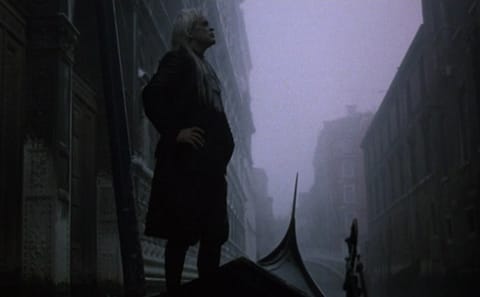
Nosferatu in Venice (1988, dir by Augusto Caminito and Klaus Kinski)

Scenes That I Love: The Finale of Aguirre, The Wrath of God (Happy Birthday, Werner Herzog!)


Werner Herzog and Friend (Image from the documentary The Burden of Dreams)

Since today is Werner Herzog’s birthday, I thought I would share a Herzog scene that I love.

Herzog is such an iconic and eccentric figure that I think there’s a tendency to overlook just how good of a director and a storyteller he actually is.  People just tend to think of him as being the man with the German accent who makes random comments about how the universe is governed by chaos.

But, he’s actually a brilliant director as well and if you need proof, just watch his 1972 film, Aguirre, The Wrath of God.  The scene below is actually from the final few minutes of the film so I guess it’s technically a spoiler if you haven’t seen the film yet.  That said, people who get upset about spoilers are wimps.

Klaus Kinski plays Aguirre, a Spanish conquistador who attempts to conquer the South America by floating down the Amazon River.  Things don’t quite go the way that he intended.  By the end of the film, all of his man are dead and a large amount of monkeys are congregating on his raft.  Has Aguirre conquered the monkeys or have they conquered him?

That’s up to the viewer to decide.

Happy birthday, Werner Herzog!

The International Lens: The Enigma of Kaspar Hauser (dir by Werner Herzog)


Once upon a time, in 19th century Germany, there was a young man who was known as Kaspar Hauser.

No one was really sure what Kaspar’s original name was or where he even came from.  He was found, in 1828, wandering the streets of Nuremberg.  He carried an unsigned letter with him, one that said that he was 16 yeas old, from the Bavarian border, and that he had been raised by someone who taught him how to read and write and about “the Christian religion.”  The note also stated that the boy had never been allowed to step out of the house before being taken and abandoned in Nuremberg.  He carried a second letter, which was supposedly from his mother and stated that the boy’s name was Kaspar and that his father had been in the Cavalry.  Some people who saw the two letters felt that they had both been written in the same handwriting, leading to speculation that Kaspar may written the letters himself.

When he was first found, it was believed that Kaspar could barely speak.  He knew the word for “Horses!” and he often repeated the phrase, “My father was cavalryman!”  As time progressed, Kaspar’s vocabulary expanded and he said that his earliest memories were of being locked away in a room.  His meals were brought to him by someone who always wore a mask.  Some people felt that Kaspar may have been the kidnapped child of a nobleman or an unacknowledged member of the royal family.  Others felt that he was a charlatan and that he was faking the entire thing.  Briefly, Kaspar was a celebrity as people from around the world wondered who he was and where he had come from.

In 1828, he was found with a cut on his forehead.  He said that he was attacked by a mysterious stranger who announced, before cutting him, “You have to die!”  The stranger was never found and there was even some speculation that Hauser had cut himself.  In 1830, he was found with another wound on his forehead, this time claiming that he had been grazed by a bullet after a gun accidentally went off.  Again, some felt that Hauser was intentionally injuring himself for the attention while others felt that the people who had held him prisoner were again trying to kill him.

Hauser was found wounded one last time, in 1833.  This time, he was found with a deep cut to his chest.  He claimed that he had, again, been attacked by a mysterious stranger.  A note was found where Hauser claimed that he had been attacked, a cryptic letter that claimed that the attacker was the same man who had previously cut Hauser’s head.  By this point, there was a lot more skepticism about Hauser and his stories and it was generally assumed that he had stabbed himself and injured himself worse than he ha intended.  It’s said that when Hauser died of his wounds, his last words were, “I didn’t do it to myself.”  Assuming that Hauser was born when the note from his mother claimed that he was, Kaspar Hauser was 21 when he died.

The mystery of Kaspar Hauser is an intriguing one and it’s one that’s explored in Werner Herzog’s 1974 film, The Enigma of Kaspar Hauser.  The film sticks fairly closely to the known facts of Hauser’s life.  For instance, Herzog does not show us the final attack on Hauser.  Instead, he just has Hauser tell us about the attack, leaving it to us to decide whether or not Kaspar is telling the truth.  At the same time, the film starts with footage of Kaspar being held in a small room.  We watch as a dark-clad stranger carries Hauser to Nuremberg and, after showing him how to walk, then abandons him on the streets of the city.  Herzog accepts Hauser’s claim that he was raised in a locked room but he leaves it to us to decide why Hauser was in that room and why he was eventually abandoned in Nuremberg.

Kaspar Hauser is played by an actor named Bruno S.  Bruno S. was a nonprofessional and he was 42 year-old when he played the 16 year-old Hauser.  And yet, Bruno S. has such an unconventional screen presence that he seems perfect for the role.  With his wide-eyed stare and his tentative movements, Bruno S. is poignantly believable as someone who is discovering the world for the same time.  As the film progresses, Hauser develops a sharp and cynical wit, all of which Bruno S. captures perfectly.

Hauser is another Herzog protagonist who, because he’s on the outside of regular society, has developed the ability to see the world in a way that no one else can.  While he lays dying, Hauser has visions of nomadic Berbers in the Sahara Desert.  Why?  Why not?  That’s the enigma of Kaspar Hauser.  As in all of his best films, Herzog embraces the questions without trying to manufacture answers and the end result is a haunting film about one of Germany’s most enduring historical mysteries.