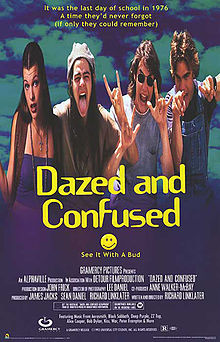
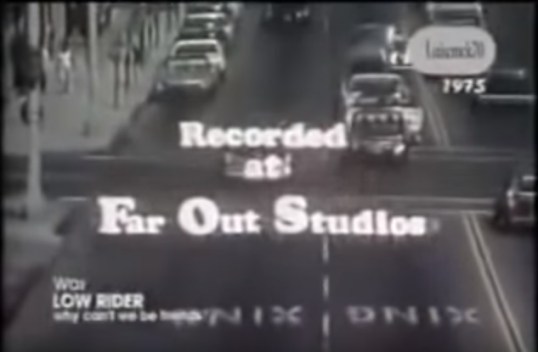
In order to celebrate San Jacinto Day, here’s one of my favorite scenes from Richard Linklater’s 1993 Texas film, Dazed and Confused. Not only does this montage introduce the viewer to the suburban Texas nightlife of 1976 but it’s also perfectly set to War’s Low Rider.
And, of course, it also features that classic line, “It’d be a lot cooler if you did.”
This is a song that really gets stuck in your head!
The song, of course, is about cars. Myself, I’ve always associated this song with Dazed and Confused. I’ve also always liked that line about the low rider getting a little higher because it’s such a 70s line. It’s like the parents think it’s about the car and the kids know it’s about the driver.
As for the video, my favorite part comes at the end:
Time for a new “AMV of the Day” entry and this time I found one that combines one of my favorite songs of the last couple years with an anime series that I’ve grown to like very much.
“War” is the title of the song and the AMV created by saberslayer. I grew to love this song after I first heard it play during my play-through of Remedy’s Alan Wakepsychological-horror game. As for the anime series Valkyria Chronicles this was something that I wasn’t sold on when I first found out it was based on the PSP strategy rpg of the same name. Not being a major fan of anything Sony gaming-related I just dismissed the series as just another attempt by Sony to push the PSP since it wasn’t selling as well as it’s rival the Nintendo DS. Well, to my surprise I tried the series and ended up really liking it.
The video really captures the feeling of the song with the backdrop of a world that’s a mix of World War II Europe with anime-style techno-magic. Saberslayer does a great job in keeping much of the hyper-editing cuts that many amv creators have fallen in love with. While the video still uses some graphical flourishes like making certain scenes play out in sepia-like tones the rest of the video is pretty straightforward in terms of editing and it allows for the song’s tempo to match the video’s pacing. Saberslayer could easily have sped things up but to the detriment of the song and the video’s overall emotional impact.
This is one AMV creator I shall keep my eyes open for whenever they release a new video.
This site has been pushing the upcoming alien invasion film, Battle: Los Angeles since the first trailer started coming out several months ago. Sony Pictures has just released the latest one and this Super Bowl tv spot is shorter than the usual trailers, but it definitely shows the potential for this film’s awesomeness.
It pretty much uses some of the same footage from the previous trailers, but shows new ones of the soldiers’ reaction to the initial stages of the invasion and how they’ll be the one’s to have to fight the big fight.
Since I had already chosen the latest AMV of the Day to feature the Finnish rock band, Poets of the Fall, I thought it only appropriate that the latest Song of the Day make it a double-billing. This latest chosen song for this music feature is “War” by Poets of the Fall.
The song features heavily in the psychological-thriller game, Alan Wake, on the Xbox 360. It’s not surprising to find Poets of the Fall as part of this game’s soundtrack since the groups past relationship with Remedy who developed the game and who also happen to be Finnish themselves. “War” was used as the score for the end of Episode Five in the game. Even the official music video shot by the band used the basic plot of the game for it’s visuals.
In years past the band’s albums were typically labeled as alternative rock which is probably why I never really heard about them until I heard them on Alan Wake. This particular song is the second track on their latest album, Twilight Theater, and moves the band from their alternative roots to a more symphonic rock sound. This symphonic sound actually gives the band a much more classic hard rock vibe than their previous albums and is probably why I’ve finally gotten into their music. And I shall continue to listen to them and their future musical endeavors if they continue on this new musical style.
War
Do you remember standing on a broken field White crippled wings beating the sky The harbingers of war with their nature revealed And our chances flowing by?
If I can let the memory heal I will remember you with me on that field
When I thought that I fought this war alone You were there by my side on the frontline When I thought that I fought without a cause You gave me a reason to try
Turn the page I need to see something new For now my innocence is torn We cannot linger on this stunted view Like rabid dogs of war
I will let the memory heal I will remember you with me on that field
When I thought that I fought this war alone You were there by my side on the front line And we fought to believe the impossible When I thought that I fought this war alone We were one with our destinies entwined When I thought that I fought without a cause You gave me the reason why
With no-one wearing their real face It’s a whiteout of emotion And I’ve only got my brittle bones to break the fall
When the love in letters fade It’s like moving in slow motion And we’re already too late if we arrive at all
And then we’re caught up in the arms race An involuntary addiction And we’re shedding every value our mothers taught
So will you please show me your real face Draw the line in the horizon ‘Cause I only need your name to call the reasons why I fought
When I thought that I fought this war alone You were there by my side on the front line And we fought to believe the impossible When I thought that I fought this war alone We were one with our destinies entwined When I thought that I fought without a cause You gave me the reason why
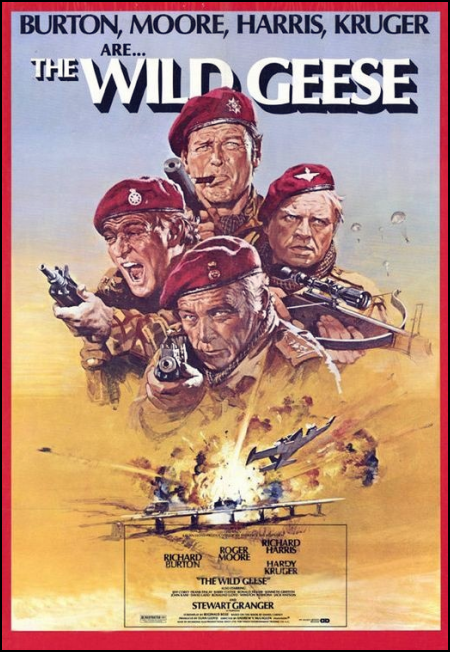
1978’s action war film The Wild Geese is an adaptation of Daniel Carney’s unpublished novel about a group of mercenaries on a mission during the turbulent revolutionary times that beset Central Africa during the 1960s and early 70s. The film features an all-star cast of British actors, a true who’s who of the era. Under the direction of Andrew V. McLaglen, The Wild Geese manages to be an action-packed and well-told film with memorable performances.
The character Colonel Allen Faulkner, played by Sir Richard Burton, is loosely based on the real-life mercenary legend Michael “Mad Mike” Hoare. Hoare not only inspired this central character but also served as the film’s military and technical advisor. Adding to the film’s authenticity, one of the actors portraying a mercenary, Ian Yule, had served with Hoare in his mercenary company. This infusion of real-life experience gives the film a vivid sense of art imitating life and lends credibility to its portrayal of mercenary warfare.
The story begins with a meeting between Faulkner and British banker Sir Edward Matheson about a rescue mission in the fictional Central African nation of Zembala. The first third follows Faulkner’s recruitment of a 50-man mercenary team, including his reluctant old friend Rafer Janders (Sir Richard Harris). The film portrays the mercenary company training and preparing for the mission before being inserted behind enemy lines. The second half details the rescue of their target: a deposed African leader about to be executed by the man who overthrew him.
During the second third of the film, the action intensifies. Though tame by today’s standards, the sequences were energetic and well-shot for their time. The mercenaries are shown not as idealized heroes but as pragmatic soldiers who use ruthless tactics—such as cyanide gas and poisoned crossbow bolts—that may shock modern audiences. This realism reflects Hoare’s influence and presents mercenaries as professionals doing a dangerous job for pay, blurring the moral lines of warfare. Betrayal during the mission tests their survival in enemy territory.
Burton and Harris deliver excellent performances as hardened war veterans, while a younger Sir Roger Moore adds roguish charm as the Irish pilot Shaun Fynn. Strong supporting roles include Hardy Kruger as Pieter Coetzee, an initially racist Afrikaner who gains new perspective on the continent’s upheaval, and Stewart Granger as the principled banker Matheson.
Though relatively small budgeted compared to other war epics of the era, The Wild Geese carries an epic feel and should have appealed more to American audiences. Unfortunately, financial difficulties with the production company affected its U.S. release. Over time, video and DVD releases built it a cult following among war and mercenary film fans, a subgenre often dominated by lesser films. McLaglen’s straightforward direction keeps the film’s pacing steady, and the story balances action with political and philosophical themes in its final act.
The Wild Geese stands as a rare gem in war cinema that delves into a little-known subgenre. With strong performances by knighted British actors, a former Hitler Youth, and real-life mercenaries as extras, the film distinguishes itself from the many flawed war movies flooding late-70s and early-80s cinema. Its roots in actual mercenary experiences, highlighted by Hoare’s real-life involvement and character inspiration, make it a compelling and underappreciated classic for aficionados of the genre.
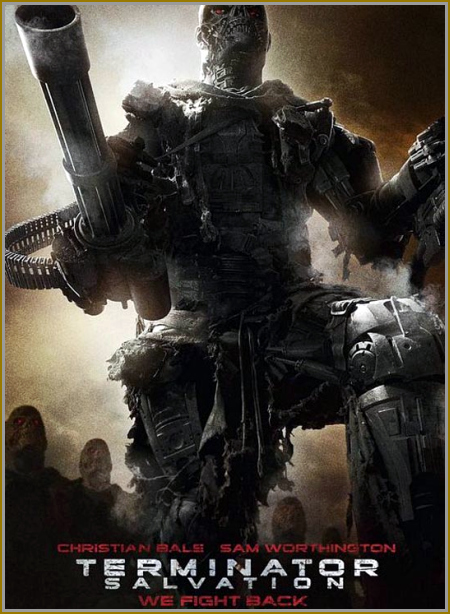
It has been 25 years since a certain James Cameron introduced the film-going public to the post-apocalyptic world of Judgement Day. While he’s never really fully shown the war-torn future ruled by the machines in the the two films he directed in the Terminator franchise he does show glimpses of it. It’s these glimpses of desperate humans fighting to survive against Skynet and its machine hunter-killing robots which have always intrigued and made its fans salivate at the thought of seeing it realized. Terminator 3: Rise of the Machines in 2003 tried to show how it all truly began, but again it just hinted at the future battlefield and not the full-blown war. It is now 2009 and the most unlikely filmmaker has finally shown what the future of Judgement Day looks like. McG’s Terminator Salvation succeeds and fails in equal amounts yet has laid the groundwork for the future of the franchise as a war series instead of of its past as installments of what really is one huge chase film.
There are many things which work in Terminator Salvation and one of them happen to be its director McG. A director who is much-maligned for his too campy Charlie’s Angels set of films would’ve been the last name to look to for a restart to the stalled franchise. His direction of this fourth entry in the series was actually very well-done. There’s none of the cartoony and way over-the-top action set-pieces of his Charlie’s Angels past. Instead he moves the film along in a brisk and energetic pace with very little downtime for much introspection. It is this pacing which makes this a good and, at times, an above-average action-film but also serves to make any of the scenes questioning what it is to be human (once again) and machine seem tacked on. The first three films in the series have delved into this theme and question too many times for a fourth attempt make it seem any more relevant than the previous times.
McG went out to make a war entry to the series and to an extent that’s what he did. While there are chases to be had it doesn’t necessarily mean its all about John Connor once again (though the film does make it a point of targeting him again in its own fashion). Terminator Salvation has finally shown what the world looks like after the events of the third film and what had been hinted and teased at in the first two. The world is a desolate place with ruins of landmarks to give the audience a reference point. We see Los Angeles a tumbling and crumbling wreck which looked eerily like something out of the recent Fallout 3 scifi-rpg game. Even San Francisco makes a post-apocalyptic appearance as a major Skynet headquarters. McG achieves this post-apocalyptic look by bleaching out the film’s color palette to the point that browns and greys dominate. He actually achieves to add grittiness to this film which his past films had never shown him having the ability to do. While this film won’t sway people to admiring his skill as a filmmaker it does show some growth. Then again he does have a hold of a film series which is nothing but B-movies elevated through bigger budgets and access to the latest in film FX. If I have any gripe to point out about the action in the film it’s that there’s not enough of it to truly convey a “War Against the Machine” scenario. We get these tantalizing hints, but not something on par of what a fuure war should look.
The budget could be seen on the screen as the film uses a combination of CGI and practical effects to pull off a much more complex robotic army for Skynet. It’s the robots and machines which keeps bringing the audience back each and every time the series releases a new entry. We don’t just have the Human Resistance fighting the typical T-800 or even the more advanced T-1000 or T-X. We get the earlier versions of these human hunting and killing machines. From a brutish and zombie-like T-600 we see in the LA-scenes to newer and bigger specialized Skynet soldiers like the anime-inspired mech Harvester which towers several stories high and literally harvests humans it finds to take back to SKynet’s R&D bases. When the original Terminator does make an appearance it’s both a welcome and a surprise as McG’s technical wizards find a way to bring back the original exactly the way it’s supposed to look. I’m sure the Governator of California would want to have that physique and youth back.
As an action-film Terminator Salvation works well enough when the action appears on the screen. Now as a film that tries to delve into the philosophical trappings of the series it doesn’t so much as fail and sink the film, but almost does which would’ve been a shame. While not the worst in the series in terms of storytelling it does come across as very scattershot in what story it wants to tell. The film actually has three ideas which could’ve been used to make it’s own film. Is the film a story of John Connor and his rise to his prophesized leadership of the Resistance (he’s a leader of a branch of fighters, but not yet of the whole group in this film)? Or is this film about the search and attempt to make sure the person who will be Connor’s father stays alive to allow what transpired in the past to happen (time-travel can be a tricky and confusing thing to comprehend)? Or is Terminator Salvation the story of the new character Marcus Wright and his quest to find out just who, or what he is exactly? It’s all three of those and all three weren’t explored enough to make one care too much for the story being told. There’s great ideas in all three but trying to combine them into one coherent storyline mostly falls flat and uninsipiring for a film trying to be the war movie in the series. For what are war movies mostly but attempts to show inspiration in the face of desperation. There’s very little of that in this film. If the writers had been given a chance to further streamline the story into one major arc then this film would have benefitted greatly in the long run.
With acting very tightly tied-in with the story being told it’s only logical that the performances by the cast rarely go beyond acceptable. Christian Bale’s John Connor is always dour and brooding. He’s almost becoming a typecast for any role that requires for him to be the down man in any party. He does this ably, but he doesn’t bring anything to the role which hasn’t already been explored in past entries. His performance does show hints of mental instability as the weight of being the savior and prophet of the human race may be starting to get to him. The other two pivotal roles in the film have more meat to play around with. Anton Yelchin as the teenage Resistance fighter destined to become John Connor’s father in the past shines in the scenes he’s in as he elevates a bland script with some youthful energy and hints of the adult Kyle Reese fans of the series know so well. Then we arrive on the newest character in the series: Marcus Wright.
Little-known Australian actor Sam Worthington was recommended by James Cameron for the role of Marcus Wright. Like Anton Yelchin’s performance, Worthington’s work in the role of Wright saves the film from mediocrity. While it is not a start-turning performance by any means Worthington does make it difficult not to pay attention to him throughout the film. The man has presence and every scene he is in shows why Cameron himself has faith in being the latest to carry the Terminator torch. The rest of the cast is quite a throwaway in that we never really get to know any of them and invest anything in their well-being.
Terminator Salvation is a very frustrating film in that there’s so much great ideas to mine. The series has always tried to explore such themes as fate, predetermination and human free will. While the third film in the series was quite lacking in memorable action sequences this fourth entry makes a mess of trying to explore these themes. Again, it seems as if the film’s script was rushed into production with very little doctoring and as the production continued forward no one bothered to point out just how average and bland the storyline does sound despite being the most overly complex of the series.
One thing I am sure of is that the one person people thought would be the weakest link in this film instead happens to be its strongest. McG and some inspired acting from two newcomers keep the film from becoming a total failure. Terminator Salvation is an able and, for most of it’s running time, a very good action film with brisk pacing and energy in its action sequences. Enough of these elements keeps the film’s fractured and scattershot of a storyline from sinking the film into total failure. As a summer tentpole action film it delivers on some of what it promises, but it could’ve been more and better. Some would settle on calling this entry in the franchise a failure, but I am always an optimist and a fan of action thus I’ll land on calling this film a successful failure.
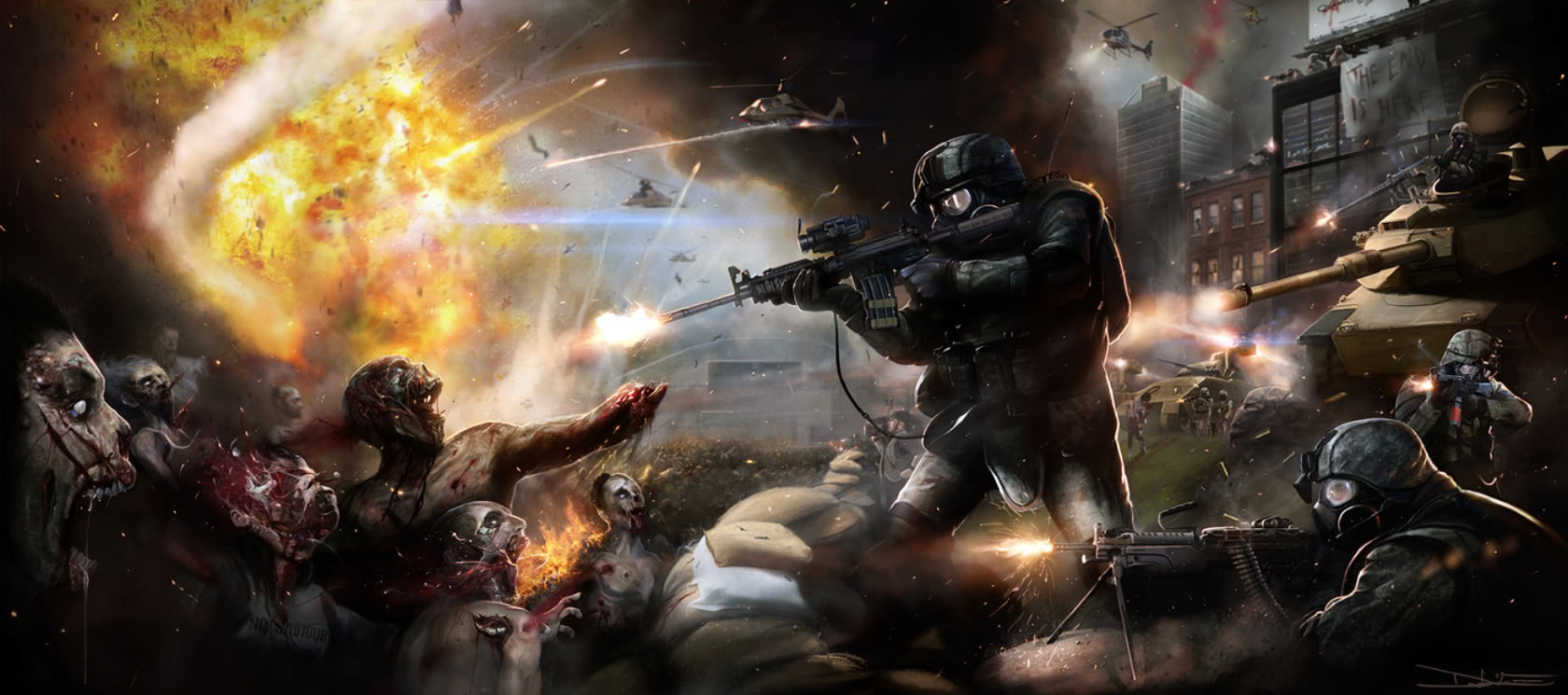
I was one of many who heard about Max Brooks’ satirical guide book The Zombie Survival Guide: Complete Protection from the Living Dead. Being a huge fan of George A. Romero’s Dead series of films and just the zombie subgenre in general, I was intrigued by the release of this guidebook. From the first page to the last I was impressed, entertained, and hooked on Brooks’ serio-comic take on how to survive a zombie outbreak. One section of the book which really caught my interest and has remained a favorite to reread over and over was the final one which details the so-called “historical” instances of past zombie outbreaks throughout history. From as far back as Ancient Egypt and Rome up to the late 1990’s. My only gripe about that section of the book was that it was all-too-brief. I felt that it could’ve been made longer and even would’ve made for a fine book on its own. Maybe I wasn’t the only one to have wished for such a thing to happen for it seems that Brooks himself might have thought the same thing. His latest book in his trip through the zombie genre is titled World War Z: An Oral History of the Zombie War and it takes the final chapter of his previous book and expands on it. But instead of using past “historical events” to tell his story Brooks goes into the near future to describe what would happen if the zombies ever did bring the human race to the brink of extinction and how humans finally learned how to fight back and take back the world.
World War Z is a fictional account of a worldwide outbreak of the living dead in the near future and judging from some of the descriptions of places and events in the beginning of the book it won’t be too far in the future. WWZ is done in an interview-style format with each chapter consisting of first-person interviews of individuals who lived through the Zombie War from its initial outbreak to it’s final battles and mop-up operations. The sampling of survivors interviewed range from soldiers who fought the losing battles in the early going of the war when lack of information, outdated tactics, and illogical reactions to the zombie outbreak contributed to humanity almost losing the war. These soldier survivors explain how humanity became its own worst enemy when it came to protecting its own and combating the growing ranks of the zombies. Some of the mistakes were unavailable as information on how to combat the zombies were far and few and even then most were unreliable. Some mistakes on the other hand many today would consider as unconscionable as war-profiteers and those willing to keep a hold on their own power and who would sacrifice their own people to keep it so.
There’s also the regular people who survived the war and who made great contributions during the dark days when humanity were pushed into isolated and fortified pockets of resistance as everywhere around them the zombie army grew exponentially. Some of these people were just children when the outbreak first began as rumors and unsubstantiated news reports. It’s the words of those children now adults that show how war and conflict really takes the biggest toll on the smallest and helpless. One could substitute the wars in Iraq, Afghanistan, The Balkans and even Africa in lieu of Brooks zombie war and this book would still resonate. There’s a particular entry of how children left to their own devices to try and survive alone in the wild with zombies all around have turned feral to the point that their capacity to learn and develop into adulthood has become stunted or even halted permanently.
Battle of Yonkers
Brooks’ novel also puts in little veiled references to the events occurring now in the real world. There’s mention of the unpopular war in the Persian Gulf as having a detrimental effect on the morale of troops once they returned home and how this helped make the initial fight to stem the tide of the zombies a losing proposition from the outset. There’s also mention of Iran as having acquired a nuclear arsenal and how this leads to an incident early in the Great Panic of the zombie outbreak that speaks volume of what could happen if unstable states acquire weapons of mass destruction. Brooks’ also gives a prescient look into a near future where the US and Europe stop being the economic superpowers of the world and step aside for the economic juggernaut that is China and India. All these inferences of today’s geopolitical and economical events mirrors what might just come into fruition.
The interview format really gives the book a sense of realism despite the outrageous and fantastical nature of the book. As I read the book I was reminded of Stephen A. Ambrose’s books on the men and women who fought during World War 2. Ambrose also used interviews and personal accounts to make up the bulk of his books like in Citizen Soldiers and Band of Brothers. Having a personal take on the events gave his books more emotional impact and really brought the emotions of the conflict to those who never experienced it. The same could be said about Max Brooks’ World War Z. Even though the novel was speculative fiction from beginning to end it still made the reader think of how such an event, if it ever came to pass, could be so tragic, disheartening but in the end uplifting as it once again shows that humanity could still pull itself together through all its petty misunderstandings to survive. On a more stylistic point, Brooks’ novel shares some similarities to Theodore Judson’s sci-fi epic Fitzpatrick’s War. Judson’s book also tries to chronicle a future war which was shaped by religious and ideological forces. Where Judson goes way into the future of an alternate Earth, Brooks smartly stays to a more foreseeable future that readers of his book would most likely see happen; hopefully a much brighter and less-zombified one.
Brooks’ decision to forgo the usual linear and narrative style for this book also allowed him a certain bit of freedom to introduce one-shot characters in addition to those who appear regularly. In a more traditional novel such one-shot characters would seem useless and even unnecessary, but in this interview format it makes more sense since it’s really just a collection of personalities trying to describe their own take of the Zombie War they lived through. Some people I know who have read the novel have said that there’s little or no talk of love and relationships in World War Z. I, for one, was glad that Brooks didn’t try to force certain “interviews” where it talks of survivors finding love and relationships during the outbreak, through the war and all the way to the mop-up. This book chronicles tales of survival and horror. As much as a tale of love would’ve been a change of pace to all the death and horror in the interviews it would’ve been too drastic a change of pace. I would think that the last thing that most people would have in their minds when trying to survive day-to-day, if not hour-to-hour would be to stop for a moment and have sex, cuddle or other less-than survival behaviors.
All in all, Max Brooks’ World War Z: An Oral History of the Zombie War takes a serious look at a fictional and fantastical premise and event with a serious eye. The book manages to be tragic and terrifyingly spot-on about how the world governments today could fail when confronted by such a horror of tremendous proportions. Unlike his more satirical first book on the zombie subject, World War Z shows the flaws and failings of humanity and how it almost led to its extinction, but it also shows humanity’s stubbornness in the face of total annihilation and how it could come together in cooperation to not just survive but take back the world. In times of extreme adversity man can be brought to his knees but also show his resilience. A great novel and one that deserves reading from not just fans of the horror and zombie subgenre, but those who enjoy taking a peek into what could be, no matter how outrageous.
I consider these the best and greatest science-fiction films of this closing decade. Some of the films in the list could be labeled as being hard scifi while some definitely have their roots in the pulp storytelling traditions of the 1950’s scifi publications and novels. Some could be considered horror while others more action or comedy. In the end, they all have a basis in the traditions of science-fiction as their common denominator. They will not be in any particular order since I couldn’t truly determine which one deserved to be top on the list or which was just 20th. In my eyes they are all equally great in their own way.
Do you agree with the choices? Do you think another film belongs on the list and, if so, which one? I’m interested to know what your favorite sci-fi films of the last 10 years happen to be.
“Everything is backwards now, like out there is the true world, and in here is the dream.” — Jake Sully
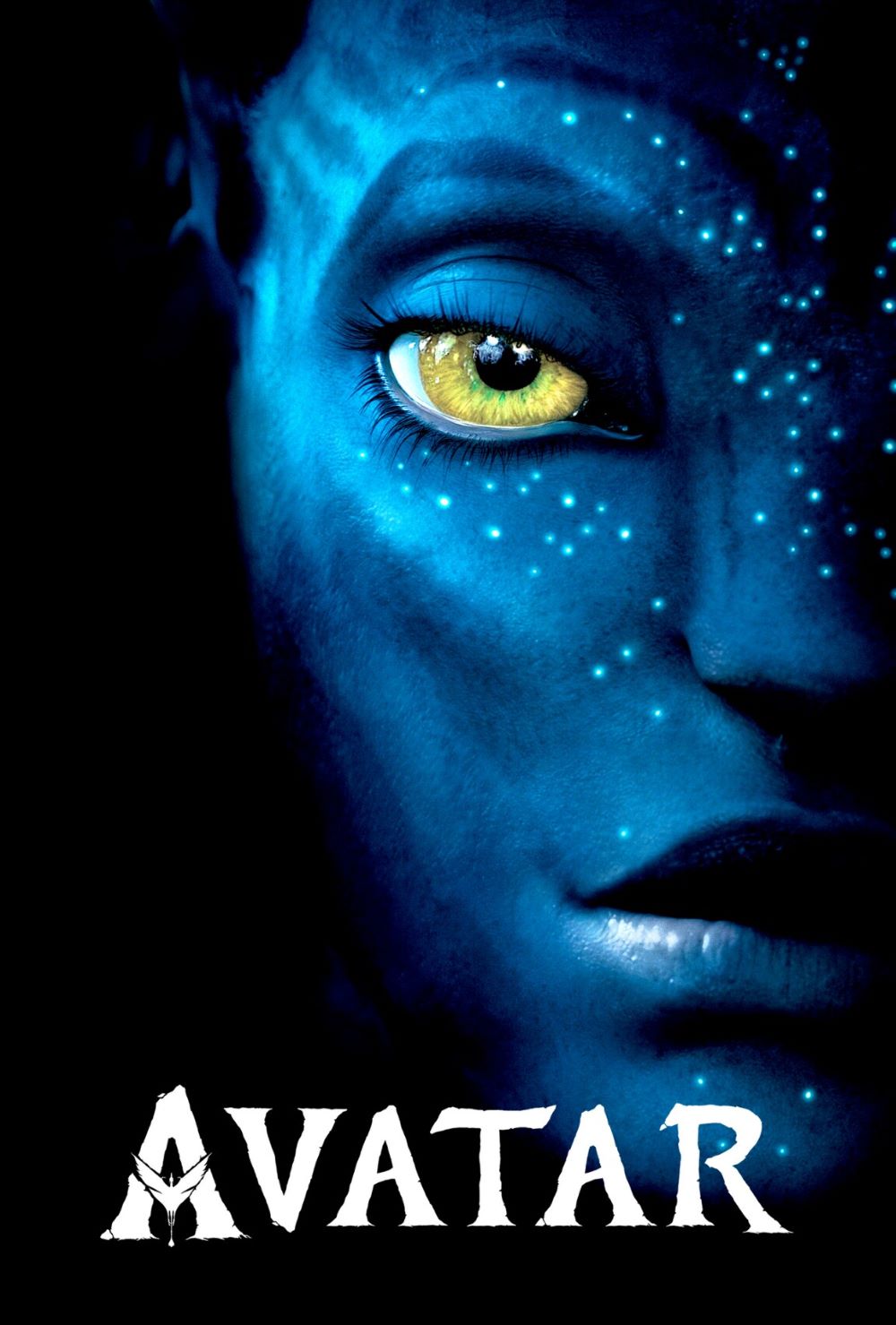
When was the last time a film became an experience for you—not just a story that made you think, but one that swept you up and immersed you completely? The most hyped film of 2009, and likely of this decade, was such an experience for me. James Cameron’s Avatar, a project over fifteen years in the making, more than lived up to the hype that followed it from the earliest production leaks.
Avatar is not the greatest film ever made, nor does it revolutionize filmmaking the way Technicolor did in the late 1950s and early 1960s. What Cameron has accomplished is providing a blueprint for how filmmakers can bring audiences closer to the stories they tell. Stories and ideas once considered unfilmable due to technological limitations are now within reach. Avatar is an experience that should be seen, regardless of whether one embraces its story. The narrative is not original—some may be reminded of an Oscar-winning film directed by Kevin Costner or an animated feature with “Gully” in the title. While the lack of originality is noticeable, the story works within the context of Cameron’s vision. Clichéd and hackneyed dialogue aside, it serves the film well. Cameron’s writing may not rival that of Kaufman or Mamet, but he knows how to tell a simple story and keep the audience engaged.
With that flaw acknowledged, I haven’t felt this way about a film—nor even the best I’ve seen this year—since the first time I watched The Fellowship of the Ring or, before that, Spielberg’s Jurassic Park. Only a few films truly sweep me into their world and hold me there. It didn’t matter that Avatar wasn’t the second coming of Rashomon or this generation’s Citizen Kane. What I watched, I fully bought into. The world of Pandora, imagined by Cameron and brought to life by WETA Digital and ILM, felt real. The detail, clarity, and dedication in its creation gave me hope that creative boundaries once thought uncrossable are now being stepped over.
While the film is also available in 2D for theaters without 3D capabilities, it must be seen in 3D, ideally in IMAX 3D. Cameron’s use of the new “emotion capture” cameras he helped develop achieves a level of CGI photorealism that avoids the “Uncanny Valley” effect seen in films like The Polar Express, Beowulf, and A Christmas Carol. The groundbreaking “mo-cap” technique, refined by WETA Digital for The Lord of the Rings trilogy, convinced Cameron it was time to make Avatar as he envisioned. The Na’vi are now the most realistic CGI characters ever put on screen, surpassing even Gollum. Cameron demonstrates that the limit of CGI use is not quantity, but how it is implemented. Lucas, Bay, and others who have misused CGI have much to learn from Cameron’s achievement.
It took a few minutes to adjust to the 3D effect, but once my eyes adapted, the film’s magic took hold. The distinction between CGI and live-action scenes blurred and eventually disappeared. Even the best CGI-heavy films sometimes break immersion, but Avatar never did. This total immersion helped me overlook the story’s familiarity and, for some, its ordinariness.
Despite the material, the performances ranged from good to excellent. The villains, while written one-dimensionally, were played with enough conviction to be believable. Giovanni Ribisi’s corporate weasel, a clear echo of Burke from Aliens, was cartoonish in motivation, but Cameron is not known for deep, well-rounded characters. The standout was Stephen Lang as Colonel Miles Quaritch. His scenery-chewing performance was riveting, stealing the film from Sam Worthington’s “hero on a journey.” While Lang’s performance may not win awards, it stands as one of the year’s most memorable, joining the ranks of characters audiences love to hate.
Some may think I’ve joined the Cameron fan club, but I can’t explain why I love this film despite its flaws: the familiar story, clichéd dialogue, and one-dimensional characters. Is Avatar just a technical and visual marvel? Yes, and more. Does the CGI and bombastic climax overshadow the storytelling? No, it actually propels the story forward, much like Jake Sully’s own fragile legs.
In the end, my love for Avatar comes down to the experience it provided—a rare occurrence in modern cinema. Cameron didn’t make a perfect film, nor one better than sliced bread. But he created a filmgoing experience that will be remembered decades from now, much like the first time audiences saw Star Wars and believed in Jedi and space battles, or Superman and believed a man could fly. Cameron’s Avatar made me believe in Pandora, a place I hope to visit, or at least experience through his eyes. I’m eager to see what he—and other filmmakers inspired by his work—will create next.


 Through the Shattered Lens