ALFRED HITCHCOCK PRESENTS (TV Series) – S1, E20: “And So Died Riabouchinska,” starring Claude Rains and Charles Bronson!


I’ve never been a rabid consumer of horror films, but I do love Alfred Hitchcock. And when you consider that Charles Bronson was featured three times in his TV series, ALFRED HITCHCOCK PRESENTS, you know I’m all in. Bronson first appeared in the season 1 episode, “And So Died Riabouchinska” which starred the Invisible Man himself, Claude Rains! I thought it would be fun to revisit this early episode from the classic TV series. 

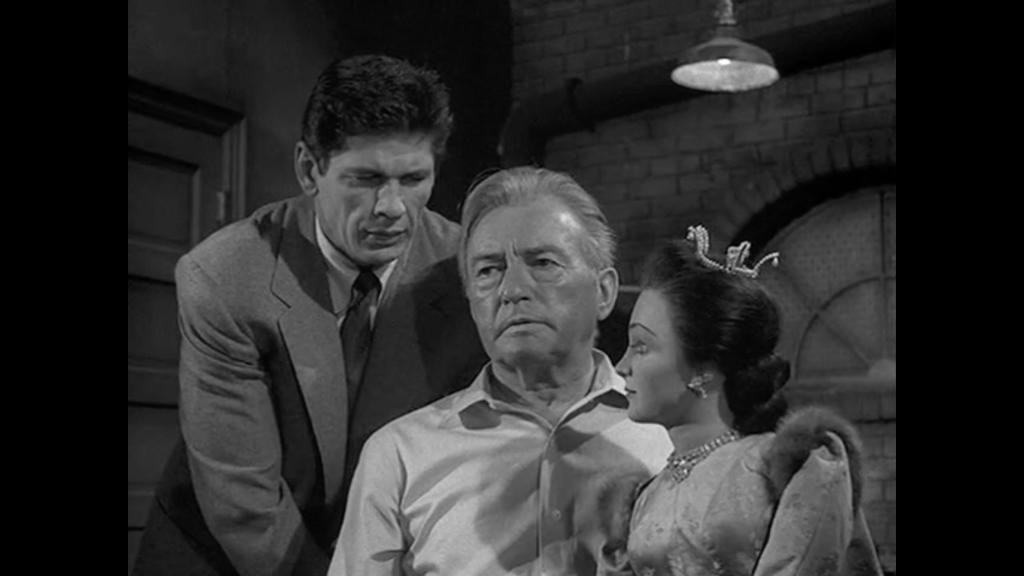
When a juggler named Ockman is found dead in the basement of a vaudeville theater, Detective Krovitch (Charles Bronson), a no-nonsense police investigator, is on the case. The prime suspect quickly emerges to be John Fabian (Claude Rains), a ventriloquist whose act revolves around his beautiful female dummy, Riabouchinska, who we find out is modeled after a long, lost love. As Krovitch interrogates Fabian and all of those around him, including his embittered wife Alyce (Wynne Miller), and her lover, the shady manager Douglas, it becomes clear that the ventriloquist has a dark and dangerous past. We discover a Fabian who is lost in a world of obsession, self delusion and even perversion, a world that the now deceased Ockman was threatening to expose.  Without giving too much away, this episode blends psychological horror with police procedural and spits out an episode that still resonates loudly on the freaky-meter!

Adapted by Mel Dinelli from Ray Bradbury’s short story, “And So Died Riabouchinska” is an exceptional entry in Season 1 of the ALFRED HITCHCOCK PRESENTS TV series. Claude Rains is incredible as Fabian. It’s a thespian tour-de-force, with Rains creating a role that’s creepy, pathetic, and oddly relatable all at the same time. I haven’t seen many of Rains’ most notable works, but based on his performance here, I do know that he’s amazing. Charles Bronson, whose strong screen presence was as obvious as the nose on his face, even this early in his career, goes toe to toe with Rains (and Riabouchinska) and helps ground the episode in something resembling the real world. It’s not a showy role for the legendary tough guy, but he conveys the toughness and authority that would go on to define his career. Performances aside, the episode is truly set apart with an emotional storyline that plumbs the depths of the human psyche in a way that seems daring for 1956 television. There are parts of this episode that will definitely make you squirm in your seat! 

Overall, in my opinion, “And So Died Riabouchinska” is an essential episode of the ALFRED HITCHCOCK PRESENTS series. It’s a lot of fun seeing Hitchcock introduce the show at the beginning and wrap it up at the end, but the best part is the fact that the story that takes place in-between is creepy, clever, and compulsively re-watchable.
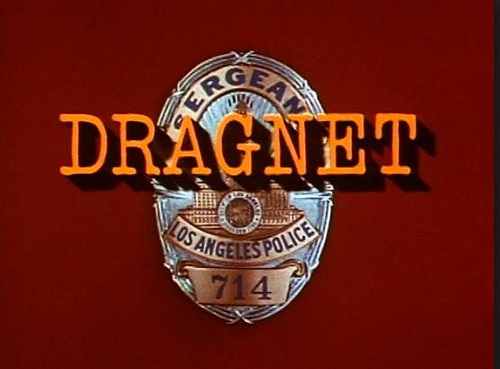
An Offer You Can’t Refuse: Dragnet (dir by Jack Webb)


1954’s Dragnet opens with a gangland slaying.  We watch as a man is brutally gunned down in a field in Los Angeles.  The rest of the film deals with the efforts of the LAPD to track down and arrest the killers.

Based on the televisions show that gave birth to the whole “cop show” format, Dragnet features Jack Webb as Sgt. Joe Friday, calmly and efficiently investigating the slaying.  Working with Friday is Officer Frank Smith (Ben Alexander) but the film (just like the show) is ultimately about how the whole criminal justice system works together as a machine designed to protect the citizenry and to punish crime.

Or, at least, that’s the way it’s supposed to work.  Especially if you’re only familiar with Dragnet from its late 60s incarnation and the countless parodies that followed, the 1954 Dragnet can seem surprisingly cynical and rough-edged.  The killings are violent, the criminals are ruthless, and the cops are often frustrated in their attempts to solve crimes.  In this film, at least, justice is not guaranteed.

The shooting victim is identified as a low-level gangster named Miller Starkie and Friday and Smith immediately suspect that he was killed on the orders of West Coast mob boss Max Troy (Stacy Harris).  Friday and Smith know that Troy is guilty and they even figure out who worked with Troy to kill Starkie.  But, throughout the film, they struggle to get any sort of concrete evidence tying Max to the crime.  Dragnet is a police procedural that follows every bit of the investigation, including the attempts to convince a grand jury to indict Max.  One of the more interesting moments in the film is when Friday gives his grand jury testimony and it becomes obvious that the district attorney was right to be skeptical about trying to bring charges.  Friday really doesn’t have enough evidence to justify arresting Max for the crime that everyone knows he committed.  To the film’s credit, it doesn’t attack the grand jury system or suggest that the system is unfairly rigged for the criminals.  Friday may be frustrated but he understands that the system has to protect the rights accused first.  One has to be presumed innocent until proven guilty even when everyone knows that person is guilty.

That said, Friday and Smith and the entire LAPD end up harassing Max Troy in a way that would probably not fly if the film were made today.  At one point, a line of police cars park in front of Max’s house and then all shine their lights into his windows.  Friday and Smith end up following Max everywhere that they he goes, stopping him and randomly frisking him before ordering him to empty his pockets.  Today, I imagine this would lead to lawsuit.  Even in the film, it doesn’t exactly pay off.

What does pay off is sending a police woman (played by Ann Robinson) into Max’s nightclub undercover, with a recording device.  This whole sequence is interesting because it’s apparent that the idea of a tiny recording devices — something that we take for granted nowadays — was apparently a new and exciting concept in 1954.  (Indeed, the one used in this film actually looks a bit bulky.)  For a few minutes, the action stops so Dragnet can show off the LAPD’s latest toy.

I liked Dragnet.  It’s an nicely-paced time capsule and, despite its docudrama style and television origins, director Jack Webb manages to come up with a few memorable visuals.  As someone who has binged the late 60s version of Dragnet, it was interesting to see a tougher and much more cynical version of the series.  While Webb was hardly an expressive actor, his dour demeanor serves him well as Joe Friday and Stacy Harris is appropriately sleazy as the crime boss.  Despite all of Friday’s frustrations, the case eventually comes to a conclusion in the 1954 film, even if it’s not the one that Friday and his bosses wanted.  Max may be able to escape the police but he can’t escape his own health.  Friday and Smith move on to investigate the next case.  As always, the names will be changed to protect the innocent.

Retro Television Reviews: Dragnet 1966 (dir by Jack Webb)


Welcome to Retro Television Reviews, a feature where we review some of our favorite and least favorite shows of the past!  On Sundays, I will be reviewing the made-for-television movies that used to be a primetime mainstay.  Today’s film is 1969’s Dragnet 1966!  It can be viewed on YouTube!

“This is the city….”

So begins Dragnet, a television movie version of the classic cop show that was the Law & Order of it’s day.  Dragnet began as a radio program in 1949 before making it’s way over to television in 1951.  Each episode starred (and the majority were directed by) Jack Webb, who played a no-nonsense cop named Joe Friday.  Friday narrated every episode, dropping trivia about the history of Los Angeles while also showing viewers how the cops went about catching criminals.  Despite what is commonly believed, Joe Friday never said, “Just the facts, ma’m,” but he did investigate each case with the cool determination of a professional who kept his emotions under control.  The majority of Dragnet’s episodes were based on actual cases that were worked by the LAPD, hence the opening declaration of, “The story you are about to see is true.”

On television, Dragnet originally ran from 1951 to 1959, during which time Dragnet also became the first television series to be adapted into a feature film.  Jack Webb decided to relaunch Dragnet in 1966 and he produced a made-for-television movie that followed Friday and his latest partner, the far more talkative Bill Gannon (Harry Morgan), as they worked multiple cases over the course of one long weekend.  The pilot movie did lead to a new show, one that lasted from 1967 to 1970 and which is today fondly remembered for scenes of Friday and Gannon debating the merits of the legal system with hippies.  However, for whatever reason, the 1966 pilot movie was not actually aired until 1969.

The made-for-TV movie features Friday and Gannon searching not for LSD dealers and draft dodgers but instead for a crazed photographer (Vic Perrin) who hires women to pose for him and then ties them up and takes their picture right before her murders them.  The photographer is based on real-life serial killer Harvey Glatman and Perrin is perfectly creepy in the role.  Though Friday never loses his composure, his disgust at the photographer and his crimes is palpable and it adds an extra charge to the scene where, in the middle of a drenching rain storm, Friday tries to sneak up on the trailer where he believes the photographer is holding his latest victim.  It’s actually a pretty exciting scene and definitely one that will take by surprise anyone who thinks of the 60s Dragnet as just being a campy exercise in establishment resentment.

Of course, catching a serial killer is not all that Friday and Gannon deal with.  It’s a long weekend so Friday and Gannon end up investigating the murder of a French tourist and Friday helps a younger, black detective deal with a racist criminal.  (The scene where Friday stands up to the racist was obviously meant to answer those who claimed the LAPD was a racist organization.)  At the start of the film, Joe almost gets collared into working security for a visiting Russian diplomat and the Russian’s paranoid security team is contrasted to the level-headed and capable men of the LAPD.  Some of these scenes are better than others.  The French tourist subplot features some truly risible acting and the scene with the racist is well-intentioned but still feels a bit condescending in its portrayal of the black detective needing Friday to help him deal with the suspect.  That said, I did enjoy listening to Bill Gannon talking about his plans for retirement and how working for the LAPD was destroying his teeth.  Harry Morgan’s folksy humor was always the perfect counterpart to Jack Webb’s perpetually rational Friday.

Finally, I appreciated that the movie featured a scene with Friday and Gannon went undercover at a lonely hearts club.  If you’ve watched the 1960s version of Dragnet, you know that, for all the times that Friday and Gannon went undercover, they never really put much effort into it.  I mean, they didn’t ever bother to take off their jackets!

Though I was disappointed by the lack of hippies, Dragnet 1966 was still not only a good police procedural but also a fun time capsule of its era.

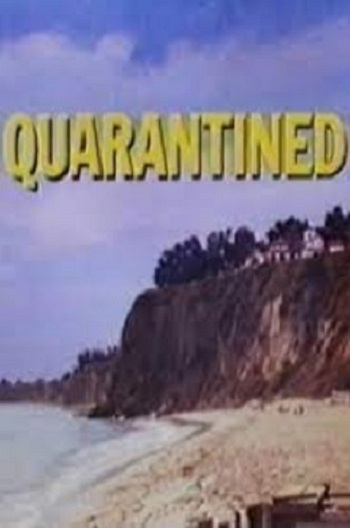
Retro Television Reviews: Quarantined (dir by Leo Penn)


Welcome to Retro Television Reviews, a feature where we review some of our favorite and least favorite shows of the past! On Sundays, I will be reviewing the made-for-television movies that used to be a primetime mainstay. Today’s film is 1970’s Quarantined! It can be viewed on YouTube!

The John C. Bedford Clinic sits atop a cliff overlooking the ocean.  Though it may be a small hospital, it’s also widely respected.  The clinic was started by John Bedford (John Dehner) and the majority of its employees are related to him.  His three sons — Larry (Gary Collins), Bud (Gordon Pinset), and Tom (Dan Ferrone) — are all doctors and they all work at the clinic.  Bud’s wife, Margaret (Susan Howard), is a psychologist and she also works at the clinic, encouraging the older patients not to give up hope in their twilight years.  John Bedford is a stern taskmaster and his youngest son, Tom, resents always having his father and his older brothers staring over his shoulder.  John and Larry explain that they are simply treating Tom the way that they would treat any new doctor.  Tom isn’t so sure.

When the Bedfords aren’t hanging out in the tasteful ranch house that sits next to the clinic, they’re checking on their patients.  As Quarantined opens, they’ve got quite a few to deal with.  The most famous is Ginny Pepper (Sharon Farrell), a film star who has come to the clinic because she’s been suffering from back pain.  Larry quickly diagnoses her as suffering from kidney failure and announces that she’s going to need to get an immediate transplant.  Ginny is not happy to hear that and spends most of her time trying to make both Larry and Nurse Nelson (Virginia Gregg) miserable.  Of course, it eventually turns out that Ginny’s not so bad.

Meanwhile, Margaret attempts to cheer up a dying old man named Mr. Berryman (Sam Jaffe) and an eccentric man named Wilbur Mott (Wally Cox) hangs out in the hospital hallway.  Martha (Terry Moore) and Lloyd Atkinson (Madison Arnold) are at the hospital to visit their son, Jimmy (Mitch Vogel).  Unfortunately, while in Jimmy’s hospital room, Lloyd suddenly collapses and subsequently dies.  John takes one look at Lloyd and announces that Lloyd might have Cholera and, as a result, no one can leave or enter the hospital until the test results come back.

In other words, the John C. Bedford Clinic is …. QUARANTINED!

If you’re thinking this sounds a little bit dull …. well, you’re not wrong.  Quarantined has a 73-minute running time and a large cast but it really does just feel like an episode of a not particularly interesting medical drama.  It wouldn’t surprise me to discover that this movie was actually meant to serve as a pilot for a show that would have followed day-to-day life at the clinic.  Each member of the Bedford family is given a hint of characterization, just enough to suggest what type of situations they would get involved in on a weekly basis.  Larry was the straight shooter who was dedicated to saving lives.  Bud was the well-meaning middle child while Margaret was the one who encouraged the men to talk about their feelings.  Tom was the idealistic but impulsive youngest child.  John was the wise patriarch.  They’re all kind of boring.

The same can be said of Quarantined as a movie.  As directed by Leo “Father of Sean” Penn, the movie promises a lot of drama but it never really delivers and there’s something rather annoying about how casually John announces that no one is allowed to leave the clinic.  He even calls the police and has them set up road blocks around the clinic.  On the one hand, John is doing the right thing.  No one wants a cholera epidemic.  On the other hand, everyone’s so quick to accept that idea of John being a benign dictator that …. well, one can only imagine what a pain in the ass the Bedfords would have been during the COVID era.

As far as I know, there was never a TV show about the Bedford family and their clinic on a cliff.  Personally, I’m okay with that.  

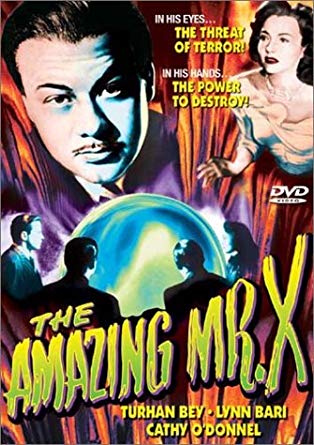
Horror Film Review: The Amazing Mr. X (dir by Bernard Vorhaus)


A woman named Christine (Lyn Bari) walks along the beach when she thinks that she hears the voice of her husband calling out her name.  The only problem is that her husband has been dead for two years.  Christine’s sister, Janet (Cathy O’Donnell), says that Christine is just hearing things and that she needs to move on from mourning.  After all, her boyfriend, Martin (Richard Carlson), is on the verge of asking Christine to marry him….

And yet, Christine can’t escape the feeling that her husband is trying to contact her from beyond the grave.  During another walk along the beach, she runs into a handsome man who introduces himself as being Alexis (Turhan Bey).  Alexis says that he’s a medium and that he has the power to speak to the dead.  Furthermore, he tells Christine that he can speak to her dead husband for her.

Despite the fact that Alexis owns a really impressive crystal ball, Martin is skeptical of his claims.  Martin even goes so far as to hire a private investigator (Harry Mendoza) to investigate Alexis’s past.  Meanwhile, though she has her suspicions, Janet finds herself falling in love with the charming Alexis….

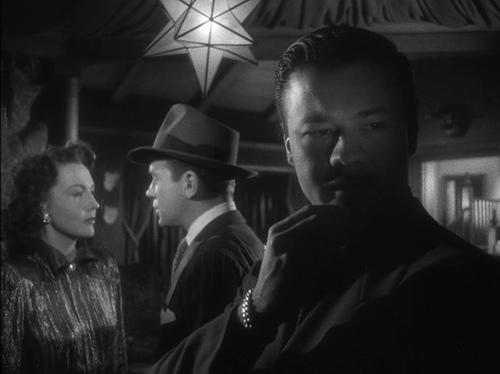
Released in 1948, The Amazing Mr. X is an unjustly obscure little mystery film.  Though I guess it’s open to debate whether it should be considered a horror film or just a noirish thriller, The Amazing Mr. X is full of creepy atmosphere and eerie moments.  Employing expressionistic camera angles and dark lighting, director Bernard Vorhaus turns The Amazing Mr. X into a dream of dark and forbidden things.  Some of the black-and-white shots are simply stunning and the seance sequence is brilliantly done.

The film is also well-acted by a cast of actors who deserve to be better remembered.  Lynn Bari is perfectly fragile and sympathetic as the haunted Christine while Cathy O’Donnell turns the potentially boring Janet into a compelling character.  The film even makes good use of Richard Carlson’s reliable dullness by casting him as the one character who is meant to be a force of stability in Christine’s otherwise neurotic life.

That said, the entire film is stolen by Turhan Bey.  Born in Austria and of Turkish descent, Turhan Bey was nicknamed the “Turkish Delight” during his film career and, watching The Amazing Mr. X, you can see why.  Bey is so charming and so handsome that you can understand why even those who should know better would want to believe that Alexis could talk to the dead.  The Amazing Mr. X was one of the last films that Bey filmed in the United States.  He retired a few years later and returned to his native Austria, where he ran a cafe.  (40 years later, the now elderly Bey did come out of retirement and made a few appearance of television before passing away, at the age of 90, in 2012.)

Like all good mysteries, The Amazing Mr. X has a third act twist that you probably won’t see coming and it ends with the proper combination of tragedy and redemption.  The Amazing Mr. X is currently in the public domain and can be viewed on YouTube so check it out!  You won’t be sorry!

Horror On TV: Kolchak: The Night Stalker 1.9 “The Spanish Moss Murders” (dir by Gordon Hessler)


Tonight, on Kolchak….

People are turning up dead.  Well, what else is new?  That’s pretty much been the plot of every Kolchak episode so far.  However, this time, they’re turning up dead while covered with Spanish moss!

Oh my God, could it be the Cajuns?

Well, as a matter of fact, it is.  As Kolchak discovers when he investigates, all of the dead people were somehow connected to a comatose Cajun….

Richard Kiel, who played the monster in the previous episode of Kolchak, returns here to play yet another monster.

The episode originally aired on December 6th, 1974!

http://www.youtube.com/watch?v=WcvJMqWRsVs

The TSL’s Grindhouse: No Way Back (dir by Fred Williamson)


Jesse Crowder’s back!

You may remember Jesse Crowder as the super cool and unflappable private detective from Death Journey.  Jesse was a Los Angeles cop but now he works independently.  There’s literally nothing that Jesse can’t do.  Ride a horse?  Ride a motorcycle?  Slow motion kung fu?  Jesse can do it all and he usually do it without bothering to button up his shirt.  Jesse is such a badass that he can kill more people in the time it takes for him to light a cigar than most people will kill in their entire lifetime.

The 1976 film No Way Back is the second Jesse Crowder film.  Once again, Fred Williamson both directs and stars as Jesse.  Williamson is in almost every scene of the film and when he’s not killing bad guys or having sex or just posing with his shirt off, he’s listening to people talk about what a badass he is.  In short, No Way Back is a vanity project but it’s a vanity project with a sense of humor.  Watching the film, you get the feeling that Williamson knows that No Way Back is kind of silly but, at the same time, he’s having fun and he wants everyone watching to have fun too.

No Way Back‘s plot involves a missing man and a lot of money.  Henry Pickens (Charles Woolf) worked at a bank but, one day, he grabbed a briefcase full of money, jumped in a car driven by his girlfriend (Tracy Reed), and disappeared.  Everyone was shocked but you know who was really shocked?  His wife!  Mildred Pickens (Virginia Gregg) and Henry’s brother both want to know to where Henry has vanished.  They hire Jesse, perhaps finding solace in his catch phrase: “You pay the bill, I’ll deliver it.  Legal, illegal, moral or otherwise.”

Not surprisingly, it doesn’t take long for Jesse to figure out that Perkins is in San Francisco.  Jesse lights his cigar and heads for the Bay City.  However, Jesse isn’t the only one looking for Henry Pickens.  There’s also a gangster named Bernie (Stack Pierce) who is determined to get the money for himself.  Much as in Death Journey, it doesn’t matter where Jesse goes or how he gets there.  As soon as he arrives, he people are trying to kill him.  Unfortunately, for them, no one can kill Jesse Crowder.

It all leads to a savage gun battle in the desert.  Fred Williamson jumps up on a horse, unbuttons his shirt, and rides across the screen.  People are betrayed.  People get shot.  Fortunately, no one can touch Jesse Crowder…

Anyway, No Way Back doesn’t really make any sense.  If you happen to watch this film (and I saw it on YouTube), just try to keep track of why Henry stole all of that money in the first place.  However, the plot isn’t really that important.  This film is all about Fred Williamson beating up gangsters and walking around without a shirt on.  It’s a dumb action movie but it never pretends to be anything different and the film’s total lack of pretension is enjoyable.  That’s always a good thing.

http://www.youtube.com/watch?v=RAlWgEPC3RU

Lisa Reviews An Oscar Nominee: Love Is A Many-Splendored Thing (dir by Henry King)


(With the Oscars scheduled to be awarded on March 4th, I have decided to review at least one Oscar-nominated film a day.  These films could be nominees or they could be winners.  They could be from this year’s Oscars or they could be a previous year’s nominee!  We’ll see how things play out.  Today, I take a look at the 1955 best picture nominee, Love Is A Many-Splendored Thing!)

Before I talk about Love Is A Many-Splendored Thing, let’s play a little trivia game.

I’m going to list ten films.  Your job is to guess what they all have in common:

Did you guess?  All ten of these films came out in 1955 and not a single one of them was nominated for best picture.  That’s something that I found myself thinking about quite a bit as I watched Love Is A Many-Splendored Thing on TCM last night.  Of course, at this point, everyone knows that deserving films are often ignored by the Academy and that what seems like a great film during one year can often seem to be rather forgettable in subsequent years.

So, you can probably guess that I wasn’t terribly impressed with Love Is A Many-Splendored Thing but, before I get too critical, I want to start things off on a positive note.  William Holden was, without a doubt, one of the best actors to ever appear in the movies.  He started his film career in the 1930s and worked regularly until his death in 1981.  Just consider some of the films in which Holden appeared: Golden Boy, Our Town, Sunset Boulevard, Stalag 17, Sabrina, Picnic, Network, and so many others.  Of course, not every film in which Holden appeared was a masterpiece.  He made his share of films like Damien: Omen II and When Time Ran Out.  But the thing is that, regardless of the film, Holden was always good.

That’s certainly the case with Love Is A Many-Splendored Thing.  It’s not one of Holden’s better films but William Holden is his usual dependable self.  He plays Mark Elliott, a rugged American correspondent who is living in Hong Kong in the 1940s.  While the Chinese Civil War rages nearby, Mark deals with his failing marriage.  His wife is back in the States.  They’re separated but not quite divorced.  Mark owns a really nice car and, since he’s played by William Holden, he delivers the most world-weary of lines with an undeniable panache.  He also appears shirtless for a good deal of the film.  Between this and Picnic, 1955 was the year of the shirtless Holden.

The problem with Love Is A Many-Splendored Thing is not with William Holden.  Instead, the problem is with the miscasting of Jennifer Jones as Han Suyin, the woman with whom Mark Elliott falls in love.  Han Suyin was a real-life person, a doctor who wrote the autobiographical novel on which Love Is A Many-Splendored Thing was based.  Han Suyin was Eurasian.  Jennifer Jones most definitely was not.  Throughout the film, Han Suyin and Mark often discuss what it’s like to be Eurasian and to be in the middle of two very different cultures.  There’s even a discussion about whether Han Suying should try to pass as European.  It all has the potential to be very interesting except for the fact that Jennifer Jones, who was so good in so many films, is in no way convincing in her role.  Whenever she mentions being Eurasian, which she does frequently, the film come to a halt as we all stare at Jennifer Jones, one of the first film stars to ever come out of Tulsa, Oklahoma.

It all leads to a rather strained movie, one that never really drew me into its cinematic world or story.  (For the record, a lot of people on twitter disagreed with me on this point.)  Ultimately, the main reason to watch it was for William Holden.  According to the film’s Wikipedia entry (how’s that for in-depth research), Holden and Jones reportedly did not get along during filming, with Jones apparently chewing garlic before their love scenes and there was a definite lack of chemistry between them.  Maybe I got spoiled by William Holden and Kim Novak dancing in Picnic but I never believed that Mark and Han Suyin were attracted to each other.  Interestingly, Jones and Holden would later both appear in another best picture nominee, 1974’s The Towering Inferno.  However, they didn’t share any scenes.

Love Is A Many-Splendored Thing was nominated for best picture but it lost to a far different love story, Marty.  This was also the final film directed by Henry King to be nominated for best picture.  Previous King films to be nominated included State Fair, In Old Chicago, Alexander’s Ragtime Band, The Song of Bernadette, Wilson, and Twelve O’Clock High.