4 Shots From 4 Films: Special John Wayne Edition


4 Shots From 4 Films is just what it says it is, 4 shots from 4 of our favorite films. As opposed to the reviews and recaps that we usually post, 4 Shots From 4 Films lets the visuals do the talking!

It’s John Wayne’s birthday!  Here’s 4 shots from the Duke’s unforgettable career.

4 Shots From 4 Films

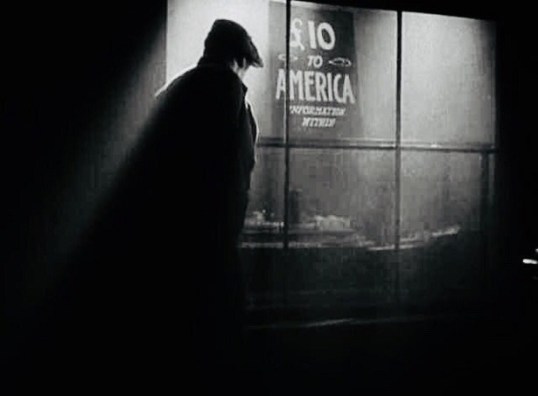
Stagecoach (1939, directed by John Ford)

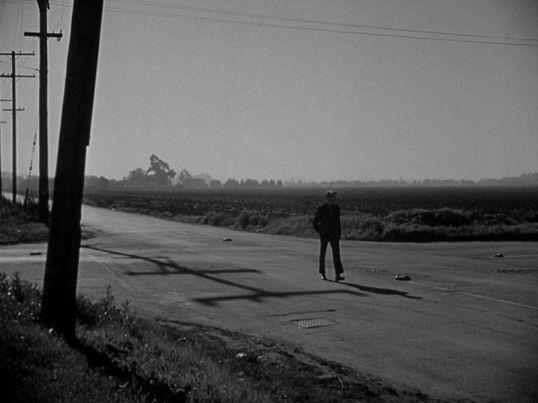
Sands of Iwo Jima (1949, directed by Allan Dwan)

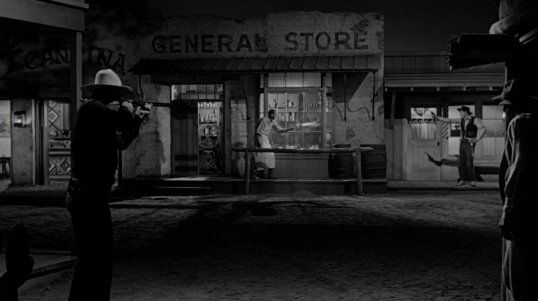
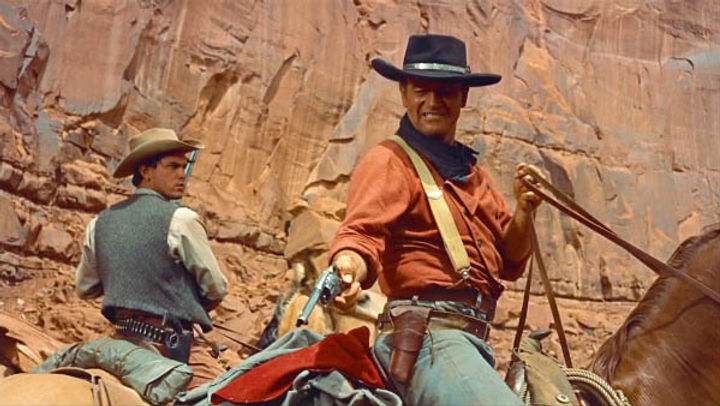
The Searchers (1956, directed by John Ford)

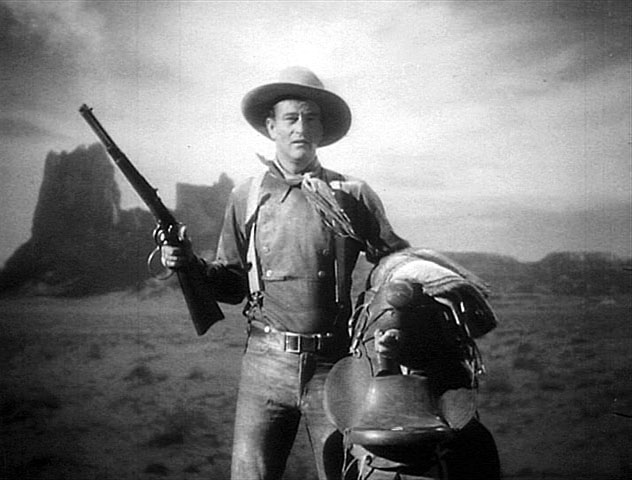
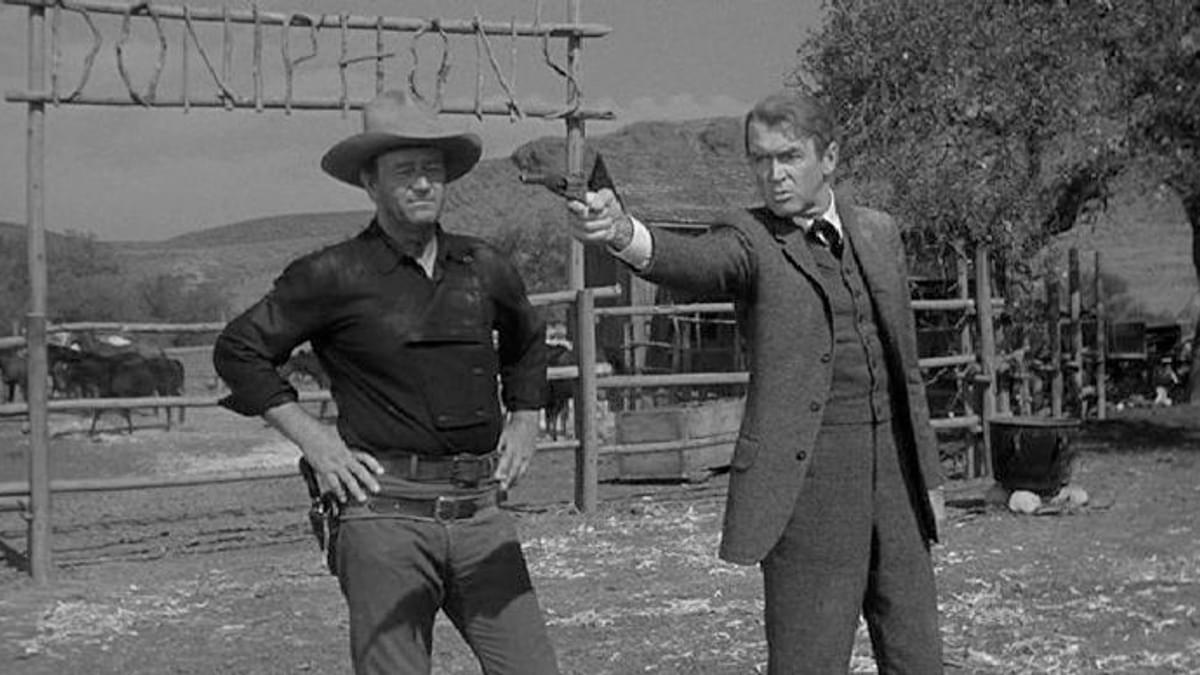
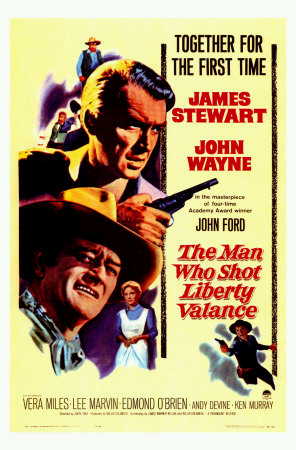
The Man Who Shot Liberty Valance (1962, directed by John Ford)


4 Shots From 4 Films: Special James Stewart Edition


4 Shots From 4 Films is just what it says it is, 4 shots from 4 of our favorite films. As opposed to the reviews and recaps that we usually post, 4 Shots From 4 Films lets the visuals do the talking!

Today, we celebrate the birthday of one of the greatest American actors of all time, the wonderful James Stewart!  It’s time for….

4 Shots From 4 James Stewart Films

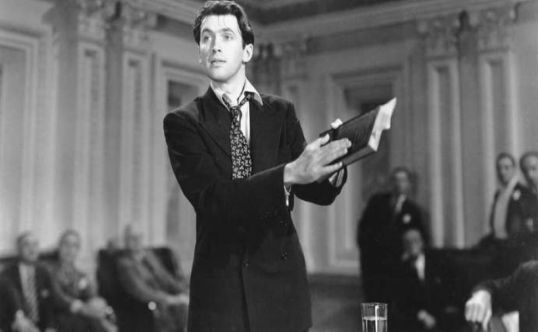
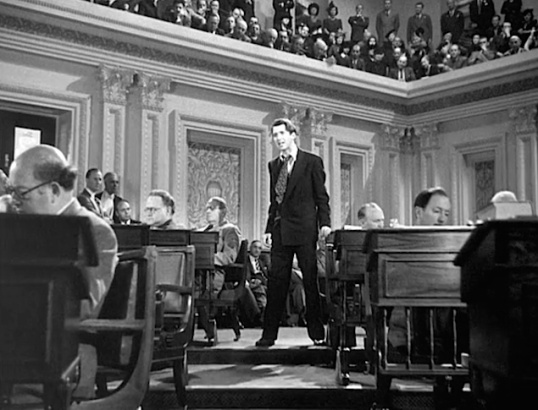
Mr. Smith Goes To Washington (1939, dir by Frank Capra, DP: Joseph Walker)

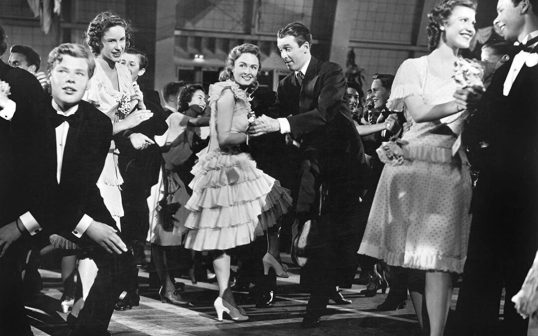
It’s A Wonderful Life (1946, dir by Frank Capra, DP: Joseph Walker and Joseph Biroc)

Rear Window (1954, dir by Alfred Hitchcock, DP: Robert Burks)

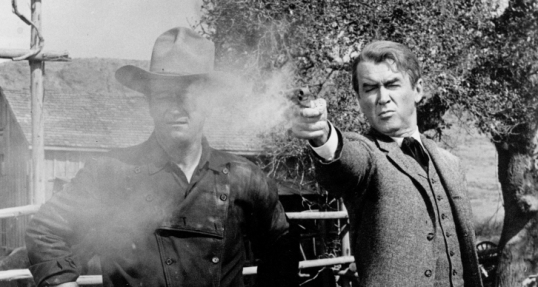
The Man Who Shot Liberty Valance (1962, dir by John Ford. DP: William H. Clothier)

Song of the Day: The Man Who Shot Liberty Valance, performed by Gene Pitney


Since I already shared a scene from my favorite John Ford film, it seems only right that today’s song of the day should pay some respect to Mr. Ford as well.  Here is the theme song from 1962’s The Man Who Shot Liberty Valance, performed by Gene Pitney.

When Liberty Valance rode to town
The womenfolk would hide, they’d hide
When Liberty Valance walked around
The men would step aside

‘Cause the point of a gun was the only law
That Liberty understood
When it came to shooting straight and fast
He was mighty good

From out of the East a stranger came
A law book in his hand, a man
The kind of a man the West would need
To tame a troubled land

‘Cause the point of a gun was the only law
That Liberty understood
When it came to shooting straight and fast
He was mighty good

Many a man would face his gun
And many a man would fall
The man who shot Liberty Valance
He shot Liberty Valance
He was the bravest of them all

The love of a girl can make a man stay on
When he should go, stay on
Just trying to build a peaceful life
Where love is free to grow

But the point of a gun was the only law
That Liberty understood
When the final showdown came at last
A law book was no good

Alone and afraid, she prayed that he’d
Return that fateful night, oh that night
When nothing she said could keep her man
From going out to fight

From the moment a girl gets to be full grown
The very first thing she learns
When two men go out to face each other
Only one returns

Everyone heard two shots ring out
One shot made Liberty fall
The man who shot Liberty Valence
He shot Liberty Valance
He was the bravest of them all

The man who shot Liberty Valance
He shot Liberty Valance
He was the bravest of them all

Songwriters: Burt F. Bacharach / Hal David

Scenes That I Love: Who Was Really “The Man Who Shot Liberty Valance?”


John Ford was born 131 years ago today and it seems appropriate that today’s scene of the day should come from his final great film (even if it wasn’t the last film that Ford directed).

In 1962’s The Man Who Shot Liberty Valance, frontier lawyer Ransom Stoddard (James Stewart) comes to political prominence due to his notoriety for being the man who, in self-defense, gunned down notorious outlaw Liberty Valance (Lee Marvin).  Stoddard, an intellectual who opposes violence, is not happy about this.  When Stoddard considers refusing to be a delegate to the upcoming statehood convention, he is reprimanded by Tom Doniphon (John Wayne).  Stoddard and Doniphon are friends but they’re also romantic rivals, both being in love with Hallie (Vera Miles).  In this scene, Doniphon reveals the truth about who shot Liberty Valance.

4 Shots From 4 Films: Special James Stewart Edition


4 Shots From 4 Films is just what it says it is, 4 shots from 4 of our favorite films. As opposed to the reviews and recaps that we usually post, 4 Shots From 4 Films lets the visuals do the talking!

Today, we celebrate the birthday of one of the greatest American actors of all time, the wonderful James Stewart!  It’s time for….

4 Shots From 4 James Stewart Films

Mr. Smith Goes To Washington (1939, dir by Frank Capra, DP: Joseph Walker)

It’s A Wonderful Life (1946, dir by Frank Capra, DP: Joseph Walker and Joseph Biroc)

Rear Window (1954, dir by Alfred Hitchcock, DP: Robert Burks)

The Man Who Shot Liberty Valance (1962, dir by John Ford. DP: William H. Clothier)

6 Shots From 6 Films: Special John Ford Edition


4 (or more) Shots From 4 (or more) Films is just what it says it is, 4 (or more) shots from 4 (or more) of our favorite films. As opposed to the reviews and recaps that we usually post, 4 (or more) Shots From 4 (or more) Films lets the visuals do the talking.

John Ford was born 130 years ago today, in Maine.  Seeing as how John Ford is one of the most influential and important directors of all time, it was pretty much guaranteed that we were going to share a few shots from his filmography on the Shattered Lens.

In honor of John Ford, here are….

6 Shots From 6 Films: Special John Ford Edition

The Informer (1935, dir by John Ford, DP: Joseph August)

Stagecoach (1939, dir by John Ford, DP: Bert Glennon)

The Grapes of Wrath (1940, dir by John Ford, DP: Gregg Toland)

My Darling Clementine (1946, dir by John Ford, DP: Joseph MacDonald)

The Searchers (1956, dir by John Ford, DP: Winston C. Hoch)

The Man Who Shot Liberty Valance (1962, dir by John Ford. DP: William H. Clothier)

10 Oscar Snubs From The 1960s


Ah, the 60s. Both the studio system and the production code collapsed as Hollywood struggled to remain relevant during a time of great social upheaval. The Academy alternated between nominating films that took chances and nominating films that cost a lot of money. It led to some odd best picture lineups and some notable snubs!

1960: Psycho Is Not Nominated For Best Picture and Anthony Perkins Is Not Nominated For Best Actor

To be honest, considering that the Academy has never really embraced horror as a genre and spent most of the 60s nominating big budget prestige pictures, it’s a bit surprising that Psycho was actually nominated for four Oscars.  Along with being nominated for its production design and its cinematography, Psycho also won nominations for Alfred Hitchcock and Janet Leigh.  However, Anthony Perkins was not nominated for Best Actor, despite giving one of the most memorable performances of all time.  The film literally would not work without Perkins’s performance and, considering that Perkins pretty much spent the rest of his career in the shadow of Norman Bates, it’s a shame that he didn’t at least get a nomination for his trouble.  Psycho was also not nominated for Best Picture, despite being better remembered and certainly more influential than most of the films that were.

1962: The Man Who Shot Liberty Valance Is Almost Totally Snubbed

The Man Who Shot Liberty Valance was not totally snubbed by the Academy.  It received a nomination for Best Costume Design.  But still, it deserved so much more!  John Ford, James Stewart, John Wayne, Lee Marvin, Vera Miles, and the picture itself were all worthy of nominations.  Admittedly, 1962 was a year full of great American films and there was a lot of competition when it came to the Oscars.  Still, The Man Who Shot Liberty Valance definitely deserved a best picture nomination over the bloated remake of Mutiny on the Bounty.  Today, if the first Mutiny on the Bounty remake is known for anything, it’s for Marlon Brando being difficult on the set.  But The Man Who Shot Liberty Valance is still remembered for telling us to always print the legend.
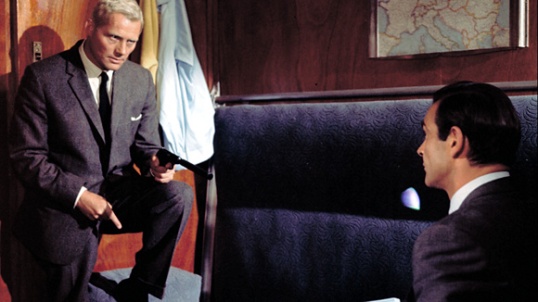
1964: From Russia With Love Is Totally Snubbed

The same year that the Academy honored George Cukor’s creaky adaptation of My Fair Lady, it totally ignored my favorite James Bond film.  From Russia With Love is a Bond film that works wonderfully as both a love story and a thriller.  Sean Connery, Lotte Lenya, Robert Shaw, and Terence Young all deserved some award consideration.  From Russia With Love was released in the UK in 1963.  In a perfect world, it would have also been released concurrently in the U.S., allowing From Russia With Love to be the film that gave the the Academy the chance to recognize the British invasion.  Instead, Tom Jones was named the Best Picture of 1963 and From Russia With Love had to wait until 1964 to premiere in the U.S.  It was snubbed in favor of one of old Hollywood’s last grasps at relevance.

1964: Slim Pickens Is Not Nominated For Best Supporting Actor

Playing three separate roles, Peter Sellers dominates Dr. Strangelove: Or How I Learned To Stop Worrying And Love The Bomb.  But, as good as Sellers is, the film’s most memorable image is definitely Slim Pickens whooping it up as he rides the bomb down to Earth.  George C. Scott and Sterling Hyaden also undoubtedly deserved some award consideration but, in the end, Pickens is the one who brings the film to life even as he helps to bring society to an end.

1967: In Cold Blood Is Not Nominated For Best Picture

In Cold Blood, though not a perfect film, certainly deserved a nomination over Dr. Doolittle.  In Cold Blood is a film that still has the power to disturb and haunt viewers today.  Dr. Doolittle was a box office debacle that was nominated in an attempt to help 20th Century Fox make back some of their money.

1967: Sidney Poitier Is Not Nominated For Best Actor For In The Heat Of The Night

In 1967, Sidney Poitier starred in two of the films that were nominated for Best Picture but somehow, he did not pick up a nomination himself.  His restrained but fiercely intelligent performance in In The Heat Of The Night provided a powerful contrast to Rod Steiger’s more blustery turn.  That Poitier was not nominated for his performance as Virgil Tibbs truly is one of the stranger snubs in Academy history.  (If I had to guess, I’d say that the Actors Branch was split on whether to honor him for In The Heat of the Night or Guess Who’s Coming To Dinner or even for To Sir With Love and, as a result, he ended up getting nominated for none of them.)

1968: 2001: A Space Odyssey and Planet of the Apes Are Not Nominated For Best Picture

Neither one of these classic science fiction films were nominated for Best Picture, despite the fact that both of them are far superior and far more influential than Oliver!, the film that won that year.

1968: The Good, The Bad, and the Ugly Is Totally Ignored

Not even Ennio Morricone’s score received a nomination!

1968: Petulia Is Totally Snubbed

Seriously, I don’t know what was going on with the Academy in 1968 but it seems they went out of their way to ignore the best films of the year.  Richard Lester’s Petulia is usually cited as one of the definitive films of the 60s but it received not a single Oscar nomination.  Not only did the film fail to receive a nomination for Best Picture but Richard Lester, George C. Scott, Julie Christie, Shirley Knight, Richard Chamberlain, and the film’s screenwriters were snubbed as well.

1969: Easy Rider Is Not Nominated For Best Picture

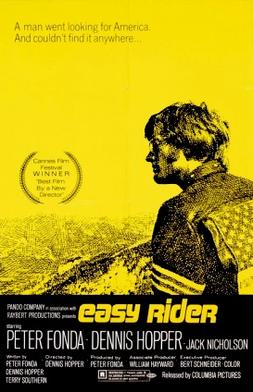
Yes, I know.  Easy Rider is a flawed film and there are certain moments that are just incredibly pretentious.  That said, Easy Rider defined an era and it also presented a portrait of everything that was and is good, bad, and timeless about America.  The film may have been produced, directed, and acted in a drug-razed haze but it’s also an important historical document and it was also a film whose success permanently changed Hollywood.  Certainly, Easy Rider’s legacy is superior to that of Hello, Dolly!

Agree? Disagree? Do you have an Oscar snub that you think is even worse than the 10 listed here? Let us know in the comments!

Up next: It’s the 70s!
Scenes I Love: “Print The Legend” From The Man Who Shot Liberty Valance


The legendary director John Ford was born 129 years ago today, in Maine.  As I sit here writing this, you can go see The Fabelmans, which ends with a scene in which a young Steven Spielberg (or Sammy Fabelman, whatever) meets John Ford (played by David Lynch).  The meeting is based on a meeting that a young Spielberg actually had with Ford shortly before Ford’s death in 1971.

However, long before John Ford met Steven Spielberg, he directed one of my favorite films, The Man Who Shot Liberty Valance.  Today’s scene that I love comes from the end of that 1962 film and it features a line that would become a classic.  “Print the legend.”  That was a line that Ford understood and I imagine it’s one that Spielberg eventually came to understand as well.

6 Shots From 6 Films: Special John Ford Edition


4 (or more) Shots From 4 (or more) Films is just what it says it is, 4 (or more) shots from 4 (or more) of our favorite films. As opposed to the reviews and recaps that we usually post, 4 (or more) Shots From 4 (or more) Films lets the visuals do the talking.

John Ford was born 127 years ago today, in Maine.  Seeing as how John Ford is one of the most influential and important directors of all time, it was pretty much guaranteed that we were going to share a few shots from his filmography on the Shattered Lens.  As a challenge to myself, I decided that I would only picks shot from Ford’s non-westerns.

However, I then remembered just how much I love The Man Who Shot Liberty Valance and that plan pretty much went out the window.

Anyway, in honor of John Ford, here are….

6 Shots From 6 Films: Special John Ford Edition

The Informer (1935, dir by John Ford, DP: Joseph H. August)

The Long Voyage Home (1940, dir by John Ford. DP: Gregg Toland)

The Grapes of Wrath (1940, dir by John Ford. DP: Gregg Toland)

They Were Expendable (1945, dir by John Ford. DP: Joseph H. August)

The Quiet Man (1952, dir by John Ford, DP: Winton C. Hoch)

The Man Who Shot Liberty Valance (1962, dir by John Ford. DP: William H. Clothier)

Scenes That I Love: The Steak Scene From The Man Who Shot Liberty Valance


Since today is the 113th anniversary of the birth of John Wayne, I decided to watch the 1962 classic, The Man Who Shot Liberty Valance!  And then I decided to share a scene that I love from the film.

The famous steak scene features three of the greatest screen icons of Hollywood’s golden age: James Stewart, John Wayne, and Lee Marvin.  Lee Marvin is the bully who is terrorizing the entire town.  James Stewart is the idealist who thinks that the law, and not violence, is the answer.  And John Wayne is …. well, he’s John Wayne.  He’s the only man in town who can stand up to Lee Marvin but, at the same time, he’s also aware that his time is coming to a close.  In the scene below, all three of the characters display their different approaches to life and a disagreement with steak nearly leads to violence.

This scene — and really, the entire film — features these three actors at their best.  John Wayne is an actor who is often described as having “just played himself” but that’s really not quite fair.  While Wayne’s outsized persona definitely does influence how the audience reacts to any character that he plays, he was a better actor than he’s often given credit for being.  That’s especially evident in The Man Who Shot Liberty Valance, in which Wayne plays a confident man’s man who knows that fate is closing in on him.  The coming of civilization (represented by James Stewart) will be great for the town of Shinbone but it will also leave men like Wayne’s Ton Doniphon with nowhere to go.  The coming of civilization means that the heroes of the past are destined to become obsolete.

Enjoy this scene from The Man Who Shot Liberty Valance: