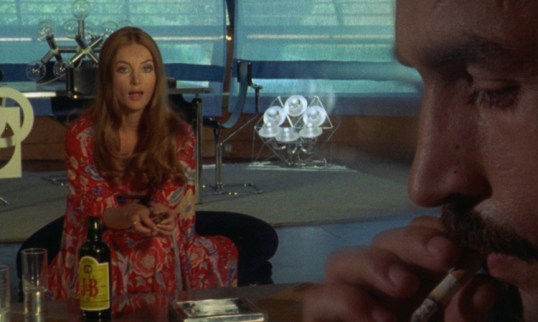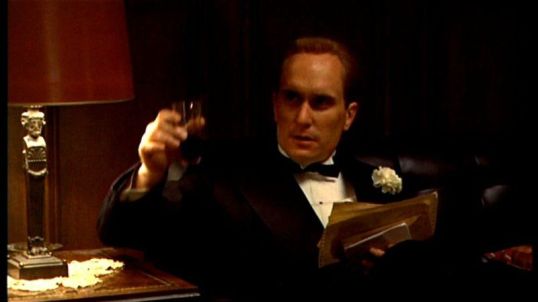
Robert Duvall, RIP


Salud, you glorious actor.

I knew this day was going to come because he was only 5 years away from 100 but still, it breaks my heart.

Rest in peace, Robert Duvall.

In my opinion, Robert Duvall was the best of American actors to come to prominence during the 60s and 70s, someone who was consistently great, who could move you to tears or make you laugh, someone who was just as good at being a villain as he was at being a hero.  It’s hard not to think of a single movie that was not improved by the presence of Robert Duvall.
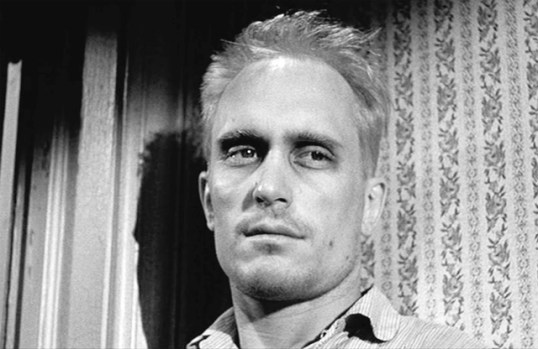
He was the original Boo Radley and, though he was only in To Kill A Mockingbird for a few minutes, his performance was unforgettable.  He captured both the shyness and the compassion of an outcast with a good heart.

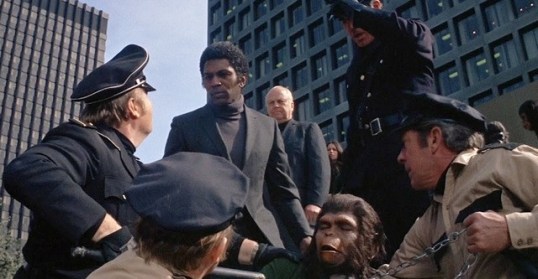
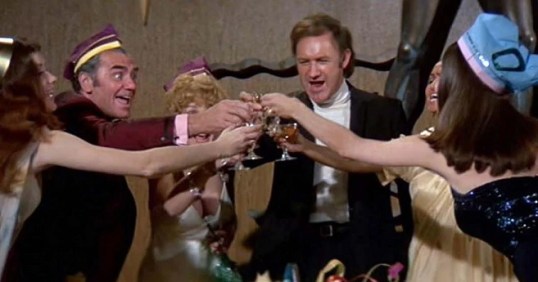
In M*A*S*H, he was Major Frank Burns, the dangerously incompetent doctor who drove Bud Cort to tears, got punched out be Elliott Gould, and eventually tried to kill Donald Sutherland.  Burns was the perfect villain and Duvall wisely didn’t play the role for laughs.
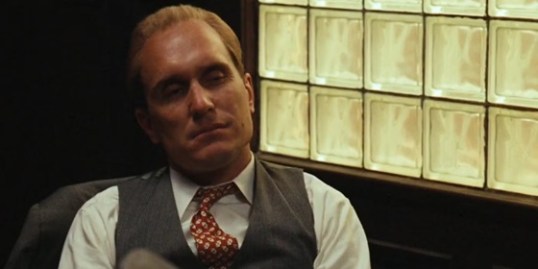
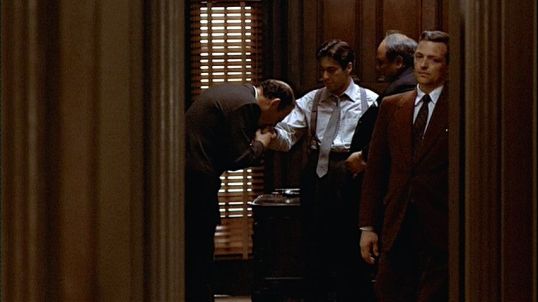
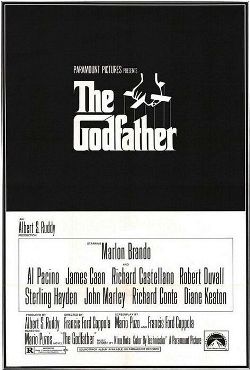
In the original Godfather novel, Tom Hagen was described as being bland and colorless.  In the films, Duvall transformed him into one of the most vibrant characters in the entire saga.  During the first film, when he asks Michael “why am I out?,” he breaks your heart.  When Michael snaps at him in the sequel, you realize that Michael is losing the one person who still cares about him.  His absence in Godfather Part III is so deeply felt that it makes you realize that Robert Duvall was just as important to the saga as Pacino, Caan, Brando, and the rest.
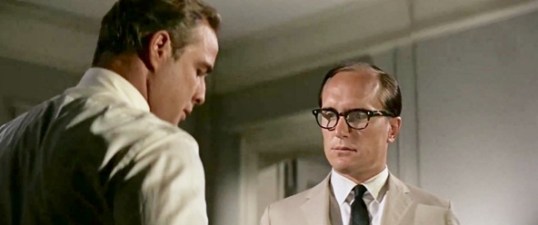
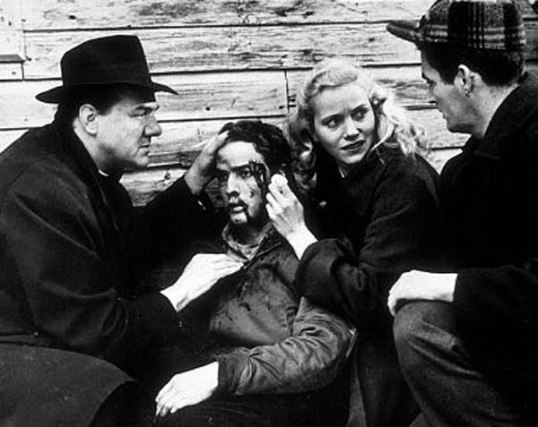
(Robert Duvall had previously worked with Brando in The Chase and, on the set of The Godfather, he was one of the few actors who could call Marlon out.  Once, when Marlon was holding up filming with a hundred nit-picky questions, Duvall said, “Don’t worry, Marlon, we don’t have anywhere to be either.”  Marlon laughed and shot the scene.)

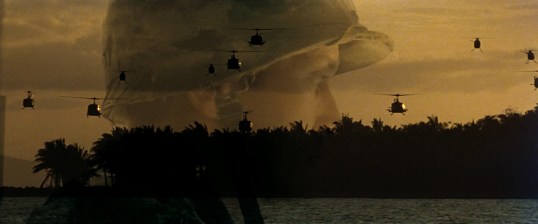
In Apocalypse Now, Duvall delivery of one line — “I love the smell of napalm in the morning,” — summed up everything that the film had to say about war.
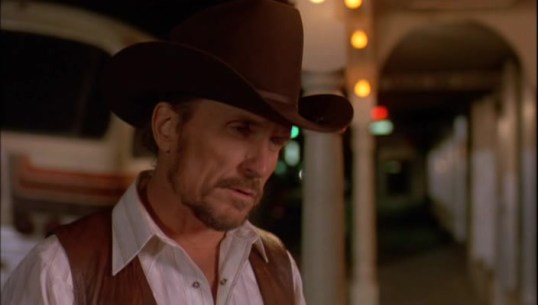
In Tender Mercies, he gave one of the most honest performances that I’ve ever seen and he won a deserved Oscar.  Tender Mercies is one of the great Texas films and that’s largely due to Robert Duvall.
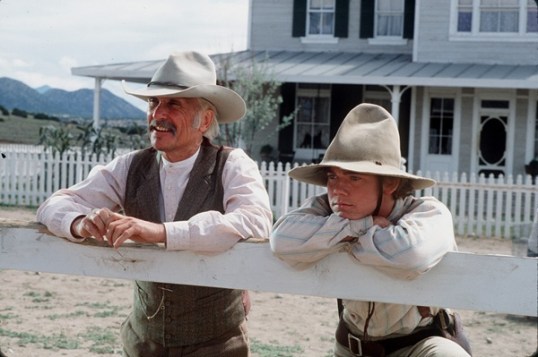
In the miniseries Lonesome Dove, he made you laugh, he made you cry, he made you believe that he had stepped out of the Old West, and he made it all look easy.
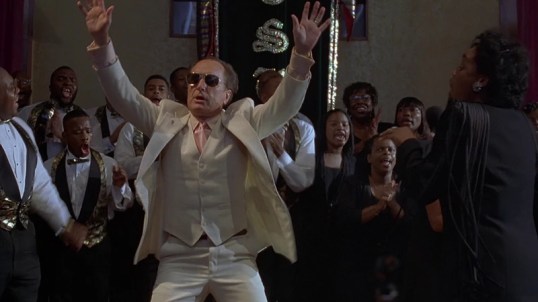
With The Apostle, he proved himself to be as strong a director as an actor.  He crafted one of the best American films about religion to come out in the 90s and he gave a fearless performance that should have won him a second Oscar.

Even in a seriously flawed film like The Judge, he could hold your attention like few other actors.

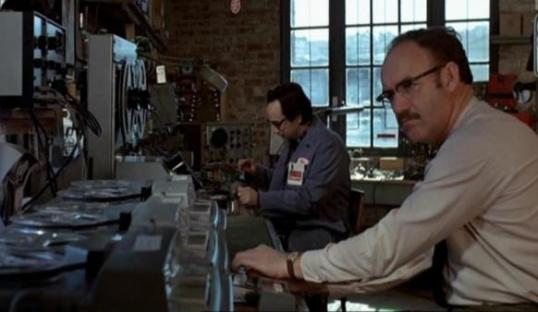
Robert Duvall was born in California, raised in Maryland, and began his career in New York and yet somehow, he was one of the most authentic Southerners that I’ve ever seen on screen.  Down in my part of the world, we considered him to be something of an honorary Texan.  By most reports, he had the fiercely independent but generous spirit that defines the best of the Southwest.  When he was a struggling actor, his roommates were Gene Hackman and Dustin Hoffman.  His best friend was James Caan.  He knew and worked with the best actors and directors of the past 60 years.
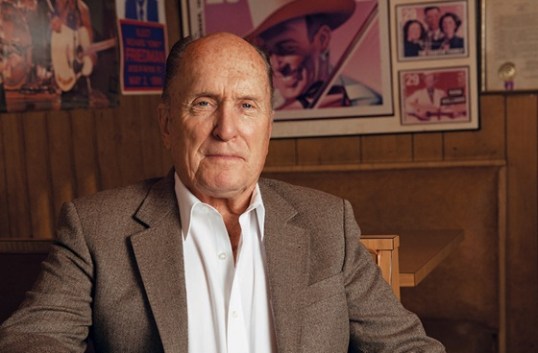
He was a truly one of the greats.  He may be gone but his performances will live forever.
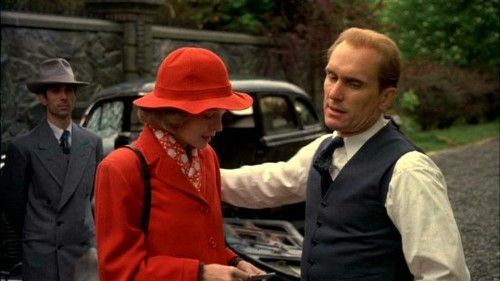
 

Song of the Day: Theme From The Godfather by Nino Rota


Today, the Shattered Lens observes the birthdays of two great actors, Robert Duvall and the much-missed Diane Keaton.

Along with being two of America’s best actors, Duvall and Keaton also co-starred in the first two Godfather films.  They didn’t share many scenes in the second film (though there was at least one Duvall/Keaton scene that was filmed but not included in the final film) but, in the first film, they have a memorable moment in which Keaton (as Kay) visits the Corleone compound while the Corleones are in the middle of a gang war, and asks Duvall’s Tom Hagen to send a letter to Michael in Sicily.  Hagen explains that he can’t do that because that would serve as evidence that he knew where Michael was.  When Kay notices a car that has obviously been bombed, Tom blandly replies, “Oh, that was an accident.  Luckily, no one was hurt!”

In honor of these two amazing performers and my favorite movie of all time, today’s song of the day is Nino Rota’s theme from The Godfather.

Scenes That I Love: Diane Keaton and Al Pacino in The Godfather


Today would have been Diane Keaton’s 80th birthday.

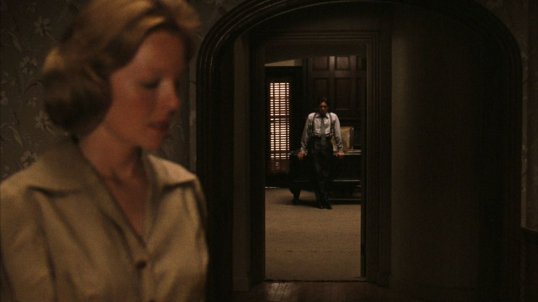
In today’s scene that I love, from 1972’s The Godfather, Keaton plays Kay Adams Corleone, the wife of Michael (Al Pacino).  In this scene, Michael has “allowed” Kay to ask him about the family business.  She asks him if he had his brother-in-law, Carlo, killed.  Michael says, “No.”  Kay is relieved …. until she steps out into the hallway and realizes, as the door is shut in her face, that her husband just lied to her.

This is a beautifully acted scene and one of the most powerful endings in film history.

4 Shots From 4 Christmas Films


4 Shots From 4 Films is just what it says it is, 4 shots from 4 of our favorite films. As opposed to the reviews and recaps that we usually post, 4 Shots From 4 Films lets the visuals do the talking.

Happy holidays!

Let’s get December started with….

4 Shots From 4 Christmas Films

The Godfather (1972, dir by Francis Ford Coppola, DP: Gordon Willis)

Lethal Weapon (1987, dir by Richard Donner, DP: Stephen Goldblatt)

Die Hard (1988, dir by John McTiernan, DP: Jan de Bont)

Die Hard 2 (1990, dir by Renny Harlin, DP: Oliver Wood)

Scenes I Love: Al Pacino and Diane Keaton in The Godfather


Today’s scene that I love comes from my favorite film of all time, 1972’s The Godfather

In this scene, Kay Adams (Diane Keaton) has moved on and is working as a teacher.  Suddenly, Michael Corleone (Al Pacino) shows up.  He’s been back from Sicily for a year and he’s working with his father.  Michael promises her that the Corleone family is getting out of the rackets.  We, of course, know that is never going to happen.

4 Shots From 4 Films: My Favorite Movies Edition


It’s my birthday so today, here are four shots from my four favorite films!

4 Shots From My 4 Favorite Films

It Happened One Night (1934, dir by Frank Capra, DP: Joseph Walker)

It’s A Wonderful Life (1946, dir by Frank Capra, DP: Joseph Walker and Joseph Biroc)

The Godfather (1972, dir by Francis Ford Coppola, DP: Gordon Willis)

Suspiria (1977, dir by Dario Argento, DP: Luciano Tovoli)

Video Game Missions I Love: “Fireworks” From The Godfather


I wish I had a 4th of July movie to review today but I don’t.  Instead, I’ll just share my favorite “mission” from the much maligned 2006 Godfather video game.

In this mission, Aldo (who is controlled by the player) takes care of a corrupt cop on the 4th of July.  The Godfather game is hardly perfect but I have always loved that cut-scene of the fireworks going off while Aldo and Rosa look down at the alley.

Happy 4th of July, everyone!

8 Shots From 8 Films: Special Robert Evans Edition


4 Or More Shots From 4 Or More Films is just what it says it is, 4 shots from 4 of our favorite films. As opposed to the reviews and recaps that we usually post, 4 Shots From 4 Films lets the visuals do the talking!

95 years ago today, Robert Evans was born in New York City.  He started out working in his brother’s clothing business but a chance meeting with actress Norma Shearer led to him becoming an actor.  And while Evans, by his own account, was not a particularly good actor, he did prove himself to be very skilled at playing the games of Hollywood.  Evans eventually moved from acting to production, first as an executive at Paramount and then as an independent producer.

He lived a life as glamorous and tumultuous as the stars of his pictures and his memoir, The Kid Stays In The Picture, is considered to be one of the classic show biz autobiographies.  He hung out with cinematic rebels like Jack Nicholson and Robert Towne and counted Secretary of State Henry Kissinger as a friend.  He suggested that Francis Ford Coppola should direct The Godfather and, when Paramount put pressure on Coppola to cut the film down to two hours, it was Evans who famously announced that a two-hour Godfather was nothing more than a trailer.  He lost Ali MacGraw to Steve McQueen and, again by own account, he lost a lot of potentially productive years to cocaine.  (The Cotton Club scandal is one of the wildest in the history of Hollywood, though it should be noted that Evans himself was never charged with any wrongdoing.)  But, for all that he lost, Evans continues to gain admirers as being the epitome of the producer who was willing to take chances.  For all of his flamboyance, Evans had an eye for good material and the willingness to protect his directors.  In many ways, he was as important to the cinematic revolution of the 70s as the directors that he hired.  When Evans passed away in 2019, it was truly the end of an era.

Here, in honor of the birth and legacy of Robert Evans, are 8 Shots from 8 Films that Evans produced, either as studio chief at Paramount or as an independent producer.

8 Shots From 8 Robert Evans Films

Rosemary’s Baby (1968, dir by Romnn Polanski, DP: William A. Fraker)

Love Story (1970, dir by Arthur Hiller, DP: Richard Kratina)

The Godfather (1972, dir by Francis Ford Coppola, Cinematography by Gordon Willis)

Chinatown (1974, dir by Roman Polanski, DP: John A. Alonzo)

Marathon Man (1976, dir by John Schlesinger, DP: Conrad Hall)

The Cotton Club (1984, dir by Francis Ford Coppola, DP: Stephen Goldblatt)

The Two Jakes (1990, dir by Jack Nicholson, DP: Vilmos Zsigmond)

Sliver (1993, dir by Phillip Noyce, DP: Vilmos Zsigmond)

6 Shots From 6 Films: Special Gordon Willis Edition


4 Or More Shots From 4 Or More Films is just what it says it is, 4 shots from 4 of our favorite films. As opposed to the reviews and recaps that we usually post, 4 Shots From 4 Films lets the visuals do the talking!

Today the Shattered Lens celebrates what would have been the 94th birthday of the great cinematographer, Gordon Willis.  Willis was the master of using shadow and underexposed film to create some of the most haunting movie images of the 70s and 80s.  He was also one of the first cinematographers to take advantage of the so-called “magic hour,” that moment when the sun is setting and everything is bathed in a golden glow.  Today, everyone does that but Willis was the first.

Willis has often been cited as one of the most influential cinematographers of all time but, amazingly, Willis would receive only two Academy Award nominations (for Zelig and The Godfather Part III) and he would never win a competitive Oscar.

In memory of Gordon Willis, here are….

6 Shots From 6 Gordon Willis Films

End of the Road (1970, dir by Aram Avakian, Cinematography by Gordon Willis)

The Godfather (1972, dir by Francis Ford Coppola, Cinematography by Gordon Willis)

The Parallax View (1974, dir by Alan J. Pakula, Cinematography by Gordon Willis)

The Godfather Part II (dir by Francis Ford Coppola, Cinematography by Gordon Willis)

All The President’s Men (1976, dir by Alan J. Pakula, Cinematography by Gordon Willis)

Manhattan (1979, dir by Woody Allen, Cinematography by Gordon Willis)

4 Shots From 4 Films: Special Al Pacino Edition


4 Shots From 4 Films is just what it says it is, 4 shots from 4 of our favorite films. As opposed to the reviews and recaps that we usually post, 4 Shots From 4 Films lets the visuals do the talking!

Today, the Shattered Lens wishes a happy birthday to Al Pacino!  It’s time for….

4 Shots From 4 Al Pacino Films

The Godfather (1972, dir by Francis Ford Coppola, DP: Gordon Willis)

The Godfather Part II (1974, dir by Francis Ford Coppola, DP: Gordon Willis)

The Irishman (2019, dir by Martin Scorsese, DP: Rodrigo Prieto)

Once Upon A Time In Hollywood (2019, dir by Quentin Tarantino, DP: Robert Richardson)