4 Shots From 4 Films is just what it says it is, 4 shots from 4 of our favorite films. As opposed to the reviews and recaps that we usually post, 4 Shots From 4 Films lets the visuals do the talking!
Today, Bruce Willis turns 71. It’s time for….
4 Shots From 4 Bruce Willis Films
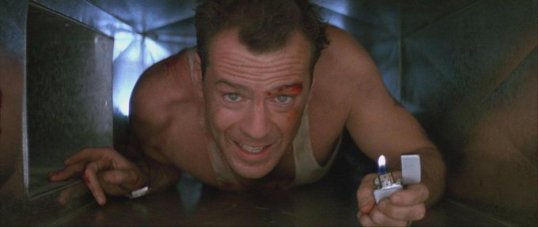
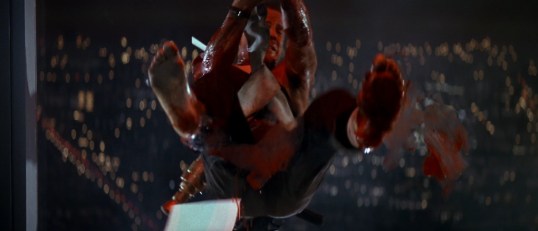
Die Hard (1988, dir by John McTiernan, DP: Jan de Bont)
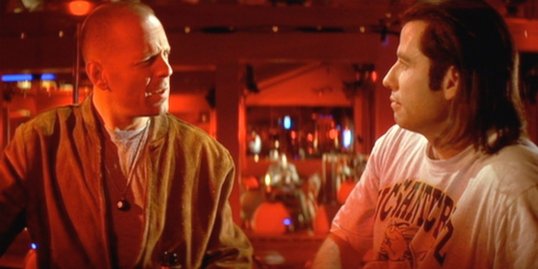
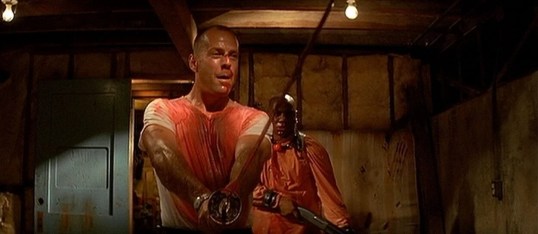
Pulp Fiction (1994, dir by Quentin Tarantino, DP: Andrzej Sekuła)
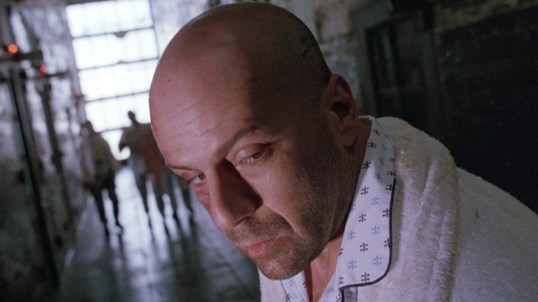
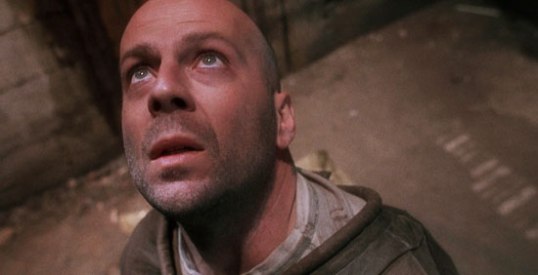
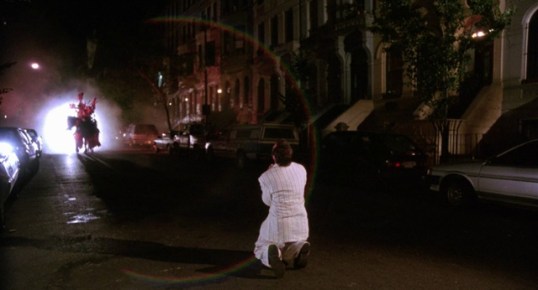
12 Monkeys (1995, dir by Terry Gilliam, DP: Roger Pratt)
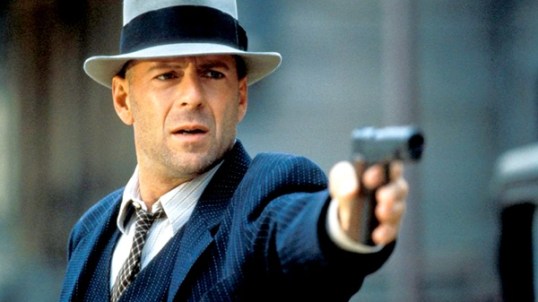
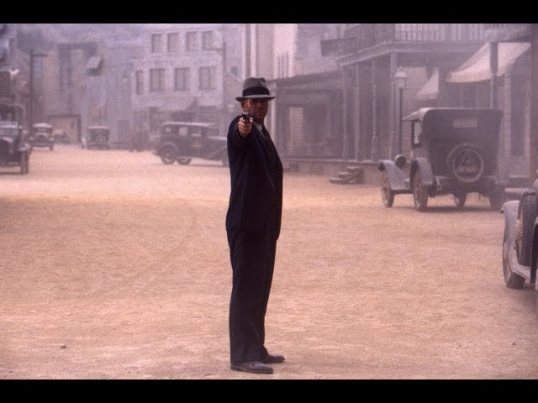
Last Man Standing (1996, dir by Walter Hill, DP: Lloyd Ahern II)
4 Shots From 4 Films is just what it says it is, 4 shots from 4 of our favorite films. As opposed to the reviews and recaps that we usually post, 4 Shots From 4 Films is all about letting the visuals do the talking.
I guess we could call this one “Christmas in the 80s.”
4 Shots From 4 Holiday Films
A Christmas Story (1983, dir by Bob Clark)
Brazil (1985, dir by Terry Gilliam)
Die Hard (1988, dir by John McTiernan)
National Lampoon’s Christmas Vacation (1989, dir by Jeremiah Chechik)
4 Or More Shots From 4 Or More Films is just what it says it is, 4 shots from 4 of our favorite films. As opposed to the reviews and recaps that we usually post, 4 Shots From 4 Films lets the visuals do the talking!
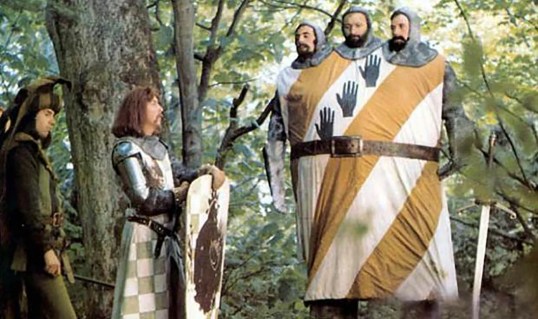
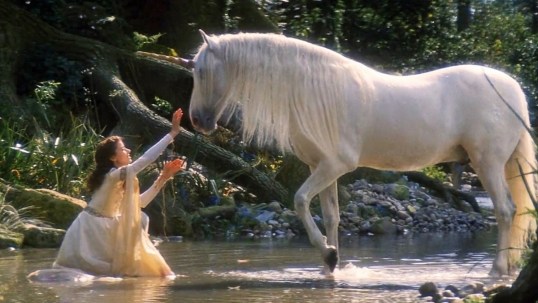
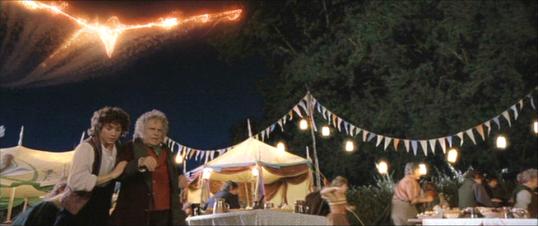
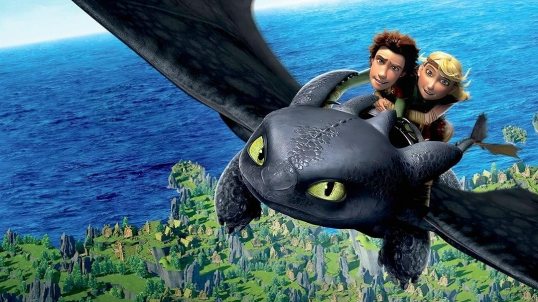
4 Shots From 4 Fantasy Films
Monty Python and the Holy Grail (1975, Dir. by Terry Gilliam and Terry Jones)
Legend (1985, Dir. by Ridley Scott)
The Lord of the Rings: The Fellowship of the Ring (2001, Dir by Peter Jackson)
How To Train Your Dragon (2010, Dir. by Chris Sanders and Dean DeBlois)
4 Or More Shots From 4 Or More Films is just what it says it is, 4 shots from 4 of our favorite films. As opposed to the reviews and recaps that we usually post, 4 Shots From 4 Films lets the visuals do the talking!
Today, we pay tribute to the year 1975. It’s time for….
4 Shots From 4 1975 Films
One Flew Over The Cuckoo’s Nest (1975, dir by Milos Forman, DP: Haskell Wexler and Bill Butler)
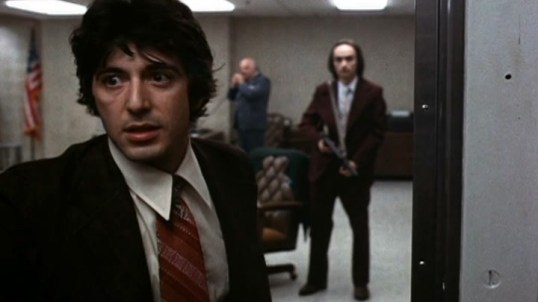
Dog Day Afternoon (1975, dir by Sidney Lumet, DP: Victor J. Kemper)
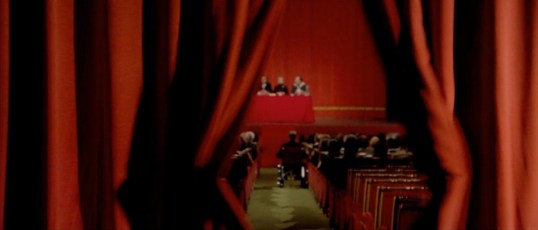
Deep Red (1975, dir by Dario Argento, DP: Luigi Kuveiller)
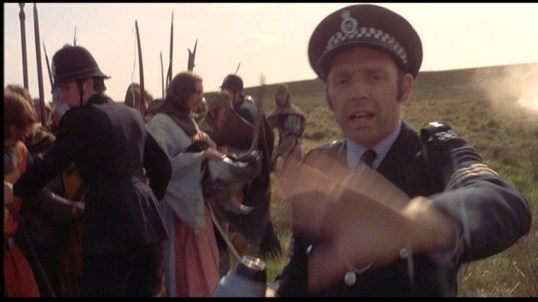
Monty Python and the Holy Grail (1975, dir. Terry Gilliam & Terry Jones, DP: Terry Bedford)
4 Shots From 4 Films is just what it says it is, 4 shots from 4 of our favorite films. As opposed to the reviews and recaps that we usually post, 4 Shots From 4 Films lets the visuals do the talking!
Today, Bruce Willis turns 70. It’s time for….
4 Shots From 4 Bruce Willis Films
Die Hard (1988, directed by John McTiernan, DP: Jan de Bont)
Pulp Fiction (1994, dir by Quentin Tarantino, DP: Andrzej Sekuła)
12 Monkeys (1995, dir by Terry Gilliam, DP: Roger Pratt)
Last Man Standing (1996, dir by Walter Hill, DP: Lloyd Ahern II)
4 Shots From 4 Films is just what it says it is, 4 shots from 4 of our favorite films. As opposed to the reviews and recaps that we usually post, 4 Shots From 4 Films lets the visuals do the talking!
Today, let us take a look back at a classic cinematic year. It’s time for….
4 Shots From 4 1985 Films
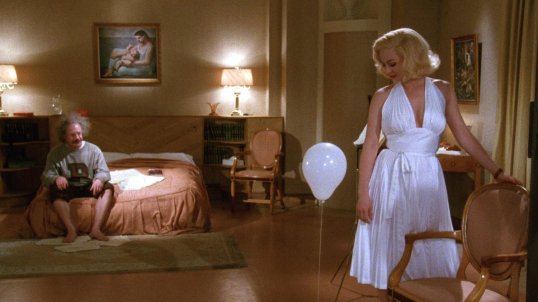
Insignificance (1985, directed by Nicolas Roeg, DP: Peter Hannan)
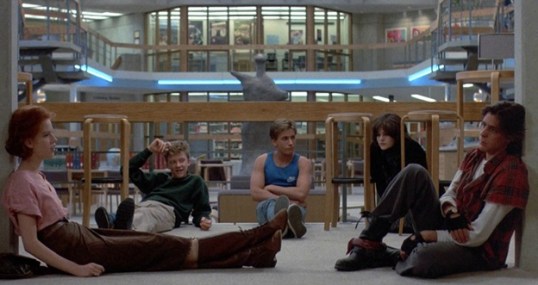
The Breakfast Club (1985, dir by John Hughes, DP: Thomas Del Ruth)
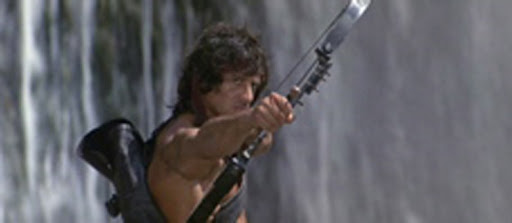
Rambo: First Blood Part II (1985, dir by George Pan Cosmatos, DP: Jack Cardiff)
Brazil (1985, dir by Terry Gilliam, DP: Roger Pratt)
4 (or more) Shots From 4 (or more) Films is just what it says it is, 4 (or more) shots from 4 (or more) of our favorite films. As opposed to the reviews and recaps that we usually post, 4 (or more) Shots From 4 (or more) Films lets the visuals do the talking.
*tick tick tick* TIME!
4 Shots From 4 Time Travel Films
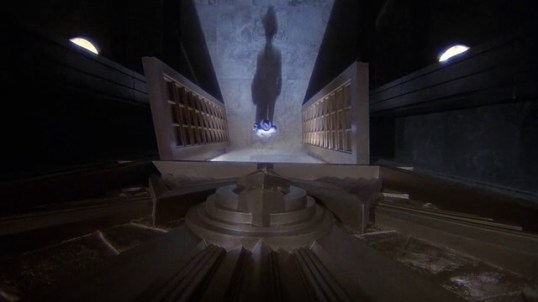
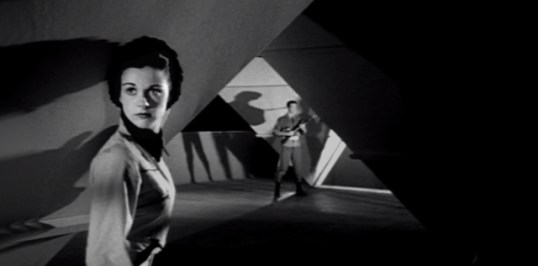
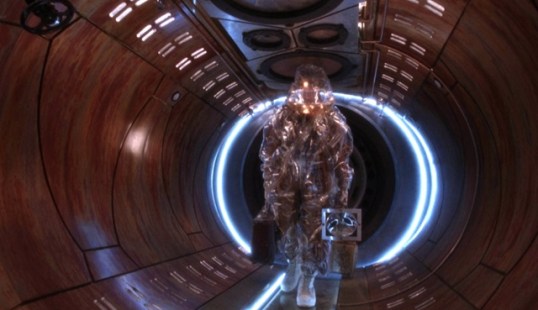
Beyond The Time Barrier (1960, dir by Edgar G. Ulmer, DP: Meredith Nicholson)
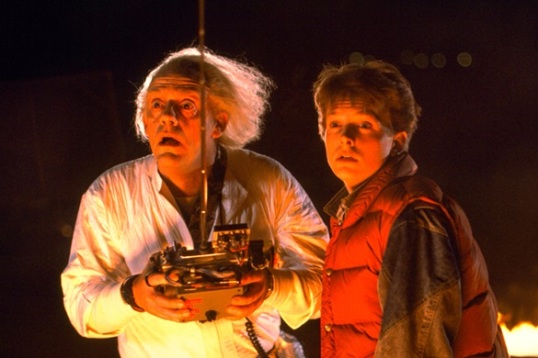
Back to the Future (1986, dir by Robert Zemeckis, DP: Dean Cundey)
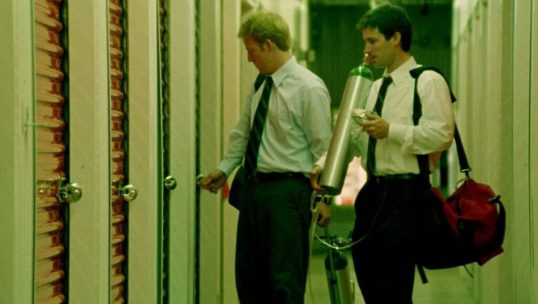
12 Monkeys (1995, dir by Terry Gilliam, DP: Roger Pratt)
4 Shots From 4 Films is just what it says it is, 4 shots from 4 of our favorite films. As opposed to the reviews and recaps that we usually post, 4 Shots From 4 Films lets the visuals do the talking.
Yesterday, it was announced that the veteran cinematographer Roger Pratt passed away in December. Known for his work with Terry Gilliam and Tim Burton, Pratt left behind a legacy of visually stunning films. It’s time for…
4 Shots From 4 Roger Pratt Films
Brazil (1985, dir by Terry Gilliam, DP: Roger Pratt)
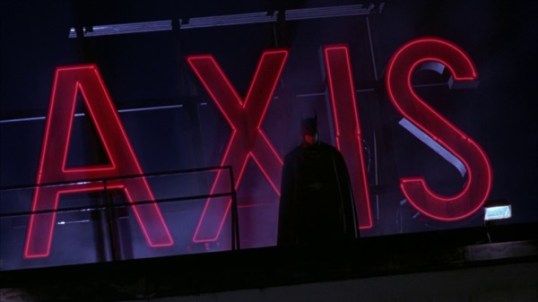
Batman (1989, dir by Tim Burton, DP: Roger Pratt)
The Fisher King (1991, dir by Terry Gilliam, DP: Roger Pratt)
12 Monkeys (1995, dir by Terry Gilliam, DP: Roger Pratt)
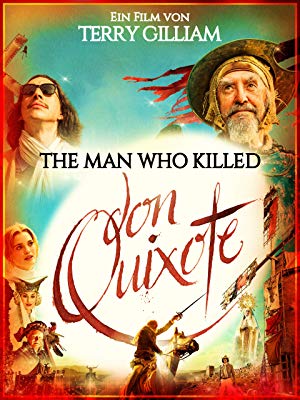
For many years, The Man Who Killed Don Quixote was a film best known for not having been made.
In the past, we’ve used the Icarus Files as a way to write about filmmakers who flew too close to the sun of their own ambition and who plunged down to the sea as a result. However, in the case of The Man Who Killed Don Quixote, the sun is not director Terry Gilliam’s ambition. Instead, the sun is a combination of shady financiers, natural disasters, and film industry silliness that seemed to all conspire to keep Gilliam from making his film. And yet, unlike the real Icarus, Gilliam insisted on continuing to fly, regardless of how many times he crashed into the ocean.
Terry Gilliam first started to talk about adapting Migel de Cervantes’s Don Quixote into a film in the late 80s. The tale of a Spanish nobleman who becomes convinced that he’s fighting giants when he’s actually only jousting with windmills, Don Quixote sounded like an obvious project for Gilliam. Gilliam’s films have always dealt with the power and importance of imagination. However, it’s often forgotten that Gilliam’s protagonists are often both saved and eventually destroyed by fantasy. (One need only think about the end of Time Bandits, in which the young main character goes on the journey of a lifetime but then watches as his parents blow up in front of him.) It’s easy to forget that Don Quixote dies at the end of Cervantes’s tale, having regained his sanity and having announced that his niece will be disinherited if she marries a man who has ever read a book about chivalry.
From 1990 to 1997, Gilliam started pre-production on his version of Don Quixote several times, just for the production to be canceled. Sometimes, this was due to Gilliam not being able to get the budget that he felt would be necessary to bring his vision to life. Frustrated with the Hollywood studio system, Gilliam wanted to raise the money for and make his movie in Europe but this turned out to lead to a whole new set of financial and regulatory complications.
Filming finally started on the film in 2000, with Jean Rochefort playing a former film actor who thinks that he’s Don Quixote and Johnny Depp playing the director who fills the role of Sancho Panza. Unfortunately, as shown in the poignant documentary Lost in La Mancha, the production seemed to be almost cursed from the start. The footage from the first day of shooting was unusable, due to planes flying overhead. The 2nd day of shooting was ruined by a flash flood that swept away much of the set. Jean Rochefort injured himself and, despite his best efforts to act through the pain, he had to step away from the role. Filming was suspended in 2000 and, for the next 16 years, Gilliam tried to find a way to get the stalled film started up again. Many actors came and went, including Robert Duvall and, most promisingly, John Hurt. Hurt agreed to play the role of Quixote but, just when it seemed that the film was finally going to go into production, Hurt passed away from pancreatic cancer. A few months later, the original Quixote, Jean Rochefort, also passed away. The film went back into limbo.
Finally, in 2016, a producer named Paulo Branco offered to fund the film. Pre-production started up again, this time with Adam Driver in the Sancho Panza role and Michael Palin playing Quixote. However, the project was soon once again stalled, as Branco wanted creative control of the film. When Branco slashed both the budget of the film and Palin’s already reduced salary, Gilliam denounced Branco’s actions. Branco suspended production but, by this point, Gilliam had already hooked up with another set of producers. Jonathan Pryce replaced Michael Palin as Don Quixote and, finally, Terry Gilliam’s The Man Who Killed Don Quixote was filmed!
Once filming was complete, however, Paulo Branco popped up yet again. Claiming that he owned the rights to the story and not Terry Gilliam, he sued to keep the film from being distributed. The courts ruled in Branco’s favor but Gilliam countered that he hadn’t used one frame of footage that had been shot while Branco was serving as producer and that, while Branco had the rights to his version of The Man Who Killed Don Quixote, he did not have the rights to Gilliam’s. While the lawyers argued, Amazon Studios withdrew from an agreement to distribute the film. Once the case was finally settled, The Man Who Killed Don Quixote was finally given a haphazard release in a few countries, often in edited form.
And that’s a shame because The Man Who Killed Don Quixote is a delight. It’s a film that is both playful and snarky, a celebration of imagination that also serves as a satire of Hollywood narcissism. Adam Driver plays Toby Grummett, a director who returns to a Spanish village to direct an big-budget, epic adaptation of Don Quixote. Ten years earlier, as a student filmmaker, Grummett shot a previous adaptation of Don Quixote in the same village. When he tracks down the old shoemaker (Jonathan Pryce), who starred in his student film, he discovers that the shoemaker thinks that he is Quixote and that he’s become something of a tourist attraction.
And from there, the film follows Don Quixote as he takes Toby on a quest to fight giants and protect the helpless and to live a life of chilvary. Along the way, Toby finds himself getting caught up in Quixote’s elaborate fantasy world. It leads to a lot of comedy but there’s also something rather poignant about the old shoemaker’s attempts to be a hero and Toby rediscovering the love of fantasy and the imagination that he had when he was a film student. And yet, it would be a mistake to assume that this film is simply a light-hearted fantasy. The laughs are tinged with melancholy. The enemies that Quixote and Toby meet are not just imaginary giants. This a film that mixes comedy and tragedy in a way that few other films have the courage to do so.
As is typical with Gilliam’s later films, it bites off a bit more than it can chew but it’s still hard not to get caught up in it. Driver and Pryce are both wonderfully cast and the film’s satire of the film business carries a sting to it. Watching the film, it becomes apparent that Gilliam sees himself as being both Quixote and Toby. The film’s ending seems to be Gilliam’s defiant message that he will always choose to fight the giants.
Though the Academy of Motion Picture Arts and Sciences claim that the Oscars honor the best of the year, we all know that there are always worthy films and performances that end up getting overlooked. Sometimes, it’s because the competition too fierce. Sometimes, it’s because the film itself was too controversial. Often, it’s just a case of a film’s quality not being fully recognized until years after its initial released. This series of reviews takes a look at the films and performances that should have been nominated but were,for whatever reason, overlooked. These are the Unnominated.
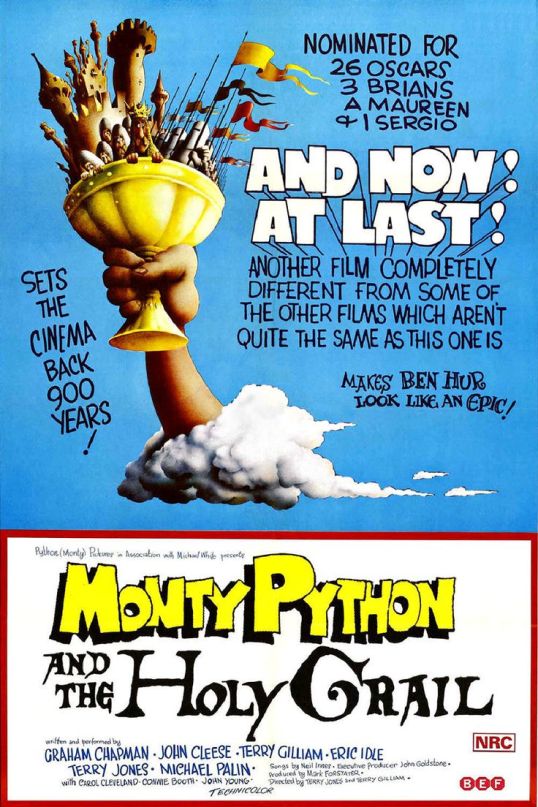
Really, Academy?
No nominations for one of the most influential and widely-quoted films ever to be released?
Well, actually, I get it. Monty Python and the Holy Grail was first released in 1975 and 1975 was an unusually good year for cinema. Back in the 70s, of course, the Academy only nominated five films for Best Picture and, as a result, a lot of good films were not nominated that year. There just wasn’t room for them. Check out the five films that were nominated and ask yourself which one you would drop to make room for a different nominee.
Would you drop:
Barry Lyndon, which was directed by Stanley Kubrick was considered to be the most realistic recreation of the 18th Century to ever be captured on film,
Dog Day Afternoon, in which director Sidney Lumet brilliantly mixed comedy and drama and which featured wonderful performances from Al Pacino, John Cazale, Chris Sarandon, and Charles Durning,
Jaws, the Steven Spielberg-directed hit that changed the face of Hollywood,
Nashville, Robert Altman’s sprawling and ambitious portrait of a country tying to find itself after a decade of trauma,
or
One Flew Over The Cuckoo’s Nest, in which Milos Forman paid tribute to individual freedom and Jack Nicholson gave perhaps the best performance of his legendary career?
I mean, those are five great films. Even the weakest of the nominees (which, in this case, I think would be the eventual winner, One Flew Over The Cuckoo’s Nest) is still stronger than the average Best Picture nominee.
So, I can understand why there wasn’t room for an episodic and rather anarchistic British comedy, one that largely existed to parody the type of epic and period filmmaking that the Academy tended to honor. If there had been ten nominees in 1975 and Monty Python and the Holy Grail had been snubbed to make room for something like The Other Side of the Mountain, my feelings might be different but there weren’t.
That said, even if there wasn’t room in the Best Picture slate, what to make of the lack of nominations for a script that is so full of quotable lines and memorable incidents that even people who haven’t seen Monty Python and the Holy Grail are familiar with them? No nominations for the costumes, the production design, or the cinematography, all of which are surprisingly good for a low-budget film that was directed by not one but two untested neophyte directors? No nominations for the thrilling music or the Camelot song? How about a special award for the killer rabbit?
How about at least a best actor nomination for Graham Chapman, who played King Arthur not as a comedic buffoon but instead as being well-intentioned but also increasingly frustrated by the fact that his subjects cared not about his quest or his royal title? Though 1975 may have been a strong year for movies, it appears that the Academy still struggled to find five best actor nominees and they resorted to giving a nomination for James Whitmore’s performance as Harry Truman in a filmed version of his one-man stage show, Give ‘Em Hell Harry. Nothing against James Whitmore or Harry Truman but I think we all know that spot belonged to Graham Chapman and his performance as King Arthur.
Monty Python and the Holy Grail is often described as being a satire of the Arthurian legends. I think, even more than being a film about King Arthur, it’s a film about a group of people trying to make an epic despite not having the resources or the patience to do so. Python humor has always featured characters who were both foolishly confident and stubbornly aggressive and both of those traits are on wide display in Monty Python and the Holy Grail. The production can’t afford horses so Arthur and his knights hit two coconuts together to duplicate the sound of the hooves on the ground and when they’re confronted about it, they attempt to change the subject. Can’t afford to shoot in a real castle? Simply declare Camelot to be a silly place and walk away. Can’t afford to get permits to film on a certain location? Film illegally and run the risk of getting arrested just when you’re about to start the film’s climatic battle scene. Can’t afford to hire God for a cameo? Use a cut-out. Can’t afford a real knight? Just hire some people who get carried away and then hope one of them doesn’t kill the local academic who has shown up to explain the film’s historical context.
“I just get carried away,” John Cleese’s Lancelot says more than once and he has a point. But the entire movie is about people getting carried away. The Black Knight is so carried away in his belief in himself that he continues to fight despite having neither arms nor legs. The villagers are so carried away in their desire to burn a witch that they cheer when it’s discovered that she weighs the same amount as a duck. (“It’s a fair cop,” the witch, played by Connie Booth, admits.) Eric Idle’s Sir Robin is so carried away in his ability to answer questions that he doesn’t consider that he might be asked about the capitol of Assyria. The Knights of the Round Table as so carried away in their dancing and their singing that no one wants to go to the castle. Even the film’s animator gets carried away, suffering a heart attack and saving Arthur and his surviving knights from a fate worse than death.
Monty Python and the Holy Grail is a very funny film, of course. We all know that. (I once read a story about a woman who, having learned she only had a few weeks to live, decided to watch this film everyday until she passed. I don’t blame her.) But what I truly love about this film is that, in scene-after-scene, you can literally see the Pythons realizing that they were actually capable of making a real movie. Michael Palin, especially, seems to be having so much fun playing the eternally pure Sir Galahad that it’s impossible not to get caught up in his happiness. There’s a joie de vivre that runs through Monty Python and the Holy Grail, even at its darkest and most cynical. The Pythons are having fun and it’s impossible not to have fun with him.
And, while the Oscars may have snubbed Monty Python and the Holy Grail, the Tonys did not. When the film was later turned into Spamalot, it received 14 Tony nominations and won three.



 Through the Shattered Lens