4 Shots From 4 Films is just what it says it is, 4 shots from 4 of our favorite films. As opposed to the reviews and recaps that we usually post, 4 Shots From 4 Films is all about letting the visuals do the talking.
4 Shots From 4 Holiday Films
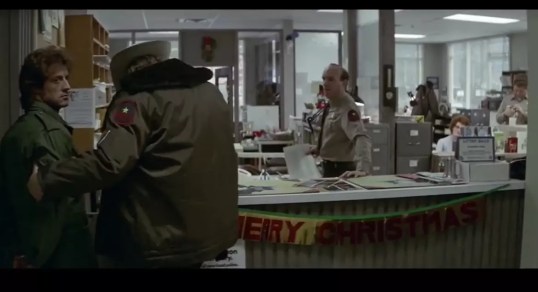
Three Days of the Condor (1975, dir by Sydney Pollack)
4 Or More Shots From 4 Or More Films is just what it says it is, 4 shots from 4 of our favorite films. As opposed to the reviews and recaps that we usually post, 4 Shots From 4 Films lets the visuals do the talking!
4 Shots From 4 Texas Films
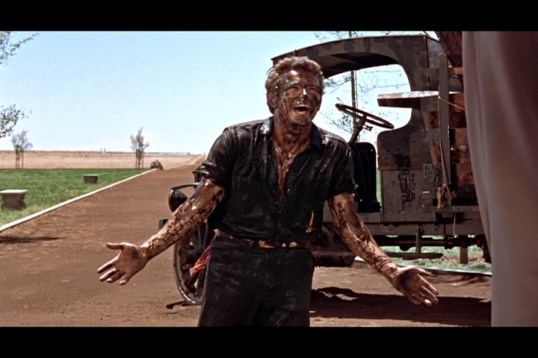
Giant (1956, Dir by George Stevens)
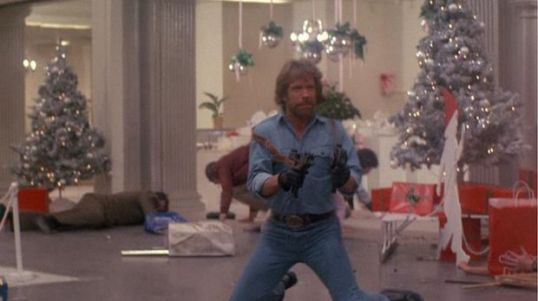
North Dallas Forty (1979, Dir. by Ted Kotcheff)
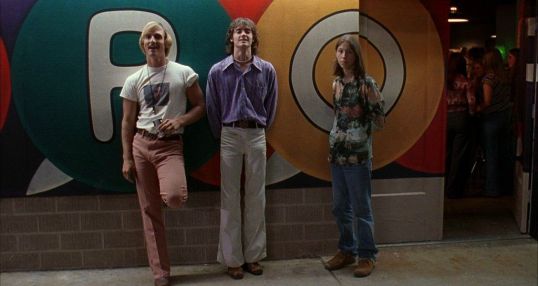
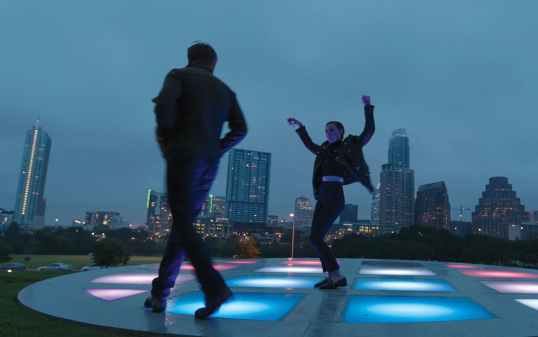
Dazed and Confused (1993, Dir by Richard Linklater)
4 Or More Shots From 4 Or More Films is just what it says it is, 4 shots from 4 of our favorite films. As opposed to the reviews and recaps that we usually post, 4 Shots From 4 Films lets the visuals do the talking!
Today, the Shattered Lens pays tribute to the year 1971!
4 Shots From 4 1971 Films
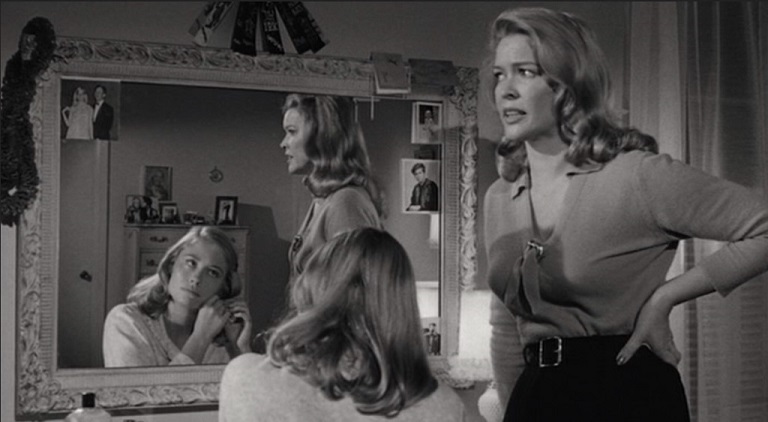
The Last Picture Show (1971, dir by Peter Bogdanovich, DP: Bruce Surtees)
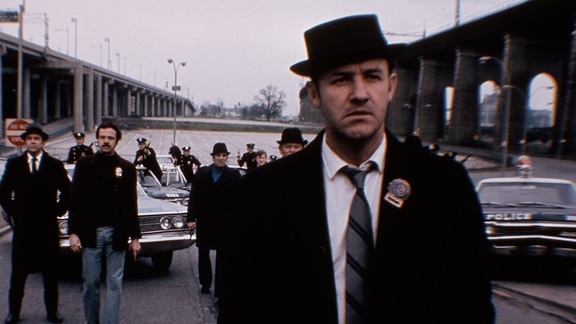
The French Connection (1971, dir by William Friedkin, DP: Owen Roizman)
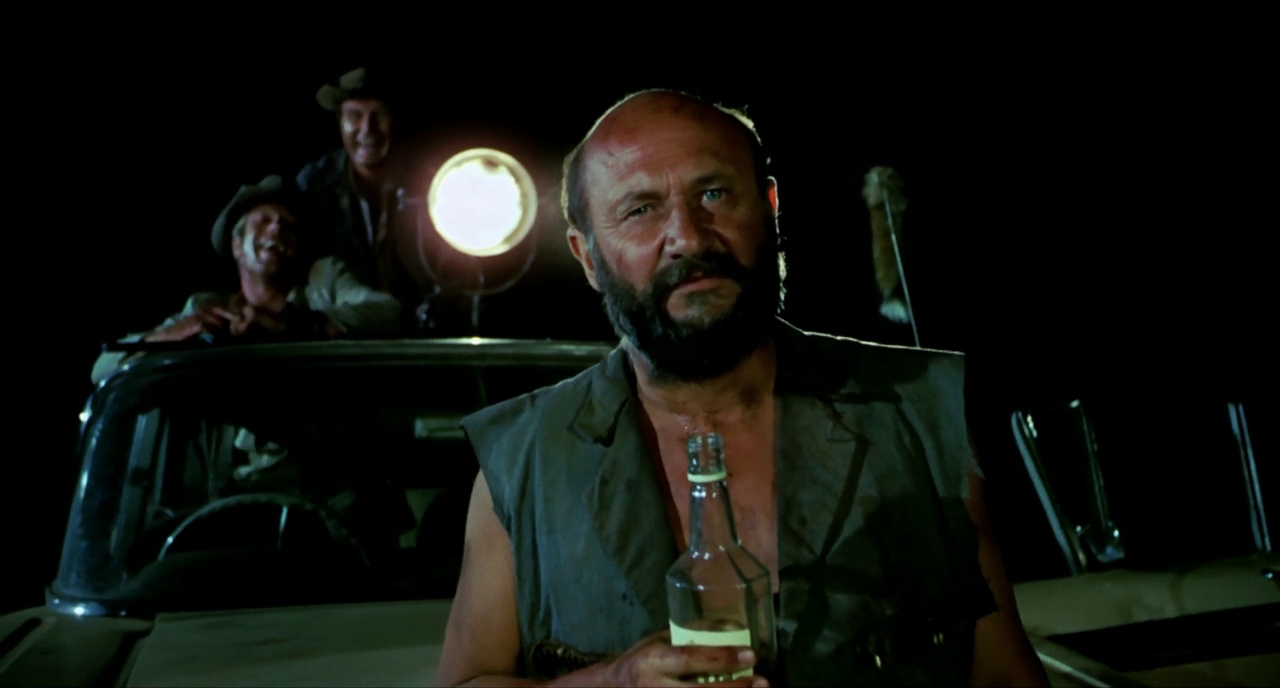
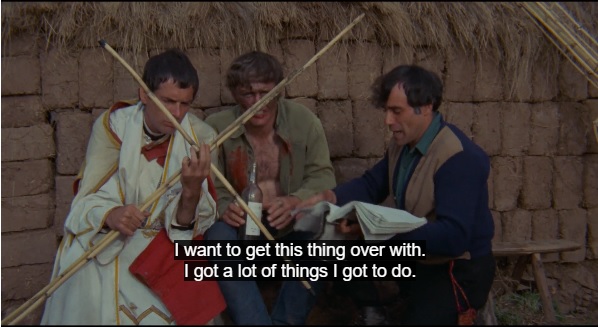
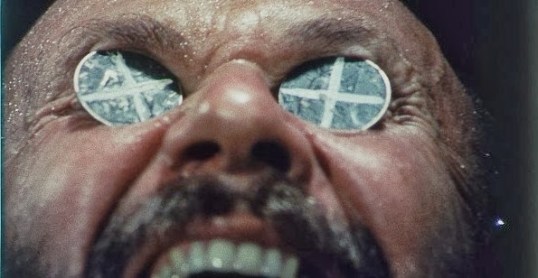
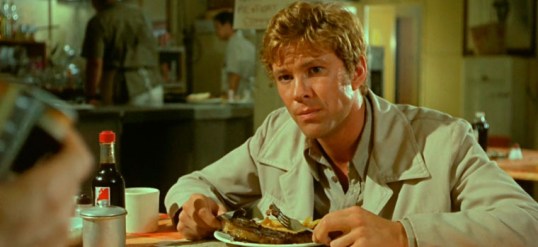
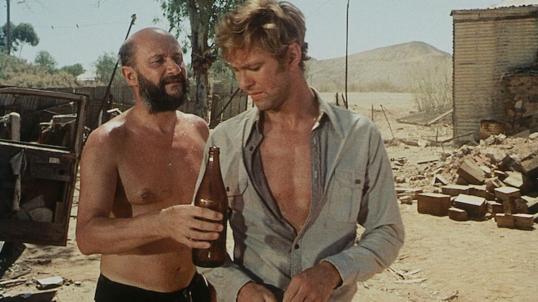
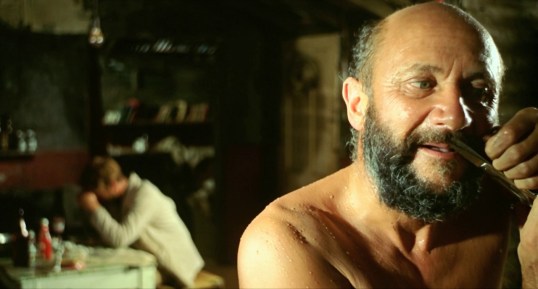
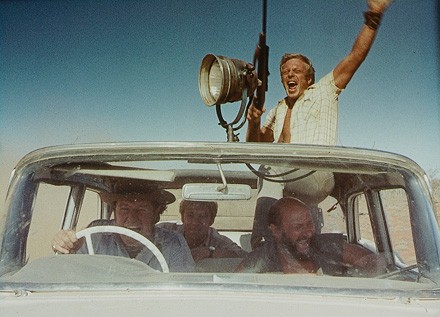
Wake in Fright (1971, dir by Ted Kotcheff, DP: Brian West)
The Last Movie (1971, dir by Dennis Hopper, DP: Laszlo Kovacs)
4 Or More Shots From 4 Or More Films is just what it says it is, 4 shots from 4 of our favorite films. As opposed to the reviews and recaps that we usually post, 4 Shots From 4 Films lets the visuals do the talking!
Today, the Shattered Lens wishes a happy birthday to Sylvester Stallone! It’s time for….
4 Shots From 4 Sylvester Stallone Films
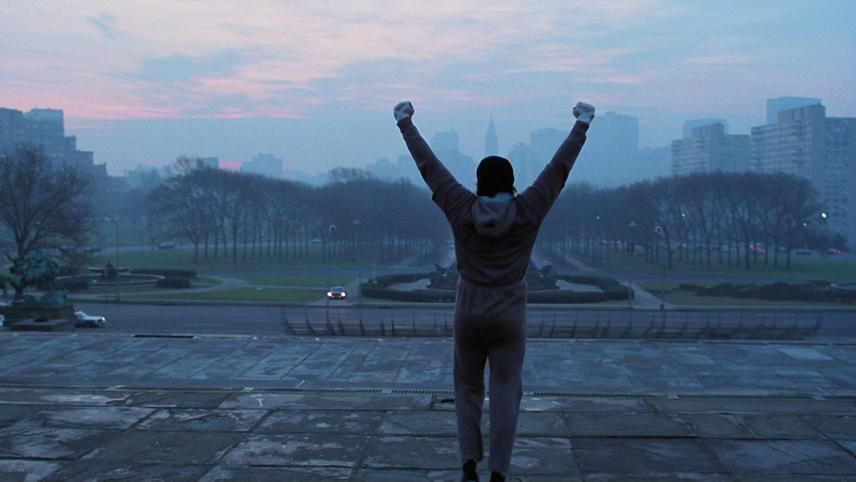
Rocky (1976, dir by John G. Avildsen, DP: James Crabe)
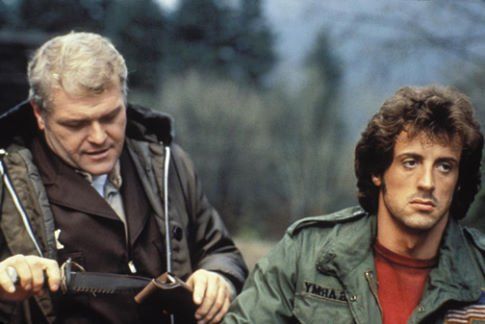
First Blood (1982, dir by Ted Kotcheff, DP: Andrew Laszlo)
Rocky III (1982, dir by Sylvester Stallone, DP: Bill Butler)
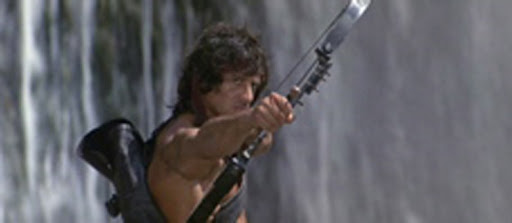
Rambo: First Blood Part II (1985, dir by George Pan Cosmatos, DP: Jack Cardiff)
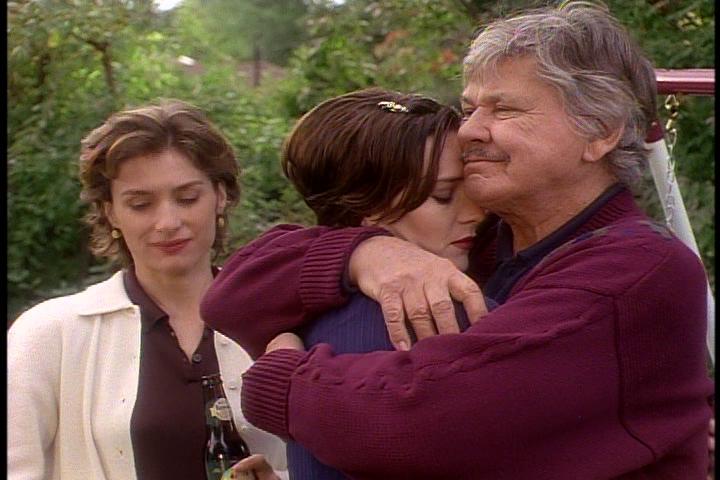
Legendary actor Charles Bronson ended his five-decade career by starring in a series of made-for-TV movies, FAMILY OF COPS (1995), BREACH OF FAITH: A FAMILY OF COPS II (1997), and FAMILY OF COPS III: UNDER SUSPICION (1999). I was in my mid-twenties as this series played out, and I enjoyed each of the installments. Today, I’m going to take a look at the first in the series.
In FAMILY OF COPS, Charles Bronson stars as Police Inspector Paul Fein. Paul, a widower as we enter this story, leads a family who is heavily involved in law enforcement in Milwaukee, Wisconsin. His oldest son Ben (Daniel Baldwin) is a detective on the force. Ben is a family man in a loving marriage with several wild kids. Paul’s younger son Eddie (Sebastian Spence) is a patrol cop. Eddie’s single, has a beautiful girlfriend, and seems to be a nice guy with a well-adjusted life. Paul’s oldest daughter Kate (Barbara Williams) is a local public defender. She seems to be dedicated to her work, not leaving much time for a social life. And then there’s Paul’s youngest daughter Jackie (Angela Featherstone), who has moved out to California and refers to herself as “the family curse.” This story opens with Jackie reluctantly coming back to Milwaukee to attend her dad’s birthday party. All Paul wants for his birthday is for his family to be together. We soon learn that neither Ben or Kate care much for Jackie and her irresponsible life choices. As a matter of fact, the reason she ran off to California in the first place was to get out from under her family’s disapproval. It’s not long after she gets back that the family wishes she would have stayed away. Sneaking out of her sister’s house late at night to drink and party, she meets the prominent local businessman Adam Novacek (Simon MacCorkindale), eventually going to his home and engaging in sexual intercourse. Sadly, the next morning she wakes up to Novacek’s recently deceased corpse, and she’s arrested as the prime suspect in his murder. Convinced of her innocence, Paul, Ben, and Eddie set about trying to clear her name and find the real murderer. Besides Jackie, other suspects begin to emerge, including Novacek’s current wife Anna (Lesley-Anne Down), his former wife Laura (Kate Trotter), who’s now confined to a looney bin, and a local gangster named Frank Rampola (John Vernon), who has a vendetta against Paul for recently busting his grandson. How far will Paul Fein go to protect his family in his search for a killer?!!
FAMILY OF COPS is a perfect example of what I would refer to as entertainment for the “older person crowd,” and I don’t mean this as a put-down in any way as I enjoyed the movie. I just mean that it fits a type of entertainment that was popular in the 80’s and 90’s. These types of shows would depend greatly on the charisma or reputation of a veteran actor or actress, would contain simple production values, and would usually follow formulaic plots. Examples of the types of shows I’m referring to include MURDER, SHE WROTE with Angela Lansbury, MATLOCK with Andy Griffith, DIAGNOSIS MURDER with Dick Van Dyke, and WALKER: TEXAS RANGER with Chuck Norris. A combination of my dad, mom and grandma loved all of these shows. I’m a big fan of MATLOCK myself. In this case, FAMILY OF COPS leans heavily on Charles Bronson’s five decades as a tough guy icon to anchor a somewhat formulaic crime film and family melodrama. The role of Paul Fein fits a 73-year-old Bronson like a glove. He’s still in good physical shape, and the movie gives him a couple of opportunities to punch the shit out of some much younger thugs and henchmen. That was fun for me.
The supporting cast of the film is solid. Daniel Baldwin and Angela Featherstone make the biggest impact. Baldwin is good as the oldest son, a hothead, tough guy on the job who is constantly being humbled at home. Featherstone has the most beautiful eyes, and her rebellious character seems to have a good heart, but she just can’t seem to keep herself out of trouble. Paul Fein’s love for his troubled daughter Jackie is a sweet part of the story and provides something that most of us can relate to. She told me that she “loved Charles,” and I think you can see that in their scenes together. Sebastian Spence and Barbara Williams don’t have a lot to do in this first installment, but their characters will get their own moments to shine in the sequels. I also enjoy seeing John Vernon and Lesley Anne-Down show up in the movie as various persons of interest throughout the story. Bronson and Lesley Anne-Down had recently worked together in DEATH WISH V: THE FACE OF DEATH (1994) and were reportedly good friends in real life. Ted Kotcheff directed FAMILY OF COPS, which I find kind of disappointing. The same guy who directed movies like NORTH DALLAS FORTY (1979) and FIRST BLOOD (1982) didn’t bring anything special to the table in this film. I know it’s a modestly budgeted made-for-TV movie, but the best that can be said for the direction is that it’s workmanlike, and you would never suspect that the director had once helmed the original Rambo movie.
Ultimately, I enjoy FAMILY OF COPS because it stars Charles Bronson. Even as an older man, Bronson still dominates a scene, and the ratings success of the movie proved that Bronson still had an audience who wanted to see him on screen. And even though the story isn’t very unique and the central mystery isn’t very exciting, just the fact that Bronson is leading a solid story that includes action, crime, mystery and family melodrama will always provide some moments of joy for his fans like me. This is far from Bronson’s best work, but the old workhorse still knows how to entertain!
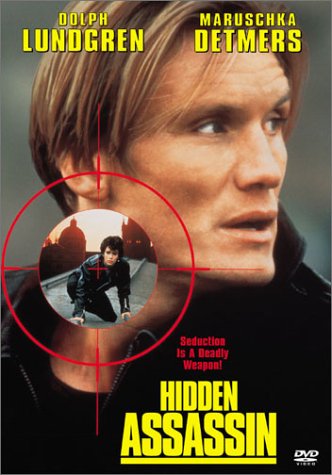
After the Cuban ambassador to the United States is assassinated, the CIA worries that someone is trying to create trouble between the USA and Cuba. With another Cuban-American summit due to be held in Prague, CIA Agent Dolph Lundgren is sent to arrest the assassin and bring her back to America to be tried before she can cause anymore trouble. The CIA claims that the assassin is a sniper-turned-club owner named Simone (Maruschka Detmers) but, once it becomes obvious that whoever wants to keep her from going to America want to not only kill him but also her as well, Dolph starts to suspect that there’s a bigger conspiracy at work.
Hidden Assassin was the last feature film to directed by Ted Kotcheff and, while it’s definitely a direct-to-video action flick, it’s still a cut above similar films that were being released at the time. Not surprisingly, the director of FirstBlood and UncommonValor knew how to shoot action films but he also did a good job directing the actors and everyone gives it their all in this film. Amongst the lower-tier action films of the 90s, Dolph Lundgren was always a better actor than Van Damme and he also more likable than Seagal. (Of course, a rabid bobcat is more likable than Steven Seagal.) Lundgren is at his best here, believable as both an action star and a spy. John Ashton of Beverly Hills Cop fame plays his partner and Gavan O’Herlihy plays his superior. They’re both pros who know exactly how to handle the material.
Hidden Assassin has some plot holes, the least of which anyone would go through that much trouble to sour relations between America and Cuba. America and Cuba haven’t gotten along for a very long time. Still, the movie makes great use of Prague as a location and Lundgren is characteristically strong as the film’s hero. There’s even some moments of deliberate humor that work surprisingly well. Lundgren and Kotcheff were a killer combination and it’s too bad they didn’t do more movies together.
Kotcheff directed a lot of classic films but perhaps the most influential was 1982’s First Blood. In today’s scene that I love, John Rambo (Sylvester Stallone) is arrested by Sheriff Will Teasle (Brian Dennehy). Teasle may think that he’s keeping his community safe and teaching Rambo a lesson about respecting authority but, needless to say, he’s making a huge mistake.
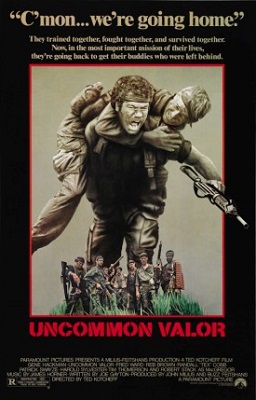
Retired Marine Colonel Jason Rhodes (Gene Hackman) and oilman Harry MacGregor (Robert Stack) share a tragic bonf. Both of them have sons that served in Vietnam and are listed as being MIA. Believing that their sons are still being secretly held in a POW camp in Loas, Rhodes and MacGregor put together a team to sneak into Southeast Asia and rescue them.
With MacGregor supplying the money and Rhodes leading the mission, the team includes Blaster (Red Brown), Wilkes (Fred Ward), Sailor (Randall “Tex” Cobb), and Charts (Tim Thomerson), all of whom served with Rhodes’s son. Also joining in his helicopter pilot Curtis Johnson (Harold Sylvester) and former Marine Kevin Scott (Patrick Swayze), whose father was also listed as being MIA in Vietnam. After a rough start, the group comes together and head into Laos to bring the prisoners home!
UncommonValor is one of the many movies released in the 80s in which Vietnam vets returned to Asia and rescued those who were left behind. In the 80s, there was a very strong belief amongst many Americans that soldiers were still being held prisoner in Vietnam, Cambodia, and Laos and Hollywood was quick to take advantage of it. The box office success of UncommonValor set the stage for films like Rambo and Missing In Action, film in which America got the victory that it had been denied in real life.
What set UncommonValor apart from the films that followed was the cast. Not surprisingly, Gene Hackman brings a lot more feeling and nuance to his performance as the obsesses Col. Rhodes than Sylvester Stallone and Chuck Norris brought to their trips to Vietnam. The film surrounds Hackman with a quirky supporting cast, all of whom represent different feelings about and reactions to the war in Vietnam. Fred Ward’s character suffers from PTSD. Randall “Tex” Cobb, not surprisingly, is a wild man. Patrick Swayze’s character is trying to make the father he’ll never know proud. Robert Stack and Gene Hackman represent the older generation, still trying to come to terms with everything that was lost in Vietnam and still mourning their sons. The raid on the POW camp is exciting but it doesn’t feature the type of superhuman action that’s present in other POW-rescue films. Col. Rhodes and his soldiers are ordinary men. Not all of them survive and not all of them get what they want.
UncommonValor started out as a screenplay from Wings Hauser, though he’s not present in the cast of the final film and he was only given a “story” credit. John Milius served as producer. Director Ted Kotcheff is best-known for FirstBlood, another action film about America’s struggle to come to terms with the Vietnam War.
Our regular review of Homicide will not be posted today so that we may bring you this special presentation….
My retro television review will return tomorrow. For now, check out 1966’s The Human Voice. In this 55-minute stage adaptation, Ingrid Bergman plays a woman having a phone conversation with her lover of five years on the night before he’s meant to marry another. Written by Jean Cocteau, this monologue was also filmed by Pedro Almodovar in 2020, with Tilda Swinton giving a performance that cannot hope to compare to Bergman’s.
And now, without further ado, here is The Human Voice!
To be honest, it’s probably open for debate whether or not Wake In Fright is actually a horror film.
This 1971 Australian film, which tells the story of a school teacher who becomes stranded in a small town in the outback, doesn’t feature any ghosts or werewolves or vampires or zombies or anything else of a supernatural nature. The school teacher meets a large number of people in town, the majority of whom are technically quite friendly. They teach him how to gamble. They take him on a hunt. They give him shelter when he doesn’t have anywhere else to stay. The word “mate” is tossed around so frequently that it soon becomes clear that every man — significantly, there’s only two women in the film and one of them only appears in the teacher’s memories — in the outback is considered to be one.
The people of town of Bundanyabba — or “The Yabba,” as they call it — are also very generous with their beer. If they meet you for the first time, they expect you to have a beer with them. If they see you for the first, second, or third time during the day, they expect you to have a beer with them. They wake up in the morning drinking and they go to bed drunk. When John Grant (Gary Bond) first shows up in the Yabba, he can barely handle two beers. By the end of his stay, he’s drinking nonstop.
However, John also discovers that it dangerous to turn down those offers of beer. Turn down a beer and you might get a strange look, if you’re lucky. More likely, you’ll get yelled at. Turn down a beer from the wrong person and you might even get attacked. Everyone in the Yabba is friendly but everyone is also always on the verge of throwing the first punch. Refuse a beer and you might be in trouble. Refuse to enthusiastically take part in a savage and sadistic kangaroo hunt and your mates might starts to talk. When John first arrives, he’s a bit amused by the town and what he sees as being its backwards ways. It’s obvious that he looks down on the people around him and one can sense that they realize that. Perhaps that’s why everyone around him seems to take such joy in watching John slowly lose his identity.
That’s horror at the heart of Wake in Fright. It’s not the horror of the paranormal. Instead, it’s the horror of the isolation. There’s no way to fight the isolation and the madness it brings. Your only choice is to either surrender to it or be destroyed by it. The longer John spends in the Yabba, the more the bleakness of the outback gets to him. It’s a world dominated by brutal men, none of whom are particularly impressed when they find out that John’s teacher and that he has a suitcase full of books. They view John as being soft and, in order to prove that he’s not, John starts to sacrifice his identity. He starts to become just as much of a brute as Dick (Jack Thompson) and Joe (Peter Whittle).
Having lost all of his money, John eventually ends up staying with Doc Tydon (Donald Pleasence). Doc really is a doctor. He’s also, as he cheerfully explains, an alcoholic. When John says that he’s going to find some place else to stay, Doc makes it clear that John isn’t leaving. The film makes good use of Pleasence’s eccentric screen presence. Is Doc simply being friendly or does Doc have more sinister motives fueling his insistence that John stay with him? When Doc gives John advice, is it to help him or is it to further degrade John? Like John, Doc is an educated man and obviously smarter than those around him. And yet, Doc seems very happy in the mad world of the Yabba, drinking, hunting, and gambling. Is John destined to become Doc or can he escape?
John discovers that leaving the Yabba isn’t easy. Every time he tries, he ends up back in town. All roads seems to lead back to the Yabba. In retrospect, perhaps the most frightening thing about Wake In Fright is that no one seems to be surprised by the sight of the increasingly disheveled and unstable John. Even when he stumbles through town while carrying a rifle, no one gives him a second look. He’s just another part of the scenery.
No, Wake In Fright is not a traditional horror film but it’s a horror film, nonetheless. It’s about the horror of not only losing your identity but perhaps not being quite sure what your identity was in the first place. As played by Gary Bond, John is an often frustrating character but you never stop caring about him. It’s frightening to watch him lose himself, even while you wonder if he ever knew who he truly was in the first place. Bond was a stage actor who only appeared in three films. Wake in Fright was his final film and one of the huge reasons why it’s so effective is because Gary Bond is not an actor who we recognize from other films. We don’t seen an actor when we look at him. Instead, we see a person who, for the first time, is discovering just how unsettling life on the fringes can be.
It’s a powerful film and a controversial one. When John is taken on a kangaroo hunt, footage from an actual hunt was included in the film and it’s a horrific sequence, one that’s made all the more disturbing by the fact that the hunters refuse to acknowledge just how horrific and unjust it all is. Reportedly, when Wake In Fright was first released, someone in a Sydney theater stood up and shouted at the screen, “This is not us!” Actor Jack Thompson, who made his film debut in Wake In Fright, was in the audience and shouted back, “It is us, mate! Sit down!”
For a long time, it was impossible to see Wake In Fright. Only one known print was known to exist and it was a badly damaged one. Fortunately, in 2002, another print was found in Pittsburgh and Wake In Fright was rereleased and rediscovered. When it was first released in 1971, the film’s violence and downbeat atmosphere were both controversial and it struggled at the Australian box office. (Many Australians, like that theatergoer in Sydney, initially viewed the film as being a bit of a personal attack.) Rereleased in 2003 and championed by Martin Scorsese, Wake In Fright was embraced by a new generation of critics, many of whom declared it to be one of the greatest and most important Australian films ever made.
Wake In Fright is a powerful and unsettling film, a portrait of a place that seems to be fueled by toxic masculinity and self-destruction. It’s a disturbing film and not easy to watch. But if you do watch it, it will stick with you and leave you thinking long after the final credits roll.







 Through the Shattered Lens