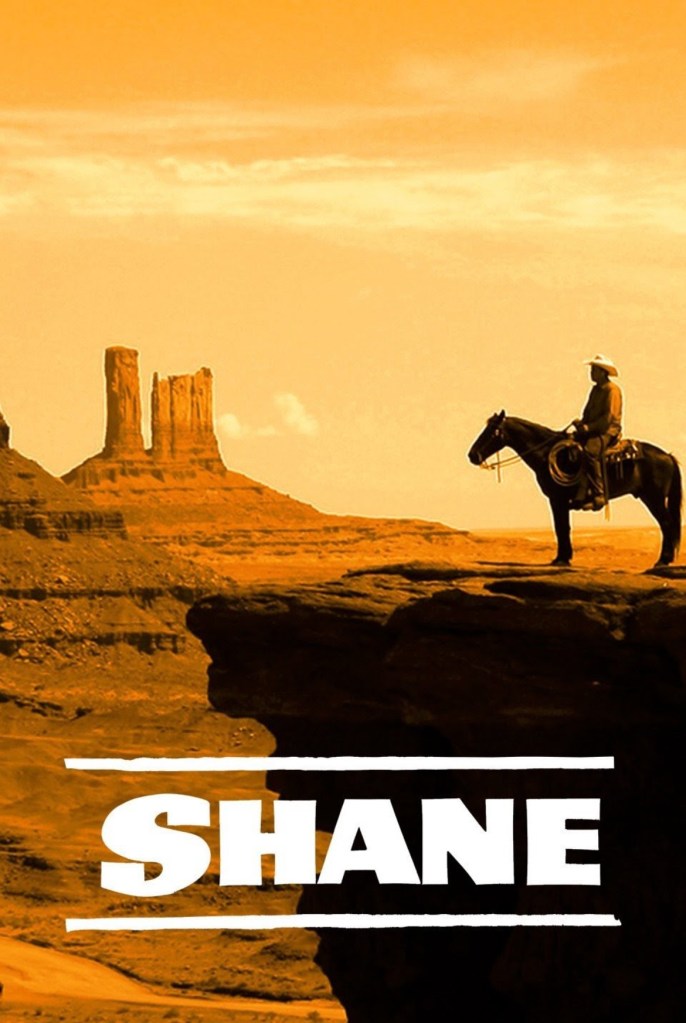
Episode 5 opens with a man riding his horse down the hill towards a sweaty Shane (David Carradine) who’s plowing a field on the Starett ranch. The man gets off his horse, walks up to Shane and punches him right in the face. He then turns around and heads back towards his horse. Not putting up with strangers punching him in the face on this day, Shane gets up and punches the guy back in the face. The guy then surprisingly proceeds to knock Shane on his ass again, this time telling him his name in the most Bond-ian of ways, “It’s Posey…RG Posey” (Steve Ihnat). Through a variety of circumstances, we learn that Posey hates “sodbusters” who put up fences and work the ground. He hates sodbusters so much that when he rode up on a person he thought was a sodbuster, he just decided to knock the crap out of him.
Hanging out at Sam Grafton’s saloon, Posey tells the local cowhands about kicking Shane’s ass, so local cattle rancher Rufe Ryker (Bert Freed) hires him on the spot. He thinks that any man who has gotten the best of Shane is someone he wants on his side. Over time though, Posey’s hateful and bullying actions towards Tom Starett (Tom Starett), his daughter Marian Starett (Jill Ireland), and Shane are too much, even for Ryker. Posey’s one of those guys who refer to farmers as “apple knockers,” “nesters” and “stump jumpers.” On multiple occasions, he even says they’re not human. Ryker makes it clear to Posey that while he’s working with the Ryker outfit, the Starett’s will be treated respectfully. Not content to leave well enough alone, Posey decides to dam up the stream that flows onto the Starett’s ranch just because he can. When Shane finds out, he rides out to confront Posey, and the two men fight it out with shovels. Ryker rides up on the two men and fires Posey on the spot, and even helps Shane break up the dam. Unable to accept that his own bitterness and hate cost him his job, Posey decides to blame Shane and sets out to kill him.
Episode 5 is an enjoyable episode. First, it has a couple of exciting action sequences. The scene where Shane and Posey fight with shovels is the best action scene in the series so far. Grown men swinging shovels at each other is extremely dangerous and this episode certainly captures that feeling. I also enjoyed the scene at the very end where young Joey Starett (Christopher Shea) is running through the field with Shane’s gun, trying to warn him that Posey’s on his way to kill him. It’s a well executed scene that had me on the edge of my seat. Second, this episode tackles an important social issue. Posey hates sodbusters “just because they’re different.” As mentioned earlier, in his own mind he’s reduced them to being less than human. This is beaten into our heads in a pretty heavy handed approach, but that’s perfectly fine. The episode aired over 58 years ago and has a strong “message” that illustrates how Posey’s hate has turned him into an angry, bitter man who blames others for his own bad decisions and problems. For a good example of this these days, just open up any social media app and scroll for a bit, and you’ll see how anger and bitterness continue to steal our joy. Finally, I think Steve Ihnat is good as Posey, a man so full of hate that he doesn’t have the first clue about how to actually be happy. Ihnat had a solid television career, appearing in almost every good TV show in the 1960’s. He would even direct the James Coburn rodeo movie from 1972 called THE HONKERS. Sadly, Ihnat would pass away in 1972 at just 37 years of age.
Overall, I found episode 5 to be very good. It tells an exciting story, while teaching an important lesson about how a person who allows hate to fester in their heart will ultimately end up as a bitter and lonely loser. Shane’s relationship with Marian Starett doesn’t advance much in Episode 5 but they do look at each other longingly at one point. Now that I think about it, with all the hate shown by Posey, it would have been nice to see a little more love in this episode. Oh well, there’s always episode 6 to look forward to!
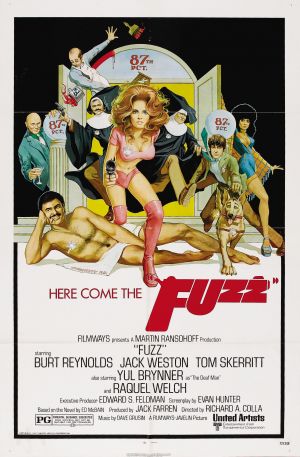 Detective Eileen McHenry (Raquel Welch) has just been given her new assignment and she is about to find out that there is never a dull day in the 87th Precinct. How could there be when the precinct’s top detectives are played by Burt Reynolds, Tom Skerritt, and Jack Weston? Or when Boston’s top criminal mastermind is played by Yul Brynner? There is always something happening in the 8th Precinct. Someone is stealing stuff from the precinct house. Someone else is attacking the city’s homeless. Even worse, Brynner is assassinating public officials and will not stop until he is paid a hefty ransom!
 Through the Shattered Lens