Retro Television Review: St. Elsewhere 3.2 “Playing God: Part Two”


Welcome to Retro Television Reviews, a feature where we review some of our favorite and least favorite shows of the past! On Fridays, I will be reviewing St. Elsewhere, a medical show which ran on NBC from 1982 to 1988.  The show can be found on Daily Motion.
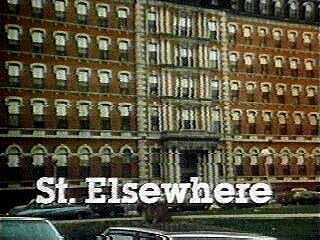
This week, the hospital is a depressing place.

Episode 3.2 “Playing God: Part Two”

(Dir by Bruce Paltrow, originally aired on September 26th, 1984)

There was a lot going on in this episode.

Sister Domenica demanded that Sister Theresa be taken off of life support and she threatened to sue the hospital if it didn’t happen.  This led to Dr. Westphall telling another long and depressing story about his dead wife.  I don’t mean to be flippant about anyone’s tragedies but it’s hard not to notice that almost everything seems to lead to Westphall telling a depressing story.  Westphall is one of the most saddest television characters that I’ve ever come across.

The nurses are closer to striking.  A labor negotiator named Richard Clarendon (Herb Edelman) is brought in by the nurses and it’s hard not to notice that he looks a lot like Helen Rosenthal’s ex-husband.  I think I can already guess where this is heading.

A sick child was brought in by a woman (Tammy Grimes) who claimed to be his fairy godmother.  This gave Fiscus an excuse to get a consultation from Kathy Martin, who has abandoned the morgue for psychiatry and who is no longer dressing exclusively in black.

At home, Dr. Craig struggled with impotence.  At the hospital, Dr. Ehrlich gave an awkward lecture about whether or not one can have sex after heart surgery.

The firefighters are still recovering from their burns.

Clancy got an abortion, despite Morrison’s objections.

And yet, all that drama was overshadowed by the fact that the Dr. Peter White — the drug-addicted rapist who nearly killed more than a few patients due to his own incompetence — is once again walking the halls of St. Eligius.  White won his lawsuit.  I’m not really sure that I understand what the basis of his lawsuit was.  St. Eligius could only ask a select number of residents to return and, even if you overlook the fact that White was accused of rape, it’s not as if Dr. White was ever an especially competent doctor.  It would seem that just his struggle with drug addiction would be enough to justify not asking him to return.  And yet, somehow, Dr. Peter White is once again a resident at St. Eligius.  (The ruling was probably handed down by a Carter judge.)

“You just can’t admit that you were wrong about me!” White snaps at Westphall.

Westphall replies that White is a terrible human being and not worthy of being a doctor and that he will not be allowed to work with any patients at the hospital.  And, for once, I wanted to cheer Dr. Westphall.  He may be depressing but he understands exactly who and what Peter White is.

Whatever the future may hold for the hospital, I have a feeling that it’s not going to be happy.  Two episodes in and the third season has already settled into a pit of melancholy.  That said, melancholy is perhaps the right mood for a medical show.  When it comes to hospitals, there aren’t many happy endings.

Retro Television Review: St. Elsewhere 3.1 “Playing God, Part One”


Welcome to Retro Television Reviews, a feature where we review some of our favorite and least favorite shows of the past! On Fridays, I will be reviewing St. Elsewhere, a medical show which ran on NBC from 1982 to 1988.  The show can be found on Daily Motion.

Today, we start the third season of St. Elsewhere with some new opening credits!

Episode 3.1 “Playing God, Part One”

(Dir by Bruce Paltrow, originally aired on September 19th, 1984)

The opening of the third season finds that St. Eligius is just as depressing as it’s ever been.

Fiscus leads a group of new residents, including Dr. Elliott Axelrod (played by new series regular Stephen Furst), through the hospital.  Fiscus comes across as being an arrogant jackass.  I guess that’s the appeal of being a second-year resident.  You get to look down on all of the first-years.

Jack is still dating Clancy (young Helen Hunt).  When Clancy tells Jack that she’s pregnant, he’s shocked when she says she’s planning on getting an abortion.  Jack proposes to her.  Clancy says she’s not ready to get married and she’s not ready to have a baby.

Dr. Craig is still yelling at Dr. Ehrlich.  Dr. Ehrlich is still annoying the nurses.

Speaking of the nurses, they’re going on strike!

Three firefighters (one of whom is played by Erin Hudson) are injured while on the job and are rushed to St. Eligius with severe burns.  Luckily, plastic surgeon Bobby Caldwell (Mark Harmon, without that terrible mustache he wore during season two) is on call.

Dr. Peter White is working in a shady clinic and is still suing for his right to be a resident.

A traffic accident leaves one nun in a coma and apparently brain-dead.  Sister Doemnica (Michael Learned) wants to take her off life-support.  Westphall (Ed Flanders), who seems even more depressed than usual, disagrees.  It looks like there’s going to be some conflict about this.  For once, I’m on Westphall’s side.  I’m believer in hope.

Auschlander is still battling his cancer.

In other words, it’s another day at St. Eligius.  The third season premiere did a good job of re-introducing viewers to the hospital.  The snarkiness of Fiscus’s tour nicely balanced all of the more dramatic moments in the episode.  If anything has me worried, it’s the possible return of the loathsome Peter White.  How is the hospital going to deal with the return of a man who they all know is a rapist, even if he was somehow acquitted?  I guess we’ll find out.

Retro Television Review: St. Elsewhere 2.22 “Hello, Goodbye”


Welcome to Retro Television Reviews, a feature where we review some of our favorite and least favorite shows of the past! On Fridays, I will be reviewing St. Elsewhere, a medical show which ran on NBC from 1982 to 1988.  The show can be found on Hulu and, for purchase, on Prime!

This week, season two comes to an end.

Episode 2.22 “Hello, Goodbye”

(Dir by Linda Day, originally aired on May 16th, 1984)

Due to St. Eligius being structurally unsound, the first floor is temporarily closed.  The ER, which was the busiest part of the hospital, is no longer operative and Shirley Daniels is assigned to redirect any and all ambulances to Boston General.  As Joan explains it, either the first or the third floor had to be closed so that a team of engineers could strengthen the building.  The third floor is surgery, where all the money is made.  And so, it’s the ER that closes.  Joan, meanwhile, is designated as the scapegoat for all of the recent problems at St. Eligius.  She loses her job with the mayor’s office.

Fresh from interviewing a nervous Dr. Elliott Axelrod (Stephen Furst) for a position as a resident, Dr. Auschlander collapses.  Dr. Westphall fears that his old friend is going to die but finally, Auschlander wakes up and says that he’s not done fighting yet.  Neither is St. Eligius.

Luther finds a stuffed Cheshire cat for a young heart patient.  Dr. Craig finally starts to forgive his drug addict son, Stephen (Scott Paulin).  And Dr. Morrison takes his son on a walking tour of Boston and meets a college student named Clancy (a young Helen Hunt).  Even though Clancy label Morrison a “boomer,” she still spends the night with him.  Morrison finally takes off his wedding ring and appears ready to try to move on with his life.

The second season ends on a melancholy note.  Apparently, the show’s producers weren’t sure whether or not St. Elsewhere was going to be renewed for a third season and this episode was designed to work as both a season and a series finale.  Very few of the regular characters appear and the episode is dominated by Westphall and Morrison, both of whom tend to be rather somber.  In other words, this is a depressing episode but it’s not an episode without hope.  Auschlander does wake up.  Morrison does pursue a tentative relationship with Clancy.  Even with the hospital temporarily shut down, life goes on.  Unlike Wendy Armstrong, nobody gives up.  It’s sad but at least there’s a chance that things could get better.

Both this episode and the second season overall were a roller coaster, deftly mixing drama and comedy and giving the show’s ensemble cast a chance to shine.  Next week, we start season three!

Retro Television Review: St. Elsewhere 2.18 “Equinox”


Welcome to Retro Television Reviews, a feature where we review some of our favorite and least favorite shows of the past! On Fridays, I will be reviewing St. Elsewhere, a medical show which ran on NBC from 1982 to 1988.  The show can be found on Hulu and, for purchase, on Prime!

This week, Peter White returns to the hospital.

Episode 2.18 “Equinox”

(Dir by David Anspaugh, originally aired on March 14th, 1984)

A college student (Thomas Byrd) comes in after taking a hit to the groin during a touch football game.  It turns out that he might have testicular cancer and it falls to Dr. Cavanero to let him know that he will soon be down a ball.

Dr. Chandler is upset when his new girlfriend prefers to hang out with Luther.  Chandler accuses Luther of “shuckin’ and jivin’.”  Chandler’s girlfriend dumps him for being “mean.”  In a well-acted scene, Chandler talks to Morrison about how he’s expected to act one way as a black man and another way as a black doctor.

Fiscus makes the mistake of giving Elliott Axlerod (Stephen Furst) his lucky baseball cap.  Axelrod spills a urine sample on it and then accidentally sets the hat on fire while attempting to dry it.  Axlerod is having a terrible day until a man dressed like Paul Revere brings his horse into the ER for treatment.  It turns out that Axlerod’s father was veterinarian.  Axlerod cures the horse but he still has to get Fiscus a new hat.

Finally, Dr. White returns.  His charges have been reduced from attempted rape to assault.  Wendy Armstrong is not happy and starts to binge eat.  (And yet, as several nurses point out, she doesn’t gain a pound.  We all know what that means….)  When Kathy Martin sees Peter in the cafeteria, she yells that he raped her.  “You’re crazy,” Peter lies.

The episode ends with Dr. Chandler going for a run outside, stopping, and screaming into the air.

This episode was a bit uneven.  The Axlerod story worked because of the likability of Stephen Furst and not because the story itself was particularly clever.  The Philip Chandler/Jack Morrison conversation was the highlight of the episode, though the ending with Chandler screaming into the void was a bit overdone.

As for Dr. White, I’ve reached the point where I can’t even stand to look at him and I feel foolish for having any sympathy for him earlier in the season.  Hopefully, this season will end with Dr. White going to prison for life because I’m not sure how many more episodes I can handle of him wandering around the hospital with that smug look on his face.

Seriously, St. Elsewhere, take care of this guy soon….

Retro Television Review: St. Elsewhere 2.8 “All About Eve”


Welcome to Retro Television Reviews, a feature where we review some of our favorite and least favorite shows of the past! On Fridays, I will be reviewing St. Elsewhere, a medical show which ran on NBC from 1982 to 1988.  The show can be found on Hulu and, for purchase, on Prime!

This week, everyone’s got the blues.

Episode 2.8 “All About Eve”

(Dir by David Anspaugh, originally aired on December 14th, 1983)

What a depressing episode!

With tension rising between Boston’s Catholics and its Protestants, threats are being called into the hospital because young Protestant Eddie Carson (Eric Stoltz) is still a patient.  (Last week, I assumed Eddie was Catholic but apparently, he’s supposed to be a Protestant.  I also assumed his parents were blown up in the pub bombing.  In this episode, it was made clear that the victims were his aunt and uncle.)  A group of masked, IRA-style terrorists break into Joan Halloran’s home.  Joan’s gone at the time but Bobby Caldwell is in the shower and he ends up getting beaten into unconsciousness.

(Wow, did someone on the writing staff have an issue with Irish Catholics?)

Meanwhile, Dr. Westphall has to explain to his several autistic son Tommy (Chad Allen) that their beloved housekeeper has quit and moved away.  Westphall’s daughter says she’s going to skip college and stay home to help take care of her brother.  While I’ve always known that the widowed Westphall had an autistic son, this was the first episode to actually show us Westphall interacting with Tommy.  And, with no disrespect meant to the autistic community, I can understand why Westphall always seems so depressed.  Tommy runs and hides in a corner.  Tommy hits his father.  Tommy demands to know if everyone is going to leave him.  By the end of the episode, Westphall was exhausted and I was even more exhausted from watching him.

But Westphall’s angst was not the most depressing thing about this episode.  On top of everything else, Eve Leighton died!  She didn’t die as a result of the heart that Dr. Craig transplanted into her.  The heart was working fine.  Instead, the rest of Eve’s body gave out.  Being in the hospital initially saved her life but it also shut her off from everything that inspired her to keep living.  Dr. Craig was in surgery when Eve coded.  By the time he was able to get to her room, she was already gone.  And with Eve’s death, that also means that the heart that once belonged to Morrison’s wife is gone as well.

I mean, seriously …. GOOD LORD!  It was a well-acted episode.  Both William Daniels and Ed Flanders broke my heart.  But I seriously had to rewatch Happy Gilmore after watching this show.  That’s how depressed it left me!

But that’s life and death in a hospital.  Every hospital is home to hundreds of different stories and the majority of them do not have happy endings.

Retro Television Review: St. Elsewhere 2.2 “Lust Et Veritas”


Welcome to Retro Television Reviews, a feature where we review some of our favorite and least favorite shows of the past! On Fridays, I will be reviewing St. Elsewhere, a medical show which ran on NBC from 1982 to 1988.  The show can be found on Hulu and, for purchase, on Prime!

This week, St. Eligius gets a new plastic surgeon.

Episode 2.2 “Lust Et Veritas”

(Dir by Mark Tinker, originally aired on November 2nd, 1982)

This episode sees the addition of two new doctors to the hospital’s staff and they’re both played by familiar actors.  Elliott Axlerod is played by Stephen Furst.  He’s a new resident and obviously terrified of screwing up in the ER.  He asks Ehrlich and Fiscus for advice.  When told that he’s required to perform a rectal exam on every patient, he asks, “Is it too late to go to law school?”  Ehrlich assures him that it is.

(It’s never too late!)

Secondly, Mark Harmon joins the cast as plastic surgeon Bobby Caldwell and not even a porn star mustache can obscure the fact that young Mark Harmon was amazingly hot.  (Actually, old Mark Harmon isn’t that bad either.  He aged well.)  Bobby, we learn, was brought to St. Eligius by Dr.  Craig.  He’s cocky and confident and it’s obvious that he loves being lusted after by Dr. Armstrong and Nurse Daniels.  However, he already has a secret lover as this episode finds him showering with Joan Halloran, the city hall bureaucrat who spends most of her time arguing with Dr. Craig about whether or not to shut down one of the hospital’s non-profit programs.

Dr. Craig is nervous because he’s waiting for a heart to become available so he can perform his first transplant on Eve Leighton (Marian Mercer), a teacher who wants to get back into her classroom as soon as possible.  Ehrlich is nervous because Craig is taking all of his frustrations. and his nervousness out on him.

Meanwhile, Jerry Singleton (Alan Arkin), the demanding husband of stroke-victim Fran (Piper Laurie), continued to push his wife to recover until finally, at the end of the episode, she yelled that he was pushing her too hard.  It was a heart-breaking moment.  Jerry thinks that he’s helping his wife but, as this episode showed, he’s actually been torturing her with his overbearing demands that she hurry up and get better.

Finally, a former resident named Barry Dorn (Peter Horton) returns to the hospital to try to convince Dr. Cavanero to change her negative evaluation of his job performance.  Everyone acts as if Barry was a character on the show during the previous season, even though he wasn’t.  It’s even revealed that he is Wendy Armstrong’s former boyfriend.  When Cavanero refuses to change her evaluation, Armstrong accuses her of not having any feelings.  (Seriously, Armstrong is the worst!)  Even worse, when Cavanero heads to the doctor’s lounge, she finds Barry waiting for her.  Barry punches her, busting open her lower lip.  Armstrong stitches up the cut and then says that Cavanero is lucky because now, she’ll have an excuse to meet Dr. Caldwell!  Armstrong then offers a half-hearted apology for previously accusing Cavanero of being heartless.  (Again, Armstrong is the worst!!!!)

This wasn’t a bad episode.  Mark Harmon and Stephen Furst seem like they’ll be good additions to the show’s ensemble.  The Barry story felt a bit odd, just because Barry was apparently present but 0ff-camera during the entire first season.  It sounds like Barry went through a lot of the same things that Peter White went through during the first season and Peter was not present in this episode.  There’s a part of me that suspects that Barry was originally meant to be Peter but the show’s producers obviously decided they wanted to keep Peter around for a bit longer.

Next week …. well, I have no idea how things are going to develop.  There’s a lot going on in this hospital.  We’ll see what happens.

SILENT RAGE – Revisiting the Chuck Norris film from my youth.


SILENT RAGE is one of those movies that I watched quite a bit as a kid, and I thought it was pretty scary. Fox-16 out of Little Rock played it quite often. We didn’t have cable in Toad Suck so I’d watch whatever movies that were playing, especially if they had action. I’d say my initial interest and appreciation for Chuck Norris began with this film, and I still watch Chuck quite a bit to this day. With that said, I’m not sure I’ve watched SILENT RAGE again since I was a teenager. If I’m going to watch Chuck, I’ll generally watch CODE OF SILENCE, LONE WOLF MCQUADE, MISSING IN ACTION, INVASION USA, THE DELTA FORCE, or even FIREWALKER or HERO AND THE TERROR. But this week, I was browsing through Tubi and saw my childhood friend SILENT RAGE and decided to give it another spin.

SILENT RAGE opens in a wild household. John Kirby (Brian Libby) is awakened from his sleep by a kid wearing a Stormtrooper mask and shooting him with a laser gun. The kid tells Kirby he’s got a phone call. Kirby is clearly not doing well. He’s making strange sounds and his body movements are as funky as hell. Add to this situation, wild kids running around the house and a woman, who I’m guessing is their mom, screaming at them. To say this woman’s voice is annoying as she screams at the kids would possibly be my understatement of 2024. When Kirby answers the phone he tells the unseen doctor on the other end of the line, “I’m losin’ it, Doc! I’m not gonna make it” and he hangs up. I have to admit I’m understanding of Kirby at this point. I’ve only witnessed the activities of that house for a couple of minutes and I’m losin’ it! So in what seems like a reasonable move at the time, Kirby goes outside to the woodpile, grabs an axe, and then walks back into the house and confronts the loud lady. She immediately begins screaming in fear and runs upstairs and locks herself into the bedroom. Her fear scream is probably twice as annoying as her “screaming at kids” voice. Prior to Kirby chopping down the door with his axe, she’s able to scream out the window to a passing mailman for help. Soon after this message to the mailman, Kirby puts the lady, and the audience, out of our collective misery. 

In what is possibly the fastest response time in law enforcement history, a blazer immediately pulls up front and sheriff Dan Stevens (Chuck Norris) emerges from the passenger side. From this point forward, I will disregard his character name and refer to him as Chuck Norris. Every other person will be referred to as their characters’ names. I thought Norris was cool in SILENT RAGE when I was a kid, and I must admit I still think he’s pretty awesome as he calmly walks into the house where John Kirby has just committed multiple murders. After a few minutes, Kirby attacks Norris. The two men scuffle, but Kirby is able to break free and jump out the upstairs window onto the ground and run into the woods. Norris follows and is immediately almost shot by his deputy, Charlie (Stephen Furst). Quick tangent – it may seem strange at first to think of Stephen Furst (Kent Dorfman from ANIMAL HOUSE) as Norris’ deputy, and after watching the film again, I’ll go ahead and agree that it is a strange choice. He basically plays a goofy guy who has no business in law enforcement and that is made abundantly clear throughout the film. Back to the woods we go where Norris, after barely escaping being shot in the head by Charlie, engages in an additional fight with Kirby. He’s able to subdue the murderer and handcuff him. Now in the back of the cop car, Kirby breaks out of his handcuffs, kicks open the door and begins attacking various men with guns. It’s at this point that he’s shot about 14 times. He should be dead at this point, but I do understand for the sake of running time, that there will be additional plot developments. 

These additional plot developments arrive in the form of doctors operating on John Kirby to try to save his life. Fortunately, nature takes its course and Kirby dies, or so we think. It seems that Dr. Phillip Spires (Steven Keats) has a god complex and administers an experimental serum that brings Kirby back to life. Not only that, at the dosage he’s being given, it turns him into an indestructible killing machine. Dr. Tom Halman (Ron Silver) is the voice of reason who tries to convince Dr. Spires to let him die, but to no avail. Dr. Spires is doing this for science and mankind and secretly keeps Kirby alive with Doctor Paul Vaughn (William Finley). The two men think they can control him, but of course they’re wrong. Alive, and now superhuman, Kirby escapes to wreak havoc. And only one man can stop the indestructible, superhuman killing machine, and that man’s name is Chuck Norris.

Just a few additional thoughts before I close. First, Toni Kalem plays Chuck’s love interest, Alison, in the film. His relationship with her does slightly take away from his cool factor as they make love at one point to the cheesiest, corniest 80’s song called “A Time for Love.” She also has an extremely annoying scream voice herself when Kirby comes after her at the end. Second, the cool factor is almost completely restored when Chuck takes on a bar full of drunken, violent bikers and single-handedly destroys them. I think it’s nice of the 22 bikers to come at Chuck one at a time. It would have been a lot harder for him to take on 22 people diving on him at the same time. Third, I stated earlier that the power-crazed Dr. Phillip Spires was played by actor Steven Keats. For those who follow the film career of Charles Bronson like I do, you will immediately recognize Keats as the same actor who played Paul Kersey’s son-in-law in DEATH WISH. In SILENT RAGE he’s a narcissistic jerk, in DEATH WISH he’s a whiny wuss. That’s a solid 1-2 fist-punch of un-likability, Steven!!

I did enjoy the nostalgia factor of re-watching SILENT RAGE after many years. And Chuck Norris getting out of that blazer to go after John Kirby at the beginning of the film was still cool. There were a few things already mentioned above that bothered me more now than they did when I was a kid, but at the end of the day, Chuck Norris is still Chuck Norris. And I will always enjoy Chuck Norris! 

Retro Television Review: Pigs vs. Freaks (dir by Dick Lowry)


Welcome to Retro Television Reviews, a feature where we review some of our favorite and least favorite shows of the past!  On Sundays, I will be reviewing the made-for-television movies that used to be a primetime mainstay.  Today’s film is 1984’s Pigs vs. Freaks!  It  can be viewed on YouTube.

In the late 1960s, a small town is divided between the conservative older generation and their rebellious hippie children.  Former high school football star Doug Zimmer (Patrick Swayze) has just returned from fighting in Vietnam and, unlike many of his former classmates, he is firmly on the side of the establishment.  He wears his hair short.  He has a job as a cop.  He tries to keep his younger sister, Janice (Penny Peyser), from hanging out with hippies like his former best friend, Neal (Grant Goodeve).

Neal is also the son of the local police chief, Frank Brockmeyer (Eugene Roche).  Though Frank and Neal have different political beliefs and Frank is always telling Neal to get a haircut, they still have a respectful relationship.  When Neal complains that cops like Doug and his partner, Sgt. Cheever (Brian Dennehy), are always harassing the hippies who want to play football in park, Frank suggests a football game between the hippies and the police.  When Neal agrees, the game becomes known as “Pigs vs. Freaks.”

While Frank coaches the Pigs and signs a few former athlete as police reservists, Neal recruits his former little league coach, a bearded guru who now goes by the name of Rambaba Organimus (Tony Randall) to serve as the Freak’s coach.  He also places a call to a former football star named Mickey South (Adam Baldwin) and talks him into coming down from Canada to play in the game.  Of course, Mickey is wanted by the FBI for dodging the draft so it might not seem like a great idea for him to risk federal prison for an exhibition football game but no matter!  Who cares that there are now two federal agents watching the Freaks practice?  There’s a game to be won!

Pigs vs. Freaks is an amiable mix of comedy and drama.  Some of the comedy, like Tony Randall’s bearded guru and Stephen Furst’s perpetually frantic hippie linebacker, is a bit too broad but there’s enough moments of dramatic insight that it’s easy to overlook those flaws.  I appreciated the fact that both the Freaks and the Pigs are treated fairly, with both sides getting a chance to make a case for themselves.  When they first appear and start harassing the hippies for playing football in the park, it’s easy to dismiss both Doug and Cheever as fascists but a later scene, which is very well-played by both Brian Dennehy and Patrick Swayze, establishes them as just being two men who are confused by the direction of the world.  Swayze, in particular, gives a strong performance that reveals the vulnerability underneath Doug’s tough exterior.  As for the hippies, Mickey South is no self-righteous crusader but instead someone who feels the Vietnam War is wrong but who is also someone who both misses and loves his home country.  Adam Baldwin does a wonderful playing him and is well-matched with Grant Goodeve, who plays the most reasonable hippie that one could hope to meet.

It’s a likable film and well-intentioned, a portrait of two opposing groups brought together by the love of one game.  Some will cheer for the Pigs.  Some will cheer for the Freaks.  I cheered for both.

Horror Film Review: Silent Rage (dir by Michael Miller)


The 1982 film, Silent Rage, takes place in a small town in Texas.

John Kirby (Brian Libby) is the town troublemaker, an obviously mentally disturbed man with a violent and unpredictable temper.  As the film starts, Kirby is murdering the members of the latest family to offer him a home.  John is strong, fierce, and determined to create chaos.  However, he’s about to face someone who is just as strong and determined.  Sheriff Dan Stevens is a tough, tight-lipped western lawman who happens to be an expert in kung fu.  Dan is such a badass that he’s played by Chuck Norris!

Dan is able to eventually slap the cuffs on Kirby but Kirby is so strong that he manages to break free from them and grab a shotgun.  The other policemen are forced to gun him down.  Barely clinging to life, Kirby is rushed to a secret institute where three scientists — Tom Halman (Ron Silver), Philip Spires (Steven Keats), and Paul Vaughn (William Finley) — are working on a process that they think will help cells to repair themselves.  Philip and Paul think that Kirby will be the perfect test subject.  Tom, whose sister (Toni Kalem) is dating Dan — mentions that it might not be a good idea because Kirby was a psychotic murderer and stuff.  Philip decides to experiment on Kirby, regardless.

While the scientists are breaking the laws of God, Dan and his comic relief deputy (played, in a charming performance, by Stephen Furst) are dealing with local problems, like the bikers who hang out at a nearby roadhouse.  (Apparently, it’s not a Chuck Norris film without a fight in a roadhouse.)  However, Dan soon has more than just bikers to deal with.  The experiments have succeeded.  John Kirby has come back to life.  He can’t speak and it’s debatable whether he even knows who he is.  But he is now virtually immortal and super-strong and soon, he’s killing scientists and going on a rural rampage.  Can even Chuck Norris stop him!?

That question is not just hyperbole.  One reason why Silent Rage works as well as it does is because Chuck Norris has been established as America’s premiere fighting badass.  There is an entire internet culture that has been built around the idea of Chuck Norris being the man who cannot be defeated.  The world, we’re told, lives in fear and awe of a Chuck Norris roundhouse kick.  And yet, when Sheriff Dan faces the resurrected Kirby, he finds himself fighting an opponent who is not intimidated or easily knocked down.  The film establishes early on that Kirby will kill anyone, even the most likable characters in the film.  Watching Dan fight Kirby, the stakes feel real and you don’t know who is going to win.  Both Chuck Norris and Brian Libby deserve a lot of credit for their fight scene at the end of the movie.

Silent Rage is often described as being a slasher film because Brian does spend a lot of time stalking people and killing them in different ways.  Personally, I would not call it a slasher film.  Because it hinged on scientists who overlooked the obvious dangers to achieve their goals, I would refer to this as being a sci-fi horror film, with John Kirby becoming the human equivalent of the Xenomorph from Alien.  There’s nothing scarier than a monster who can challenge Chuck Norris.

Film Review: The Day After (dir by Nicholas Meyer)


“This is Lawrence. This is Lawrence, Kansas. Is anybody there? Anybody at all?”

The words of Joe Huxley (John Lithgow) hang over the ending of The Day After, a 1983 film that imagines what the aftermath of a nuclear war would be like not on the East or the West Coasts but instead in the rural heartland of America.  Huxley is a professor at the University of Kansas and, as he explains early on in the film, Kansas would be an automatic target in any nuclear war because it houses a number of missile silos.  When he explains that, it’s in an almost joking tone, largely because the missiles haven’t been launched yet.  Instead, the only thing we’ve heard are a few barely noticed news stories about growing tensions between America and Russia.  About halfway through The Day After, the bombs go off and there are suddenly no more jokes to be made.

When the bombs drop over Kansas, we watch as cities and field and people burst into flames.  In a matter of minutes, several thousands are killed.  I’m almost ashamed to admit that I was probably more upset by the image of a horse being vaporized than I was by the death of poor Bruce Gallatin (Jeff East), the college student who was planning on marrying Denise Dahlberg (Lori Lethin).  I guess it’s because horses — really, all animals — have nothing to do with the conflicts between nations.  Humans are the ones who take the time to build bigger and better weapons and The Day After is one of the few films about war that’s willing to acknowledge that, when humans fight, it’s not just humans that die.

The bombing sequence is lengthy and I have to admit that I was a bit distracted by the fact that I recognized some of the footage from other movies.  A scene of panicked people running through a building was taken from Two-Minute Warning.  A scene of a building exploding and a construction worker being consumed by flames was lifted from Meteor.  As well, there’s some stock footage which should be familiar to anyone who has ever seen a documentary about the early days of the Cold War.  Still, despite that, it’s an effective sequence simply because it’s so relentless.  Some of the film’s most likable characters are vaporized before our eyes.  Steve Guttenberg, of all people, is seen ducking into a store.

Guttenberg plays Stephen Klein, a pre-med student who manages to survive the initial attack and takes shelter with the Dahlberg family at their ranch.  At first, it’s a bit distracting to see Steve Guttenberg in a very serious and very grim film about the nuclear apocalypse but he does a good job.  The sight of him losing both his teeth and his hair carries a punch precisely because he is reliably goofy Steve Guttenberg.

If the film has a star, it’s probably Jason Robards, the doctor who witnesses the initial blast from the safety of his car and then treats the dying in Lawrence, Kansas.  He does so, despite the fact that he doesn’t know if his wife, son, and daughter are even still alive.  He continues to do so until he also falls ill with radiation poisoning.  Knowing that he’s dying, he heads home just to discover that there is no home to return to.

Home is reccuring theme throughout The Day After.  Everyone wants to return to their home but everyone’s home has been wiped out.  “This is my home,” Jim Dahlberg (John Cullum) tries to explain before he’s attacked by a group of feral nomads.  Home no longer exists and trying to pretend like life can go back to the way it once was is an often fatal mistake.

Real happy film, right?  Yeah, this isn’t exactly a film that you watch for fun.  I have to admit that I made a joke about how I wouldn’t want to die while wearing the unfortunate blue jumpsuit that Jason Robards’s daughter chooses to wear on the day of the nuclear attack and I felt guilty immediately.  (Well, not that guilty.  Seriously, it was a terrible fashion choice.)  The Day After is a film that gives audiences zero hope by design.  It was made at a time when it was generally assumed that nuclear was inevitable and it was designed to scare the Hell out of everyone watching.  And while I can’t attest to how audience may have reacted in 1983, I can say that, in 2020, it’s still a powerful and disturbing film.

“Is anybody there? Anybody at all?” Joe Huxley asks and by the end of the film, the answer doesn’t matter.  The damage has already been done.