Batman: The Movie (1966, directed by Leslie H. Martinson)


One day, while defending Gotham City, Batman (Adam West) and Robin (Burt Ward) learn that there is a plot to abduct Commodore Schmidlap from his yacht. Quick! To the batcopter! Flying over the ocean, they locate the yacht but it turns out that the whole kidnapping plot was a ruse for a shark to attack Batman!

“Holy sardine!” Robin exclaims!

With the help of porpoise who bravely sacrifices its life to protect the Caped Crusader, Batman manages to escape. Back at police headquarters, Batman, Robin, Commissioner Gordon (Neil Hamilton), and Chief O’Hara (Stafford Repp) wonder which member of Batman’s rogue’s gallery of villainy could have been responsible for the ruse.

Batman says that it was pretty “fishy” what happened and that could possibly mean The Penguin (Burgess Meredith) was involved!

Robin points out that it happened “at sea” and C stands for Catwoman (Lee Meriweather)!

Batman then says that the shark was “pulling my leg” and that might mean it was working for The Joker (Cesar Romero)!

Chief O’Hara says that it all adds up to “a sinister riddle,” which can only mean one thing: The Riddler (Frank Gorshin)!

“The four of them,” Batman says, “working together…”

“Holy nightmare!” Robin exclaims!

As you can probably guess, the tone of 1966’s Batman: The Movie is far different from the tone of more recent Batman films. That’s because Batman: The Movie was based on the light-hearted 60s TV show that made Batman a household name even while transforming the character from being a shadowy vigilante to being a comedic straight arrow, a proud square who regularly lectured the citizens of Gotham about respecting the forces of law and order.

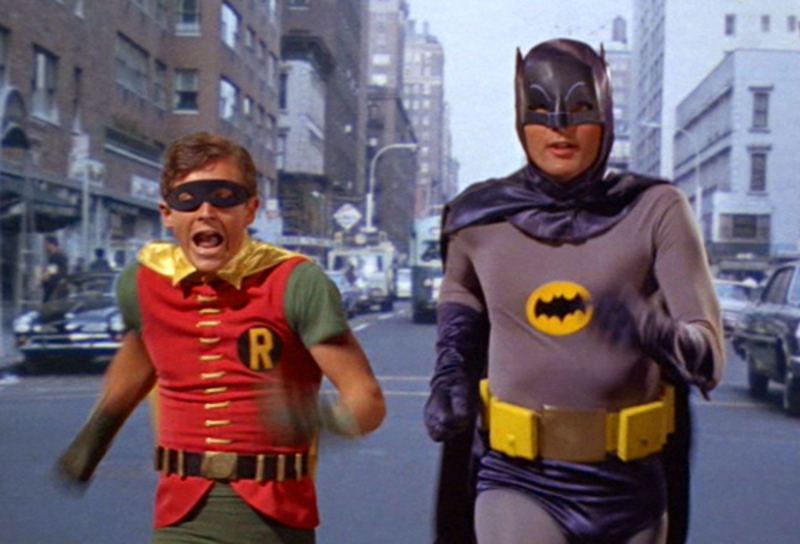
Batman: The Movie was released after the conclusion of the first season of the Batman televisions series and it featured nearly the entire cast of the show. (Lee Meriweather replaced Julie Newman in the role of the purring Catwoman.) The movie feels like an extended episode of the show, still using the same famous music and featuring scenes of Batman and Robin running in place with a street scene projected behind them. The attitude is one of affectionate parody, as opposed to the more cynical campiness of Joel Schumacher’s infamous films from the 90s. Adam West expertly deadpans his way through the main role while the underrated Burt Ward energetically plays the naïve and easily amazed Robin. Of the villains, Lee Meriweather is a sexier Catwoman than Anne Hathaway and there’s never been a better Riddler than Frank Gorshin. (Of the many actors who played Batman’s villains on the TV series, Gorshin was always the only one who seemed to understand that he was supposed to be playing someone dangerous.) At 104 minutes, Batman: The Movie runs out of steam before it ends but there’s still much here to entertain fans of the television show.

Of course, when I was growing up in the 90s, there was no easier way to lose credibility with most diehard Batman films than to admit to liking anything about the television series. The Batman TV series was widely blamed for people thinking that comic books were only meant for kids. Tim Burton was a hero for treating Batman seriously. Joel Schumacher was hated for taking the opposite approach. Batman and Robin was criticized for being too much like the TV show, right down to George Clooney doing a poor man’s Adam West impersonation in the main role. Despite the acclaim that greeted Batman: The Animated Series, It wasn’t until Christopher Nolan took control of the character that the cinematic Batman truly returned to his grim roots.

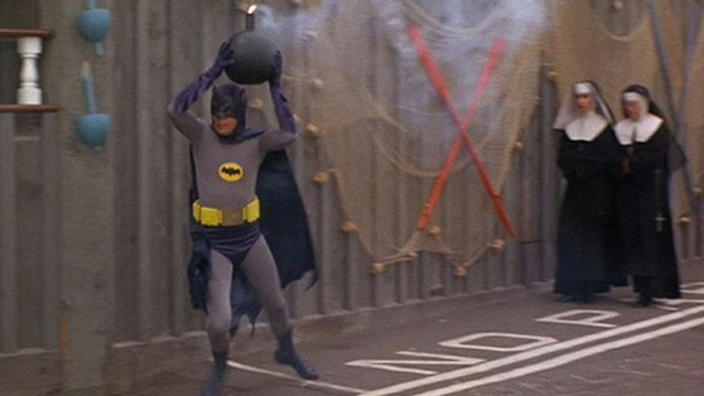
Since the conclusion of Nolan’s Dark Knight trilogy, there have been several versions of Batman. Ben Affleck took over the role for two films. Young Bruce Wayne and his doomed parents briefly appeared in Joker. Robert Pattinson is set to take over the role in The Batman. Now that everyone knows Batman as a grim avenger and countless actors have bragged about how they prepared for their roles in the Batverse by reading either The Killing Joke or The Dark Knight Returns, it’s easier to appreciate the more light-hearted approach of something like Batman: The Movie. After two decades of grim and serious Batmans being used as a metaphor for everything from PTSD to the surveillance state, the sight of a paunchy Adam West trying to find a place to safely dispose of a ridiculously oversized bomb can be a relief.
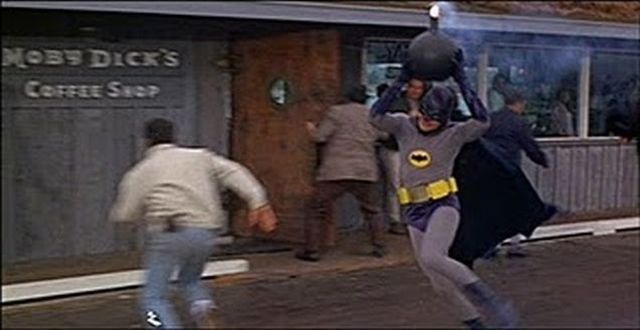
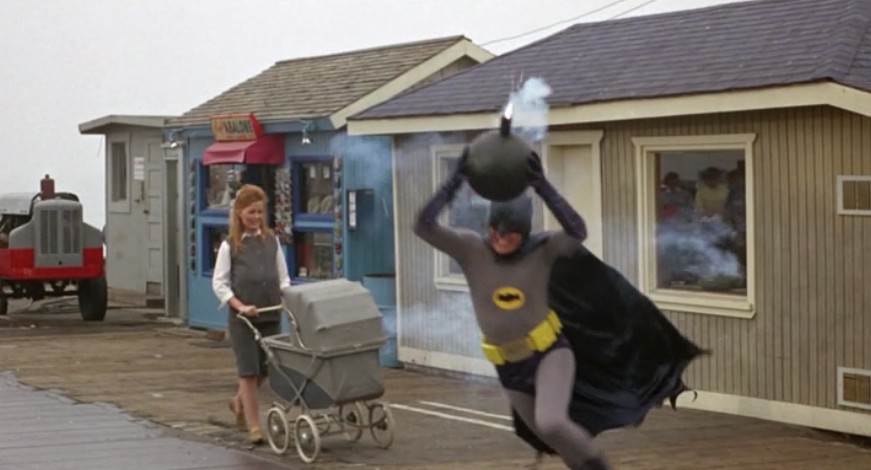
“Sometimes,” Batman says, “you just can’t get rid of a bomb!”

Tell me about it, Batman.

Star in the Dust (1956, directed by Charles F. Haas)


The time is the late 1800s and the place is the town of Gunlock.  Gunlock is split between the ranchers and the farmers, with the ranchers eager to buy all of the land around the town and the farmers refusing to sell.  Trying to keep the peace is Sheriff Bill Jorden (John Agar), who not only wants to keep war from breaking out in Gunlock but who also wants to live up to the example of his legendary father.

There’s a prisoner in the Gunlock city jail.  Sam Hall (Richard Boone) is a notorious gunman who has been convicted of killing three farmers.  He’s due to hang at sunset but everyone in town believes that Sam will somehow escape the executioner.  (They’re even taking bets down at the local saloon and casino.)  Everyone knows that Sam was hired by the ranchers but Sam has yet to name which rancher specifically invited him to come to town.  The farmers want to lynch Sam.  The ranchers want to break him out of jail and arrange for him to be killed in the resulting firefight.  Meanwhile, Sheriff Jorden insists that he’s going to carry out Sam’s sentence by the letter of the law.  Complicating matters for Jorden is that he’s engaged to Ellen Ballard (Mamie Van Doren), the sister of the main rancher, George Ballard (Leif Erickson).

I was really surprised by Star in the Dust, which turned out to be far better than I would normally expect a John Agar/Mamie Van Doren western to be.  Though Agar, Boone, and Van Doren get top-billing, Star in the Dust is really an ensemble piece, with several different people responding to the possible hanging of Sam Hall in their own way.  Sam’s girlfriend, Nellie Mason (Colleen Gray), tries to figure out a way to keep Sam alive.  One of the ranchers, Lew Hogan (Harry Morgan), is morally conflicted about whether or not to honor his word to help Sam escape, especially after he finds out that Sam tried to rape his wife (Randy Stuart).  Even the old deputies (played by James Gleason and Paul Fix) get a few minutes in the spotlight before the shooting begins.  The town of Gunlock comes to life and everyone, from the villains to the heroes, has a realistic motivation for reacting in the way that they do to Sam’s pending execution.

Mamie van Doren’s role is actually pretty small.  She doesn’t have enough screen time to either hurt or help the film overall.  John Agar is as stiff as always but, for once, it works for his character.  Sheriff Jorden isn’t written to be a bigger-than-life John Wayne type.  Instead, he’s just a small town lawman trying to do his job and keep the peace.  Not surprisingly, the film is stolen by Richard Boone, who brings a lot of unexpected shading and nuance to the role of Sam Hall.  Hall may be a killer but he has his own brand of integrity and, if he’s going to die, he’s determined to do it his way.

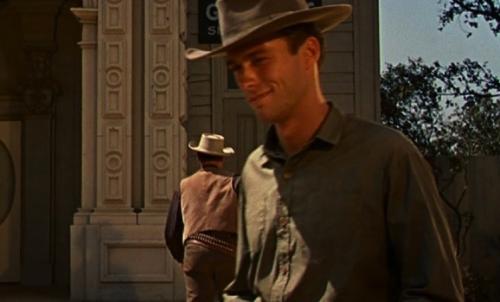
Produced by the legendary Albert Zugsmith, Star in the Dust is a surprisingly intelligent and well-acted B-western.  If you watch carefully, you might even spot Clint Eastwood playing a ranch hand named Tom who wants to know if he should put money down on Sam Hall being hanged.  Though he was uncredited in this tiny role, Star in the Dust was Eastwood’s first western.

Horror on TV: Twilight Zone 5.28 “Caesar and Me”


TheTwilightZoneLogo


Tonight’s episode of The Twilight Zone might remind you of a previous episode entitled The Dummy. Once again, we have a story about a ventriloquist (Jackie Cooper) and a dummy who appears to have a mind of his own. (In fact, the same prop dummy was used in both episodes.) However, Caesar and Me is an even darker take on the conflict between puppet and puppeteer.


Seriously, don’t mess with Caesar.


This episode originally aired on April 10th, 1964.


Horror on TV: The Twilight Zone 2.7 “The Nick of Time”


TheTwilightZoneLogo

Along with starting each day of October with a horror film here at the Shattered Lens, we’re going to end each day with a horror-themed television show.

While I had previously caught a few episodes of the Twilight Zone during one of the annual holiday marathons on SyFy, I didn’t truly appreciate the show until I first exchanged e-mails with my friend in Australia, Mark. Among other things, Mark expressed a very eloquent appreciation for The Twilight Zone and that inspired me to watch quite a few episodes that have been uploaded to YouTube and Hulu. Along with being an essential piece of television history, the best episodes of the Twilight Zone remain watchable and entertaining 50 years after they were first broadcast.

Considering the esteemed place that the Twilight Zone continues to occupy in American culture, it seems appropriate to feature it during Horror Month here at the Shattered Lens.

We start things off with an episode that was originally broadcast on November 18th, 1960. The Nick of Time tells the story of what happens when two newlyweds stop off at a small town cafe and the superstitious husband (William Shatner) starts to play with a memorably creepy fortune telling machine. Now, I should warn you that, since this episode is not available on YouTube, I’m having to embed it from Hulu. That means that you’ll have to sit through a few commercials but it’s still a good episode.

Enjoy!