Everyone remembers the “Mad as Hell Speech” from Sidney Lumet’s 1976 satire, Network.
Personally, I think this scene below is just as good. Replace “tube” with TikTok and AI and you’ll have a pretty good explanation for why the world today is full of so many ignorant people who think they know more than they do.
(Usually, heavy-handed scenes annoy me. Fortunately, much like David Fincher with Aaron Sorkin’s script for The Social Network, Sidney Lumet knew the right directorial tone to take when translating Paddy Chayefsky’s script to the screen. One shudders to think of what Network would have been like with a less skilled director behind the camera.)
4 Or More Shots From 4 Or More Films is just what it says it is, 4 shots from 4 of our favorite films. As opposed to the reviews and recaps that we usually post, 4 Shots From 4 Films lets the visuals do the talking!
Today, we celebrate the anniversary of the birth of director Sidney Lumet, born 101 years ago on this date. It’s time for….
4 Shots From 4 Sidney Lumet Films
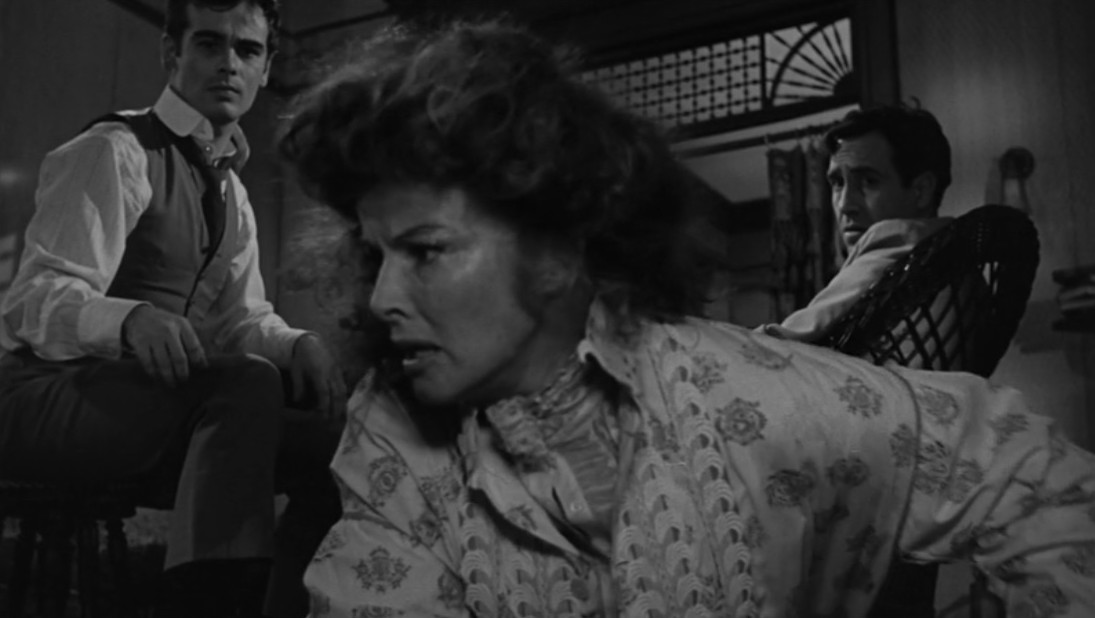
Long Day’s Journey Into Night (1962, dir by Sidney Lumet, DP: Boris Kaufman)
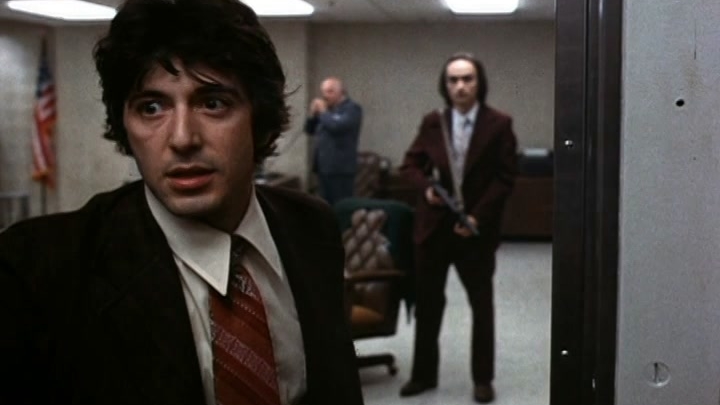
Dog Day Afternoon (1975, dir by Sidney Lumet, DP: Victor J. Kemper)
Network (1976, dir. Sidney Lumet, DP: Owen Roizman)
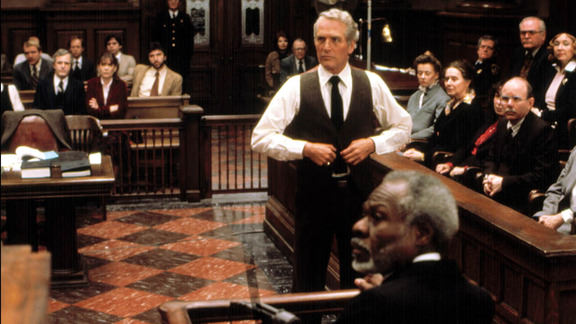
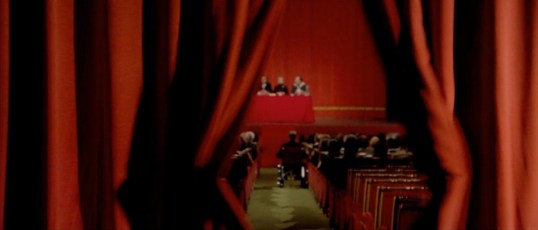
The Verdict (1981, dir by Sidney Lumet, DP: Andrzej Bartkowiak)
In 1973’s Serpico, Al Pacino plays a cop who doesn’t look like a cop.
Indeed, that’s kind of the start of Frank Serpico’s problems. He’s a New York cop who doesn’t fit the stereotype. When we see him graduating from the Academy, he’s clean-shaven and wearing a standard patrolman uniform and he definitely looks like a new cop, someone who is young and enthusiastic and eager to keep the streets safe. However, Serpico is an outsider at heart. The rest of the cops have their homes in the suburbs, where they spend all of their time with their cop buddies and where they go also go out of their way not to actually live among the people that they police. Serpico has an apartment in Greenwich Village and, as a plainclothes detective, he dresses like a civilian. He has a beard. He has long hair. He has a succession of girlfriends who don’t have much in common with the stereotypical (and there’s that word again) cop’s wife. Serpico is an outsider and he likes it that way. In a world and a career that demands a certain amount of conformity, Frank Serpico is determined to do things his own way.
However, the real reason why Serpico is distrusted is because he refuses to take bribes. While he’s willing to silently accompany his fellow officers while they collect their payoffs from not only the people that they’re supposed to be arresting but also from the storeowners that they’re meant to be protecting, Serpico refuses to take a cut. Serpico understands that the small, everyday corruption is a way of forcing his silence. The corruption may help the cops to bond as a unit but it also ensures that no one is going to talk. Serpico’s refusal to take part makes him untrustworthy in the eyes of his fellow cops.
Serpico and Bob Blair (Tony Roberts), a politically-connected detective, both turn whistleblower but it turns out that getting people to listen to the truth is not as easy as Serpico thought it would be. The Mayor’s office doesn’t want to deal with the political fallout of a police conspiracy. Serpico finds himself growing more and more paranoid, perhaps with good reason. When words gets out that Serpico has attempted to turn into a whistleblower, his fellow cops start to turn on him and, during a drug bust, Serpico finds himself deserted and in danger.
Serpico opens with its title character being rushed to the hospital after having been shot in the face. This actually happened to the real Serpico as well. What the film leaves out is that hundreds of New York cops showed up at the hospital, offering to donate blood during Serpico’s surgery. That’s left out of the film, which at times can be more than a little heavy-handed in its portrayal of Serpico as an honest cop surrounded by nonstop corruption. Filmed just three years after Serpico testified before New York’s Knapp Commission (which was the five-man panel assigned to investigate police corruption in the city), Serpico the movie can sometimes seem a bit too eager to idealize its title character. (Vincent J. Cannato’s excellent look at the mayorship of John V. Lindsay, The Ungovernable City, presents far more nuanced look at the NYPD corruption scandals of the early 70s and Serpico’s role as a whistleblower.) Director Sidney Lumet later expressed some dissatisfaction with the film and even made other films about police corruption — The Prince of the City, Q & A, Night Falls On Manhattan — that attempted to take a less heavy-handed approach to the subject.
That said, as a film, Serpico works as a thriller and as a portrait of a man who, because he refuses to compromise his ideals, finds himself isolated and paranoid. Al Pacino, fresh from playing the tightly-controlled Michael Corleone in The Godfather, gives an intense, emotional, and charismatic performance as Serpico. (One can see why the image of a bearded, hippie-ish Pacino was so popular in the 1970s.) Sidney Lumet brings the streets of New York to vibrant and dangerous life and he surrounds Pacino with an excellent supporting cast, all of whom bring an authentic grit to their roles. Serpico may not be a totally accurate piece of history but it is a good work of entertainment, one that works as a time capsule of New York in the 70s and as a portrait of bureaucratic corruption. It’s also the film in which Al Pacino announced that he wasn’t just a good character actor. He was also a movie star.
In 1971’s The Anderson Tapes, Sean Connery stars as Duke Anderson.
Duke is a career criminal, a safecracker who has just spent ten years in prison. He’s released, alongside Pops (Stan Gottlieb), who spent so much time behind bars that he missed two wars and the Great Depression, and the quirky Kid (Christopher Walken, making his film debut). Duke immediately hooks up with his former girlfriend, Ingrid (Dyan Cannon), and decides to rob the luxury apartment building where Ingrid is now living.
Of course, Duke will have to put together a crew. It’s not a heist film without a quirky crew, is it? Duke recruits the Kid and Pops. (The Kid is happy to be in the game but he’s not a fan of violence. Pops, meanwhile, has none of the skills necessary for living in the “modern” world and would much rather return to prison.) Duke also brings in the flamboyant Tommy Haskins (an overacting Martin Balsam) and driver Edward Spencer (Dick Anthony Williams). Duke goes to the mob for backing and Pat Angelo (Alan King) gives it to him on the condition that he take along a sociopathic racist named Socks (Val Avery) and that Duke kills Socks at some point. Duke reluctantly agrees.
So far, this probably sounds like a conventional heist film. Director Sidney Lumet mixes comedy and drama with uneven results but, overall, he does a good job of ratcheting up the tension and TheAndersonTapes is a good example of one of my favorite mini-genres, the “New Yorkers will be rude to anyone” genre. At first glance, Sean Connery seems to be playing yet another super smooth operator, a confident criminal with a plan that cannot fail. Duke seems like a criminal version of James Bond, However, as the film progresses, we start to suspect that things might be getting away from Duke. When Duke has to go the Mafia for support and is told that killing Socks is now a part of the job, we see that Duke isn’t as in-control of the situation as we originally assumed. This is the rare Sean Connery film where he has someone pushing him around.
(Apparently, Connery took this role as a part of his effort to escape being typecast as Bond. Perhaps that explains why Duke seems like almost a deconstruction of the James Bond archetype.)
Of course, what really lets us know that Duke isn’t as in-charge as he assumes is the fact that four different law enforcement agencies are following his every move. From the minute he gets out of prison, Duke is being watched. The apartment is bugged. Security cameras records his every move. Once the heist begins, we’re treated to flash forwards of breathless news reports. TheAndersonTapes is less a heist film and more a portrait of the early days of the modern Surveillance State. Of course, none of the agencies make any moves to stop Duke because doing so would reveal their own existence. The film really does become a portrait of a government that has gotten so big and intrusive that it’s also lost the ability to actually do anything.
The Anderson Tapes is entertaining, even if it’s not really one of Lumet’s best. Connery is, as always, a fascinating screen presence and it’s always entertaining to see a young Christopher Walken, showing early sings of the quirkiness that would become his signature style. TheAndersonTapes is a portrait of a world where you never know who might be listening.
4 Or More Shots From 4 Or More Films is just what it says it is, 4 shots from 4 of our favorite films. As opposed to the reviews and recaps that we usually post, 4 Shots From 4 Films lets the visuals do the talking!
It’s tax day, which means that it’s time for….
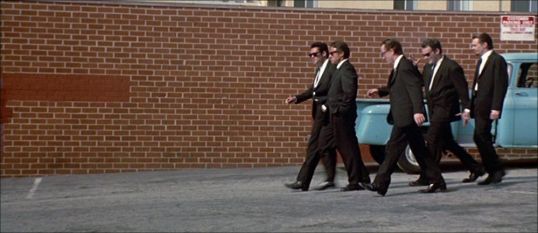
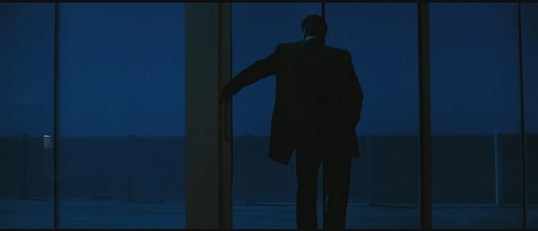
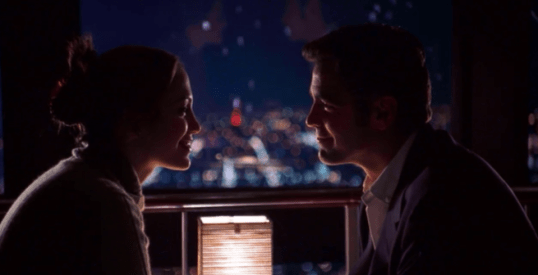
4 Shots from 4 Heist Films
Dog Day Afternoon (1975, dir by Sidney Lumet, DP: Victor J. Kemper)
Reservoir Dogs (1992, dir by Quentin Tarantino, DP: Andrzej Sekuła)
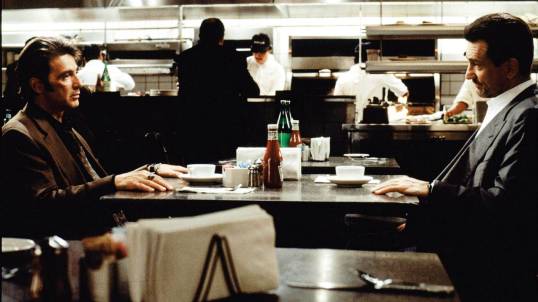
Heat (1995, dir by Michael Mann, DP: Dante Spinotti)
Out of Sight (1998, dir by Steven Soderbergh, DP: Elliot Davis)
4 Or More Shots From 4 Or More Films is just what it says it is, 4 shots from 4 of our favorite films. As opposed to the reviews and recaps that we usually post, 4 Shots From 4 Films lets the visuals do the talking!
Today, we pay tribute to the year 1975. It’s time for….
4 Shots From 4 1975 Films
One Flew Over The Cuckoo’s Nest (1975, dir by Milos Forman, DP: Haskell Wexler and Bill Butler)
Dog Day Afternoon (1975, dir by Sidney Lumet, DP: Victor J. Kemper)
Deep Red (1975, dir by Dario Argento, DP: Luigi Kuveiller)
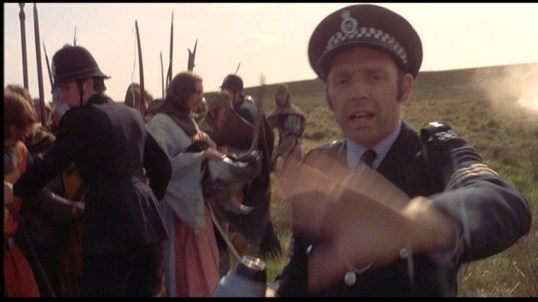
Monty Python and the Holy Grail (1975, dir. Terry Gilliam & Terry Jones, DP: Terry Bedford)
The great character actor Lance Henriksen is 84 years old today!
Ever since he made his film debut in 1970, the legendary Henriksen has played a collection of villains, bikers, police officers, soldiers, and even the occasional android. One of his earliest appearance was in 1975’s Dog Day Afternoon. His role is small but he definitely makes an impression. His faux friendly suggestions that Sal point his gun upwards is the line that sets off the film’s haunting ending. For viewers today, of course, we know that Sal and Sonny are screwed as soon as Lance Henriksen shows up outside of the bank.
In today’s scene that I love, Lance Henriksen does what only a great character actor can do. In less than a minute, he created a truly unforgettable character.
4 (or more) Shots From 4 (or more) Films is just what it says it is, 4 (or more) shots from 4 (or more) of our favorite films. As opposed to the reviews and recaps that we usually post, 4 (or more) Shots From 4 (or more) Films lets the visuals do the talking.
With all the excitement (or not) surrounding the Oscars, it might be easy to overlook the fact that today is also the birthdays of one of the greatest and most iconic American actors of all time! We cannot let this day end without wishing a happy birthday to the one and only Al Pacino!
In others words, it’s time for….
6 Shots From 6 Al Pacino Films
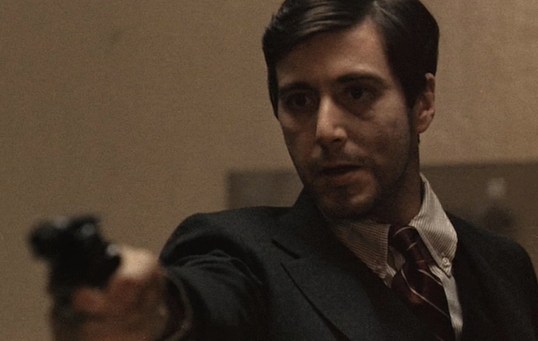
The Godfather (1972, dir by Francis Ford Coppola, DP: Gordon Willis)
Dog Day Afternoon (1975, dir by Sidney Lumet, DP: Victor J. Kemper)
Scarface (1983, dir by Brian DePalma, DP: John A. Alonzo)
Heat (1995, dir by Michael Mann, DP: Dante Spinotti)
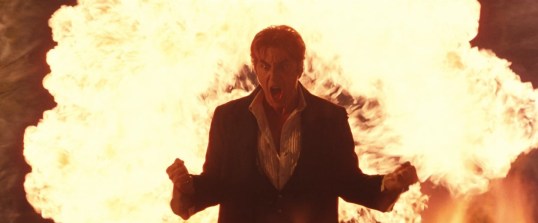
The Devil’s Advocate (1997, dir by Taylor Hackford, DP: Andrzej Bartkowiak)
Once Upon A Time In Hollywood (2019, dir by Quentin Tarantino, DP: Robert Richardson)
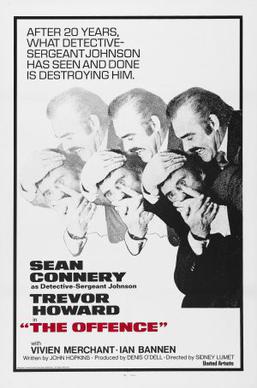
After a suspected child molester named Baxter (Ian Bannen) dies while being interrogated in police custody, Detective Superintendent Cartwright (Trevor Howard) head up the internal affairs investigation. Baxter was beaten to death by Detective Sergeant Johnson (Sean Connery), a 20-year veteran of the force who has seen the worst that humanity has to offer. Did Johnson allow his anger over Baxter’s crimes to get to him or did something else happen during the interrogation?
When Sean Connery agreed to play James Bond for a final time in Diamonds are Forever, he did it under the condition that United Artists agree to back two of Connery’s non-Bond film projects. UA agreed, though they did insist that neither film cost more than $2,000,000. One of those projects was an adaptation of Macbeth, which was canceled in the wake of Roman Polansi’s version of the Scottish play. The other project was The Offense.
Based on a play by John Hopkins, The Offence is the type of movie that probably would have never been made if not for the interest of a big star, like Connery. The story is downbeat and grim and audiences are essentially asked to spend nearly two hours in the presence of two very unlikable men. Baxter is an accused child molester while Johnson is a bully who has been driven so mad by the things that he’s seen that he’s not only violent on the job but also on at home. Director Sidney Lumet directs with a cold and detached style, refusing to provide any sort of relief from the intensity of the film’s interrogations. The film is set up as an acting showcase for Connery and Bannen, giving both of them a chance to show what they could do with two unpredictable characters.
Unfortunately, not many people got a chance to see their performances. Even though Connery kept the budget under a million dollars and despite both the film and his performance being critically acclaimed, United Artists barely released The Offence and it took 9 years for the film to make back it’s meager budget. It didn’t even get released in France until 2007. Connery, however, often cited The Offence as being one of his best films and said that his performance in the film was his personal favorite.
The movies is too stagey and talky to be entirely successful but Connery was right about his performance. It’s one of his best and it retains its power to disturb to this day. Connery often chafed at being typecast as James Bond. With The Offence, Connery plays a character who is nothing like Bond. Everything about Johnson is brutal and seedy. While it’s impossible not to initially sympathize with his anger towards the state of the world, Connery reveals that Johnson’s self-righteous anger is actually a shield for his own dark thoughts and desires. He’s a bully, an angry man who grows more and more insecure as the film progresses and Baxter continues to see through him. Connery makes Johnson sympathetic, frightening, pathetic, and dangerous all at the same time. The Offence is a film that proves that Sean Connery was not only a good Bond but also a great actor.
In the middle of the night, a shady American businessman (Richard Widmark) was stabbed to death. Now, with the train momentarily stalled due to a blizzard, its up to the world’s greatest detective, Hercule Poirot (Albert Finney), to solve the crime. With only hours to go before the snow is cleared off the tracks and the case is handed over to the local authorities, Hercule must work with Bianchi (Martin Balsam) and Dr. Constantine (George Coulouris) to figure out who among the all-star cast is a murderer.
Is it the neurotic missionary played by Ingrid Bergman? Is it the diplomat played by Michael York or his wife, played by Jacqueline Bisset? Is it the military man played by Sean Connery? How about Anthony Perkins or John Gielgud? Maybe it’s Lauren Bacall or could it be Wendy Hiller or Rachel Roberts or even Vanessa Redgrave? Who could it be and how are they linked to a previous kidnapping, one that led to the murder of an infant and the subsequent death of everyone else in the household?
Well, the obvious answer, of course, is that it had to be Sean Connery, right? I mean, we’ve all seen From Russia With Love. We know what that man is capable of doing on a train. Or what about Dr. No? Connery shot a man in cold blood in that one and then he smirked about it. Now, obviously, Connery was playing James Bond in those films but still, from the minute we see him in Murder on the Orient Express, we know that he’s a potential killer. At the height of his career, Connery had the look of a killer. A sexy killer, but a killer nonetheless….
Actually, the solution to the mystery is a bit more complicated but you already knew that. One of the more challenging things about watching the 1974 version of Murder on the Orient Express is that, in all probability, the viewer will already know how the victim came to be dead. As convoluted as the plot may be, the solution is also famous enough that even those who haven’t seen the 1974 film, the remake, or read Agatha Christie’s original novel will probably already know what Poirot is going to discover.
That was something that director Sidney Lumet obviously understood. Hence, instead of focusing on the mystery, he focuses on the performers. His version of Murder on the Orient Express is full of character actors who, along with being talented, were also theatrical in the best possible way. The film is essentially a series of monologues, with each actor getting a few minutes to show off before Poirot stepped up to explain what had happened. None of the performances are exactly subtle but it doesn’t matter because everyone appears to be having a good time. (Finney, in particular, seems to fall in love with his occasionally indecipherable accent.) Any film that has Anthony Perkins, John Gielgud, Lauren Bacall, Sean Connery, Ingrid Bergman, and Albert Finney all acting up a storm is going to be entertaining to watch.
Though it’s been a bit overshadowed by the Kenneth Branagh version, the original Murder on the Orient Express holds up well. I have to admit that Sidney Lumet always seems like he would have been a bit of an odd choice to direct this film. I mean, just consider that he made this film in-between directing Serpico and Dog Day Afternoon. However, Lumet pulls it off, largely by staying out of the way of his amazing cast and letting them act up a storm. It looks like it was a fun movie to shoot. It’s certainly a fun movie to watch, even if we do already know the solution.





 Through the Shattered Lens