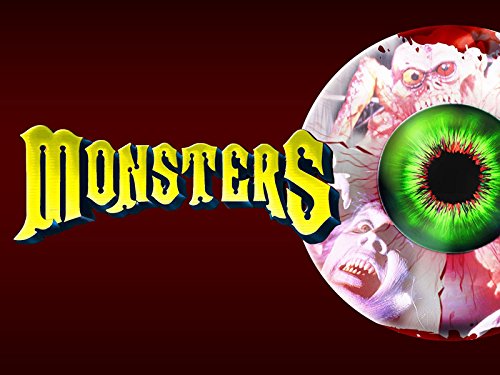
Late Night Retro Television Review: Monsters 3.20 “Werewolf of Hollywood”


Welcome to Late Night Retro Television Reviews, a feature where we review some of our favorite and least favorite shows of the past! On Wednesdays, I will be reviewing Monsters, which aired in syndication from 1988 to 1991. The entire series is streaming on YouTube.

This week, Monsters satirizes the film business.  Well, it’s about time someone did!

Episode 3.20 “Werewolf of Hollywood”

(Dir by Thomas J. Whelan, originally aired on February 10th, 1991)

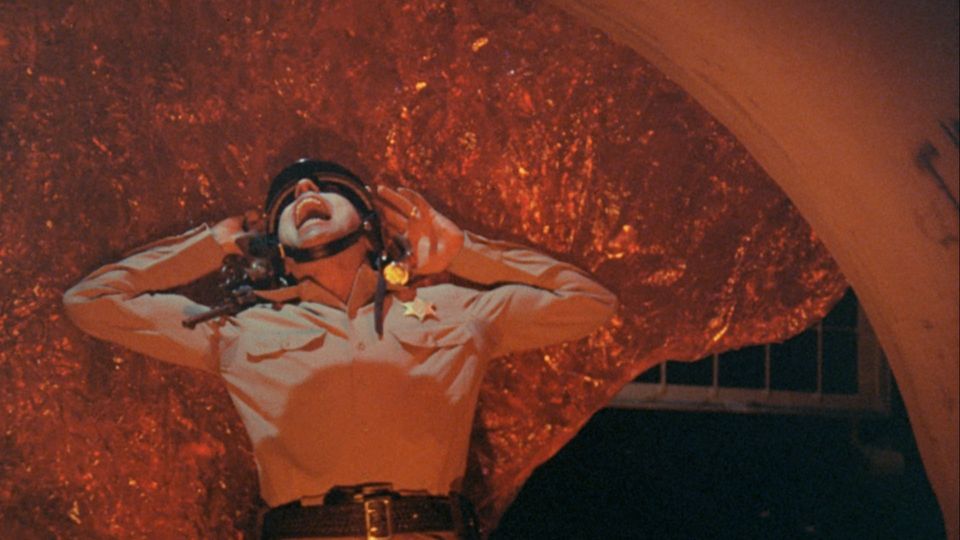
Screenwriter Buzz Hunkle (Richard Belzer) has been instructed to rewrite a script that was originally written by Leo Tandoski (Shelley Berman).  Leo’s script is about a studio head who is actually a werewolf.  Buzz and his assistant Vicki (Geraldine Leer) read the script and immediately deduce that Leo is attacking executive Billy Mariner (David Leary).  At first, Buzz just assumes that the werewolf angle is a bit of heavy-handed satire but, when Leo turns up dead, Buzz comes to suspect that Billy might actually be a werewolf!  Vicki gives Buzz a gun full of what she claims are silver bullets and she sends him off to investigate.  Of course, it turns out that everyone in this show business tale has a secret or two.

This episode …. well, I liked the idea behind it.  It had potential, I’ll give it that.  And the werewolf effects were certainly effective.  Monsters was a show that almost always featured effective makeup and costuming.  That said, I have to admit that I wanted to like this episode more than I actually did.  Whenever Monsters tries to be intentionally funny, it almost always comes across as if it’s trying too hard and that was certainly the case with this episode.  As an actor, Richard Belzer was always inconsistent.  He did good work as Detective Munch.  In this episode of Monsters, he sleepwalks through the role.  I really wanted this episode to work but it just feel flat for me.

Guess what?  We’ve only got four more episodes of Monsters left!  Overall, I have enjoyed reviewing this show, even if it has been a bit uneven overall.  I’ll miss it when I’m done.

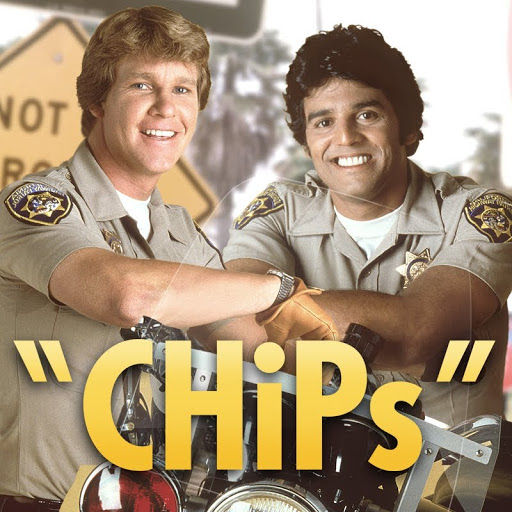
Late Night Retro Television Review: CHiPs 2.5 “Neighborhood Watch”


Welcome to Late Night Retro Television Reviews, a feature where we review some of our favorite and least favorite shows of the past!  On Mondays, I will be reviewing CHiPs, which ran on NBC from 1977 to 1983.  The entire show is currently streaming on Freevee!

This week, Ponch and Baker abandon the highways and keep watch over a neighborhood.

Episode 2.5 “Neighborhood Watch”

(Dir by Phil Bondelli, originally aired on October 14th, 1978)

After a series of near-accidents and speeding violations occur in an upper class neighborhood, Getraer decides to take his people off the highways and instead assign then to keep an eye on one residential street.  Ponch is happy because it means he gets to sit on his bike and watch all of the women who jog throughout the day.  Baker is happy for presumably the same reason, though he’s noticeably less obvious about it than Ponch.  To be honest, I’m surprised that Ponch hasn’t been in more accidents because he can never keep his eyes on the road.

Unfortunately, even a quiet neighborhood street has its problems.  Gerald Billings (Stephen Young) is struggling, with both his marriage and with his attempts to find a new job.  The first time that Baker pulls him over, it’s because Gerald is speeding and shaving in his car.  The second time, it’s because Gerald is driving drunk after finding out that he has been turned down for yet another job.  It’s after the second arrest that Gerald files a formal complaint against Baker.

What’s interesting is that this is the same thing that often happens to Ponch but Getraer is instantly sympathetic to Baker whereas he’s never that way when it comes to anyone trying to get Ponch in trouble.  Indeed, Getraer often comes across as if he can’t wait for the day when he’ll have an excuse to fire Ponch.  Don’t get me wrong.  Ponch is pretty obnoxious and his behavior while on the job is often rather gauche.  But it’s still pretty obvious that, for all of Ponch’s flaws, the tension between him and Getraer is personal in nature.  Getraer just doesn’t like him.

As for Baker, he gets off the hook when he arrests Gerald a third time.  After a drunk Gerald accidentally runs over a pedestrian and crashes his car, Gerald takes off on foot.  Baker catches him and it’s pretty obvious that Gerald’s going to be heading off to jail.  His complaint will be forgotten.  Even if Gerald wasn’t going to jail, I’m sure Getraer would have pulled some string for his favorite motorcycle cop.

This episode’s other plotline revolved around some mischievous kids who had too much free time on their hands and almost always seemed to be doing something reckless on their skateboards.  The most prominent of them was Brian (played by Robbie Rist, who previously gained infamy as Cousin Oliver on The Brady Bunch).  Brian even buzzed Ponch and Jon with a model airplane.  Realizing the kids weren’t really that bad, Ponch took them to a skate park and showed off a few of his own skateboard moves.  Let’s just say that Erik Estrada was no Tony Hawk.

This episode was kind of boring.  I get that the episode was showing that the Highway Patrol does good work even off the highways but the highway — and more importantly, the chance to see a fast-paced chase or a spectacular crash on the highway — is the main reason anyone would have for watching this show.  Taking Ponch and Baker off the highway just feels wrong.  Hopefully, they’ll be back where they belong next week!

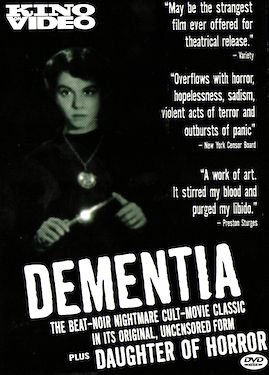
Horror on the Lens: Dementia (dir by John Parker)


Today’s Horror on the Len is 1955’s Dementia, an experimental horror film without dialogue.  The film follows a young woman (Adrienne Barrett) over the course of one surreal and nightmarish night on Los Angeles’s skid row.

Despite an opening endorsement from no less a Hollywood luminary as Preston Sturges, audiences in 1955 were not sure what to make of this dream-like film.  However, it has since been rediscovered and reappreciated by audiences who appreciate the film’s surreal vision.

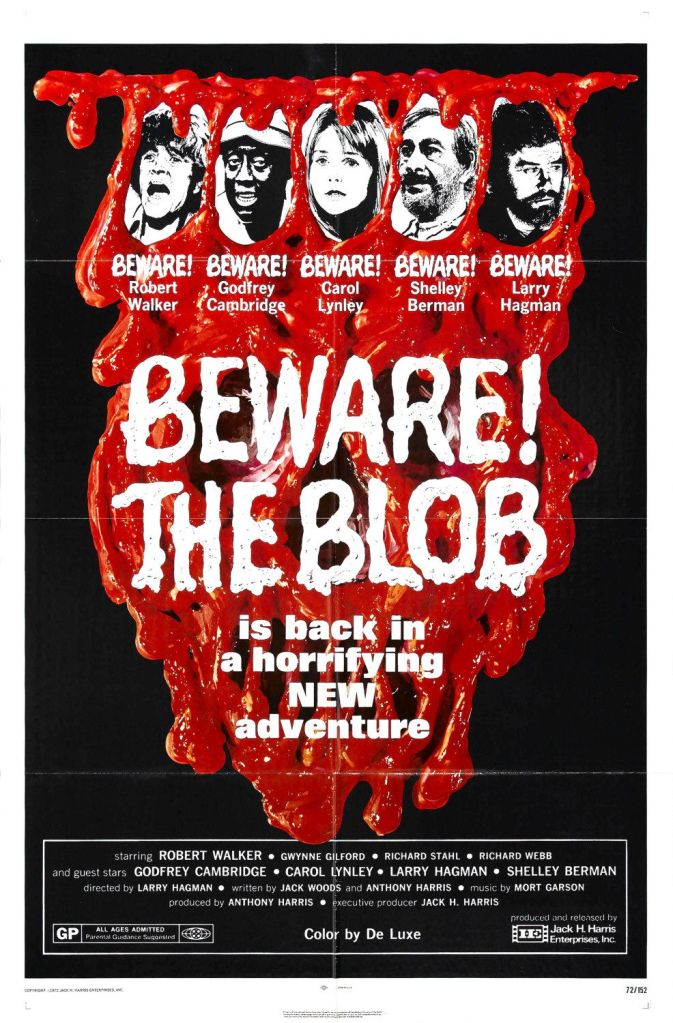
Movie Review: Beware! The Blob (by Larry Hagman)


Everyone has one movie or two that hit them so hard it caused them to develop habits. It could be shaking your shoes to confirm no spiders are in them, counting the seconds after a lightning strike for the thunder, or checking the back seat of your car before you get into it, just in case. Some movies kind of imprint themselves on you in different ways.

Beware! The Blob (or Son of The Blob in some circles) was the most terrifying film I saw as a kid. I watched it in front of my grandmother’s living room tv that had a little alarm clock on the floor beneath it. Unlike Friday the 13th and Halloween, where I could rationalize my fears, Beware! The Blob had me fearing the summer and any open crevice we had. On any visits to our local video store (in the Pre-Blockbuster days), I’d pick out video games to rent and could see the box for the film in the horror section. I’d never walk over there, even in my early teenage years.

Most consider the 1958 original a Classic, and Chuck Russell’s 1988 update often goes toe to toe with John Carpenter’s The Thing on the Best Remakes list. Beware! The Blob will probably never make that list, but it’s not a total loss, given a recent rewatch. The film’s greatest strengths are in the casting and the special effects. From a cinema history/trivia standpoint, the film marks one of the earliest credits for Cinematographer Dean Cundey. Cundey worked as a 2nd Unit Cinematographer for the film, particularly with the animal shots in the opening and later on. That might not sound like much, but Cundey would go on to be picked by Debra Hill to help out on Halloween in 1978. From there, he had The Fog, Halloween II, The Thing, Romancing the Stone, Back to the Future, Big Trouble in Little China, Who Framed Roger Rabbit?, and Jurassic Park, to name a few.

With 14 years since the first film, there were some tech upgrades to how the blob was made. A large plastic balloon was used for some scenes (particularly the bowling alley sequences). Additionally, silicone was added to a drum to allow for the “blob pov” during the bowling alley sequences. In most sequences, a red dyed powder mixed with water was used. To make sure the audience was aware the Blob was close, a high whistle would sound, giving anyone with even the slightest bit of tinnitus some cause to look over their shoulder. Academy Award Winner Tim Baar (The Time Machine) and Conrad Rothmann worked on the effects, along with Cundey.

In his film directing debut, Larry Hagman (TV’s I Dream of Jeannie, Dallas) weaves a tale of horror lurking through a town peppered with parties, hobos, a boy scout team, an angry bowling alley owner, some dune buggy aficionados and a sheriff (Richard Webb, The Phantom Stagecoach) who’s a little confused about some of the events happening in town. To his credit, it’s amazing to see who Hagman assembled here, as he called in some friends to join in on the fun. Comedian Godfrey Cambridge. Cindy Williams, just a few years shy of American Graffiti. Gerrit Graham, about two years before Phantom of the Paradise. Sid Haig (The Devil’s Rejects) is here as well. You can even spot Hagman in the film as one of three hobos squaring off with the Blob. It should be noted that the other two hobos with him are Burgess Meredith (Clash of the Titans) and Del Close (Chuck Russell’s The Blob).

The film flows like it’s namesake, with some chapters having little do to with anything – Dick Van Patten’s boy scouts, while funny, could have had one of their scenes cut for speed. It’s not incredibly terrible, but it’s exactly great, either. Most of the script, written by Anthony Harris, was tossed with ad-libbing done on set. Despite all this, it does looks like the cast enjoyed themselves making the film. It has that going for it, at least.

Sid Haig was caught unaware in Larry Hagman’s Beware! The Blob

Chester, A construction worker from the Arctic (Cambridge) is getting his camping gear stowed away when his wife, Marlene (Marlene Clark, The Beast Must Die) discovers a thermos in their freezer. He explains he performed some work and brought home a piece of what the found in the Arctic. Setting it on a countertop, the couple forget about the thermos, which pops open. The newly released blob absorbs a fly and a kitten before moving on to larger prey. Before we know it, Chester is having problems with his TV – which happens to be playing the original 1958 movie – as it slithers into his favorite recliner. It’s a sequence that’s burned into my mind. I always check a chair before sitting in it. Some check for thumbtacks, I check for alien goo.

When Lisa (Gwynne Gilford, Masters of the Universe & actor Chris Pine’s Mom) discovers Chester with his new friend, she dashes out and heads to her boyfriend, Bobby (Robert Walker, Easy Rider). By the time the couple return to Chester’s place, they find the house empty. Can the couple convince the cops and the town of the danger ahead before it’s too late? Most of Beware! The Blob‘s scenes are set up in a way where people are completely oblivious of it until it’s touched them, causing said individual to slip and fall into the camera. The climax of the film takes place in a bowling alley, which is actually impressive for the techniques used, but even with the casting, you might spend more time laughing than anything else. Perhaps that’s my way of rationalizing the film years later.

At the time of this writing, Beware! The Blob is currently available to watch on the Plex streaming service. We’re also labeling this an Incident – out of respect to the kitten – and returning the timer to Zero.

Shattered Politics #20: The Best Man (dir by Franklin J. Schaffner)


Best_man22234

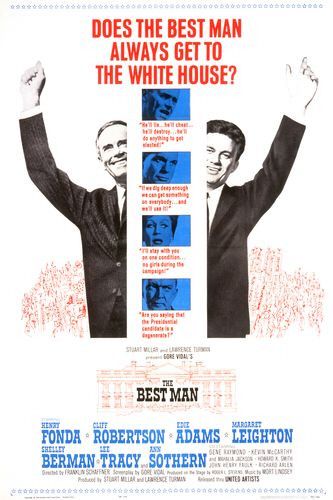
“Does The Best Man Always Get To The White House?” asks the poster for the 1964 film, The Best Man.

Of course, nowadays, that question seems incredibly naive.  Of course the best man doesn’t always get to the White House!  Some of my friends are Republicans and some of my friends are Democrats and a lot of my friends are Libertarians but they all have one thing in common: the belief that at least half of the past 4 elections were won by the wrong man.

But, as anyone who has done their research can tell you, 1964 was a far different time from 2015.  In general, people had greater faith in both government and their elected leaders.  Ineffective leaders and corrupt authority figures were viewed as being the exception as opposed to the rule.  We’re a lot more cynical now and, when we see political movies from the early 60s, all of that optimism and idealism often make them feel very dated.

Another big difference between the middle of the 20th Century and today is that, when it came to presidential nominating conventions, there was actually the potential for some suspense regarding who would win the nomination.  Occasionally, it took more than one ballot for a candidate to be nominated.  Last minute deals often had to be made and convention delegates were actually selecting an ideology along with a candidate.  Political conventions were contests and not coronations.

Again, it’s obvious that times have changed and, as a result, a film like The Best Man, which may have seemed very provocative and shocking in 1964, feels a bit like an antique today.  That doesn’t mean that it’s a bad film.  In fact, The Best Man is an interesting time capsule of the way things used to be.

The Best Man takes place at a presidential nominating convention.  The party is not specified but it feels like a Democratic convention.  There are several candidates competing for the nomination but the two front-runners are former Secretary of State William Russell (Henry Fonda) and Senator Joe Cantwell (Cliff Robertson).

Much like the character that Fonda played in Advise & Consent, Russell is an intellectual, a calm and rational liberal. Much like Spencer Tracy in State of the Union, Russell is separated from his wife (Margaret Leighton) but the two of them are pretending to be a happy couple for the sake of the campaign.

Meanwhile, Joe Cantwell is a paranoid and ruthless opportunist, a former war hero who will do anything to win.  The only person more ruthless than Joe Cantwell is his brother and campaign manager, Don (Gene Raymond).

(For those who enjoy history, it’s interesting to note that John F. Kennedy was a war hero-turned-senator who had a ruthless brother who doubled as his campaign manager.)

Both Cantwell and Russell come to the convention hoping to get the endorsement of former President Art Hockstader (Lee Tracy).  While the pragmatic Hockstader cannot stand Cantwell personally, he also views Russell as being weak and indecisive.

However, both Russell and Cantwell have secrets of their own.  When Cantwell discovers Russell’s secret and threatens to leak it, Russell has to decide whether or not to reveal Cantwell’s secret.

The Best Man was based on a stage play by Gore Vidal and the actual film never quite escapes its theatrical origins.  And, in many ways, it feels undeniably dated.  But it’s still a well-acted film, one that will probably be best enjoyed by political junkies and students of history.  Before watching the movie, be sure to read up on the 1960 presidential election and then see if you can guess who everyone is supposed to be.