Retro Television Review: Homicide: Life On The Street 4.4 “A Doll’s Eyes”


Welcome to Retro Television Reviews, a feature where we review some of our favorite and least favorite shows of the past!  On Sundays, Lisa will be reviewing Homicide: Life On The Street, which aired from 1993 to 1999, on NBC!  It  can be viewed on Peacock.
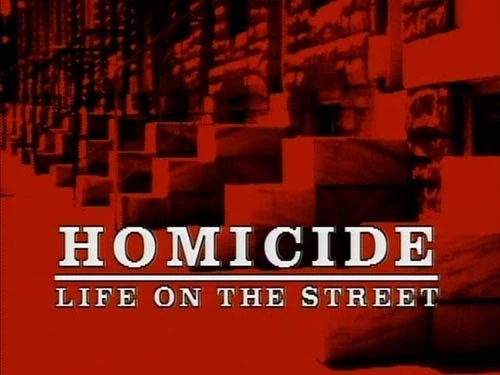
This week’s episode made me cry and cry.

Episode 4.4 “A Doll’s Eyes”

(Dir by Kenneth Fink, originally aired on December 1st, 1995)

Here in America, there’s recently been a lot of debate about how much of a problem crime actually is.  It’s a bit of an odd debate because much of it is based on telling people to ignore what they’re seeing and experiencing and to instead, just take comfort in abstract statistics and numbers.  “Actually,” we’re told, “crime is down from last year,” as if the claim that there’s slightly less of it being reported somehow negates the fact that it exists.

Those who say that crime is not a big deal often forget that crime is not just a matter of statistics and police reports.  Crime is something that happens to people.  It’s something that scars people.  It’s not something that most people can just shrug off.  Every crime is different and everyone reacts to being a victim in their own individual way but react, they do.  It’s easy to be dismissive of people’s concerns about crime when you’re not the one getting your house broken into or hearing gunshots in the night.  It’s easy to say “It was just a mugging,” when you’re not the one getting mugged and losing whatever trust you may have once had in the system. Seth Rogen once tweeted that he didn’t care that his car got broken into because he wasn’t into worrying about possessions.  That’s easy to say when you can just buy a new car whenever you feel like it.  For someone who can’t and is now stuck with the knowledge that they’re not even safe in their own car, it’s considerably more difficult to be so cavalier.   Crime is about more than just statistics and numbers.  For those who have been victimized, it’s about loss.  It’s about never feeling truly safe or secure again.

This week’s episode of Homicide fellows Pembleton and Bayliss as they investigate a shooting at a mall.  A young boy was caught in the crossfire and now, he’s on life support at the hospital.  For Pembleton and Bayliss, it starts out as another case.  Tracking down the shooters is not difficult.  Getting the shooters to confess is not difficult.  Pembleton and Bayliss aren’t dealing with master criminals here.

For the boy’s parents (played, in two heart-breaking performances, by Marcia Gay Harden and Gary Basaraba), the shooting of their son is the moment that their lives stopped.  They’re the one who eventually have to make the decision to take their son off of life support.  Hearing that their son’s organs were donated and are helping other people provides cold comfort.  Their only son is dead and, as this episode make clear, they’re not going to be okay.  Some would describe their son as just being another statistic, part of the count of how many people died in Baltimore during any given year.  For his parents, he’s Patrick, a 10 year-old who loved dinosaurs and science and whose life was ended because he was in the wrong place at the wrong time.  When Bayliss runs into the father of a girl who got an organ transplant as the result of the Patrick’s death, the girl’s father muses on how strange it is that one child died so that his girl could live.  It’s a powerful moment, one that really captures the humanity at the heart of this show’s best episodes.  Patrick’s parents will never recover but his murder has led to other people being saved.  Was it worth the cost?  The show is smart enough to leave the question for us to ponder.

This episode made me cry.  It reminded me a bit of season 2’s Bop Gun, with its mix of the family trying to deal with an unimaginable tragedy while, for Pembleton and Bayliss, it’s another day at work.  I would actually say this episode was superior to Bop Gun.  Bop Gun tried too hard to wrap things up.  A Doll’s Eyes understands that sometimes, this is no way to wrap things up.  Life just keeps moving.

Retro Television Review: Homicide: Life On The Street 3.12 “Partners”


Welcome to Retro Television Reviews, a feature where we review some of our favorite and least favorite shows of the past!  On Sundays, I will be reviewing Homicide: Life On The Street, which aired from 1993 to 1999, on NBC!  It  can be viewed on Peacock.

This week, the bar finally opens!

Episode 3.12 “Partners”

(Dir by John McNaughton, Originally aired January 20th, 1995)

As you can tell by the title, this episode was all about partners.

For instance, Megan Russert realized that her former partner from narcotics, Douglas Jones (Robert Clohessy, with his Bronx accent), has been beating up his wife, Natalie (Lily Knight).  He regularly puts her in the hospital, though Natalie always insists that she either fell down the stairs or walked into a door.  Jones, who is now working homicide during the night shift and under Russert’s command, insists that he would never hurt his wife.  When Russert asks Jones’s former boss if Jones had been having any trouble while working narcotics, he refuses to give her specifics.  It’s a boys club and the boys protect each other.  Eventually, Natalie ends up shooting Jones with his own gun, probably killing him.  (We’re told that he’s barely holding on.)  This storyline was well-acted and well-written but watching it, I was reminded of just how awkwardly this show tends to use Russert.  Because she commands a different shift, she doesn’t really get much interaction with the other main characters.  Her affair with Beau Felton has never really made sense.  From what I understand, Russert was created by NBC demanded more personal drama and some glamour.  Isabella Hofman does about as good a job as anyone could with her often underwritten character but there’s really just not much for her to do.

Meanwhile, with Pembleton under suspension and threatening to quit, Bayliss doesn’t have a regular partner.  His attempt to partner up with Lewis ends in disaster when Lewis’s bad (albeit hilarious) driving leads to Bayliss getting a minor concussion.  Fortunately, Pembleton does return to the Homicide Department, though not before nearly burning down his kitchen while trying to make dinner.  Unfortunately, before Pembleton can return to his job, he has to take the fall for offering to drop the investigation into Congressman Wade’s false kidnapping report.  Andre Braugher perfectly plays the scene in which Pambleton testifies in court.  It’s easy to see the emotional and mental pain that Pembleton feels as he essentially commits perjury, taking the blame and letting Commissioner Harris of the hook.  Pembleton is forced to compromise and it eats away at his soul.  At the same time, he also gets to return to doing what he does best.  Early on in the episode, Giardello acknowledges that he and Pembleton are not friends.  “I’ve never been to your house, I’ve never met you’re wife …. I am not your friend ….” but Giardello explains that Pembleton is a good detective.  He turns “red names black” and that’s why he wants and needs Pembleton to return.

Bayliss, Lewis, and Munch finally open their bar and, at the end of the episode, it looks like the entire city of Baltimore has turned out.  Bolander even looks like he’s having a good time!  Munch raises a glass in a toast to the best partners that anyone could hope for and I got tears in mismatched eyes.  Seriously, I was so happy to finally see that bar open!  It was also nice to see everyone else happy for once.  That doesn’t often happen on Homicide.

Late Night Retro Television Review: Pacific Blue 1.13 “All Jammed Up”


Welcome to Late Night Retro Television Reviews, a feature where we review some of our favorite and least favorite shows of the past! On Tuesdays, I will be reviewing Pacific Blue, a cop show that aired from 1996 to 2000 on the USA Network!  It’s currently streaming everywhere, though I’m watching it on Tubi.

This week, season one comes to an end!

Episode 1.13 “All Jammed Up”

(Dir by Ronald Victor Garcia, originally aired on May 25th, 1996)

Here we are at the end of the first season of the show and both Pacific Blue and Tim Palmero’s bicycle squad are still struggling to justify their existence.

There’s a couple of thieves robbing people who are stuck in traffic.  The thieves ride bicycles.  You can literally see Palermo light up as he realizes that he’s finally run into a criminal who can reasonably be subdued by his bike patrol.  Of course, it still takes them forever to catch the guy.  Whenever the bike criminal would escape and Palermo or TC would say, “We’ll get him next time,” I was reminded of Mike Brady trying to sell his terrible architectural designs in The Brady Bunch Movie and assuring his desperate boss that the next client would definitely want their gas station or restaurant to look just like the Brady house.

Meanwhile, Chris and and Cory go undercover as escorts in order to catch an arms dealer who is staying at a hotel and who has a thing for sex workers.  Chris is not happy with assignment and complains about it.  Normally, I would agree because it really is a degrading assignment.  (The arms dealers can be identified only by a tattoo on his behind.)  But Chris whines about everything so I have to admit that I didn’t have as much sympathy as I should have had.

Cory, along with her undercover work, is upset because her boyfriend (Ken Olandt) refuses to tell his parents that she’s a bike cop.  Her boyfriend’s father was played by Robert Pine, the sergeant from CHiPs.  That was amusing.

Meanwhile, Elvis wants to ask someone out.  TC gives him advice and, in a nod to Cyrano, tells Elvis what to say.  Hey, TC — there’s a crime wave going on!  Or maybe you didn’t notice….

This was a pretty pointless way to end the season but …. eh, it’s Pacific Blue.  It’s pretty much what I was expecting from this show.  This first season was pretty bad.  I can’t really think of a single episode that didn’t get on my nerves in some way.  Way too much time was spent this season on people saying, “They ride bikes?”  Yes, they ride bikes.  They look stupid and I would be kind of angry if I was the victim of a crime and any of these losers showed up but at some point, both the show and the audience will have to accept that it is what it is.  The show is about cops on bicycles.  Every episode during the first season seemed to be designed to make us go, “Okay, they’re real cops!”  But if you’re still having to convince the audience of that thirteen episodes in, it’s a problem.

Oh well.  Season 2 starts next week!


Retro Television Review: Homicide: Life On The Street 1.9 “Smoke Gets In Your Eyes”


Welcome to Retro Television Reviews, a feature where we review some of our favorite and least favorite shows of the past!  On Sundays, I will be reviewing Homicide: Life On The Street, which aired from 1993 to 1999, on NBC!  It  can be viewed on Peacock.

This week, season one comes to a close.

Episode 1.9 “Smoke Gets In Your Eyes”

(Dir by Wayne Ewing, originally aired on March 24th, 1993)

It’s another day in Baltimore.

While the rain falls and the cold wind blows, Detectives Howard and Felton investigate another murder and, for once, it’s Detective Howard who is getting distracted and irritable.  Felton lights a cigarette.  The witnesses all light cigarettes.  The uniformed cops light cigarettes.  The medical examiner looks over a body and lights a cigarette.  Howard bites into a celery stick.  To his horror, Felton realizes that Howard is trying to quite smoking and, therefore, she is going to be Hell to work with until she eventually gives up.  Howard swears that she’s not going to give up,  She’s dating State’s Attorney Ed Danvers and he’s not a huge fan of smoking.  Howard later assures Pembleton that sex with Danvers is so mind-blowing that it’s worth giving up cigarettes.

Bayliss is trying to give up cigarettes as well.  He’s doing it for his health.  (Sorry, Danvers!)  His attempt to go smoke-free lasts for a day or two.  He gives in while on a stake-out with Howard, Pembleton, and Felton.  Bayliss is so desperate to bum a cigarette that detectives nearly miss capturing their suspect.

Meanwhile, Lt. Giardello is shocked to discover that the upper flood of the building, the floor right above his department, has been closed for asbestos removal.  No one bothered to tell the detectives that they were working in a toxic environment.  Actually, with all the cigarette smoke, I doubt they would have noticed.  As always, Yaphet Kotto’s performance was one of the highlights of this episode.  Both his outrage over the asbestos and his joy about having found something to hold over the head of Captain Barnfather were wonderful to watch.

Finally, Munch and Bolander investigate the death of a 14 year-old boy who was beaten to death as a part of a gang initiation.  Fortunately, the members of the gang are not very smart.  One suspect confesses all that he knows after Munch and Bolander hook him up to what they claim is an atomic-powered lie detector that causes sterility.  (It’s actually the xerox machine.)  The head of the gang turns out to be a snot-nosed, middle class kid who says that the murder was an act of kindness.  A disgusted Bolander ends the episode, sitting in a bar and talking about how American society destroyed Elvis.  The bartender is played by a bemused John Waters.

This episode was originally meant to be the final episode of season one.  NBC, not wanting to end the first season on such a downbeat note, instead decided that Night of the Dead Living should be the finale, despite the fact that moving the episodes around caused all sorts of continuity problems.  For the purpose of the site, I’m reviewing the episodes in the order that they were meant to be shown.  So, for us, this is indeed the season finale.

And what a dark way to end the season!  But it also feels like the right way to end season one.  In its first season, Homicide was not an optimistic series.  The murder of Adena Watson went unsolved.  Bolander is alone and still pining for his ex-wife.  No matter how many murders are solved, there’s always another one right around the corner.  The first season of Homicide would have been downright depressing if not for the sense of humor of the detectives.  It was gallows humor, of course.  But it was very much needed.

Season one featured some great episodes (Three Men and Adena, the pilot, Night of the Dead Living) but it faltered towards the end.  Bolander’s relationship with Carol was never as interesting as the show’s writers seemed to think and the whole plotline with Chris Thormann getting shot went for an at least one episode more than necessary.  But still, the first season was challenging and frequently compelling.  It was also very low-rated.  Homicide came close to being canceled after the first 9 episodes.  When it did return for a second season, it was only given four episodes in which to prove itself.

We’ll start looking at those four episodes next week.

Retro Television Review: Homicide: Life On The Street 1.5 “A Shot In The Dark”


Welcome to Retro Television Reviews, a feature where we review some of our favorite and least favorite shows of the past!  On Sundays, I will be reviewing Homicide: Life On The Street, which aired from 1993 to 1999, on NBC!  It  can be viewed on Peacock.

This week, the murders continue and two detectives continue to obsess.

Episode 1.5 “A Shot In The Dark”

(Dir by Bruce Paltrow, originally aired on February 24th, 1993)

As I watched this week’s episode of Homicide, it occurred to me that I really don’t care about Stanley Bolander’s relationship with Dr. Carol Blythe.

Seriously, I really did try to give this storyline a chance.  Bolander is played by the great character actor Ned Beatty.  Dr.  Blythe is played by Wendy Hughes.  Both Beatty and Hughes are no longer with us but they were both very good actors and I’m always in favor of giving good actors a plotline.  But, my God — Bolander is so whiny!  I mean, I get it.  He’s newly divorced and he’s unsure of himself and he’s a lot more comfortable investigating death than actually living life.  However, Dr. Blythe obviously likes him and Bolander had a fairly good date with her during the previous episode so why did he spend this episode afraid to talk to her on the phone?  During this episode, Bolander and Munch were investigating the murder of a drug dealer.  The only witness was a high-class prostitute who ended up hitting on Bolander, largely because she wanted him to buy her some food.  It was an interesting-enough case but instead of focusing on that, the whole thing was Munch telling Bolander to call Blythe and Bolander getting mad as a result.  It got old.

While Bolander whined about his relationship issues, Lewis and Crosetti continued to investigate the shooting of Officer Thormann.  Crosetti was convinced that Thormann had been shot by Alfred Smith (Mojo Gentry), largely because a man named Charles Flavin (Larry Hull) fingered Smith as being the shooter.  Lewis thought that Flavin was a more likely suspect, especially after Flavin failed a lie detector.  In the end, it was not superior police work that led to the arrest of Charles Flavin but instead his girlfriend telling Crosetti and Lewis that Flavin shot Thormann because he had a headache.  When confronted, Flavin immediately confessed and then started complaining about his migraine.

(As for Officer Thormann, he survives being shot in the head but he is now blind.)

Everyone is happy that Thormann’s shooter has been arrested but Crosetti finds himself wracked with guilt and self-doubt over the fact that he nearly arrested the wrong man.  In a wonderfully-acted moment, Crosetti tells Lewis that Giardello was right.  Crosetti was too close to Thormann to work the case.

Speaking of getting too involved in a case, Bayliss continues to obsess over the Adena Watson case.  After the incompetent Captain Barnfather (Clayton LeBouef) goes to a community meeting and reveals that a pipe was used to kill Adeena (and, in the process, ruins Bayliss’s plan to interrogate the man who he suspects is the murderer), Bayliss calls Barnfather and calls him a — cover your ears, if you’re young — “butthead.”  Barnfather is so offended that he comes to the station to demand that Bayliss be taken off the case.  Giardello tells Bayliss that he can either apologize or he can find another job.  Giardello also acknowledges that Barnfather’s an idiot and Bayliss has every reason to be upset.  Bayliss, who has a cold and is running a fever, apologizes and then tells Giardello that he’s willing to step down as primary and let Pembleton have the case.  Giardello, who really is the perfect boss, tells Bayliss to go home and get some sleep.

While Bayliss is losing his temper, Felton and Pembleton are investigating a man who lived in the neighborhood where Adeena’s body was found.  Felton’s theory is that the man killed Adeena and then kept her body in the trunk of his car before dumping her in the back yard where she was found.  The man’s car has subsequently been repossessed and Pembleton and Felton spend a night searching for the car on various impound lots.  When they finally find the car, they also find no evidence linking it to the Watson murder.  The focus of these scenes was less on the search for the car and more on listening to Pembleton and Felton bicker.  The two men sincerely dislike each other and Homicide deserves a lot of credit for acknowledging that working with someone is not the same thing as respecting them.  Pembleton views Felton as being a racist.  Felton views Pembleton as being a snob.  As they look for the car, they argue about everything, from the renaming of a street after Martin Luther King to Felton’s belief that Pembleton takes everything too personally.  Their argument is fascinating to listen to, largely because of the obvious disdain that each man has for the other.  Neither man is portrayed as having a monopoly on the truth.  Pembleton may be right about Felton’s prejudices but Felton is equally correct when he suggests that Pembleon is more concerned with showing up Bayliss than with investigating the case.  It’s the type of thing that you would never hear on television today.

In the end, the neighbor and his car prove to be a dead end.  But lab results come in that suggest that Bayliss’s suspicion that Adeena was killed by the local arabber may be correct.  While the rest of the squad celebrates the arrest of Charles Flavin, Pembleton and Bayliss prepare to bring in the arabber.

(According to Wikipedia, an arabber is a street vendor who sells fruits and vegetables from a horse-drawn cart.  Apparently, they’re a Northeastern thing and specifically a Baltimore thing.  Having grown up in the Southwest, I have to admit that I had never even heard the term before watching Homicide.)

All of the Bolander nonsense aside, this was a good episode that took a look at the mental strain involved in being a homicide detective.  Crosetti allowed himself to become so obsessed that he nearly arrested the wrong guy.  Bayliss allowed himself to become so obsessed that he nearly lost his job as a result.  Interestingly enough, Thormann’s shooter is captured because his girlfriend turned him in and not because of any superior policework.  Meanwhile, it’s easy to laugh at Pembleton and Felton spending an entire day chasing down a false lead but, in doing so, they eliminate the neighbor as a viable suspect and help to make the case against the arabber even stronger.  In the end, it’s a thankless job but this episode makes the viewer glad that someone’s doing it.

Next week, we finally meet the arabber!
Retro Television Review: Homicide: Life on the Street 1.4 “Son of a Gun”


Welcome to Retro Television Reviews, a feature where we review some of our favorite and least favorite shows of the past!  On Sundays, I will be reviewing Homicide: Life On The Street, which aired from 1993 to 1999, on NBC!  It  can be viewed on Peacock.

This week, things get emotional on Homicide!

Episode 1.4 “Son of a Gun”

(Dir by Nick Gomez, originally aired on February 10th, 1993)

Officer Chris Thormann (Lee Tergesen), a patrol officer who is friendly with the Homicide detectives and who is a bit of protegee to Steve Crosetti, has been shot.  While Thormann lies in surgery with a bullet in his brain, his wife (Edie Falco, in one of her first television appearances) waits for news from the doctors and tries to avoid the members of the callous press.  Crosetti demands to be put in charge of the investigation into Thormann’s shooting and when Giardello points out, quite correctly, that Crosetti is too close to the victim to be objective, Crosetti strips down to his boxers and shows Giardello the scars left behind by every time that he’s been shot.

It’s an odd scene, one that seems to come out of nowhere in an episode that, up until that moment, had been pretty serious.  Kotto does a great job of capturing Giardello’s horror as Crosetti drops his pants.  It’s obvious that this is not the first time that Crosetti has shown off his scars to get assigned to a certain case.  It’s a scene that shouldn’t work but it does work because not only is it well-acted by Yaphet Kotto and Jon Polito but it also captures the insanity of being a homicide detective.  Just four episodes in, Homicide has already shown that it can be a funny show but the humor is rooted in the darkest corners of the human experience.  To survive as a homicide detective, you have to harden yourself to the point of being callous and you have to be able to see the humor in just about everything.  Crosetti, with his constant analysis of the Lincoln assassination and his inventory of bullet scars, may seem crazy but actually, he’s doing what he has to do to survive.

The episode ends with Thormann alive but in a coma and possibly brain-damaged.  And it ends with the shooter still at large.  Crosetti has received an anonymous tip from someone saying that the killer was a man named Alfred Smith.  But who knows if that’s true.

The Adeena Watson case remains open, as well.  Bayliss and Pembleton are still struggling to figure out how to work together.  Bayliss is too obsessed with the case.  Pembleton is too determined to show up the new guy.  A raid on the apartment where it’s believed Adeena was murdered turns up nothing but more evidence of human misery.  That said, a cheerful guy (played by Paul Schulze) who claims to be an agent for hitmen does give up several of his clients, allowing Howard and Felton to close even more cases.  Even Calpurnia Church (Mary Jefferson), the “black widow” from the pilot, is finally arrested due to the agent’s testimony.

Finally, Stanley Bolander goes on his first date with Dr. Blythe.  Before going on his date, he meets his neighbor, Larry Molera (Luis Guzman).  Larry is a carpenter.  He’s built a coffin that is currently sitting in living room.  Bolander’s date goes well but the nervous Bolander turns down Blythe’s offer to go back to her place with her.  Bolander returns to his apartment, where he discovers that Larry is dead and lying in his coffin.  (Much, who was called when Larry’s body was discovered, is shocked to see Bolander.  Bolander is not happy that Much now knows where he lives.)  Larry’s death inspires Boland to return to Dr. Blythe’s apartment.

This was an emotional episode.  Thormann is clinging to his life while his wife and Crosetti wait for him to wake up.  The recently divorced Bolander finally found the courage to go out with Dr. Blythe.  Bayliss appears to be so obsessed with the Adeena Watson case that he’s struggling to think straight.  This episode takes a look at the mental strain that comes from dealing with crime and death on a daily basis.  It’s well-done, even if it’s not quite as memorable as Night of the Dead Living.  (The stuff with Larry and his coffin was a bit too self-consciously quirky to be as emotionally devastating as the show obviously meant for it to be.)  If I took anything away from this episode, it’s that fate is random.  Officer Thormann has been shot in the head but he survived hours of surgery.  Larry seemed to be healthy but he suddenly died while Bolander was on his date.  Adeena’s killer may never be caught while Calpurnia Church was caught because of an initially unrelated investigation.  Some of the detectives are skilled.  Some of them are not.  But, in the end, they’re all at the random mercy of fate.