Today, the Shattered Lens wishes actor and comedian Steve Martin a happy 77th birthday. Originally from Texas, Martin has been a cultural mainstay for longer than I’ve been alive. He’s an adept banjo player and an occasional actor, equally skilled at both comedy and drama.
Today’s scene that I love comes from 1979’s The Jerk, in which Steve Martin reveals all that he needs.
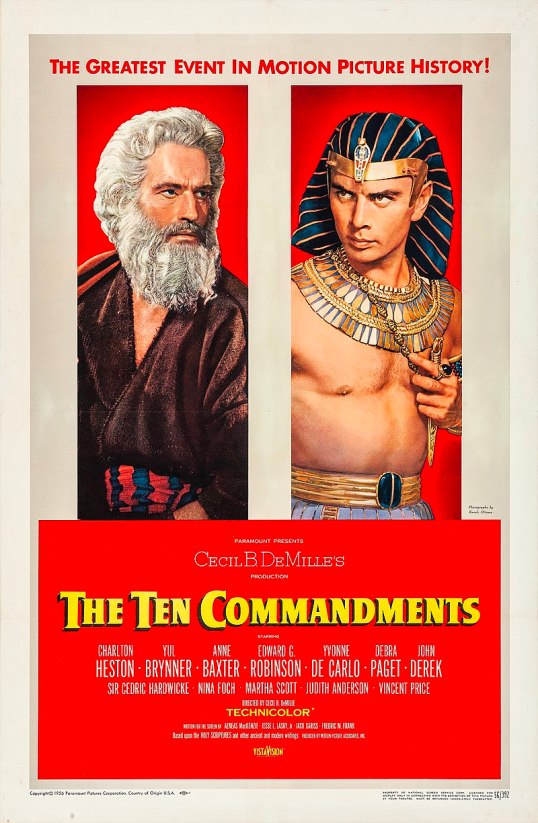
142 years ago, on this date, director Cecil B. DeMille was born in Ashfield, Massachusetts. From the silent era until his death in 1959, DeMille was one of Hollywood’s superstar directors. His films, which were often over the top and effective at the same time, helped to build the modern film industry.
Today’s scene that I love comes from DeMille’s final film. From 1956’s The Ten Commandments, Moses parts the Red Sea.
(Please note, this video starts with a frozen image that lasts for about 12 seconds.)
Since today is the birthday of the great Mario Bava, today’s scene that I love comes from one of Bava’s best films. Here is the wonderfully atmospheric and ominous opening of 1960’s Black Sunday:
Today, the Shattered Lens wishes a happy birthday to the greatest director come out of Texas, Richard Linklater!
Today’s scene that I love comes from Linklater’s 1991 film, Slacker. Filmed in Austin, this film not only established Linklater as one of the best indie film directors but it also inspired a countless number of other aspiring filmmakers. How many other director have attempted to make a Slacker? None have done it as well as Linklater. Indeed, the film not only helped to define the modern independent film aesthetic but it also continues to shape the way that people view Texas’s idiosyncratic capital city.
In this opening scene, Linklater himself gets the film started, delivering a monologue as he’s driven around Austin.
Perusing the imdb, I saw that today was the birthday of the late Tony Sirico. Sirico was a former mob associate who, after serving a term in prison, reinvented himself as an actor. Because of his background, he was often typecast as gangsters but he also proved himself to be an intelligent performer with perfect comedic timing. For a lot of us, he will always be remembered for playing Paulie on The Sopranos.
Today scene that I love comes from The Sopranos and it features excellent work from the entire cast, especially Tony Sirico. In this scene from the 2002 episode “The Strong, Silent Type,” the Sopranos and their associates stage an intervention for Christopher Moltisanti and it goes about as well as you might expect. In just five minutes, this scenes manages to capture everything that The Sopranos was about, as well as giving each member of the cast a chance to shine. Since this is Sirico’s birthday, I’ll just recommend that viewers especially watch Paulie’s facial expressions while Adriana reads her letter to Christopher.
Today, on what would have been Stanley Kubrick’s birthday, our scene comes from 1987’s Full Metal Jacket.
By most account, Kubrick was a director who did not regularly encourage improvisation but he apparently made an exception while filming Full Metal Jacket, allowing R. Lee Ermey to come up with his own dialogue for the majority of his scenes as Sgt. Hartman. At one point, Kubrick apparently even asked Ermey to clarify what some of his more colorful lines were referring to.
In this scene, Hartman meets his latest batch of recruits and lets them know that they are the lowest of the low. One thing that is often missed about this scene is that Ermey specifically played Hartman as being a drill instructor who was bad at his job, as someone who broke down his recruits but failed to build them back up. (Being a former drill instructor, Ermey knew what he was talking about.) It’s a bit ironic that, to many, Ermey’s Hartman is the first character they think of when they think of a drill instructor.
94 years ago today, the English director Peter Yates was born in Aldershot, Hampshire. Yates would go on to direct films in almost every genre but today, he’s perhaps best-remembered for directing what is considered to be one of the best car chases of all time. Today scene that I love comes from Peter Yates’s 1968 film Bullittand yes, that is Steve McQueen doing his own driving through the streets of San Francisco.
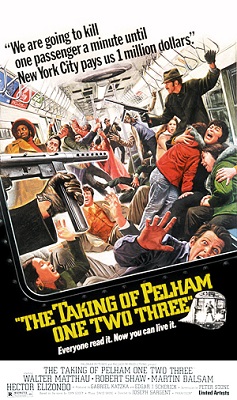
98 years ago, on this date, Joseph Sargent was born in New Jersey. Sargent would go on to become one of the busiest directors of the 70s, 80s, and 90s, working in both film and television. Though he would never receive the type of critical attention as some of his contemporaries, Sargent was a skilled director who specialized in making entertaining, no-nonsense films. Though his reputation was tarnished a bit by the fourth Jaws film, it should be remembered that Sargent was also responsible for films like Colossus: The Forbin Project,Tribes, Nightmares, and The Taking of Pelham One Two Three.
1974’s The Taking of Pelham One Two Three has come to be recognized as a genre classic. It’s certainly one of my favorite films about how New Yorkers will be rude to anyone in any circumstances. You can see an example of this in today’s scene that I love. Having hijacked a train, Robert Shaw calls in his last of demands and gets a very New York response.
Today’s scene that I love features Harrison Ford in one of his more unexpected roles. In Francis Ford Coppola’s Apocalypse Now, he played one of the three men who ordered Martin Sheen to go upriver and assassinate Marlon Brando. It’s a small role, especially when one considers that Ford had appeared as Han Solo just two years before. Given the lengthy shooting of Apocalypse Now, there’s some debate as to whether Ford was actually cast in the role before he was selected for Star Wars. Giving credence to that theory is that Ford played a similar role for director Francis Ford Coppola in The Conversation. However, it’s hard not to notice that Ford plays Col. G. Lucas, which would suggest that his casting was a bit of an inside joke. Speaking of inside jokes, G.D. Spradlin plays General R. Corman, no doubt named for the man who gave Coppola his start in the business.
(Interesting enough, both Spradlin and Corman played U.S. Senators in The Godfather Part II.)
In this scene, Ford shows off the nerdy intensity that was actually kind of his acting trademark before Star Wars changed his screen persona. This scene, along with his work in The Conversation, serves as a reminder that Harrison Ford is a pretty good character actor along with being one of the last great movie stars.


 Through the Shattered Lens