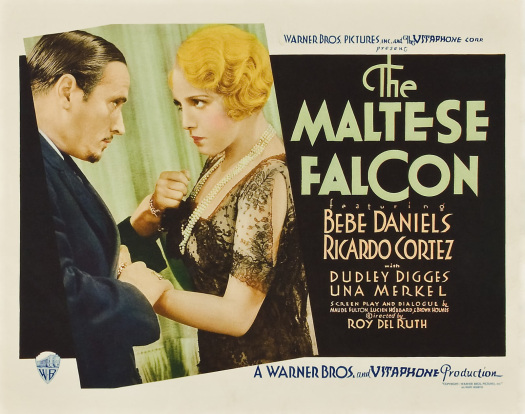
The Maltese Falcon (1931, directed by Roy Del Ruth)


Detective Sam Spade (Ricardo Cortez) may be an immoral lech but when his partner, Miles Archer, is murdered, Sam sets out to not only figure out who did it but to also eliminate himself as a suspect.  Sam was having an affair with Miles’s wife, Ivy (Thelma Todd).  Sam’s investigation leads to him falling for the mysterious Miss Wonderly (Bebe Daniels) and getting involved with a trio of flamboyant criminals who are searching for a famous relic, the Maltese Falcon.  Dudley Digges plays Casper Gutman.  Otto Matieson plays Dr. Joel Cairo.  Dwight Frye plays the gunsel, Wilmer, who Gutman says he “loves … like a son.”

The first film adaptation of Dashiell Hammett’s classic detective novel is overshadowed by the version that John Huston would direct ten years later.  That’s not surprising.  There’s a lot of good things about the first version but it’s never as lively than John Huston’s version and neither Dudley Digges nor Otto Matieson can compare to Sydney Greenstreet and Peter Lorre.  Of the supporting cast, Dwight Frye makes the best impression as the twitchy Wilmer and Bebe Daniels and Thelma Todd are both sexy as the story’s femme fatales.  That doesn’t mean that they’re better than their counterparts in John Huston’s film.  It just means they all bring a different energy to their roles and it’s interesting to see how the same story can be changed by just taking a slightly different approach.  Elisha Cook, Jr. was perfect for Huston’s version of the story.  Dwight Frye is similarly perfect for Roy Del Ruth’s version.

Needless to say, Ricardo Cortez can’t really compare to Humphrey Bogart.  But, if you can somehow block the memory of Bogart in the role from your mind, Cortez actually does give a good performance as Spade.  Because this was a pre-code film, Cortez can lean more into Spade’s sleaziness than Bogart could.  Also, because this was a pre-code film, the first Maltese Falcon doesn’t have to be as circumspect about the story’s subtext.  Spade obviously tries to sleep with every woman he meets and is first seen letting a woman out of his office.  (The woman stops to straighten her stockings.)  Gutman and Cairo’s relationship with Wilmer becomes much more obvious as well.  What’s strange is that, even though this Maltese Falcon is pre-code, it still ends with the type of ending that you would expect the production code to force onto a film like this.

If you’re going to watch The Maltese Falcon, the Huston version is the one to go with.  But the first version isn’t bad and it’s worth watching for comparison.
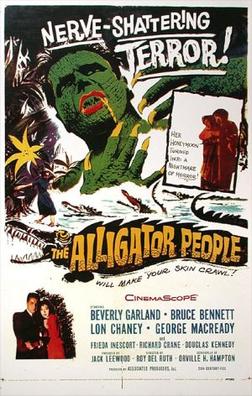
Horror Film Review: The Alligator People (dir by Roy Del Ruth)


You know what the worst bayou is?

Bayouself.

Thank you!  I’ll be here all night and don’t forget to tip your server!

Anyway, the 1959 film, The Alligator People, largely takes place in the bayous of Louisiana.  Nurse Jane Marvin (Beverly Garland) is suffering from amnesia so she allows two psychiatrist to give her a dose of truth serum and then, when she’s in a hypnotized state, she proceeds to remember her former life as Joyce Webster.

Joyce married a handsome and seemingly perfect man named Paul Webster (Richard Crane) but, right when they were about to go on their honeymoon, he received a telegram that disturbed him.  After he made a phone call, he vanished from Joyce’s life.  Joyce did some research of her own and discovered that Paul’s former home was the Cypresses Plantation in the small town of Bayou Landing, Louisiana.

When Joyce travels down to Bayou Landing, she discovers that there’s really not much there, other than a bunch of hungry alligators.  She meets the owner of the plantation, Lavinia Hawthorne (Frieda Inescort).  She also meets the handyman, Manon (Lon Chaney, Jr.), a one-handed brute who spends most of his day shooting at alligators.  And, eventually, Joyce comes across her husband but Paul is no longer the man that she remembers.

Paul’s skin is scaly and he only comes out at night.  It turns out that Paul was, long ago, injected with a serum that would allow him to grow back a missing limb.  The serum worked as far as the limb was concerned but an unfortunate side effect is that Paul is now turning into an alligator!  Dr. Mark Sinclair (George Macready), the man who came up with the serum in the first place, is hopeful that he can reverse the process but, to do so, he’s going to need a lot of radioactive material.

Complicating things is that Manon has decided that he wants Joyce for himself and he’s certainly not going to compete with some alligator man for her attention.  Of course, Joyce despises Manon from the first moment she sees him but Manon’s not that smart.  Can Paul be cured before Manon destroys everything?

The Alligator People is one of those 1950s B-movies that is probably better-known for its name than anything else.  That said, when taken on its own terms, it’s an entertaining watch.  It was one of the final films to be directed by Roy Del Ruth, who had previously been one of Hollywood’s top directors of musicals and comedies.  There’s not much music or deliberate comedy to be found in The Alligator People but Del Ruth does manage to capture the humid stillness of the bayous.  As always, Beverly Garland gives a strong performance as a determined woman who isn’t going to be told what to do and Richard Crane is about as convincing as one can be while turning into an alligator.

As for Lon Chaney, Jr, he plays Manon as being a total monster and he gives a convincing performance, even if it is hard not to mourn the loss of the shadings that he brought to his monster roles while he was with Universal.  Manon is a rough and determinedly unintelligent character, one who exists only to destroy.  Significantly, he’s not one of the Alligator People.  Instead, he’s just a man who doesn’t care about anyone but himself.

The Alligator People is an effective B-movie, full of a bayou atmosphere.

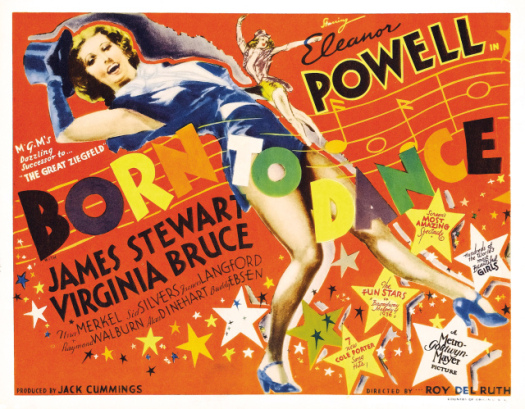
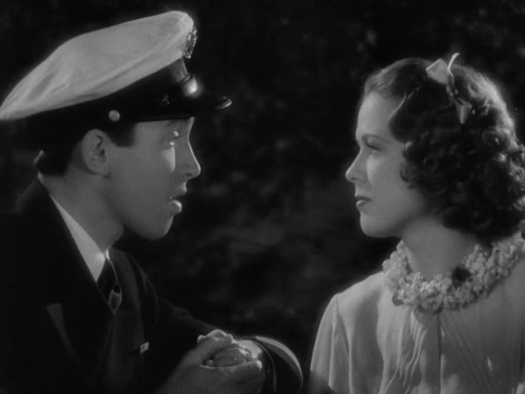
You’re The Top!: Eleanor Powell Was BORN TO DANCE (MGM 1936)


gary loggins's avatarcracked rear viewer

Dancing masters like Fred Astaire, Gene Kelly, and The Nicholas Brothers all agreed… Eleanor Powell was the tops! The 24-year-old star made a big splash in MGM’s BROADWAY MELODY OF 1936, and the studio quickly followed up with BORN TO DANCE, showcasing Eleanor’s tap-dancing prowess in a fun musical-comedy-romance featuring a cavalcade of stars, and an original score by Cole Porter. Yep, Leo the Lion was going big on this one!

The plot’s your typical Boy Meets Girl/Boy Loses Girl/Boy Wins Girl Back fluff, this time around concerning submarine sailors in port and the babes they chase after. Nora Paige (Eleanor) enters the Lonely Hearts Club (no, not Sgt. Pepper’s! ) looking for work as a hoofer (“You don’t use a fan?”, says wisecracking Jenny Saks, played by wisecracking Una Merkel ). Nora shows what she can do in the hot number “Rap, Tap On Wood”, a joyous dance number…

View original post 531 more words

Pre Code Confidential #11: THE MALTESE FALCON (Warner Brothers 1931)


gary loggins's avatarcracked rear viewer

Everybody knows the 1941 Humphrey Bogart/John Huston classic THE MALTESE FALCON, but only true film fanatics watch the original 1931 version. Since I fall squarely into that category, I recently viewed the first adaptation of Dashiell Hammet’s seminal private eye yarn. The film, like it’s more famous remake, follows the novel’s plot closely, with the added spice that Pre-Code movies bring to the table.

Cortez is no Bogie, but he’ll do

The odds are six-two-and-even if you’re reading this post, you don’t need a plot recap. What I intend to do is go over some of the differences between the two versions. Let’s start with Sam Spade himself, the prototype hard-boiled detective. Suave, slick-haired Ricardo Cortez  interprets the role as a grinning horndog who’s never met a skirt he didn’t like. We meet Spade in the opening shot, clinching a dame in silhouette at the door to his office. Then the door…

View original post 575 more words

Christmas Surprise: IT HAPPENED ON 5TH AVENUE (Allied Artists 1947)


gary loggins's avatarcracked rear viewer

ithap1

I’d never heard of IT HAPPENED ON 5TH AVENUE until it’s recent broadcast on TCM. This unsung little holiday gem was a TV staple for decades before being pulled from viewing in 1990, only resurfacing in 2009 when a small but dedicated band of classic film fans put the pressure on to see it aired once again. And I’m glad they did, for this charming, unpretensious comedy boasts a marvelous cast, an Oscar-nominated screenplay, and a Frank Capra-esque feel without a lot of the Capra-corn.

Capra himself was scheduled to direct it back in 1945, but instead he chose to make another Christmas film you may have heard of, IT’S A WONDERFUL LIFE. Veteran Roy Del Ruth obtained the rights, and IT HAPPENED ON 5TH AVENUE became the first release of Allied Artists, the larger budgeted, more prestigious arm of Monogram Pictures (and you know how much I love Monogram movies!)…

View original post 683 more words

The Fabulous Forties #4: Topper Returns (dir by Roy Del Ruth)


Topper_Returns_VideoCover

The fourth film in Mill Creek’s Fabulous Forties box set was 1941’s Topper Returns.  Topper Returns was the third (and final) film to be made about Cosmo Topper (Roland Young).  Cosmo Topper is an upper class and mild-mannered banker who likes to collect automobiles and who is married to the somewhat daffy Clara (Billie Burke).  Cosmo would seem to be a pretty normal guy, except for the fact that he can talk to dead people.  In the first Topper film, a ghost played by Cary Grant helped him to learn how to appreciate life.  In the second Topper film, Topper Takes A Trip, a ghost played by Constance Bennett helped to save Topper and Clara’s marriage.  And in this Topper film, a ghost helps …. well actually, the ghost doesn’t help Topper out at all.  Instead, Topper helps the ghost solve her own murder.

When Gail Richards (Joan Blondell) visits her friend Ann Carrington (Carole Landis) for the weekend, she has no idea just how weird things are going to get.  First off, while Gail and Ann are riding in a taxi to the big and foreboding Carrington mansion, a mysterious man in black shoots out the taxi’s tires.  Though the taxi crashes, both Gail and Ann survive and are able to hitch a ride from Ann’s neighbor, Cosmo Topper.

Once they get to the mansion, Gail meets Ann’s strange family.  Gail loves the mansion and who wouldn’t, seeing as how it is big and dark and full of secret passageways?  However, Gail makes the big mistake of switching beds with Ann.  Later that night, when that man in black sneaks into the bedroom and attempts to stab Ann to death, he ends up killing Gail instead.  When we next see Gail, she’s a ghost who can’t leave our world until her murder has been solved.

No worries!  Gail isn’t that upset about being a ghost.  In fact,  she seems to be rather amused by it all.  She floats right over to Topper’s house and demands that he come over and solve her murder.  After some initial reluctance, Topper agrees.  Topper sneaks into the Carrington mansion and gets to work searching for clues and attempting to solve the crime.  Needless to say, it involves a lot of family secrets, hidden rooms, and dark passageways.

Now, I should admit that I haven’t seen the first two Topper films so I don’t know how Topper Returns compares to them.  The majority of the reviews that I’ve read online seem to indicate that Topper Returns is widely considered to be inferior when compared to the first two films.  It is true, as a lot of other reviewers have pointed out, that Topper himself occasionally seems almost superfluous to the film’s plot.  At no point does he mention that he has a history of talking to ghosts and, if not for the fact that the film’s title is Topper Returns, it would be easy to believe that this film was the first appearance of the character.

But no matter!  I enjoyed Topper Returns, mostly because I’d like to think that if I was ever murdered and came back as a ghost, I would manage to have as much fun doing so as Joan Blondell appears to be having in the role of Gail.  Funny, likable, and quick-witted, Gail isn’t going to let a little thing like being dead keep her from having fun!  I also appreciated that the film has a nicely morbid streak.  Towards the end of the film, there’s a cheerful conversation between Gail and another ghost.  Gail mentions that, as soon as the murder has been solved, she can go to Heaven and “you can go to…”  Gail lets her voice trail off but still make a point of glancing down at the ground.

For a modern viewer, the most problematic part of Topper Returns is the character of Chauffeur, who is Topper’s African-American servant and who doesn’t even get a proper name even though he’s in about 80% of the movie.  On the one hand, Chauffeur is written as a total racist stereotype and, as written, the majority of his lines will absolutely make you cringe.  On the other hand, he’s also played by Eddie Anderson, a talented comedic actor who always played his servants in such a way as to suggest that they were actually a hundred times smarter than the white people they were working for.  Though you may not like the way the character is written, it is possible to appreciate the subversive subtext that Anderson brings to his performance (a subtext which, undoubtedly, was not present in the original script).  Anderson was best known for playing comedian Jack Benny’s sidekick and, at one point during Topper Returns, he announces that he’s sick of ghosts and that he’s going “return to Mr. Benny!”

Taken on its own 1941 terms, Topper Returns was an enjoyable old, dark house movie.  Watch it for Joan Blondell having the time of her afterlife.

http://www.youtube.com/watch?v=G6ieJAW5sFs

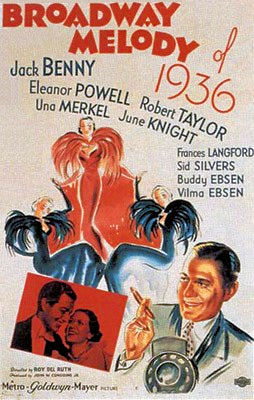
Lisa Reviews An Oscar Nominee: Broadway Melody of 1936 (dir by Roy Del Ruth)


PosterBroadwayMelody1936_01

It’s Oscar month and you know what that means!  It’s time for TCM to do their annual 31 Days of Oscars!  For the next 31 days, TCM is going to be showing movies that were nominated for and occasionally won Oscars.  This is a great month for me because it has long been my goal to see and review every single film that has ever been nominated for best picture.  Considering that close to 500 movies have been nominated, that’s no small task.  However, over the past four years, I have definitely made some progress, as you can see by clicking on this link and looking at a list of every single best picture nominee.  Thank you, TCM, for helping me get closer to my goal!

For instance, if not for TCM, how would I ever had the chance to watch Broadway Melody of 1936?  Broadway Melody of 1936 was one of the twelve films to be nominated for best picture of 1935 but it’s now largely forgotten.  When film loves discuss the best musicals of the 30s, it’s rare that you ever hear mention of Broadway Melody of 1936.

Technically, it can be argued that Broadway Melody of 1936 was the first sequel to ever be nominated for best picture, despite the fact that it has little in common with Broadway Melody, beyond taking place on Broadway and being nominated for best picture.  (Broadway Melody won the award.  Broadway Melody of 1936 lost to Mutiny on the Bounty.)  Silence of the Lambs, The Godfather, Part II, Mad Max: Fury Road, Toy Story 3, and The Bells of St. Mary’s are all sequels that were nominated for best picture but Broadway Melody of 1936 did it first.

As for what Broadway Melody of 1936 is about … well, it’s really not about anything.  Oh, don’t get me wrong.  The film has a plot.  Irene Foster (Eleanor Powell) wants her former high school boyfriend, Broadway director Robert Gordon (Robert Taylor), to cast her in his new show but Gordon refuses because he doesn’t want the innocent Irene to be exposed to the sordid world of show business.  Fortunately, Irene has some allies who are willing to help her get that role.  Ted Burke (Buddy Ebsen) is an appealingly goofy dancer who, at one point, wears a Mickey Mouse sweatshirt.  Bert Keeler (Jack Benny) is a columnist who rattles off his “New Yawk cynical” dialogue in the style of most 1930s news reporters.

Broadway Melody of 1936 has a plot but it’s not really that important.  The story is just an excuse for the songs and the dance numbers.  And while none of the numbers are spectacular (especially when compared to other 30s musicals, like 42nd Street), they are all definitely likable.

Seen today, Broadway Melody of 1936 seems like an odd best picture nominee.  It’s not bad but there’s nothing particularly great about it.  To truly appreciate the film, it’s probably necessary to try to imagine what it was like to watch the film in 1935.  At a time when the country was still in the throes of the Great Depression, Broadway Melody of 1936 provided audiences with an escape.  Audiences could watch the film and imagine that they, just like Eleanor Powell, could leave behind the dullness of reality and find stardom in the glamorous and glitzy world of Broadway.

Never doubt the power of escapism.