Film Review: The Concorde …. Airport ’79 (dir by David Lowell Rich)


In 1979’s The Concorde …. Airport ’79, Joe Patroni (George Kennedy) finally gets to fly the plane.

The plane is question is a Concorde, a supersonic airliner that can travel faster than the speed of sound.  When we first see the Concorde, it’s narrowly avoiding a bunch of dumbass hippies in a hot air balloon as it lands in Washington, D.C.  The recently widowed Joe Patroni joins a flight crew that includes neurotic Peter O’Neill (David Warner), who says that he has dreams in which he’s eaten by a banana, and suave co-pilot Paul Metrand (Alain Delon).  Because this is an Airport film, Mertrand is dating the head flight attendant, Isabelle (Syliva Kristel).  “You pilots are such men,” Isabelle says.  “It ain’t called a cockpit for nothing, honey,” Patroni replies.

(One thing that is not explained is just how exactly Joe Patroni has gone from being a chief technician in the first film to an airline executive in the second to a “liaison” in the third and finally to a pilot in the fourth.)

The Concorde is flying to Moscow with a stop-over in Paris.  There’s the usual collection of passengers, all of whom have their own barely-explored dramas.  Cicely Tyson plays a woman who is transporting a heart for a transplant.  She gets maybe four or five lines.  Eddie Albert is the owner of the airline and he’s traveling with his fourth wife.  (Of course, he’s old friends with Patroni.)  John Davidson is an American reporter who is in love with a Russian gymnast (Andrea Marcovicci).  Avery Schrieber is traveling with his deaf daughter.  Monica Lewis plays a former jazz great who will be performing at the Moscow Jazz Festival.  Jimmie Walker is her weed-smoking saxophonist.  Charo shows up as herself and gets kicked off the plane before it takes off.

The most important of the passengers is Maggie Whelan (Susan Blakely), a journalist who has evidence that her boyfriend, Kevin Harrison (Robert Wagner), is an arms trafficker.  Harrison is determined to prevent that evidence from being released so he programs a surface-to-air missile to chase the Concorde.  Patroni is able to do some swift maneuvers in order to avoid the missile, which means that we get multiple shots of passengers being tossed forward, backwards, and occasionally hanging upside down as Patroni flips over the plane.  Oddly no one really gets upset at Patroni about any of this and no one seems to be terribly worried about the fact that someone is obviously trying blow up their plane.  Even after the stop-over in Paris, everyone gets back on the Concorde!  That includes Maggie, who could have saved everyone a lot of trouble by just holding a press conference as soon as the plane landed in Paris.

A year after The Concorde came out, Airplane! pretty much ended the disaster genre.  However, even if Airplane! had never been released, I imagine The Concorde would have still been the final Airport film.  Everything about the film feels like the end of the line, from the terrible special effects to the nonsensical script to the Charo cameo and Martha Raye’s performance as a passenger with a weak bladder.  The first Airport film was an old-fashioned studio film standing defiant against the “New Hollywood.”  The second Airport film was a camp spectacular.  The third Airport film was an example of changing times.  The fourth Airport film is just silly.

And, really, that’s the main pleasure to be found in The Concorde.  It’s such an overwhelmingly silly film that it’s hard to look away from it.  For all of its weaknesses, The Concorde will always be remembered as the film that featured George Kennedy opening the cockpit window — while in flight — and shooting a flare gun at another plane.  As crazy as that scene is, just wait for the follow-up where Kennedy accidentally fires a second flare in the cockpit.  “Put that out,” Alain Delon says while David Warner grabs a fire extinguisher.  It’s a silly moment that it also, in its way, a great moment.

The Concorde brings the Airport franchise to a close.  At least George Kennedy finally got to fly a plane.
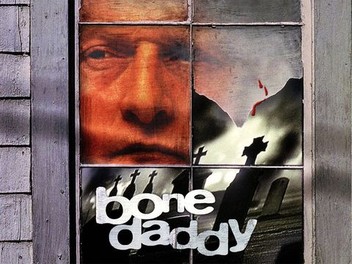
Brad reviews BONE DADDY (1998), starring Rutger Hauer!


I became obsessed with the actor Rutger Hauer in the summer of 1990. I was about to go into my senior year of high school, and I was attending the Arkansas Governor’s School. I had seen Hauer before in films like THE HITCHER and WANTED: DEAD OR ALIVE, but as part of our curriculum, we all watched BLADE RUNNER and then broke up into smaller groups to analyze the film. Blown away by the film, Hauer’s powerful performance, and the opportunity to engage in a serious conversation about a movie with my peers, it was a rewarding experience, and I soon found myself seeking out every Hauer film I could find. I followed the charismatic Dutch actor’s career closely from that point forward, all the way up to his death in July of 2019. I was actually sitting on a beach in Florida when I read that he had passed away. Based on my extreme interest in every project that Hauer was associated with, I specifically remember when BONE DADDY premiered on HBO in 1998. I didn’t have HBO so I had to wait for a few months to catch it when it arrived on home video.

In BONE DADDY (1998), Rutger Hauer stars as Dr. Bill Palmer, a retired Chicago medical examiner turned bestselling author. Years earlier, Palmer investigated a series of brutal unsolved murders committed by a serial killer known as “Bone Daddy.” Retiring in frustration from not being able to solve the murders, Palmer pens the novel, “Bone Daddy,” a fictionalized account of the crimes where, unlike real life, the killer is caught and brought to justice. The book’s runaway success catapults Palmer to fame, but it also seems to pull the notorious Bone Daddy out of retirement. When his literary agent, the cocky, Rocky Carlson, is kidnapped and subjected to the killer’s signature torture, the surgical removal of bones from a living body, Palmer finds himself back on the case and teamed up with the no-nonsense police detective Sharon Wells (Barbara Williams). As the bones and the suspects pile up, Palmer is determined to make sure the killer is found and brought to justice this time around!

BONE DADDY is a pretty darn good entertainment option if you’re in the mood for an undemanding serial killer flick that’s in and out of your life in 90 minutes. It’s certainly not in the same league as SE7EN, but that doesn’t mean it can’t be enjoyed for what it is. The premise is pretty twisted, and the scenes where the killer is preparing to remove the bones of fully coherent victims is horrifying to say the least! There isn’t a lot of gore, but what’s there is pretty gross. This is B-movie territory and the lack of Hollywood gloss works in its favor. The film’s plot also has quite a bit of family drama between Dr. Palmer and his adult son Peter (Joseph Kell), who’s following in his dad’s professional footsteps in the medical field. It seems Dr. Palmer wasn’t the greatest dad and the current state of their relationship figures strongly throughout various portions of the film. This element of the story is actually handled quite well and adds some interesting tension as we move towards the end.

At the end of the day, the best thing about BONE DADDY is the presence of Rutger Hauer in the lead. He brings gravitas to the role of Dr. Palmer, a man who has had his share of successes and failures in the world. It’s his failures that continue to haunt him throughout this story and seems to put everyone around him in danger. Hauer, known for his ability to go over the top at times, plays the role completely straight with the quiet intensity and determination of a man trying to make up for past wrongs. It’s another solid performance in the career of the then-53 year old actor. I also want to give a special shout out to his nice, bushy mustache. I enjoyed it very much! The other primary performance of the film comes from Canadian actress Barbara Williams as the lead cop. In contrast to how much I enjoy Hauer, I’m just not much of a fan of Williams. She seems to be in a perpetual state of being offended in every role I’ve seen her in. She played Charles Bronson’s daughter in the FAMILY OF COPS series and her character was always on the ready to jump down someone’s throat for just about anything they said. It’s kind of the same here. I should probably try to look for some more of her work just to see if she ever smiles. 

Overall, I think BONE DADDY is worth a watch, especially for fans of Rutger Hauer or movies about serial killers. The plot is predictable, and so is the identity of the killer if you’re paying attention, but you could definitely do a lot worse! 

Horror Film Review: The Haunting of Julia (dir by Richard Loncraine)


1977’s The Haunting of Julia (also known as Full Circle) opens with a truly horrifying incident.

Julia (Mia Farrow) is an American housewife who is living in London.  One morning, her young daughter Kate starts to choke on her breakfast.  The panicked Julia attempts to perform a tracheotomy (!) on her daughter.  It should be noted that Julia is not a doctor and her attempts to perform a difficult medical operation on her daughter do not go well.  In fact, Kate dies.  The traumatized Julia demands a divorce from her husband Magnus (Keir Dullea).  While Magnus is reluctant to actually sign the papers, he does agree to a separation.

Julia moves into a new home.  As soon as she moves in, strange things start to happen.  There are odd noises.  Appliances turns on by themselves.  At first, Julia blames Magnus but soon, she spots a girl who looks like Kate in a nearby park.  Julia runs after the girl, just to discover that she’s vanished.

Was the little girl Kate or is Julia seeing something else?  Julia starts to research the history of the house and even consults a psychic who, after conducting a seance, informs Julia that she should leave the house immediately.  The mentally fragile Julia refuses to leave the house, feeling that doing so would mean abandoning the spirit of her daughter.  Meanwhile, Julia’s acquaintances are turning up dead….

Based on a novel by Peter Straub, The Haunting of Julia is an atmospheric ghost story.  (While I haven’t read Straub’s original novel, the film version seems to be owe more than a little bit of a debt to Don’t Look Now.)  I think I was eleven years old when I first came across The Haunting of Julia airing on one of the local stations down in Shreveport.  I didn’t watch the entire film.  In fact, I only caught the final ten minutes and I had to watch the movie with the volume turned down very low because my mom didn’t like me watching horror movies.  In this case, my mom was probably correct because what I did see of The Haunting of Julia left me totally traumatized and scared to go to sleep.  No matter what else one might say about this film, it has an absolutely haunting and terrifying ending.  Trying to get that final image out of your head is not easy.

When I recently rewatched The Haunting of Julia on TCM, I discovered that it was still just as frightening as I remembered it being.  I also discovered that, for the most part, Julia is a remarkably unlikable character.  While Julia is not solely responsible for all of the terrible things that happen over the course of this film, it’s still hard not to wonder just how stupid you would have to be to try to perform a tracheotomy with no medical training.  Afterwards, it’s understandable that Julia’s in denial and one can understand how she convinced herself that Kate’s spirit was trying to contact her.  But it’s still hard not to feel that a lot of people end up dying because she’s essentially an idiot.  Mia Farrow gives a typically eccentric performance as Julia, one that suggests that she wasn’t all there before she accidentally killed her daughter.  The rest of the cast is full of dependable British character actors, all of whom bring the film to frightening life.  This is a film where you have more sympathy for the people around the main character than for the main character herself.

That ending still packs quite a punch.  Don’t watch The Haunting of Julia alone.

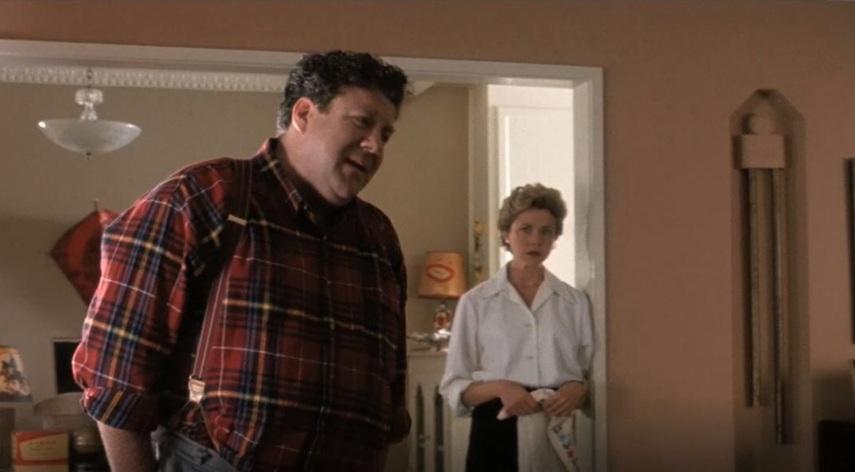
RIP, George Wendt: Guilty By Suspicion (1991, directed by Irwin Winkler)


George Wendt passed away in his sleep earlier today.  He was 76 years old.

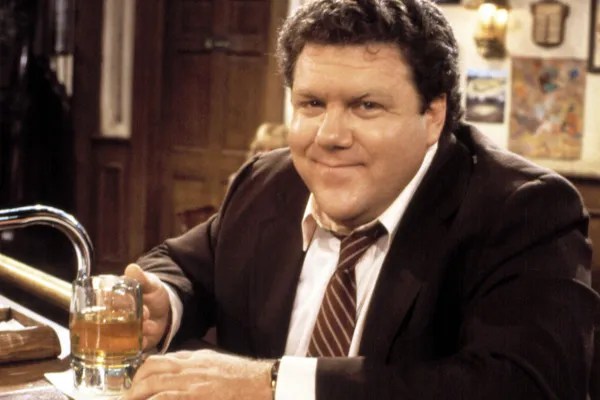
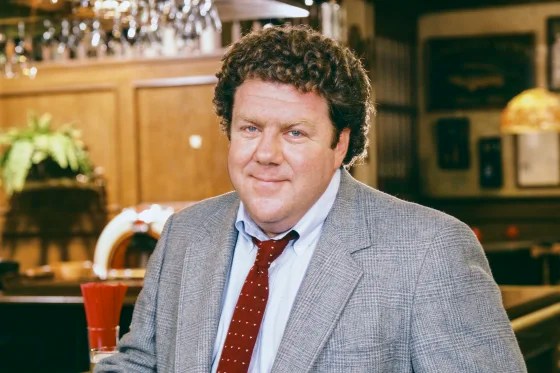
If you’re old enough to have watched Cheers when it originally aired or to have caught it in reruns, George Wendt will always be Norm Peterson, the beer-drinking accountant who spent all of his time at the show’s titular bar.  One of the show’s trademarks was that, whenever he entered the bar, everyone greeted him by shouting, “Norm!”  “How’s the world treating you?” a bartender would ask.  “It’s a dog eat world and I’m wearing milkbone underwear,” Norm once replied.

(One of my favorite joke from the series was when Norm went into a steakhouse and everyone inside was heard to yell, “Norm!” as the door closed behind him.)

If we’re going to be really honest, Norm was probably a high-functioning alcoholic and terrible husband.  (Wife Vera was often-mentioned but never seen.)  Wendt was so likable in the role and was so good at delivering those one-liners that it didn’t matter.  Watching the show, you never wondered why Norm was in the bar.  You were just glad he was.

George Wendt was also an accomplished stage actor.  (I saw him on stage when he was co-starring with Richard Thomas in 12 Angry Men.)  He appeared in several movies, usually playing the comedic sidekick or the hero’s best friend.  His film roles often didn’t ask him to do much other than be likable but one exception was his performance in 1991’s Guilty By Suspicion.

Guilty By Suspicion is a film about the McCarthy era, starring Robert De Niro as film director David Merrill, who is threatened with being blacklisted unless he names four of his colleagues as being communists.  George Wendt plays screenwriter Bunny Baxter, a childhood friend of David’s who attended a few communist rallies when he was younger, failed to mention it to the FBI, and who is now being investigated as a subversive.  The studio argues that David should name Baxter because his name is already out there.  When David refuses, he finds himself blacklisted and unable to make a living.  Bunny Baxter, meanwhile, is offered a similar deal.  Baxter can save his own career but only if he names David as a communist.  Unlike David, Baxter considers betraying his friend because it’s the only way that he can ever hope to work again.  “Your dead anyway,” Baxter says to David.

Guilty By Suspicion suffers from Irwin Winkler’s plodding direction but De Niro gives a good performance, as does Martin Scorsese who is cast as a director based on Joseph Losey.  The film is full of actors who would later become better-known, like Chris Cooper, Tom Sizemore, and Annette Bening.  Wendt, however, gives the film’s best performance as the screenwriter who is torn between protecting his career and maintaining his integrity.  The scene where he asks permission to name Merrill as a communist is powerful and it shows how good an actor George Wendt could be.  Bunny Baxter is asking his best friend to allow himself to be stabbed in the back.  Baxter is that desperate.  That he’s played by George Wendt, an actor who was everyone’s favorite likable barfly in the 80s, makes the scene all the more powerful.

George Wendt, RIP.  Thanks for the memories.

A Blast From The Past: Wait Until Dark (dir by Barry Davis)


Malibu, CA will not be reviewed tonight so that we might bring you this special presentation….

My retro television reviews will return next week but, for now, why not enjoy something even better than me discussing my hatred of Malibu, CA?  1982’s Wait Until Dark is a videotaped record of a stage production of Frederick Knott’s classic play about a blind woman who is menaced by three criminals.  (I assume it was filmed for PBS.  According to Lettrboxd, this aired on television on June 20th, 1982.)  This play was famously adapted into an Audrey Hepburn film in 1967.  The production below gives us a chance to see how the suspense plays out in a theatrical setting.  The cast, including Katharine Ross and Stacy Keach, is excellent!

And now, here is Wait Until Dark….


Horror on the Lens: Full Circle (dir by Richard Loncraine)


For today’s horror on the lens,we have a film from 1977.  I recently watched this film very late at night and — OH MY GOD!  Seriously, I had nightmares for two nights straight!

Full Circle opens with the horrifying death of Kate (Sophie Ward), the daughter of Julia (Mia Farrow) and Magnus (Keir Dullea).  After Kate’s death, Julia and Magnus divorce and Julia moves into a new house.  However, she is haunted by visions of a little girl who looks just like Kate.  As well, the house is full of odd noises, creepy toys, and appliances that turn on by themselves.  Is Julia seeing the ghost of her daughter or something far more dangerous?

Full Circle is a truly haunting and disturbing haunted house film.  Mia Farrow gives a great performance as Julia and the entire film is dominated by a palpable atmosphere of dread.  And that final scene — AGCK!

http://www.youtube.com/watch?v=WQVrglbsjfQ