Retro Television Review: St. Elsewhere 1.11 “Graveyard”


Welcome to Retro Television Reviews, a feature where we review some of our favorite and least favorite shows of the past! On Fridays, I will be reviewing St. Elsewhere, a medical show which ran on NBC from 1982 to 1988.  The show can be found on Hulu and, for purchase, on Prime!
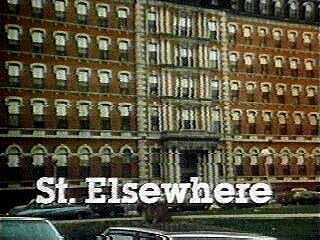
This week, a handful of doctors save two patients and lose one.

Episode 1.11 “Graveyard”

(Dir by Victor Lobl, originally aired on January 18th, 1983)

It’s the graveyard shift at St. Eligius.  The halls and the cafeteria are dark.  The ER is oddly calm.  There are only a few patients to be looked after and most of the doctors are playing poker and talking about the rather boring subject of Dr. Samuels’s love life.

Only a handful of the series regulars make an appearance in this episode but that’s fine.  This episode actually provides a nice break from having to keep track of where everyone is.  Unfortunately, as I already said, a lot of this episode is centered around the character of Dr. Samuels.  Nothing against the late David Birney, who did a perfectly acceptable job in the role, but Dr. Ben Samuels is just not that interesting of a character.  He’s a dedicated surgeon who feels too much, drinks too much, and wants to sleep with his colleagues.  That’s fine but I grew up watching General Hospital.  I’ve seen a hundred doctors just like Samuels on television.

To me, the far more interesting characters are the people like David Morse’s Jack Morrison or Ed Begley, Jr’s Victor Ehrlich or even Terence Knox’s Peter White.  They’re doctors who screw up and aren’t always brilliant and sometimes say the wrong things.  They feel like real people whereas Dr. Samuels just feels like a cliche, a holdover from some other medical show.  Samuels is not a particularly compelling character and, when I did some research, I was not surprised to discover that David Birney only appeared on one season of the show.

G.W. Bailey’s Hugh Beale also only appeared in the first season and that’s a shame because Bailey’s performance as Beale has been one of the first season’s real pleasures.  Bailey plays Beale as a compassionate man who often pretends to be more naive than he is.  As a Southerner, he’s an outsider on this Boston-set show and, being an outsider, he can often relate to the patients in the psych ward.  Of course, that still doesn’t stop Dr. Beale’s main patient, Ralph the Birdman, from throwing himself off the roof of the hospital in this episode.  To be honest, I already suspected things weren’t going to go well for Ralph on this show but his suicidal jump still upset me.  As annoying as the character was, he was also finally making some progress.  He finally admitted he wasn’t a bird.  And then he proved it by showing that he couldn’t fly.

While Ralph plunged to his death, Dr. Samuels saved a gunshot victim (played by Tom Hulce).  And Jack allowed the father (James Hong) of one of his comatose patients to perform a Chinese ritual that led to the patient waking up and eventually walking into the cafeteria, where the doctors were playing poker.  “Who ordered the Chinese?” Fiscus asked and …. ugh.  Not cool, Fiscus.

It was a night of triumph and tragedy.  Ralph died but Dr. Samuels and Dr. Paxton agreed to give their relationship another try which …. eh.  I don’t care about Samuels and Paxton.  For the most part, though, I liked this episode.  The smaller cast made it easier to keep track of things and the poker game banter reminded me that the doctors are all people too.  Still, I have to feel bad for Ralph.  All he wanted to do was fly.

Retro Television Review: Miami Vice 3.13 “Down For The Count: Part Two”


Welcome to Retro Television Reviews, a feature where we review some of our favorite and least favorite shows of the past!  On Mondays, I will be reviewing Miami Vice, which ran on NBC from 1984 to 1989.  The entire show can be purchased on Prime!

This week is all about justice for Zito!

Episode 3.13 “Down For The Count: Part Two”

(Dir by Richard Compton, originally aired on January 16th, 1987)

Picking up where last week’s episode ended, Down For The Count: Part Two finds almost the entire Vice Squad mourning the death of Larry Zito.  I say “almost” because, as usual, Castillo refuses to show any emotion or even look anyone in the eye.  When he first appeared, Castillo’s stoicism made him an interesting character but I have to admit that I’m starting to get a bored with the character and his refusal to speak in anything more than terse growls.  ZITO’S DEAD!  WAKE UP, CASTILLO!

Switek, needless to say, is heart-broken.  Trudy tells Gina that she had a totally meaningless one night stand with some guy she met at a club because she was depressed.  (“Did it make you feel better?” Gina asks.  “No!” Trudy wails.)  Crockett is determined to take down crooked boxing promoter Oswaldo Guzman (Pepe Serna) and prove that Zito was not a junkie but that he was instead murdered by Guzman’s goons.  As for Tubbs, he makes a few jokes.  WHAT’S WRONG WITH YOU, TUBBS!?  ZITO’S DEAD!

Crockett and Tubbs go undercover as Burnett and Cooper and, once again, I find myself wondering how they can keep successfully doing that when their cover has gotten blown over a dozen times over the course of the series.  Do criminals in Miami not talk to each other?  This time, Crockett pretends to be involved with a cable sports network that wants to make a deal to air the fights that Guzman sponsors.  When a Las Vegas gangster named Guilinni (former Warhol superstar Joe Dallesandro) shows up looking to kill Guzman, Crockett and Tubbs effortlessly manipulate both sides.  It turns out that criminals aren’t that smart.

Meanwhile, Trudy and Gina meet one of Crockett’s associates from the Vietnam War.  His name is Danny Allred (Chris Elliott) and he’s a former CIA agent who now lives in an abandoned airplane.  Danny is a codebreaker and he helps them to figure out the code that Guzman was using to keep track of all of his crooked fights.  Danny is a fun character and I hope he shows up in more episodes.  He added some moments of levity to what was otherwise a pretty grim episode.

This episode had plenty of good moments.  The scene where Crockett and Tubbs visited Zito’s apartment was both poignant and nicely-acted by both Don Johnson and Philip Michael Thomas.  The final shoot-out was violent even by the standards of Miami Vice.  That said, I’m a bit surprised that the episode didn’t revolve around Switek.  Switek gets to express his anger and argue with Internal Affairs at the start of the episode and gets to repeatedly shoot Guzman at the end of the episode but he’s largely absent for the middle part of the story.  As Switek was both Zito’s partner and his best friend, it really does seem like he should have been at the center of the entire episode.

Still, I was glad that Zito’s name was cleared and that Guzman ended up getting shot multiple times until he fell out a window.  The show’s final credits featured still shots of John Diehl as Zito.  I’m going to miss Larry.

Striking Distance (1993, directed by Rowdy Herrington)


Thomas Hardy (Bruce Willis) comes from a huge family of Pittsburgh cops.  He used to be a homicide detective but then his father (John Mahoney) was murdered by a serial killer and his cousin (Robert Pastorelli) jumped off a bridge after Hardy turned him in for being crooked.  When Hardy insisted that the serial killer who murdered his father and countless others in Pittsburgh had to be a cop, he was kicked out of homicide and reassigned to the river patrol.

Two years later, Hardy drinks too much and spends his time floating up and down the river.  He’s got a new, younger partner named Emily (Sarah Jessica Parker) but not even Emily can snap him out of his funk.  It’s not until the serial killer starts to strike again — this time specifically targeting people from Hardy’s life — that Hardy starts to care about police work again.

Striking Distance is a good example of a thoroughly mediocre film that bombed at the box office but was given a new lease on life by HBO.  During the 90s, it sometimes seemed as if there wasn’t a day that went by that HBO didn’t air Striking Distance at least once.  I guess it makes sense.  Bruce Willis was a big name and Sarah Jessica Parker did eventually end up starring on one of HBO’s signature hits.  Still, it seems like they could have found a better Bruce Willis film to air.  When critics in the 90s complained that Bruce Willis was an ego-driven star who wasn’t willing to break out of his comfort zone, they weren’t talking about Willis’s appearances in films like Pulp Fiction or 12 Monkeys or even Die Hard.  They were talking about movies like Striking Distance, where Willis smirks his way through the film and spends more time making the camera gets his good side than actually developing a character.

The most interesting thing about Striking Distance is that it manages to be too simple and too complicated at the same time.  There’s no mystery to the identity of the serial killer or why Hardy is being targeted.  There’s also no depth to Hardy and Emily’s relationship.  As soon as they meet, everyone knows where their relationship is going to head.  At the same time, the movie is full of red herrings and unnecessary characters.  Hardy comes from a family of policemen and it seems like we meet every single one of them.  Tom Atkins, Dennis Farina, and Tom Sizemore all show up as different relatives.  They don’t add much to the movie but they’re there.  Andre Braugher, Timothy Busfield, and Brion James also all show up in minor roles, to no great effect beyond providing the film with an “It’s that guy!” moment.

To the film’s credit, it has a few good chase scenes, though the novelty of everyone being in a boat wears off pretty quickly.  Striking Distance is a mess but everyone who had HBO in the 90s sat through it at least once.