Lisa Marie Reviews An Oscar Nominee: Apocalypse Now (dir by Francis Ford Coppola)


1979’s Apocalypse Now reimagines the Vietnam War as pop art.

Jim Morrison sings The End in the background as slow-motion helicopters pass in front of a lush jungle.  The jungle erupts into flame while in a dingy hotel room, Captain Benjamin Willard (Martin Sheen) gets drunks, practices his karate moves, and smashes a mirror before collapsing to the floor in tears.  The next morning, the hung-over and bandaged Willard ends up at a U.S. military base where he has a nice lunch with Lt. General Corman (G.D. Spradlin) and Col. Lucas (Harrison Ford) and a nearly silent man wearing an undone tie.  Willard is asked if it’s true that he assassinated an enemy colonel.  Willard replies that he did not and that the operation was classified, proving that he can both lie and follow military protocol.  Willard is told that a Col. Walter Kurtz (Marlon Brando) has gone rogue and his mission is to go into Cambodia and terminate his command with “extreme” prejudice.  It’s a famous scene that features G.D. Spradlin delivering a brilliant monologue about good and evil and yet it’s often missed that Willard is getting his orders from Roger Corman and George Lucas.

(Roger Corman was the mentor of director Francis Ford Coppola while the pre-Star Wars George Lucas was Coppola’s business partner.  Indeed, Apocalypse Now was originally somewhat improbably planned to be a George Lucas film.)

Up the river, Willard heads on a patrol boat that is populated with characters who could have come out of an old World War II service drama.  Chief (Albert Hall) is tough and no-nonsense.  Lance (Sam Bottoms) is the goofy comic relief who likes to surf.  Clean (Laurence Fishburne) is the kid who is obviously doomed from the minute we first see him.  Chef (Fredric Forrest) is the overage, tightly-wound soldier who just wants to find mangoes in the jungle and who worries that, if he dies in a bad place, his soul won’t be able to find Heaven.  The Rolling Stones are heard on the boat’s radio.  Soldiers on the other patrol boats moon the boat and toss incendiary devices on the roof.  It’s like a frat prank war in the middle of a war.

Colonel Bill Kilgore (Robert Duvall) is a badass calvary officer whose helicopter raids are legendary amongst the enemy and a dedicated surfer who tries to turn every night into the equivalent of an AIP Beach Party film.  He’s a brilliant warrior who speaks with Malibu accent (“Charlie don’t surf!”) and who doesn’t flinch when a bomb goes off near him.  “I love the smell a napalm in the morning,” he says and, for a few moments, you really wish the film would just abandon Willard so we could spend more time with Kilgore.  “Some day this war is going to end,” he says with a reassuring nod, showing a non-neurotic attitude that is the opposite of Kurtz’s.  Willard says that he could tell Kilgore was going to get through the war without even a scratch and it’s true.  Kilgore doesn’t try to rationalize or understand things.  He just accepts the reality and adjusts.  He’s a true surfer.

The film grows progressively more surreal the closer the boat heads up the river and gets closer to Cambodia.  A USO show turns violent as soldiers go crazy at the sight of the Playboy Bunnies, dressed in denim outfits and cowboy hats and twirling cap guns like the love interest in a John Wayne western.  A visit to a bridge that is built every day and blown up every night is a neon-lit, beautiful nightmare.  Who’s the commanding officer?  No one knows and no one cares.

The closer Willard gets to Kurtz, the stranger the world gets.  Fog covers the jungles.  A tiger leaps out of nowhere.  Dennis Hopper shows up as a photojournalist who rambles as if Billy from Easy Rider headed over to Vietnam instead of going to Mardi Gras.  Scott Glenn stands silently in front of a temple, surrounded by dead bodies that feel as if they could have been brought over from an Italian cannibal film.  Kurtz, when he shows up, is an overweight, bald behemoth who talks in riddles and who hardly seem to be the fearsome warrior that he’s been described as being.  “The horror, the horror,” he says at one point in one of the few moments that links Apocalypse Now to its inspiration, Joseph Conrad’s Heart of Darkness.

Directed by near-communist Francis Ford Coppola and written by the unapologetically right-wing John Milius, Apocalypse Now is actually less about the reality of Vietnam and more about how the images of the war shaped pop culture the world over.  It’s a reminder that Vietnam was known for being the first television war and that counterculture was not just made up of dropouts but also of writers, actors, and directors.  Kurtz may say that Willard’s been sent by grocery store clerks but actually, he’s been sent by the B-movie producers who first employed and mentored the directors and the actors who would eventually become the mainstays of the New Hollywood.  The film subverts many classic war film cliches but, at the same time, it stays true to others.  Clean dying while listening to a tape recording of his mother telling him not to get shot and to come home safe is the type of manipulative, heart-tugging moment that could have appeared in any number of World War II-era films.  And while Coppola has always said the film was meant to be anti-war, Col. Kilgore remains the most compelling character.  Most viewers would probably happily ride along with Kilgore while he flies over Vietnam and plays Wagner.  The striking images of Vietnam — the jungle, the explosions, the helicopters flying through the air — stay in the mind far more than the piles of dead bodies that appear in the background.

It’s a big, messy, and ultimately overwhelming film and, while watching it, it’s hard not to get the feeling that Coppola wasn’t totally sure what he was really trying to say.  It’s a glorious mess, full of stunning visuals, haunting music, and perhaps the best performance of Robert Duvall’s legendary career.  The film is too touched with genius to not be watchable but how one reacts overall to the film will probably depend on which version you see.

The original version, which was released in 1979 and was nominated for Best Picture, is relentless with its emphasis on getting up the river and finding Kurtz.  Willard obsesses on Kurtz and really doesn’t have much to do with the other people on the boat.  It gives the story some much-needed narrative momentum but it also makes Kurtz into such a legendary badass that it’s hard not to be disappointed when Willard actually meets him.  You’re left to wonder how, if Kurtz has been living in the jungle and fighting a brutal and never-ending guerilla war against the communists, he’s managed to gain so much weight.  Brando, who reportedly showed up on set unprepared and spent days improvising dialogue, gives a bizarre performance and it’s hard to view the Kurtz we meet as being the Kurtz we’ve heard about.  As strong as the film is, it’s hard not to be let down by who Kurtz ultimately turns out to be.

In 2001 and 2019, Coppola released two more versions of the film, Redux and The Final Cut.  These versions re-inserted a good deal of footage that was edited out of the original cut.  Most of that footage deals with Willard dealing with the crew on the boat and it’s easy to see why it was cut.  The scenes of Willard bonding with the crew feel out of character for both Willard and the rest of the crew.  A scene where Willard arranges for Clean, Lance, and Chef to spend time with the Playboy bunnies seems to go on forever and features some truly unfortunate acting.  Worst of all, Redux totally ruins Kilgore’s “I love the smell of napalm in the morning” monologue by having Willard suddenly steal his surf board.  Again, it’s out of character for Willard and it actually feels a bit disrespectful to Duvall’s performance to suddenly turn Kilgore into a buffoon.

But then there are moments that do work.  I actually like the lengthy French Plantation scene.  By the time Willard, Lance, and Chef stumble into the plantation,  the journey upriver has gotten so surreal that it makes a strange sort of sense that they would run into a large French family arguing politics while a clown tries to keep everyone distracted.  The new versions of the film are undeniably disjointed but they also shift the focus off of finding Kurtz and place it more on Willard discovering how weird things are getting in Vietnam.  As such, it’s less of a disappointment when Kurtz actually shows up.  Much as with the French Plantation scene, the journey has become so weird that Kurtz being overweight and pretentious feels somehow appropriate.

What all the versions of the film have in common is that they’re all essentially a neon-lit dream of pop cultural horror.  Is Apocalypse Now a horror film?  Critic Kim Newman argued that it owed a lot to the genre.  Certainly, that’s the case when Willard reaches the temple and finds himself surrounded by corpses and and detached heads.  Even before that, though, there are elements of horror.  The enemy is always unseen in the jungle and, when they attack, they do so quickly and without mercy.  In a scene that could almost have come from a Herzog film, the boat is attacked with toy arrows until suddenly, out of nowhere, someone throws a very real spear.  Until he’s revealed, Kurtz is a ghostly figure and Willard is the witch hunter, sent to root him out of his lair and set his followers on fire.  If the post-60s American horror genre was shaped by the images coming out of Vietnam then Apocalypse Now definitely deserves to be considered, at the very least, horror-adjacent.

Apocalypse Now was controversial when it was released.  (It’s troubled production had been the talk of Hollywood for years before Coppola finally finished his film.)  It was nominated for Best Picture but lost to the far more conventional Kramer vs Kramer.  Robert Duvall was the film’s sole acting nominee but he lost the award to Melvyn Douglas’s turn in Being There.  Douglas was very good in Being There and I imagine giving him the Oscar was also seen as a way of honoring his entire career.  That said, Duvall’s performance was amazing.  In his relatively brief screen time, Duvall somehow managed to take over and ground one of the most unruly films ever made.  The Oscar definitely should have gone to him.

As for the film itself, all three versions, flaws and all, are classics.  It’s a film that proves that genius can be found in even the messiest of productions.

Brad’s “Scene of the Day” – Billy Bob Thornton is saved in THE APOSTLE (1997)


Happy 70th birthday to the incredible “hillbilly Olivier,” also known as Billy Bob Thornton. I’ve always been partial to this incredible scene where Thornton and Robert Duvall create a truly powerful moment in Duvall’s film, THE APOSTLE. Enjoy two great actors doing what they do the best!

Brad reviews JACK REACHER (2012), starring Tom Cruise!


In honor of Tom Cruise’s 63rd birthday, I decided to revisit the 2012 film JACK REACHER. Cruise stars as the title character in the film version of the Lee Child novel “One Shot.” The story follows Reacher, a former military investigator, who gets pulled into the case of James Barr (Joseph Sikora), a sniper who supposedly killed five people in a random shooting in Pittsburgh. Although all the evidence is neatly stacked up against Barr, the sniper just has one request for his defense, “Get Jack Reacher.” Emerging from a self-imposed hiding, Reacher teams up with Barr’s defense attorney Helen Rodin (Rosamund Pike), to try to figure out what in the hell is going on. Once he has access to the evidence, and based on what he already knows about James Barr, Reacher immediately starts tearing holes in the case being presented by Police Detective Calvin Emerson (David Oyelowo) and District Attorney Alex Rodin (Richard Jenkins). Reacher’s own investigation uncovers a conspiracy involving a mysterious criminal organization led by the evil, and partially deformed Zec (Werner Herzog), whose plans are violently enforced by his badass henchman Charlie (Jai Courtney). It seems they have orchestrated the shooting to appear random, but they were really just after one person, Oline Archer (Susan Angelo), whose construction company is vital to their criminal enterprise. With the help of defense attorney Rodin, as well as the owner of an Ohio shooting range, former Marines Corps Gunnery Sergeant Martin Cash (Robert Duvall), Reacher is determined to bring the real killers to justice!

I remember there being some controversy surrounding the announcement that Tom Cruise would be starring as Jack Reacher. Dedicated readers of Lee Child’s books didn’t seem to appreciate that Cruise’s physical stature is not even close to the way the character is described. If I was an avid fan of the books, I would definitely understand the concern, but I’ve never read a single book in the series. This is one of those instances where my lack of reading experience allows me to completely enjoy the film, because Tom Cruise is flat out excellent. He’s smart, funny, a badass lone wolf of justice, and completely believable. I’d go so far as to say that the primary reason I love this film is Tom Cruise’s incredible star turn as Jack Reacher. With the choice of Tom Cruise or another actor who more closely resembles the Reacher from the book, I’m going with Cruise 10 out of 10 times. With that said, I’m also happy for the purists out there that the new REACHER series on Amazon, which began in 2022 and is still going strong, addresses this “size controversy” in it’s casting. I’ve heard good things about the series, and I’ll eventually get around to watching it as well.

Aside from Tom Cruise’s magnetic central performance, I find JACK REACHER to be a truly entertaining movie, and I don’t think we get enough of those these days. It has exciting and fun action scenes, a sly sense of humor, chillingly evil bad guys who get their comeuppance at the end, and an incredible supporting cast. Thinking back on it now, Rosamund Pike as the defense attorney, Werner Herzog as the evil villain, and Robert Duvall as the “cranky old Robert Duvall” character are the supporting performances that stand out the most to me, but all the casting choices are good. With his shepherding of the “Mission: Impossible” series, director Christopher McQuarrie has proven himself to be an expert at delivering fun movies, and he delivered big time here for film audiences a few years before taking on his first impossible mission.

In summary, I don’t really have a single negative thing to say about JACK REACHER. Most of the negative things I’ve read online have been due to the disappointment that some viewers have felt based on the differences between the books and the movie. I just know that I still watch it every couple of years and enjoy it immensely each time. JACK REACHER is one of my favorite films of its decade!

Film Review: Joe Kidd (dir by John Sturges)


1972’s Joe Kidd opens with the title character (played by Clint Eastwood) in jail.  Joe is a New Mexico rancher and apparently, someone with a long history of getting in trouble with the law.  This time, he’s been arrested for poaching and disturbing the peace.  Given a choice between a fine and ten days in jail, Joe goes for the ten days.  Cowardly Sheriff Mitchell (Gregory Walcott) says he’s going to put Joe to work.  Joe Kidd snarls in response.

However, that’s before Luis Chama (John Saxon), a Mexican revolutionary, raids the courthouse and demands that all of his people’s ancestral land be returned to them.  Local landowner Frank Harlan (Robert Duvall) forms a posse to track Chama down.  Joe says that he has nothing against Chama but that changes once he discovers that Chama raided his ranch and beat up one of his ranchhands.  Joe joins the posse but he soon discovers that Harlan and his men are sadists who are more interested in killing Mexicans than actually capturing Chama.

I was actually pretty excited about watching Joe Kidd.  Clint Eastwood, Robert Duvall, and John Saxon, three of my favorite actors in the same movie!  How couldn’t I be excited?  Unfortunately, neither Duvall nor Saxon are at their best in this film.  Frank Harlan is a one-dimensional villain and Duvall doesn’t make much of an effort to bring any sort of unexpected nuance to the character.  Duvall doesn’t give a bad performance but it’s hard not to feel that Harlan is a character who could have been played by any forty-something actor.  It feels like waste to cast such a good actor in such a thin role.  (Add to that, I prefer Duvall when he plays a good guy as opposed to when he plays a bad guy.)  As for Saxon, this is probably one of his worst performances but his character is also rather underwritten and the film can’t seem to decide if it wants the viewer to be on his side or not.  Saxon delivers his lines in an exaggerated Mexican accent that makes it difficult to take Louis Chama seriously.  Gregory Sierra would have made a good Louis Chama but Saxon just seems miscast.

Fortunately, Clint Eastwood is always a badass, even in an uneven film like this.  Eastwood is at his best in the early scenes, when he’s grouchy and hungover and annoyed at finding himself in the jail.  He is believably outraged by Harlan’s tactics and, in typical Eastwood fashion, he delivers every pithy one-liner with just enough style to keep things interesting.  That said, Eastwood is let down by a script that never really makes it clear why Joe Kidd stays with the posse once it becomes clear that he’s traveling with a bunch of sociopaths.  Joe’s motivations are never really clear.  In the end, he seems like he goes through a lot of trouble to protect his farmland and get revenge for one of his ranch hands (who is just beaten up), just to then desert it all once all the shooting is over.

That said, Joe Kidd is a gorgeous film to look at and Joe makes creative use of a steam engine.  This isn’t the film to show anyone who isn’t already an Eastwood fan.  But, for those of us who are already fans of Clint, it’s enjoyable to watch him snarl, even if it is in a lesser film.

Scenes That I Love: James Caan In The Godfather


Today would have been James Caan’s 85 birthday so today’s scene that I love comes from one of Caan’s best-known films, The Godfather.

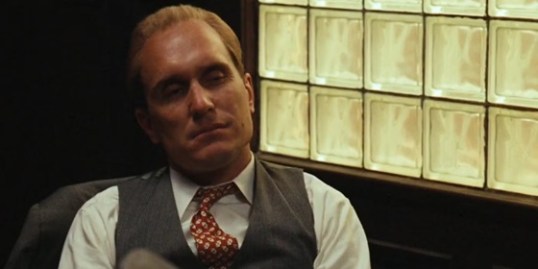
This scene features Caan’s Sonny Corleone in all of his glory, congratulating Michael on his broken jaw and getting on Tom Hagen’s nerves.  Robert Duvall and James Caan were close friends in real life and that friendship definitely comes through in their performances as Tom and Sonny.


SHANE (The TV Series) – Episode 9: Poor Tom’s A-Cold (originally aired November 5th, 1966)


Episode 9 begins with Shane (David Carradine) riding his horse up to a family looking over some dead cattle. It seems their water source has become poisoned and the patriarch of the family, Tom Gary (Robert Duvall), blames Rufe Ryker (Bert Freed). He believes that Ryker is trying to force him off of his land. After Shane heads off to get the family some fresh water, Gary grabs his shotgun and heads to Sam Grafton’s bar looking for Ryker and some payback. When Shane finds out that Gary is going after Ryker, he and Tom Starett (Tom Tully) take off to try to stop a killing. They get there just in time to stop Gary. Ryker tells them that he had nothing to do with the water becoming poisoned, that it’s just a drought and the area is subject to getting alkaline in the water. That’s what actually killed his cattle. 

Three weeks later, Shane, Tom, Marian (Jill Ireland), and Joey (Christopher Shea) are sitting around the table talking about the Garys. Nobody has seen them for a few weeks, so Marian decides she’s going to go visit Ada Gary (Phyllis Love) to check on the family. Ada tells Marian that her husband has become completely obsessed with the idea that Ryker is trying to steal his land and that he spends every night outside with his shotgun. The next day, Ryker rides up and tells Shane that Tom Gary took a shot at him as he was riding his horse along the trail. Moments later, the Gary’s little girl runs up to the ranch and tells Shane and Tom that her pa has shot her mom. When they get to the Gary ranch, Ada is shot but she’s still alive. She tells them that her husband believes everyone, including her, is out to get him, and that he has headed off into the hills with guns and supplies. Shane and Ryker head off to get him, with Ryker wanting him dead…

Episode 9 starts off like a normal episode. It’s very normal for a sodbuster to be into it with Ryker at this point. But after watching the first eight episodes, we believe Ryker when he says he didn’t poison the water supply. We know that’s not his style. As the episode progresses, we begin to learn more about Tom Gary. We hear from his kids and his wife about how scary he is when he’s angry. His kids even tell Joey about their special hiding place outside of the house that they go to when their dad gets mad. We find out that they’ve spent many nights outside hiding from their dad because it’s not as scary as being in the house with him. This is when we realize the episode is going in a completely different direction. Tom Gary isn’t a victim of Ryker and his desire to own all of the land in the valley. The truth is that Tom Gary is abusive and clearly suffering from a mental illness, and the valley is not the place for a man with a violent mental illness. Can you imagine what living hell it must be for his wife and his kids? To be honest, I haven’t ever thought of what it must have been like for those suffering from mental illness, and for those who loved them, back in the old west. And this is from a guy whose wife works with the mentally ill week in and week out. Tom Gary has no help, and his family has no way out. Robert Duvall gives a good performance as Tom Gary, and we definitely see him as a man who has lost control of his faculties and is no longer capable of living in normal society. The writers even go so far as showing Shane as the person who wants to bring him in alive, and Ryker as the person who thinks it will be better for everyone, especially Ada Gary, if he’s dead and she doesn’t have to deal with him any longer. 

Overall, Episode 9 is not an easy episode to watch, and it doesn’t provide any easy answers, which is honestly how it should be. I wasn’t expecting the show to go in this direction, even if just for one episode. This episode makes you uncomfortable and makes you think of things you don’t really want to think of, and I’m guessing that’s probably the point. I give the show credit for that, but I’m also hoping episode 10 will get back to more familiar territory. 

SLING BLADE (1996) – #ArkansasMovies, my celebration of movies filmed in the Natural State!


I love watching movies that are filmed in my home state of Arkansas. We’ve had our share of big stars show up in the Natural State. Burt Reynolds, Billy Bob Thornton, Bill Paxton, Robert De Niro, Dennis Quaid, Matthew McConaughey, Tom Cruise and Andy Griffith have all filmed really good movies here. Martin Scorsese directed one of his very first movies in southern Arkansas. It’s going to be fun revisiting some of my favorite Arkansas movies and sharing them with you!

I live out in the country in Saline County, Arkansas. Back in 1996, Billy Bob Thornton wrote, directed and starred in a little film made right here called SLING BLADE (1996). It’s one of my favorite movies. Here’s a picture of our son and daughter sitting at the same table at Garry’s Drive-In Diner where Billy Bob Thornton and John Ritter sat in the movie. 

Thornton stars as Karl Childers, a developmentally disabled man who was abused as a child by his parents and the other children in the community. At the age of 12, he murdered his mom and her teenage lover Jessie Dixon with a sling blade. After 30 years in the mental hospital, the state decides he’s no longer dangerous, so they give him his stack of books and send him on his way. Karl has no clue of how to get on with his life, but the administrator of the hospital (James Hampton) helps him get a job as a small engine mechanic in his hometown. Hanging out at the laundromat one day, Karl meets a boy named Frank (Lucas Black) and helps him carry his bags of clothes back to his house. The two become friends and start hanging out a lot together. Frank introduces Karl to his mom, Linda (Natalie Canerday), and her gay best friend and boss, Vaughan (John Ritter). Karl also meets Linda’s abusive and alcoholic boyfriend, Doyle (Dwight Yoakam). Karl grows to love Frank and Linda. When he witnesses a drunk Doyle’s abusive and threatening behavior towards Frank and Linda one night, Karl starts thinking that Doyle may really hurt his friends someday. He decides he’s going to make sure that can never happen. 

First and foremost, I love SLING BLADE because of Billy Bob Thornton’s performance as Karl Childers. He had been developing the character of Karl for many years before the movie was made. He loved pulling “Karl” out when he was just hanging out and goofing around with his friends. He based his character on bits and pieces of so many different people in his life. As a native Arkansan, many of the words he says and the way he says them reminds me of different people I’ve known over the years. His opening monologue where he describes the murders of his mother and the young Jessie Dixon is a masterpiece in and of itself. Thornton created a truly unique character, and that’s extremely rare these days. It’s a performance for the ages and continues to inspire terrible imitations to this day!

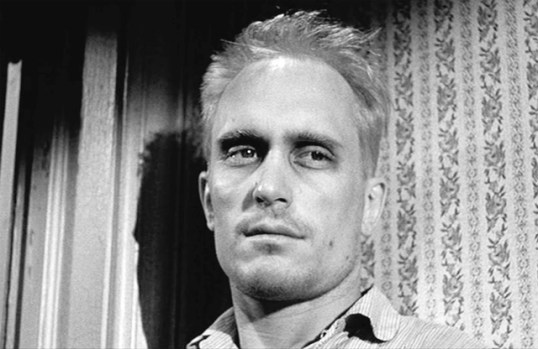
The remainder of the cast in SLING BLADE is so good and natural. Lucas Black is phenomenal as Frank. Billy Bob Thornton has been asked how he got such a great performance from the then 12-year-old boy from Alabama. He says he didn’t get that performance; that’s just the kind of actor Lucas Black is. The relationship between Karl and Frank is the key to the film working, and Black is perfect. Natalie Canerday is excellent as Frank’s mom, Linda. She’s from Russellville, Arkansas, so her accent is authentic, and she just blends perfectly into the film. John Ritter provides a very solid supporting performance as Linda’s gay friend who cares deeply for her and Frank. Thornton was part of the cast of Ritter’s early 90’s sitcom with Markie Post called HEARTS AFIRE. He actually wrote this screenplay while working on the show. The two were great friends off camera and Ritter actually worried that he wouldn’t be able to give a serious performance opposite Thornton’s portrayal of Karl. And then there’s country music superstar Dwight Yoakam as the abusive bully Doyle Hargraves. He’s simply great in the film. He doesn’t just portray Doyle as a monster either. There are many people in this world like Doyle Hargraves, and Yoakam is able to capture that. Director Jim Jarmusch has a memorable cameo in the film. He sells Karl his “french fried potaters.” And the great Robert Duvall even makes a short appearance in the film as Karl’s dad. Duvall was over in the Memphis area filming his own movie A FAMILY THING, which was written by Thornton. He just made the 2 hour drive over for the day and filmed his scene.

Every scene filmed in SLING BLADE is filmed here in Benton and Saline County. The opening and closing scenes between Thornton and actor J.T. Walsh at the “nervous hospital” were filmed at the old Benton Services Center, which is now a psychiatric nursing home just outside of Benton. I’ve driven by the location of the home where Linda and Frank lived. I drive by the laundromat where Karl meets Frank every time I go eat at Garry’s Sling Blade Drive-in. I’ve driven out to the bridge over the Saline River that is prominently featured in the film (see picture below). Heck, I even went to college at the University of Central Arkansas with one of the young ladies who interview Karl at the beginning of the film. I love this movie, and I’m so proud that it was filmed in my backyard. 

SLING BLADE is an incredible film with a truly unique character at its center. The film is at times funny, heartbreaking, violent, slow, awkward, dramatic, and thrilling. It’s a resounding success for Billy Bob Thornton as a director, actor, and writer, even winning him an Oscar for his screenplay. I give this film my highest recommendation. 

I’ve included the trailer for SLING BLADE below:

Past reviews in the #ArkansasMovies series include:

A FAMILY THING (1996) – Robert Duvall & James Earl Jones are brothers!


Just for the hell of it, I went on a little Robert Duvall marathon for his birthday on January 5th. I started the marathon off with his superior western with Kevin Costner, OPEN RANGE (2003). Next up was Duvall’s excellent crime film with Joe Don Baker and Robert Ryan, THE OUTFIT (1973). Duvall was in badass mode in this one. Based on one of Richard Stark’s “Parker” books, this was my first time to watch the film and damn, it was excellent. After that, I watched the bleak THE ROAD (2009), starring Viggo Mortensen, where Duvall just had a small part. It was a downer. I finished off the marathon late in the evening with A FAMILY THING (1996). I remember when this movie came out in the 1990’s because it was co-written by Billy Bob Thornton. Thornton was still a year away from his massive success with the movie SLING BLADE, but I knew him from his writing and co-starring in the superior crime film ONE FALSE MOVE (1991), as well as his small role in TOMBSTONE (1993). As an Arkansan, I knew Thornton was from Arkansas so I had taken a particular interest in him. But I was only 22 years old when A FAMILY THING was released, and a movie about a couple of old guys resolving family issues didn’t seem that appealing to me. As a guy into his 50’s, the entire concept seems more interesting to me now, so I gave it a spin for the first time to close out the marathon.

The story opens up in rural Arkansas with Earl Pilcher Jr. (Robert Duvall) getting the shock of his life when his beloved mother writes a final letter to him and instructs her local pastor to deliver it a few days after her death. The letter tells Earl that his biological mother was a black woman named Willa Mae who died in childbirth. It seems that Earl’s dad had gotten Willa Mae pregnant, and since he came out white, his “mother” was able to raise him as her own without having to tell him the truth. The letter also tells him that he has a half-brother named Ray Murdock (James Earl Jones) living in Chicago. It’s her dying wish that he meet Ray and get to know him as family. Pissed at his dad, and wanting to honor his mom, Earl heads to Chicago to meet Ray. Earl knows that Ray is a cop so he’s able to track him down. They immediately don’t like each other, but through a variety of circumstances, Earl ends up staying at Ray’s house for a couple of days. While there, he meets Ray’s wise, old Aunt T., Willa Mae’s sister (Irma P. Hall) and his sullen son Virgil (Michael Beach). Will the two men continue to push each other away, or will they eventually find the family connection that exists under all that messy past? 

I was surprised how deeply I was affected by A FAMILY THING. I’d be lying if I said I didn’t get teary-eyed a couple of times. The movie may use issues of adultery and racism to get the ball rolling, but more than anything else, it seems to understand that life is messy and that people are messy. We’ll disappoint ourselves, we’ll disappoint other people, and other people will disappoint us. There’s a reason that many people find their love in dogs and cats instead of people, because real relationships can be tough. The truth about my own life is that I could not have appreciated this film in 1996 at only 22 years of age. I was too naive. That’s no longer the case in 2025, and I can now truly relate to this story of two men who share a painful history, find common ground, and decide it’s worth moving forward together because family really does matter.

A movie like A FAMILY THING has no chance of working without a great cast, and this movie is a thespian jackpot. Robert Duvall is spot on perfect as the good ole guy from Arkansas, with a little bit of a racism engrained down deep into his soul, who now has to deal with the fact that he is half black. The scene where he confronts his dad about the lies that had been told to him all his life is as good as it gets. James Earl Jones matches Duvall in the even trickier role as the man who has always known about his “white” half brother Earl. This man has buried his hatred away for Earl’s father for decades, who he blames for the death of his own mother, and now has to deal with those feelings being dredged back up to the surface when Earl shows up in Chicago. Jones perfectly balances his character’s desire to keep the past in the past, with his decency as a man who doesn’t want to just throw Earl out on the street. He eventually softens towards him no matter how much bitterness he has for Earl’s dad. And neither Duvall or Jones even give the best performance in the film. That honor goes to Irma P. Hall as the blind, but extremely perceptive Aunt T. She sees through all of their bullshit, as she states to each of them on different occasions, and encourages them to get to know each other because they’re family. As they play games of racism and bitterness, she reminds them they are brothers no matter the color of their skin. It’s the performance of a lifetime and was at least worthy of an Oscar nomination in my opinion. 

Overall, A FAMILY THING may compress the amount of time and potential therapy it would take to resolve the type of family history presented here, but it does find a certain truth in the power of relationships. Earl and Ray don’t have to recognize the fact that they are brothers. As a matter of fact their lives are just fine without each other. But it’s their willingness to embrace the messy truth and find a way to connect with each other that makes the movie meaningful to me! 

Here’s the trailer for A FAMILY THING.

Song of the Day: The Godfather by Nino Rota


Today, the Shattered Lens wishes a happy birthday to both Robert Duvall and Diane Keaton!

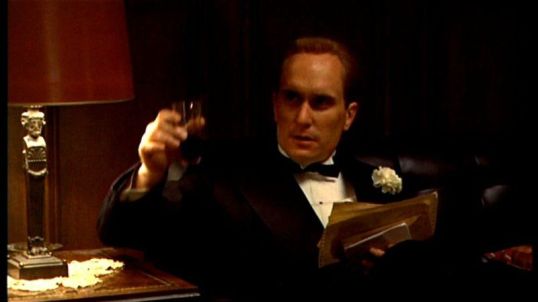
Along with being two of America’s best actors, Duvall and Keaton also co-starred in the first two Godfather films.  They didn’t share many scenes in the second film (though there was at least one Duvall/Keaton scene that was filmed but not included in the final film) but, in the first film, they have a memorable moment in which Keaton (as Kay) asks Duvall’s Tom Hagen to send a letter to Michael in Sicily.  Hagen politely refuses.  When Kay notices a car that has obviously been bombed, Tom replies with bland good cheer, “Oh, that was an accident.  Luckily, no one was hurt!”

In honor of these two amazing performers and my favorite movie of all time, today’s song of the day is Nino Rota’s theme from The Godfather.

Happy 94th Birthday, Robert Duvall!


Robert Duvall is one of the great actors of all time. The picture above is from the 1975 film BREAKOUT, where he co-starred with Charles Bronson and Jill Ireland. I always loved that he worked with Charles Bronson at the height of their popularity.

He has been in so many classic movies. My personal favorites include THE GODFATHER 1 and 2, LONESOME DOVE, and OPEN RANGE. They just don’t make them like Robert Duvall anymore.

Thank you sir for all the enjoyment you’ve brought to my life through your work! Happy Birthday!!