10 (Plus) Of My Favorite DVD Commentary Tracks


It seems like I’m always taking a chance when I listen to a DVD commentary track.  Occasionally, a commentary track will make a bad film good and a good film even better.  Far too often, however, listening to a bad or boring commentary track will so totally ruin the experience of watching one of my favorite movies that I’ll never be able to enjoy that movie in the same way again.  I’ve learned to almost always involve any commentary track that involves anyone credited as being an “executive producer.”  They always want to tell you every single detail of what they had to do to raise the money to make the film.  Seriously, executive producers suck. 

However, there are more than a few commentary tracks that I could listen to over and over again.  Listed below are a few of them.

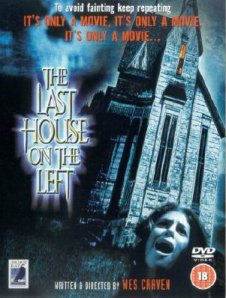
10) Last House On The Left (The Original) — Apparently, there’s a DVD of this film that features a commentary track in which stars David Hess and Fred Lincoln nearly come to blows while debating whether or not this movie should have been made.  The DVD I own doesn’t feature that commentary but it does feature a track featuring writer/director Wes Craven and producer Sean S. Cunningham.  The thing that I love about their commentary is that they both just come across as such nice, kinda nerdy guys.  You look at the disturbing images onscreen and then you hear Cunningham saying, “We shot this scene in my mom’s backyard.  There’s her swimming pool…”  Both Craven and Cunningham are remarkably honest about the film’s shortcomings (at one point, Craven listens to some of his more awkward dialogue and then says, “Apparently, I was obsessed with breasts…”) while, at the same time, putting the film’s controversy into the proper historical context.

9) Burnt Offerings — When Burnt Offerings, which is an occasionally interesting haunted house movie from 1976, was released on DVD, it came with a commentary track featuring director Dan Curtis, star Karen Black, and the guy who wrote the movie.  This commentary track holds a strange fascination for me because it, literally, is so mind-numbingly bad that I’m not convinced that it wasn’t meant to be some sort of parody of a bad commentary track.   It’s the commentary track equivalent of a car crash.  Curtis dominates the track which is a problem because he comes across like the type of grouchy old man that Ed Asner voiced in Up before his house floated away.  The screenwriter, whose name I cannot bring myself to look up, bravely insists that there’s a lot of nuance to his painfully simple-minded script.  Karen Black, meanwhile, tries to keep things positive.  The high point of the commentary comes when Black points out that one actor playing a menacing chauffeur is giving a good performance (which he is, the performance is the best part of the movie).  She asks who the actor is.  Curtis snaps back that he doesn’t know and then gets testy when Black continues to praise the performance.  Finally, Curtis snaps that the actor’s just some guy they found at an audition.  Actually, the actor is a veteran character actor named Anthony James who has accumulated nearly 100 credits and had a prominent supporting role in two best picture winners (In the Heat of the Night and Unforgiven).

8 ) Cannibal Ferox — This is a good example of a really unwatchable movie that’s made watchable by an entertaining commentary track.  The track is actually made up of two different tracks, one with co-star Giovanni Lombardo Radice and one with director Umberto Lenzi.  Lenzi loves the film and, speaking in broken English, happily defends every frame of it and goes so far as to compare the movie to a John Ford western.  The wonderfully erudite Radice, on the other hand, hates the movie and spends his entire track alternatively apologizing for the movie and wondering why anyone would possibly want to watch it.  My favorite moment comes when Radice, watching the characters onscreen move closer and closer to their bloody doom, says, “They’re all quite stupid, aren’t they?”

7) Race With The Devil Race with the Devil is an obscure but enjoyable drive-in movie from the 70s.  The DVD commentary is provided by costar Lara Parker who, along with providing a lot of behind-the-scenes information, also gets memorably catty when talking about some of her costars.  And, let’s be honest, that’s what most of us want to hear during a DVD commentary.

6) Anything featuring Tim Lucas — Tim Lucas is the world’s foremost authority on one of the greatest directors ever, Mario Bava.  Anchor Bay wisely recruited Lucas to provide commentary for all the Bava films they’ve released on DVD and, even when it comes to some of Bava’s lesser films, Lucas is always informative and insightful.  Perhaps even more importantly, Lucas obviously enjoys watching these movies as much as the rest of us.  Treat yourself and order the Mario Bava Collection Volume 1 and Volume 2.
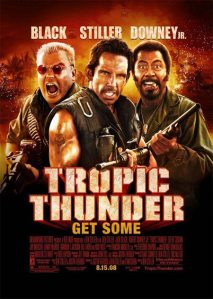
5) Tropic Thunder — The commentary track here is provided by the film’s co-stars, Jack Black, Ben Stiller, and Robert Downey, Jr.  What makes it great is that Downey provides his commentary in character as Sgt. Osiris and spends almost the entire track beating up on Jack Black.  This is a rare case of a great movie that has an even greater commentary track.

4) Strange Behavior — This wonderfully offbeat slasher film from 1981 is one of the best movies that nobody seems to have heard of.  For that reason alone, you need to get the DVD and watch it.  Now.  As an added bonus, the DVD comes with a lively commentary track featuring co-stars Dan Shor and Dey Young and the film’s screenwriter, Bill Condon (who is now the director that Rob Marshall wishes he could be).  Along with providing a lot of fascinating behind-the-scenes trivia, the three of them also discuss how Young ended up getting seduced by the film’s star (Michael Murphy, who was several decades older), how shocked Condon was that nobody on the set seemed to realize that he’s gay, and why American actors have so much trouble speaking in any accent other than their own.  Most memorable is Young remembering the experience of sitting in a theater, seeing herself getting beaten up onscreen, and then listening as the people sitting around her cheered.

3) Imaginationland — As anyone who has ever listened to their South Park commentaries knows, Matt Stone and Trey Parker usually only offer up about five minutes of commentary per episode before falling silent.  Fortunately, those five minutes are usually hilarious and insightful.  Not only are Parker and Stone remarkably candid when talking about the strengths and weaknesses of their work but they also obviously enjoy hanging out with each other.  With the DVD release of South Park’s Imaginationland trilogy, Matt and Trey attempted to record a “full” 90-minute commentary track.  For the record, they manage to talk for 60 minutes before losing interest and ending the commentary.  However, that track is the funniest, most insightful 60 minutes that one could hope for.

2) Donnie Darko — The original DVD release of Donnie Darko came with 2 wonderful commentary tracks.  The first one features Richard Kelley and Jack Gyllenhaal, talking about the very metaphysical issues that the film addresses.  Having listened to the track, I’m still convinced that Kelley pretty much just made up the film as he went along but its still fascinating to the hear everything that was going on his mind while he was making the film.  However, as good as that first track is, I absolutely love and adore the second one because it features literally the entire cast of the movie.  Seriously, everyone from Drew Barrymore to Jena Malone to Holmes Osborne to the guy who played Frank the Bunny is featured on this track.  They watch the film, everyone comments on random things, and it’s difficult to keep track of who is saying what.  And that’s part of the fun.  It’s like watching the film at a party full of people who are a lot more interesting, funny, and likable than your own actual friends.

1) The Beyond — This movie, one of the greatest ever made, had one of the best casts in the history of Italian horror and the commentary here features two key members of that cast — Catriona MacColl and the late (and wonderful) David Warbeck.  The commentary, which I believe was actually recorded for a laserdisc edition of the film (though, to be honest, I’ve never actually seen a “laserdisc” and I have my doubts as to whether or not they actually ever existed), was recorded in 1997, shortly after the death of director Lucio Fulci and at a time when Warbeck himself was dying from cancer.  (Warbeck would pass away two weeks after recording this commentary).  This makes this commentary especially poignant.  Warbeck was, in many ways, the human face of Italian exploitation, a talented actor who probably deserved to be a bigger star but who was never ashamed of the films he ended up making.  This commentary — in which MacColl and Warbeck quite cheerfully recall discuss making this underrated movie — is as much a tribute to Warbeck as it is to Fulci.  Highpoint: MacColl pointing out all the scenes in which Warbeck nearly made her break out laughing.  My personal favorite is the scene (which made it into the final film) where Warbeck attempts to load a gun by shoving bullets down the barrel.  The wonderful thing about this track is that Warbeck and MacColl enjoy watching it too.

Review: Iron Man 2 (dir. Jon Favreau)


In 2008 Marvel Comics released it’s very first in-house financed film through it’s Marvel Studios. That film was called Iron Man. It was a film that definitely was given buzz and hype by the comic book crowd, but wasn’t highly-anticipated by the general public. Even the prospect of Robert Downey, Jr. as the character of Tony Stark was received by the fanboys with trepidation and by the rest of the film-going public with apathy. When the film finally came out the reaction wasn’t what industry experts had expected. The film became a bonafide hit and it was all due to one man. That man happened to be the very person people thought was wrong for the part: Robert Downey, Jr. His performance as Tony Stark and as Iron Man was one of those which makes a franchise. Robert Downey, Jr. was born to play Tony Stark and it showed on the screen. The film was a major success not just for RDJ but for the fledgling Marvel Studios.

It is now 2010 and the follow-up to Iron Man has finally come out. The road to this second film wasn’t as difficult and mired in trepidation as the first, but now people wondered whether the first film was just a fluke and would lightning be caught once again in the proverbial bottle. The complaints this time around prior to the film’s release was that there were too many new characters both villains and allies being introduced. Would the action scenes be as average and all-too-brief as they were in the first film? Would Robert Downey, Jr. be able to handle the pressure of being the foundation of a world Marvel Studios was building with not just the Iron Man franchise but the other films coming down the pipeline like Thor and Captain America then the big boy in the room: The Avengers. These were all credible worries, but in the end this sequel made a great leap forward into calming down these fears. Iron Man 2 definitely lives up to the first film and improves on certain weaknesses of the first film, but not all which just keeps this sequel from being on the same level as past Marvel superhero sequels like Spider-Man 2 and X2.

The film opens up literally just as the first film ends as we see a Russian TV rebroadcasting Tony Stark declaring himself as Iron Man in front of a crowd of reporters. It’s who is watching this broadcast that moves the story along from start to finish. We meet Ivan Vanko (played with inherent menace by Mickey Rourke) who finds out from his dying father that Tony stark and Iron Man was to blame for their family’s hardship and lost legacy. That very theme of patriarchal and familial legacy becomes a running theme throughout the film. This opening intro sequence shows the audience that Tony Stark wasn’t the only one capable of creating the very power source keeping him alive and powering up the Iron Man suit. The extended intro also does a good job of introducing a main character right from the start and giving us his background, motivations and skill set and why he makes a credible opponent for a one-man army which Iron Man truly has become. But Ivan Vanko, or Whiplash as the credits have dubbed him, won’t be the only problem Tony Stark has to face throughout the film. All the problems he’s having to deal with since becoming Iron Man and publicly declaring himself as such comes from that very declaration.

The U.S. government now sees Iron Man as a problem, despite having stabilized the world by his very existence, and has been trying to force Tony Stark to relinquish the suit and the technology necessary to operate and replicate the Iron Man suit/weapon. Whether it’s his self-inflated and fame-fed ego or his new-found ideals to rewrite his family’s warmongering and war-profiteering past, Tony Stark refuses to give up the suit and even embarrasses the senator (played by Garry Shandling) heading up the subcommittee trying to get Stark to relinquish the suit. The other more immediate and personal problem Stark now has to find a solution for happens to be the very thing keeping him alive. The minituarized ARC Reactor in his chest is gradually poisoning him due to it’s palladium core. While the poison levels slowly builds as he continue to wear the reactor it jumps up in levels whenever he uses the suit. Without a suitable replacement to the toxic palladium all the good work Tony Stark thinks he has done will be for naught as death was something he couldn’t fight against.

Right in the middle of both Vanko and the US government sits one Justin Hammer of Hammer Industries. Hammer (played with weasly and loser aplomb by Sam Rockwell) runs a competing arms manufacturer to Stark Industries. A company who took the opportunity of Stark ending all arms manufacturing and sales to become the government’s newest primary defense contractor. Hammer also looks to replicate the Iron Man suit and arc reactor technology either in-house or through less reputable means. Hammer is instrumental in giving Vanko and the government the resources needed to take on Tony Stark. Most of the comedic aspect of the film involves Hammer trying to help out these two competing antagonists with hilarious and, in the end, lethal results.

Not everything about the film centers on Stark’s problems. The film also works in further building up and rounding out the cast of characters supporting Tony Stark. Pepper Potts has now turned from being Tony’s personal aide and secretary to actually becoming Chairman and CEO of his company by his choice. His military liaison and best friend Lt. Col. James Rhodes (Don Cheadle replacing Terence Howard for this sequel in the role) returns with conflicted agendas as he’s caught between his friendship to Stark and his commitment as an Air Force officer to the military and this to the U.S. government. We get more screentime with S.H.I.E.L.D.’s Nick Fury as he appears in the middle and very end of the film. Another ally to join this core group is Natasha Romanoff as the Black Widow (played by Scarlett Johannson). These people try their best to keep Tony Stark grounded and focused throughout the film.

Iron Man 2 pretty much equals what the first film did in providing the audience with some very good performances from all the actors. Great performances despite another script which definitely needed some help in tightening up the story and it’s many converging subplots. While the screenplay done up by screenwriter Justin Theroux is not bad it does fail to capitalize on the very good origin story of the first. The dialogue was pretty average with some lines bordering on uninspired. The adage of great actors making even the worst script sound great definitely stands with the one for this film.

Robert Downey, Jr. returns to elevate the script and dialogue with his very presence and personality. RDJ is Tony Stark and once again proves that he was born for to play the character and personify it on-screen. Every screentime he has with the rest of the film’s actors pop and sizzle especially those with the two female support of Gwyneth Paltrow as Pepper Potts and Scarlett Johannson as the Black Widow. The chemistry between RDJ and Paltrow has improved even though it was already one of the strongest positives of the first film. We see their relationship evolve beyond the mutual attraction from the first film to something much stronger this second time around. Paltrow’s performance was more defined as she goes from being just Stark’s gal Friday to one in a position of power. She becomes the everyman/woman who bears witness to the fantastic going-ons of a world suddenly becoming full of superheroes and the subsequent villains and enemies.

While the two leads in RDJ and Paltrow continue to do a great job in their roles, and the rest of those returning and even the newest faces keeping up with their own performances, the one actor who almost steals the film has to be Sam Rockwell as Justin Hammer. Some have called his performance as being too campy and over-the-top. I think his work as Justin Hammer was actually one of the best in the whole film. It’s right up there with RDJ’s work as Tony Stark. Where people saw a character that seemed over-the-top was actually an actor playing the role exactly how it should be played. Hammer was a character always in the shadow of the more popular, charismatic and confident Tony Stark. Hammer thought himself equal to Stark in every way when in truth his mannerisms and affectations only made him seem more the loser each and every time he was on-screen.

One thing which the film improved on over the first was the staging of it’s action sequences and the length with which they lasted. In the first film, the action was quite minimum to say the least as the film really focused on Iron Man’s origin. While the action in the first film wasn’t bad in any way the fact that they didn’t last long was a sore point for even the ardest fan of that film. This time around the action had better staging and a much improved choreography. The visual effects work by Legacy Effects Studio (formerly known as Stan Winston Studios) improved on the original with the different Marks of Iron Man suits looking distinct whether it was the newest Mark VI worn by Stark in the climactic battle or the “pimped-out” War Machine worn by Rhodes.

One thing which should excite comic book fans, and especially those who fanatically follow the Marvel line of titles, is the many little references to future Marvel Studios titles. While the script itself could be seen as average with some above-average moments it still was coherent enough that all the little easter eggs about Thor, Captain America and The Avengers didn’t seem out of place. This sequel played less like a sequel to a stand-alone franchise, but more like another piece to the world Marvel was building and adding to with each new film. It is for this very reason that I’m more than willing to give some of the deficiencies in the story and dearth of new characters a break.

I think it would be difficult to look at any Marvel Studio film as a stand-alone or even for a franchise to be self-contained. Both Iron Man films belong in a world where other characters with their own films will inhabit and interact with each other. Thus we get all these little references even though it may bloat up the particular film they appear in. The final judgement will come once all the films planned have been released and the overall effect and payoff has been met or not.

In the end, Iron Man 2 was a sequel which more than matched it’s predecessor but still had problems in its screenplay work to keep it from being great. The performances were excellent from everyone involved with some even elevating their roles to higher levels. The action was better than the original with some great work from the visual effects studios whose task was to keep the action coherent and easy to follow (unlike Michael Bay’s action work). For those who follow the comics this film should definitely be a must-see and shouldn’t disappoint. For the casual viewer the film should be a fun and action-filled two-hours that also happens to have some very great actors doing good to great work. I must also recommend that people not leave the theater once the end credits begin to roll. Like the previous film in the franchise there is a suprise scene at the very end of the credits which should be seen as it hints at a future Marvel superhero film and one that will tie in with this particular franchise.

Iron Man 2: Second Official Trailer


May 7, 2010 is still two months away but it sure is a long wait after seeing the second official trailer for this summer’s most anticipated blockbuster. I am talking about Marvel’s Iron Man 2. The trailer premiered on the post-Oscar Jimmy Kimmel Show episode and I will say that it was the highlight of the night.

There’s been some concern about Iron Man 2 after the release of the first official trailer. Some said that trailer gave them feelings that the sequel was going to be way over-the-top and almost crossing the line into ridiculous. Others thought there may have been too many bad guys involved. Then there are those who are still bitching about the look of the main villain, Mickey Rourke as Whiplash.

I’d like to say that the second trailer went a long way in dispelling some of the concerns. There were more scenes about Tony Stark and the Iron Man suit (in its many variations). There seemed to be more explained about Whiplash and his role as the main villain. Even Sam Rockwell’s Justin Hammer character comes to the forefront. The clincher was the sequence when the Hammer Iron Men showed up to battle not just Iron Man but the War Machine. This sequel may not be all about the Iron Man story-arc called “Armor Wars” but it sure seems to borrow a lot from that arc and, for that, this self-confessed comic book geek is giddy. GIDDY I SAY!

Oh yeah, one last thing: On-The-Go Mk. V Iron Man suit!