Horror on TV: Spectre (dir by Clive Donner)


Produced by Gene Roddenberry and directed by Clive Donner, 1977’s Spectre was a pilot film for a television series about an occult detective (Robert Culp) who solved supernatural mysteries while dealing with a curse that had been put on him by the demon, Asmodeus.

In this film, Culp’s William Sebastian and his associate, Dr. Ham Hamilton (Gig Young) travel to the UK to investigate a supernatural case involving an old family.  Despite the efforts of a succubus and a cursed airplane, Sebastian and Ham are determined to solve the mystery.  John Hurt appears as a member of the cursed family.

This pilot was not picked up and developed into a series but it was popular enough that it was released as a theatrical film in Europe.

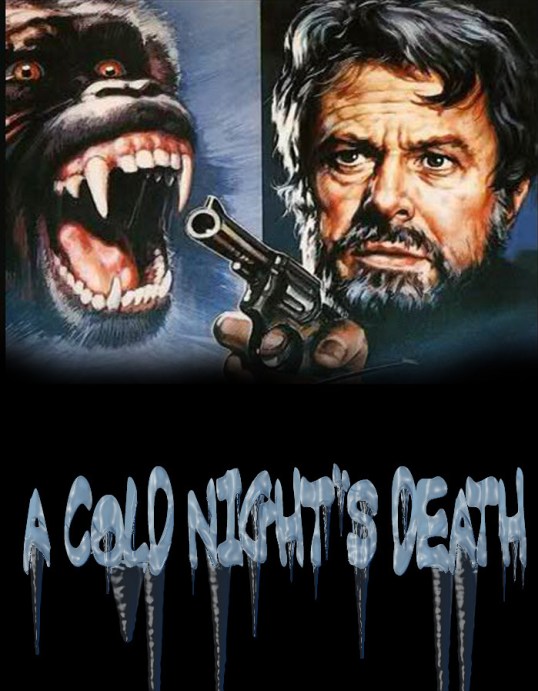
Horror on TV: A Cold Night’s Death (dir by Jerrold Freedman)


For today’s Horror on the Television, we have a made-for-TV movie from 1973.  As you can tell from the video below, it originally aired as a part of ABC’s Tuesday Night At The Movies.

A Cold Night’s Death tells the story of two scientists (Eli Wallach and Robert Culp) who are sent to a remote research station to investigate the apparent disappearance of another scientist.  They soon come to suspect that they may not be alone and soon, paranoia rears its ugly head.  With its frozen landscape and its ominous atmosphere, this movie feels like a distant cousin to John Carpenter’s The Thing.

Late Night Retro Television Review: Highway to Heaven 3.21 “Parents’ Day”


Welcome to Late Night Retro Television Reviews, a feature where we review some of our favorite and least favorite shows of the past!  On Thursdays, I will be reviewing Highway to Heaven, which aired on NBC from 1984 to 1989.  The entire show is currently streaming on Tubi and several other services!

This week, Mark and Jonathan become narcs!

Episode 3.21 “Parents’ Day”

(Dir by Michael Landon, originally aired on February 25th, 1987)

Robert Culp plays one of the worst characters ever in this week’s episode of Highway to Heaven.

Culp plays Ronald James, a news anchor who is known for his fiery anti-drug editorials.  His teenage son, David (Lance Wilson-White), is a student at an exclusive boarding school.  When a joint is found in David’s dorm room, Ronald comes down hard on his son.  Ronald says David should be ashamed of himself.  Ronald says that David has brought dishonor to the family.  Ronald grounds David for four weeks.

After attending an anti-drug lecture delivered by newly hired narcotics detective Mark Gordon, David decides to call the police and tell them about the cocaine that is hidden in his family’s garage.  The cocaine belongs to Ronald but, when Ronald is confronted by the police, he announces that it must belong to David.  When it becomes obvious that Ronald’s job is at risk, he tells David to take the blame.  David says he’ll do it if Ronald promises to stop using.  Ronald agrees.

David takes the blame….

….and Ronald keeps on using!

Seriously, what a scumbag!

While Ronald is disappointing everyone, Jonathan — who is also working as a narcotics detective — pressures the local boarding school drug dealer, Brad Dietrich (Bill Calvert), to stop dealing.  Brad laughs off Jonathan’s threat.  Come back with a warrant, Brad says.  Then Brad’s girlfriend overdoses on the cocaine that Brad gave her.

Finally, after David nearly drinks himself to death, Ronald goes on the news and admits that he’s a drug addict.  He then says that parents have to step up and do a better job.  That’s fine, Ronald, but you know what?  YOU’RE A DRUG ADDICT WHO FRAMED YOUR OWN SON!  You don’t get to be a moral authority!

As you can probably guess, there was not a subtle moment to be found in this episode.  On the one hand, the message was obviously heartfelt.  That’s kind of a given when it comes to Highway to Heaven.  With every episode, it’s obvious that Michael Landon was sincerely trying to make the world a better place.  On the other hand, this episode was so heavy-handed that it sometimes verged on camp.  Culp was very believable as someone who was totally coked up.  The kid playing his son, on the other hand, was considerably less convincing.  It also doesn’t help that there’s a massive hole in the middle of the plot.  If the police were really unsure about who had brought the cocaine into Ronald’s house, they could have just drug-tested both Ronald and David to see who was snorting.  As well, seen from a modern perspective, it’s hard to really buy into the show’s argument that parents and children should be constantly calling the police on each other.  Today we know that the attempt at a zero tolerance war on drugs made the situation even worse.  This episode’s suggestion that snitching on loved ones is the answer reminded me of the worst excesses of the COVID era.

As I mentioned earlier, the episode ends with Ronald making an impassioned plea to parents to get serious about teenage drug use.  Hopefully, he was arrested as soon as the cameras were turned off.


Retro Television Review: The Love Boat 4.4 “Target Gopher/The Major’s Wife/Strange Honeymoon/The Oilman Cometh”


Welcome to Retro Television Reviews, a feature where we review some of our favorite and least favorite shows of the past!  On Wednesdays, I will be reviewing the original Love Boat, which aired on ABC from 1977 to 1986!  The series can be streamed on Paramount Plus!

This week’s cruise is all about simple misunderstandings that could be easily cleared up by people just not acting stupid for a few seconds.  Unfortunately, that’s too much to ask.

Episode 4.4 “Target Gopher/The Major’s Wife/Strange Honeymoon/The Oilman Cometh”

(Dir by Roger Duchowny, originally aired on November 8th, 1980)

Lo and beware!  Here comes the idiot plot!

As I’ve mentioned many times in the past, there’s nothing that bothers me more than an idiot plot.  That is when a TV show — usually a sitcom — builds an entire episode out of a misunderstanding that could be easily cleared up by everyone just not being an idiot.  These are the type of episodes where everyone talks over each other and runs off before they can get a full explanation of what’s happening.  They are frustrating to watch.

This episode of The Love Boat has not just one idiot plot but several of them.  I usually love this show but this episode made me cringe from start to finish.

Consider:

Oilman Mason Fleers (Dale Robertson) has chartered the boat for his company.  He is not only giving everyone a free cruise but he hopes that he’ll be able to sign a big oil deal with Prince Hassan (Pat Harrington, Jr.), who is excited to see the ocean because “my country is covered in sand.”  Mason has arranged for the Dallas Cowboys Cheerleaders (playing themselves) to provide entertainment.  Even though the cheerleaders were on the ship last season, everyone acts as if this is the first time they’ve ever seen them.  Doc Bricker is especially excited to see them, even though it’s debatable that a glamorous NFL cheerleader from a land-locked city would ever fall for a middle-aged guy who works on a boat for a living.

Prince Hassan boards the boat looking for a new wife.  (He already has several but he specifically wants an American.)  When Mason’s assistant, Ted (David Cassidy, with a rather unflattering mustache), attempts to give Prince Hassan the gift of a computerized chess game, Prince Hassan thinks that Ted is actually giving him Ted’s girlfriend, Janet (Janet Gunn).  Prince Hassan thinks that Janet will be his new wife and he immediately makes plans for the marriage ceremony to take place on the boat.  Ted, Captain Stubing, and Janet could clear all this up by telling Prince Hassan the truth but instead, they just try to hide Janet from him.  And then Ted decides that maybe he could win Janet back from the Prince.

One word for all of this: Idiot.

Mason, for his part, falls for one of the cheerleaders (Jayne Ann Maxwell), and pressures her to spend time along with him.  Jayne reacts to this by randomly declaring her love for Gopher.  Gopher plays along so Mason decides to get revenge by walking up behind Gopher, surprising Gopher, and then collapsing to the deck and pretending that Gopher knocked him out.  Gopher is suspended from his duties while the cruise line investigates.  There were plenty of people on the deck at the time but no one steps forward to say that Mason clearly faked getting hit.  Or maybe someone could point out that Mason has spent the entire cruise harassing a cheerleader who is not interested in him.  But no one does.  Why?

Because this is an idiot plot.

Walter Henson (Al Corley) was planning on spending his honeymoon on the cruise but then he found out his wife-to-be cheated on him.  He left her at the altar.  He still takes the cruise but he brings his brother, Hud (Mark Pinter), with him.  When Doc, Isaac, and Gopher learn that Hud and Walter are both in the honeymoon suite, they assume that they’re a couple and, because this episode is 44 years old, start giving each other funny looks.  It doesn’t occur to anyone that Walter and Hud might have the same last name because they’re related.  When Hud falls for a cheerleader, he continually makes excuses to keep her from finding out that he’s traveling with his brother.  Why?

IDIOT PLOT!

Major Ross Latham (Robert Culp) boards the boat with his shy and modest wife, Nara (Nobu McCarthy).  Surprise!  Gloria Beaumont (Jo Ann Pflug) is also on the boat.  She and the major are old friends and soon, they’re spending all of their time together.  Julie and Vicki assume that Gloria is trying to steal Ross away from Nara.  Nara doesn’t suspect a thing.

Idiot.  Plot.

Needless to say, everything work out in the end but this episode leaned way too heavily on everyone being an idiot.  The Love Boat should be entertaining, not frustrating.  This was one of those episodes that just left me wanting to jump overboard.

Retro Television Reviews: Turn-On 1.2 “Episode Two”


Welcome to Retro Television Reviews, a feature where we review some of our favorite and least favorite shows of the past!  On Thursdays, I will be reviewing Turn-On, which aired on ABC in 1969.  The entire show is currently streaming on YouTube!
After watching and writing about the only aired episode of this show, I thought I was done with Turn-On.

However, after I published last week’s review, my friend Mark informed me that there was a second episode.  It never aired, even though it was listed in the official schedule before the pilot was so universally despised that ABC announced the show’s cancellation before the episode had even ended.  However, the second episode is available on YouTube and …. well, I am a completist.  As much as that first episode gave me a migraine, I felt an obligation to check out the second episode and see what direction that show would have followed if it hadn’t been abruptly canceled halfway through its premiere.

So, with that in mind, let’s take a look at the second episode of Turn-On!

Episode 1.2 “Episode #2”

(Dir by Mark Warren, unaired, though originally scheduled for Febraury 12th, 1969)

The second episode of Turn-On! opens much like the first.  Two computer technicians sit behind the console that will be programming the next 30 minutes.

One of them asks, “What do you think would happen if (George) Wallace had been elected president?”

“The Mason-Dixon Line would now be the Canadian border,” the other replies.

(The joke’s on him.  The Mason-Dixon line moved up to Boston, even without Wallace in the White House.)

The technician turns a key.  Robert Culp and Mel Stewart appear, standing against a white background.

“Why can’t I ever get the girl?” the black Stewart asks.

“There are some things the public isn’t ready for,” the white Culp replies before running off with a young black woman.

A few second later, Culp reappears, sitting behind an anchor desk and sign that reads, “Register communists, not firearms.”  Culp reads a news story, announcing that a man was shot by a “38 caliber communist.”

“Who knows what evil lurks in the hearts of men?” a voice asks.  “I do,” Theresa Graves replies.

A woman plays a trombone while sitting on artificial turf.  “I play even better on grass,” she says.

An astronaut attempts to enter a toilet stall, just for a voice to say, “I’m sorry, you have reached a disconnected toilet.”

A bunch of Klan members sit in a theater and look bored.

Mel Stewart plays with an abacus.

A man with a waxed mustache says that he just read Lady Chatterley’s Lover.  “I’m going right out to buy a greenhouse.”

Mel Stewart is sworn in as “the first black Justice of the Supreme Court.”  (Uhmm …. hello?  Thurgood Marshall anyone?  He’d been on the Court for two years at this point.)  After administering the oath to Stewart, a judge shakes his hand and says, “Congratulations, boy.”  Stewart does a double-take while silly sound effects play.

A cartoon tank rolls by, with a sign that reads, “Go home, everyone!”

“It’s time to Turn-On!” an old lady on a motorcycle declares.

The man with the mustache introduced tonight’s hosts, Robert Culp and France Nuyen.  Culp and Nuyen toss a bomb back and forth.

Mel Stewart paints a Campbell Soup can but is told by a Renaissance art critic that, “You are too ahead of your time.”

An executive has a tantrum at his desk.

A boss is told that his son has been bothering everyone in the office.  “Boys will be boys!” the boss.  “He’s also asking everyone why we don’t have a union!”  “Get rid of him.”

Mel Stewart appears behind a desk, announcing that you should never put “an unqualified man in office just because he’s black.”

A woman in a tattered dress complains that her detergent is hungry.

A cardboard monk carries a sign that reads, “Sanctify Fanny Hill.”

A policeman announces that muggings are down from last year and that the muggers need to try harder.

The man with the waxed mustache appears in a bridal gown and reads a letter from a woman wanting to know why men have not been molesting her like they have her friends.  “Your time will come,” he says, “Wear a tight sweater and hang out in a seedy neighborhood.”

A cardboard priest carries a sign that reads, “Candid Camera Bugs Confessionals.”

Robert Culp appears as a anchorman and says that the Commission’s Report on Civil Disorders is so shocking that another commission has been appointed.

“Money is the only that means anything you!” a wife yells at her husband, “What about love!?”  “I love money,” he replies.

(At this point, Turn-On‘s humor basically just feels like scrolling a neurotic communist’s twitter timeline.)

A blonde woman (who is introduced as being “The Body Politic”) says that she is forgiving the president.

A Southern gentleman says that “We will oppose integration by burning crosses and all other lawful means.”

Robert Culp plays a doctor who tells Mel Stewart that he’s dying and then gives him a cigarette.

“Does your wife believe in the pill?” a voice asks.  “My kids sure don’t.”

“This little piggy went to market,” a cop says as he plays with a corpse’s toes in a morgue.

A naked man (seen from behind) paints a clothed woman.

A cardboard monk carries a sign that asks us to “Pray for Rosemary’s Clooney.”

Hamilton Camp wears a straight-jacket and announces that all public assemblies have been banned in the name of free speech.

Two Depression-era bank robbers rent a car from Robert Culp.

An old woman cut-out carried a sign that reads, “Get a lot when you’re young,” which really isn’t bad advice, to be honest.

The Body Politic woman says that she’s opposed to “unilateral withdrawal.”

“Due to an oversupply, there’s a shortage!” Hamilton Camp declares.

Robert Culp, as the anchorman, says that the city council had to postpone discussion on absenteeism due to a lack of a quorum.

“I got the job!” Mel Stewart tells France Nuyen.  “I thought they didn’t hire people of your race,” Nuyen replies.  Stewart whispers, “I lied.”

“IBM plays monopoly,” reads the sign being carried by a cardboard cut-out.

A psychiatrist tells his patient that it will cost $500 for him to help her break her dependence on her father.  He suggests that she borrow the money from her father.

And it just keeps going and going.  There’s an extended sequence of people having dumb conversations while facing each other nose-to-nose.  At one point a cardboard cut-out carries a sign that announces, “The Wages of Sin Are $2.00.”

Robert Culp brags about how he cured himself of vanity.

And so it goes until eventually, the computer is turned off and the episode ends.

This unaired episode was actually a slight improvement over the episode that actually did air.  A lot of this is because Robert Culp, with his longish hair and snarky delivery, was a better fit for the show’s sensibility than the more straight-laced Tim Conway.  (Conway often seemed confused by his episode’s humor while Culp, on the other hand, comes across as being someone who appreciated a good “grass” joke.)

At the same time, for all the quick cuts and two-line skits, there was an odd blandness to this episode and one could already see the pitfalls that would have appeared if the show hadn’t been canceled.  For all of the show’s attempts to be hip and unpredictable and random, it ultimately all felt a bit formulaic.  By the end of the second episode, the abrupt cuts to people looking shocked or smiling at the camera felt just as hackneyed as the laugh tracks that appeared on other television shows.  What is shocking once is amusing twice and boring the third time.

Anyway, that’s it for Turn-On!  It’s a show that was definitely a product of its time and, as a history nerd, I appreciate it as a time capsule.  But it’s also easy to see why audiences in 1969 were not exactly turned on by Turn-On.

Next week, we’ll start in on a show that aired more than one episode!
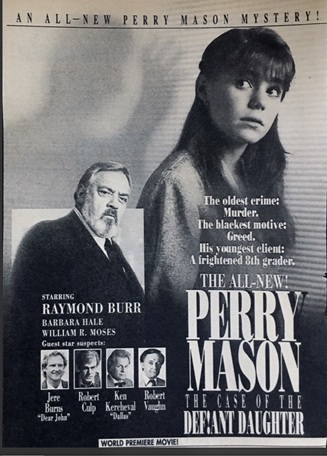


Horror on the Lens: Spectre (dir by Clive Donner)


Produced by Gene Roddenberry and directed by Clive Donner, 1977’s Spectre was a pilot film for a television series about an occult detective (Robert Culp) who solved supernatural mysteries while dealing with a curse that had been put on him by the demon, Asmodeus.

In this film, Culp’s William Sebastian and his associate, Dr. Ham Hamilton (Gig Young) travel to the UK to investigate a supernatural case involving an old family.  Despite the efforts of a succubus and a cursed airplane, Sebastian and Ham are determined to solve the mystery.  John Hurt appears as a member of the cursed family.

This pilot was not picked up and developed into a series but it was popular enough that it was released as a theatrical film in Europe.

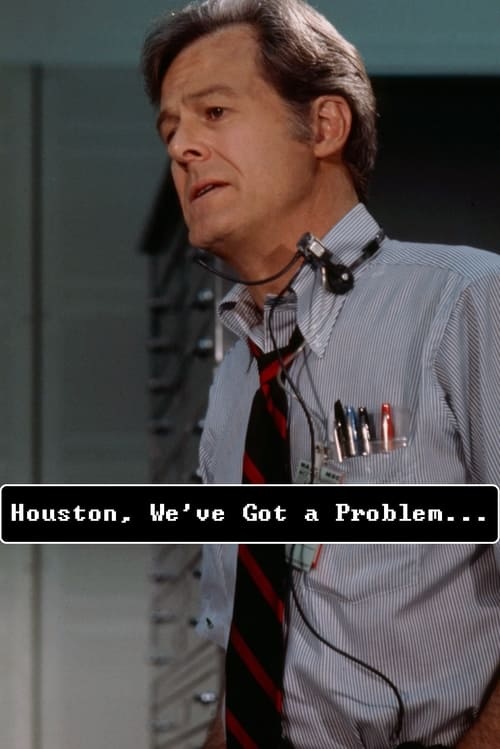
Retro Television Reviews: Houston, We’ve Got A Problem (dir by Lawrence Doheny)


Welcome to Retro Television Reviews, a feature where we review some of our favorite and least favorite shows of the past!  On Sundays, I will be reviewing the made-for-television movies that used to be a primetime mainstay.  Today’s film is 1974’s Houston, We’ve Got A Problem!  It  can be viewed on YouTube!

The year is 1970 and Apollo 13 is the latest manned NASA mission into space.  The head of the mission of Jim Lovell and the destination is the Moon.  Unfortunately, the American public has gotten so used to the idea of men going to the Moon that hardly anyone is paying attention to Apollo 13.  That changes when Lovell contacts mission control in Houston and utters those famous words, “Houston …. we’ve had a problem.”  An oxygen tank has exploded, crippling the spacecraft and leaving the three men in danger.  If Houston can’t figure out how to bring them home, Apollo 13 could turn into an orbiting tomb.

Yes, this film tells the story of the same crisis that Ron Howard recreated in Apollo 13.  The difference between Houston, We’ve Got A Problem and Apollo 13 (beyond the fact that one was a big budget Hollywood production and the other a low-budget made-for-TV movie), is that Apollo 13 largely focused on the men trapped in space while Houston, We’ve Got A Problem is totally Earthbound.  In fact, Jim Lovell does not even appear in the ’74 film, though his voice is heard.  (The film features the actual communications between the crew and Mission Control.)  Instead, the entire film follows the men on the ground as, under the leadership of Gene Kranz (Ed Nelson), they try to figure out how to bring the crew of Apollo 13 home.  Houston, We’ve Got A Problem is a far more low-key film than Apollo 13, one that features narration from Eli Wallach to give it an effective documentary feel but one that also lacks the moments of wit and emotion that distinguished Apollo 13.  

NASA cooperated with the making of the film and it works best when it focuses on the men brainstorming on how to solve the biggest crisis that the American space program had ever faced to that date.  The film is less effective when it tries to portray the effects of the men’s work on their home lives.  Sandra Dee is wasted as the wife who can’t understand why her engineer husband (reliably bland Gary Collins) can’t spend more time at home.  Clu Gulager plays the guy who fears he’s missing out on time with his son.  Robert Culp plays the man with a heart condition who places his hand over his chest whenever anything stressful happens.  Steve Franken has to choose between his religious obligations and his obligation to NASA.  The melodrama of those fictional moments are awkwardly mixed with the based-in-fact moments of everyone calmly and rationally discussing the best way to save the crew.  Jim Lovell, as a matter of fact, complained that Houston, We’ve Got A Problem did a disservice to the flight controllers by presenting them all as being hopelessly inept in their lives outside of mission control.  (Lovell was reportedly much happier with Apollo 13.)

Because it features the actual conversations between the crew and Mission Control, Houston, We’ve Got A Problem is interesting as a historical document but it never escapes the shadow of Ron Howard’s better-known film.

Retro Television Reviews: See The Man Run (dir by Corey Allen)


Welcome to Retro Television Reviews, a feature where we review some of our favorite and least favorite shows of the past!  On Sundays, I will be reviewing the made-for-television movies that used to be a primetime mainstay.  Today’s film is 1971’s See The Man Run!  It  can be viewed on YouTube!

Two criminals have kidnapped the 18 year-old daughter of Dr. Thomas Spencer (Eddie Albert).  They call the number that they have for Dr. Spencer and they tell the man that answers that they are going to kill his daughter unless he pays them a large amount of money.

What the criminals don’t know is that Dr. Spencer has recently changed his phone number and his old number was given to a struggling actor named Ben Taylor (Robert Culp).  When the kidnappers call, Ben has just gotten out of bed and he’s still a bit too groggy to explain to them that they have the wrong number.  Though he suspects that the whole thing might be an elaborate prank, he decides to call the real Dr. Spencer and tell him about the phone call.  However, when the doctor answers, Ben does such a bad job of explaining the situation that Dr. Spencer thinks that Ben is the kidnapper.  Begging Ben not to hurt his daughter, Dr. Spencer says that he’ll pay anything and that he won’t even call the police.

This gives Ben and his wife, Joanne (Angie Dickinson), an idea.  When the kidnappers call back, Ben pretends to be Dr. Spencer.  After the kidnappers tell Ben the amount of money that they want, Ben then calls Dr. Spencer and, pretending to be the kidnapper, relays the message but he also adds an extra $50,000 to the ransom demand.  Ben and Joanne’s plan is to collect the ransom from Dr. Spencer, take their cut, and then deliver the ransom to the kidnappers.

It’s a complicated plan and, throughout the course of the day, both Ben and Joanne have their moments of doubt.  But they stick with it, because Joanne wants the money and Ben wants the chance to not only prove himself as an actor but to also show Joanne that he’s not the loser that she insists that he is.  Complicating matters, though, is that Dr. Spencer’s wife (June Allyson) has called the police without telling Dr. Spencer.  Though Dr. Spencer doesn’t know it, the cops are determined to be there when he hands off the ransom to the man who claims to have his daughter.

Clocking in at a briskly-paced 73 minutes, See The Man Run is an enjoyable thriller, one that is full of unexpected twists and which features a fierce performance from Angie Dickinson and a rather poignant one from Robert Culp.  Culp is convincing rather he’s playing a kidnapper, a doctor, or just an out of work actor who doesn’t realize that he’s gotten in over his head.  As smart as he may be, Ben cannot escape from his own insecurities and his fear of being betrayed.  It all leads to a diabolically clever surprise ending, one that proves that you can run only so far before you stumble.

Horror on the Lens: A Cold Night’s Death (dir by Jerrold Freedman)


For today’s Horror on the Lens, we have a made-for-TV movie from 1973.  As you can tell from the video below, it originally aired as a part of ABC’s Tuesday Night At The Movies so it’s only appropriate that we are also sharing it on Tuesday.

A Cold Night’s Death tells the story of two scientists (Eli Wallach and Robert Culp) who are sent to a remote research station to investigate the apparent disappearance of another scientist.  They soon come to suspect that they may not be alone and soon, paranoia rears its ugly head.  With its frozen landscape and its ominous atmosphere, this movie feels like a distant cousin to John Carpenter’s The Thing.

Enjoy!

The Raiders (1963, directed by Herschel Daughtery)


In the years immediately following the Civil War, seven Texas cattleman, led by Col. John McElroy (Brian Keith), try to drive their cattle into Missouri.  The terrains proves treacherous and the local Pawnees refuse to allow the cattlemen to pass through their land without paying a hefty fee for the right.  McElroy and his followers go to Fort Hays and demands that the local railroad magnate, Huntingon Lawford (Addison Richards), extend his line into Texas.  When both Lawford and martinet Calvary officer Capt. Benton (Alfred Ryder) refuse to help, McElroy and his man start sabotaging the railroad’s western expansion.

This brings them into conflict with Wild Bill Hickok (Robert Culp), Buffalo Bill Cody (Jim McMullan), and Calamity Jane (Judi Meredith), all of whom are working for the railroad!  Hickok is an old friend of McElroy’s and Cody is sympathetic to McElroy’s cause but will they be able to broker a peace between the two sides?  When Captain Benton plans to lure McElroy into a trap where he and his friends will fired on with a Gatling gun, it’s up to Cody and Hickok to try to prevent a massacre.

The Raiders starts out as a downbeat look at a cattle drive in the years when America was still trying to rebuild from the devastation of the Civil War.  Brian Keith was one of those actors who was always ideally cast in westerns and war movies and he’s convincing as the tough but fair-minded McElroy.  If the film had just been about McElroy, it would have been a good B-western.  Instead, it brings heavily fictionalized versions of Wild Bill Hickock, Buffalo Bill Cody, and Calamity Jane into the story.  Robert Culp, Jim McMullan, and especially Judi Meredith all overact in their roles and a lot of time is wasted on subplots like Calamity Janes being in love with Wild Bill and Buffalo Bill trying to prove himself to the older man.

The Raiders started out as a made-for-TV movie and it appears that it was a pilot for a proposed TV show about Calamity Jane and the Bills.  (Brian Keith is even listed in the credits as being a “special guest star.”)  When the pilot wasn’t picked up, the film was given a theatrical release but The Raiders still has the flat look and unimaginative editing of a television show.  No matter how authentic Brian Keith’s performance might be, he can’t make up for the fact that the majority of the film was clearly shot on a studio backlot.