For today’s On Stage On The Lens, we have an excellent 2014 production of a Halloween classic, Sweeney Todd: The Demon Barber of Fleet Street. This production features not only the New York Philharmonic Orchestra but also Bryn Terfel and Emma Thompson in the lead roles.
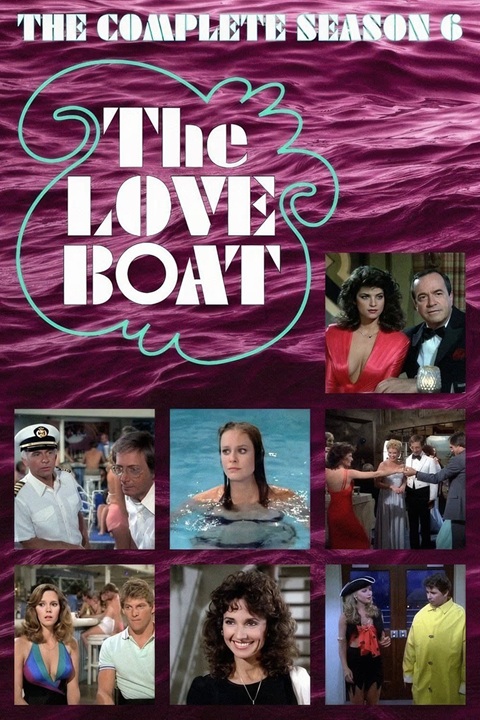
Welcome to Retro Television Reviews, a feature where we review some of our favorite and least favorite shows of the past! On Wednesdays, I will be reviewing the original Love Boat, which aired on ABC from 1977 to 1986! The series can be streamed on Paramount Plus!
This week, Vicki is accused of corrupting a passenger!
Episode 6.23 “Vicki’s Dilemma/Discount Romance/Loser & Still Champ”
(Dir by Jack Arnold, originally aired on March 5th, 1983)
Poor Vicki! Finally, someone her own age — Mark Hammond (Glenn Scarpelli) — boards the boat and he turns out to be a speed freak! In fact, he steals some amphetamines from Doc’s cabin. (For some reason, Doc didn’t lock the medicine cabinet. Y’know, people get fired for stuff like that….) When the speeding Mark collapses on deck, Vicki is the first to help him. And how does Mark thank her? By slipping the stolen pills into Vicki’s pocket!
Mark’s mom (Elinor Donahue) accuses Vicki of getting her son hooked on speed. Luckily, Mark has an attack of conscience and admits the truth. (“I was going to let you take the fall but….” Mark says.) Vicki and the Captain are surprisingly forgiving of Mark and his mom. If I was in Vicki’s shoes, I can’t say I’d be quite so gracious about it. Then again, I’ve been taking speed for ADD for most of my life so I would at least have an excuse for having the medicine.
Meanwhile, Gopher’s uncle (Red Buttons) boards the boat and starts selling watches out of his cabin. He’s such a good salesman that he almost puts the boat’s gift shop out of business! The owner of the gift shop is played by June Allyson and she’s not amused. She and Red Button still end up falling in love though.
Finally, passenger Tom Joseph (Patrick Wayne) feels threatened because he’s got a crush on another passenger (Ann Turkel) who is a tennis star and much more athletic to him. Every LoveBoat has at least one boring story and this week, it was Tom’s story.
This was an okay episode. Red Buttons and June Allyson were a cute old couple. I appreciated the Vicki storyline, if just because it was one of the few times that I’ve seen this show acknowledge that Vicki really doesn’t get to spend much time with people her own age. Captain Stubing confessed to worrying about whether or not life at sea was fair to Vicki and Gavin MacLeod delivered the lines with such sincerity that, for a few brief moments, The Love Boat became a serious drama.
When he died in 1988, Phillip Hutchinson was only 24 years old.
Born in Virginia, Phillip Hutchinson served in the U.S. Marines before he was discharged for desertion. He went on to become a career criminal and a violent one at that. By the time he was 24, he already had a long criminal record. In Texas, he was convicted of aggravated assault and ended up with a life sentence. He escaped from prison by stealing a truck. (It was his third escape attempt.) Fleeing Texas, he eventually ended up in Denver. He is alleged to have robbed four banks in Denver before holding up the Rio Grande Operating Credit Union. The 18 year-old teller was able to set off a silent alarm and Hutchinson ended up leading police on a chase through Denver. Following Hutchinson in the air was a news helicopter. At one point, Hutchinson crashed into an unmarked police car, killing Detective Bob Wallis.
After crashing his own car, Hutchinson continued to run on foot. Eventually, he reached a trailer park. He took John Laurienti as a hostage and forced the 73 year-old man to drive him past the police in his pick-up truck. When the men in the news helicopter realized that the police didn’t realize that Hutchinson was in the truck, they dived down and blocked the truck from moving forward. The cops, realizing their mistake, surrounded the truck and opened fire, killing Hutchinson while the cameraman in the helicopter continued to film. John Laurienti escaped from the truck, uninjured.
Phillip Hutchinson really had no one but himself to be blame. If he hadn’t robbed the credit union, he would have had the cops chasing him to begin with. If he hadn’t rammed into the unmarked car and killed Bob Wallis, it’s possible that the police would have been more willing to negotiate before opening fire on him. You can wonder what led to someone, by the age of 24, becoming a hardened criminal and that is something that should always be investigated. In the end, actions do have consequences.
Phillip Hutchinson is one of those criminals who would probably be forgotten today if not for the fact that his death was not only captured on camera but also broadcast across the television airwaves. Hutchinson has gone on to have a significant afterlife in various “documentaries.” Remember World’s Wildest Police Videos? (I’ve also read that the shoot-out is a popular video on various “forbidden” and “dark” websites but I’m not going to look to find out.)
1991’s The Chase was a made-for-television movie about Phillip Hutchinson and his final ride. Casey Siemaszko plays Phillip Hutchinson as being a psycho redneck, which is probably not the far from the truth. Siemaszko gives a good performance as Hutchinson but the majority of the film deals with the people who came into contact with Hutchinson on the final day of his life. Ricki Lake plays the teller who set off the silent alarm. Ben Johnson gives a moving performance as the old man who Hutchinson took hostage. Barry Corbin plays Bob Wallis. Megan Follows plays a drug addict who narrowly escapes Hutchinson. Robert Beltran plays the man in the helicopter. They all give good performances. At the same time, for a film called The Chase, the Chase itself doesn’t actually start until we’re 70 minutes into the movie and it’s over pretty quickly. If you’re watching this film for the action, you’ll probably be disappointed.
This film was written by Guerdon Trueblood, who also directed one of my favorite grindhouse films, The Candy Snatchers. Trueblood’s script follows the standard disaster formula, in that there are a lot of subplots and filler leading up to the big event. In other words, The Chase isn’t a film for everyone. I’ll admit, though, that I teared up a little at the end. Phillip Hutchinson may have been a violent criminal but his death brought a community together.
WatchingSuburban Sasquatch last night and then reviewing it today reminded me of how much more I enjoyed Birdemic. Suburban Sasquatch would have been improved by a dance scene.
I wonder how the birds could possibly want to destroy a civilization that is capable of something like Hanging Out With My Family.
In 2004’s Suburban Sasquatch, Bigfoot is stalking the suburbs.
Bigfoot appears out of thin air.
Bigfoot vanishes whenever he’s feeling stressed or local Native American badass Talla (Sue Lynn Sanchez) starts shooting arrows at him.
Bigfoot pulls off arms and legs and tosses them in the air.
Bigfoot likes to drag his victims off to a cave where he apparently just leaves them laying around.
Bigfoot has to eat.
Bigfoot has really big tits.
Yes, you read that last one correctly. Groucho Marx once said that he wouldn’t be seeing a movie starring Victor Mature and Hedy Lamarr because, “‘I never go to movies where the hero’s tits are bigger than the heroine’s,” and let’s just say that Victor Mature had nothing on the Suburban Sasquatch. The sasquatch costume itself is covered in coarse, dark fur except for its belly and chest, both of which are left pretty much bare. It makes me wonder where exactly the production purchased the sasquatch costume. The film was apparently shot in Pennsylvania and Pennsylvania seems like it’s a bit too blue collar to be home to an S&M-themed furry community but who knows?
(Maybe the costume was ordered from Austin.)
As for the film, it’s basically just the Suburban Sasquatch killing people. It was obviously made for next to no money and the dialogue is just bad enough to leave you wondering whether or not the director was specifically trying to satirize no-budget, direct-to-video horror films or if he was just trying to do what he could with what he had available. Personally, I couldn’t hep but smile at the fact that no one seemed to be that panicked about a Sasquatch being on the loose. Throughout the film, people continue to wander around outside as their friends and neighbors aren’t getting ripped apart by Bigfoot.
(“Actually, Lisa, it’s not Bigfoot. It’s a Suburban Sasquatch.” I don’t care. Everyone keeps looking at his footprints and gasping. He’s Bigfoot.)
A few other things I liked about Suburban Sasquatch:
The special effects, especially the scenes of blood-spraying, appear to have been done with MS Paint.
There were only two cops in the entire town and they were both useless.
Reporter Rick Harlan (Bill Ushler) kept showing up at the crime scenes and talking about how the people had the right to know about the killings but he didn’t really put much effort into getting the word out there.
Suburban Sasquatch likes to rip off people’s limbs and smash their heads, all in full MS Paint glory. But, somehow, whenever the bodies are found, the limbs have reattached and the heads are no longer smashed.
The character of Talla, assigned by her Native American ancestors to kill the sasquatch, was incredibly badass, even if she was something of a stereotype. Seriously, if I was told that I had to be someone from Suburban Sasquatch, I would want to be Talla because she shows up, shoots her arrows, tells Rick to get lost, and then she goes somewhere else and shoot even more arrows. She’s the one character in the film who is actually actively trying to do something.
Finally, I should not that there’s an online rumor that the late Neil Hope, who played Wheels on Degrassi High, appeared in Suburban Sasquatch but I definitely didn’t see him and, considering that Hope apparently spent his entire post-Degrassi life in Canada, I have a hard time believing that he hopped down to Pennsylvania to appear in a nothing-budget film. One of the first victims does have a Wheels-style mullet but I’m pretty sure that wasn’t Neil Hope as Hope himself was sporting a bald look at the time this film was made. (That said, on Degrassi: The Next Generation, Jimmy, Spinner, Craig, and Marco did play in a band called Downtown Sasquatch and Jimmy and Spinner briefly owned a clothing store called Squatch Wear.)
Suburban Sasquatch came out in 2004 and probably would have been forgotten if not for Joel McHale featuring a clip from it on The Soup. Much like Bigfoot himself, the film lives on.
First released in 1958, Fiend Without A Face takes place around an American Air Force base in rural Canada.
The base is home to several nuclear experiments, which have left the local residents uneasy. They grew even more uneasy when people start to turn up dead. Local farmers are found deceased, missing their brains and spinal columns. Two puncture marks are found at the base of each skull. Air Force Major Jeff Cummings (Marshall Thompson) is investigating the deaths, determined to prove to the locals that American nuclear energy is not to blame. Cummings suspects that Prof. R.E. Walgate (Kynaston Reeves) might be involved. Walgate claims to have telekinetic powers and has made a name for himself through his psychic experiments. Cummings has recently become a big believer in the idea of thought projection. Could Walgate’s psychic powers, combined with nuclear power, be at the heart of the mystery?
Of course, they are! Who is responsible for the murders? It turns out that there’s more than enough blame to go around. Yes, Walgate’s psychic experiments have indeed backfired and now, there’s an invisible monster stalking the Canadian countryside. Whoops! Sorry, Canada! And, at the same time, all of the nuclear energy has made that monster far more powerful than it would be under normal circumstances. Whoops! Sorry again, Canada!
(Actually, I guess we should be happy that this happened in Manitoba as opposed to a place that people actually care about, like North Dakota.)
To understand why this is all happening at an American base that happens to be located in Canada, it’s important to know that Fiend Without A Face was a British film that hoped to appeal to both Brits and Americans. As a result, the film may have been shot in England but it needed to be set somewhere closer to America. At the same time, if the film actually did take place in North Dakota, British audiences would have said, “Bloody yanks,” and failed to show up at the theater. Canada was the logical compromise. That’s one thing I love about B-movies. They’ll shamelessly twist the plot any which way that may be necessary in order to appeal to the biggest possible audience.
Speaking of loving B-movies, I absolutely love Fiend Without A Face. The film not only has a morbid streak that one doesn’t necessarily expect to find in a low-budget production from 1958 but it also features the sight of brains (with their spinal column trailing behind them) attacking humans and crawling through the base. Because the effect was achieved with stop-motion animation, the brains move in a somewhat herky-jerky fashion, which just makes them all the more frightening. The brains spend the majority of the film in a state of invisibility. When they are suddenly revealed, it’s a great moment. It’s what Lucio Fulci used to call “pure cinema.”
Clocking in at only 77 minutes and featuring a lot of stock Air Force footage to go along with the moving brains, Fiend Without A Face is a gloriously ludicrous movie that also happens to be one of the best B-pictures of the 1950s.
In 1973’s The Invasion of Carol Enders (Meredith Baxter) is attacked while walking in the park with her boyfriend (Christopher Connelly) and strikes her head. At the same time, Diana Bernard (Sally Kemp) crashes her car while driving home in the rain. Both women end up at the hospital at the same time. Both die but Carol is brought back to life. Except now, there’s someone else in Carol’s head….
This is a bit of an odd made-for-TV movie, even by the standards of the 70s. It’s only 69 minutes long and it was shot on video tape, giving the whole thing the look of an old daytime drama. It’s easy to watch this movie and imagine that it’s just a supernaturally-tinged episode of General Hospital or Days Of Our Lives. Both the acting and the plot add to the daytime drama feel of the production. This is a movie that fully embraces the melodrama.
I think the most interesting thing about this film is that everyone is very quick to accept that Diana has somehow willed her spirit into Carol’s body. There’s very little hesitation about accepting Diana/Carol at her word and no one even thinks to suggest that maybe Carol is having some sort of mental episode as a result of the attack. Adam hears that his girlfriend has been possessed and he immediately gets to work helping out the woman who has possessed her. I mean, good for Adam. I like a man who is willing to do whatever has to be done. Still, everyone acts as if possession happens every day.
This is kind of a silly movie, which is probably why I enjoyed it. It’s short, it’s simple, and it embraces the melodrama. What’s not to enjoy?
2020’s Beckman is one of the most violent faith-based films I’ve ever seen.
Usually, when a religious film is full of death and violence, it’s apocalypse-themed. The rapture has happened. The Anti-Christ is in power. All bets are off. Beckman, however, is not an apocalypse-themed film. Instead, it’s a John Wick rip-off, one in which the Wick-character also happens to be a preacher.
David A.R. White plays Beckman, a former contract killer who stumbled into a church and meets Rev. Philip (Jeff Fahey). Philip converts Beckman, baptizing him and showing him that even a viscous killer can be redeemed. (A Vietnam vet, Philip killed eleven people during the war and it still haunts his nightmares. Incidentally, Jeff Fahey deserves roles in better movies.) When Philip grows sick and dies, Beckman takes over as the church’s pastor. When Philip’s runaway niece, Tabitha (Brighton Sharbino), shows up at the church, Beckman adopts her as his daughter.
One year later, all Hell breaks loose. Gunmen working for rich cult leader Reese (William Baldwin, looking like someone cosplaying Alec for Halloween) storm the church and they kidnap Tabitha. Beckman snaps. He goes back to his old ways, leaving a trail of bodies throughout Los Angeles as he searches for Tabitha. The film becomes a cross of Taken and John Wick with a religious angle tossed in as well. Beckman kills but he constantly hears a voice in the back of his head telling him that he needs to reject his anger.
Beckman does indeed kill a lot of people and I have to admit that it bothered me a bit, just how casual the film got about killing. It made the film’s ending, with Beckman suddenly realizing that he doesn’t need to kill everyone, feel rather hollow. Reese is an Jeff Epstein-like madman who kidnaps teenage girls and makes them a part of his cult. He associates with human traffickers. And yet, when Beckman has a chance to kill him, Beckman suddenly realizes that he doesn’t want to lower himself to Reese’s level. Okay, what about all the people Beckman killed beforehand? I mean, if you’ve already killed 12 people, you might as well take out the worst of them all.
(It reminded me a bit of how Cecil B. DeMille would always be sure to include plenty of sin in the first half of his films so that audiences could enjoy themselves before the second half became all about chastity and redemption. The film portrays a countless number of deaths but still wants its message to be Thou Shalt Not Kill. It feels a bit hypocritical.)
Beckman takes a lot of its cues from JohnWick and there are a few effective fight scenes. The film is also divided into chapters and there’s a lot of time jumps, showing that the filmmakers have, at the very least, seen at least one Tarantino film. But the film itself lacks the self-aware humor and the shameless style that made the JohnWick films memorable. David A.R. White is not a bad actor but he’s better at light comedy than at killing people. The film ends with what appears to be the promise of a sequel but I’m not sure how many more people Beckman can kill while still claiming to be a preacher.
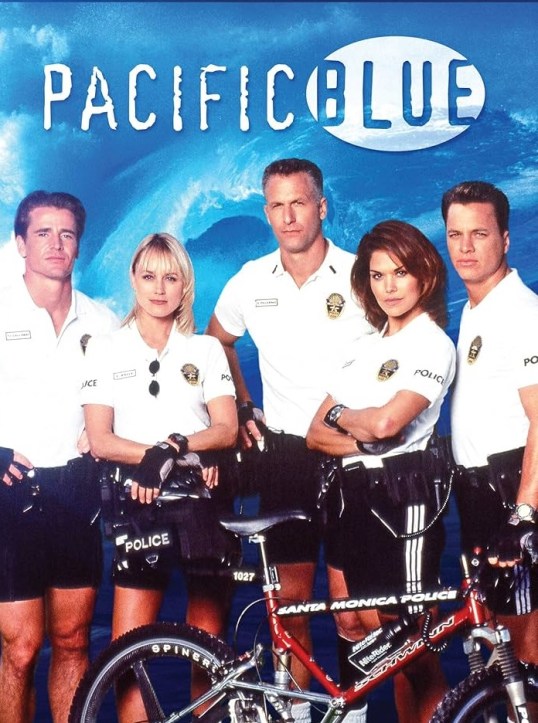
Welcome to Late Night Retro Television Reviews, a feature where we review some of our favorite and least favorite shows of the past! On Tuesdays, I will be reviewing Pacific Blue, a cop show that aired from 1996 to 2000 on the USA Network! It’s currently streaming everywhere, though I’m watching it on Tubi.
This week, the bike cops go undercover and essentially end up looking like a bunch of cops working undercover.
Episode 3.3 “Rave On”
(Dir by Michael Levine, originally aired on August 17, 1997)
The bike cops go undercover!
If that’s not funny enough, they go undercover as ravers.
I swear, you haven’t really laughed until you’ve laughed at the sight of the extremely stiff stars of Pacific Blue hanging out at a rave and giving each other secret signals whenever they spot anyone doing drugs. Chris’s drink gets roofied and, as someone who has experienced that in real life, I appreciated that the show was trying to warn its viewers about leaving their drinks unattended. Seriously, if my friends hadn’t been looking out for me that night, it scares me to think about what probably would have happened. Still, good intentions can’t disguise just how unconvincing Darlene Vogel’s performance was.
Palermo spends this entire episode saying that the parents of teens who go to raves and take drugs should be prosecuted and jailed. Then Palermo discovers that his sixteen year-old daughter (Johna Stewart-Boden) has been attending raves and, while she hasn’t intentionally taken any drugs, she’s stood by while her friends have. Palermo does not arrest himself. He does not throw himself in jail. He does not look in the mirror and smirk and say, “Oh yeah, buddy, your parent-of-the-year.” In other words, Lt. Palermo is a big, freaking hypocrite.
The bike cops break up the rave scene but the music will never die.
Tonight, from 1976, we have The Paul Lynde Halloween Special.
In this special, actor and comedian Paul Lynde celebrates Halloween with Betty White, KISS, Donny and Marie Osmond, Florence Henderson, Billy Barty, Margaret Hamilton (the original Wicked Witch of the West), and I’m going to guess a mountain of cocaine that was probably sitting backstage.
This special is definitely a product of a very certain era in America’s cultural history.


 Through the Shattered Lens