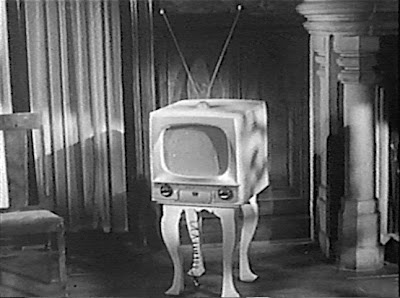
Horror on the Lens: The Norliss Tapes (dir by Dan Curtis)


The Norliss Tapes (1973, dir by Dan Curtis)

Today’s Horror on the Lens is The Norliss Tapes, a 1973 made-for-TV movie that was also a pilot for a television series that, unfortunately, was never put into production.

Reporter David Norliss (Roy Thinnes) has disappeared.  His friend and publisher, Stanford Evans (Don Porter), listens to the tapes that Norliss recorded before vanishing. (Stanford Evans, it must be said, is a great name for an editor.)  Each tape details yet another paranormal investigation.  (Presumably, had the series been picked up, each tape would have been a different episode.)  The first tape tells how Norliss investigated the mysterious death of an artist who apparently returned from the grave.

For a made-for-TV movie, The Norliss Tapes is pretty good.  It’s full of atmosphere and features a genuinely menaching yellow-eyed zombie monster. The film was directed by Dan Curtis, who was responsible for several made-for-TV horror films and who also created the deathless TV show, Dark Shadows. Curtis also directed a few feature films. Burnt Offerings, for instance, will be forever beloved for its scene of annoying little Lee Montgomery getting crushed by a chimney. If you ever get a chance to listen to the director’s commentary that Dan Curtis recorded for the Burnt Offerings DVD release, you must do so. Curtis comes across as the crankiest man on the planet and it’s actually kind of fascinating to listen to. His irritation when Karen Black keeps asking him if he knows the name of the actor who played the ghostly chauffeur is truly an amazing thing to here. (For the record, the actor’s name was Anthony James, he also had important supporting roles in two best picture winners — In The Heat of the Night and Unforgiven — and yes, he was one of the best things about Burnt Offerings. Karen Black knew what she was talking about.)

But back to The Norliss Tapes!

Admittedly, this is not the first Halloween in which I’ve shared The Norliss Tapes with our readers. Back in 2015, The Norliss Tapes was one of our “horrors on the lens.” Unfortunately, there’s only so many good quality, public domain horror films available on YouTube so, occasionally, a movie is going to show up more than once over the years. But, as long as it’s good film, who cares?

Enjoy The Norliss Tapes!

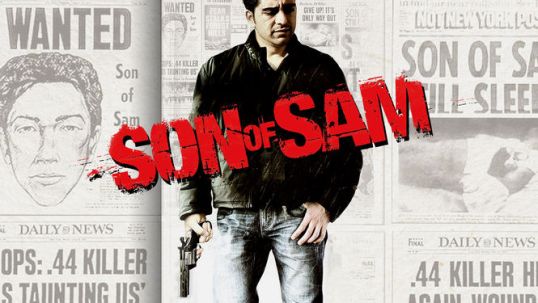
The TSL’s Grindhouse: Son of Sam (dir by Ulli Lommel)


Oh, Ulli Lommel.

Where to even begin?

Born in what is now Poland but what was then Germany, the late Ulli Lommel got his start as a frequent collaborator with the enfant terrible of New Wave German cinema, Rainer Werner Fassbinder.  Lommel acted in several of Fassbinder’s films and Fassbinder produced Lommel’s third film as a director, the acclaimed The Tenderness of Wolves.  In the 70s, Lommel relocated to the United States and, after marrying heiress Suzanna Love, he became a prominent part of the New York City art scene.  He hung out with Andy Warhol.  He made films about punk rock.  He directed three films, Cocaine Cowboys, The Boogeyman, and The Devonsville Terror, that proved that he actually did have some talent when it came to taking on thrillers and horror films.

And then, it all pretty much fell apart.  Reportedly, after he and Love divorced, he lost not only his frequent star but also his main financial backer.  Lommel spent the rest of his lengthy career directing zero-budget horror films that were best-known for featuring stock footage that was lifted from his previous films.  Starting in 2005, he started making direct-to-video movies about real-life serial killers.  In interviews, Lommel insisted that his films were not exploitive but that, instead, his serial killer films were meant to offer up a critique of the hypocrisy of American society.  And while it’s easy to roll your eyes at Lommel’s claim, I have no doubt that he was being, in his own way, perfectly sincere.  His serial killer films are famous for not sticking to the facts but they should be even more famous for their emphasis on alienation and loneliness.  All of Lommel’s serial killer films focus on people living on the fringes of society, ignored by those who would rather pretend that they didn’t exist.  Lommel consistently portrayed serial killers as being a symptom of a much bigger disease.

Unfortunately, Lommel made his films with very little money and on a very tight shooting schedule.  Reportedly, Lommel’s philosophy was to almost always only shoot one take.  If someone screwed up a line or if there was a glaring continuity error or if the camera crew briefly appeared in the background, so be it.  Indeed, because Lommel’s later films were so deliberately chaotic and semi-improvised, it was often difficult to tell if a continuity error was actually a mistake or something that Lommel deliberately planned.

Sadly, this led to Ulli Lommel getting a reputation for being one of the worst directors of all time.  That’s not fair, though.  Whatever one might say about his low budgets or his odd style, one cannot deny that Ulli Lommel had a unique vision and that he stuck with it.  That’s more than you can see for most bad directors.  If nothing else, you’ll never mistake a Ulli Lommel film for being the work of any other director.

Take his 2005 film about the Son of Sam.  The film is 80 minutes of David Berkowitz (played by Yogi Joshi) wandering around New York with a confused look on his face.  Whenever he sees anyone, a voice commands him to kill while another voice chants “Son of Sam …. Son of Sam.”  Meanwhile, there are flashforwards to the recently arrested David Berkowitz, meeting with his public defender and subsequently asking a priest (played by Lommel himself) to exorcise the demons from him.  Then there are flashbacks to Berkowitz at some sort of Satanic coven meeting where the high priestess won’t stop laughing.  (In typical Lommel fashion, the high priestess is clad in her underwear while everyone else in the cult is dressed in black.)  Then, there’s another set of flashbacks to Berkowitz talking to an old woman who may or may not be a part of the cult.  Then a dog shows up and gives Berkowitz a meaningful stare.

It’s a mess with no real plot and making it through the entire 80 minutes is a true endurance test.  The film not only screws up the facts behind the murders (i.e., the real-life Berkowitz shot people sitting in cars, the film’s Berkowitz shoots a drug dealer standing in a doorway) but it also buys into Berkowitz’s self-serving claim of having been manipulated by a Satanic cult, a claim that falls apart under scrutiny and common sense but which was still recently presented as fact by a Netflix miniseries.  We’re told that the film is taking place in the 70s, which is good because, despite the presence of one awkward conversation about going to Studio 54, you’d never know it otherwise.

And yet …. there’s an intensity to Lommel’s vision that I have a hard time totally dismissing.  The movie plays out like a fever dream and the visuals are so chaotic and so random and just so weird that it’s hard not to feel that Lommel probably did manage to capture what it was like inside of David Berkowitz’s messed-up head.

Don’t get me wrong.  Son of Sam is not a good film.  It’s a mess and it’s repetitive nature gets boring fairly quickly.  But it’s also hardly the work of the worst director of all time.  Instead, it’s uniquely Lommel.

Book Review: The Girlfriend by R.L. Stine


Oh Scotty, baby, baby, baby, you idiot….

That’s what I found myself thinking as I read R.L. Stine’s 1991 YA suspense thriller, The Girlfriend.  Scotty is the book’s main character.  He’s got a great life ahead of him, despite the fact that he’s an idiot.  Scotty has been accepted to Princeton.  He’s the quarterback of high school’s football team.  His family is rich.  He’s dating Lora, the head cheerleader.  He and Lora have just been elected homecoming king and queen.  However, Lora and her family are going on vacation to Paris and that means that she’ll miss the homecoming dance!  Scotty will be a king without a queen!  Scotty is so upset over this that he makes out with Shannon.  Shannon has just moved to town and no one knows anything about her.  Scotty certainly knows little, beyond the fact that she claims to have three overprotective older brothers and that one of them is former wrestler.  Oh, and Shannon’s in love with Scotty.  She likes to call him “baby.”

Now, when I say that she likes to call him “baby,” what I mean is that the word “baby” appears close to a million times in this book.  I didn’t actually sit down and count all of the times that the word appeared, of course, but I am a fairly observant reader and it seems like a million is close to the right number.

Of course, overusing the word “baby” is not the only thing that Shannon does.  Shannon turns out to be a bit unstable and more than a little possessive.  She sets out to make Scotty and Lora’s life as miserable as possible but you know what?  Good for her!  Seriously, Scotty is a jerk and Lora’s incredibly bland for someone who can go to Paris whenever she feels like it.  Shannon provides the book with what life it has.  She’s a jolt of pure energy, forcing all of the dull people around her out of their complacency.  Though it may or may not have been Stine’s intention, it’s impossible to read The Girlfriend without spending the whole time looking forward to what Shannon is going to do next.  Unfortunately, she does kill two pets and, as a result, I can’t really be on Team Shannon but, even after that, she’s still more interesting to read about than either Scotty and Lora.

Anyway, The Girlfriend is an entertaining work of Stine fiction.  Scotty is a uniquely unlikable lead character but Shannon brings a much-needed jolt of life to the proceedings.  It’s too bad that she never returned for a sequel.  Of course, it’s not too late.  Scotty’s probably still working at his Dad’s architectural firm.  Maybe it’s time for Shannon to stop by for a visit.

What do you think about that, baby?

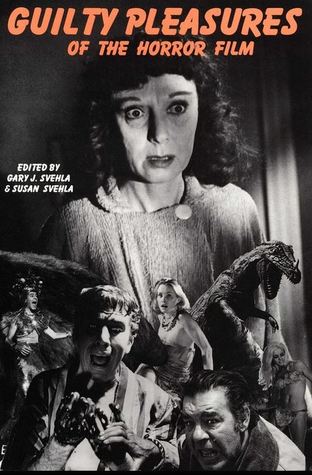
Horror Book Review: Guilty Pleasure of the Horror Film, edited by Gary J. and Susan Svehla


The back cover of this book announces, “THE CHARGE: Bad filmaking!”

It then offers up a list of 12 films (most of which are horror films, though a few are not) that were dismissed by the critics.  The book features 12 essays, each providing a defense of one of the films in question.  Those 12 films are:

  1. Maniac (1934), which is defended by Bret Wood
  2. Sh!  The Octopus (1937), defended by John Soister
  3. Voodoo Man (1944), defended by Gary Don Rhodes
  4. Unknown Island (1948), defended by John Parnum
  5. Scared Stiff (1953), defended by Ted Okunda and James L. Neibaur
  6. Indestructible Man (1956), defended by Don Leifert
  7. Rodan (1957), defended by Don G. Smth
  8. The Tingler (1959), defended by Tom Weaver
  9. The Flesh Eaters (1964), defended by David J. Hogan
  10. When Dinosaurs Ruled The Earth (1970), defended by Mark A. Miller
  11. King Kong (1976), defended by Robert A. Crick
  12. Dune (1984), defended by Susan Svedha

There’s a few things that you’ll notice about this list.  First off, you’ll notice that — as I already pointed out — not all of these films are horror films.  Dune, in particular, is a surreal science fiction epic.  Like all of David Lynch’s films, there are elements of horror but the film itself isn’t actually a part of the genre.  Secondly, I was surprised to discover that Rodan and The Tingler apparently needed to be defended.  Finally, just by looking at the release dates of the film included in the book, you’ll probably be able to guess that Guilty Pleasures of the Horror Film has been around for a while.  The book was first published in 1996.  I picked up my copy at Recycled Books of Denton, Texas, way back in 2006.  And finally, in 2021, I got around to reading the entire thing.  It’s funny how that works out some times.

With all that in mind, though, it’s an enjoyable book and each essayist does a good job of making their case.  (The fact that it took me so long to get around to reading it has everything to do with me having ADHD and nothing to do with the quality of the book itself.  My office is currently full of very good books that I need to get around to reading.  And I will!)  While I think the natural instinct of most readers will be to automatically jump ahead to see what the essayists has to say about David Lynch’s version of Dune (and perhaps the 70s version of King Kong), my favorite essays dealt with Indestructible Man and Flesh Eaters.  While I was already familiar with the surprisingly grim and violent Indestructible Man, reading David J. Hogan’s thoughts on Flesh Eaters inspired me to make a commitment to watch and review the movie sometime this October.  Really, what more can you ask for from a book like this?

Despite the fact that they’re not all horror films and I’ve never really been comfortable with the term “guilty pleasure,” (despite the fact that I’ve used it more than a few times), Guilty Pleasures of the Horror Film is an enjoyable book for those of us who love the genre and who are always willing to defend an unfairly maligned film.

International Horror: The Case of the Bloody Iris (dir by Giuliano Carnimeo)


Luna, a blonde wearing a miniskirt, walks down a city street. She goes to a high-rise apartment building and is buzzed in. She doesn’t live in the building but someone who is expecting her does. She gets on an elevator, one that is full of people. One person in the elevator obviously notices when she enters. Eventually, everyone gets off the elevator, except for Luna and that one person. As the elevator approaches the top floor, Luna is suddenly stabbed to death. The murderer flees. When the elevator reaches the top floor, three residents discover Luna’s dead body….

And none of them seem to care!

Professor Isaacs (George Riguad) stares at the body, unconcerned. Miss Moss (Maria Tedeschi) makes a few judgmental comments about the victim. Mizar (Carla Brait) does, at least, scream when she finds the dead body but, ultimately, she’s more worried about how she’s going to get downstairs so that she can get to her job as a stripper/performance artist in a sleazy club.

Yes, we’ve entered giallo territory! The Italian giallo films are known for their brutal murders, stylish visuals, convoluted plots, and their black-gloved killers. However, what I always find to be most disturbing about them is that it’s rare that anyone really cares about all of the murders or the victims. Instead, giallo films are often full of bystanders who, at the most, get mildly annoyed at the idea of their day being interrupted by someone else’s murder. The typical giallo takes place in a heartless world, one where even the most grotesque scenes are often viewed with a disturbing nonchalance. That’s certainly the case with the opening of the 1972 Italian film, The Case of the Bloody Iris.

The rest of the film centers on Jennifer Langsbury (Edwige Fenech) and Marilyn (Paola Quattrini), two models who have recently been hired to star in a series of print ads for the building. They also live in the building, which would seem convenient if not for the fact that there’s also a killer on the loose who is only targeting young, single women. Even without the murders occurrin around her, Jennifer is struggling a bit getting adjusted to the world. Before becoming a model, she was a member of hippie sex cult and the cult’s leader, Adam (Ben Carra), has a bad habit of randomly showing up and demanding that she return to him. However, Jennifer is far more interested in Andrea Anitnori (giallo mainstay George Hilton), the handsome architect who built the building and who has an obsessive phobia about blood, which is going to be a bit of a problem because a lot of blood is about to be spilt.

Got all that?

The Case of the Bloody Iris is a typical, if entertaining, giallo, which means there’s a lot of sex, a lot of blood, a lot of bizarre suspects, and a few incredibly incompetent police detectives. It’s also pretty damn enjoyable, even if it doesn’t exactly break a lot of new ground as far as the genre is concerned. While director Giuliano Carnimeo never matches the visual heights of an Argento, a Bava, a Martino, or even a Lenzi, he still does a good job keeping the action moving and he shows just enough of a flair for capturing stylistic violence to make his film worthy of the genre. While the mystery itself doesn’t always make a lot of sense (which is actually to be expected when it comes to the giallo genra), The Case of the Bloody Iris features Edwige Fenech and George Hilton, two mainstays of the genre, at their best and (even though dubbed) most charismatic. It’s an enjoyable little thriller, one that’s worth the 90 minutes that it takes to watch it.

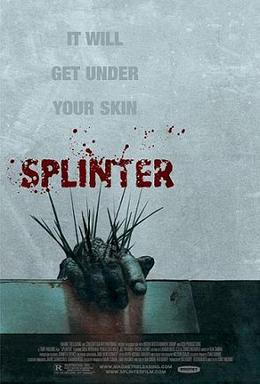
Horror Film Review: Splinter (dir by Toby Wilkins)


Seth (Paulo Costanzo) and Polly (Jill Wagner) thought they were going to enjoy a nice weekend camping in Oklahoma.  Unfortunately, as they drove out to the campsite, two unexpected things occurred.

First off, they got carjacked by Dennis (Shea Whigham) and his drug addict girlfriend, Lacey (Rachel Kerbs).  Dennis was a murderer who had just escaped from prison so, needless to say, he really needed a ride.

Secondly, after getting a flat tire, the foursome pulled their vehicle into a lonely gas station.  At first, it didn’t appear that there were any attendants at the station but that quickly proved to be incorrect.  There was an attendant at the station but, unfortunately, he had been infected by a weird space fungus that transformed him into a homicidal monster.  Soon, Dennis and his hostages are trapped as infected humans and animals laid siege to the station.

That’s the plot of the 2008 film, SplinterSplinter is a good example of a genre of horror film that’s known as the “dumbasses get trapped out in the middle of nowhere” genre.  I’ve actually driven through and occasionally even lived in Oklahoma and Arkansas and, if my memories are correct, there really aren’t as many deserted shacks and gas stations as you might think.  But, in the movies, there’s at least a dozen sitting off the side of every country road.  Inevitably, a character will make the mistake of going into that deserted building and suddenly it’s zombie apocalypse time!  Or, if the zombies are busy, aliens might land.  Or some hulking dude wearing a burlap sack and carrying an axe might show up.

It’s a popular genre, mostly because it exploits a very real fear.  Anytime you enter a previously unknown location, especially if you’re alone and it’s the middle of the night, you’re aware that anything could happen.  It’s probable that you’ll just run into someone working the night shift and he’ll make some awkward joke while you’re getting a coke out of the cooler.  But it’s also possible that you might walk in on a robbery or a murder or a zombie outbreak or an alien invasion or Kirk Cameron might be there, forcing everyone to watch Saving Christmas.  I mean, these things could happen!  And then, what can you do?  You’re stuck there, in an unfamiliar place.  The only thing you know is that something nearby is plotting to attack you.  That’s not something that we like to think about but the risk is always there.  (For the record, I don’t believe in zombies, aliens, or Kirk Cameron but still….)

Splinter does a pretty good job tapping into those very real fears.  Yes, the monsters and the deaths are memorably grotesque and there’s a lot of gore (for those of you who are into that) but the film is most effective when it concentrates on the claustrophobic atmosphere of that isolated gas station.  From the start, the film creates a feeling of unease and, once the main characters find themselves trapped in that gas station, there’s not a slow spot to be found.  Once a person or an animal is infected by the fungus, it becomes relentless in its efforts to destroy.  Finally, the film is dominated by the great Shea Whigham, who gives a ferocious but charismatic performance as Dennis.  Surely, I’m not the only viewer who watched this movie and thought Polly should dump Seth for the convict, am I?

Splinter is a good film for Halloween.  Clocking in at 82 minutes, it won’t leave you bored and it will definitely stick in your mind anytime you stop by a gas station late at night.

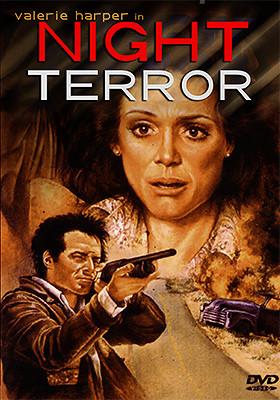
Horror On The Lens: Night Terror (dir by E.W. Swackhamer)


Today’s horror on the lens is a surprisingly violent and grim made-for-TV movie from 1977, Night Terror! 

In Night Terror, Valerie Harper plays a woman trying to drive to Denver, overnight.  Unfortunately, she catches the attention of The Killer (played by Richard Romanus), a mute psychopath who spends his time driving up and down the highway, killing random people.  This is a pretty well-done and suspenseful made-for-television movie, featuring good performances from both Harper and Romanus.  I wrote a more in-depth review of the film back in May so give it a read after you watch the movie.

(Or before you watch the movie.  I’m not going to tell you how to do things.)

Drive carefully!


Lisa’s Week In Television: 9/26/21 — 10/2/21


If it seems like I watched an excessive amount of old TV shows this week, that’s because I did.  While I was working this week, I kept the TV turned to the retro channels.  The only exception to that rule was on Friday when I watched three daytime dramas.  For the most part, these shows served as background noise while I was making plan for this year’s Horrorthon but, at the same time, I have to admit that I do kind of like occasionally watching the old TV shows.  I’m a history nerd and, at their best, those shows are like stepping into a time machine and seeing the way people used to dress, talk, and, for better or worse, think.

This week also saw the end of Big Brother, which means that I can now devote all of my time to horror films.  Yay!

With all that in mind, here’s my week in television:

Allo Allo (Sunday Night, PBS)

With the Germans and the Italians holding a conference to determine their plans for invading England, it falls on Rene to discover their plans to send that information to the Resistance, via the use of a homing duck.  Yes, a duck.  There’s probably worse ways to do it, to be honest.  I know that the ducks in our neighborhood are pretty resilient.  Needless to say, Rene complained quite a bit but still did what he had to do.

Bachelor in Paradise (Tuesday Night, ABC)

Ivan had to leave the show because he snuck out of his room during lockdown and tried to see one of the future contestants.  This show certainly does have a lot of rules for something that is essentially just a second-rate knock-off of Paradise Hotel.
Bewitched (Weekday Afternoon, Antenna TV)

I watched two episodes of this classic sitcom while doing some work around the office on Tuesday.  Unfortunately, both episodes were from the Dick Sargent years.  (I prefer the episodes with Dick York’s hapless Darrin to the episodes that feature Dick Sargent flying into a rage every few minutes.)  The first episode features Sarena causing trouble, which was fun.  The second episode featured Endora casting a hex on Darrin, which was fun if just because Darrin was such a pain in the ass that he certainly deserved it.
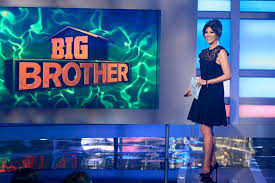
Big Brother (24/7, Paramount Plus and CBS)

It’s over!  I wrote about the show and big finale over at the Big Brother Blog!
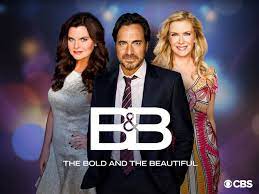
The Bold and the Beautiful (Weekday Afternoons, CBS)

Last year, when the COVID lockdowns first kicked in, I got sucked back into the world of the daytime dramas.  However, up until this week, it had been a few months since I had watched any of them.  I guess I just got bored with them.  That said, this Friday, I decided to check in with a few of them, just to see what was going on.

The Bold and the Beautiful remains my favorite, just because it’s so self-aware and intentionally over the top.  This Friday’s episode featured a lot of people having heated discussions and it was fun to watch.  The drama, the eye rollings, the flaring nostrils, the little smirks — Hell, I might have to start setting the DVR for these shows again!
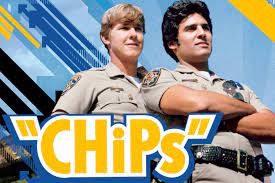
CHiPs (Weekday Afternoon, Charge!)

I watched two episodes of this 70s cop show on Thursday.  The show itself was pretty bland but the California scenery was lovely and that opening theme music really gets stuck in your head.  They knew how to work a bassline in the 70s.

Cold Case (Weekday Afternoon, Start TV)

Remember this show?  Cold Case followed the adventures of Lily (Kathryn Morris), the deathly pale cold case detective who never seemed to wash her hair.  On Wednesday, I watched an episode in which Lily and the cold case squad investigated the murder of a woman who made a tape for a dating service shortly before her death.  As always, the show started off on an interesting note but then got unbearable once Lily and the gang started doing their thing.

Crossing Jordan (Weekday Afternoons, Start TV)

On this crime show, Jill Hennessy played Jordan, a coroner who investigated crimes for some reason.  This was one of those overly quirky crime shows that aired in the aughts, so naturally Jordan has a crew of odd co-workers and a potential boyfriend played by Jerry O’Connell.  Fortunately, Miguel Ferrer was also on the show, lending it all some much needed gravitas.

I watched two episodes on Wednesday.  In the first one, Jordan researched the darkest corners of the internet.  (GASP!)  It was interesting to watch, just because the episode was made before Twitter and Facebook really became things.  This was followed by an episode in which Jordan investigate the death of corporal who had gone AWOL from Afghanistan.  Crossing Jordan was always at its worst when it tried to be political.

Considering how annoying I found this show to be, both during its original run and in reruns, I’m kind of surprised I watched two episodes.  Was I just too lazy to change the channel?  It’s possible.

CSI: Miami (Weekday Mornings, Charge!)

I don’t care what anyone says.  Between David Caruso putting on the sunglasses and Emily Proctor’s Southern accent, CSI: Miami was the best of the various CSIs.  I watched two episodes on Thursday.  The first one dealt with a man who died at a race track and it was okay but kind of forgettable.  The second one dealt with the mysterious world of the internet and there’s nothing I love more than when CSI: Miami explores the dark web!  While the team explored the internet, Horatio protected his niece from a killer and did that thing where he delivered one-liners in an extremely serious voice.  It was fun!

Dennis The Menace (Weekday Afternoons, Antenna TV)

Dennis the Menace?  More like Dennis the sociopath!  I watched two episodes on Tuesday.  When Dennis wasn’t harassing Mr. Wilson, he was making everyone else’s life a living Hell.  GO AWAY, YOU LITTLE BRAT!
Friday the 13th: The Series (YouTube)

Getting to discover old shows like this is one of the truly fun things about our annual horrorthon at TSL.

General Hospital (Weekday Afternoons, ABC)

Oh my God, Sonny might still be alive!  On Friday, I watched this show for the first time in months and I was immediately reminded of why I love General Hospital, despite the fact that I find the title to be misleading.  The show features nonstop drama, much of it revolving around gangsters named Sonny who know how to fake their own death.

Ghost Whisperer (Weekday Mornings, Start TV)

As I’ve written in the past, I love Ghost Whisperer!  The episode that I watched on Wednesday featured a ghost leading Melinda to a munitions dump that was full of unexploded bombs.  I don’t believe in ghosts but, if they did exist, I would hope they would be willing to confide in me as easily as they do Melinda.

I Dream of Jeannie (Weekday Afternoons, Antenna TV)

I watched two episodes of this old show on Tuesday, while I was doing some work around the office.  The first episode featured Jeannie’s sister trying to steal away Major Nelson.  The 2nd featured a con artist (played by Milton Berle) trying to outsmart Jeannie! Oh no!  The 2nd episode took place in Hawaii, which was nice.  I loved visiting Hawaii.
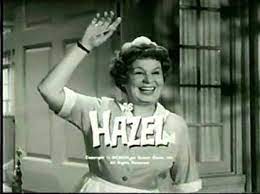
Hazel (Weekday Mornings, Antenna TV)

Hazel is an old sitcom about a live-in maid who insists on trying to run everyone’s life.  On Tuesday, I had the TV in the office tuned to Antenna TV and, as a result, two episodes of Hazel served as background noise while I worked.  In one episode, Hazel’s employer was convinced that the neighbors were interfering with his TV reception.  In the second episode, Hazel came to the defense of a friend who was accused of being a corporate spy.  I felt bad for Hazel, who apparently didn’t have much of a life outside of work.

Knight Rider (Weekday Afternoons, Charge!)

I’ve often heard of this old show but Thursday was the first time that I ever watched an episode.  In fact, I watched two episodes.  Youngish David Hasselhoff driving a car that talks in the voice of Mr. Feeney?  What’s not to love!?  Actually, to be honest, it seemed like the type of show that would get pretty boring once the novelty wore off.  The car was cool, though.  The first episode featured the Hoff and the car saving a building from detonation.  The second found the Hoff driving the car in a race and protecting a journalist.  In both cases, everything turned out for the best.
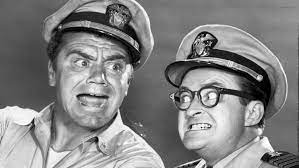
McHale’s Navy (Weekday Mornings, Antenna TV)

This was an old sitcom about a bunch of sailors in the Navy.  It was obviously made at a time when America was not at war because you wouldn’t trust any of these people to be able to handle a combat situation.  Ernest Borgnine played the McHale of the title.  I had the show on for background noise while I was doing some work around the office on Tuesday.  Antenna TV aired two episodes but I didn’t pay much attention to either one.  One featured a chimpanzee.  The other featured McHale trying to run a beauty contest.  Ernest Borgnine seemed to be having fun.
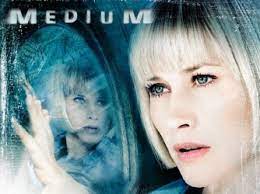
Medium (Weekday Afternoon, Start TV)

Medium was the serious version of Ghost Whisperer, starring Patricia Arquette instead of Jennifer Love Hewitt.  It will always be interesting to me that Patricia basically spent the first decade of this century starring in Medium and filming Boyhood on the weekends.  Anyway, Medium was always a bit too dour for me but Patricia Arquette and Jake Weber both gave good performance every week that the show aired.  It was a show for grown-ups, one that unfortunately aired when I was anything but.

Start TV always shows Medium after Ghost Whisperer, which makes it impossible not to compare the two shows.  On Wednesday, I watched an episode in which Patricia developed a sensitivity to light.  She started wearing sunglasses but whenever she put them on, everyone that she saw would have a number on their head that states how many days they have left to live.  AGCK!  Actually, by Medium standards, this was a fun episode.
Moone Boy (Sunday Night, PBS)

PBS’s airing of Moone Boy came to a touching end with two final episodes on Sunday.  The first featured Dessie trying to open a Catholic book shop.  It soon became popular with people of all religions, including Scientologists!  The second episode featured the death of Martin’s grandfather and the return of his grandfather’s imaginary friend, George Gershwin (played by Paul Rudd).  It was the a very, very sweet episode, one that took an honest but humorous look at aging, maturing, and death.  The final scene brought tears to my mismatched eyes,  What a good show!  I’m glad I got to see it.

Open All Hours (Sunday Night, PBS)

I didn’t really pay much attention to this episode but I’m pretty sure a dog ordered Granville to go on a rampage.  I’m a little bit worried about Granville, to be honest.  He seems to let things get to him.
Survivor (Wednesday Night, CBS)

You can read my thoughts on the latest episode of Survivor here!
Talking Dead (Sunday Night, AMC)

Talking Dead was a bit bland this week, which was a shame considering how good the latest episode of The Walking Dead was.  For the record, the guests were superfan Yvette Nicole Brown and, via satellite, Lauren Ridloff.
That Girl (Weekday Afternoons, Antenna TV)

On Tuesday afternoon, I had the TV in the office tuned to Antenna TV, largely because I had a lot of work to do and retro sitcoms are often the perfect background noise.  Among the shows that aired were two episodes of That Girl, which is a show that I had heard of but never watched before.  Marlo Thomas plays Anne Marie, an actress.  I appreciated the fact that Anne and I share a middle name.

Anyway, I didn’t really pay much attention to the two episodes that aired.  I had a lot of work to get done.  The first episode featured Anne dealing with a potential audit from the IRS and it was nice to see that people in the 70s hated the IRS as much as I hate them right now.  The second episode featured Anne Marie trying to encourage a singer who was planning on becoming a nun.  In both cases, everything worked out for the best.

Three’s Company (Weekday Afternoons, Antenna TV)

I watched two episodes of this very 70s sitcom on Tuesday.  I should admit that I only had it on for background noise while I was finishing up some work so I didn’t pay much attention to it.  I’ve seen a few episodes of this show over the year and I’ve never really seen the appeal.  I’m just like, “Just explain what really happened and get on with your life!”

Anyway, the first episode features James Cromwell — yes, that James Cromwell — as a vice cop who thought Chrissy was a prostitute so he came back to the apartment to arrest her but Jack thought he was just a jerk so he punched him and then Cromwell tried to arrest everyone but then Mr. Roper said that Jack was gay so Cromwell let him go because it would be too embarrassing to admit that he got punched out by a gay guy.  God, that was exhausting.  This was followed by an episode where everyone thought the apparently asexual Mr. Roper was having an affair because every character on the show was an idiot.
Unforgettable (Weekday Afternoon, Start TV)

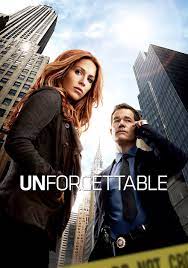
On this show, Poppy Montgomery played a detective who had the ability to remember every single thing she had ever seen or heard.  It was a really interesting premise and Poppy Montgomery was a good series lead but the show was never as interesting as it should have been.  The episode I watched on Wednesday featured Poppy and Dylan Walsh transporting a witness down to Florida.  It was a pretty basic show but Poppy and Dylan had an enjoyable chemistry.
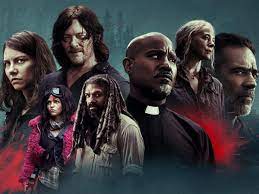
The Walking Dead (Sunday Night, AMC)

This week’s episode was pretty good and I wrote about it here!
The Young and the Restless (Weekday Afternoons, CBS)

After having not watched the show for a month, I watched Friday’s episode.  There was a lot of talking.  Mariah and Tessa were debating whether or not start a family.  Victoria and Nick’s rivalry was threatening to ruin a wedding.  As usual, there were a lot of restless people on the show.  I enjoyed it.  I like watching attractive, rich people argue.

In conclusion …. actually, this post is already over 2,000 words long so we probably don’t need a conclusion.  It was a good week!
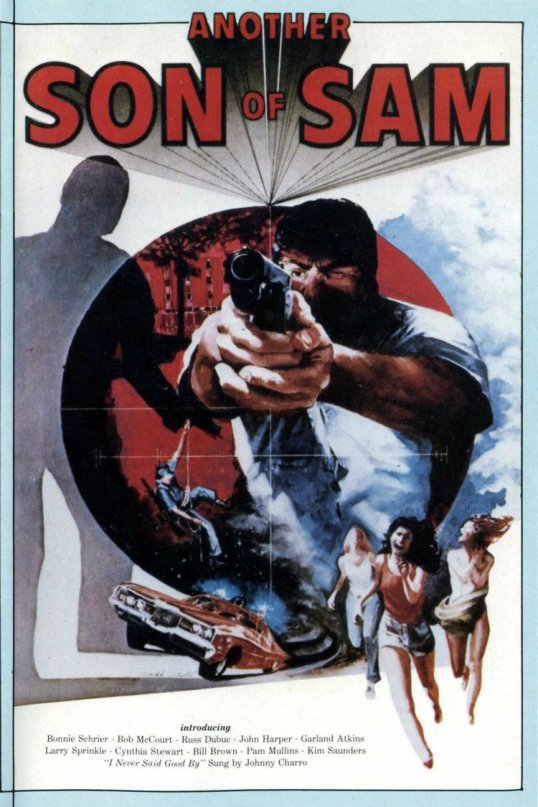
The TSL’s Grindhouse: Another Son of Sam (dir by Dave A. Adams)


Well, his friends call him Another Son of Sam

But his real name is Mister Earl….

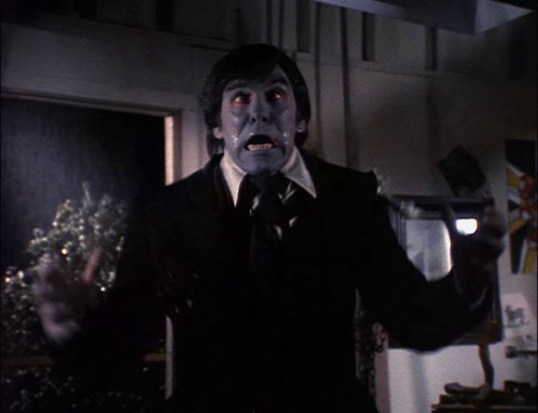
Actually, his real name is Harvey.  Let’s make that clear right now.  Despite it’s title, Another Son of Sam has next to nothing to do with the Son of Sam.  Instead, this zero-budget, North Carolina-shot exploitation film is about a mental patient named Harvey who, having been traumatized by his mother, escapes from the hospital and goes on a rampage at a nearby college.  This film was first shot in 1975, under the name Hostages.  However, it couldn’t actually secure a release until 1977, when it was retitled Another Son of Sam.  

Another Son of Sam is difficult to summarize, not because it’s particularly complex but, instead, because close to nothing actually happens.  Even though it’s only 70 minutes long, there’s really only enough plot for about five minutes.  However, because I do like to maintain a certain minimum word count when it comes to my reviews, I guess I better find something to say about this film.

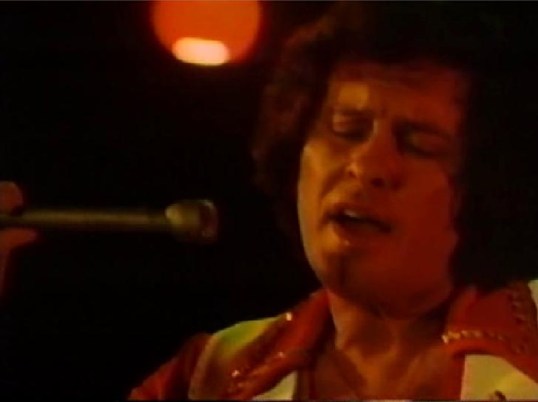
It opens with a lengthy sequence of police Lt. Setzer (Russ Dubuc) enjoying a weekend at the lake.  The lake is never really mentioned again but some of the shots of the boat skimming the water are so nicely done that you can’t help but think that the film should have dropped the whole escaped killer thing and instead just focused on Setzer’s weekend.  After leaving the lake, Lt. Setzer goes to a bar and enjoys a performance from singer Johnny Charro!  Charro, who was and is something of a local celebrity in Charlotte, North Carolina, is credited as playing himself.  He sings an endless song, one that is repeated several time throughout the film.  Whenever anyone turns on a radio, there’s Johnny Charro!

Meanwhile, crazy old Harvey kills an orderly, escapes from a mental hospital, and hides out on a college campus.  Luckily, Lt. Setzer just happens to be investigating an unrelated case at the college!  Once Setzer realizes that there’s a killer on campus, he calls out the SWAT team!  The SWAT team searches for Harvey but, because they all kind of suck at their job, Harvey kills a few of them.

And that’s pretty much the entire film.

Now, there’s a lot of negative things you can say about Another Son of Sam.  None of the characters are memorable.  The acting is risible.  The pace is so slow that 70 minutes feels more like 70 hours.  However, I would like to take a moment to focus on two things that work surprisingly well.

First off, director Dave Adams (who was apparently a stuntman making his directorial debut) purposefully avoids showing us Harvey’s face.  Instead, we see his hands when he’s committing a murder and his eyes when he’s watching a potential victim.  The many shots of Harvey’s eyes, glaring out from the darkness, are actually effectively creepy.  By not showing us his face, Adams allows Harvey to remain an unknowable force of evil.  This is not one of those films where the audience is meant to sympathize or identify with the killer and I appreciated that.

Secondly, the film does this weird thing where the scene will suddenly freeze but we’ll still hear the sounds of people talking or walking down a hallway or listening to Johnny Charro or whatever else they were doing before the scene froze.  Apparently, this is because Adam shot the film using short ends and, as a result, the camera would often run out of film in the middle of a scene.  However, even if it wasn’t deliberate on the part of the director, the freeze frames actually do improve the film.  Along with creating a properly surreal viewing experience, they also remind us of just how unpredictable life can be and how quickly it can end.  One minute, you’re taking a shower or you’re talking about your plans for Spring Break.  The next minute, you’re frozen in place as all of your plans come to a perhaps permanent halt.  The freeze frames may have been the result of incompetence but they still work.

And it’s good that something works in Another Son of Sam because this is an otherwise unfortunate film.  I say that as someone who actually has a weakness for grainy, low-budget, amateur movies.  I liked the lake, the freeze frames, the eyes, and Johnny Charro.  But once the film hit 30 minutes, my mind was wandering.

One interesting note: the film opens with a list of mass murders, starting with Jack the Ripper and ending with David Berkowitz.  It makes the point that most of the killers were never caught and, even if they were, their motivations were never understood.  One of the killers they mention as having never been caught is “Seattle Ted.”  This, of course, was a reference to Ted Bundy, who would be captured two years after the release of Another Son of Sam.

Ladies and gentleman …. JOHNNY CHARRO!

Book Review: Execution of Innocence by Christopher Pike


*sigh*

I was super excited when I came across a copy of the 1997 Christopher Pike novel, Execution of Innocence, in my collection of used paperbacks. Along with R.L. Stine, Christopher Pike was one of the kings of YA horror and suspense literature in the 1990s. In fact, his books were often a bit more macabre than even Stine’s. If Stine killed off four people in a book, Pike would probably kill off 8. I was looking forward to reading Execution of Innocence. Just the title alone promised all sorts of morbid drama! Unfortunately, the book itself doesn’t really live up to the promise of that title.

The book opens with Mary, a teenage girl, sitting in a police department. It turns out that one of her classmates, the wealthy Dick (and that does turn out to be an appropriate name) is dead. The cops thinks that Mary’s boyfriend, Charlie, murdered Dick because he got jealous over Mary and Dick going to the school dance. Charlie, it turns out, is a mechanic from the bad side of town. Mary’s a good girl and Charlie’s a bad boy, and Dick’s dead. And now, Charlie has mysteriously disappeared.

The problem is that Mary swears that she doesn’t remember what happened the night that Dick died. The cops are skeptical, especially when another witness comes forward and declares that Mary threatened to kill Dick herself! Now, Mary has to work with her friend Hannah and prove that she didn’t murder Dick. But what Mary doesn’t realize is that Hannah has secrets of her own….

This is one of those books where describing makes it sound more than it actually is. The mystery of who murdered Dick has the potential to be intriguing but Pike, instead, continually has his characters act in the most illogical and improbable of ways. The reader spends a good deal of the book trying to understand everyone’s possible motives just to discover that the actual motives either don’t make sense in the first place or, in the case of one major character, they feel a bit homophobic. It also doesn’t help that the book attempts to present Charlie and Mary as being some sort of ideal couple when they’re relationship is actually about as toxic as they come. You really can’t help but feel that all of Mary’s friends (and the cops) had a point when they warned her away from the guy.

Execution of Innocence is definitely not first-rate Pike. Try re-reading Monster instead. That’ll give you nightmares!