October Hacks: Savage Vows (dir by Bob Dennis)


Savage Vows is a shot-on-video slasher film from 1995.

It tells the story of what happens when Mark (Armand Sposto) loses his wife in a car accident and six of his friends decide to spend the weekend with him.  Some of his friends sincerely want to help him.  Some of his friends just want to hang out for the weekend and a funeral is as good an excuse as any to do so.  Some of his friends are wondering how much money Mark is going to get from the insurance company and whether or not he might be willing to give them some of that money.  To be honest, they’re not the most likable group of friends.

For his part, Mark just wants to sit on the couch and spend the entire weekend watching movies.  In one of the few scenes in the film that doesn’t take place in Mark’s house, everyone heads down to the local, indie video store.  Mark rents the Lion King.  His friends insist on renting a bunch of horror films in order to keep Mark from being corrupted by a Disney cartoon.  I mean, Mark may be in mourning and he may have just lost his wife and he might be very generously allowing everyone to stay in his rather small house but that doesn’t mean that he just gets to rent whatever movie he wants to rent!  He’s got friends to think about!

Anyway, Mark is so depressed and he spends so much time either watching movies or running blindly through his neighborhood that he doesn’t even notice that there’s a black-gloved killer murdering his friends.  Who could the killer be?  The natural suspect would seem to be the redneck neighbor who keeps talking about how he’s a sign of the apocalypse but then that neighbor gets killed down at the cemetery so I guess it wasn’t him.  The identity of the killer is eventually revealed but don’t ask me to explain what exactly was motivating this particular person to kill.  I assume that an explanation was given but, for me to have heard it, this film would have had to have done a much better job of holding my attention.  I’ve only got a three-minute attention span.

I was going to be even snarkier than I’m currently being when it came to describing this film but, to be honest, it feels a bit churlish to be too critical of a film that was obviously made over a weekend by a group of friends who had access to a video camera.  This was a direct-to-video film that was shot in someone’s house with a semi-amateur cast and an obvious eye towards selling it in the type of video store that shows up in the movie.  That doesn’t make Savage Vows any sort of secret masterpiece or anything like that.  To be honest, it’s a pretty inept film and it barely even qualifies as a work of outsider art.  But, in the end, you have to admire the fact that the film not only got made but, nearly 30 years later, it can still be viewed on sites like Tubi.  Good for the people who made this film!

That said, Savage Vows still sucks.

The TSL Horror Grindhouse: Snuff (dir by Michael Findlay, Horacio Frederiksson, and Simon Nuchtern)


For a film that has a reputation for being one of the most controversial ever to be released, Snuff is incredibly boring.

Filmed in Argentina in 1971 as Slaughter, the majority of this film deals with a cult leader whose name is Satan (Enrique Larratelli).  Satan pronounces his name with the emphasis on the second syllable, so that it sounds less like the name of the Lord of the Darkness and more like, “Sah-TAN.”  I guess even he understood that the importance of not being too obvious when it comes to naming yourself.  That said, everything about Satan indicates that he worships the Devil so I’m not really sure why he felt the need to get all fancy with the pronunciation of his name.  Interestingly enough, Satan does not have a last name.  I imagine that if he did have a last name, he would be one of those pretentious people who would try to spruce up his last name with a “von” or “de,” like Satan von Smith or Satan de Jones.

Anyway, Satan has a group of followers.  They’re all young women who ride motorcycles and who look like hippies but they’re actually knife-wielding murder groupies.  Over the course of the film, they seduce several men and then kill them.  One of them carries a knife in the waistband of her panties, which is not something that I would ever have the courage to do because, seriously, if you sit down at the wrong angle or trip and fall, you’re probably going to have blood everywhere.

An actress named Terry London (Mirta Massa) comes to Argentina with her boyfriend and producer, Max Marsh (Aldo Mayo).  They’re going to be making a movie but mostly, Terry just wants to sleep and hang out around their mansion.  Some of Terry’s decadent Hollywood friends show up for the carnival.  Someone dies and I assume he was a friend of Terry’s.  Satan and his followers start plotting to attack and kill all of the Hollywood phonies and their rich friends.  Satan is especially offended that one of them is the son of an arms dealer.  Satan is about world peace, don’t you know.

Anyway, if you’re dumb enough to actually get caught up in the story of Satan and his followers, prepare to be disappointed because that story ends abruptly and without resolution.  Instead, some woman that we’ve never seen before suddenly declares that the movie is turning her on and an actor who is supposed to be the director of the movie proceeds to dismember her while the cameras roll.  The idea is that the crew of the movie actually murdered a woman, filmed it, and then decided to release the move into theaters because it’s not like people get prosecuted for murder or anything….

Of course, the murder footage was faked.  It’s painfully obvious that it was faked, just as its obvious that the footage was shot long after filming was completed on Slaughter.  It’s not even the same film stock.  But, in 1976, when Slaughter was released under the name Snuff, there were actual protestors who showed up at the theaters and claimed that the footage was real.  Some of those protestors were hired by the film’s distributor but reportedly, some of them were actual grass roots activists who believed what they had heard.  As a result, this extremely dull film became a box office success.  In New York City, it was the number one film in theaters for three weeks.

Controversy sells and Snuff will always have a place in the history of grindhouse films.  That said, the film itself is pretty much unwatchable.  If you’re going to watch it, hire someone to come march outside of your house with a sign to keep things interesting.  Otherwise, prepare for boredom.

The Eric Roberts Horror Collection: Dark Image (dir by Chris W. Freeman)


2017’s Dark Image tells the story of two twins.

Jessica and Jayden Browne (April Eden) were two musical prodigies who spent their entire youth either practicing or performing under the guidance of their mother, Phyllis (Leslie Easterbrook).  One night, while Phyllis was at the opera with her brother, Alex (John Aprea), someone broke into the house and murdered one of the twins.  The surviving twin had a nervous breakdown and soon found herself in a mental hospital, where she was watched over by her uncle Alex.

Assigned to investigate the case was Detective Billy Watts (Thomas Downey), who quickly came to believe that the murderer was the groundskeeper, Ogden Edwards (Ed O’Ross).  After one particularly grueling interrogation, Ogden left the police station, got drunk, and then drove to Watts’s home to confront him.  Unfortunately, the drunk Ogden not only crashed his car on Billy’s lawn but he also ran over Billy’s son, who only wanted to stay up late so he could watch fireworks.  When Ogden was acquitted of murder, Billy swore vengeance and was quickly suspended from the force by Captain Fanning (Eric Roberts).

Now, the surviving twin has finally stopped hearing voices and is planning on spending the weekend at the house where the murders took place.  She’s hoping that staying at the house will lead her to remember something.  Alex sends his daughter, Lindsey (Eve Mauro), along to keep an eye on the twin but that turns out to be a bit of a mistake as Lindsey is kind of a drunk.  Alex also asks Billy to keep an eye on the house but, again, that plan falls apart when Billy sees Ogden Edwards stumbling around the property.

From the minute she and Lindsey arrive at the house, the surviving twin starts to hear voices and see shadows moving in the dark.  When she and Lindsey go out to a bar, everyone in the place briefly appears to be a faceless demon.  Could it perhaps be connected to a mysterious note that the twin found in the house, the one that featured a reference to Dante’s Inferno and suggested that the house itself might be a gateway to Hell?  Well, that’s always a possibility!

There are plenty of things about Dark Image that don’t make much sense.  For instance, the twin is continually freaking out and screaming about her visions but nobody around her ever seems to view that as being particularly strange.  The twin’s plan for going back to the house doesn’t make much sense (though, to the film’s credit, it does offer up an explanation as to just why exactly the twin actually did decide to return) and it also doesn’t make sense that Lindsey would agree to accompany her.  As soon as Lindsey arrives at the house, she’s drinking wine and joking about picking up men at the bar and you have to wonder why she’s apparently not creeped out about the idea of spending the weekend at the house where one her cousins was brutally murdered by a killer who was never captured.  The fact that Lindsey’s an alcoholic can only excuse so much.

That said, though, Dark Image is entertaining as long as you don’t spend too much time worrying about the film’s logic.  If you just watch it for the atmosphere and for April Eden’s intense performance, Dark Image is a perfectly serviceable horror thriller that has a decent number of twists and one effectively creepy scene where Eden is menaced by a shadowy figure while taking a shower.  Ed O’Ross does a good job playing Ogden Edwards and the ending of the film is properly macabre.  It’s an effective film when taken on its own terms.

As for Eric Roberts, he only appears in two scenes but it’s always fun to see him.  He plays the somewhat sarcastic police captain who is constantly telling his detectives to do it by the book.  Eric Roberts is always entertaining when he’s playing a character in a bad mood.

Previous Eric Roberts Films That We Have Reviewed:

  1. Star 80 (1983)
  2. Blood Red (1989)
  3. The Ambulance (1990)
  4. The Lost Capone (1990)
  5. Love, Cheat, & Steal (1993)
  6. Love Is A Gun (1994)
  7. Sensation (1994)
  8. Dark Angel (1996)
  9. Doctor Who (1996)
  10. Most Wanted (1997)
  11. Mr. Brightside (2004)
  12. Six: The Mark Unleased (2004)
  13. Hey You (2006)
  14. In The Blink of an Eye (2009)
  15. Enemies Among Us (2010)
  16. The Expendables (2010) 
  17. Sharktopus (2010)
  18. Deadline (2012)
  19. Miss Atomic Bomb (2012)
  20. Lovelace (2013)
  21. Self-Storage (2013)
  22. This Is Our Time (2013)
  23. Inherent Vice (2014)
  24. Road to the Open (2014)
  25. Rumors of War (2014)
  26. Amityville Death House (2015)
  27. A Fatal Obsession (2015)
  28. Stalked By My Doctor (2015)
  29. Joker’s Poltergeist (2016)
  30. Stalked By My Doctor: The Return (2016)
  31. The Wrong Roommate (2016)
  32. Stalked By My Doctor: Patient’s Revenge (2018)
  33. Monster Island (2019)
  34. Seven Deadly Sins (2019)
  35. Stalked By My Doctor: A Sleepwalker’s Nightmare (2019)
  36. The Wrong Mommy (2019)
  37. Exodus of a Prodigal Son (2020)
  38. Free Lunch Express (2020)
  39. Her Deadly Groom (2020)
  40. Top Gunner (2020)
  41. Deadly Nightshade (2021)
  42. Just What The Doctor Ordered (2021)
  43. Killer Advice (2021)
  44. The Poltergeist Diaries (2021)
  45. A Town Called Parable (2021)
  46. My Dinner With Eric (2022)

Retro Television Reviews: T. and T. 1.17 “The Game” and 1.18 “A Victim of Fashion”


Welcome to Retro Television Reviews, a new feature where we review some of our favorite and least favorite shows of the past! On Fridays, I will be reviewing T. and T., a Canadian show which ran in syndication from 1987 to 1990.  The show can be found on Tubi!

This week, Mr. T plays the game!

Episode 1.17 “The Game”

(Dir by Robert Malenfant, originally aired on May 2nd, 1988)

“In this episode,” Mr. T explains, “Amy and I disagree on tactics as I try to bring an end to a very dangerous game.”

Pam Richards (Cynthia Preston) and her boyfriend Nash Weaver (David Orth) are two spoiled rich kids, playing a dangerous game.  Nash steals some expensive dishes and silverwear from the home of his father (who is judge, no less) and, with Pam’s help, puts it in the locker of one of their shy classmates, Greg Walker (Victor Erdos).  Nash then calls the police, gives them an anonymous tip, and Greg is arrested.  Greg is only 14 but it appears that he’s going to be tried as an adult!  Canada is going to make an example out of him!

Fortunately, Greg’s attorney is Amy Taler and that means that T.S. Turner is on the case!  It doesn’t take T.S. long to figure out what happened.

“The way I see it,” he tells Amy, “the girl played decoy so they could plant stuff in Greg’s locker!  These are the type of games these kids are into.  I’m going to see if I can play too.”

T.S. stakes out Pam’s house.  Nash orders a pizza for him.  “I don’t eat while on duty,” T.S. growls.

That night, Nash and Pamela leave Nash’s house and break into a neighbor’s house.  T.S. follows them, just to discover that they’ve already left the house.  In the kitchen, T.S. finds a balloon that looks like an eyeball.  The balloon pops, revealing a note that reads, “We’re watching you too.”  Suddenly, the cops show up and arrest T.S!

Waiting outside the house, Nash tells T.S. to “give my regards to the boys in blue.”

“Give it to them yourself,” T.S. replies.

Nash and Pam claim that they were just going in the house to water the plants and T.S. is not charged with breaking and entering.  Detective Jones assures T.S. that he doesn’t like Nash much either, saying that the kid has been in trouble before but he’s never been charged.

“Why?” T.S. snarls, “Because his father’s a judge?”

T.S. returns to staking out Nash’s house.  (He’s eventually joined by Greg, who simply cannot believe that Pam would frame him.)  “These kids are not playing kid games!” T.S. says.  Eventually, Nash and Pam drive off to small warehouse.  When T.S. follows them, Nash pulls a gun on them.

“You want to go to prison?” T.S. demands, “You know what prison’s like?  Being locked up in the small cell, 24 hours!  After you shoot me, who is next?  Is it Pam?  How about your father …. BECAUSE HE’S A JUDGE!”

(T.S. is really hung up on that.)

Nash points the gun at his own head.

“It’s not worth it, brother!” T.S. shouts.

A sobbing Nash surrenders himself.

Later, T.S. tells Amy, “Nash was just a little frightened kid, reaching out for love and attention.”

Here’s the thing — this all happened over the course of 30 minutes running time.  As a result, Nash’s surrender seemed to come out of nowhere.  This is an episode that would have benefitted from a full hour.  As it is, this episode ends on a jarringly abrupt note and therefore, Nash’s surrender is neither as effective nor satisfying as it should have been.

Episode 1.18 “A Victim of Fashion”

(Dir by Don McCutcheon, originally aired on May 9th, 1988)

“In this episode,” Mr. T tells us, “the world of fashion loses its glamour as threats and murder come into play.”

“I’m not going to hire no tux and go to no bourgeois fashion show and that’s that!” T.S. Turner tells Amy when she informs him that he has no choice but to accompany her to an uptown fashion show.  This leads to a genuinely amusing scene in which Amy leads T.S. onto an elevator, where T.S. is suddenly grabbed by two men who proceed to …. get his measurements so they can rent him a tuxedo.

Fashion designer John Merrick (Richard Monette) has hired Amy and T.S. because he was mailed a slashed up picture of his top model, Anita (Tonya Williams).  Anita doesn’t know that she’s being stalked and Merrick wants T.S. to be her bodyguard without explaining why.  Tonya, for her part, is just happy to be famous enough to require a bodyguard.

“Please,” T.S. tells her, “call me T.S.”

“Okay,” Anita replies, “if you’ll tell me what it stands for.”

“Tree Surgeon.”

Who could the stalker be?  Could it be the long-haired man wandering around with a camera?  Of course it is!  This is only a 30 minute show so it’s not like there’s time to develop a lot of suspects.  However, it turns out that Lonzo (Patrick Brymer) was not really stalking Anita as much as he was demanding that Merrick admit to stealing Lonzo’s designs.  When Merrick tries to murder Lonzo, T.S. is there to save the day!  Yay!

Again, just as with the other episode I looked at this week, this is an episode that would have been considerably more effective with a 60-minute running time.  With only 30 minutes to tell the story, it felt rushed.  There was a lot of comedic potential to the idea letting Mr. T loose in the fashion world but sadly, there was enough time to get to any of it.

Next week — T.S. quips his way through another case!  Evildoers beware!

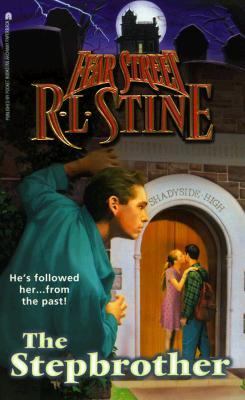
Horror Novel Review: The Stepbrother by R.L. Stine


The 1998 novel, The Stepbrother, tells the story of Sondra.

Sondra is a teenager living in Shadyside.  Like many of the town’s teenagers she comes from a broken home but she also has a cute boyfriend named Zach and three close girlfriends, the main one of whom is named Mallory and who somehow is an expert in hypnotism.  Seriously, how does one become an expert in hypnotism before even graduating from high school?  I would think that hypnotism would be one of those things where you would have to spend years in training before you were allowed to even try it out on anyone.  But Mallory is just casually hypnotizing everyone!  I wouldn’t even know where to begin when it comes to hypnotizing people, though I’ve been told that I do know how to cast a spell whenever I enter a room.  I said that with a wink and a smile, by the way.

Sondra also has a new stepfather and a stepbrother named Eric.  Zach is totally jealous of Eric and everyone does keep commenting on the fact that Sondra and Eric do kind of look like they belong together.  Seriously, it’s not like they’re blood-related so why not?  I mean, he is right there!  (I never had a stepbrother in high school but if I did, I can only imagine what would have happened.)  Still, Zach shouldn’t worry because Sondra is too busy freaking out over the possibility of dying in a fire to seriously consider cheating on him.  Sondra keeps having feelings of deja vu.  Mallory suggests that maybe Sondra is the reincarnation of a girl who died in a fire back in the 50s.  And maybe Eric is the reincarnation of the person who was responsible for the fire!

Yeah, okay.  Whatever.  If I’m not very enthusiastic about this book, it’s because I don’t believe in reincarnation and I always find reincarnation stories to be pretty boring.  This one features Sondra flashing back-and-forth from the 80 to the 50s and trying to avoid dying in a second fire but it all felt way too predictable to be effective.  If you’ve seen one movie or read one book about reincarnation, you’ve pretty much seen and read them all.

(That said, if I did believe in reincarnation, I would assume that I was probably Edie Sedgwick in a past life.  Or maybe Alice Roosevelt.  Or perhaps Victoria Woodhull or Evelyn Nesbit.  I once had a dream where I was Mary Kelly, Jack the Ripper’s final victim, in a past life.  One thing I find interesting about reincarnation is that everyone’s past life was always so exciting and melodramatic.  Nobody was ever just some slop in a past life.  Instead, they were a wealthy celebrity who died under the most tragic of circumstances.)

Finally, the whole hypnotism subplot was silly even by the standards of R.L. Stine.  Of course, I have to admit that I’m also not a big believer in hypnotism.  I went to a hypnotism demonstration in college and I’m proud to say that I could not be hypnotized, largely because my ADD and my own stubbornness made it impossible for me to clear my mind.  Everyone else at the demonstration was rather easily hypnotized but not me!  I’ve always taken a good deal of pride in that.

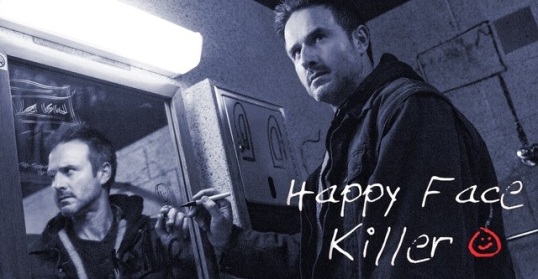
October True Crime: Happy Face Killer (dir by Rick Bota)


2014’s Happy Face Killer is loosely-based on the real-life crimes of Keith Hunter Jesperson.

Jesperson was a truck driver who, in the early 90s, murdered at least eight women in six different states.  (Jesperson later claimed that he murdered over 160 but no one knows if that’s true or not.  For his part, Jesperson has a habit of retracting his confessions shortly after giving them.)  The product of an abusive childhood, Jesperson’s trademark was drawing a smiley face on either the bodies of his victim or on the locations where he dumped them.  A good deal of Jesperson’s crime spree was inspired by anger that someone else had falsely confessed to one of his murders.  Jesperson left graffiti in truck stops all over Oregon, letting people know that the “Happy Face Killer” was still out there.

In The Happy Face Killer, Jesperson is played by David Arquette.  The film makes good use of Arquette’s naturally goofy screen persona, showing how a serial killer like Jesperson could convince someone to climb into his truck in the first place.  Arquette plays Jesperson as someone who comes across as being maybe a little bit nerdy and little but off-center but who still manages to present himself as being a likable guy.  It’s only once he has his victim alone in his truck that Jesperson allows the mask to slip and reveals his true self.  Whether making overly glib videos in which he brags about being a murderer or considering whether he should let one potential victim live because she has a baby, Arquette portrays Jesperson as being an all-too plausible and familiar monster.  The film’s best moments are the ones where Jesperson is struggling to hold up his façade of normality.  It’s those scenes that make the viewers realize that we’ve all probably known a Keith Jesperson or two.  Indeed, I think one reason why serial killers have such a hold on the culture right now is because it’s totally possible that anyone of us might know one.  Who knows what their neighbors or their co-workers are really doing behind closed doors?

Where the film falters is in its portrayal of the investigation that led to Jesperson’s eventual capture.  In real life, Jesperson panicked after the police questioned him about reports that he had been seen with some of the Happy Face Killer’s victims.  Afraid that he was going to be arrested, Jesperson twice attempted (and failed) to commit suicide before eventually turning himself in and confessing to the crimes in hopes of getting a lenient sentence.  In the film, the investigation is headed up by a tough-as-nails FBI agent (played by Gloria Ruben), who is haunted by the murder of her sister and who spends a lot of time apologizing to dead bodies and fighting the forces of the patriarchy.  The scenes with Ruben feel a bit too derivative of every other serial killer film that has ever been made and Ruben’s flat performance fails to bring much depth to her one-note character.  The scenes of Ruben snapping at the condescending men who think that a woman can’t catch a serial killer feel less like empowerment and more like pandering.

The Happy Face Killer is at its most effective when it focuses on the loneliness of the late night truck stop and the danger hiding behind the smiling face of the seemingly friendly man offering you a ride.  David Arquette gives a frightening performance as the soulless Jespersen.  In real life, Keith Jespersen is currently serving four life sentences and will hopefully never see the outside of a prison again.

Horror Film Review: Black Friday (dir by Arthur Lubin)


The 1940 film, Black Friday, opens with Dr. Ernest Sovac (Boris Karloff), a once-respected scientist, being led out of his cell on Death Row and being taken to the electric chair.  As he enters the death chamber, he hands one of the gathered reporters his journal.  Dr. Sovac says that he wants the reporter to know the true story of how he came to be on Death Row.  While the police strap Dr. Sovac into the electric chair, the reporter reads the journal.

It’s flashback time!

Months earlier, Dr. Sovac’s best friend, an befuddled English professor named George Kingsley (Stanley Ridges), is nearly fatally injured when he has the misfortune to get caught in the middle of an attempt to assassinate a gangster.  In order to save George’s life, Sovac performs a brain transplant, giving George part of the gangster’s brain.  George does recover but now he’s got the gangster inside of his head, trying to take control.  Much like Dr. Jekyll, George continually switches identities and becomes a viscous hoodlum who is looking for revenge against those who betrayed him, including gang boss Eric Marnay (Bela Lugosi).

Dr. Sovac, however, is more concerned with the fact that, before he died, the gangster apparently hid a good deal of money somewhere.  Sovac wants that money for himself so that he can build his own laboratory and hopefully help other people with otherwise incurable brain conditions.  Sovac tells himself that, once he gets his hands on the money, he can find a way to rid George of his evil alternative personality.  But until George finds the money, Sovac is content to allow George to continue turning into a murderous gangster.  Things, however, come to a head when George starts to threaten Sovac’s daughter (Anne Gwynne).

Black Friday is yet another Universal Horror Film featuring Boris Karloff was a mad scientist.  What makes Dr. Sovac a compelling character is that he starts out with the best of intentions.  He just wants to save the life of his best friend and Sovac’s desperation is increased by the fact that George himself was just an innocent bystander when he was injured.  Later, when Sovac starts searching for the gangster’s money, his intentions are again not necessarily bad.  He sincerely wants to do some good with that money and he uses those good intentions to justify allowing George to do some very bad things.  In the end, Sovac becomes so obsessed with being able to fund his laboratory that he loses sight of the price that both he and George are having to pay.  Karloff does a great job of playing Sovac, showing how a kind man manages to lose track of his morals until it is too late.  Stanley Ridges is also well-cast as George and does an excellent job of switching back and forth from being a befuddled professor to a ruthless gangster.  There’s an excellent scene in which George, attempting to teach his class, suddenly hallucinates that all of his students have become gangsters.  Ridges does a great job playing it.

Reportedly, the film was originally conceived with Karloff playing George and Bela Lugosi playing the role of Dr. Savoc.  However, Karloff said that he would rather play Savoc and, as such, Lugosi lost a role for which he probably would have been very well-cast.  Since Lugosi was a bit too naturally sinister for the role of George, he instead had to settle for a small role as a gang leader.  Lugosi, it should be said, is a convincing gangster but it’s still hard not to be disappointed that, in this film, he and Karloff don’t share any scenes together.

Previous Universal Horror Reviews:

  1. Dracula (1931)
  2. Dracula (Spanish Language Version) (1931)
  3. Frankenstein (1931)
  4. Island of Lost Souls (1932)
  5. The Mummy (1932)
  6. The Invisible Man (1933)
  7. The Bride of Frankenstein (1935)
  8. Dracula’s Daughter (1936)
  9. Son of Frankenstein (1939)
  10. The Invisible Man Returns (1940)
  11. The Wolf Man (1941)
  12. Ghost of Frankenstein (1942)
  13. Invisible Agent (1942)
  14. Frankenstein Meets The Wolf Man (1943)
  15. Son of Dracula (1943)
  16. House of Frankenstein (1944)
  17. The Invisible Man’s Revenge (1944)
  18. House of Dracula (1945) 
  19. Creature From The Black Lagoon (1954)

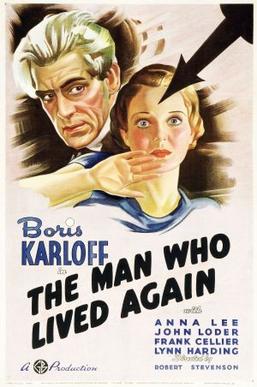
Horror On The Lens: The Man Who Changed His Mind (dir by Robert Stevenson)


In this film from 1936, Anna Lee plays Dr. Clare Wyatt, who leaves behind her reporter boyfriend (John Loder) so that she can accept a job working with the eccentric scientist, Dr. Laurience (Boris Karloff).  Dr. Laurience lives in a spooky mansion with a sarcastic, wheelchair-bound assistant (Donald Calthorp).  It turns out that Dr. Laurience believes that he has discovered how people can switch minds and bodies.  The scientific community ridicules Dr. Laurience but soon, Laurience is putting his theories to the test.  Dr. Laurience finds himself falling in love with Clare but he knows that she’s in love with her suspicious boyfriend.  What if Dr. Laurience changed his mind?

This is an entertaining British production, featuring almost the entire cast playing more than one role as various minds are moved into different bodies.  That said, the film is dominated by the great Boris Karloff, who gives one of his most enjoyable performances as the mad Dr. Laurience.  Though Karloff became a star playing the Monster, he always seemed happier whenever he got to play the mad scientist.

October Positivity: Finding Faith (dir by Justin Rossbacher)


The 2013 film, Finding Faith, opens with a skeezy-looking man attempting to abduct a teenage girl.  Of course, what the man doesn’t know is that the girl is not a teenager at all.  Instead, she’s an undercover cop who has spent the last few days engaging in online conversations with the man who tried to kidnap her.  The man is arrested and, as he’s taken away, she comments that she’s glad she won’t have to spend anymore time chatting with him.

Indeed, it’s dangerous world out there.  We tend to laugh about Nigerian prince emails and painfully obvious phishing scams but there’s a lot of unsavory people lurking around online.  Faith Garrett (Stephanie Owens) is an intelligent and popular high school cheerleader who thinks that she’s met a cute boy online.  However, as she soon learns, she wasn’t actually talking to Eddie Blue.  Instead, she was talking to a methhead redneck who was talking to her so that he could figure out the best way to track her down and abduct her.  In New Jersey, there’s a warehouse that is full of abducted teenage girls who are scheduled to be sold to the highest bidder and Faith’s abductor feels that he’ll be able to make a lot of money off of her.

If this sounds familiar, you’ve probably seen Taken or one of the many movies that was inspired by that film.  Or maybe you’ve seen one of the countless Lifetime films in which a mother is forced to grab a gun and rescue her daughters from the people who have kidnapped them.  Finding Faith does feature some gunplay.  Erik Estrada plays Sheriff Mike Brown, who is in charge of the investigation into Faith’s abduction.  Sheriff Brown carries a gun and so do the people working for him.  That said, Finding Faith puts much more emphasis on the power of prayer than the power of firearms.  Faith prays.  Faith’s father prays.  Sheriff Brown prays.  You know who doesn’t pray?  The kidnapper.

Finding Faith is based on a true story.  Indeed, the film was executive produced by the real Sheriff Mike Brown and, judging from some of the performances, it wouldn’t surprise me if some of the film’s cops were played by actual cops.  Because the film is based on a true story and because the threat of being abducted by someone who has been stalking you online actually is something that most people should be aware of, it’s a bit disappointing that Finding Faith isn’t a better movie.  Unfortunately, it’s a bit overlong and it’s plagued with slow spots.  On the plus side, Stephanie Owens gives a good performance in the lead role of Faith.  Erik Estrada tersely delivers his heavy-handed narration and delivers most of his other lines through clenched teeth.  Estrada is one of those actors who never lets you forget that he’s acting.  As a result, he can be entertaining to watch but, at the same time, watching him tends to take the viewer out of the reality of the film.  As an actor, Estrada is better-served by films like Guns than films like Finding Faith.

That said, the film’s final message is to be careful out there and that’s definitely a good idea!

Late Night Retro Television Reviews: Highway to Heaven 1.1 “Pilot: Part One”


Welcome to Late Night Retro Television Reviews, a feature where we review some of our favorite and least favorite shows of the past!  On Thursdays, I will be reviewing Highway to Heaven, which aired on NBC from 1984 to 1989.  The entire show is currently streaming on Tubi and several other services!

Highway to Heaven is one of those old shows that, decades after its final episode, still always seems to either be airing or streaming somewhere.  The show’s premise was a simple one.  Jonathan Smith (Michael Landon) was an angel who had been sent to Earth to help people.  Working with him was a retired cop named Mark Gordon (Victor French).  Together, they drove across the country and met a different guest star every week.

Though the show aired its final episode over 30 years ago and both of the stars have since passed on, Highway to Heaven remains popular in both syndication and streaming.  From the few episodes that I’ve seen, it appears that the show’s main appeal was just how unabashedly sentimental it was.  For people living in a cynical age, the show is a throwback to a simpler time.  Of course, I imagine that some people also find it to be a fairly campy show.  There’s nothing subtle about the messaging of Highway to Heaven. 

Anyway, it seems like a good show to review for Retro Television Reviews, so here we are.  Let’s head down that highway!

Episode 1.1 “Highway to Heaven: Part One”

(Dir by Michael Landon, originally aired on September 19th, 1984)

In a small town in Arizona, there’s a retirement community that is full of people who are in need.

For instance, Estelle Wicks (Helen Hayes) hasn’t left her room in years.  She’s convinced that her daughter is going to come to get her at any minute, even though everyone else at the community tries to get her to understand that her daughter hasn’t been by to see her in years.  That said, at least Estelle still has some hope.  Everyone else in the community appears to be resigned to spending all of their time indoors, watching television and waiting for the end.

Mr. Haskins (John O’Leary), the owner of the community, is struggling to pay the bills and is thinking of selling the retirement home to a group of land developers.  Mr. Haskins rarely smiles and hardly ever interacts with the people living at the community.  He doesn’t want them going outside or doing any special activities because he’s worried about potential lawsuits.  He’s not willing to spend the money necessary to even make the community look like an inviting place to live.

Mr. Haskins’s assistant, Leslie Gordon (Mary McCusker), is a lonely woman who lives in an apartment with her brother, Mark (Victor French).  Mark is a former cop who refuses to trust anyone and who can’t hold down a job.  He’s developing quite a drinking problem and spends most of his time either watching television and having a beer or going down to the local bar and having even more beer.

No one, and I mean no one, in this town appears to be happy.  But then a mysterious drifter named Jonathan Smith (Michael Landon) hitchhikes into town and applies for a job as a maintenance worker at the retirement community.  As he explains to Mr. Haskins, he doesn’t have any references but he’s willing to work without a salary for a month in order to prove that he can handle the job.  Mr. Haskins hires Jonathan, who immediately plants a flower garden and gets to know the residents at the retirement community.  He even gets Estelle to agree to take care of a puppy.

With Jonathan’s gentle encouragement, even Leslie starts to enjoy life a little bit more.  When Jonathan shows up one morning with a bicycle, Leslie rides it to work.  When Leslie asks Jonathan how he could afford the bike, he says that a friend gave it to him.  When she asks how Jonathan could afford to plant all of the flowers for the retirement home, he says that a friend helped out.  For a drifter who just came to town, Jonathan certainly seems to have a lot of friends!

This raises the concern of Mark, who thinks that Jonathan must be a conman of some sort.  He sets out to investigate just exactly who Jonathan is.  He first stop is the local bicycle shop, where the owner says that he’s never met a Jonathan Smith.  And then — the episode ends!  “TO BE CONTINUED” reads the title card.

It’s a rather abrupt ending, undoubtedly the result of the pilot originally being aired as a two-hour movie.  As often happens, the pilot was split into two parts for syndication.  Of course, the viewer already knows that Jonathan is an angel who has been sent to Earth to help people but the first episode of the series ends with Mark still convinced that Jonathan is just a con man.  I assume he’ll find out the truth next week.

As far as first episodes go, this one is hard to judge because it’s obviously incomplete.  That said, the pilot’s unapologetic earnestness is definitely its strongest trait.  Early on, Jonathan says, “Kindness doesn’t cost a thing,” and Michael Landon delivers the line with such sincerity that he makes it work despite the fact that it’s also a cliché.

Anyway, next week, we’ll finish up the pilot and see if Mr. Haskins will ever learn how to run a retirement community.  Hopefully, Estelle will finally come out of her room as well.  And, most importantly, we’ll see how Mark went from thinking Jonathan was a con artist to traveling around the country with him.

Until then, be kind.