Horror Film Review: The Asphyx (dir by Peter Newbrook)


The Asphyx, a 1972 horror film from the UK, opens in what would have been the film’s modern day.  A horrific accident occurs when two cars collide.  The drivers are both dead, with one of the them rather grotesquely hanging out of a shattered windshield.  And yet somehow, an elderly pedestrian who was trapped underneath the two cars is still alive and able to shuffle away from the accident.

The film then jumps back to the Victorian-era.  Sir Hugo Cunningham (Robert Stephens) is a scientist who is studying what happens at the exact moment of death.  Taking a look of several pictures that were taken of people as they died, he spots a dark smudge that seems to be hovering near the subject of each photograph.  Later, while making a home movie with an amazing new device called a motion picture camera, Sir Hugo can only watch in horror as his son Clive (Ralph Arliss) and Clive’s fiancee, Anna (Fiona Walker), both drown in a boating accident.  When Sir Hugo later looks at the film, he notices a ghostly blue light that seems to be hovering over both his son and Anna.

Sir Hugo speculates that the light could be what the ancient Greek called the Asphyx, a force that comes for everyone’s life in the moment right before death.  Hugo theorizes that everyone has their own individual Asphyx and he also comes to believe that if one were to capture their own Asphyx before it takes away their life, the result would be immortality.  Working with his reluctant adopted son, Giles (Robert Powell), Hugo sets out to capture an Asphyx.  Unfortunately, to do so means that someone has to be on the verge of death so that their Asphyx will show up.  Giles is not happy about the idea of strapping Hugo into an electric chair or of sitting in a gas chamber himself but he agrees to do so in return for Hugo’s permission to marry Hugo’s daughter, Christina (Jane Lapotaire).

(Before we all say, “Ewwww!,” let us remember that Clive is only adopted.  Still, it does feel a bit strange.)

The experiments lead to both tragedy and success.  Heads roll, literally.  And while Giles’s doubts continue to grow, Hugo finds himself more and more obsessed with the idea of living forever.

The Asphyx is a rather low-key horror film.  No one is going to mistake this for one of Hammer’s bloody and flamboyant films.  The horror is less in what is seen and more in what is implied.  That said, the premise is an intriguing one, the film’s plot unfolds with a good deal of intelligence, and both Robert Powell and Robert Stephens overact so grandly during the film’s final few minutes that those who are just looking for a campy British horror film will be satisfied.  Robert Stephens gives a very good performance as Sir Hugo, a scientist who claims that he’s just tying to make the world a better place but who is actually motivated by his own megalomania.  (He reasons that he deserves to be immortal because he’s a scientist and his contributions are too important to be ended by a mere death.)  Robert Powell’s somewhat wooden acting style actually makes him ideal for the role of Giles, who is written to be, at least in the beginning, a somewhat boring person.  The film’s best performance comes from Jane Lapotaire, whose reaction to discovering how far her father is willing to go to capture an Asphyx is simply heart-breaking to watch.

The Asphyx is a great pick if you’re looking for an off-beat and intelligent horror film this scary season.
Horror Movie Review: The Fall of the House of Usher (dir by Roger Corman)


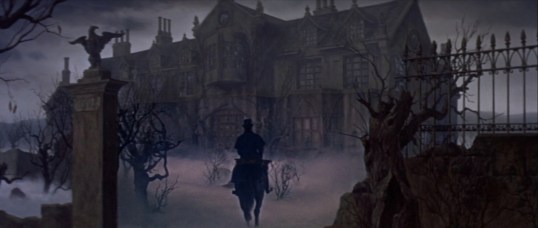
The 1960 film, The Fall Of The House of Usher, opens with Phillip Winthrop (Mark Damon) riding his horse across a desolate landscape.

There’s a foreboding mansion in the distance but what the viewer immediately notices is that the land around the mansion looks almost post-apocalyptic.  Even though the film is set in the 1800s, the misshapen trees and the high winds all bring to mind a film set in a nuclear-scarred world, the type where you expect to find radioactive mutants hiding behind every tree and rock.

Phillip is a young aristocrat who is traveling to the home of the Usher family.  He is engaged to marry Madeleine Usher (Myrna Fahey) but, as soon as he arrives at the mansion, her older brother, Roderick (Vincent Price, with no mustache and blonde hair), informs Phillip that he will never be allowed to marry Madeleine.  Roderick explains that the Usher family is cursed and he even takes Phillip on a tour of Usher family history, showing him a series of truly hideous paintings of past Ushers.  One Usher was a murderer.  Another Usher was blackmailer.  An Usher wearing a pirate’s cap is identified as being a slave trader.  The Ushers are cursed, with each family member destined to become insane.  Roderick’s mission is to bring the Usher bloodline to a close and that means that Madeleine cannot marry.

Phillip disagrees, especially when the sickly Madeleine herself says that she wants to escape from her seemingly mad brother.  With the house itself continually shaking as if it’s on the verge of collapsing, Phillip becomes determined to take Madeleine away.  Roderick tries to warn him not to.  Even the friendly butler, Bristol (Harry Ellerbe), encourages Phillip to give up.  But Phillip remains stubborn and determined.  However, when Madeleine suddenly collapses and dies, it appears that Phillip’s plans to marry her are at an end.  But is Madeleine truly dead?

Based on a short story by Edgar Allan Poe, this was, at the time, the most expensive film that Roger Corman and American International Pictures had ever made.  (It was also their first color film.)  Of course, the budget was still just $300,000 and the Usher mansion was largely constructed out of props that were borrowed from other films.  That said, the film had a name star and, with its vivid colors and its fiery finale, it certainly looked like a big-budget film.  This film marked the first collaboration between Vincent Price and Roger Corman and it was a box office success, making  a million dollars at a time when a million dollars really meant something..  Corman and Price would go on to do several other Poe adaptations together, all of which were distinguished by Price’s villainous performances and Corman’s pop art visuals.

Seen today, The Fall of the House of Usher can seem to be a bit slow.  With only one location and a cast of only four actors, it often feels a bit stagey.  Mark Damon is rather stiff as Phillip.  (One can see why he abandoned acting to become a producer.)  But Vincent Price’s performance as Roderick Usher continue to entertain, with Price delivering every line of dialogue with his trademark aristocratic archness.  There’s nothing subtle about Price’s performance but Price’s tendency to overact perfectly matched Corman’s vivid visuals and it’s interesting to watch a hyperactive Price performance paired with the type of dull performance that Mark Damon offers up.

The fiery finale still packs a certain punch and, watching it, one can see why Corman and Price said, “Let’s do this again!”  The Fall of the House of Usher (which is also available on some streaming sites as simply House of Usher) remains an enjoyable macabre Halloween treat.

House of Usher (1960, dir by Roger Corman, DP: Floyd Crosby)


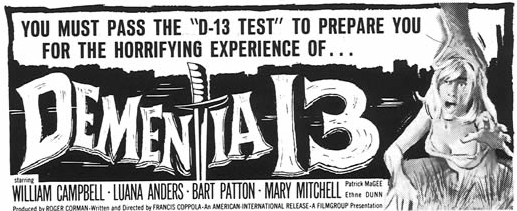
Horror on the Lens: Dementia 13 (dir by Francis Ford Coppola)


(I originally shared this film back in 2011, 2019, 2022, and 2023 — can you believe we’ve been doing this for that long? — but the YouTube upload keeps getting taken down!  So, I’m resharing it today!)

For today’s excursion into the world of public domain horror, I offer up the film debut of Francis Ford Coppola.  Before Coppola directed the Godfather and Apocalypse Now, he directed a low-budget, black-and-white thriller that was called Dementia 13.  In a possible sign of things to come, producer Roger Corman and Coppola ended up disagreeing on the film’s final cut and Corman reportedly brought in director Jack Hill to film and, in some cases, re-film additional scenes.

Regardless of whether the credit should go to Coppola, Corman, or Hill, Dementia 13 is a brutally effective little film that is full of moody photography and which clearly served as an influence on the slasher films that would follow it in the future.  Speaking of influence, Dementia 13 itself is obviously influenced by the Italian giallo films that, in 1963, were just now starting to make their way into the drive-ins and grindhouses of America.

Speaking of giallo films, keep an eye out for Patrick Magee, who gave a memorable performance in Lucio Fulci’s The Black Cat.  Luana Anders, who plays the duplicitous wife in this film, showed up in just about every other exploitation film made in the 60s and yes, the scene where she’s swimming freaks me out to no end.  Other films featuring Luana Anders include Night Tide and Easy Rider, in which she played one of the hippies who unsuccessfully enticed Peter Fonda and Dennis Hopper to stay at the commune.

As for Francis Ford Coppola, well, he’s gone on to have quite a career, hasn’t he?  It’s been quite a journey from Dementia 13 to Megalopolis!

October Positivity: Mindreader (dir by Rich Christiano)


2022’s Mindreader start out telling the story of the Great Dexter (Hamish Briggs).

In 1974, Dexter amazed audiences with his mid-reading tricks.  He also amazed his fellow magicians, none of whom could figure out how Dexter performed his tricks.  Dexter insisted that they only needed to consider his catch phrase — “I don’t really do magic, I just read minds,” — to understand how he was able to know what people were thinking.  Dexter said that his fellow magicians just needed to have faith that he could do what he could do.

But the other magicians, because they were so used to the idea of tricking their audiences, would not accept what Dexter said.  They launched an investigation into how Dexter was able to read minds.  A particularly jealous magician tried to fool Dexter by lying about what he was thinking.  Dexter, of course, saw right through him and humiliated the magician in front of his peers.  Those who worked at the same theater as Dexter were offered money to spy on and betray Dexter.  Dexter’s story eventually ended with tragedy.

Years later, Dexter is a revered figure.  The same organization of magicians that persecuted him now wants to honor him.  They interview those who knew Dexter.  They hear about Dexter’s powers.  They hear about how Dexter’s ability to read minds helped countless people.  And they still demand to know how Dexter could have read minds.  Dexter’s now aged assistant tells them that they can either believe it was a trick or they can accept that Dexter could do what he said he could.

Now, it’s pretty obvious what this film is getting at.  Dexter is obviously meant to be a Christ figure and his persecution is meant to parallel the betrayal and crucifixion of Jesus.  It’s not at all subtle but it’s still fairly well-done.  For a Rich Christiano film, the first hour of Mindreader is well-directed, well-acted, and nicely paced.

However, the film takes an abrupt turn when the end credits suddenly roll at the 60 minute mark and a whole new film begin.  Suddenly, the viewer finds themselves watching as a bunch of college students as they stand up and leave a movie theater.  They agree the movie was interesting but they don’t say much else about it.  The student who invited them to the movie goes to his dorm room and feels like a failure for not talking to them about the film’s message.  But, the next day, he discovers that at least one of them is interesting in what the film was really about and they proceed to discuss it.

Two things about this ending:

Number one, it feels more than a little self-congratulatory.  One gets the feeling that this ending was Christiano’s way of clapping back at every critic (like me!) who has ever suggested that a lot of faith-based films don’t really do much to reach people who don’t already agree with their point of view.

Number two, as the magicians in this film could have told you, you should never reveal how it’s done.  There’s a difference between getting people to think about something and telling people to think about it.  After an effective hour, Mindreader gets too heavy-handed for its own good.

Sometimes, you have to have faith in your audience.

Late Night Retro Television Review: Monsters 2.16 “Perchance to Dream”


Welcome to Late Night Retro Television Reviews, a feature where we review some of our favorite and least favorite shows of the past! On Wednesdays, I will be reviewing Monsters, which aired in syndication from 1988 to 1991. The entire series is streaming on YouTube.

This week, it’s all about dreams!

Episode 2.16 “Perchance to Dream”

(Dir by Paul Boyington, originally aired on February 4th, 1990)

Alex (Raphael Sbarge) is a college student whose dorm room has become one wild place.  Blood continually drips from a chair.  A subway train occasionally roars past the window.  A giant nun peeks in on him and tries to swat him with a ruler.  These are all images that Alex used to see in his dreams but now, they’re entering his waking world and what’s really strange is that everyone else can see them too.  His subconscious has become reality.

Thinking that it might have something to do with a recent mugging in which Alex struck his head and apparently lost the ability to sleep, Alex’s girlfriend, Megan (Sarah Buxton), asks Kyle (Kenneth Danziger), an expert on dreams, for help.  Arriving at Alex’s dorm room just in time to save Alex from the nun and her ruler, Kyle theorizes that, because Alex isn’t sleeping, he’s projecting his dreams into the real world.  The only solution is for Alex and Megan to enter a portal that leads them straight into Alex’s subconscious.  If Alex can find his dream self, he can finally get some rest.  Of course, Alex and Megan will have to avoid and defeat a series of trains, muggers, and nuns to accomplish their task.

This episode is entertainingly goofy.  It was obviously inspired by the popularity of the Nightmare on Elm Street films but the monster here is not a wisecracking killer like Freddy Krueger but instead, it’s just Alex’s bad childhood memories and the trauma of having been mugged.  As I watched this episode, I was impressed that Monsters tried to do something different than usual but I was also very aware that 20 minutes was not enough time to tell the story that this episode wanted to tell.  For this episode to really work, the viewer would have to feel a deep connection to Alex.  Raphael Sbarge gives a likable performance as Alex and he has a really cute chemistry with Sarah Buxton but 20 minutes still isn’t enough time to really get to know the guy.

When seen today, the special effects are undeniably primitive but there’s something kind of charming about that.  The scene where the giant nun tries to swat Alex with a ruler looks silly today and I imagine it probably looked silly in 1990 as well but it’s a fun kind of silly.  The same can be said of the scene where Alex and Megan plunge into his subconscious.  CGI has come a long way but today’s realistic CGI just doesn’t have the do-it-yourself charm of early chroma keying and matte shots.  I liked that Alex’s subconscious was not only goofy but cheap as well.

Horror on TV: One Step Beyond 1.2 “Night of April 14th” (dir by John Newland)


For today’s televised horror, we have the second episode of the 1960s anthology series, One Step Beyond.

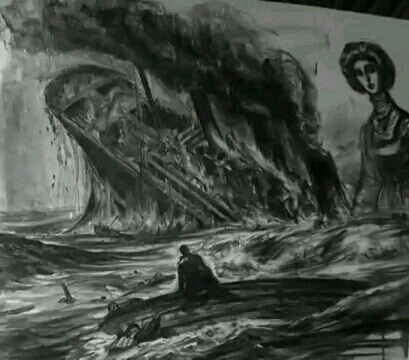
In this episode, a young Englishwoman is haunted by dreams of drowning.  Try as she might, she can’t get the feeling of doom out of her mind.  Perhaps her upcoming trip to New York will help to relax her.  Her fiancee even tells her that they’ll be traveling to New York on the most luxurious ship ever built.  The name of that ship?  Why, the Titanic, of course.

For the record, there actually were quite a few people who apparently did have psychic premonitions of doom when it came to the Titanic.  Perhaps the most infamous example was the author Morgan Robertson, who wrote a novel in 1898 that was called The Wreck of the Titan: Or, Futility.  That book managed to perfectly predict that sinking of the Titanic, right down to the iceberg and the number of lives lost.

This episode originally aired on January 27th, 1959.

Enjoy!

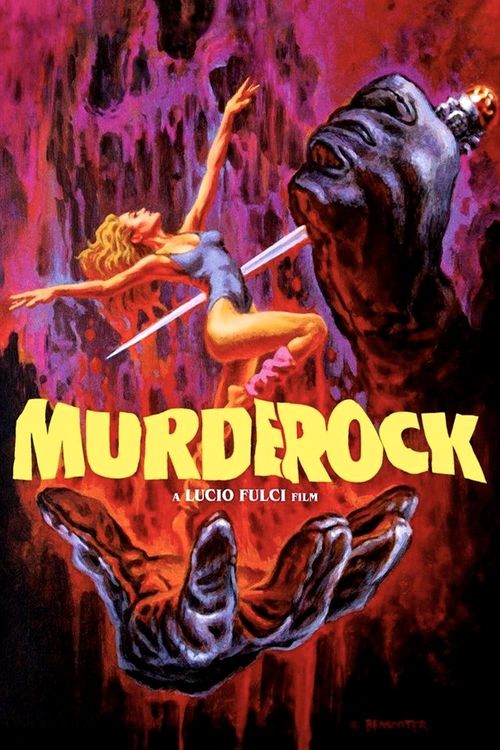
October Hacks: Murder Rock (dir by Lucio Fulci)


Are the streets to blame?  Paranoia’s coming your way….

Ah, Murder Rock.

This 1984 film is often dismissed as being one of director Lucio Fulci’s lesser efforts, an attempt to combine the trappings of the giallo genre with the sexy, choreographed dance routines of Flashdance.  And certainly, the film does lack the visceral, dream-like horror of The Beyond trilogy and Zombi 2.  The film’s killer isn’t even as interesting as The New York Ripper‘s killer who talked like a duck.  That said, I think some critics have been a bit too hard on Murder Rock over the years.  Taken on its own terms, it’s a well-made slasher with a healthy does of 80s style.  Of course, I should admit that, as someone who grew up attending dance classes and dancing through the pain, I could relate to the film’s milieu.  I’ve never had to deal with a zombie in real life but I did meet my share of dancers who would do anything to move up.

The film takes place at the Arts For The Living Center in New York City, where young dancers are hoping to land a spot on a televisions show and also hoping to avoid getting killed by the murderer who is haunting the locker rooms and using a long hairpin needle to stop the hearts of his victims.  (The sound of a previously healthy victim’s heart beating on the soundtrack and then abruptly stopping is far more powerful than one might expect.)

Previously seen losing an eye in Fulci’s Zombi 2, Olga Karalatos plays Candice Norman, the owner of the dance studio.  When one of her dancers is murdered while taking a shower, Candice is just one of many suspects.  Candice, however, is haunted by a dream in which she sees herself being stalked by a handsome man (Ray Lovelock) carrying a hairpin.  Later, Candice realizes that she’s seen the handsome man before.  He’s George Webb, a male model whose face adorns a billboard.  Candice starts to investigate George on her own, discovering that he’s apparently an alcoholic who lives in a run-down apartment.  When evidence starts to show up suggesting that George could be the murderer, he claims that he’s being framed.

Of course, George isn’t the only suspect.  There’s also Willy Stark (played by Christian Borromeo), a dancer whose girlfriend ends up as a victim of the murder spree.  With his blonde hair and aristocratic bearing, Christian Borromeo was one of the most handsome actors to appear in Italian films in the early 80s.  He didn’t do many films before retiring but he still managed to appear in films directed by Dario Argento, Federico Fellini, Ruggero Deodato, and Lucio Fulci.  He played very different characters in all of his films and gave a good performance each time.  One reason why I specifically want to single out Christian Borromeo here is because there’s still a lot of people online who are under the impression that Borromeo died a heroin overdose in the 80s.  This is largely due to a comment that was made during an interview with David Hess, who co-starred with Borromeo in The House At The Edge of the Park.  Hess was confusing Borromeo with their co-star, Garbiele Di Giulio.  Di Giulio did indeed die of a heroin overdose.  Christian Borromeo is still alive, though retired from acting.

As for Murder Rock, the killings are nowhere near as gory as in Fulci’s other films but that actually adds to the film’s creepy atmosphere.  The killer is frightening because the killer is coolly efficient and can kill without resorting to the out-of-control, manic violence of quacking sociopath at the center of The New York Ripper.  As is usual with Fulci, the film’s visuals are Murder Rock‘s greatest strength.  The first murder occurs while the locker room’s light blink on and off, creating a truly frightening sequence as the camera seamlessly assumes the killer’s point of view.  When the police investigate the crime, the flashes of the police cameras are almost blinding as they record the stark crime scene.  Candice’s nightmares play out like a particularly macabre perfume commercial (and yes, that it meant as a compliment).  Fulci’s camera roams from location to location, keeping the audience off-balance throughout the film.  As he did in so many of his other films, Fulci makes New York look like the grimiest, most claustrophobic city in the world.

As for the dance sequences, they’re so over-the-top that you can’t help but love them.  The film was obviously envisioned as a way to cash in on the popularity of Flashdance but Fulci’s dispenses of the romanticism that made Flashdance a hit and instead just focuses on bodies moving in a explosion of choreographed carnality.  There’s nothing subtle about the way the film lingers on the spandex-clad dancers but then again, that’s why we love Fulci.  He was not one to make apologies.

Fulci once said that Murder Rock was meant to be the first part of a projected trilogy of musical gialli.  Who knows whether or not that’s true.  (As an interview subject, Fulci was always quick to boat of the grand projects he had planned for the future.  As the diabetic Fulci was in precarious health at the same time that he made his most popular horror films, there was always something rather poignant to Fulci’s constant boasting about all of the great films he planned to make.)  As I said at the start of this review, Murder Rock is one of Fulci’s less-appreciated films but, as someone who loves both dancing and watching horror movies, I’ve always liked it.  Even the fact that the killer is exposed in a way that doesn’t really stand up to close scrutiny just adds to the film’s charm.  (Seriously, a good giallo rarely makes that much sense.)

In closing — SING IT!

Are the streets to blame?

Paranoia’s coming your way!


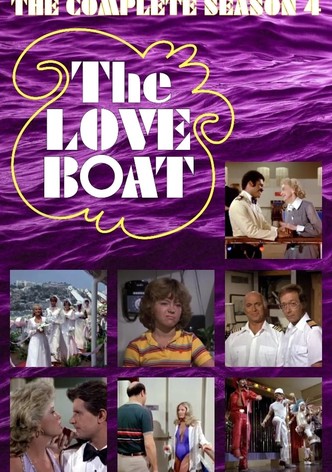
Retro Television Review: The Love Boat 4.25 & 26: “This Year’s Model/The Model Marriage/Vogue Rogue/Too Clothes for Comfort/Original Sin”


Welcome to Retro Television Reviews, a feature where we review some of our favorite and least favorite shows of the past!  On Wednesdays, I will be reviewing the original Love Boat, which aired on ABC from 1977 to 1986!  The series can be streamed on Paramount Plus!

This week, it’s time for the fashion festival!

Episode 4.25 and 4.26 “This Year’s Model/The Model Marriage/Vogue Rogue/Too Clothes for Comfort/Original Sin”

(Dir by Roger Duchowny, originally aired on May 2nd, 1981)

This week, the Love Boat sails to Acapulco for the International Fashion Festival!  Vicki, who hopes to grow up to be a fashion designer, is excited about meeting her idols.  Doc, Gopher, and Isaac are excited about the models.  Captain Stubing starts the cruise by reminding everyone to do their job for once.  It’s about time Stubing told them that.  Does Doc even keep office hours anymore?

This one of those two-hour episodes of The Love Boat that gets chopped into two episodes for syndication.  As such, it’s double-sized, with twice as many guest stars and the boat actually sailing to Acapulco during filming.  That doesn’t mean that the storyline are any more complicated than usual on this episode.  Despite being longer then usual, the episode follows the usual Love Boat pattern.  The extra time is largely taken up with a travelogue of Mexico (watch as a limo very slowly drives to a luxury hotel!) and the fashion show.

Fashion designers Gloria Vanderbilt, Bob Mackie, Halston, and Geoffrey Beene all appear as themselves.  They’re listed as guest stars but they don’t actually do anything other than board the ship and then show off their designs.  They don’t find love on the boat, nor do they search for it.  (Well, Halston probably did….)  Interestingly enough, none of them — not even the famous Halston — has much of a screen presence and in the scene where they introduce themselves to the crew, they’re all so stiff that it is somewhat difficult to watch.  It’s obvious that none of them were actors but it’s also interesting to consider that there was a time when someone could be internationally famous without being a natural on camera.

There are also a few fictional designers on the cruise.  They’re the one who actually have storylines.  Harvey Blanchard (Dick Shawn) is not aware that his daughter, Mandy (Debra Clinger), has married his nerdy assistant, Alvin Beale (Richard Gilliand).  Mandy wants Alvin to tell her father that they re married during the cruise but first, Alvin is going to have to figure out what to do after he accidentally dumps some designer clothes down a laundry chute and they end up shrinking in the dryer.  (“Have you ever considered designing children’s clothing?” Alvin asks his boss.)

Benita James (Elke Sommer) is an “up-and-coming” fashion designer who falls in love with Sidney Sloan (Mike Connors), despite the fact that he’s an industrial spy who has been hired to steal her designs.  Sid falls in love with Benita as well and decides that he can’t betray her.  But when Sid’s partner (Steve Franken) ransacks Benita’s cabin, will Sid be able to convince her that he wasn’t involved?

Charles Paris (Robert Vaughn, looking somewhat embarrassed) is a cosmetics tycoon who boards the boat looking for the new Ms. Paris, the model who will be the face of his company.  Will he pick Liz(Morgan Brittany) the model with whom he is falling in love, or will he pick Joanne Atkins (Carmilla Sparv), the model who has been told that, since she’s now over 35, her career is over?

Speaking of Joanne, she falls in love with Captain Stubing and Stubing falls in love with her.  Meanwhile, the married heads of her modeling agency (Anne Baxter and McClean Stevenson, who looks almost as embarrassed as Robert Vaughn) argue over whether or not Joanne is too old to continue on as a model.

Julie is excited because her former sorority sister, Melissa (Cristina Ferrare), is a model on the cruise.  Julie can’t wait to spend the whole cruise with her but Melissa meets and falls in love with Larry (Chris Marlowe).  When Melissa and Larry run off to get married, Julie takes her friend’s place in the fashion show.

And really, the fashion show is what this episode is all about.  The stories aren’t particularly important.  We’re here for the clothes!

Bob Mackie starts things off with a really cute collection of lingerie and pajamas, which happen to be my favorite things to wear.  I loved his collection.

Gloria Vanderbilt follows with sporty summer fashion, and watching her collection, I found myself wanting to go play tennis with my neighbors.

Geoffrey Beene follows with a collection of plaid suits that will be familiar to anyone who has ever binged a 70s sitcom.

“Up and comer” Benita James presents a collection of truly hideous cocktail dresses.

And Halston closes things out with evening wear.  “Red is my favorite color,” Halston says, “It’s so fun.”  This redhead appreciates the sentiment, even if it was kind of obvious that Halston didn’t bring his top designs on the cruise with him.

As the highlight of the episode, the fashion show was definitely entertaining though. it was impossible not to smile at just how ugly Benita James’s designs actually were.  Seriously, someone went to the trouble to hire two industrial spies to steal those designs?

As for everything else, it all works out.  This is The Love Boat.  Everything always works out.  Charles Paris announces that the new Ms. Paris will be Joanne but then he asks Liz to be “Mrs. Paris.”  Sid and Benita decide to get married as well.  Captain Stubing gets to have sex for once.  I think that may be the first time that’s happened since this show started.  Julie enjoys modeling.  Everyone either finds love or decides not to get divorced.  That’s a successful cruise!

This cruise was fun in its silly way.  Bob Mackie definitely won the fashion show.  Though the designers may not have been comfortable on camera and McClean Stevenson looked like he was on the verge of jumping overboard from embarrassment, this was The Love Boat at its most entertaining.


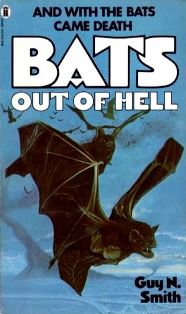
Horror Book Review: Bats Out Of Hell by Guy N. Smith


“You think those are bats?” someone said as we all stood out on the balcony of a hotel in the mountains of Switzerland.

I was 18 years old, a recent high school graduate who was spending my summer in Europe with my sisters.  We were in Switzerland and had just eaten dinner at our hotel.  I had stepped out onto hotel’s balcony, joining several other tourists who were looking up at the evening sky.  The sky was was full of shadowy, winged creatures that seemed to be circling the hotel.  As I stared up at the creatures and listened to the people around me wonder what they could be, I thought to myself that they very well could be bats.  That freaked me out a little.  Growing up in the Southwest, I had seen my share of bats.  I’ve seen bats get trapped in garages.  I’ve seen bats come flying out of tunnels.  I’ve never been attacked by a bat.  In fact, you have to be pretty obnoxious to attract the attention of a non-rabid bat.  But that doesn’t make the sight of them any less frightening or the thought of them sucking your blood any less alarming.

We all stood out on the balcony, staring up at the bats and wondering if we were about to be attacked.

“Those are definitely bats,” someone else said, “Is it safe to be out here?”

By this point, my sister Megan had come out onto the balcony in order to make sure that I hadn’t fallen off.

“What’s everyone looking at?” she asked.

“Those are bats!” an old woman exclaimed, pointing at the sky.

“Those are birds,” Megan replied.

The “bats” chirped in agreement.

I found myself thinking about that Swiss evening as I read the 1978 horror paperback, Bats Out Of Hell.  This novel opens with Professor Brian Newman developing a new virus as part of an attempt to find a cure for Meningitis.  Unfortunately, he has tested his virus on a bunch of bats at the laboratory and now, they’ve all become increasingly aggressive.  Since the virus also appears to ultimately be fatal to the bats, Newman can’t help but feel guilty about what he’s putting the bats through.  Even though he’s told he just be happy that the bats are going to die eventually, he can’t stop thinking about their accusatory stare.  He knows that the bats blame him and well they should!

An argument with his girlfriend leads to Brian falling and accidentally setting free all of the infected bats.  The bats swarm across the British countryside, attacking everyone that they see and spreading the virus.  The government reacts by declaring martial law and trying to isolate the bats to one city.  Soon, rioters are taking to the streets and vigilantes are enforcing their own violent interpretation of the law.

That’ll teach humanity to try to cure Meningitis!

Bats Out Of Hell is a pulpy read, one that works because bats are scary and author Guy N. Smith keeps the action moving quickly.  The novel is at its best when envisioning a world where fear of disease has led to mass panic and a suspension of civil rights.  Hmmm …. why does that seem so familiar?  It’s amazing how science fiction can eventually become science fact.

October True Crime: Ripper’s Revenge (dir by Steve Lawson)


Taking place in Victorian-era London, 2023’s Ripper’s Revenge tells the story of Sebastian Stubb (Chris Bell.)

Sebastian Stubb is a journalist, writing stories for one of the many sleazy tabloids that keep the people of London in a state of constant agitation.  Just a few months ago, things were going well for Stubb and his fellow reporters.  Jack the Ripper was terrorizing the city and sending bloody letters to both the police and the newspaper.  Every day, there was a new detail to be reported and a new panic to stoke.  Stubb and his colleagues left London obsessing over the crimes and the motivation of the mysterious Jack the Rippe, to such an extent that Stubb now feels that his reporting probably inspired more murders than it stopped.

Jack the Ripper’s killing spree has come to an apparent end and the Ripper himself has disappeared, though Londoners still continue to speculate about who he could have been.  (In real life, the police rather infamously claimed that an obscure lawyer named Montague Druitt was the murderer but there really wasn’t much evidence for that, beyond the fact that the murders appear to have ended at the same time that Druitt committed suicide.  Personally, I suspect that the assassin was an American con artist named Francis Tumblety, who fled back to America shortly after the final murder was committed.)  Stubb is now struggling financially.  While his girlfriend, Iris (Rachel Warren), walks the streets just as the victims of Jack the Ripper once did, Stubb searches for the next big story.

Then, one day, Stubb gets a letter.  The letter is from someone claiming to be Jack the Ripper.  The writer apologizes for having not written sooner and then tells Stubb that his latest victim can be found in a warehouse.  Though believing the letter to be a hoax, Stubb goes to the warehouse and discovers a dead prostitute.  At the same time, Stubb is himself discovered by the London police and is hauled off to jail.

Now, at this point, I should mention that Ripper’s Revenge is a sequel to a film called Ripper Untold.  That film also featured Chris Bell as Stubb and apparently, it featured him investigating the original Ripper murders.  I point this out because I haven’t seen Ripper Untold, so I don’t know how directly Ripper’s Revenge follows the story from the first film.  It doesn’t really matter, though,  This is a case where you can follow the sequel’s plot without having seen the original.

We know Stubb is not the Ripper but who is?  Because this is a low-budget film, there really aren’t that many suspects.  Inspector Wingate (Carl Wharton) seems to have a nasty puritanical streak.  Junior reporter Lenny (Rafe Bird) seems to be almost too eager to help out Stubb.  And even Iris seems to be really excited about the idea of the murders starting again, if just so Stubb can make more money.  Who is the murderer?  I won’t spoil it, beyond to say that the ending has so many twists that it almost starts to feel like a parody of a surprise ending.

That said, this low-budget and rather talky film is actually surprisingly effective.  Bell, Warren, Wharton, and especially Rafe Bird all give excellent performances and the film really does capture the claustrophobic desperation of living on the fringes of acceptability,  (This is a case where both the low budget and the limited amount of locations really work to the film’s benefit.)  The discussion about whether or not the Ripper would have existed without the press shows that this film has more on its mind than just exploiting the crimes of history’s first celebrity killer.  As I said, the ending is a twisty one and it doesn’t quite make sense but things rarely do when it comes to Jack the Ripper.