Musical Film Review: The Commitments (dir by Alan Parker)


First released in 1991 and based on a novel by Roddy Doyle, The Commitments is the story of a manager with a dream and a band with a chip on its collective shoulder.

Living in working class Dublin, Jimmy Rabbitte (Robert Arkins) dreams of managing a band.  He’s a fan of old school soul and rock and roll music, the type that was played by black artists in the American South.  Jimmy feels that the Irish have a special connection to that music because, as he explains it, “the Irish are the blacks of Europe.”  (I think one could argue that the black people living in Europe are the blacks of Europe but we’ll go with it.  I understand Jimmy’s argument, even if it is the sort of thing that would send social media into a tizzy if it were made today.)  Jimmy puts an ad in the paper and discovers that there are a lot of aspiring musicians in Ireland and very few of them know much about soul music.  Even Jimmy’s father (a delightful Colm Meaney) seems to believe that he could be a part of the band.  In the end, Jimmy puts together the band himself, recruiting an unlikely collection of friends and barely know acquaintances.  He finds a lead singer in the talented but unruly Deco Cuffe (Andrew Strong), a pianist in the religious Steven (Michael Aherne), a saxophonist in Dean Fay (Felim Gormley), a guitarist in Outspan Foster (Glen Hansard), and three back-up singers in Bernie (Bronagh Gallagher), Imelda (Angeline Ball), and Natalie (Maria Doyle).  He also finds a mentor in trumpeter Joey “The Lips” Fagan (Johnny Murphy), an American who claims to have played with everyone who is anyone and who names the band The Commitments.  They’re a working class band and one that doesn’t always mix well with each other.  Deco’s gets on everyone’s nerves from the start but, as Dean puts it at the unemployment office, he’s much happier being a saxophonist on the dole than a plumber’s assistant on the dole.

There’s a raw energy to The Commitments, as both a film and a band.  Both the film’s comedy and its music comes from a very real pain.  No one in the film is rich.  No one has been given much of a chance by British society.  Deco may be obnoxious but he also epitomizes the wild spirt of someone who refuses to be tamed by society.  Jimmy Rabbitte may occasionally be a bit in over his head but it’s hard not to admire his refusal to surrender.  From the minute the band comes together, it’s obvious that they’re not going to last.  Nearly every gig ends in disaster and Joey, despite his knowledge of soul, is a bit rigid in his demands of the band.  When Dean improvises, Joey acts as if it’s the end of the world that Dean would rather play jazz than soul.  Joey sees jazz as being elitist.  Dean sees it as being a way to express his own artistic vision.  The wonderful thing about The Commitments is that they’re both allowed to be right.

The band might not last but the film leaves you happy that they still had their moment.  The Commitments is a film that feels alive, not just with artistic desire but with the anger of people who have been pushed to the side by the establishment.  For a while, the band gives them a chance to express that anger and, afterwards, it’s gratifying to see that the majority of the members still carry the legacy of The Commitments with them, with some members continuing to pursue music and others returning to their everyday lives in Dublin.  It’s a good film, one that celebrates both music and humanity.
 

The Unnominated #11: The General (dir by John Boorman)


Though the Academy of Motion Picture Arts and Sciences claim that the Oscars honor the best of the year, we all know that there are always worthy films and performances that end up getting overlooked.  Sometimes, it’s because the competition too fierce.  Sometimes, it’s because the film itself was too controversial.  Often, it’s just a case of a film’s quality not being fully recognized until years after its initial released.  This series of reviews takes a look at the films and performances that should have been nominated but were, for whatever reason, overlooked.  These are the Unnominated.

Directed by John Boorman, 1998’s The General tells the story of Martin Cahill.

Martin Cahill (Brendan Gleeson) was a Dublin-based crime lord, a thief by trade who never made any apologies for his profession.  The film opens with the end of Martin Cahill’s life.  Leaving his suburban home, he’s sitting behind the steering wheel of his car when a young man runs up and shoots him in the face.  Cahill’s car rolls forward while his wife (Maria Doyle Kennedy) screams for help.  Cahill has been assassinated in front of his family and the reaction of the local police is to celebrate until Cahill’s oldest nemesis, Inspector Ned Kenney (Jon Voight), announces that they have nothing to cheer about.  The film leaves it somewhat ambiguous as to who shot Cahill, though it heavily suggests that he was shot by the IRA, both because of their mistaken belief that he was moving drugs into the neighborhood but also because of his refusal to share his profits with them.

The film flashes back and we watch as Martin Cahill, a rebellious young man who stole to impress girls and to get a shot back at the establishment, grows up to become Martin Cahill, the crime lord that the papers nickname The General.  Cahill is a professional thief and he’s fairly honest about it.  When his government-controlled flat is torn down, Cahill camps out on the site in a tent, refusing to leave because the location of the new building is to close to the police station.  He says he’d rather be moved to a richer part of town.  It’s better for his work.  As portrayed by Brendan Gleeson, Cahill is a fascinating and complex character, a ruthless criminal who is also devoted to his pigeons, his children and both his wife and his girlfriend (Angeline Bail).  (Fortunately, for Martin, his wife and his girlfriend know about each other and are good friends.)  He’s the type of crime lord who will test a man’s loyalty by nailing him to a pool table and then take him to the hospital afterwards.  “Sorry, Martin,” another associate says after Martin shoots him in the leg to make a fake break-in look authentic.  It’s hard not to like the film’s version of Martin Cahill, an intelligent and ultimately honest man who understands the importance of allowing his enemies to believe him to be a buffoon.  He may be a criminal but he considers it to be an honest living, unlike the government officials who force unwanted laws and exorbitant taxation on the citizenry  Director John Boorman certainly seems to like Cahill, which is interesting as Boorman was actually the victim of one of Cahill’s robberies.  (Boorman recreates the robbery in the film.)

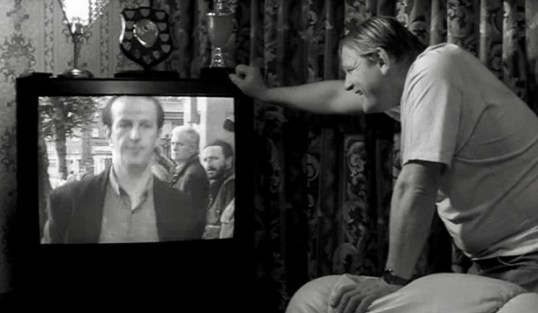
The film went unnominated at the Oscars, which were dominated that year by Shakespeare in Love and Saving Private Ryan.  Brendan Gleeson definitely deserved a nomination for his charismatic performance as Martin Cahill.  Equally worthy of a nomination was Seamus Deasy’s black-and-white cinematography, which gives the film the dream-like feel of a half-remembered legend.  (The version of the film that’s on Tubi features desaturated color.  It’s actually an effective look for the film’s story but I still prefer the black-and-white original.)  Neither was nominated and, indeed, Brendan Gleeson would have to wait until 2023 to finally receive his first Oscar nominations for The Banshees of Inisherin.

The General (1998, dir by John Boorman, DP: Seamus Deasy)

Previous entries in The Unnominated:

  1. Auto Focus 
  2. Star 80
  3. Monty Python and The Holy Grail
  4. Johnny Got His Gun
  5. Saint Jack
  6. Office Space
  7. Play Misty For Me
  8. The Long Riders
  9. Mean Streets
  10. The Long Goodbye

Film Review: Circle of Friends (dir by Pat O’Connor)


1995’s Circle of Friends tells the story of three friends who come of age in 1950s Ireland.

Bernadette Hogan (Minnie Driver), better known as Benny, is our narrator, the daughter of a local tailor whose shyness and insecurity disguises a quick mind and a sarcastic wit.  After years of jokes about her weight (which feel particularly cruel since Benny doesn’t appear to be particularly overweight), Benny has resigned herself to being alone.  Her parents may want her to marry their accountant, Sean Walsh (Alan Cumming), but Sean is obviously a creep.  He’s one of those guys who drinks his tea with his pinky extended.  Everyone knows better than to trust him.

Eve (Geraldine O’Rawe) is an orphan and was largely raised in a convent.  Now that she’s 18, the Westawards — the protestant heretics who once employed her father — are grudgingly keeping their promise and paying for her education.  She gets 60 pounds per term.  (I know my uncle, who paid my college tuition, would have loved it if my college tuition had been whatever the American equivalent of 60 pounds may be.)  Eve has inherited a cottage, a nice and isolated little building that becomes quite important later on in the film.

And finally, there’s Nan (Saffron Burrows).  Nan grew up with Bernadette and Eve, though her family eventually moved to Dublin.  Benny says that Nan is destined to be known for being pretty.

Nan is reunited with Benny and Eve when they all enroll at University College Dublin.  The film follows their friendship at the college, examining how they grow and change over the course of the term.  Benny develops a crush on and eventually starts dating Jack Foley (Chris O’Donnell), a medical student who enjoys playing rugby.  (I’ve never quite understood rugby, to be honest.  It seems weird to me that everyone always starts all huddled up and then apparently, they all try to grab a muddy ball until someone ends up with a compound fracture.  I’m not sure why someone would want to risk losing a limb over a game.)  Eve dates Jack’s friend, Aidan (played by a young Aiden Gillen).  And Nan …. at first glance, Nan would seem to be living every film lover’s dream!  Not does she lose her virginity to a character played by Colin Firth (in this case, Firth is playing Simon Westward) but they also regularly have sex in Eve’s lovely little cabin.  Of course, they don’t bother to let Eve know what they’re doing.  That’s part of the forbidden appeal of it all!  Unfortunately, despite being played by Colin Firth, Simon turns out to be a bit of cad.

Indeed, all of the men turn out to be a bit of a disappointment, though some do manage to redeem themselves.  The film is less about Benny finding love and more about Benny discovering that it’s even more important to love and respect herself.  As so often happens when it comes to lifelong friends, there are some struggles.  Not all of the friendships survive.  Unfortunately, that’s just a part of growing up.  Still, Benny, Eve, and Nan are all wonderfully written and acted characters and the film does a great job of portraying their difficult but very true-to-life relationship.

Circle of Friends is a lovely film and a personal favorite of mine.  Unfortunately, it’s not always an easy film to watch.  It’s not streaming on any of the usual services.   However, the film has been uploaded to YouTube so be sure to watch it while you can.

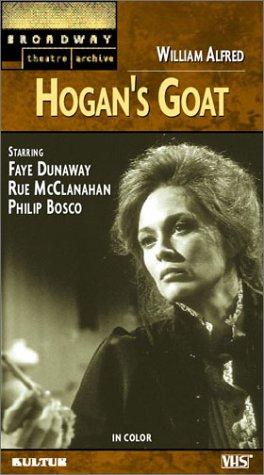
Made-For-Television Film Review: Hogan’s Goat (dir by Glenn Jordan)


1971’s Hogan’s Goat opens in Brooklyn in the 1890s.  This was when Brooklyn itself was still a separate city, before it become a borough of the unified New York City.  If you’ve watched the video that I include with most of my Welcome Back Kotter reviews, you’ll notice the boast: “Fourth largest city” on the Welcome to Brooklyn sign.  And indeed, if Brookyln had remained independent, it would now be the fourth most populated city in America, behind New York, Los Angeles, and Chicago.  Sorry, Brooklyn.

(However, Houston thanks you.)

Local ward boss Matt Stanton (Robert Foxworth) heads home with what he thinks is exciting news.  He tells his wife, Kathleen (Faye Dunaway), that he is finally going to be mayor of Brooklyn.  The current mayor, a man named Quinn (George Rose), has been caught up in some sort of corruption and the Democratic political machine is ready to abandon him.  Matt Stanton is about to become one of the most powerful men in New York.  That’s not bad for a relatively young man who came to America from Ireland in search of a better life.  Adding to Stanton’s happiness is the fact that he’ll be defeating Quinn, a canny politician towards whom Stanton holds a grudge.  Kathleen, however, is worried.  An immigrant herself, Kathleen met Stanton while the latter was in London.  They were married in a civil ceremony and, ever since Stanton brought her back to Brooklyn, she has been lying and telling everyone that they were married in a church.  Kathleen feels that she and Stanton have been living in sin and she wants to have a convalidation ceremony.  Stanton refuses because doing so would mean admitting the lie in the first place and he can’t afford to lose the support of the Irish Catholic voters of Brooklyn.

However, it turns out that there are even more secrets in Stanton’s past, ones that Kathleen doesn’t know about but Quinn does.  When those secrets start to come out, Kathleen comes to realize that there’s much that she doesn’t know about her husband.  Stanton, with political power in his grasp, desperately tries to hold on to the image that he’s created of himself and Kathleen, leading to tragedy.

Hogan’s Goat was an Off-Broadway hit when it premiered in the mid-60s and its success led to Faye Dunaway getting her first film offers.  The made-for-television version of Hogan’s Goat, which premiered on PBS and featured Dunaway recreating her stage role, is essentially a filmed play.  Little effort was made to “open up” the story and, as a result, the film is undeniably stagy.  It’s clear from the start the film was mostly shot to record Faye Dunaway’s acclaimed performance for posterity.  Indeed, she’s the only member of the theatrical cast to appear in the film version.  Dunaway does give a strong performance, easily dominating the film with her mix of nervous intensity and cool intelligence.  The rest of the cast is a mixed bag.  Robert Foxworth is appropriately driven and ambitious as Stanton but his Irish accent comes and goes.  Philip Bosco does well as a sympathetic priest and George Rose is appropriately manipulative as Quinn.

In the end, the story of Hogan’s Goat is probably of the greatest interest to Irish-American history nerds like me, who have read and studied how Irish immigrants, especially in the 19th century, faced tremendous prejudice when coming to the United States and how they reacted by building their own political machines and dispensing their own patronage.  In Hogan’s Goat, the conflict is less between more Stanton and Quinn and more between Kathleen’s traditional views and her devout Catholicism and Stanton’s own very American ambition.  Whereas Kathleen still fights to retain her faith, pride, and her commitment to who she was before she married Stanton, Stanton fights for power and to conquer the man who Stanton feels has everything that he desires.  In the end, Stanton’s hubris is not only his downfall but Kathleen’s as well.

Late Night Retro Television Review: Degrassi High 1.14 “It Creeps!”


Welcome to Late Night Retro Television Reviews, a feature where we review some of our favorite and least favorite shows of the past!  On Sunday, I will be reviewing the Canadian series, Degrassi High, which aired on CBC and PBS from 1989 to 1991!  The series can be streamed on YouTube!

Wake up in the morning, it’s time to make a feminist slasher film….

Episode 1.14 “It Creeps!”

(Dir by Kit Hood, originally aired on February 6th, 1990)

Shane’s back!

We haven’t seen Shane since he showed up at the last junior high dance.  Shane, of course, is the ex-boyfriend of Spike and the wayward father of Emma.  Shane took LSD while at a concert and either jumped or fell off a bridge.  When we see him in this episode, he’s suffering from brain damage.  One minute, he’s greeting Spike like his best friend.  Another minute, he’s yelling at her and suddenly acting aggressive.  Spike still tries to be nice to him, despite Liz’s comment of “He’s creepy.”  (Seriously, what is going with Liz this season?)  What’s really disturbing, though, is that Shane’s only close friend still appears to be Luke, the idiot who gave him the acid in the first place.

(Seriously, how did Luke get away with that?)

That was the B-plot of this episode.  The A-plot featured Lucy finally making her feminist horror film, It Creeps!!, for her creative writing class.  Personally, I like the idea behind It Creeps!!  It’s a slasher movie where, for once, it’s the guys getting knifed in the shower instead of the girls.  It’s the type of thing that would get Lucy a deal with Blumhouse today.  I’m a little bit surprised that she was able to get away with making it for a school project but I guess that 80s were a more innocent time.  If a student shot a bloody slasher film in her school today, she’d probably be suspended.

Lucy shows her film to the class and is shocked when they laugh at certain parts.  She runs out the room but her creative writing teacher assures her that class is enjoying her film.  He tells her that she did a good job, considering that it was her first film.  (It’s a hundred times better than Michael Scott’s Threat Level Midnight.)  Lucy returns to the classroom, just in time to find everyone cheering as Wheels dies on screen.

Of course, those of us who know our Degrassi history, know how this is going to turn out.  After graduation, Wheels is going to be driving drunk and he’s going to have the accident that will not only send him to prison but will also leave Lucy crippled and temporarily blinded.  Seriously, this show is a lot darker if you already know what’s going to happen in School’s Out!

As for this episode, it was a good one.  The plot with Lucy’s film worked because the end result actually looked like something that had been filmed by a moderately talented teenager who owned a somewhat beat-up video camera.  And I was glad that the show remembered that Shane existed.  Amanda Stepto did a wonderful job portraying Spike’s reaction to seeing Shane.  This was Degrassi High at its best.

Retro Television Review: Homicide: Life On The Street 3.6 “A Model Citizen”


Welcome to Retro Television Reviews, a feature where we review some of our favorite and least favorite shows of the past!  On Sundays, I will be reviewing Homicide: Life On The Street, which aired from 1993 to 1999, on NBC!  It  can be viewed on Peacock.

No one’s happy this week.

Episode 3.6 “A Model Citizen”

(Dir by John McNaughton, originally aired on November 11th, 1994)

Welcome to Baltimore, where everyone is depressed.  Consider this week’s episode of Homicide: Life On The Street.

  1. The episode opens with Munch, Bolander, Howard, and Felton in a morgue, waiting for the results of an autopsy.  They start talking about the shows that they watched as children and how many of them had their origins right in Baltimore.  Of course, none of those shows are on the air anymore.  Munch mentions his favorite childhood shows and is ridiculed for liking things when he was a kid.
  2. Emma Zoole (Lauren Tom), an artist who makes models of crime scenes for use in criminal court, stops by the department.  She’s looking for Steve Crosetti, to get his input on a recreation.  Meldrick Lewis tells her that Crosetti’s dead but he offers to help.  Lewis has a crush.  However, Emma likes Bayliss and Bayliss likes Emma.  Bayliss is even turned on by the fact that Emma sleeps in a coffin.  However, when Bayliss sees how upset Lewis is over his relationship with Emma, Bayliss tries to break up with her.  They end up having sex in the coffin instead.
  3. That’s it!, Lewis declares.  He cannot go into the bar business with Tim Bayliss.  Then again, there might not be a bar business anyway because Munch got kicked out of the state-required alcohol awareness class.  Munch, for whatever reason, decided to argue about whether or not a bartender could really be held responsible for getting someone drunk.
  4. Pembleton, Russert, and the city of Baltimore are all being sued by serial killer Pamela Wilgis.  Wilgis claims that Pembleton violated her civil rights when he interrogated her.  Pembleton’s entire interrogation style is put on trial.  He feels like he’s being attacked on all sides.  Finally, Pembleton gets depressed enough to reenter a church, even though he earlier claimed to no longer have any use for religion.
  5. Munch and Howard investigate the accidental shooting of a child by his older brother.  Much gets extremely upset while searching for the gun, taking Howard totally be surprise.  Howard comes to realize that Much actually cares about protecting children from violence and Munch realizes that the world is a terrible place.
  6. Beau Felton returns to his house and discovers that both his wife and his son have left and they’ve taken all the furniture with them.  Goodbye is scrawled, in lipstick, on the bathroom mirror.
  7. Much ends up sitting outside, staring at the ground while Lewis and then Howard both talk to him about how much life sucks.
  8. No one wants to end up like Steve Crosetti, Howard says at one point.  Good luck!  This job is depressing!

This was a good episode, one that really captured the emotional turmoil of seeing the worse that humanity has to offer while, at the same time, acknowledging that depressed people often use humor to deal with their feelings.  A few of Munch’s and Lewis’s line made me laugh out loud but seriously, I felt so bad for both of them!

Hopefully, everyone will have cheered up by next week.

Song of the Day: Theme From CHiPs by John Parker and Alan Silvestri


As today is Erik Estrada’s birthday, it’s obvious what today’s song of the day has to be.

No matter what you may think of the show, this theme has one of the greatest bass lines of all time.  If you’re not dancing, you might want to call 911.

Late Night Retro Television Review: Check It Out! 3.10 “Shrink from Sendrax”


Welcome to Late Night Retro Television Reviews, a feature where we review some of our favorite and least favorite shows of the past!  On Saturdays, I will be reviewing the Canadian sitcom, Check it Out, which ran in syndication from 1985 to 1988.  The entire show is currently streaming on Tubi and Peacock!

This week, corporate sends a visitor to Cobb’s for reasons that are never exactly clear.

Episode 3.10 “Shrink From Sendrax”

(Dir by Jayne Schipper, originally aired on November 15th, 1987)

I’m just going to do a mini-review of this episode because I’m busy working on our big St. Patrick’s Day extravaganza here at the Shattered Lens!

  1. Remember that new company that bought out Cobb’s?  It can be easy to forget about them.  Well, in this episode, they send a psychiatrist named Dr. Matthews (Graham Harley) to check on everyone’s mental health.  Why would they do that?  I mean, is Cobb’s grocery store really that important to them?  It seems like a lot of money to spend on checking whether or not the cashiers are feeling good about themselves.
  2. Admittedly, I haven’t had that many jobs and I’ve never worked in a grocery store.  If you told me that I had no choice but to sit down and talk about my life with a psychiatrist as a condition of my employment, I would probably quit.  It’s not that I have anything against psychiatrists.  It’s just that I believe therapy should always be voluntary.
  3. The episode’s highlight was Leslie wanting to spend hours talking to the psychiatrist about the party that was thrown when he turned two years old.  Aaron Schwartz, who is often underused on this show, really got a chance to show off his comedic skills in this episode.
  4. Gordon Clapp’s Viker also got a few good scenes.  In general, any episode that features Clapp is, at the very least, going to make me smile.
  5. Howard freaks out over the psychiatrist and the questionnaire that he’s forced to fill out.  He gets some advice from 14 year-old stockboy Brad, played by T and T‘s Sean Roberge.  This is Brad’s third appearance on the show and I get the feeling that he was originally meant to be a major character but the show’s writers couldn’t figure out what to do with the character.
  6. This third season has had a lot of weird detours and characters.  We haven’t heard anything else about Howard’s brother.  The corporate liaison, TC Collingwood (Elizabeth Hanna), is occasionally pictured in the opening credits and occasionally not.  What happened to the stockboy who had a crush on Marlene?
  7. Anyway, to prove that he’s not crazy, Howard dresses up like a clown because he knows that only way to prove he’s not crazy is to act crazy while realizing that he’s acting crazy or something.
  8. Marlene and Christian, the two most consistently interesting characters on the show, were not in this episode and that kind of made the whole psychiatry angle feel useless.  The idea of Marlene and Christian reacting to ink blots is such a good one that I personally would have delayed production on this episode until Kathleen Laskey and Jeff Pustil were available to appear in it.

Gordon Clapp and Aaron Schwartz were great but, overall, this was pretty dumb episode.