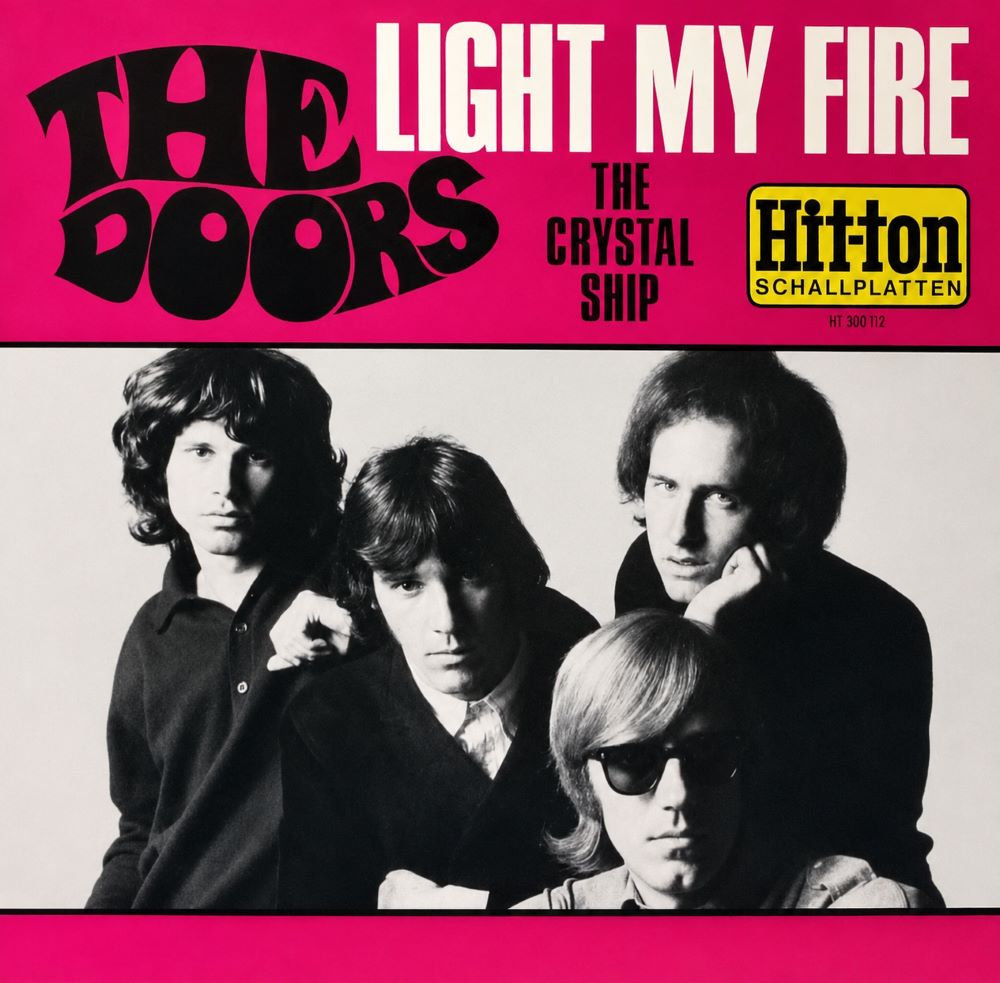
Alright, let’s talk about Light My Fire. You’ve probably heard it a million times on the radio, but trust me, you’ve been missing the point. The short version you hear is just a tease, a little taste. If you want to understand what The Doors are really about, you have to dive into the full album version. It’s a seven-minute trip, and the journey it takes you on is all about the instrumental break in the middle. It’s not just a pop song; it’s a full-blown experience that defined an era, blending psychedelic rock with a dark, bluesy undertow that still sounds fresh today. And here’s the kicker—the guy who wrote and composed this entire masterpiece, Robby Krieger, was only 18 years old when he came up with it. Eighteen. Let that sink in.
Now, the engine of this whole thing is Krieger’s guitar. It’s easy to get hypnotized by Ray Manzarek’s carnival-like organ solo that comes first—it’s a wild ride on its own—but when that ends, Krieger steps in and things get seriously real. This is where the song truly catches fire. His style is so unique; he wasn’t just playing rock and roll riffs. He was pulling from flamenco and jazz, bending notes and creating a sound that was both aggressive and almost conversational. He’s not just showing off; he’s telling a story with his guitar, and it’s absolutely hypnotic. Remember, this is a teenager crafting this—not some seasoned pro in his thirties. It’s mind-blowing.
You really need to pay close attention to when the guitar solo kicks in at 3:18. This isn’t a quick, tidy solo you’d hear on a standard pop track. It goes for over two minutes, and it builds and builds into this incredible peak. It’s crazy to think that at a time when most pop songs were winding down, The Doors were just getting started, stretching the boundaries of what a “hit song” could even be. It’s a serious statement from a band that wasn’t afraid to be different, and it’s why the radio edit is often seen as a crime against music. That an 18-year-old kid had the vision and the guts to push for something this ambitious just makes it even more legendary.
So, do yourself a favor. The next time you’re in the mood for something that’s more than just background noise, put on the full version of Light My Fire. Crank up the volume, close your eyes, and wait for that 3:18 mark. Let that searing guitar solo wash over you, and think about the fact that a teenager was behind it all. It’s raw, it’s poetic, and it’s the kind of pure, unfiltered musical magic that you just don’t hear anymore. Honestly, once you experience it in its full glory, you’ll never want to hear the short version again.
Light My Fire
You know that it would be untrue
You know that I would be a liar
If I was to say to you
Girl, we couldn’t get much higher
Come on baby light my fire
Come on baby light my fire
Try to set the night on, fire
The time to hesitate is through
No time to wallow in the mire
Try now we can only lose
And our love become a funeral pyre
Come on baby light my fire
Come on baby light my fire
Try to set the night on, fire yeah
[guitar solo @3:18]
The time to hesitate is through
No time to wallow in the mire
Try now we can only lose
And our love become a funeral pyre
Come on baby light my fire
Come on baby light my fire
Try to set the night on, fire yeah
You know that it would be untrue
You know that I would be a liar
If I was to say to you
Girl, we couldn’t get much higher
Come on baby light my fire
Come on baby light my fire
Try to set the night on fire
Try to set the night on fire
Try to set the night on fire
Try to set the night on fire
Great Guitar Solos Series
- Master of Puppets (by Metallica)
- Free Bird (by Lynyrd Skynyrd)
- Hotel California (by The Eagles)
- Stairway to Heaven (by Led Zeppelin)
- Texas Flood (by Stevie Ray Vaughan)
- Comfortably Numb (by Pink Floyd)
- Powerslave (by Iron Maiden)
- Fade to Black (by Metallica)
- Bohemian Rhapsody (by Queen)
- Sweet Child o’ Mine (Guns N’ Roses)
- Mr. Crowley (by Ozzy Osbourne)
- Rainbow in the Dark (by Dio)
- Róisín Dubh (by Thin Lizzy)
- Rock You Like A Hurricane (by Scorpions)
- Whipping Post (by Allman Brothers Band)
- Carry On Wayward Son (by Kansas)
- War Pigs (by Black Sabbath)
- Since I’ve Been Loving You (by Led Zeppelin)
- Satch Boogie (by Joe Satriani)
- Rambin’ Man (by The Allman Brothers Band)
- Sympathy for the Devil (by The Rolling Stones)
- Little Wing (by Jimi Hendrix)
- While My Guitar Gently Weeps (by the Beatles)
- The Rocker (by Thin Lizzy)
- Bulls on Parade (by Rage Against the Machine)
- Eruption (by Van Halen)
- Killer Queen (by Queen)
- Something (by The Beatles)
- Maggot Brain (by Funkadelic)
- Cliffs of Dover (by Eric Johnson)
- Black Magic Woman (by Carlos Santana)
- Layla (by Derek & The Dominoes)
- Dazed and Confused (by Led Zeppelin)
- Blue Sky (by The Allman Brothers Band)
- Southern Man (by Neil Young)
- Know Your Enemy (by Rage Against the Machine)
- Highway Star (by Deep Purple)
- Sharp Dressed Man (by ZZ Top)
- Black Hole Sun (by Soundgarden)
- Aqualung (by Jethro Tull)
- Scuttle Buttin’ (by Stevie Ray Vaughan)
- All Along the Watchtower (by Jimi Hendrix)
- Paranoid (by Black Sabbath)
- Any Way You Want It (by Journey)


