Retro Television Review: Fantasy Island 6.12 “The Tallowed Image/Room and Bard”


Welcome to Retro Television Reviews, a feature where we review some of our favorite and least favorite shows of the past!  On Tuesdays, I will be reviewing the original Fantasy Island, which ran on ABC from 1977 to 1984.  Unfortunately, the show has been removed from most streaming sites.  Fortunately, I’ve got nearly every episode on my DVR.
This week, William Shakespeare comes to the Island!  Smiles, everyone, smile!

Episode 6.12 “The Tallowed Image/Room and Bard”

(Dir by Carl Kugel, originally aired on January 29th, 1983)

This week, we have another two fantasies and, interestingly enough, they both involve time travel.

Movie star Angela Marckham (Laraine Stephens) wants to be taken seriously as an actress.  She asks Roarke to send her back in time so that she can appear in one of Shakespeare’s plays.  However. something goes wrong when Roarke attempts to open up the time travel portal and instead, Shakespeare (Robert Reed) ends up in the modern era.

“Be this Heaven or Hell?” Shakespeare demands.

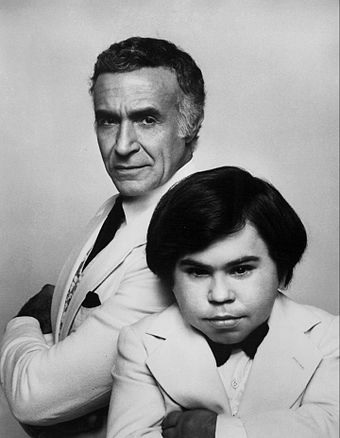
“This is Fantasy Island,” Tattoo replies.

Shakespeare is happy to have escaped England because he was on the verge of being killed by the Earl of Norfolk (Lloyd Bochner).  Angela puts Shakespeare to work writing a scene for her but Shakespeare announces that he cannot use a “word processor” and needs a quill pen.  Luckily, quills can be bought at the Fantasy Island gift shop!  Shakespeare then gets writers block.  Angela really should just demand a refund.  Her fantasy is a bust.  No traveling to the past.  No play.  Shakespeare is kind of a jerk.  But then the Earl of Norfolk shows up on Fantasy Island and, with his life now in danger, Shakespeare discovers that can write again.  Hooray!

This fantasy felt familiar but, then again, the same can be said for many of the episodes of Fantasy Island that I’ve recently watched.  After six seasons, any show would start to repeat itself.  In this case, neither Angela nor Shakespeare are particularly sympathetic.  Roarke has the patience of the saint.

Meanwhile, Andy Durant (Ray Buktenica) goes back to Victorian-era London so that he can meet a model whose picture fascinates him.  Andy meets Pamela Gentry (Angela Landers) but is shocked to discover that she is about to fall victim to the mad owner of a wax museum.  Frederick Kragan (Cesar Romero) kills his models and then disguises them as wax figures.  (If this sounds familiar, it’s because it’s basically a remake of House of Wax.)  Kragan’s assistant, Otto, is played by Sid Haig!  Can Andy save Pamela’s life and expose Kragan’s crimes?

This was a fairly entertaining episode.  I actually kind of liked the idea of Shakespeare being a cranky jerk, even if there was nothing particularly British about Robert Reed’s performance.  Then again, there’s also nothing British about the performances of Audrey Landers, Cesar Romero, or Sid Haig.  This was an odd episode but the House of Wax fantasy had a lot of old school Hammer film atmosphere to it.  And, for those who enjoy Roarke/Tattoo comedy, this episode had a bit more than usual.  Between Tattoo trying to help Shakespeare and Roarke laughing off Angela’s very justified anger over her fantasy not being fulfilled, this was a very good Roarke/Tattoo episode.

Overall, this was a good trip to the Island.
The Unnominated #13: Heat (dir by Michael Mann)


Though the Academy of Motion Picture Arts and Sciences claim that the Oscars honor the best of the year, we all know that there are always worthy films and performances that end up getting overlooked.  Sometimes, it’s because the competition too fierce.  Sometimes, it’s because the film itself was too controversial.  Often, it’s just a case of a film’s quality not being fully recognized until years after its initial released.  This series of reviews takes a look at the films and performances that should have been nominated but were, for whatever reason, overlooked.  These are the Unnominated.

First released in 1995, Heat is one of the most influential and best-known films of the past 30 years.  It also received absolutely zero Oscar nominations.

Maybe we shouldn’t be too surprised that Academy — especially the Academy of the 1990s — didn’t shower the film with nominations.  For all of its many strengths, Heat is still a genre piece, an epic three-hour crime film from director Michael Mann.  It’s a film about obsessive cops and tightly-wound crooks and it’s based on a made-for-TV movie that Mann directed in the late 80s.  While the Academy had given a best picture nomination to The Fugitive just two years before, it still hadn’t fully come around to honoring genre films.

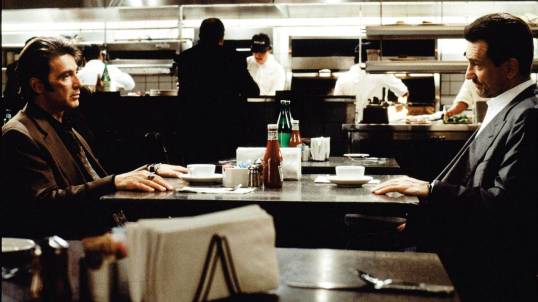
And yet one would think that the film could have at least picked up a nomination for its editing or maybe the sound design that helps to make the film’s signature 8-minute gun battle so unforgettable.  (Heat is a film that leaves you feeling as if you’re trapped in the middle of its gunfights, running for cover while the cops and the crooks fire on each other.)  The screenplay, featuring the scene where Al Pacino’s intense detective sits down for coffee with Robert De Niro’s career crook, also went unnominated.

Al Pacino was not nominated for playing Vincent Hanna and maybe we shouldn’t be too surprised at that.  Pacino yells a lot in this movie.  When people talk about Pacino having a reputation for bellowing his lines like a madman, they’re usually thinking about the scene where he confronts a weaselly executive (Hank Azaria) about the affair that he’s having with Charlene (Ashley Judd), the wife of criminal Chris Shiherlis (Val Kilmer).  And yet, I think that Pacino’s performance works in the context of the film and it’s often forgotten that Pacino has quite scenes in Heat as well.  Pacino’s intensity provides a contrast to Robert De Niro’s tightly controlled career criminal, Neil McCauley.  McCauley has done time in prison and he has no intention of ever going back.  But, as he admits during the famous diner scene, being a criminal is the only thing that he knows how to do and it’s also the only thing that he wants to do.  (“The action is the juice,” Tom Sizemore says in another scene.)  If any two actors deserved a joint Oscar nomination it was Pacino and De Niro.  In Heat, they’re the perfect team.  Pacino’s flamboyance and De Niro’s tightly-controlled emotions come together to form the heart of the picture.

No one from the film’s supporting cast was nominated either, despite there being a wealth of riches to choose from.  Ashley Judd and Val Kilmer come to mind as obvious contenders.  Kilmer is amazing in the shoot-out that occurs two hours into the film.  Ashley Judd has a killer scene where she helps her husband escape from the police.  Beyond Judd and Kilmer, I like the quiet menace of Tom Sizemore’s Michael Cheritto.  (Just check out the look he gives to an onlooker who is getting a little bit too curious.)  Kevin Gage’s sociopathic Waingro is one of the most loathsome characters to ever show up in a movie.  William Fichtner, Jon Voight, Danny Trejo, and Tom Noonan all make a definite impression and add to Michael Mann’s portrait of the Los Angeles underworld.  In an early role, Natalie Portman plays Hanna’s neglected stepdaughter and even Amy Brenneman has some good moments as Neil’s unsuspecting girlfriend, the one who Neil claims to be prepared to abandon if he sees “the heat coming.”

I have to mention the performance of Dennis Haysbert as Don Breedan, a man who has just been released from prison and who finds himself working as a cook in a diner.  (The owner of the diner is played by Bud Cort.)  Haysbert doesn’t have many scenes but he gives a poignant performance as a man struggling not to fall back into his old life of crime and what eventually happens to him still packs an emotional punch.  For much of the film’s running time, he’s on the fringes of the story.  It’s only by chance that he finds himself suddenly and briefly thrown into the middle of the action.

Heat is the ultimate Michael Mann film, a 3-hour crime epic that is full of amazing action sequences, powerful performances, and a moody atmosphere that leaves the viewer with no doubt that the film is actually about a lot more than just a bunch of crooks and the cops who try to stop them.  Hanna and McCauley both live by their own code and are equally obsessed with their work.  Their showdown is inevitable and, as directed by Michael Mann, it takes on almost mythological grandeur.  The film is a portrait of uncertainty and fear in Los Angeles but it’s also a portrait of two men destined to confront each other.  They’re both the best at what they do and, as a result, only one can remain alive at the end of the film.

I rewatched Heat yesterday and I was amazed at how well the film holds up.  It’s one of the best-paced three-hour films that I’ve ever seen and that epic gunfight is still powerful and frightening to watch.  Like Martin Scorsese’s Casino, it was a 1995 film that deserved more Oscar attention than it received.

Heat (1995, dir by Michael Mann, DP: Dante Spinotti)

Previous entries in The Unnominated:

  1. Auto Focus 
  2. Star 80
  3. Monty Python and The Holy Grail
  4. Johnny Got His Gun
  5. Saint Jack
  6. Office Space
  7. Play Misty For Me
  8. The Long Riders
  9. Mean Streets
  10. The Long Goodbye
  11. The General
  12. Tombstone


Retro Television Review: Mary Jane Harper Cried Last Night (dir by Allen Reisner)


Welcome to Retro Television Reviews, a feature where we review some of our favorite and least favorite shows of the past!  On Sundays, I will be reviewing the made-for-television movies that used to be a primetime mainstay.  Today’s film is 1977’s Mary Jane Harper Cried Last Night!  It  can be viewed on YouTube.

Damn.

I mean, seriously!  I have seen some depressing films before but nothing could have quite prepared me for Mary Jane Harper Cried Last Night.

Susan Dey stars as Rowena, a young single mother whose 3 year-old daughter, Mary Jane Harper (Natasha Ryan), is taken to the hospital with a broken arm.  Dr. Angela Buccieri (Tricia O’Neil) doesn’t believe Rowena’s claim that Mary Jane is just accident prone and when she discovers what appears to be cigarette burns on the little girl, Dr. Buccieri goes to the head of pediatrics (played by veteran screen villain John Vernon) and requests a full set of X-rays to see if there are any previously healed injuries.  Buccieri’s request is denied.  It turns out that Rowena comes from a wealthy family and her father (Kevin McCarthy) is a trustee of the hospital.  Even after Dr. Buccieri opens up about her own experiences as an abused child, she is told to drop the matter.

She doesn’t drop it.  Instead, she goes to a social worker named Dave Williams (Bernie Casey).  Dave does his own investigation but none of Rowena’s neighbors want to talk about all of the crying and the screaming that they hear coming from Rowena’s apartment.  Rowena presents herself as being a stressed but loving mother.  Dave suggests a support group that she can attend.  When Rowena goes to the group, she opens up a little about how overwhelmed she feels.  Unfortunately, she leaves Mary Jane in the apartment alone and, when a fire breaks out, Mary Jane is lucky to survive.

As intense as all of that is, it’s also only the first half of the movie.  The second half is even more intense and emotionally draining and it all leads up to one of the most devastating final lines ever uttered in a movie.  Throughout the film, the system fails both Rowena and Mary Jane.  Mary Jane is failed when all of the evidence of the abuse that she has suffered is either ignored or shrugged away by the same people who are supposed to be looking out for her.  Rowena is failed when no one pays attention to her obvious emotional instability.  When she finally does have a breakthrough during a therapy session, her psychiatrist (played by James Karen) curtly tells her that they’ll have to talk about it next week because their hour is up.

Rowena is a character who I both hated and pitied.  Like many abusers, she herself was a victim of abuse.  Even when Rowena tries to get support, no one wants to admit that a mother is capable of abusing their own child.  That said, Mary Jane Harper is at the center of the film. She’s a little girl who is desperate to be loved by a woman who often terrifies her.  She is continually failed by the people who should be looking after her and it’s just devastating to watch.  I’m sure I’m not the only person who was moved to tears by this film.

What a sad film.  At the same time, it’s also an important one.  If the film takes place at a time when no one wanted to admit to the abuse happening before their eyes, we now live in a time when people toss around allegations of abuse so casually that it’s led to a certain cynicism about the whole thing.  Even when seen today, Mary Jane Harper Cried Last Night works as a powerful plea to watch out and care for one another.

Retro Television Reviews: The George McKenna Story (dir by Eric Laneuville)


Welcome to Retro Television Reviews, a feature where we review some of our favorite and least favorite shows of the past!  On Sundays, I will be reviewing the made-for-television movies that used to be a primetime mainstay.  Today’s film is 1986’s The George McKenna Story!  It  can be viewed on Netflix, under the title Hard Lessons!

George Washington High School is a school that has defeated many well-meaning principals.  The hallways are full of drugs and gang members.  A good deal of the student body never shows up for class.  Fights are frequent.  The police are a common sight.  The majority of the teachers are men like Ben Proctor (Richard Masur), burned-out and content to hide in the teacher’s lounge.

New Orleans-raised George McKenna (Denzel Washington) is the latest principal and, from the minute that he shows up at the school, he seems a bit more confident than the other principals that the school has had.  He barely flinches when a raw egg hits his suit.  When he hears a fight occurring, he doesn’t hesitate to head down the hall to investigate.  McKenna is determined to make George Washington High into a worthwhile institution and that means inspiring both the students and the teachers.

When it comes to films about dedicated educators trying to reform a troubled school, most films tend to take one of two approaches.  One approach, the well-intentioned but not always realistic liberal approach, features the teacher or the principal who demands respect but who also treats the good students and teachers with equal respect and who turns around the school through the power of benevolence.  The other approach is the one where the principal or teacher grows frustrated and turns into an armed vigilante who forces the students to shut up and learn.  Think of The Principal or The Substitute or Class of 1984.  The first approach is the one that most teachers claim that they try to follow but I imagine that, for most of them, there’s an element in wish-fulfillment to be found in watching the second approach.  In the real world, of course, neither approach is as automatically successful as it is in the movies.

The George McKenna Story was made for television and it’s based on a true story so, not surprisingly, it follows the first approach.  Denzel Washington plays McKenna as someone who could probably handle himself in a fight if he ever got into one but, for the most part, the film portrays McKenna as succeeding by treating his students with more empathy and respect that they’ve gotten from anyone else in their lives.  Though cranky old Ben Proctor thinks that McKenna’s methods are foolish and that he’s asking the teachers to do too much, McKenna starts to turn the school around.  One student, whose father was threatening to make him drop out, ends up getting nearly straight A’s and reciting Shakespeare.  Unfortunately, not everyone can be rescued.  One student is arrested for murder and taken away by the cops but McKenna is still willing to be there for that student.  McKenna doesn’t give up on his students and, unlike that music teacher in The Class of 1984, he doesn’t allow them to fall through a skylight either.

The George McKenna Story is a predictable film.  It’s easy to guess which student will be saved by McKenna’s approach and which student will end up getting stabbed in a gang fight and which student will end up in prison.  That said, the film definitely benefits from Denzel Washington in the lead role.  Washington exudes confidence from the minute that he appears on screen and you’re left with little doubt that if anyone could reform a school simply through good intentions, it would definitely be Denzel Washington.

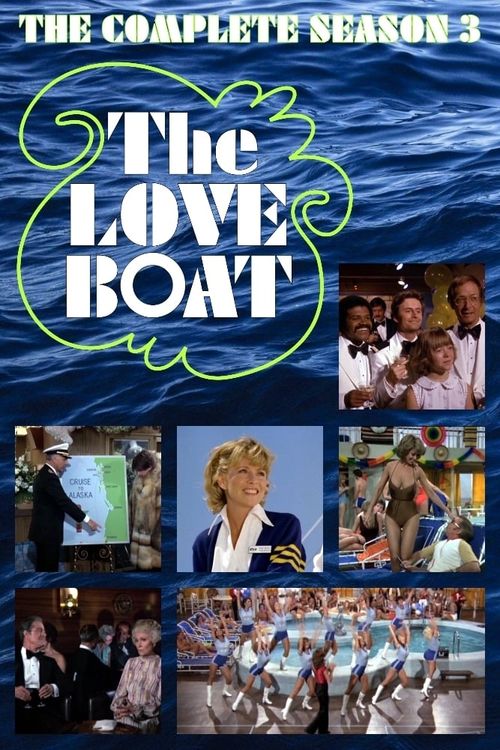
Retro Television Reviews: The Love Boat 3.5 “The Scoop/The Audit Couple/My Boyfriend’s Back”


Welcome to Retro Television Reviews, a feature where we review some of our favorite and least favorite shows of the past!  On Wednesdays, I will be reviewing the original Love Boat, which aired on ABC from 1977 to 1986!  The series can be streamed on Paramount Plus!

Today, the IRS takes a cruise.  Agck!

Episode 3.5 “The Scoop/The Audit Couple/My Boyfriend’s Back”

(Dir by Jack Arnold, originally aired on October 6th, 1979)

Captain Stubing is being audited!

Damn the IRS!  What a bunch of money-obsessed fascists!

The IRS agent, Viola Penny (Phyllis Diller), has booked a room on the cruise so that she can look through Captain Stubing’s records and….

Wait a minute.  If you’re an IRS agent, you get to go on a luxury cruise and also look through someone’s private information?  That sounds like fun!  Sign me up!

Anyway, Viola originally seems to be tough-minded and determined to toss Capt. Stubing in jail.  But then she gets drunk at dinner and, when she wakes up in the captain’s cabin, she’s convinced that she and Stubing are now lovers.  She decides to go easy on the audit but then she comes across $50,000 hidden in an ice bucket and she becomes convinced that Stubing is cheating the government and that he seduced her to keep her from finding out.  But then she discovers that the money is actually the crew emergency fund and she falls in love with Stubing again….

Yeah, it’s hard to keep track of how Viola feels from scene to scene.  At the end of the episode, she declares her love for the captain and leaves the boat.  Stubing realizes that he forgot to ask her what the results of his audit were but he also orders Gopher not to call her back to the boat.  If there’s a new captain next week, I’ll just assume Stubing’s in USP Marion.

Meanwhile, caddish Jay Cavanaugh (Lyle Waggoner) is really excited when he sees his ex-girlfriend, Patricia Lucas (Jennifer Salt), on the boat.  Jay is determined to get back together with Patricia, despite the fact that Patricia is on her honeymoon with her new husband, Danny (Richard Kline).  Danny is instantly jealous of Jay, who has a perfect smile and a perfect tan.  However, he needn’t be insecure because Patricia is totally in love with him.  Still, Danny keeps walking in on Jay flirting with Patricia and soon, he declares that the marriage is over.

Patricia tricks Jay into stepping up on a stage in the Acapulco Lounge and announcing that he’s in love with Patricia.  Patricia then announces that Jay has no idea what love is and declares, in front of all the crew and passengers, that she’s in love with Danny.  Danny and Patricia’s marriage is saved but seriously, Danny was kind of wimpy about the whole thing.  It seems like Patricia deserved better than both Jay and Danny.

Finally, Simon Scott (Ray Buktenica) is a tabloid reporter who is on the cruise because he’s been assigned to discover who the famous actress, Jackie Landers (Joyce Dewitt), is traveling with.  It turns out that Jackie is not traveling with a romantic partner but instead with her autistic son.  At first, Jackie pretends to be in a relationship with Doc Bricker but eventually, Simon discovers the truth.  However, Simon refuses to write a tabloid-style story about her child so Jackie falls in love with him and hires him to help her write her own non-tabloidy story about her son.

This episode was a mixed bag.  The IRS storyline was frustrating, largely because it featured a lot of complications that could have been prevented by people just not jumping to conclusions.  The newlyweds story felt anticlimactic because there was never any question about who Patricia would choose to be with.  But the storyline with Jackie, Simon, and Jackie’s son was actually pretty sweet.  Ultimately, this was a pleasant but forgettable cruise.