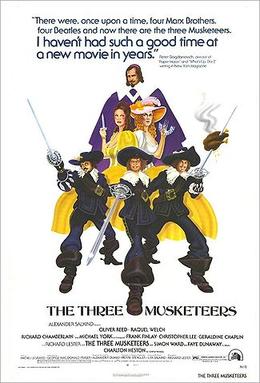
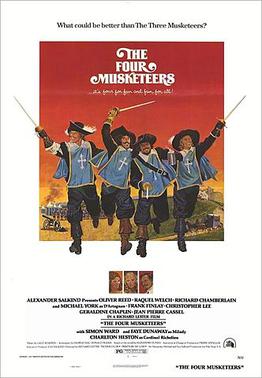
The Three Musketeers (1973, directed by Richard Lester) and The Four Musketeers (1974, directed by Richard Lester)


In 1973, director Richard Lester and producer Ilya Salkind decided to try to get two for the price of one.

Working with a script written by novelist George McDonald Fraser, Lester and Salkind had assembled a once-in-a-lifetime cast to star in an epic film adaptation of Alexandre Dumas’s The Three Musketeers.  Michael York was cast as d’Artagnan, the youthful swordman who goes from being a country bumpkin to becoming a King’s Musketeer.  His fellow musketeers were played by Oliver Reed, Richard Chamberlain, and Frank Finlay.  Faye Dunaway and Christopher Lee were cast as the villains, Milady and Rochefort.  Charlton Heston played the oily Cardinal Richelieu.  Geraldine Chaplin played Queen Anne while Simon Ward played the Duke of Buckingham.  Comedic relief was supplied by Roy Kinnear as d’Artagnan’s manservant and Raquel Welch as Constance, d’Artagnan’s klutzy love interest.  The film was a expensive, lushly designed epic that mixed Lester’s love of physical comedy with the international intrigue and the adventure of Dumas’s source material.

The only problem is that the completed film was too long.  At least, that’s what Salkind and Lester claimed when they announced that they would be splitting their epic into two films.  The cast and the crew, who had only been paid for one film, were outraged and the subsequent lawsuits led to the SAG ruling that all future actors’ contracts would include what was known as the Salkind clause, which stipulates that a a single production cannot be split into two or more films without prior contractual agreement.

But what about the films themselves?  Both The Three Musketeers and The Four Musketeers are currently available on Tubi.  I watched them over the weekend and, of the many films that have been made out of Dumas’s Musketeer stories, Richard Lester’s films are the best.  Lester captures the swashbuckling spirit of the books while also turning them into two films that are easily identifiable as Lester’s work.  There’s a lot physical humor to be found in Lester’s adaptation, especially during the first installment.  d’Artagnan runs through the streets of Paris, convinced that he has been insulted by the haughty Rochefort.  d’Artagnan manages to get challenged to three separate duels, all to take place on the same day.  After his first swordfight as a member of the Musketeers, d’Artagnan tries to tell the men that he wounded about an ointment that will help them with their pain.  Raquel Welch also shows a genuine flair for comedy as Constance, which makes her fate in the second film all the more tragic.

For all the controversy that it caused, splitting the story into two films was actually the right decision.  If The Three Musketeers is an enjoyable adventure film, The Four Musketeers is far more serious.  In The Four Musketeers, Oliver Reed’s melancholic Athos steps into the spotlight and his story of his previous marriage to the villainous Milady casts his character in an entirely new light.  In The Four Musketeers, the combat is much more brutal and the humor considerably darker.  Likable characters die.  The Musketeers themselves commit an act of extrajudicial brutality that, while true to Dumas’s novel, would probably be altered if the film were made today.  From being a naive bumpkin in The Three Musketeers, The Four Musketeers finds d’Artgnan transformed into a battle weary soldier.

The cast is fabulous.  This is a case of the all-star label living up to the hype.  Oliver Reed, Frank Finlay, and Richard Chamberlain all seems as if they’ve been riding and fighting together for decades.  Christopher Lee plays Rochefort as being an almost honorable villain while Faye Dunaway is a cunning and sexy Milady.  What truly makes the film work, though, is the direction of Richard Lester.  Lester stay true to the spirit of Dumas while also using the material to comment on the modern world, with the constant threat of war and civil uprising mirroring the era in which the films were made.  Interestingly enough, Richard Lester first became interested in the material when Ilya Salkind reached out to the Beatles to try to convince them to play the Musketeers.  While the Beatles were ultimately more interested in a never-produced adaptation of The Lord of the Rings, Richard Lester was happy to bring Dumas’s characters to life.

Both The Three Musketeers and The Four Musketeers are currently on Tubi, for anyone looking for a truly great adventure epic.

4 Shots From 4 Films: Special Raquel Welch Edition!


4 Shots From 4 Films is just what it says it is, 4 shots from 4 of our favorite films. As opposed to the reviews and recaps that we usually post, 4 Shots From 4 Films lets the visuals do the talking!

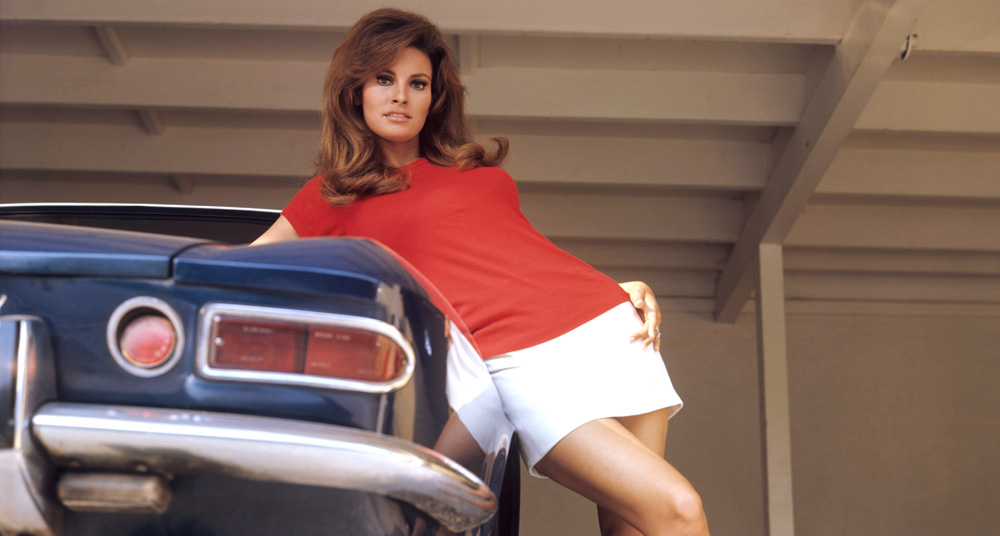
In remembrance of the great Raquel Welch.

4 Shots From 4 Films

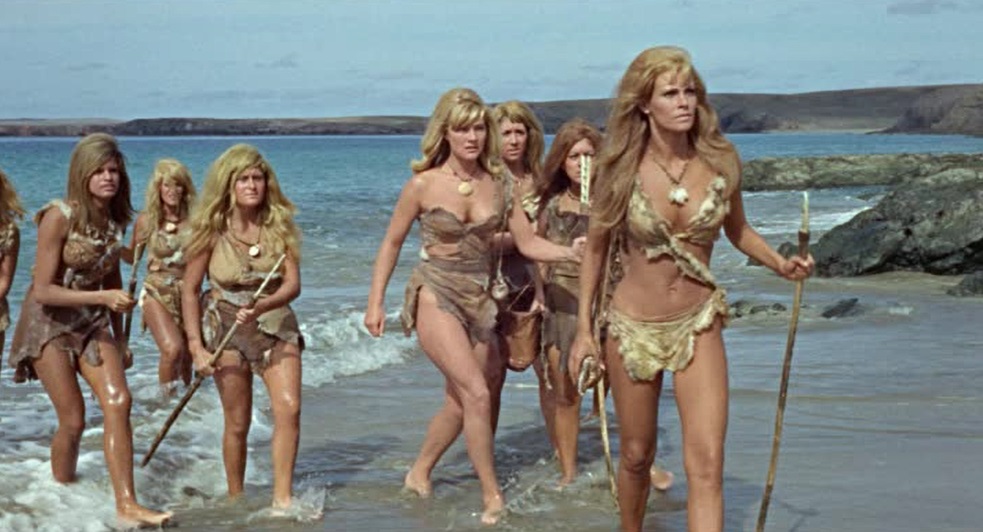
One Million B.C. (1967, directed by Don Chaffey)

Fathom (1967, directed by Leslie H. Martinson)

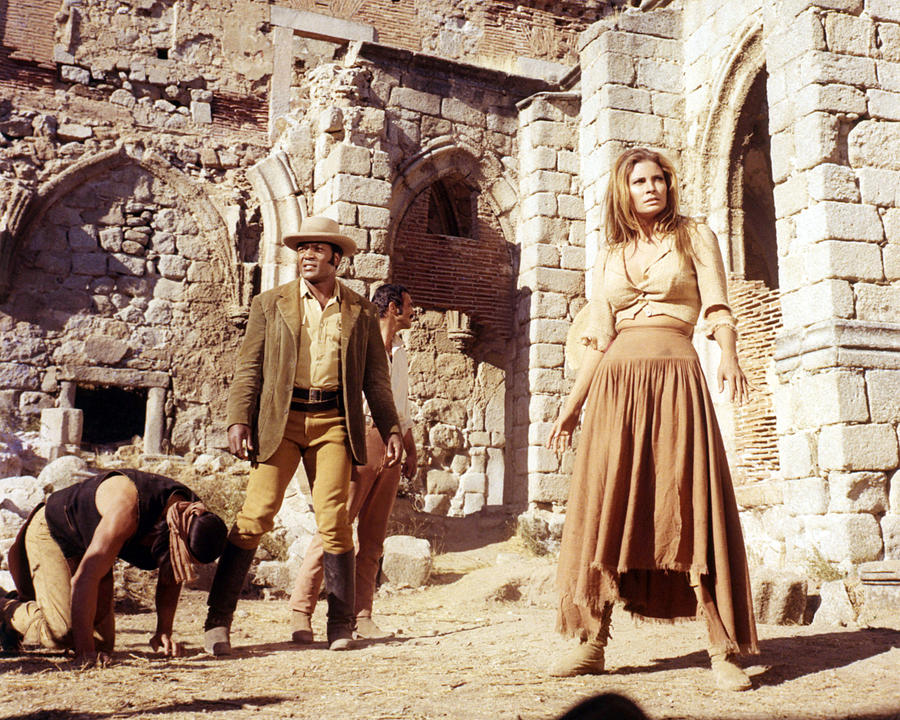
100 Rifles (1969, directed by Tom Gries)

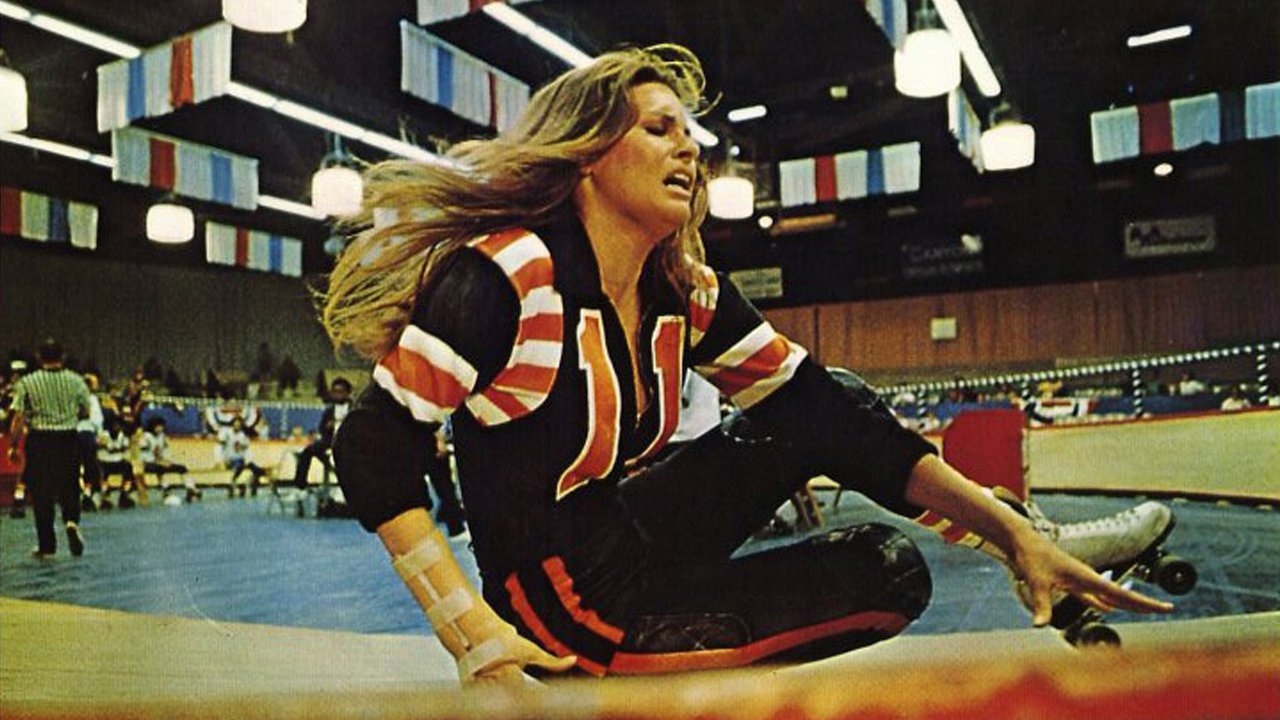
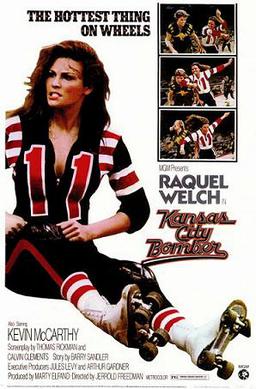
Kansas City Bomber (1972, directed by Jerrold Freedman)

The Unnominated #14: Kansas City Bomber (dir by Jerrold Freedman)


Though the Academy of Motion Picture Arts and Sciences claim that the Oscars honor the best of the year, we all know that there are always worthy films and performances that end up getting overlooked.  Sometimes, it’s because the competition too fierce.  Sometimes, it’s because the film itself was too controversial.  Often, it’s just a case of a film’s quality not being fully recognized until years after its initial released.  This series of reviews takes a look at the films and performances that should have been nominated but were, for whatever reason, overlooked.  These are the Unnominated.

In 1972’s Kansas City Bomber, Raquel Welch stars as KC Carr.

KC. is a star on the roller derby circuit, a tough fighter who is loved by the audience and who shows no fear when it comes to skating around the track and getting into brawls with the other team.  The audience especially loves it when she fights Jackie Burdette (Helena Kallianiotes), madly cheering over every punch landed and every elbow thrown and every strand of hair pulled.  It’s not glamorous work but KC loves the adulation of the crowds and the comradery of her team.  She’s a single mother and putting on roller skates and getting bruised in fights allows her to support her daughter, Rita (a pre-Taxi Driver Jodie Foster).

But then KC is traded to another team, the Portland Loggers.  It takes KC a while to fit in with her new team.  She’s viewed with suspicion, especially when she starts to date the owner of the team, Burt Henry (Kevin McCarthy).  Burt may seem charming but KC soon discovers that he has a jealous side.  When KC spends too much time with her best friend and roommate, Burt trades her to another team.  When a male skater named “Horrible” Hank (Norman Alden) reveals that he has a rather obvious crush on KC, Burt goes out of his way to humiliate Hank.  Burt wants to start a new team in Chicago and he’s promised to make KC a star.  Will KC give up her own freedom to be Burt’s well-compensated star or will she stand up for herself and show that she doesn’t belong to anyone?

You already know the answer.  The wonderful thing about Raquel Welch is that she was tough.  She didn’t let people push her around and, if that resulted in people in Hollywood whispering that she was difficult, so be it.  Like KC Carr, Raquel Welch didn’t make any apologies.  Kansas City Bomber is one of the few of Welch’s early 70s films to celebrate and show how just how tough she was.  For once, Welch is given an actual character to play and she proves herself to be a strong and fierce actress.  It’s fun and more than a little empowering to watch her performance here.  Everyone underestimates KC Carr, just as everyone underestimated Raquel Welch.  In both cases, the doubters are proven wrong.

Kansas City Bomber is not a great film.  (The pacing is totally off and the supporting characters are not quite as memorable as either Welch or Kevin McCarthy.)  But Raquel Welch gave a great performance.  That Welch was never Oscar-nominated isn’t really a surprise.  She didn’t appear in the type of movies that received Oscar attention and she was often cast in roles that didn’t give her much of an opportunity to show off what she could do.  She definitely deserved a nomination for Kansas City Bomber.  

Previous entries in The Unnominated:

  1. Auto Focus 
  2. Star 80
  3. Monty Python and The Holy Grail
  4. Johnny Got His Gun
  5. Saint Jack
  6. Office Space
  7. Play Misty For Me
  8. The Long Riders
  9. Mean Streets
  10. The Long Goodbye
  11. The General
  12. Tombstone
  13. Heat

4 Shots From 4 Films: Special Raquel Welch Edition!


4 Shots From 4 Films is just what it says it is, 4 shots from 4 of our favorite films. As opposed to the reviews and recaps that we usually post, 4 Shots From 4 Films lets the visuals do the talking!

Today, we wish a happy birthday to the one and only Raquel Welch!

4 Shots From 4 Films

One Million B.C. (1967, directed by Don Chaffey)

Fathom (1967, directed by Leslie H. Martinson)

100 Rifles (1969, directed by Tom Gries)

Kansas City Bomber (1972, directed by Jerrold Freedman)

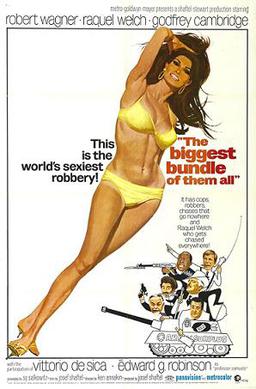
The Biggest Bundle Of Them All (1968, directed by Ken Annakin)


Harry Price (Robert Wagner) is a small-time tough guy with big plans.  He and his gang of accomplices fly over to Italy and plot to kidnap Cesare Celli (Vittorio De Sica), a retired mafia don who is reputed to be worth millions.  However, after snatching Celli from a wedding, Harry discovers that Celli is actually flat broke.  Trying to be helpful, Celli suggests that Harry call up the local gangsters and demand that they pay a ransom for Celli’s release.  When everyone refuses to pay, Celli comes up with another plan.  Celli takes over Harry’s gang and, with the help of Celli’s old friend, Prof. Samuels (Edward G. Robinson), plots to steal $5,000,000 worth of platinum ingots from a train.

Complicating matters is that Harry and his gang are not exactly master criminals.  Benny (Godfrey Cambridge) is a violinist who has moral objections to carrying a gun and who also refuses to cross a picket line, even in the course of a robbery.  (“I’m a union man!”)  Tozzi (Francesco Mule) is more interested in having a good dinner than pulling off the perfect heist.  Davey (Davy Kaye) is short, which is apparently a problem for some reason.  Finally, Harry’s girlfriend, Juliana (Raquel Welch), is more interested in dancing than in committing crimes.  Still, Celli is determined to use them to pull off the heist of the century and, even more importantly, to help prove that this old criminal has still got what it takes.

The Biggest Bundle of Them All was an attempt at a wacky heist film.  Unfortunately, at the time that the film was made, Robert Wagner and “wacky” didn’t belong anywhere near each other.  Wagner stiffly delivers lines like, “I’ve had it, baby.  Can you dig it?” and looks thoroughly out-of-place.  Godfrey Cambridge and Edward G. Robinson have a few funny scenes but both Kaye and Mule are wasted in one-note role while De Sica looks like he’s trying to figure out how he went from Bicycle Thieves to this.  Everyone in the movie just goes through the motions.  Even while they’re robbing the train, the cast seems to be indifferent.

It almost doesn’t matter, though, because this is a Raquel Welch film.  Welch doesn’t have much of a character to play but she looks amazing while doing it and that really is the appeal of any film that Welch made in the late 60s and early 70s.  Welch spends a good deal of the film in a bikini and is undeniably sexy, particularly in the scene where Wagner sends her to seduce De Sica.  She also gets to share a dance with Edward G. Robinson, which is such a goofy and fun scene that it’s almost worth the price of admission.  (Regardless of what fun they may have been having on-screen, Robert Wagner later wrote in his autobiography that, off-screen, Robinson grew so annoyed with Welch’s chronic lateness on the set that he yelled at her until she was in tears.)

Even Raquel Welch in a bikini can only carry a film so far and The Biggest Bundle of Them All is ultimately too disjointed to work.  Director Ken Annakin tries to recreate the same sort of frantic comedy that was at the heart of his previous film, Those Magnificent Men in Their Flying Machines, but the end result falls flatter than 5 million dollars worth of platinum ingots sliding out of an airplane.

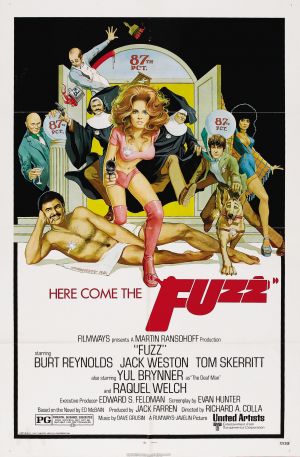
A Movie A Day #212: Fuzz (1972, directed by Richard A. Colla)


Detective Eileen McHenry (Raquel Welch) has just been given her new assignment and she is about to find out that there is never a dull day in the 87th Precinct.  How could there be when the precinct’s top detectives are played by Burt Reynolds, Tom Skerritt, and Jack Weston?  Or when Boston’s top criminal mastermind is played by Yul Brynner?  There is always something happening in the 8th Precinct.  Someone is stealing stuff from the precinct house.  Someone else is attacking the city’s homeless.  Even worse, Brynner is assassinating public officials and will not stop until he is paid a hefty ransom!
Based on the famous 87th Precinct novels that Evan Hunter wrote under the name Ed McBain, Fuzz has more in common with Robert Altman’s MASH than The French Connection.  (Skerritt and Bert Remsen, who plays a policeman in Fuzz, were both members of Altman’s stock company.)  Much like Altman’s best-regarded films, Fuzz is an ensemble piece, one that mixes comedy with tragedy and which features several different storylines playing out at once.  Scenes of homeless men being set on fire are mixed with scenes of Reynolds and Weston going undercover as nuns.  (Of course, Burt does not shave his mustache.)  Since it was written by Hunter, the film’s script comes close to duplicating the feel of the 87th Precinct novels.  Unfortunately, Richard A. Colla was a television director and Fuzz feels more like an extended episode of Police Story or Hill Street Blues than a movie.  Unlike Altman’s best films, Fuzz‘s constantly shifting tone and the mix of comedy and drama often feels awkward.  Fortunately, Fuzz does feature good performances from Reynolds, Westin, Skerritt, and Brynner, along with a great 70s score from Dave Grusin.  Raquel Welch is never believable as cop but she’s Raquel Welch so who cares?

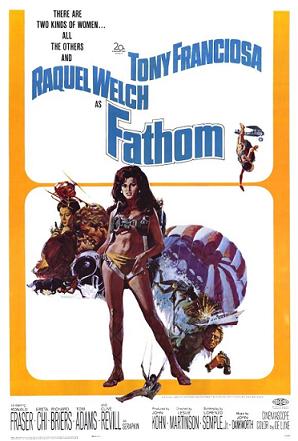
Lisa Cleans Out Her DVR: Fathom (dir by Leslie H. Martinson)


(Lisa is currently in the process of cleaning out her DVR!  It’s going to take her forever but, with the help of Dexedrine and energy drinks, she is determined to get it done!  She recorded 1967’s Fathom off of FXM on April 3rd of this year!)

Fathom is a spy spoof, one that was made the height of the initial James Bond craze.  It’s very much a late 60s film, in everything from the way the film looks to the overly complicated storyline to the film’s cultural attitudes.  This is one of those films that you know was probably considered to be “naughty” when it was released but, seen today, it’s all rather quaint.  There’s no nudity, there’s no cursing, and there’s very little violence.  However, it does feature in Raquel Welch in a lime green bikini and you just know that, when this film came out, there were probably people bemoaning it as the end of civilization.  “What happened to the movies that you could take the entire family too!?” they probably wailed.  That’s the way history works.  What was once daring now seems remarkably innocent.

I watched the film last night but I’d be lying if I said I could follow the plot.  I think that was intentional on the part of the filmmakers.  Fathom satirizes the spy films of the late 60s by taking all of their familiar elements to their logical extreme.  Spy thrillers feature unexpected twists and turns.  Fathom has a new twist every 10 minutes or so.  Spy thrillers feature sudden betrayal and double agents.  With the exception of Raquel Welch, literally no one in Fathom is who they initially claim to be.  It becomes exhausting to try to keep up.  In many ways, Fathom plays out like an old serial.  Every few minutes or so, there’s another cliffhanger.  Oh no, Raquel Welch is on an out-of-control motorboat!  Oh no, the bad guys have got Raquel Welch on an airplane!  Oh no, Raquel Welch is being chased by a bull and she’s wearing a red dress!  ¡Olé!

Raquel plays Fathom Harvill, who works as a dental hygienist except for when she’s touring Europe as a member of the U.S. parachute team.  She’s recruited by some spies to help track down a nuclear triggering mechanism, one that is being hidden somewhere in Spain.  The Scottish secret service just wants her to parachute into a villa owned by a mysterious American named Peter Meriweather (Anthony Franciosa) and plant a recording device.  Things don’t go quite as smoothly as they should and soon, Fathom’s going from one extreme situation to another.

(Even though Peter is supposed to be a suave, James Bond-type, Franciosa gives such an oddly intense performance that it feels like a dry run for his later work in Dario Argento’s Tenebrae.  Interestingly enough, in Argento’s film, Franciosa’s character is named Peter Neal.  Is it possible that Peter Meriweather changed his last name?)

But really, the entire plot is just an excuse to get Raquel into that lime green bikini and she totally owns the moment.  Raquel Welch is one of my favorite of the old film stars because she never apologized for who she was.  She had the body, she was sexy, she knew it, and she used it to her advantage.  Of course, when seen today, it’s disappointing that Fathom spends the entire movie being rescued by men but then again, I imagine that just the idea of a woman being a secret agent was revolutionary in 1967.  Actually allowing her to get out of situations on her own might have made heads explode.  If Fathom were made today, Fathom would at least get one scene where she gets to kick some ass, Angelina Jolie-style.

Anyway, Fathom is an enjoyably silly spy film.  Don’t worry about trying to follow the plot and, instead, just enjoy it as an over-the-top time capsule.  It doesn’t get more 1967 than Fathom.

On the Border: BANDOLERO! (20th Century-Fox 1968)


gary loggins's avatarcracked rear viewer

bandolero1

BANDOLERO! was made at an interesting time in the history of Western movies. Sergio Leone’s “Man With No Name” trilogy had begun to exert their influence on American filmmakers (HANG EM HIGH, SHALAKO). Traditional Hollywood Westerns were still being produced (FIRECREEK, 5 CARD STUD), but in a year’s time, Sam Peckinpah’s THE WILD BUNCH would change the Western landscape forever. Andrew V. McLaglen’s BANDOLERO! is more on the traditional side of the fence, though it does exhibit a dash of Spaghetti flavor in its storytelling.

Outlaw Dee Bishop and his gang attempt to rob a bank in Valverde, Texas. The heist is going well until rich Nathan Stone walks in with his beautiful Mexican wife, Maria. Stone tries to break it up, and gets shot for his troubles, thus alerting the attention of Sheriff July Johnson and his deputy, Roscoe. The lawmen successfully catch the gang as they’re leaving the bank. Stone dies, and Dee and…

View original post 782 more words