Late Night Retro Television Review: CHiPs 3.19 “Off Road”


Welcome to Late Night Retro Television Reviews, a feature where we review some of our favorite and least favorite shows of the past!  On Mondays, I will be reviewing CHiPs, which ran on NBC from 1977 to 1983.  The entire show is currently streaming on Prime!
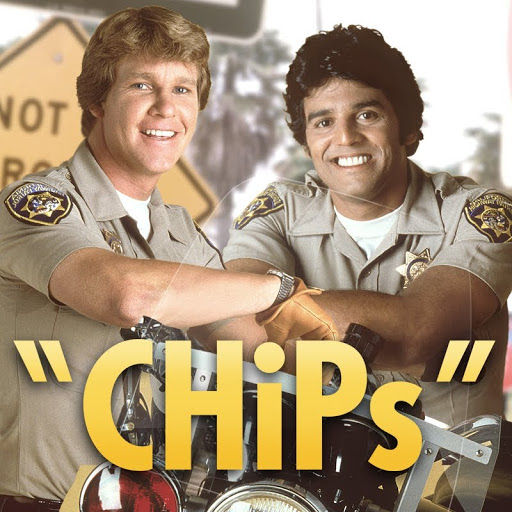
This week, Ponch and Jon go to the desert!

Episode 3.19 “Off Road”

(Dir by Paul Nuckles, originally aired on February 2nd, 1980)

Though off-duty, Jon and Ponch continue to hang out together.  This weekend, they’re taking part in an off-road race at an old military bombing range in the desert.  They’re going to have look out for unexploded shells as they drive through the desert and try to make it to the finish line.  Since they’re cops, they will also have to deal with two crooks (Ramon Bieri and Michael Baselon) who are using the race as a cover to track down some stolen gold that they hid in the area.  Another racer (played by Edd Byrnes) also knows about the gold and he’s determined to get it as well.  And, of course, Ponch falls for two female racers who also end up getting involved in the search for the gold.

This is one of those episodes of CHiPs where Ponch and Jon show off the California lifestyle.  Whether it’s hang-gliding or sailing or offroad racing or handball, you can be sure that Ponch and Jon will try it at least once.  This episode is a bit of a throwback to the first season, in that Jon is the one who knows about off-road racing while Ponch is the one who learns what it’s all about.  Jon gets to be a mentor again, explaining the rules of the race while Ponch flashes his smile and leers at every woman who happens to walk by.

This episode actually spent more time with the people looking for the gold than it did with Ponch and Jon.  And I guess that’s okay because this is also one of those episodes where you can tell just how much Larry Wilcox and Erik Estrada disliked being in the same scene together.  Playing co-workers and close personal friends, Wilcox and Estrada have all the chemistry of two high school rivals forced to sit next to each other in summer school.  Wilcox barely looks at Estrada while talking to him.  Estrada continually flashes the Estrada smile in their scenes together, silently daring Wilcox to try and steal back the scene.  I was actually worried that Baker might end up abandoning Ponch in the desert but, fortunately, he didn’t and their adventures can continue.

Anyway, if you’re a car chase person, this was a fun episode.  If you’re watching for the stunts, this episode had quite a few.  The storyline was needlessly convoluted but the vehicles looked good and that’s what CHiPs is all about.

Late Night Retro Television Reviews: Highway to Heaven 1.14 “Plane Death”


Welcome to Late Night Retro Television Reviews, a feature where we review some of our favorite and least favorite shows of the past!  On Thursdays, I will be reviewing Highway to Heaven, which aired on NBC from 1984 to 1989.  The entire show is currently streaming on Tubi and several other services!

This week, Jonathan and Mark enlist in the War on Drugs.

Episode 1.14 “Plane Death”

(Dir by Victor French, originally aired on January 9th, 1985)

In a small town in California, a man named Charlie Down (Robert Ford) drives his big family car down an isolated car.  One thing that that is immediately noticeable is that Charlie has a gigantic pair of fuzzy dice hanging from his rearview mirror.  That’s rarely a good sign.  The other thing that is immediately noticeable is that a remote control airplane is flying over the landscape.  As the audience will soon learn, the people in this town are obsessed with remote control airplanes.  That’s because drug dealer Jack Harm (Michael Bowen), the son of the local sheriff, is using the airplanes to smuggle cocaine.  When one of the planes crashes, Charlie rushes out to it and grabs the cocaine for himself.  He is pursued by Jack and his gang.  Charlie runs away from them.  An off-screen gunshot is heard.

What Jack doesn’t know is that the man that he murdered is an old friend of Mark Gordon’s (Victor French).  For the past few months, Mark has been on the road with angel Jonathan Smith (Michael Landon).  They’ve been taking care of people all over America.  But right now, they are between assignments.  They show up in town so that Mark can see his friend but, shortly after arriving, Mark is informed that Charlie has gone missing.  It doesn’t take Mark long to figure out what happened.  He announces that he’s going to get revenge, “just like in the Bible, eye for an eye.”

Fortunately, Jonathan is there to keep Mark from doing something that he might regret.  Before Mark can drive down to the local bar, Jonathan arranges for the police and the FBI to show up and take Jack and his gang into custody.  Jack’s father can only watch in disappointment as his son is taken off to prison.  When Mark thanks Jonathan for keeping him from making a mistake, Jonathan replies that he’s sure Mark would have stopped himself from killing anyone.  Mark says that he wouldn’t have been able to stop himself and Victor French’s delivery of the line is so somber and serious that there’s little doubt he was prepared to kill everyone in town.

At Charlie’s funeral, his young son (played by David Faustino) announces that he’s going to become a cop so that no other kids have to feel as bad as he feel right now.  Jonathan says that Charlie would be proud to hear that.  Mark asks Jonathan if the country is ever going to be able to win the war on drugs.

“If they don’t,” Jonathan replies, “they’re may not be a country to worry about.”

Yikes!  Setting aside the ultimate futility of the War on Drugs (which far too often became a war on addicts as opposed to war on the people making money off of them), this episode was actually pretty well-done.  Mark’s intense anger was perfectly portrayed, making him a bit frightening even if you understood his desire for revenge.  Michael Bowen’s superficially friendly psychopath was easy to dislike.  This was one of those episodes where the viewer appreciates the sincerity of the show’s emotions even if the legacy of the War on Drugs has ultimately been one of failure.

Horror on TV: Kolchak: The Night Stalker 1.17 “Legacy of Terror” (dir by Don McDougall)


Tonight, on Kolchak….

All across Chicago, people are losing their hearts …. literally!  A string of murders are all connected by the fact that the heart has been cut out of the body.  Could it be the work of an Aztec death cult that’s being led by a centuries-old mummy!?

Carl Kolchak is going to find out!

The episode originally aired on February 14th, 1975.  Wow!  Happy Valentine’s Day!

Enjoy!

http://www.youtube.com/watch?v=Op4DJ1O_1Oc

Horror on TV: Kolchak: The Night Stalker 1.8 “Bad Medicine” (dir by Alexander Grasshoff)


On tonight’s episode of Kolchak: The Night Stalker, wealthy women are dying in Chicago and Carl Kolchak is on the case!  It turns out that it’s all connected to priceless jewels and a legendary monster known as the Diabelro, a creature has been cursed to roam the Earth and search for gems.

The Diabelro is played by Richard Kiel, who might be best known for playing Jaws in The Spy Who Loved Me and Moonraker.

This episode originally aired on November 29th, 1974.

Enjoy!

http://www.youtube.com/watch?v=97o7cuBNTAs

Embracing the Melodrama Part III #4: The Grasshopper (dir by Jerry Paris)


“It’s very simple what I want to be: totally happy; totally different; and totally in love.”

— Christine Adams (Jacqueline Bisset) in The Grasshopper (1970)

Seriously, is Christine asking for too much?

Total happiness?  That may sound like a lot but trust me, it can be done.

Totally different?  That’s a little bit more challenging because, to be honest, you’re either different or you’re not.  If you have to make the effort to be different, then you definitely are not.

Totally in love?  Well, it depends on how you define love…

At the start of The Grasshopper, Christine thinks that she’s heading to America to find love.  While an oh-so late 60s/early 70s theme song plays in the background, Christine leaves her small hometown in Canada and she heads down to California.  She’s planning on meeting up with her boyfriend Eddie (Tim O’Kelly) and taking a job as a bank teller.

Of course, it soon turns out that working in a bank isn’t as exciting as Christine originally assumed.  Eddie expects Christine to just be a conventional girlfriend and that’s not what Christine is looking for. As well, it’s possible that Christine may have seen Targets, in which O’Kelly played an all-American boy who picks up a rifle and goes on a killing spree.

And so, Christine abandons Eddie and heads to Las Vegas.  Since this movie was made in 1970 and Uber didn’t exist back then, Christine’s preferred method of traveling is hitchhiking.  This gives her a chance to meet the usual collection of late 60s weirdos who always populate movies like this.  One driver crosses herself when Christine says that she plans to have a baby before getting married.  Another is a hacky Las Vegas comic.

In Vegas, Christine applies for a job as a showgirl.  As she explains to sleazy casino owner Jack Benton (Ed Flanders), she “once did Little Women in school.”

“Did you do it nude?” Jack replies.

Yep, that’s Vegas for you!  It’s the city of Showgirls, Casino, and Saved By The Bell: Wedding in Vegas, after all!

Anyway, thing do get better once Christine meets and falls in love with Tommy Marcott (Jim Brown), a former football player who is now working as a door greeter in Jack’s casino.  Everyone tells Christine not to get involved with Tommy.  One of Jack’s men, a menacing hitman who looks just like Johnny from Night of the Living Death (he even wears glasses), warns Christine to watch herself.

Through a long series of events, Christine ends up on her own again.  The usual collection of 70s events occur: murder, drugs, prostitution, and ultimately a stint as the mistress of a rich man played by Joseph Cotten.  The important thing is that it all eventually leads to Christine and a skywriter getting stoned, stealing a plane, and deciding to write a message in the sky.

That’s when this happens:

Yes, it’s all very 1970!

Anyway, The Grasshopper is one of those films that tries to have it both ways.  Establishment audiences could watch it and think, “Wow, those kids are really messed up.”  Counterculture audiences could watch it and say, “Old people are such hypocrites.”  Oddly enough, The Grasshopper was written by future director Garry Marshall and it’s an incredibly overwrought film.  There’s not a subtle moment to be found in the entire film and the film’s direction is flashy but empty.  However, for those of us who love history, it’s as close to 1970 as we’re going to get without hopping into a time machine.

Horror on TV: The Twilight Zone 1.23 “Shadow Play” (dir by Paul Lynch)


For tonight’s trip into the world of televised horror, we have an episode from a 1986 attempt to revive The Twilight Zone.

This episode is a remake of one of my favorite episodes of the original series, Shadow Play.  That’s the one where the guy is on death row but he says he’s not worried about being executed because he knows he’s just having a reoccuring nightmare.  Of course, this kind of freaks out some of the people around him because, if he’s just having a dream, what happens to them when the dream ends?

While the remake is nowhere near as good as the original, it’s still fairly well done.  Plus, it’s on YouTube and the original isn’t.

This episode was directed by Paul Lynch, the Canadian director who also directed the original Prom Night.

Enjoy!