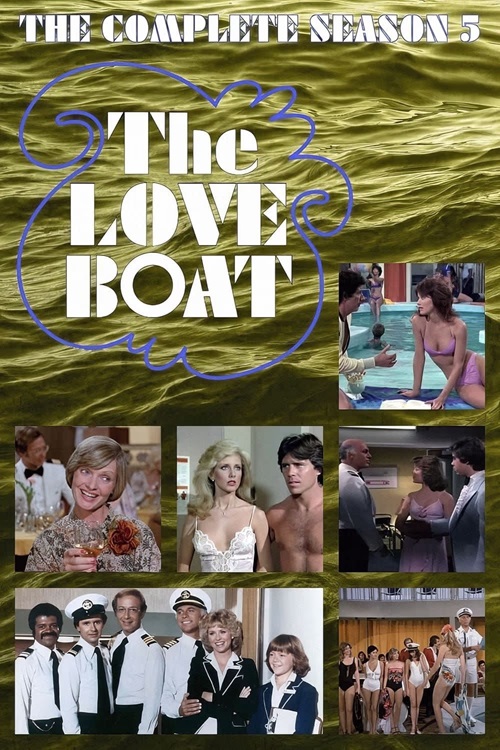
Retro Television Review: The Love Boat 5.22 and 5.23 “Pride of the Pacific/The Viking’s Son/Separate Vacations/The Experiment/Getting to Know You”


Welcome to Retro Television Reviews, a feature where we review some of our favorite and least favorite shows of the past!  On Wednesdays, I will be reviewing the original Love Boat, which aired on ABC from 1977 to 1986!  The series can be streamed on Paramount Plus!
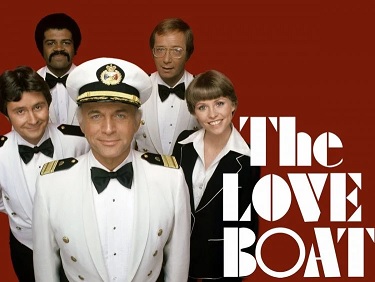
This week, a special two-hour Love Boat sets sail for Alaska and adventure!

Episode 5.22 and 5.23 “Pride of the Pacific/The Viking’s Son/Separate Vacations/The Experiment/Getting to Know You”

(Dir by Roger Duchowny, Originally aired on March 6th, 1982)

The Pacific Princess is sailing to Alaska!

The Sea Princess, commanded by the strict and haughty Gunner Nordquist (Ted Knight), is also sailing to Alaska.  Steve Bloom (Sonny Bono) of the Cruise Ship Association has arranged for a series competitions between the crews of the two ships.  At each stop, the rival crews will compete in races, tree-sawing, tug-of-war, and wrestling.  The crew that wins the most competitions will receive a trophy.  All of the passengers are really excited about it, though I’m not sure why.  I would not want to spend my vacation watching a bunch of strangers take part in a competition that has nothing to do with me.

Gunner is determined to win.  Stubing is determined to have fun.  Or, at least, he is until his crew is absolutely humiliated during the second competition.  When he learns that Gunner has brought in a bunch of ringers, Stubing becomes determined to win at all costs.  Only the tears of Vicki can reveal to Stubing that he’s becoming a monster.  Stubing realizes that he’s been pushing too hard and he apologizes to his crew.  At the final stop, Stubing suggests a dog sled race between him and Gunner.  Gunner agrees.  Steve Bloom says it’s okay.  The crowd is excited for some reason.  In the end, Gunner wins the dog sled race and the competition but only because Stubing kindly refuses to take advantage of an accident that occurs during the race.  Gunner announces that the trophy properly belongs to Stubing and his crew.  Gunner also says that it’s okay if his son (Woody Brown) wants to become a cruise director instead of a navigator.  I’m glad that all worked out….

Actually, this whole storyline made no sense to me.  Beyond the fact that the passengers were oddly excited about the whole thing, I really didn’t see the point of making the members of the crew compete in stuff like tug-of-war and wrestling.  Wouldn’t it have made more sense to compete to see who could be the first to reach the next port?  I appreciated that at least some of this episode was shot on location.  The Alaskan scenery was lovely but the whole competition storyline was just weird.

There were other storylines, of course.  A couple played Charles Nelson Reilly and Charlotte Rae spent the entire cruise in their cabin, getting to know each other because they fell in love at first sight and they wanted to make sure they can handle marriage.  (I can think of one big reason why Charlotte Rae marrying Charles Nelson Reilly might not work out but, this being The Love Boat, it never comes up.)  Two Harvard researchers (John James and Mary Crosby) tried to come up with a pill that would make shy Dave (Douglas Barr) irresistible to women.  Both of those stories were pretty boring.  John James was handsome so the show had that going for it.

Slightly more interesting was the story of Harry Meacham (Tom Bosley) and his wife, Dorothy (Michele Lee).  As they’re in the process of divorcing, Harry sails on The Sea Princess while Dorothy board the Pacific Princess.  Of course, Doc makes his move as soon he realizes the Dorothy will soon be single.  While Dorothy has a chaste fling Doc, Harry has a chaste fling with massage therapist Britta (Priscilla Barnes).  Eventually, Harry and Dorothy realize they still love each other.  Awwww!  Yay!  This story was sweet.

Otherwise, this was not the most memorable cruise to Alaska that the Love Boat has ever taken.  Next week, let’s hope for no musicals and no athletic competitions.  Come on, Love Boat, we all know why we’re here!

October True Crime: Ed Gein: The Butcher of Plainfield (dir by Michael Feifer)


Ed Gein was a farmer who lived in Plainfield, Wisconsin in the 1950s.  Everyone in town agreed that Ed was a bit of an eccentric.  He had been something of a recluse ever since the death of his mother in 1945.  Having never married, he spent most of his time on his farmhouse, where he had a collection of pulp magazines and literature about Nazi war crimes.  Ed supported himself by doing odd jobs around town.  He was quiet and a little weird but he was considered to be harmless enough.

Or, at least, he was until November of 1957.

That was when Bernice Worden, the owner of the local hardware store disappeared.  Her son told the police that Ed Gein has been the last person to talk to her the night before she disappeared and that Gein had specifically said that he would return to the store the next morning.  When the police searched Gein’s property, they discovered that Gein’s house was full of body parts.  Among other things, they found several skulls, a trash can made out of human skin, bowls made out of skulls, leggings made out of skin taken from human legs, nine vulvae in a shoe box, four noses, masks made from the skin taken from human heads, a corset made out of human skin, a pair of lips on a window shade drawstring, and the bodies of Bernie Worden and tavern owner Mary Hogan.  The police who discovered Gein’s home were reported to have been haunted by nightmares for years afterwards.  The officer who interrogated Gein later died of heart failure when he was informed that he was going to have to testify at Gein’s trial and relive the experience of hearing Gein’s story.

Gein confessed that he had started digging up graves after the death of his mother, collecting recently deceased women who he thought resembled her.  Gein also confessed to murdering both Bernie Worden and Mary Hogan, though most observers felt that Gein had killed many more.  Judged to be legally insane, Gein spent the rest of his life in a mental hospital, where he was said to be a polite and friendly patient.  He died of cancer in 1984.

The story of Ed Gein has inspired many writers and filmmakers.  Psycho was inspired by Gein’s crime, with the book’s version of Norman having far more in common with the real Gein.  The Texas Chainsaw Massacre’s house of horrors was also inspired by Gein and so was The Silence of the Lambs‘s Buffalo Bill.  The 1974 film, Deranged, featured Roberts Blossom in the role of Ed Gein, whose name was changed to Ezra Cobb.

In 2007’s Ed Gein: The Butcher of Plainfield, Kane Hodder plays Ed Gein.  Best-known for playing Jason Voorhees in several Friday the 13th films (and for providing a great DVD commentary for Friday the 13th Part VII: New Blood), Hodder plays Gein as being a hulking and awkward farmer who, after losing his mother, comes to believe that death is the only thing that’s real in life.  With his friend Jack (Michael Berryman), Gein digs up bodies from the local graveyard.  When Jack finally says that he’s tired of digging up bodies and that he thinks Gein needs to get professional help, Gein responds by murdering Jack and dragging the body behind his pickup truck.  Interestingly enough, Gein drives by Deputy Bobby Mason (Shawn Hoffman) who doesn’t even notice the body being dragged because he’s too busy fooling around with his girlfriend, Erica (Adrienne Frantz).

Bobby, in short, is a bit of a dumbass and that’s unfortunate for the people of Plainfield because Ed Gein is about to go on a rampage.  First, he abducts the owner of the local tavern.  Then, he abducts Bobby’s own mother, Vera (Priscilla Barnes)!  And, to top it all off, he abducts Erica just a few hours later.  This leads to a lot of scenes of Bobby running around, searching for his mother and then his girlfriend and managing to screw up just about everything that he attempts to do.  Bobby being a total idiot wouldn’t be a problem except for the fact that Bobby is also supposed to be the hero of our story.

Ed Gein: The Butcher of Plainfield features a lot of gore and discarded body parts, to the such an extent that I had to actually look away from the screen more than a few times.  That said, the story itself is only loosely based on the facts of the case.  (For instance, Ed Gein never kidnapped the girlfriend of a deputy and instead, he reportedly never even tried to flee once it became obvious that the police were on to him.)  The film is so haphazardly edited that it’s often difficult to keep track of how many days or night have passed from one scene to another and there’s quite a few scenes that feel as if they’ve been included to pad out the running time.  That said, Kane Hodder gives a good performance as this film’s version of Ed Gein, proving that he can be just as intimidating when wearing a mask of human skin as when wearing a hockey mask.

Retro Television Reviews: The Love Boat 1.17 “Winner Take Love / The Congressman Was Indiscreet / Isaac’s History Lesson”


Welcome to Retro Television Reviews, a feature where we review some of our favorite and least favorite shows of the past!  On Wednesdays, I will be reviewing the original Love Boat, which aired on ABC from 1977 to 1986!  The series can be streamed on Paramount Plus!

This week, things get awkward as we set sail on The Love Boat!

Episode 1.17 “Winner Take Love / The Congressman Was Indiscreet / Isaac’s History Lesson”

(Dir by Jack Arnold, originally aired on January 28th, 1978)

It’s the most awkward cruise ever!

A beauty contest is being held on the ship!  The winner becomes Ms. Pacific Princess and, along with getting a lot of money, she also sacrifices a year of her life so that she can go on free cruises and promote the Pacific Princess line.  Along with being beautiful, the winner is also expected to be “virtuous.”  Of course, judging from The Love Boat, the cruise line seems to specifically cater to people who are desperately looking to get laid so the rules seem to be a bit hypocritical.

The head of the contest, Waldo Linden (Graham Jarvis), recruits Captain Stubing to act as host.  Unfortunately, after Stubing gets a few laughs from the jokes that Waldo has written for him, the Captain turns into a prima donna.  He starts punching up the script on his own.  Waldo, however, has even more to worry about than the captain.  Suzy (Maureen McCormick), one of the contestants, is secretly traveling with her boyfriend, Rick (Bobby Sherman).  When Waldo tries to disqualify Suzy for not being “virtuous,” another contestant, the klutzy Jeanette (Priscilla Barnes), asks that Waldo help her zip up her dress and, after Waldo kisses her, she points out that Waldo hasn’t been living up to his own standards.  Due to Jeanette’s blackmail, Suzy is allowed to compete and she wins!  But then she refuses the crown so that she can marry Rick and, as a result, Jeanette becomes Miss Pacific Princess.

While that’s going on, scandal-plagued Congressman John Whitcomb (Dick Van Patten) falls in love with Robin Brandt (Vickie Lawrence).  What the Congressman doesn’t know is that Robin works for a tabloid newspaper and Robin’s editor expects Robin to report on whether or not allegations of an affair are going to led to Whitcomb resigning his seat. 

All of that is certainly awkward but it’s nothing compared to the third storyline.  Almost everyone loves passenger Virgil Gibson (played by the engaging Scatman Crothers), who is always the life of the party and who loves to make people laugh.  The only person who doesn’t like him is Prof. Stephanie Hayden (Vernee Watson), who is on the cruise to work on a study about African-American history.  Hayden feels the Virgil is acting like a fool and playing into all of the demeaning stereotypes that white people have about black people.  Hayden encourages Isaac to learn more about his background and soon, Isaac is being rude to Virgil and telling him not to call people “boss.”

Captain Stubing notices this.  He approaches Isaac — while Isaac is working — and says, “I notice you’ve been reading a lot of black history.”

AGCK!  As soon as the very white Captain Stubing says those words to Isaac, the cringing begins.

Stubing goes on to explain that Virgil was a pitcher in the Negro Baseball Leagues and that, if not for him, blacks would never have made it into the major leagues.  “And I wouldn’t be serving drinks on this cruise,” a remorseful Isaac says.  “And I wouldn’t be teaching,” Stephanie agrees.  Stubing goes on to explain that Virgil is acting the way he acts because that’s the way blacks were expected to behave when Virgil was a young man.  After being chastised by the ship’s white authority figure, Isaac and Stephanie agree that they were wrong to judge Virgil.

And, in many ways, Captain Stubing does have a point about judging people and Isaac and Stephanie were being a bit harsh in their dismissal of Virgil.  But that doesn’t change the fact that this episode features the extremely white Captain Stubing explaining black history to not only the ship’s only black employee but also a black college professor who has spent her entire academic career researching and writing about black history.  Stubing is essentially telling two black people how they should interpret and feel about black history.  It’s incredibly weird to watch and one has to wonder why the writers thought that Stubing — as opposed to Virgil himself — was the correct character to explain Virgil’s past and Virgil’s character.  It just doesn’t feel right, at all.

That said, there was a lot to like about this episode.  Scatman Crothers shows the same charm here that he showed in The Shining.  As cringey as Captain Stubing is when he lectures on black history, the plotline of him turning into a diva was actually pretty funny and Gavin MacLeod seemed to be having fun playing up the pompous side of the character.  The beauty pageant subplot was dumb but Maureen McCormick actually gave a pretty good performance as Suzy.  This episode had its moments though, in the end, it will always be defined by the awkwardness.
 

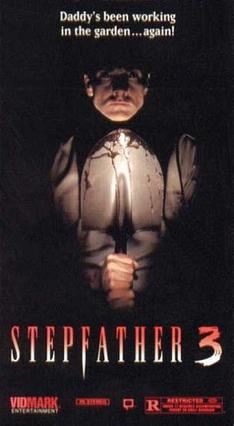
Stepfather III (1992, directed by Guy Magar)


As if Stepfather II was not bad enough on its own, 1992 saw the release of Stepfather III.

Once again, Jerry Blake/Gene Clifford manages to survive being mortally wounded at the end of the previous film.  After he recovers, he is sent to the exact same institution that he previously escaped from.  Guess what happens?  He escapes again!  Now using the name Keith, he marries Christine Davis (Priscilla Barnes) and become stepfather to her son, Andy (David Tom).  Andy is in a wheelchair.  Keith is convinced that Andy is faking his condition and keeps calling him “slugger.”  When Andy doesn’t respond, Keith prepares to move on to another single mother (Season Hubley).  But, before he can move on, Keith needs to take care of his current family.  Good thing that he has a woodchipper.

Terry O’Quinn did not return for Stepfather III.  The Stepfather is played by Robert Wightman, who looked and sounded nothing like Terry O’Quinn.  The film tries to explain it away by saying that the Stepfather got plastic surgery after he escaped from the institution but, unless the plastic surgeon was God, there’s no way that Jerry/Gene could ever have become Keith.

Stepfather III goes through the motions and even repeats the first film’s “buckle up for safety” gag.  By repeating all of the key scenes from the first (and even the second) movie, the third movie only succeeds in reminding us that The Stepfather doesn’t work without Terry O’Quinn’s performance and Joseph Ruben’s intelligent direction.  Keith becomes a standard movie slasher with a wood chipper.  He does inspire Andy to get out of his wheelchair, in a scene that will inspire more laughter than cheers.

One positive note: Season Hubley is in this movie!  Much as with Jill Schoelen in the first movie and Meg Foster in Stepfather II, this franchise had a way of attracting actresses who deserved better.

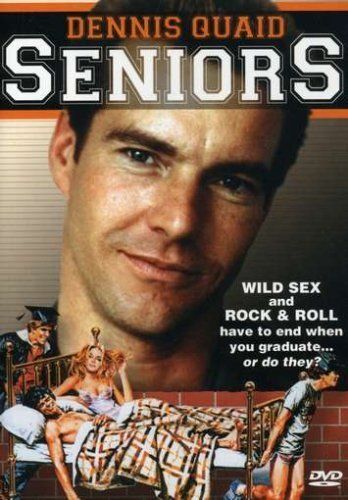
The Seniors (1978, directed by Rod Amateau)


Four college seniors (including one played by Dennis Quaid) are upset at the prospect of graduating, having to get real job, and losing Sylvia (Priscilla Barnes), the mute nymphomaniac who lives in their house with them and does all the cleaning and cooking.  They decide that the best way to avoid getting a real job is by setting up a fake company called Phantom Research.  They apply for and get a grant to study female sexuality, which essentially means that they pay the girls on campus to have sex with them.  Before you can say Risky Business (which was actually released years after this film), they expand their operations, get involved with some crooked businessmen, and nearly lose their lives.  It’s a comedy.

The Seniors is one of those films that used to come on television frequently when I was a kid.  I remember watching it when I was 12 and enjoying it, mostly because I was a stupid kid and I was at that age where any film about sex seemed clever and hilarious.  I recently rewatched it and discovered that there was only one funny bit and that was about a nerdy research assistant named Arnold (Rocky Flintermann) who helps out the seniors in return for them setting him up with Sylvia.  Throughout the film, the formerly virginal Arnold gets laid so often that he loses the ability to walk and then he dies.  Ha ha.  The rest of the film is just dumb.  The problem is that the film wants to be a raunchy, Animal House-style comedy but it was written by Stanley Shapiro (who previously wrote Doris Day comedies) and directed by Rod Amateau, who had previously directed several episodes of Gilligan’s Island.  Their style is all wrong for the material.

The film’s opening credits announce that it stars, among others, Ryan O’Neal, Clint Eastwood, and Charles Bronson.  A cartoon professor then walks out and announces that, “All of these big stars!  None of them are in this film!”  That’s too bad.  I would have liked to have seen some of those stars in this movie.  I think Eastwood would have told the seniors to get jobs and stop exploiting Sylvia.  Bronson would have blown away the entire operation but Ryan O’Neal probably would have been cool with it all.

O’Neal, Eastwood, and Bronson are not in the film.  Dennis Quaid is, though he probably doesn’t brag about.  Edward Andrews and Ian Wolfe both have minor roles as corrupt businessmen who help fund Phantom Research.  Alan Reed, the voice of Fred Flinstone, plays a professor.  This was his last performance before his death.