Retro Television Review: St. Elsewhere 2.3 “Newheart”


Welcome to Retro Television Reviews, a feature where we review some of our favorite and least favorite shows of the past! On Fridays, I will be reviewing St. Elsewhere, a medical show which ran on NBC from 1982 to 1988.  The show can be found on Hulu and, for purchase, on Prime!
This week, things get dark.

Episode 2.3 “Newheart”

(Dir by Mark Tinker, originally aired on November 9th, 1983)

What a depressing episode!

It doesn’t start out on a particularly depressing note.  It opens with a bachelor part for Dr. Vijay Kochar, who is about marry a woman that he’s never actually met.  (It’s an arranged marriage.)  The bachelor party, which appears to have been held in Fiscus’s apartment, is a bust.  Dr. White shows up with a sex doll.  Victor Ehrlich shows up with a short film called “Sally Takes a Ride,” which turns out to be not the pornography he was expecting but instead, a short film about astronaut Sally Ride.  Vijay mentions that he’s a virgin and soon, with the help Dr. White and Nurse Daniels, the news is all over the hospital.  Kathy Martin decides to give Vijay an early wedding gift by having sex with him.

Since this episode aired in 1983, there’s a random aerobic class being held in the hospital, which leads to a lengthy scene of spandex and dancing.  It’s a bit of a silly scene for what was, for the first half hour, shaping up to be a silly episode.

Fran and Jerry Singleton finally check out of the hospital.  Fran has regained the ability to speak and can stiffly walk.  Jerry has learned to stop being such an overbearing jerk.  Dr. Morrison is not there to say goodbye to the Singletons because….

…. and here’s where things start to get dark….

….his wife is in another hospital!  Jack Morrison’s wife has an offscreen cerebral hemorrhage and, as evidenced by Morrison’s tears at the end of the episode, she does not survive.  At the same time that she’s dying, Dr. Craig gets a call telling him that there is finally a heart available for the transplant.  And, though it wasn’t explicitly stated, it seems pretty obvious that the heart in question belonged to Morrison’s wife.

AGCK!

Seriously, how much more depressing can one episode get?  And for all this to happen to Jack Morrison, who is probably the most decent character on the show, it’s just not fair!  I mean, he was literally the only married intern who had a happy marriage.  He has a newborn son.  And now, he’s going to have to balance being a single father with being a resident.

Poor guy!  I hope next week finds some sort of relief for him.
Retro Television Review: St. Elsewhere 2.2 “Lust Et Veritas”


Welcome to Retro Television Reviews, a feature where we review some of our favorite and least favorite shows of the past! On Fridays, I will be reviewing St. Elsewhere, a medical show which ran on NBC from 1982 to 1988.  The show can be found on Hulu and, for purchase, on Prime!

This week, St. Eligius gets a new plastic surgeon.

Episode 2.2 “Lust Et Veritas”

(Dir by Mark Tinker, originally aired on November 2nd, 1982)

This episode sees the addition of two new doctors to the hospital’s staff and they’re both played by familiar actors.  Elliott Axlerod is played by Stephen Furst.  He’s a new resident and obviously terrified of screwing up in the ER.  He asks Ehrlich and Fiscus for advice.  When told that he’s required to perform a rectal exam on every patient, he asks, “Is it too late to go to law school?”  Ehrlich assures him that it is.

(It’s never too late!)

Secondly, Mark Harmon joins the cast as plastic surgeon Bobby Caldwell and not even a porn star mustache can obscure the fact that young Mark Harmon was amazingly hot.  (Actually, old Mark Harmon isn’t that bad either.  He aged well.)  Bobby, we learn, was brought to St. Eligius by Dr.  Craig.  He’s cocky and confident and it’s obvious that he loves being lusted after by Dr. Armstrong and Nurse Daniels.  However, he already has a secret lover as this episode finds him showering with Joan Halloran, the city hall bureaucrat who spends most of her time arguing with Dr. Craig about whether or not to shut down one of the hospital’s non-profit programs.

Dr. Craig is nervous because he’s waiting for a heart to become available so he can perform his first transplant on Eve Leighton (Marian Mercer), a teacher who wants to get back into her classroom as soon as possible.  Ehrlich is nervous because Craig is taking all of his frustrations. and his nervousness out on him.

Meanwhile, Jerry Singleton (Alan Arkin), the demanding husband of stroke-victim Fran (Piper Laurie), continued to push his wife to recover until finally, at the end of the episode, she yelled that he was pushing her too hard.  It was a heart-breaking moment.  Jerry thinks that he’s helping his wife but, as this episode showed, he’s actually been torturing her with his overbearing demands that she hurry up and get better.

Finally, a former resident named Barry Dorn (Peter Horton) returns to the hospital to try to convince Dr. Cavanero to change her negative evaluation of his job performance.  Everyone acts as if Barry was a character on the show during the previous season, even though he wasn’t.  It’s even revealed that he is Wendy Armstrong’s former boyfriend.  When Cavanero refuses to change her evaluation, Armstrong accuses her of not having any feelings.  (Seriously, Armstrong is the worst!)  Even worse, when Cavanero heads to the doctor’s lounge, she finds Barry waiting for her.  Barry punches her, busting open her lower lip.  Armstrong stitches up the cut and then says that Cavanero is lucky because now, she’ll have an excuse to meet Dr. Caldwell!  Armstrong then offers a half-hearted apology for previously accusing Cavanero of being heartless.  (Again, Armstrong is the worst!!!!)

This wasn’t a bad episode.  Mark Harmon and Stephen Furst seem like they’ll be good additions to the show’s ensemble.  The Barry story felt a bit odd, just because Barry was apparently present but 0ff-camera during the entire first season.  It sounds like Barry went through a lot of the same things that Peter White went through during the first season and Peter was not present in this episode.  There’s a part of me that suspects that Barry was originally meant to be Peter but the show’s producers obviously decided they wanted to keep Peter around for a bit longer.

Next week …. well, I have no idea how things are going to develop.  There’s a lot going on in this hospital.  We’ll see what happens.

Retro Television Review: St. Elsewhere 2.1 “Ties That Bind”


Welcome to Retro Television Reviews, a feature where we review some of our favorite and least favorite shows of the past! On Fridays, I will be reviewing St. Elsewhere, a medical show which ran on NBC from 1982 to 1988.  The show can be found on Hulu and, for purchase, on Prime!

This week, we start season 2!

Episode 2.1 “Ties That Bind”

(Dir by Bruce Paltrow, originally aired on October 26th, 1983)

The second season is here and there are changes to be found in the opening credits.

David Birney and G.W. Bailey are no longer listed in the opening credits.  I’m not sorry to see Birney go as Dr. Samuels was never that interesting of a character.  I will miss Bailey’s performance as Dr. Beale.

Norman Lloyd is now listed in the credits, appearing right after Ed Flanders.  Ellen Bry, Kim Miyori, and Eric Laneuville are also now listed in the opening credits.  That’s good.  Last season, Shirley Daniels (played by Ellen Bry) was one of the most important characters on the show and it always seemed strange that she was left out of the opening.  Mark Harmon, sporting a mustache, appears in the credits, though he didn’t appear in this episode.  The final addition to the opening credits is Nancy Stafford, who does appear in this episode.

Stafford plays Joan Halloran, the new city budget advisor who has been assigned to cut St. Eligius’s budget.  She tells Westphall and Auschlander that St. Eligius is not popular downtown.  “They call you St. Elsewhere,” she says.  Joan wants to do away with the animal research lab, which is a part of the hospital that has never been mentioned before.  (And with good reason.  Boo, animal research, boo!)  Westphall finally agrees, on the condition that the city fund Dr. Craig’s attempt to perform a heart transplant on teacher Eve Leighton (Marian Mercer).

Wisely, Dr. Craig gets a lot of screentime in this episode.  If the first season seemed to often be unsure of just how abrasive the show should allow Craig to be, the second season premiere would seem to suggest that the show’s writers realized that the more abrasive Craig is, the better.  Of course, Dr. Craig has good reason to be in a bad mood.  As he confesses to Nurse Rosenthal, he caught his son doing drugs.  Craig explains he kicked him out of the house and now, he wants nothing to do with him.

Speaking of drugs, orderly Luther (played by Eric Laneuville) finally manages to capture the thief who has been stealing all the drugs from the hospital.  Dr. White is no longer under suspicion!  Yay, I guess.  I don’t know.  Dr. White wasn’t in much of this episode but he still cames across as being a jerk.  I have to admit that I groaned a little when I saw he was still on the show.  A part of me is hoping he’ll get a redemption arc this season but, from his behavior during rounds, he still seems to be a jackass.

Speaking of jackasses, when Jerry Singleton (Alan Arkin) discovers that his wife, Fran (Piper Laurie), has had a stroke, he responds by crashing his car into the ER and then refusing to leave the doctors along while they try to save his wife’s life.  Jerry is convincing that he knows everything and he’s very demanding.  Naturally, Fran’s doctor is Jack Morrison because Morrison always gets the really depressing cases.  Fran does wake up from her coma but she neither speaks no seems to hear anything anyone says to her.  I can’t imagine this is going to end well, mostly because she’s Morrison’s patient and things never seem to go well when Morrison is involved.  (What’s really sad is that Morrison, unlike Peter White, is a good doctor!  He just has rotten luck.)

Shirley Daniels finds out that Fiscus is cheating on her with Kathy Martin, who spends most of this episode promoting cryogenics.  Shirley responds by dumping Fiscus and telling him that he’s a pig.  Fiscus tells Kathy that they no longer have to sneak around, just for Kathy to say that the sneaking around was the whole point.  She promptly dumps Ficus.

Finally, Dr. Ehrlich meets a woman, Bobbi (Jean Bruce Scott) at the laundromat.  They go back to her apartment.  She strips down to her underwear.  She has Ehrlich tie her to the bed.  Ehrlich realizes that he has to get something from his car so he runs outside and …. gets locked out.  And then he nearly gets arrested while trying to use his credit card to open the building’s door.  However, the next day, Bobbi shows up at the hospital for her “encounter group,” and the two of them are reunited.  Again, I have a feeling this is not going to end well, just because it involves Dr. Ehrlich.

Hey, this episode was pretty good!  It moved quickly, it reintroduced us to the cast, and all of the stories were actually fairly interesting.  It’s obvious that show’s producers paid attention with what didn’t work during season one and they made an effort to improve things with season two.  Compared to the majority of this first season’s episodes, the pace was quicker, the humor was sharper, and just about everyone got a moment or two to shine.  I’m looking forward to next week!

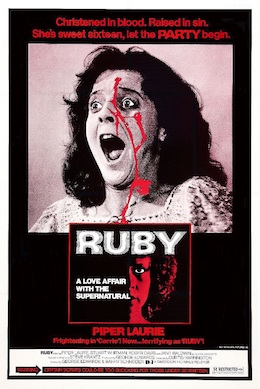
The TSL Horror Grindhouse: Ruby (dir by Curtis Harrington)


The 1977 film, Ruby, opens with a scene set in 1935.  The Great Depression is still raging and the only people making money are industrialists like Joseph P. Kennedy and gangsters like Lucky Luciano and Frank Costello.  In the Florida swamps, gangster Nicky Rocco (Sal Vecchio) is betrayed by both his gang and his pregnant girlfriend, Ruby (Piper Laurie).  As Nicky’s bullet-ridden body sinks into the bayou, Ruby goes into labor and gives birth to Leslie.

16 years later, Ruby owns her own drive-in.  The theater employs several members of the old gang and Ruby is herself married to one of Nicky’s former partners, the crippled and blinded Jake Miller (Fred Kohler, Jr.).  Ruby’s lover is another former member of the gang, Vince Kemper (Stuart Whitman).  Leslie, meanwhile, is now 16 years old and has never spoken a word in her life.  Ruby laments that she never made it as a lounge singer but she does a good job running the theater and it seems to be a popular place to see movies.  She’s even able to show Attack of the 50 Feet Woman, even though that film came out in 1958 and Ruby is set in 1951.  That’s the power of having mob-connections, I guess.

When strange things start to happen at the theater, it could just be a case of Ruby having bad luck and the former gangsters that she’s hired not being particularly good at their jobs.  Or maybe it has something to do with the fact that Nicky swore to get revenge on everyone with his dying breath.  One employee is found hanging in a projection booth.  Another is found hanging from a tree.  Another is left in a cold drink machine and the lady who puts in a quarter to get a cup of tea instead gets a cup of blood.  While Ruby might be in denial about the fact that her business is obviously cursed, Vince realizes that something has to be done so he brings a psychic/exorcist named Paul Keller (Roger Davis, who also provides some narration at the start of the film).

Of course, it’s not just ghosts that Ruby and the gang have to worry about.  Leslie is acting strange as well!  At one point, Leslie even speaks but it’s not with her voice.  It’s with Nicky’s voice!  Leslie has been possessed and soon, Nicky himself is appearing on the drive-in’s screens and repeating, “I love you, I love you.”

Ruby is a real mess of a film, one that attempts to rip-off The Exorcist while tossing a bit of Carrie in as well.  Director Curtis Harrington plays up the campier aspects of the story and Piper Laurie gives a scenery-chewing performance that suggests that she realized it was pointless to try to take anything about Ruby seriously.  Stuart Whitman plays Vince as being the most well-meaning but also the most clueless man in Florida while poor Roger Davis is stuck with the most earnest role in the film and, as such, gets the unenviable task of trying to explain what’s going on in a rational manner.  There’s nothing rational about Ruby, which goes from being a film about gangsters to being a film about ghosts to being a film about possession without even stopping to catch its breath.  It’s a deeply silly film but one gets the feeling that it was made to be silly.  Ruby works as long as you just accept the weirdness of what you’re watching while you’re watching it and you don’t give it too much thought afterwards.

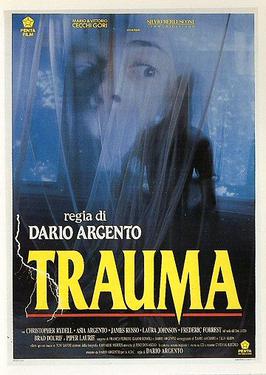
The Films of Dario Argento: Trauma


In 1993’s Trauma, Dario Argento tells a story of giallo horror, complete with a killer who wears black gloves, a camera that stalks through the streets of a rainy city, and plenty of eccentric red herrings.  The story is set and was filmed in Minneapolis, Minnesota, making this one of the two Argento films to be completely shot in America.

Trauma was also the first of Argento’s films to star his daughter Asia Argento.  Asia, who was 16 at the time of filming, plays Aura Petrescu, the daughter of Adriana (Piper Laurie) and Stefan (Dominique Serrand).  Aura is a bulimic drug addict, with track marks up and down her arms.  Having recently escaped from a mental hospital run by the eccentric Dr. Judd (Frederic Forrest), Aura is preparing to jump off a bridge and end her life when she’s grabbed by David (Christopher Rydell).  David works as a headline writer and an artist for a local TV news station.  David is also a recovering addict who takes sympathy on Aura and buys her breakfast.  Aura thanks David by stealing his wallet and running out of the restaurant.

After being  caught by the police, Aura is then returned to her home, a baroque mansion where Adriana works as a fake psychic.  When Aura arrives, Adriana is preparing for a séance.  She’s been hired to contact the spirit of a victim of The Head Hunter, a serial killer who has been chopping off people’s heads in Minneapolis.  As a storm rages outside, Aura again flees from the house.  Stefan and Adriana chase after her.  Soon, while a terrified Aura screams in the rain (in a scene that will remind some of Asia’s mother, Daria Nicolodi, freaking out at the end of Tenebrae), the Head Hunter is holding up what appeas to be the heads of her parents.

Terrified for her life, Aura goes through David’s wallet, finds his number, and calls him.  After setting Aura up at his house, David investigates who is chasing her and how those people are connected to The Head Hunter.  David also falls in love with Aura and Aura falls for him.  Unfortunately, as so often happens in the films of Dario Argento, the world is full of people who don’t care how in love two people are.  The people who are after Aura are determined to get her and if that pushes David back into the world of drug abuse, so be it.

Trauma is middle-of-the-road Argento, featuring some scenes that are touched with genius and other scenes that just feel a bit bland.  The cast is an interesting mix of veteran performers like Piper Laurie, Frederic Forrest, and Brad Dourif and younger actors like Christopher Rydell and Asia Argento.  Dario Argento is known for being a director who prefers for his actors to come in, hit their marks, and deliver their lines with a minimum amount of fuss and he’s complained about American method actors (like Tenebrae’s Anthony Franciosa, with whom Argento had a notoriously difficult relationship) who want to discuss every little detail of their character and their performance.  One can only imagine how he handled working with actors as outspoken and creative as Laurie, Forrest, and Dourif.  It must be said that those three actors all give memorable performances but none of them seem to be acting in the same film as Rydell and Asia Argento.  Rydell and Asia give rather earnest and straight-forward performances while Laurie, Forrest, and Dourif are all a bit more eccentric in the way they interpret their characters.  Piper Laurie, in particular, rejects subtlety and delivers her lines with all of the melodramatic force she can summon.  (It should be said that this is absolutely the right approach for the character that she’s playing.)  That said, it’s Fredric Forrest who truly seems to be on a different planet from everyone else, giving a performance that can only be described as weird.  Again, much as with Laurie’s self-aware melodrama, Forrest’s approach works well enough for his odd character, who I assume was named for the Dr. Judd who appears in Cat People.

The most controversial aspect of the film was the casting of Asia Argento as Aura, with some complaining of nepotism and others accusing Dario of exploiting his own daughter.  Personally, I think Asia does a perfectly acceptable job in the lead role, even if it’s obvious that she still had room to develop as an actress.  At the time the film was made, Asia was herself bulimic and the film’s most powerful scenes are the ones dealing with Aura’s own fragile sense of self-worth.  Along with being hunted by a serial killer and having lost her entire entire family, Aura is also an outsider in America.  The film paints a portrait of a society that doesn’t care about those living on the fringes.  The only person that Aura has to look out for her is David, himself a former resident of the fringe.  Christopher Rydell gives a good performance of David, playing him as someone who is trying to do the right thing and protect the victimized, even at the risk of his own sobriety.

(That said, there is one scene in which David receives a panicked phone call from Aura and Rydell’s underreaction suggests that the actor was not informed of just how desperate Asia Argento would sound when she later dubbed in her part of the conversation.)

Argento’s camera glides down dark hallways and through the streets of the city.  He films Minneapolis in the same way that many directors would film New Orleans and, as such, the film becomes a vision of Middle America through European eyes.  Because there’s a few issues with pacing and some clunky dialogue that was probably due to the Italian script being translated into English, Trauma is not Argento’s best.  It’s middle-of-the-road Argento but it remains intriguing, nonetheless.

The (Reviewed) Films of Dario Argento:

  1. The Bird With The Crystal Plumage
  2. Cat O’Nine Tales
  3. Four Flies on Grey Velvet
  4. Deep Red
  5. Suspiria
  6. Inferno
  7. Tenebrae
  8. Phenomena
  9. Opera
  10. Two Evil Eyes

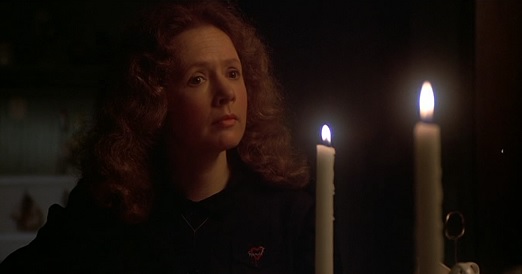
Horror Scenes That I Love: Piper Laurie in Carrie


So far, this month, I’ve been doing these horror scenes that I love in alphabetical order based on who was featured in the scene.  Originally, today was going to be devoted to Boris Karloff but, last night, I read the news that the great Piper Laurie had passed away at the age of 91.

Have no doubt that Boris Karloff will be honored tomorrow but, for today, I would be remiss if I didn’t pay tribute to Piper Laurie.  Piper Laurie often said that, when she read the script for 1976’s Carrie, she at first didn’t understand the story’s tone until she realized that Margaret White was meant to be as comedic as she was frightening.  Piper Laure’s performance as Carrie’s mother resulted in an Oscar nomination and it also revived Laurie’s career.  (Laurie had semi-retired from Hollywood following her previously Oscar-nominated work in The Hustler.)

In the scene below, Margaret makes one last attempt to keep Carrie from going to the prom.  Her line, “They’re all going to laugh at you” comes back to haunt Carrie in a very big way.

One final bit of Piper Laurie horror trivia: In 1959, when Alfred Hitchcock was casting Psycho, Piper Laurie was his second choice, behind Janet Leigh, for the role of Marion Crane.

6 Good Films That Were Not Nominated For Best Picture: The 1970s


David Niven at the 1974 Oscars

Continuing our look at good films that were not nominated for best picture, here are 6 films from the 1970s.

Dirty Harry (1971, dir by Don Siegel)

“Well, I’m all torn up about his rights….” Detective Harry Callahan (Clint Eastwood) says after being informed that he’s not allow to torture suspects for information.  Unfortunately, in this case, the Academy agreed with all the critics who called Harry a menace and this classic and influential crime film was not nominated.  Not even Andy Robinson picked up a nomination for his memorably unhinged turn as Scorpio.

Carrie (1976, dir by Brian DePalma)

The Academy liked Carrie enough to nominate both Sissy Spacek and Piper Laurie for Best Actress and Best Supporting Actress, respectively.  The film itself, however, went unnominated.  It’s enough to make you want to burn down the prom.

Suspiria (1977, dir by Dario Argento)

In a perfect world, Goblin would have at least taken home an Oscar for the film’s score.  In the real world, unfortunately, Argento’s masterpiece was totally snubbed by the Academy.

Days of Heaven (1978, dir by Terence Malick)

If it were released today, Terence Malick’s dream-like mediation of life during the depression would definitely be nominated.  In 1978, perhaps, the Academy was still not quite sure what to make of Malick’s beautiful but often opaque cinematic poetry.

Halloween (1978, dir by John Carpenter)

“The night he came home!” should have been “The night he went to the Oscars!”  The film received no nominations and it’s a shame.  Just imagine Donald Pleasence winning for his performance as Loomis while John Carpenter racked up almost as many nominations as Alfonso Cuaron did this year for Roma.

Dawn of the Dead (1978, dir by George Romero)

If the Academy wasn’t willing to nominate Night of the Living Dead, there was no way that they would go for the film’s longer and bloodier sequel.  But perhaps they should have.  Few films are cited as an inspiration as regularly as Dawn of the Dead.

Up next, in about an hour, the 1980s!


Film Review: White Boy Rick (dir by Yann Demange)


Last night, as a part of my attempt to get caught up with the films of 2018, I watched White Boy Rick.

As you might guess from the title, this film is about a white boy named Rick.  It’s based on the true story of Richard Wershe, Jr., who grew up on the streets of Detroit.  His father sold guns out of the trunk of his car and, by the time he turned 14, Rick was running with drug dealers and street gangs.  (The fact that he was white while all of his friends were black is what led to him getting his nickname.)  Rick became an informant for the FBI and, according to Wershe, the government helped him build up his reputation by supplying him with the drugs that he would then sell on the streets.  When the FBI eventually decided that Wershe was no longer a useful asset, he was arrested for dealing and sentenced to life in prison.

The story seems like one that has the potential to say a lot that needs to be said about not only the economic realities of life in a dying city but also about the role that race plays in America’s often misdirected “war on drugs.”  Unfortunately, the film falls flat because, with the exception of a few scenes, it never really convinces us that Rick was really worthy of being the subject of a film.  While the film surrounds him with interesting supporting characters, Rick himself remains something of a cipher.  Rick is played by a young actor named Richie Merritt.  Merritt’s has the right look for the character but you never get the feeling that there’s anything going on underneath the surface.  Rick comes across as just being a moron who got lucky and then, eventually, not so lucky.

The supporting cast fares a bit better.  For instance, Matthew McConaughey plays Rick’s father with just the right amount of manic energy and Bel Powley has a few harrowing scenes as Rick’s drug addicted sister.  Bruce Dern and Piper Laurie don’t get to do much as Rick’s grandparents but it doesn’t matter because they’re Bruce Dern and Piper Laurie.  (All Bruce Dern has to do to make a character interesting is look at the camera.)  Jennifer Jason Leigh plays one of Rick’s FBI handlers with the perfect hint of subversiveness.  You’re never quite sure whether she’s messing with Rick’s life because she’s incompetent or because she’s enjoying it.  Unfortunately, the supporting characters are often so interesting that Rick often gets overshadowed.  He’s a bystander in his own story, which may have been the film’s point but, from a storytelling point of view, it hardly makes for compelling viewing.

Admittedly, there are a few memorable scenes to be found in White Boy Rick.  At one point, Rick goes to a wedding at the mayor’s mansion and he’s a sight to behold in his blue tuxedo.  In another scene, it’s explained to Rick why, when it comes to being arrested, charged, and incarcerated, the stakes are very different when you’re black than when you’re white.  In scenes like that, you kind of get a hint of White Boy Rick could have been if it had been centered around a more compelling character.

As it is, though, White Boy Rick is well-made but kind of dull.  It’s definitely a missed opportunity.


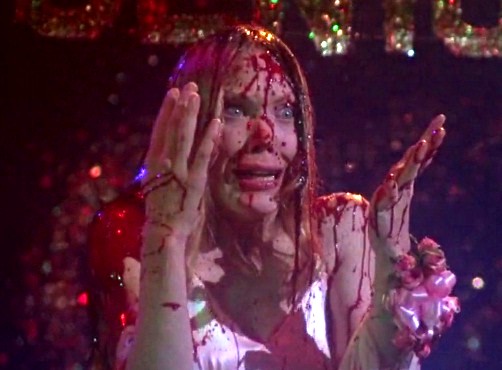
Horror Scenes That I Love: Carrie Destroys The Prom


Today’s horror scene that I love comes from 1976’s Carrie.

This scene starts out on a note of happiness with Carrie (Sissy Spacek) and Tommy (William Katt) being named as Queen and King of the Prom.  Things, however, get a bit ominous when Sue (Amy Irving) notices that bucket of pig’s blood and Nancy Allen and John Travolta hanging out underneath the stage.  Things get even worse when the coach (Betty Buckley) refuses to listen to Sue and tosses her out of the gym.

And then suddenly, there’s blood everywhere and Piper Laurie’s chanting, “They’re all going to laugh at you …. they’re all going to laugh at you….”

Is everyone really laughing at Carrie?  I believe some of them are.  Norma is definitely laughing because I think the shot of the coach laughing is included to let us know that some of the laughter is strictly in Carrie’s mind.  Nothing about the character would lead us to suspect that the coach would laugh.  In fact, seeing as how the coach just threw out Sue, it’s debatable whether she would even be back among the crowd by the time the pig’s blood came down.

(Plus, would everyone be laughing even with Tommy, the most popular kid in school, lying dead on the stage?)

Anyway, regardless of whether they were all laughing or not, we all know what happens next!

Here’s The Trailer For White Boy Rick!


Here’s the trailer for White Boy Rick!

Now, White Boy Rick is based on a true story that’s actually pretty interesting.  At the age of 14, Richard Wershe, Jr. was the youngest criminal to ever become an informant for the FBI.  Of course, once the FBI got what they wanted from him, Wershe was left on his own and, when he was 17, he was arrested for selling cocaine and sentenced to life in prison.  Wershe, who was finally paroled in 2017, claims that the harsh sentence was politically motivated and that he basically learned how to become a successful drug dealer through his work for the government.

It’s a great story and, with more and more people questioning both drug prohibition and national law enforcement, a timely one.  The film’s got a good cast, with Matthew McConaughey, Jennifer Jason Leigh, Bel Powley, Rory Cochrane, Piper Laurie, and Bruce Dern all in supporting roles.  The director, Yann Demange, previously directed the great ’71 and is definitely an up-and-coming filmmaker.  Rick is played by a Richie Merritt, who will be making his film debut in the leading role.

As for the trailer itself, it’s effective.  I had a hard time understanding some of the dialogue and it’s hard to really judge Merritt’s performance based on what’s present here.  But I like the look of the trailer and the music is damn near perfect.

Some are saying this movie might be an Oscar contender.  We’ll have to see!