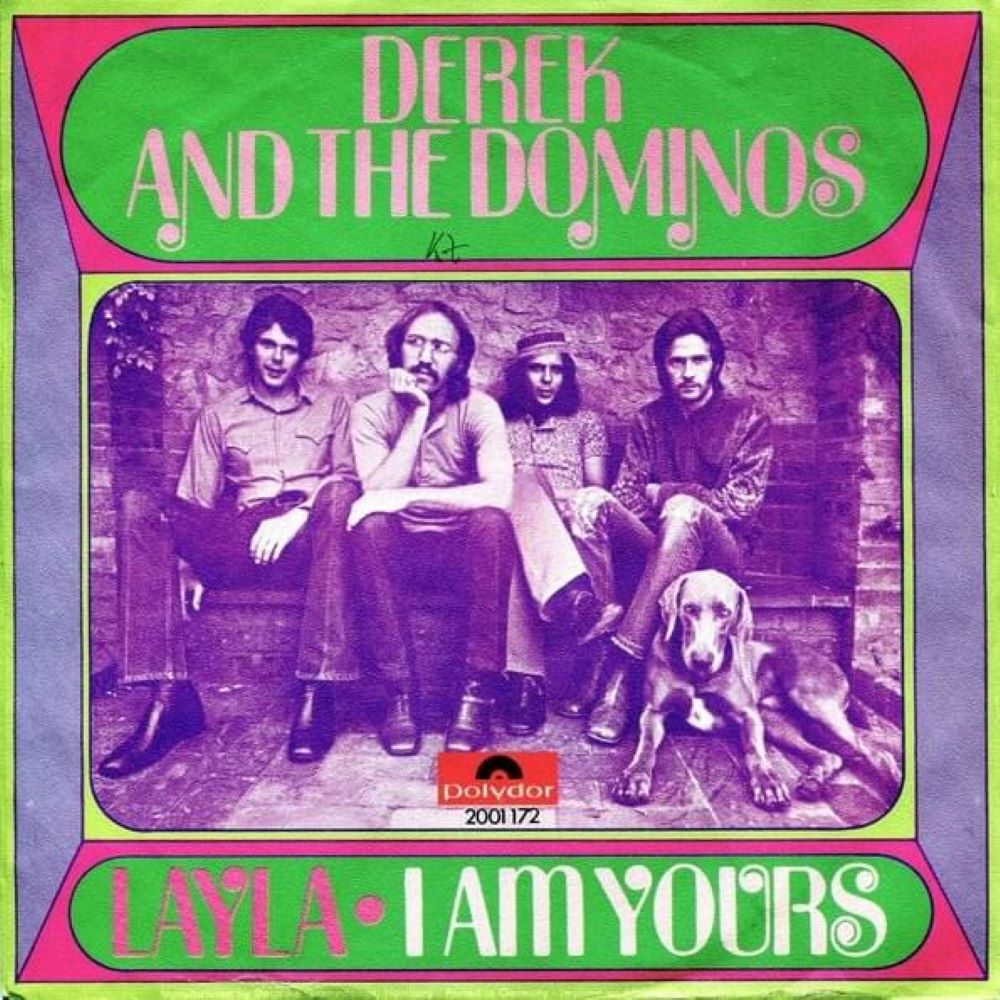
Song of the Day: Layla (by Derek & The Dominoes)


“Layla” is still one of those solos guitar players treat like a rite of passage. It’s not just the famous riff; the way Clapton and Duane Allman tear into the lead lines makes the whole first half feel like it’s permanently on the edge of falling apart, in the best way. The solo really starts to bloom once the main riff gives way to the verse lead around the 2:20 mark, with the piano-driven section kicking in later at about 3:10 on the original studio version.

A big part of why musicians and fans rate it so highly is the balance between flash and feel. The bends, slides, and quick little runs are impressive, but they always come back to short, singable phrases instead of just running scales. Allman’s slide work, especially those pushed, “beyond the fretboard” high notes, is a huge talking point among players because it sounds wild and emotional while still landing dead-on pitch.

People also love how the solo feels like one long emotional unraveling rather than a neat, contained spotlight moment. The guitar gradually hands things over to the piano section instead of ending on a standard rock climax, so the solo feels like it spills into that second movement of the song. That journey—from searing, tangled guitar lines to that almost resigned, melodic outro—is a big reason “Layla” keeps showing up on “greatest solos” lists and in conversations between working guitarists and casual fans alike.

Layla

What’ll you do when you get lonely
And nobody’s waiting by your side?
You’ve been running and hiding much too long
You know it’s just your foolish pride

Layla
You’ve got me on my knees
Layla
I’m begging, darling, please
Layla
Darling, won’t you ease my worried mind?

I tried to give you consolation
When your old man had let you down
Like a fool, I fell in love with you
You turned my whole world upside down

Layla
You’ve got me on my knees
Layla
I’m begging, darling, please
Layla
Darling, won’t you ease my worried mind?

Let’s make the best of the situation
Before I finally go insane
Please, don’t say we’ll never find a way
And tell me all my love’s in vain

Layla
You’ve got me on my knees
Layla
I’m begging, darling, please
Layla
Darling, won’t you ease my worried mind?
Layla
You’ve got me on my knees
Layla
I’m begging, darling, please
Layla
Darling, won’t you ease my worried mind?

[guitar solo]

Great Guitar Solos Series

Song of the Day: Light of the Seven (by Ramin Djawadi)


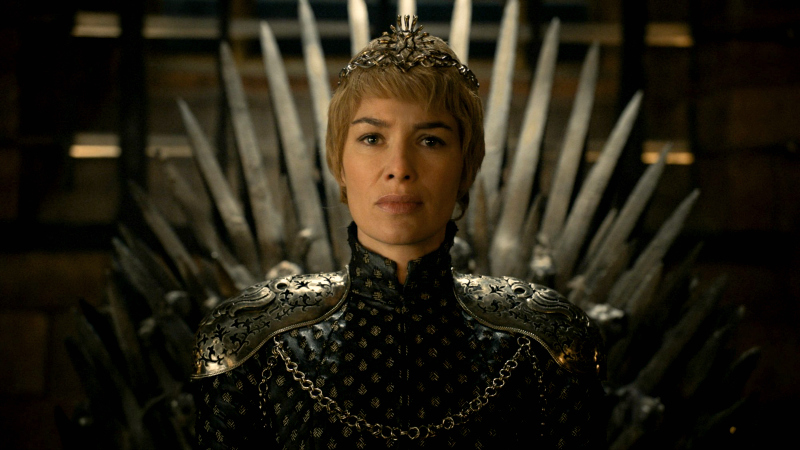
Queen Cersei

“Cersei of the House Lannister, the First of Her Name, Queen of the Andals and the First Men, Protector of the Seven Kingdoms….Long may she reign.” — Qyburn

To all of those who watch each new episode of Game of Thrones, last night’s episode was a classic in the making. It was the sort of episode that convinced millions 6 years ago to take a chance and watch an HBO series about a medieval fantasy series about royal politics, dragons, living dead, royal incest and lots and lots of sex and violence.

The series is based on the ongoing epic fantasy novel series by novelist George R.R. Martin. A series called A Song of Ice and Fire, tonight’s episode delivered on both the fire and ice. As we see the players on the Great Game cut down violently by the machinations of one Dowager Queen (and now Queen and first of her name), the fantasy realm of Westeros is now down to three Great Houses as the show finishes it’s sixth season with just two more to go.

One thing the series has always had to complement the outstanding performances of the ensemble cast, the epic work of directors in the singularly classic episodes 9’s (names such as Neil Marshall and Miguel Sapochnik come to mind) and the very good to great writing, it would be the series composer Ramin Djawadi and the work he has brought onto the show.

The show’s main theme is as recognizable nowadays as any John Williams, Howard Shore and James Horner piece. It’s a theme that’s become part of pop culture lexicon. There’s been other themes in the show that has been just as good. Yet, with the season finale of season 6 a new theme comes to the forefront that will be put on repeat as loyal viewers young and old watch and re-watch this season finale.

It’s a subtle theme of a single piano playing a solemn, melancholy lullaby. It’s soon to be joined by a single cello before another transition that adds the singular voice of a choirboy (the better to accentuate that this theme is one of the Seven Gods of Westeros). The song goes from that solemn lullaby and into a climactic dirge as the organ joins in to almost drown the piano and cello.

For those who saw that opening sequence of the season finale should appreciate just how well “Light of the Seven” made everything so much better once the dust settled and the world of Game of Thrones was changed forever once again.

Song of the Day: To Zanarkand (by Uematsu Nobuo)


ToZanarkand

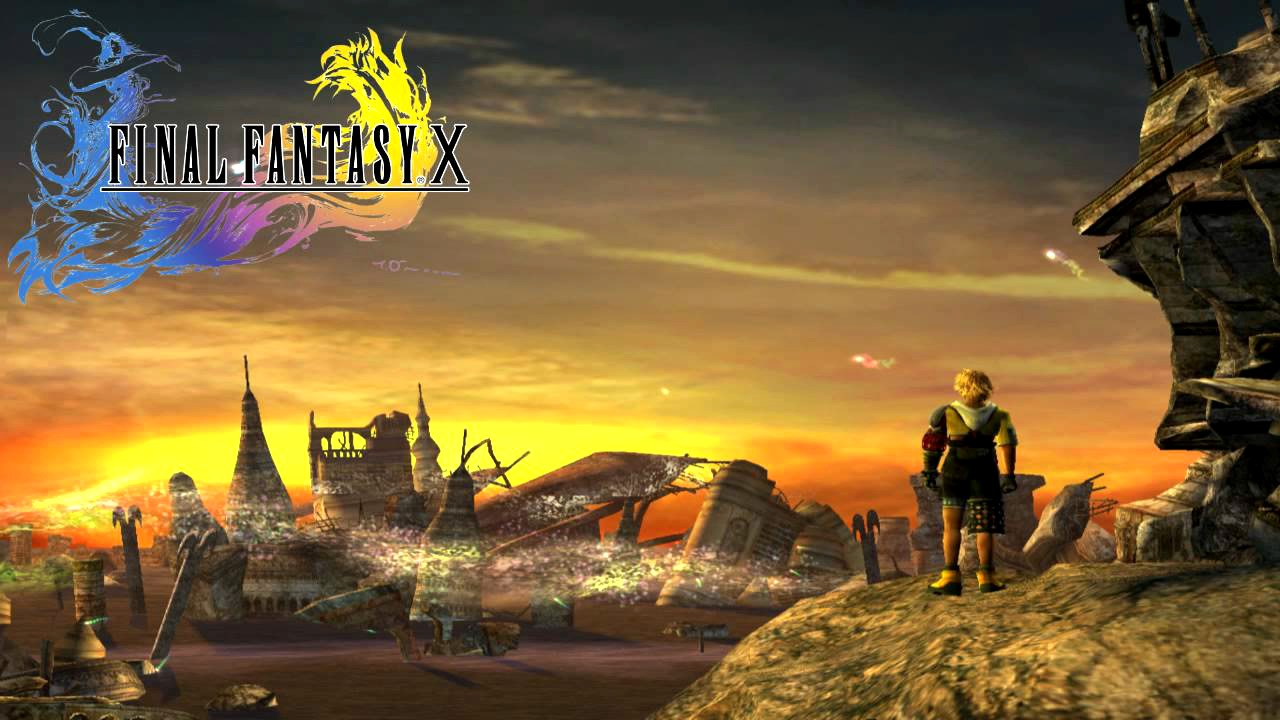
After necromoonyeti helped rekindle memories of days, weeks and months playing Final Fantasy and listening to it’s soundtrack I thought it was only appropriate that the latest “Song of the Day” comes from that very series.

“To Zanarkand” is the theme to Final Fantasy X. An entry in the venerated rpg franchise that has been underrated since it came out in 2001. While the game never reached the sort of acclaim and fan devotion as earlier entries like Final Fantasy IV and Final Fantasy VI (I’m of the few that thought Final Fantasy VII was average, at best) this tenth entry still managed to include a soundtrack that was some of composer Uematsu Nobuo’s best work.

There’s been many version of “To Zanarkand” from the original version included in the game and the first soundtrack release to the HD remastered version and reimaginings like the one from the Distant Worlds II music collection. Yet, the version that speaks loudest to me is the new arrangement by Masashi Hamauzu (same composer whose music necromoonyeti posted about previously) for the Final Fantasy X Piano Collections.

This piano solo version takes the original song and brings it down to it’s emotional core. The other versions are just as powerful, especially the full orchestra version, but the simplicity of the piano solo conveying the themes of loss, sorrow and redemption that the game’s narrative was built on works best for me.

Piano Cover of “Isolated System” by Muse


muse-2nd-law-artwork5-1348263520

This song is one of my favorite of 2013 and it helped make this summer’s World War Z more entertaining than what many was predicting. This was a film that was considered dead on arrival before it was even out, but it persevered and the decision to use “Isolated System” by Muse as the film’s opening theme was genius.

This video is an excellent piano cover by YouTube user xSymbiose. As someone who has had some piano training I can assure doubters that this cover was and is authentic and not a well-done fake. It’s easy enough to overlay the original song over a video and try to sync-up as perfectly as possible the song with the piano playing. This time around this wasn’t the case.

The playing by xSymbiose is not just precise but almost matches the original song’s tempo. There’s really only a few seconds difference between this cover and the original song’s running time.

Everytime I see piano covers executed nigh-perfectly as this one makes me wish I had continued with my piano lessons. For now I will just live vicariously through those whose skills far surpasses my own. I have our very own Leonard Wilson to thank for finding this little gem.

Other piano covers by xSymbiose

Source: xSymbiose

Song of the Day: Terra’s Theme from Final Fantasy VI (Uematsu Nobuo)


For the latest entry to the “song of the day” feature I go back to my younger years. I’m talking about when I was still barely into my 20’s. My choice for the new song of the day is Japanese composer Uematsu Nobuo’s main title theme for the Squaresoft (before they became Square-Enix) fantasy role-playing game Final Fantasy VI.

The song is “Terra’s Theme” (in the original Japanese it was called “Tina’s Theme”) and starts off the game. The version above is the piano solo version which Square-Enix produced as part of the special “Final Fantasy Piano Collections” cd releases which took all the video game music for each game in the Final Fantasy series game and remade them into piano solo pieces. Uematsu’s original composition for Final Fantasy VI (also for most of the game’s in the series he composed the music for) were very heavily-influenced by classical music traditions and one can really hear it in this main theme.

While the piano solo version is quite a haunting melody which gives some clues to the character of Terra Branford. The two versions below are the original video game music which is really a well-done MIDI file to allow it to be encoded into the game cartridge when it was first released for the SNES system. The other one is a live recording of Uematsu himself conducting an orchestra. While all three have become one of my favorite pieces of music of all kinds (not just video game music) it is the piano solo which solidified “Terra’s Theme” as one of the best songs I’ve ever heard.

Terra’s Theme (Live Orchestral)

Terra’s Theme (Original Video Game Music)

Song of the Day: A Princess (by Javier Navarrete)


The latest Song of the Day is from one of the best films of the past decade and, in my opinion, the best film of 2006. I speak of Pan’s Labyrinth by acclaimed Mexican-filmmaker Guillermo Del Toro.

“A Princess” was composed by Spanish composer Javier Navarrete and this particular piece of music from the film continues to use the main lullaby waltz-theme introduced in the beginning of the film. Where the music’s first time being heard by the audience is full of innocence and child-like magic in its tonal structure and melody in “A Princess” Navarrete dials back the innocent quality by adding in some of the hard-won wisdom the main character of Ofelia gains through her trials and tribulations throughout the film’s running time. While the song starts off with a sad and melancholy theme to its melody the song gradually moves back to it’s innocent and magical tone at it’s midway point to signify the main character’s final and complete transition from Ofelia to Princess Moanna.

It’s truly one of the best use of the leitmotif in a film score in quite a while. The fact that Navarrete was able to mine so man different emotional beats from a simple lullaby theme into one final distinct piece of music to end the film shows he was in tune with what director Guillermo Del Toro had in mind. He could easily have gone the usual fantasy music cliche of a huge number of brass and percussion to score the film, but instead went on a more subtle yet complex manner to accentuate a fairly simple fairy tale retelling which also happened to have many complexities in it’s narrative if one was willing to peel back the pages.