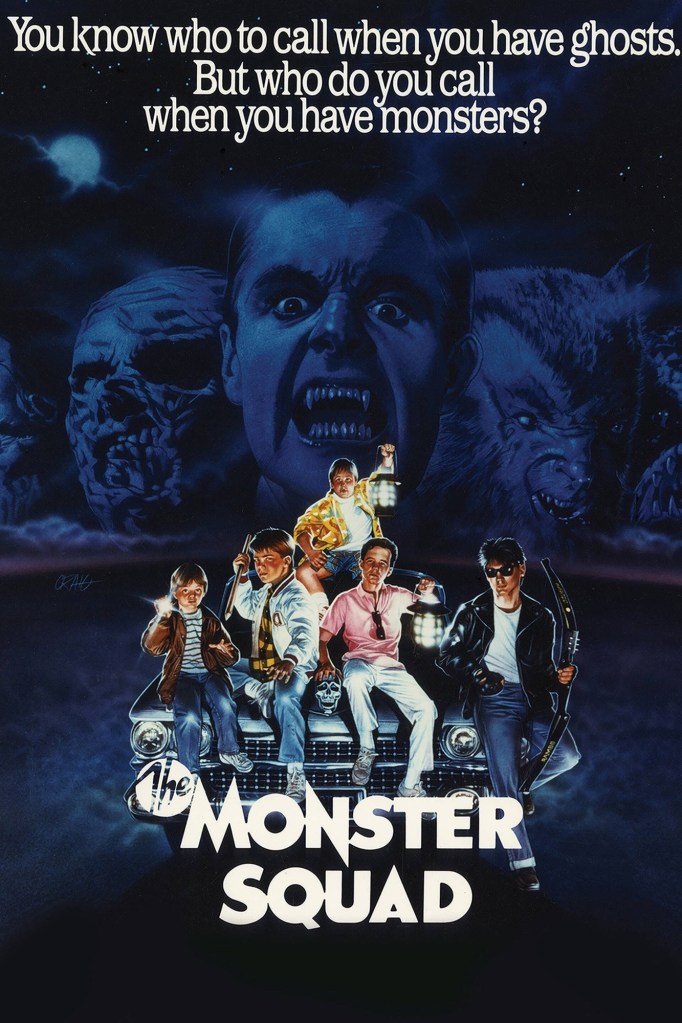
Review: The Monster Squad (dir. by Fred Dekker)


“Creature stole my Twinkie.” – Eugene

Released in 1987, The Monster Squad has lived one of those strange afterlives that cult films sometimes enjoy—ignored or even ridiculed upon release, only to become a beloved artifact for the generation that found it later on VHS. Directed by Fred Dekker and co-written with Shane Black, the movie occupies an awkward but endearing space between horror, comedy, and kids’ adventure. It never fully settles into one tone, and that’s part of both its charm and its problem. Watching it today, the film feels like The Goonies took a detour through a drive-in double feature of Dracula and The Wolf Man. It’s clunky, funny, occasionally mean-spirited, and loaded with enthusiasm—qualities that make it a thoroughly guilty pleasure for fans of ’80s genre mashups.

The story wastes no time getting into its madcap premise. A group of suburban preteens calling themselves “The Monster Squad” find that the classic Universal-style monsters are real, and worse, they’ve come to town. Count Dracula has a plan to plunge the world into darkness using an ancient amulet, and to succeed he enlists a roster of familiar faces: Frankenstein’s Monster, the Mummy, the Gill-Man, and the Wolf Man. This roster is fan-service before fan-service was a marketing term—a kid’s monster toybox brought to life. The squad, of course, must stop them, armed with comic-book knowledge, wooden stakes, and a blend of reckless courage and youthful sarcasm.

Dekker’s direction and tone play like a movie made for kids but smuggled in some heavy teenage energy. There’s violence, crude jokes, and occasional language that Hollywood would never let slip into a PG-friendly franchise today. Yet that rough edge is part of why The Monster Squad aged into cult status. It’s unapologetically of its time, operating on the belief that kids can handle scares as long as they’re fun and that suburban fantasy can, for a while at least, coexist with real danger. The movie’s depiction of childhood feels filtered through a stack of comic books and Creepshow issues—hyper absurd but still emotionally grounded in a way only ’80s adventure films seemed to pull off.

The kids themselves are a mixed bunch of believable archetypes. There’s Sean (André Gower), the de facto leader with a bedroom plastered in monster movie posters; Patrick (Robby Kiger), his wisecracking sidekick; Rudy (Ryan Lambert), the too-cool-for-school older kid who smokes, rides a bike, and somehow becomes the squad’s weapons specialist; and Eugene (Michael Faustino), the youngest, who still sleeps with his dog and writes letters to the Army for backup. They’re joined by Horace, nicknamed “Fat Kid,” played with surprising vulnerability by Brent Chalem. Each character is drawn broadly but memorably, and even when the dialogue veers into dated humor, there’s an underlying sincerity. You can tell Dekker and Black really liked these kids. They might use slingshots and one-liners, but what unites them is their intense sense of loyalty to one another—the kind of friendship that survives both bullies and broomstick-wielding vampires.

If there’s an emotional anchor, oddly enough, it’s the relationship between the squad and Frankenstein’s Monster, played by Tom Noonan in an unexpectedly gentle performance. When the creature befriends the kids, particularly little Phoebe (Ashley Bank), the film shifts momentarily from wisecracks to something close to tenderness. Noonan gives the character a shy uncertainty, a weary loneliness that offsets the visual absurdity of the rubbery monsters around him. There’s even a tinge of tragedy in his final act, which echoes Frankenstein’s literary roots—a moment of real feeling buried inside an otherwise loud and gleefully messy creature romp.

The monsters themselves, created by legendary effects artist Stan Winston, are among the film’s biggest draws. Each design feels like a loving upgrade to the old Universal look—recognizable but more feral, angular, and rooted in late-’80s aesthetics. The Wolf Man, for example, looks simultaneously comic and menacing, while the Gill-Man costume still impresses for its texture and movement decades later. The decision not to rely on stop motion or heavy opticals gives the monsters a tactile presence that CGI could never capture. There’s something about watching full-bodied suits and prosthetics move in real space that makes the threats feel tangible even when the stakes are goofy. These creatures are fun to look at, even when the script doesn’t give them much to do beyond roar and stalk across smoke-filled sets.

Shane Black’s fingerprints are all over the dialogue—the sardonic banter, the genre in-jokes, the affection for both pulp tropes and subverting them. But perhaps because the film was marketed partly as family adventure and partly as horror spoof, it often can’t decide whether to play sincere or ironic. Some scenes lean heavily on nostalgic affection for monster movies, while others feel almost mean in their mockery of small-town innocence. The tone whiplash means The Monster Squad doesn’t build much consistent momentum; one minute it’s heartfelt, the next it’s a barrage of sarcastic one-liners. Still, its rough tonal juggling has a ragtag energy that keeps it lively, and the sheer commitment to blending genres is endearing.

When it comes to pacing, the movie flies by in under 80 minutes, which turns out to be both blessing and curse. On one hand, there’s no filler—every scene moves briskly to the next piece of monster mayhem. On the other, the movie’s emotional beats and mythology barely have time to breathe. We get glimmers of backstory (like Dracula’s cryptic hunt for the amulet and Van Helsing’s prologue battle) that hint at a larger world that the film never really explores. You sense that Dekker and Black were operating under the fantasy logic of childlike storytelling: don’t explain too much, just move fast enough that no one questions it. It works, more or less, because of the film’s sheer enthusiasm, but it leaves you imagining a richer version of this story that never quite made it onscreen.

Looking back from today’s lens, some parts of The Monster Squad show their age more harshly. Certain lines and stereotypes that went unnoticed in the ’80s now feel jarring, even uncomfortable, and the film’s cavalier tone sometimes undercuts moments that should feel more innocent. Yet despite that, most viewers who revisit it with awareness of its era find themselves disarmed by its sense of fun. There’s no cynicism driving it—it’s pure genre love, messy and sincere, like a handmade Halloween costume that’s somehow cooler precisely because it’s imperfect. The film represents a time when kids’ movies were allowed to have teeth, blood, and a few scary moments, trusting that a young audience could handle being spooked without needing everything smoothed over.

For many fans, The Monster Squad works less as a polished film and more as an experience—a flashback to VHS sleepovers, bad pizza, and rewinding favorite scenes. The movie’s newfound appreciation, fueled by screenings and documentaries like Wolfman’s Got Nards, speaks to that nostalgic bond. It’s less about objective greatness and more about the feeling it preserves. Sure, some of the jokes fall flat, and the plot functions mostly as connective tissue between monster gags, but few movies embody the gleeful chaos of late-’80s pop horror as affectionately as this one does.

The Monster Squad earns its title. It’s not a flawless film, nor even a particularly coherent one, but it’s deeply fun, carried by the conviction that monsters—real or imaginary—are made to be fought with courage, humor, and friends who have your back. Watching it now is like flipping through an old comic book you used to love: you can see every crease and faded color, but that doesn’t make it any less special. And in a cinematic era saturated with irony and nostalgia pastiche, The Monster Squad still feels refreshingly earnest about its own weirdness. Maybe that’s its secret power.
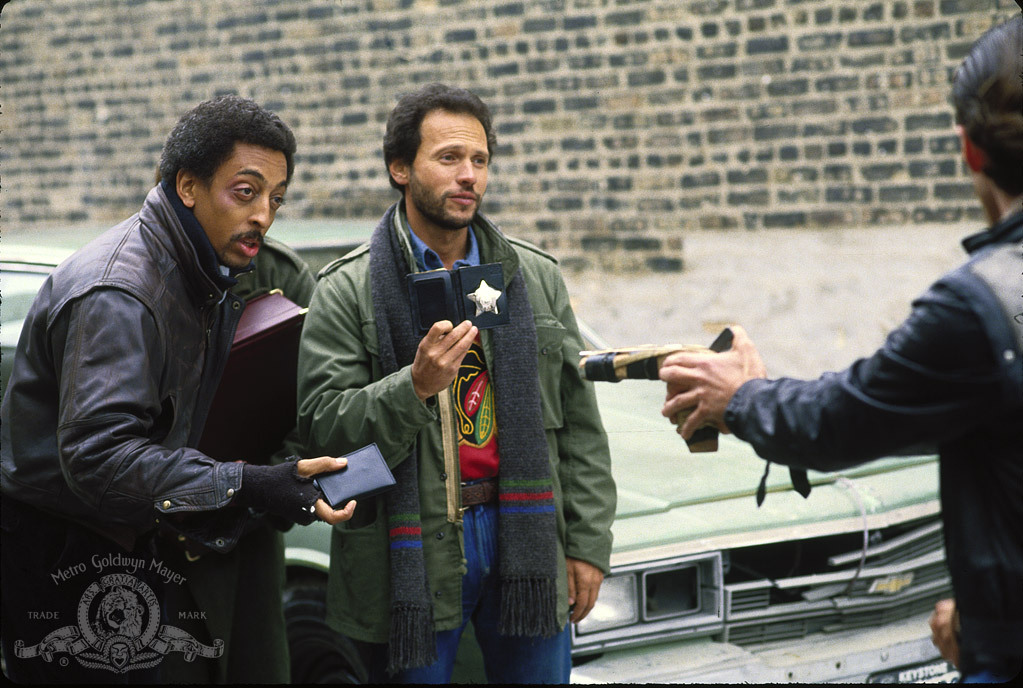
Live Tweet Alert – #MondayMuggers present RUNNING SCARED (1986), starring Gregory Hines and Billy Crystal!


Every Monday night at 9:00 Central Time, my wife Sierra and I host a “Live Movie Tweet” event on X using the hashtag #MondayMuggers. We rotate movie picks each week, and our tastes are quite different. Tonight, Monday, August 11th, we’ll be watching RUNNING SCARED (1986), starring Gregory Hines, Billy Crystal, Steven Bauer, Darlanne Fluegel, Joe Pantoliano, Dan Hedaya, Jon Gries, Tracy Reed, and Jimmy Smits.

The plot: Two street-wise Chicago cops have to shake off some rust after returning from a Key West vacation to pursue a drug dealer who nearly killed them in the past.

Peter Hyams directed RUNNING SCARED, and it’s one of the very best “Buddy Cop” films out there. So, if a night full of action and laughs sounds good to you, join us on #MondayMuggers and watch RUNNING SCARED. It’s on Amazon Prime, Tubi, and PlutoTV! I’ve included the trailer below:

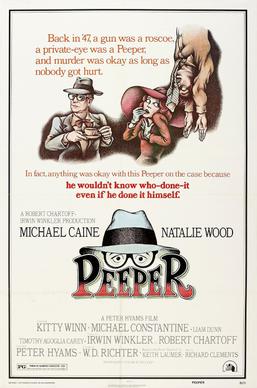
Peeper (1975, directed by Peter Hyams)


Peeper gets off to a good start, with a Humphrey Bogart look alike standing on a dark street corner and reading the opening credits in a reasonable approximation of Bogart’s unmistakable voice.  It all goes down hill from there.

Peeper stars Michael Caine as Leslie C. Tucker, a cockney private detective who is working in Los Angeles in the late 40s.  Tucker is hired by a shady businessman named Anglich (Michael Constantine).  Anglich explains that he knows that he has a daughter but he doesn’t know who or where she is.  He wants Tucker to track her down.  It doesn’t take much time for Tucker to conclude that Anglich’s daughter might be a member of the wealthy and quirky Pendergrast family.  In fact, Tucker thinks that Anglich’s daughter might be Ellen Pendergrast (Natalie Wood, who seems to be bored with the role).  It should be a simple enough case to solve but there are numerous complications along with two thugs (played by Timothy Carey and Don Calfa) who, for some reason, are out to get Anglich and Tucker.

It’s hard to know what to make of Peeper.  It’s meant to be an homage to the detective films of the 40s but it also tries to parody the genre.  Unfortunately, Peter Hyams has never been a director known for his light touch and, in this film, his idea of comedy is to have everyone shout their lines.  (Michael Constantine is the worst offender.)  Michael Caine is also miscast in the lead.  The film tries to get some comedic mileage out of Caine delivering Bogart-style dialogue in his cockney accent but it’s a joke that’s never as funny as the film seems to think.

Peeper was a critical and box office failure but fortunately, there were better things in store for both Michael Caine and Peter Hyams.  Hyams went on to direct Capricorn One while Michael Caine established himself as one of the most durable character actors around.

Cleaning Out The DVR: The Star Chamber (dir by Peter Hyams)


Here’s a good example of why I need to clean out my DVR more regularly:

I recorded the 1983 legal thriller, The Star Chamber, off of Starz on March 14th.  I know what you’re saying.  “Big deal!  That wasn’t that long ago.”  Well, did I mention that it was March 14th, 2017?

That’s right!  The Star Chamber sat on my DVR for over a year before I finally got around to watching it last night.  You’d be justified in asking why it took me so long and I’m afraid that I really couldn’t give you a definite answer.  I can, however, tell you the four main reasons why I recorded it in the first place:

  1. I’m always intrigued whenever I come across a movie of which I haven’t previously heard.
  2. The movie was described as being about a conflicted judge and I just happen to love legal films.
  3. I really, really liked the title.  The Star Chamber?  Did that mean it took place in a room full of stars?
  4. Before I recorded The Star Chamber, I only had 55 films on the DVR.  Since I don’t like odd numbers, recording The Star Chamber took care of that problem.

As for the film itself, The Star Chamber is another one of those movies where a group of vigilantes end up getting pissed off because liberal California judges are letting too many murderers go free because of pesky, constitutional technicalities.  The twist here is that the vigilantes are the same judges who keep tossing out evidence and ruling that confessions are inadmissible in court.  After spending their day setting free the dregs of society, the judges all gather in a nearby house and review the evidence before voting on whether or not they believe the accused was actually guilty.  If the verdict is guilty, the judges promptly hire a hit man who proceeds to clean up the streets.

The newest member of this tribunal is Judge Steven R. Hardin (Michael Douglas).  Hardin is haunted by the technicalities that forced him to toss out a case against two accused of child murderers.  (Making things even worse, the child’s father commits suicide afterward.)  Despite his initial reservations, Judge Hardin signs off on hiring an assassin to take the two men out.  But, when it becomes apparent that the two men actually were innocent, Judge Hardin is horrified to discover that there’s no way to call off the hit…

The Star Chamber is an oddly constructed movie.  When the movie starts, it feels like a typical police procedural.  From there, the movie turns into a rather talky examination of the U.S. legal system, with Judge Hardin trying to balance his idealism with the often frustrating reality of what it takes to uphold the law.  The movie then briefly turns into a conspiracy film, featuring middle-aged men in suits holding secret meetings and debating whether or not they’re serving the greater good.  And then, towards the end of the movie, it turns into an action film, with Judge Hardin being chased by two drug dealers, a contract killer, and a suspicious police detective (Yaphet Kotto).  Judge Hardin may start the movie as a conflicted liberal but he ends at someone who can blow up the entire second floor of a drug lab.  In many ways, The Star Chamber is a deeply silly film but, as directed and co-written by Peter Hyams, it’s also just pulpy enough to be entertaining.  The dialogue may be over-the-top but so is Michael Douglas’s performance so it all evens out in the end.

It may have taken me a while to get around to watching The Star Chamber but I’m glad that I finally did.  It’s a ludicrous film and all the more entertaining as a result.

A Movie A Day #310: Hanover Street (1979, directed by Peter Hyams)


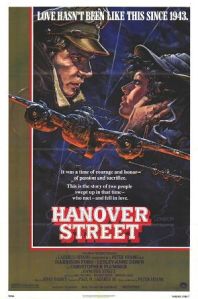
The time is World War II and, for the British, the American army is “overpaid, oversexed, and over here.”  David Halloran (Harrison Ford) is a pilot who has been stationed in England.  With no loved ones to worry about, David has no fear of flying over occupied France and dropping bombs on the Nazis below.  But then David meets an English nurse, Margaret (Lesley-Anne Down).  As David falls in love, he loses his enthusiasm for the war because he now has “a reason to live.”  The only problem is that Margaret is already married to Paul (Christopher Plummer), an officer in British Intelligence.  When David accepts an assignment to fly a British agent into France, he is shocked when the agent turns out to be Paul.  When David’s plane crashes, he and Paul have to work together to complete Paul’s mission and escape back to Britain.

Hanover Street is a very old-fashioned and very slow wartime romance.  If not for a love scene between Lesley-Ann Down and Harrison Ford, this movie could probably pass for a 1940s film, just not a good one.  The most interesting thing about Hanover Street is how awkward Harrison Ford seems to be.  Hanover Street was made shortly after Star Wars made him a sudden star and Ford still doesn’t seem like he’s comfortable with the whole idea of being a movie star.  Fortunately, for Ford, he still had Indiana Jones in his future.

A Movie A Day #263: Running Scared (1986, directed by Peter Hyams)


Running Scared is weird but good.

Ray Hughes (Gregory Hines!) and Danny Costanzo (Billy Crystal!!!) are two tough detectives in Chicago.  All they want to do is three things: retire, open a bar in Florida, and bust Chicago’s most ruthless drug dealer, Julio Gonzalez (Jimmy Smits).  Their captain (Dan Hedaya) wants them to leave for Florida as soon as possible but they are determined to take down Julio first.’

There are two strange things about this otherwise formulaic crime film.  First off, the two tough cops are played by Gregory Hines and Billy Crystal.  According to the film’s Wikipedia page, director Peter Hyams realized that Running Scared‘s plot was nothing special so he decided that the only way to make the movie stand out was by doing it “with two actors you would not normally expect to see in an action movie.”  The other strange thing is that Hyams’s gambit worked.  Gregory Hines may have been best known as a dancer and Billy Crystal as a comedian but both of them were surprisingly believable as Chicago cops.  Running Scared is actually one of Billy Crystal’s best performances.  For once, he’s believable as being someone other than a version of himself.  Even his frequent one liners seem like something that a detective would say instead of Crystal recycling punch lines from his act.  Whether they are chasing down perps and firing their guns at a moving vehicle, Hines and Crystal are never less than credible as action stars.  Lorenzo Lamas has got nothing on the team of Hines and Crystal.

Predictable though it may be, Running Scared is one of the better late 80s cop films.  The action scenes are exciting and Hyams does a good job capturing the grittiness of Chicago.  Jimmy Smits is a good villain and Joe Pantoliano, Steven Bauer, and Jon Gries all shine in supporting roles.  Keep an eye out for the always underrated Darlanne Fluegel, playing Danny’s ex-wife.

A Movie A Day #60: Outland (1981, directed by Peter Hyams)


outlandIt’s High Noon in space!

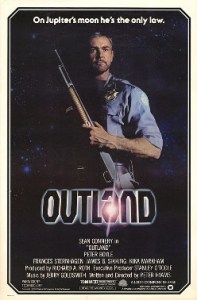
In the future, Marshal O’Neil (Sean Connery) has been hired, by Conglomerates Amalgamated, to enforce the law on a mining outpost that’s located on one of the moons of Jupiter.  Why are all the miners going crazy, taking off their spacesuits, and exploding?  Are they being hypnotized by that big red spot on Jupiter?  Or is the mining supervisor, Sheppard (Peter Boyle), forcing his workers to take amphetamines that cause them to have psychotic episodes?  O’Neil suspects the latter so Sheppard summons three intergalactic gunslingers to come and kill the marshal.  With no one, except for the outpost’s doctor (Frances Sternhagen), willing to stand behind him, O’Neil must stand up to three gunmen by himself.

The comparison between High Noon and Outland is obvious but the movie also owes much to Alien.  With its corrupt corporation, claustrophobic sets, and its blue-collar space workers, Outland seems like it could be taking place in the same movie universe as the Alien movies.  Like a lot of the films that Peter Hyams has directed, Outland is ambitious but slow.  It is never as much fun as something like Moon Zero Two.  The best thing about Outland is Sean Connery, convincingly cast as Gary Cooper in space.

A Movie A Day #11: O.J.: Made in America (2016, directed by Ezra Edelman)


juicemobile-comic

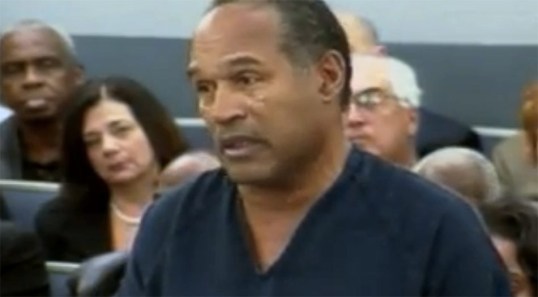
O.J.: Made in America, the best film of 2016, opens with a parole hearing in Nevada.  The inmate is surprisingly friendly and affable.  He talks about how he has tried to make the best use of his time in prison.  He chuckles as he talks about his prison duties.  For a prisoner, he seems like a really nice guy.

Then the parole commissioner asks him about the first time he was ever arrested and the prisoner’s entire demeanor changes.

“We’re going to talk about that?” he asks.

ojThe prisoner, of course, is former football great and actor Orenthal James Simpson and the first time that he was arrested, he was charged with murdering both his ex-wife, Nicole Brown Simpson, and Ronald Goldman.  In 1995, after a long and controversial trial that both forced people to reconsider how they viewed race relations in America and also marked the beginning of what would become reality television, O.J. Simpson was acquitted.  13 years to the day of his acquittal, he was sentenced to 33 years in prison for armed robbery in Nevada.
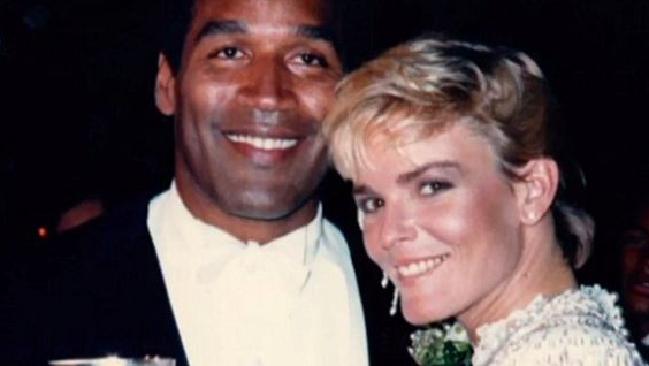
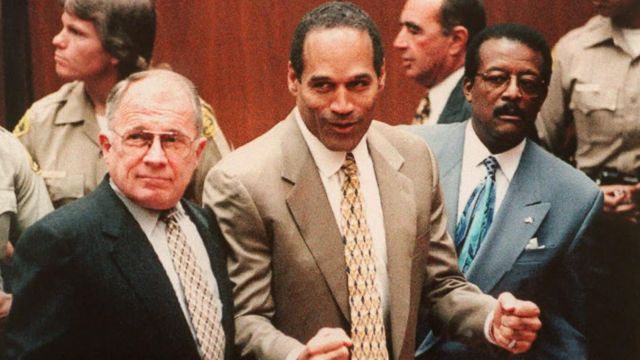
O.J.: Made in America leaves little doubt that O.J. got away with murder, though it should be pointed out that O.J. Simpson did not respond to requests for an interview and that Johnnie Cochran, who headed the legal team that won Simpson’s acquittal, died in 2005.  But with a sprawling running time of 7 and a half hours and featuring interviews with hundreds of people who either knew or were affected by O.J., O.J.: Made in America is about much more than just the trial of the century.

486940_032

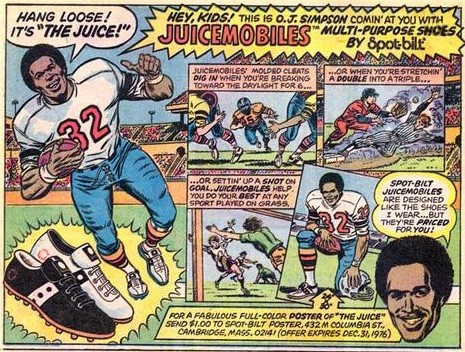
The first three hours of O.J.: Made in America deal with who O.J. was before he was charged with murder.  Things open in the 1960s, with the nation torn apart by racial unrest, and O.J. Simpson winning the Heisman Trophy and setting rushing records with both the USC Trojans and the Buffalo Bills.  While other black athletes, like Mohammad Ali, were putting their careers on the line and speaking out about civil rights, O.J. was deliberately apolitical.  When O.J. was pressured to speak out on civil rights, he would reply, “I’m not black.  I’m O.J.”

In turbulent times, O.J. emerged as a black celebrity that whites could safely embrace.  O.J. made history as the first black man to be used as a spokesman in an advertising campaign, running through airports for Hertz Rent-A-Car while onlookers shouted, “Go, O.J., go!”  A Hertz executive explains that, whenever they filmed a commercial, they were careful to make sure that it was only white people who were seen cheering O.J. on.  Retiring from football, O.J. moved to Brentwood, an all-white enclave in Los Angeles.  Surrounded by sycophants, O.J. pursued an acting career and remained silent while Los Angeles dealt with a series of racial incidents, culminating in the riots that followed after four LAPD officers was acquitted in the beating of Rodney King.

wedding

During all of this, O.J. divorced his first wife and married Nicole Brown.  One of the commendable things about O.J.: Made in America is that it gives a face and a personality to Nicole, who is often the forgotten victim when people discuss the O.J. Simpson case.  At the same time, O.J.: Made in America also documents how O.J. never faced any serious consequences for abusing Nicole.  Even after he was charged with domestic battery, all O.J. had to do for his community service was set up a charity golf tournament.  He later did an interview with Roy Firestone where the two of them joked away the charges and Firestone worried that they may have led some people to think that the Juice was a bad guy.

The next three hours deal with not only the murders of Nicole and Ronald Goldman but also with the national ramifications of the so-called “trial of the century.”  The first three hours were dominated by interviews with childhood friends, business associates, and neighbors.  It’s during the 2nd three hours that the familiar faces start to pop up.  Gil Garcetti, Bill Hodgman, and Marcia Clark talk about prosecuting O.J.  (Unfortunately, Chris Darden declined to be interviewed.)  From the defense team, F. Lee Bailey, Barry Scheck, and Carl E. Douglas share their memories of how this murder trial became a national Rorschach test on how Americans viewed race, celebrity, and justice.  The irony is not lost on anyone that O.J., who never made any public commitment to civil rights and who surrounded himself with rich, white people, was largely acquitted because of race.

Until I saw O.J.: Made in America, I could never understand how O.J, manages to win acquittal.  His guilt has always seemed so obvious to me.  But, as O.J.: Made in America made clear, reasonable doubt can mean different things to different people.  A black jury in downtown Los Angeles had reason to both distrust and dislike the LAPD.  When Mark Furhman is heard using racial slurs, Carl Douglas says that it confirmed everything that he had always suspected by the LAPD.  Beyond that Cochran and his team put on a better show than the prosecution, who often seemed unsure how to respond and who repeatedly shot themselves in the foot with unforced errors, like asking O.J. to try on the bloody glove.  (Mike Gilbert, O.J.’s agent, reveals that O.J. had stopped taking his arthritis medication during the trial, causing his fingers to swell up.)  Even though the late Cochran could not be interviewed, he still easily dominates the documentary.

o-j

O.J.: Made in America features interviews with two of the jurors, Carrie Bess and Yolanda Crawford.  When Crawford is asked if the acquittal was payback for the Rodney King verdict, she weakly protests that it was not.  When ask the same question, Carrie Bess unapologetically nods in the affirmative.

With the trial over, the best part of the documentary is yet to come.  The final 90 minutes deals with the decade between O.J.’s acquittal and his Nevada conviction.  Freshly acquitted from murdering his wife, O.J. Simpson swore that he was going to track down the real killers, returned to his Brentwood mansion, and discovered that none of his old friends wanted to hang out with him anymore.  The once popular O.J. Simpson was now a pariah.  Simpson was taken to civil court by the Goldmans and the Browns and a new jury found him liable for the deaths of both Nicole and Ron.  Ordered to pay $33,000,0000, a bankrupt and friendless O.J. spent ten years in the wilderness.

If things could not get any more surreal, O.J. was hired to star in a Punk’d-style TV show that would have been called Juiced.  The Juiced footage would have been the strangest part of O.J.: Made in America if not for what happened in Las Vegas.  Convinced that a memorabilia collector had stolen his stuff, O.J. and his entourage confronted the man in his hotel room.  In a comedy of errors, O.J. grabbed everything that he felt had been stolen from him and ended up taking a lot of other things as well, with the entire encounter being audio recorded.  Because a member of Simpson’s entourage had a gun on him, O.J. was charged with armed robbery.

2016-06-18-oj-acting

Tom Riccio, a member O.J.’s Las Vegas entourage, talks about how, in the minutes before leaving to confront the memorabilia collector, O.J. was watching the Tyra Banks Show in his hotel room.  Tyra’s guest?  O.J.’s goddaughter, Kim Kardashian.  Kim announced that she and her family were going to be starring in a new show for E!  O.J. laughed and said, “That show will never last.”  Ironically, just as no one would have known (or cared) who Kim Kardashian was if not for her father’s role on O.J.’s defense team, O.J.’s murder trial also set the stage for the emergence of the reality television genre that would make stars of everyone from the Kardashian daughters to Donald Trump.

One final note about what happened in Las Vegas: O.J.’s Nevada trial was covered, for Entertainment Tonight, by Marcia Clark.

Convicted of armed robbery, O.J. was sentenced to prison.  As Carl Douglas puts it, it was not a coincidence that the judge waited until a year to the day after Simpson’s previous acquittal to sentence him.  And it was not a coincidence that Simpson, found liable for $33,000,000 in the civil lawsuit, was sentenced to 33 years.  Douglas calls it the “fifth quarter,” the fight that happens after the fourth quarter to determine who really won the game.  O.J.’s childhood friend, Joe Bell, calls it “white justice in America.”

Most people saw O.J.: Made in America when it was broadcast over five nights by ESPN.  But the best way to see this documentary is the way it was originally viewed at Sundance: as a seven and a half hour movie, watched with little break or interruption.  Full of candid and thought-provoking interviews and previously unseen footage, O.J.: Made in America is a powerful look at race, fame, and crime.

For tomorrow’s movie a day, it’s another documentary about a sports hero who ended up in prison, Stoked: The Rise and Fall of Gator.

juice


44 Days of Paranoia #19: Capricorn One (dir by Peter Hyams)


Last night, the temperature plunged here in Texas.  When I woke up this morning, I was confronted with a world that was literally frozen.  Needless to say, nobody in Dallas went to work today.  Instead, we all sat in our houses and tried to keep ourselves entertained.  I kept myself occupied by watching a film that was initially released way back in 1978 and which takes place in my home state.

The name of that film was Capricorn One and it’s the latest entry in the 44 Days of Paranoia.

Capricorn One begins with three astronauts preparing to take the fist manned space flight to Mars.  James Brolin is the stoic leader.  Sam Waterston is the guy who has a joke for every occasion.  And O.J. Simpson is … well, O.J. really doesn’t have much of a personality.  He’s pretty much just along for the ride.

However, it turns out that there really isn’t going to be a ride.  Just as the countdown begins, the astronauts are ordered to leave the capsule.  They are then transported to secret base in the Texas desert.  It’s here that they have a meeting with the Head of NASA, who is played by Hal Holbrook.  (It’s simply not a 70s conspiracy film if Hal Holbrook isn’t somehow involved).  Holbrook proceeds to deliver a stirring monologue where he talks about how he and Brolin have always dreamed of sending a manned flight to Mars.  However, as Holbrook explains, the life support system on the crew’s ship was faulty.  If Holbrook had allowed them to be launched, they would have died as soon as they left the Earth’s atmosphere.  However, if the mission had been canceled then there was a chance that the President would use that cancellation as an excuse to cut NASA’s funding.

So, as Holbrook explains, an empty spaceship has been launched into space.  As far as the American public is concerned, the three astronauts are currently on their way to Mars.  Now, in order to save the space program, they are going to have to fake the mission.  In a studio, a fake alien landscape has been set up and it’s from that studio that Brolin, Waterston, and Simpson will pretend to explore Mars.

Brolin, Waterston, and Simpson reluctantly agree to cooperate with the plan.  However, after doing the first fake broadcast, Brolin starts to have second thoughts.  Realizing that he can’t trust the three astronauts to keep a secret, Holbrook announces that the capsule’s heat shields failed during re-entry and that the crew of Capricorn One is now dead.  Now, all he has to do is have the three of them killed for real.

Meanwhile, a NASA technician (Robert Walden) stumbles onto evidence of the deception.  He subsequently vanishes but not before he tells reporter Elliott Gould about his suspicions.  While the three astronauts try to escape from Holbrook’s agents, Gould tries to find out what really happened to Capricorn One.

It’s probably half-an-hour too long, the plot is full of holes (the least of which being why Holbrook waited until after he had announced the fake deaths to order the real deaths), and director Peter Hyams allows a few scenes to run on and on while others seem to end with a jarring abruptness.  However, for the most part, Capricorn One is a well-acted and solidly entertaining film.  However, there are two things that make Capricorn One especially memorable.

First off, Capricorn One features one of the most exciting action sequences that I have  ever seen.  It occurs while Gould is investigating Walden’s disappearance.  After visiting Walden’s apartment and discovering that it’s inhabited by a woman who claims to have never heard of his friend, Gould is driving away when he discovers that his brakes have been disabled.  The car then starts to accelerate and Gould finds himself desperately trying to regain control as the car careens through the streets of Houston.  The scene is shot almost entirely from Gould’s point-of-view and, for five minutes, we watch as everything from other cars to unlucky pedestrians come hurtling towards the car.  For those few minutes, when the viewer and Gould become one, Capricorn One is not only exciting but it feels genuinely dangerous as well.

Secondly, Capricorn One features some of the oddest dialogue imaginable.  Peter Hyams not only directed the film but he also wrote the screenplay as well.  Watching the film, one gets the feelings that Hyams was so in love with his dialogue and with all of his quirky characters that he simply could not bring himself to cut anything or anyone.  As a result, the film is full of lengthy monologues.  When the characters speak to each other, they don’t have conversations as much as they trade quips.  Characters like Gould’s ex-wife (played by Karen Black) and his editor (David Doyle) show up for a scene or two, deliver monologues that are only tangibly related to the film’s plot, and then vanish.  Sam Waterston ends up telling the world’s longest joke while he climbs a mountain in the desert.  Towards the end of the film, Telly Savalas (who was in my favorite Mario Bava film, Lisa and the Devil) shows up as a foul-tempered crop duster and engages in a long argument with Gould who, despite being a reporter, never bothers to question why Savalas would have a crop dusting business in the middle of the desert.

But here’s the thing — it works.  As odd as some of the dialogue may be and as superfluous as some of the action is to the overall plot, it still all works to the film’s benefit.  The constant quirkiness works to keep the audience off-balance and to give Capricorn One its own unique rhythm.

Capricorn One — see it now before Michael Bay remakes it.

Other Entries In The 44 Days of Paranoia 

  1. Clonus
  2. Executive Action
  3. Winter Kills
  4. Interview With The Assassin
  5. The Trial of Lee Harvey Oswald
  6. JFK
  7. Beyond The Doors
  8. Three Days of the Condor
  9. They Saved Hitler’s Brain
  10. The Intruder
  11. Police, Adjective
  12. Burn After Reading
  13. Quiz Show
  14. Flying Blind
  15. God Told Me To
  16. Wag the Dog
  17. Cheaters
  18. Scream and Scream Again