October True Crime: The Chase (dir by Paul Wendkos)


When he died in 1988, Phillip Hutchinson was only 24 years old.

Born in Virginia, Phillip Hutchinson served in the U.S. Marines before he was discharged for desertion.  He went on to become a career criminal and a violent one at that.  By the time he was 24, he already had a long criminal record.  In Texas, he was convicted of aggravated assault and ended up with a life sentence.  He escaped from prison by stealing a truck.  (It was his third escape attempt.)  Fleeing Texas, he eventually ended up in Denver.  He is alleged to have robbed four banks in Denver before holding up the Rio Grande Operating Credit Union.  The 18 year-old teller was able to set off a silent alarm and Hutchinson ended up leading police on a chase through Denver.  Following Hutchinson in the air was a news helicopter.  At one point, Hutchinson crashed into an unmarked police car, killing Detective Bob Wallis.

After crashing his own car, Hutchinson continued to run on foot.  Eventually, he reached a trailer park.  He took John Laurienti as a hostage and forced the 73 year-old man to drive him past the police in his pick-up truck.  When the men in the news helicopter realized that the police didn’t realize that Hutchinson was in the truck, they dived down and blocked the truck from moving forward.  The cops, realizing their mistake, surrounded the truck and opened fire, killing Hutchinson while the cameraman in the helicopter continued to film.  John Laurienti escaped from the truck, uninjured.

Phillip Hutchinson really had no one but himself to be blame.  If he hadn’t robbed the credit union, he would have had the cops chasing him to begin with.  If he hadn’t rammed into the unmarked car and killed Bob Wallis, it’s possible that the police would have been more willing to negotiate before opening fire on him.  You can wonder what led to someone, by the age of 24, becoming a hardened criminal and that is something that should always be investigated.  In the end, actions do have consequences.

Phillip Hutchinson is one of those criminals who would probably be forgotten today if not for the fact that his death was not only captured on camera but also broadcast across the television airwaves.  Hutchinson has gone on to have a significant afterlife in various “documentaries.”  Remember World’s Wildest Police Videos?  (I’ve also read that the shoot-out is a popular video on various “forbidden” and “dark” websites but I’m not going to look to find out.)

1991’s The Chase was a made-for-television movie about Phillip Hutchinson and his final ride.  Casey Siemaszko plays Phillip Hutchinson as being a psycho redneck, which is probably not the far from the truth.  Siemaszko gives a good performance as Hutchinson but the majority of the film deals with the people who came into contact with Hutchinson on the final day of his life.  Ricki Lake plays the teller who set off the silent alarm.  Ben Johnson gives a moving performance as the old man who Hutchinson took hostage.  Barry Corbin plays Bob Wallis.  Megan Follows plays a drug addict who narrowly escapes Hutchinson.  Robert Beltran plays the man in the helicopter.  They all give good performances.  At the same time, for a film called The Chase, the Chase itself doesn’t actually start until we’re 70 minutes into the movie and it’s over pretty quickly.  If you’re watching this film for the action, you’ll probably be disappointed.

This film was written by Guerdon Trueblood, who also directed one of my favorite grindhouse films, The Candy Snatchers.  Trueblood’s script follows the standard disaster formula, in that there are a lot of subplots and filler leading up to the big event.  In other words, The Chase isn’t a film for everyone.  I’ll admit, though, that I teared up a little at the end.  Phillip Hutchinson may have been a violent criminal but his death brought a community together.

October True Crime: Guilty Until Proven Innocent (dir by Paul Wendkos)


This 1991 made-for-TV movie opens with a murder in a Brooklyn park.  The year is 1979 and a group of teenagers are accosted by two men carrying guns.  The men rob the teenagers of their drugs and guns.  One person is killed.  When the police arrive, almost everyone says that it was too dark to see anything.  However, a 15 year-old named Jimmy O’Neill (Tristan Tait) says that he saw the faces of the men.

At the police station, the detective (Mark Metcalf) shows him a picture of a man named Billy Ferro (Zachary Mott) and Jimmy identifies him as one of the gunmen.  The detective then produces a picture of a 19 year-old named Bobby McLaughlin (Brendan Fraser) and asks if Bobby was the other man.  When Jimmy hesitates, the detective says that McLaughlin has been arrested with Billy in the past.

Of course, the truth of the matter is that, while Bobby has been arrested in the past, he’s never been arrested for anything as serious as murder and he’s never met Billy Ferro.  The man who had been arrested in the past with Ferro was named Harold McLaughlin.  The detective accidentally grabbed the wrong picture.

Bobby, a high school drop-out who lives with his foster parents (played by Martin Sheen and Caroline Kava), is arrested and charged with second degree murder.  It doesn’t matter that Bobby passes a polygraph because the results are not admissible in court.  It doesn’t matter what Bobby has an alibi because the prosecutor portrays all of his friends as being a collection of stoners and losers.  It doesn’t matter what Bobby has never even met Billy Ferro because Ferro isn’t going to help anyone out, even someone who he knows is being falsely convicted.  Bobby is convicted of second degree murder and sent to prison.

For the next seven years, while Bobby tries to survive prison, his foster father attempts to prove his son’s innocence.  With the police refusing to help, Bobby’s father is forced to launch his own investigation but it seems like no matter what he discovers, it’s not enough to get Bobby out of prison.  Still, neither he nor Bobby gives up.  Neither one will accept a system in which you’re guilty until proven innocent….

For most people who choose to watch this film, I imagine it will be because of that “Introducing Brendan Fraser” credit.  Fraser gives a very good performance in this film, playing Bobby as basically well-meaning but directionless teenager who finds himself trapped in a nightmare.  Of course, the majority of this film is Martin Sheen yelling about the injustice of it all.  This is the type of crusader role that Sheen has played often.  As was often the case when he was cast in films like this, there’s nothing subtle about Sheen’s performance but it’s not really a role that needs or demands subtlety.

Though this was made-for-television and, as such, is never quite as critical of the system as perhaps it should be (if anything, the film argues that one should trust the system to eventually do the right thing, even if it does so seven years too late), it still shows how one cop’s mistake can ruin an innocent’s man life.  It’s all the more effective because it’s based on a true story.  Of course, I immediately knew the cop shouldn’t be trusted because he was played by Mark Metcalf.  Niedermeyer as a cop?  That’s definitely not going to end well.

Made-For-TV Horror: Good Against Evil (dir by Paul Wendkos)


The 1977 made-for-TV movie Good Against Evil opens with a woman giving birth in a hospital.  Her baby daughter is forcefully taken from her and given to her father, the sinister Mr. Rimmin (Richard Lynch).

Two decades later, Jessica Gordon (Elyssa Davalos) has grown up and is working at a boutique in San Francisco.  When her car is rear-ended by a free-spirited, van-driven single guy named Andy Stuart (Dack Rambo), it’s love at first sight.  Jessica and Andy are so caught up in their whirlwind romance that they don’t even notice that there’s a schlubby guy following them everywhere that they go and that strangers are giving them dirty looks.  Someone does not want Jessica and Andy to end up together.

How could anyone object to two young people falling in love, you may ask.  Well, it turns out that Jessica is meant to be a bride of Satan and the plan is for her to eventually give birth to the Antichrist.  Everyone in Jessica’s life works for Mr. Rimmin …. or, at least, everyone but Andy.  Andy suddenly showing up and falling in love with Jessica throws a big old monkey wrench into Rimmin’s carefully crafted scheme.  Mr. Rimmin reacts by sending an army of adorable cats to harass Andy.

This might sound like it has the makings for a good made-for-TV horror film and, in fairness to Good Against Evil, the first 50 minutes or so are pretty well-done.  The movie does a good job of building up and maintaining an atmosphere of paranoia and I enjoyed watching all of the people attempting to discreetly keep an eye on Andy and Jessica whenever they went out.  When Mr. Rimmin finally abducted Jessica and took her back to his mansion, I was prepared to see Andy risk his life to rescue her….

That didn’t happen, though.  Instead, Andy got involved with the case of a little girl who was possessed.  (Again, in all fairness, he got involved because he read a news story about the girl drawing a pentagram while in a coma and he assumed that meant she was a victim of the same cult that abducted Jessica.)  Andy meets the girl’s mother (played by Kim Cattrall) and then helps an exorcist (Dan O’Herlihy) perform an exorcism.  The movie ends with Jessica, still in the clutches of Mr. Rimmin.

Good Against Evil was apparently a pilot for a television series that wasn’t picked up.  I assume the plan was that Andy would have a weekly supernatural adventure while trying to recuse Jessica from Mr. Rimmin.  The idea had some potential.  As always, Richard Lynch is a wonderfully sinister villain.  But the pilot shoots itself in the foot by getting distracted with the whole exorcism storyline.  It’s wonderful to see the great Dan O’Herlihy as a priest but the exorcism storyline really does come out of nowhere and the exorcism scene itself so blatantly copies The Exorcist that they really should have given William Peter Blatty an onscreen credit.  Sadly, because this was a pilot, the movie ends with the main storyline unresolved.  The joke is on us for caring about two people in love.

Good Against Evil is one of those films that can be found in a dozen Mill Creek box sets.  Ultimately, it’s as forgettable as its generic name.

14 Days of Paranoia #10: The Brotherhood of the Bell (dir by Paul Wendkos)


First aired on television in 1970, The Brotherhood of the Bell tells the story of Andrew Patterson (Glenn Ford).

Andrew Patterson is a widely respected economics professor.  He is an influential academic, one who has a nice house, a beautiful wife (Rosemary Forsyth), and a father-in-law (Maurice Evans) who owns a very successful business.  Patterson is also a member the Brotherhood of the Bell, a secret society made up of successful men who all graduated from the prestigious College of St. George in San Francisco.  Patterson has been a member of the society for 22 years and he’s never really taken it that seriously.  He thinks of it as just being a collection of influential men who enjoy getting together and discussing their vision for the world.

That all changes when the man who brought Andrew to the Society, Chad Harmon (Dean Jagger), gives Andrew an assignment.  The Society wants him to deliver an envelope to his friend, Dr. Konstantin Horvathy (Eduard Franz).  Horvathy is up for a deanship that another member of the Society desires for himself.  Inside the envelope is damaging information that the Society has gathered about the people who helped Horvathy defect to the United States, information that will be made public unless Horvathy withdraws as a candidate.  Reluctantly, Andrew shows Horvathy the envelope.  Horvathy responds by committing suicide.

Stricken with guilt, Andrew decides to expose the existence of the Society but he discovers that won’t be easy.  Almost overnight, Andrew’s perfect life starts to collapse.  He loses his job.  The IRS launches an investigation of his father (Will Geer).  As Chad explains it, the Society is responsible for everything that Andrew has and, therefore, the Society can take everything away.  When Andrew goes public, he’s dismissed as just being paranoid and soon, Andrew truly is paranoid.  With his marriage in ruins, Andrew goes on a talk show and can only watch helplessly as his claims are dismissed by the host (William Conrad) and as the audience argues about whether or not the Society is a white plot, a communist plot, a Jewish plot, a Catholic plot, or a government plot.  Even the people who believe Andrew are too busy fighting amongst themselves to provide any help for him or to stand up to the unified power of the Brotherhood.  The host repeatedly rings a bell during the show, the better to mock everyone’s fears.  The film makes a good point.  Crazed theorists are often a conspiracy’s best friend.

An intelligently written and well-acted film, The Brotherhood of the Bell‘s main strength is the direction of Paul Wendkos.  The lighting gets darker and the camera angles become increasingly more skewed as Andrew’s paranoia grows.  In fact, Wendkos does such a good job of visualizing Andrew’s deteriorating mental state that it’s easy to wonder if maybe everyone is right and all of this really is just happening in Andrew’s head.  Though the film ends on a slightly triumphant note, it’s hard not to feel that it’s a temporary victory at best.  The Brotherhood of the Bell (which I imagine was based on Yales’s Skull and Crossbones) will always be there.

14 Days of Paranoia:

  1. Fast Money (1996)
  2. Deep Throat II (1974)
  3. The Passover Plot (1976)
  4. The Believers (1987)
  5. Payback (1999)
  6. Lockdown 2025 (2021)
  7. No Way Out (1987)
  8. Reality (2023)
  9. Chappaquiddick (2017)

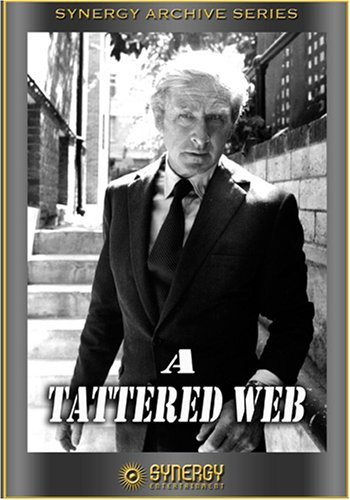
Retro Television Reviews: A Tattered Web (dir by Paul Wendkos)


Welcome to Retro Television Reviews, a feature where we review some of our favorite and least favorite shows of the past!  On Sundays, I will be reviewing the made-for-television movies that used to be a primetime mainstay.  Today’s film is 1971’s A Tattered Web!  It  can be viewed on YouTube!

Sgt. Ed Stagg (Lloyd Bridges) is a good cop and an overprotective father.  Ever since his wife left him, Ed has been determined to make sure that his daughter, Tina (Sallie Shockley), has a good life.  So, as you can probably guess, Ed is not amused when he finds out that Tina’s husband, Steve (Frank Converse), has been cheating on her with Louise Campbell (Anne Helm).  Ed has never liked Steve and would love it if his daughter left him.  But, Ed still doesn’t want want Tina to have to go through the pain of knowing that her husband is seeing another woman.

Ed decides to drop by Louise’s apartment and talk to her himself.  Louise, however, is not willing to let some old stranger tell her how to live her life.  After all, she’s heard from Steve about what a terrible and judgmental father-in-law Ed is.  Ed gets frustrated and shoves Louise.  Louise stumbles back, hits her head, and …. uh-oh.  Louise is dead!  To be honest, it didn’t really look like she hit her head that hard.  In fact, I had to rewatch the scene to see if she actually hit her head at all.  But no matter.  Louise is dead and Ed’s responsible.

The next morning, when Ed and his partner, Joe (Murray Hamilton), are called in to investigate Louise’s homicide, Ed is approached by Louise’s neighbor (John Fiedler), who gives him a description of a  young man who he says he frequently saw going up to Louise’s apartment.  The description perfectly describes Steve.  The police sketch artist draws a picture that looks like just like Steve.  Joe thinks that Steve is responsible.  Not wanting his daughter to think that her husband’s a murderer, Ed decides to frame Willard Edson (Broderick Crawford), an alcoholic who frequently comes into the station and confesses to crimes so that he can have a place to sleep for the night.

Yes, it’s a tattered web indeed.  Ed is able to talk Edson into confessing to the crime but then Steve does his own detective work and realizes that Edson couldn’t be the murderer.  Ed tells Steve that he should just let the police arrest Edson because, otherwise, they’re going to come after Steve.  Steve, however, says that he would rather be arrested and be given a chance to prove his innocence than just stand by idly while an innocent man goes to jail.  Being a veteran cop, Ed wasn’t expecting everyone to be so damn honest!

A Tattered Web isn’t bad for a 70-minute made-for-TV movie.  The film’s main strength is the cast, with Lloyd Bridges, Murray Hamilton, and especially Broderick Crawford giving strong performances.  The scene where Ed talks Edson into confession is especially well-done, with Crawford giving a performance of growing desperation while Bridges himself appears to be on the verge of tears as Ed realizes what his life has become.  Like his sons Jeff and Beau, Lloyd Bridges is such a likable actor that it’s hard not to care about what happens to the characters that he’s playing, even when he’s playing a murderer.  A Tattered Web is an effective thriller that reminds viewers that guilt cannot be escaped.

Retro Television Reviews: Haunts of the Very Rich (dir by Paul Wendkos)


Welcome to Retro Television Reviews, a feature where we review some of our favorite and least favorite shows of the past!  On Sundays, I will be reviewing the made-for-television movies that used to be a primetime mainstay.  Today’s film is 1972’s Haunt of the Very Rich!  It  can be viewed on YouTube!

The 1972 made-for-TV movie Haunts of the Very Rich opens with a lengthy shot of Lyle (Tony Bill) and Laurie (Donna Mills) sharing a very long kiss.  Obviously, they’re very happy and why shouldn’t they be?  They’re young.  They’re beautiful.  They’re in love.  They’re newly married.  And …. they’re on an airplane!

It’s a private plane, one that’s heading towards a resort called The Portals of Eden.  There’s only a few other people on the plane.  David Woodrough (Lloyd Bridges) is a businessman who is looking forward to spend some time away from his wife, especially if it means a chance to get to know one of the other passengers, Ellen Blunt (Cloris Leachman).  Annette Larner (Anne Francis) is also traveling alone and is hoping she might finally be able to get some sleep without having to take a handful of pills beforehand.  Rev. Fellows (Robert Reed) appears to have lost his faith.  And then there’s Al Hunsicker (Ed Asner).  Hunsicker’s a little bit confused about how he ended up on the airplane.  As far as he knows, he’s supposed to be on his way to a business meeting in Dallas.  Portals of Eden?  Al’s never heard of the place!  Of course, nobody on the plane really seems to be sure where they’re going or how they even got on the plane in the first place.  Strangely, Al appears to be the only one who finds any of this to be strange.

When the plane lands, they discover that the Portals of Eden is a large hotel sitting at the edge of a tropical wilderness.  Their host, the always polite Mr. Seacrist (Moses Gunn), welcomes them but avoids answering anyone’s questions.  Seacrist tells them to enjoy their stay.

For the first day, that’s exactly what everyone does.  They relax.  They indulge in a little pampering.  David gets to know Ellen.  Al is still worried about getting to his business meeting but he is assured that he can always fly out to Dallas the following day.

The night, a violent storm hits.  The next day, everyone wakes up to discover that the resort is nearly deserted.  There’s no electricity.  There’s no way to call out.  There’s not much food.  Seacrist tells them not to worry.  He assures them that help is on the way.  As the guests wait to be rescued, they finally start to wonder just how exactly the ended up at the resort in the first place.  They realize that they’ve almost all had a recent brush with death.  David swears to Ellen that he’ll file for divorce as soon as they get back home but what if they don’t have a home to which to return?  Occasionally, the guests hear a plane flying overhead.  At one point, they even see one land.  But every time, just when it seems like they’re on the verge of finally being rescued, the plane vanishes.

And things just get stranger from there.

If Jean-Paul Sartre had ended up in the United States, writing for The Bold and the Beautiful, the end result would probably look a lot like Haunts of the Very Rich.  Considering that this is a made-for-TV movie from the early 70s, Haunts of the Very Rich is a surprisingly effective and atmospheric little horror film.  The story itself won’t exactly win any points for originality.  You’ll guess the secret of Portals of Eden long before any of the characters in the film.  But still, it’s a well-directed and nicely acted film, one that’s topped off with a suitably surreal (if somewhat abrupt) finale.

Haunts of the Very Rich can currently be found on YouTube and I recommend it for anyone who likes their melodrama served with a side of existential dread.

Retro Television Review: A Little Game (dir by Paul Wendkos)


Welcome to Retro Television Reviews, a feature where we review some of our favorite and least favorite shows of the past!  On Sundays, I will be reviewing the made-for-television movies that used to be a primetime mainstay.  Today’s film is 1971’s A Little Game.  It  can be viewed on YouTube!

Twelve year-old Robert Mueller (played by 13 year-old Mark Gruner, who would later go on to play one of Chief Brody’s kids in Jaws) just hasn’t been the same since his father died.  Robert idolized his father, who was an architect who built bridges and reportedly pushed his workers to take a lot of dangerous risks to get the job done.  Perhaps that explains why Robert is not getting along with his new stepfather, Paul Hamilton (Ed Nelson).  Robert’s mother, Elaine (Diane Baker), is convinced that Robert will eventually come to accept Paul but Paul isn’t so sure.

Robert is a student at a private military academy.  When he comes home for the holidays, he brings his “best friend” with him.  Stu Parker (Christopher Shea) is friendly and polite but he’s also easily led and has a difficult time standing up for himself.  Paul immediately sees that Robert is bullying Stu.  Elaine, however, thinks that Paul is being too critical.  That’s just the way boys are!

In his diary, Robert has written that he killed someone and that he’s sure that he got away with it.  When Paul comes across the entry, he worries that Robert might be telling the truth.  Paul goes as far as to hire a private detective (Howard Duff) to investigate whether there’s been any mysterious deaths at Robert’s school.  Stu, meanwhile, explains that he and Robert sometimes play “a little game” where they imagine that best way to murder someone and get away with it.  But Stu assures Paul that it’s just a game.  They don’t actually kill anyone.

Is Stu telling the truth or is Robert just as dangerous as his deceased father, a man who Paul claims was a psychopath?  Or is Paul himself the one who has become delusional with jealousy of his stepson?

The answer to those questions is pretty obvious from the minute that Robert and Stu show up at the house.  In fact, it’s so obvious that it kind of leaves the viewer wondering how everyone else in the film could be so clueless.  On the one hand, it’s understandable that Elaine would not want to admit that there is something seriously wrong with her son.  On the other hand, how many times can anyone close their eyes to a very obvious truth?  From the minute that Robert shows up, wearing his uniform and curtly ordering around the family’s maid (played by High Noon‘s Katy Jurado, who deserved a better role), he might as well have psychopath tattooed on his forehead.

That said, evil children movies are always somewhat effective, even the ones that are a bit too obvious in their approach.  Psychologically, we’ve been conditioned to always associate children with innocence, optimism, and hope.  Children are the future, so the saying goes. As such, it does carry some impact when they’re portrayed as being a force of danger.  As I watched this film, I did find myself wondering if there was any hope for Robert.  With all that he had done, could someone still reach him and turn him around?  Or was he destined to go from being an evil child to an evil adult?  It really does get to the question of whether evil is a real, almost supernatural force or if it’s something that’s created by a combination of environment and social taboos.  Was Robert born evil or did he become evil?  A Little Game doesn’t answer that question but I doubt that anyone could.  Some questions are destined to be forever unanswered.

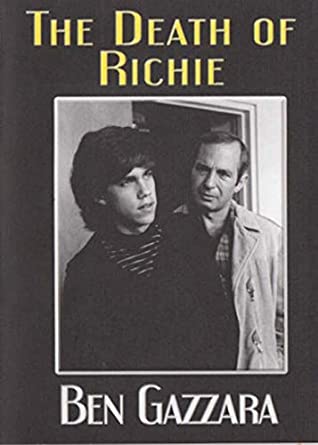
Retro Television Review: The Death of Richie (dir by Paul Wendkos)


Welcome to Retro Television Reviews, a feature where we review some of our favorite and least favorite shows of the past!  On Sundays, I will be reviewing the made-for-television movies that used to be a primetime mainstay.  Today’s film is 1977’s The Death of Richie.  It  can be viewed on YouTube!

It’s not a spoiler to tell you that this film ends with the death of a teenager named Richie.  It’s right there in the title.  We start the film knowing that Richie is going to die.  The only question is how it’s going to happen and who, if anyone, is going to be held responsible for it.

Played by Robby Benson, Richie Werner is a sensitive teenager living in the suburbs.  He’s painfully shy and he deals with that shyness by taking the drugs that are supplied to him by friends like Brick (Charles Fleischer) and Peanuts (Clint Howard, yes that Clint Howard).  His parents, George (Ben Gazzara) and Carol (Eileen Brennan), knows that Richie is struggling with both drugs and school.  However, neither one of them have a clue as to how to help him.  Carol spends most of the film silently hoping that things will somehow just magically get better.  Meanwhile, George can’t understand his son and, even worse, he makes no attempt to understand him.  George holds back his feelings and he’s obviously uncomfortable with his emotional son.  George is the type who retreats to his basement when he needs to get away from the world and yet, he can’t understand why his son needs a similar sanctuary.  When he discovers that Richie has set up a mini-bedroom in his closet, George destroys it.

Throughout the film, Richie tries to get his life straightened out.  He gets a job working at a restaurant but he quits after his friends laugh at his dorky uniform.  He tries to date a girl named Sheila (Cindy Eilbacher) but is heartbroken when he discovers that she’s going out with someone else.  When Richie tries to talk his dad, George refuses to listen.  When George tries to talk to Richie, Richie tells him to get out of his room.  Finally, after Richie crashes his car one last time, it leads to an act of shocking violence.  After all, the film is called The Death of Richie.

It’s also based on a true story, though there’s some debate over whether or not the film gets the story correct.  In real life, Richie’s named was George Richard “Richie” Diener and he lived in Long Island.  (The film appears to take place in a generic California suburb.)  Richie’s death inspired a magazine article and book, both of which inspired this film.  While I was doing research for this review, I came across a website about Richie’s death, one that argued that both the film and the book were too sympathetic to George’s version of what happened the day that Richie died.  The site has comments from many of the people who knew Richie and I recommend it to anyone who watches this film and want to know the other side of the story.

As for the film itself, it’s well-directed, intense, and, at times, rather heart-breaking.  As portrayed in the film, Richie is so desperate for some sort of approval that your heart just goes out to him.  Robby Benson is one of those actors who you come across in a lot of 70s films.  I’ve always found his performances to be a bit inconsistent and that’s certainly the case here.  He’s good when he’s allowed a quiet moment or two but there are other times when he gets so shrill that it takes you out of the reality of the film.  Ben Gazarra does a good job playing George as someone who loves his family but who is incapable of understanding his son’s pain.  Gazarra adds just a hint of ambiguity to his anger toward Richie.  Is he upset because Richie keeps getting trouble or has he reached the point where he’s just looking for an excuse to get Richie out of the family’s life?  According to the comments that I read at the blog mentioned above, both the film and the subsequent book based solely their portrayal of the last minutes of Richie’s life on George’s account.  Many people felt that there was more to what happened.

The film is a bit quick to blame all of Richie’s problems on the drugs.  While the drugs probably didn’t help, there are times when the film seems to suggesting that Richie would have been a happy, go-lucky kid if he had never taken that first Seconal.  Watching the film today, it’s obvious that there was a lot more going on with Richie than just weed and pills and it’s also obvious that calling the cops having them search his room while he watched was not the solution either.  Richie needed someone to talk to and, in the film at least, that was apparently the one thing that he could not get.  As the song says, things get a little easier once you understand.

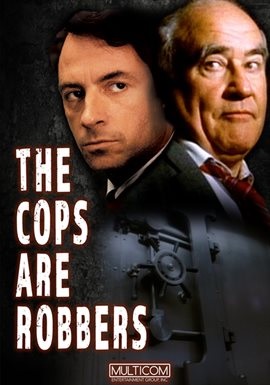
The Cops Are Robbers (1990, directed by Paul Wendkos)


When Kirkland (George Kennedy) appoints veteran cop Jake Quinn (Ed Asner) to command a division of the Massachusetts Metropolitan Police, one of Quinn’s main duties is to root out corruption.  Everyone knows that Captain Jerry Clemente (Ray Sharkey) is crooked but no one’s been able to prove anything.  This has led to Clemente getting so cocky that he tries to pull off the biggest bank robbery of all time.  Working with two other corrupt cops (played by Steve Railsback and James Keach) and some ex-cons who owe him a favor, Clemente masterminds the theft of $25,000,000 worth of jewelry.

Unfortunately, stealing that much brings in not only the FBI but it also makes Quinn even more determined to expose Clemente and all of his crooked associates.  As well, the Mafia wants their part of the action and the members of Celemente’s gang aren’t as smart as their leader.  Soon the walls are closing in.  Will Clemente get away with his crime or will he end up getting arrested and eventually writing a book about the theft that will eventually be turned into a television movie?

Though the title seems more appropriate for a comedy, The Cops Are Robbers is a drama based on a true story.  It actually could have used some comedy because the movie itself is pretty dry and straight forward.  Ed Asner and George Kennedy give their usual competent performances, cast as the type of characters that they could have played in their sleep.  Unfortunately, Ray Sharkey is nowhere near as effective as the man they’re trying to put behind bars.  When he first started out, Sharkey made a name for himself by giving convincing performances as characters who were tough and streetwise but also sometimes neurotic.  He received Emmy and Golden Globe nominations before he became better known for his trips to rehab than his acting ability.  I think that. as an actor, Sharkey’s downfall was that he saw himself compared to Al Pacino so many times that he started to buy it and he eventyally started to attack every role with the same method-style intensity.  Sometimes, like when he played Sonny Steelgrave during the first season of Wiseguy, it worked.  Most of the time, though, it just led to him overacting and bellowing all of his lines.  That’s the case with The Cops Are Robbers.  Sharkey is so loud and perpetually angry that it’s hard to believe that he’s managed to get away with his crimes for as long as he has.

For those of us who don’t live in Massachusetts, the most interesting thing about watching The Cops Are Robbers is trying to keep track of who works for what agency.  When it was mentioned that Clemente works for the Metropolitan Police, I immediately assumed that meant he was a Boston police officer.  Only later did I learn, via a review on the imdb, that the Metropolitan Police were actually a state agency.  That Clemente was a state official and not just a city cop does make his crimes slightly more interesting, though not enough to really liven up The Cops Are Robbers.

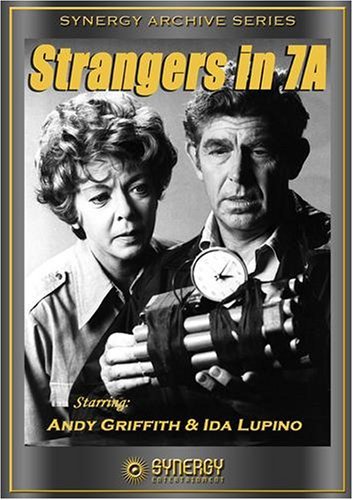
The Strangers in 7A (1972, directed by Paul Wendkos)


Artie Sawyer (Andy Griffith) is a man who no one respects.  Having recently been fired from his long-time job, he’s forced to take a job as a superintendent for an apartment building in New York.  The tenants don’t think much of him.  His wife, Iris (Ida Lupino), is getting tired of his self-pity.  The only person who seems to like Artie is Claudine (Susanne Benton).  The young and beautiful Claudine approaches Artie in a bar and, after flirting with him, reveals that she needs a place to stay.  Artie agrees to let Claudine check out Apartment 7A.  At the apartment, Claudine rolls around in the bed, dances seductively, and then reveals that she has three male friends who are going to be staying in the apartment with her.  Billy (Michael Brandon), Virgil (Tim McIntire), and Riff (James A. Watson, Jr.) all served in Vietnam together and now they need to crash at the apartment for a while.  Artie can either let them stay or they can reveal to his wife that he was at a bar, trying to pick up young women.

Led by the psychotic Billy, the three men are planning on robbing the bank next door.  When Artie, who is having doubts about whether or not it was a good idea to let four obviously unstable people live rent-free in his building, discovers their plans, he and Ida are taken hostage.  When the bank robbery goes wrong, Billy tries to use the hostages and a bomb as leverage for his escape from the police.

As far as films about bank robberies goes, The Strangers in 7A is no Dog Day Afternoon.  While it’s interesting to see the usually confident Andy Griffith play a loser, he never seems like enough of a loser that he would actually risk a job that he clearly needs just because Claudine flashed a little leg at him.  Even when he’s playing a character who is down on his luck, he’s still Andy Griffith.  Along with the lead role being miscast, the bank robbers are too generic to really be credible or threatening.  Susanne Benton is sexy as the femme fatale and Ida Lupino is sympathetic as Artie’s wife but otherwise, The Strangers in 7A is forgettable.

The Strangers in 7A was made for television.  At the time, Andy Griffith was still trying to escape being typecast as Mayberry’s amiable Sheriff Taylor.  Griffith was a convincing villain in movies like Pray For The Wildcats and Savages but he’s just not believable as a loser in this film.