4 Shots From 4 Films: Special F.W. Murnau Edition


4 Shots From 4 Films is just what it says it is, 4 shots from 4 of our favorite films. As opposed to the reviews and recaps that we usually post, 4 Shots From 4 Films lets the visuals do the talking.

Today was celebrate the visionary director, F.W. Murnau!  Murnau was born 135 years ago today, in Germany.  He went on to become a leading expressionist and one of the most influential filmmakers of all time.  Needless to say, it’s time for….

4 Shots From 4 F.W. Murnau Films

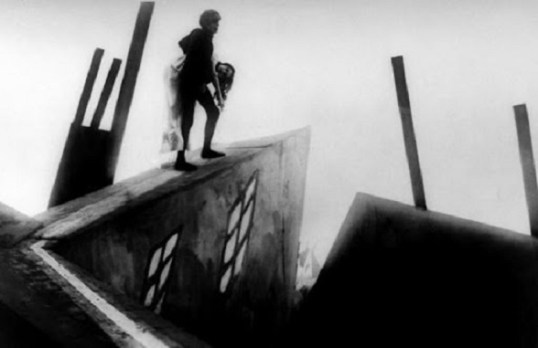
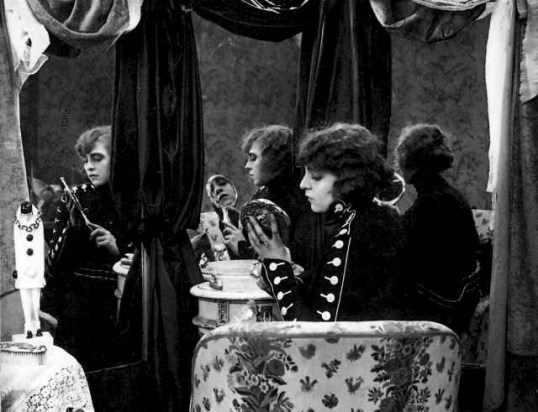
The Hunchback and the Dancer (1920, dir by F.W. Murnau)

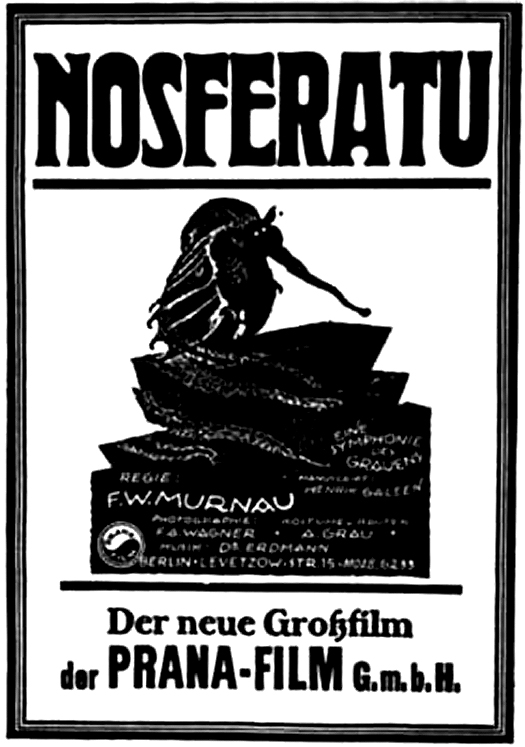
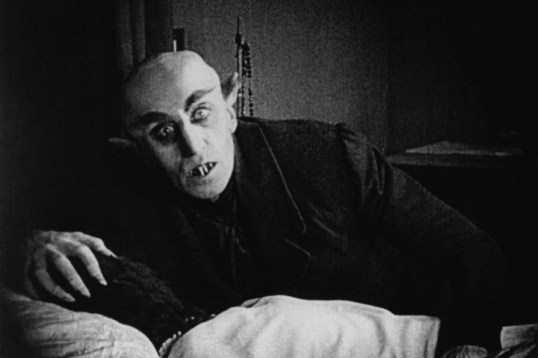
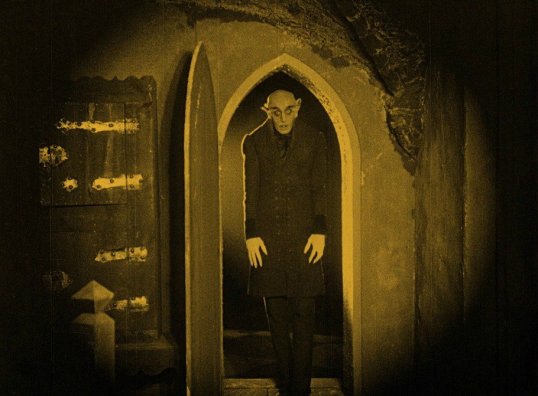
Nosferatu (1922, dir by F.W. Murnau)

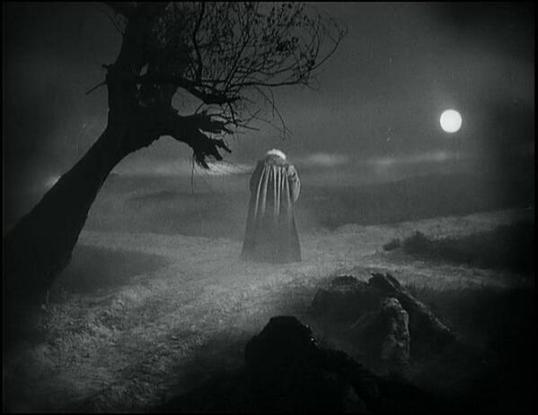
Faust (1926, dir by F.W. Murnau)

Sunrise: The Story of Two Humans (1927, dir by F.W. Murnau)

Horror on the Lens: Nosferatu (dir by F.W. Murnau)


Today’s Horror on the Lens is a classic film that really needs no introduction!  Released in 1922, the German silent film Nosferatu remains one of the greatest vampire films ever made.  It’s a film that we share every October and I’m happy to do so again this year!

Enjoy!

Horror on the Lens: Nosferatu (dir by F.W. Murnau)


Today’s Horror on the Lens is a classic film that really needs no introduction!  Released in 1922, the German silent film Nosferatu remains one of the greatest vampire films ever made.  It’s a film that we share every October and I’m happy to do so again this year!

Enjoy!

4 Shots From 4 Silent Horror Films


4 (or more) Shots From 4 (or more) Films is just what it says it is, 4 (or more) shots from 4 (or more) of our favorite films. As opposed to the reviews and recaps that we usually post, 4 (or more) Shots From 4 (or more) Films lets the visuals do the talking.

The horror genre has been around ever since people struggled to explain their fears and horror films were a feature of cinema from the time of the earliest movies.  Today, we pay tribute to some of the early entries in the horror genre with….

4 Shots From 4 Horror Films

The Cabinet of Dr. Caligari (1920, dir by Robert Wiene, DP: Willy Hameister)

Nosferatu (1922, dir by F.W. Murnau, DP: Fritz Arno Wagner and Günther Krampf)

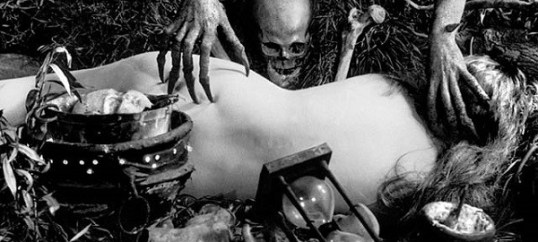
Haxan (1922, dir by Benjamin Christesen, DP: Johan Ankerstjerne)

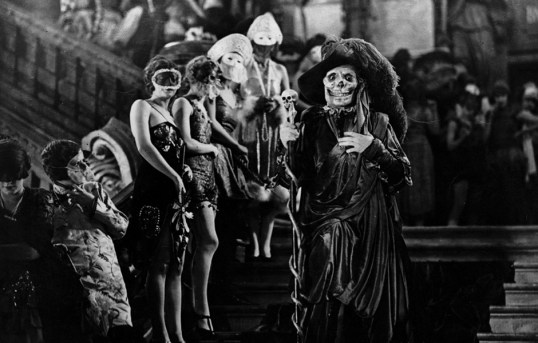
The Phantom of the Oepra (1925, dir by Rupert Julian, DP: Milton Bridenbecker, Virgil Miller, Charles Van Enger)

4 Shots From 4 Films: Special F.W. Murnau Edition


4 Shots From 4 Films is just what it says it is, 4 shots from 4 of our favorite films. As opposed to the reviews and recaps that we usually post, 4 Shots From 4 Films lets the visuals do the talking.

Today was celebrate the visionary director, F.W. Murnau!  Murnau was born 132 years ago today, in Germany.  He went on to become a leading expressionist and one of the most influential filmmakers of all time.  Needless to say, it’s time for….

4 Shots From 4 Films

The Hunchback and the Dancer (1920, dir by F.W. Murnau)

Nosferatu (1922, dir by F.W. Murnau)

Faust (1926, dir by F.W. Murnau)

Sunrise: The Story of Two Humans (1927, dir by F.W. Murnau)

Horror Scenes I Love: Klaus Kinski and Bruno Ganz have dinner in Nosferatu


Nosferatu (1979, dir by Werner Herzog)

Since today is Klaus Kinksi’s birthday, it makes sense that he should be featured in today’s scene of the day.  In this scene from Werner Herzog’s 1979 film, Nosferatu, Klaus Kinski and Bruno Ganz have dinner.  Of course, in this scenario, Bruno Ganz is Jonathan Harker while Kinski is Dracula.

(In the original, silent Nosferatu, Harker’s name was changed to Thomas Hutter while Dracula was called Count Orlok.  By the time Herzog shot his version, the characters were in the public domain and there was no longer any need to pretend that Nosferatu wasn’t an adaptation of Bram Stoker’s novel.)

Enjoy!

4 Shots From 4 Films: Special Klaus Kinski Edition


4 Shots From 4 Films is just what it says it is, 4 shots from 4 of our favorite films. As opposed to the reviews and recaps that we usually post, 4 Shots From 4 Films lets the visuals do the talking!

94 years ago today, the infamous but incredibly talented Klaus Kisnki was born.  Though Kinski appeared in many genres of film, he was an actor who seemed to be well-suited for horror films.  Today, we honor that legacy with….

4 Shots From 4 Films

Aguirre The Wrath of God (1972, dir by Werner Herzog)

Nosferatu (1979, dir by Werner Herzog)

Crawlspace (1986, dir by David Schmoeller)

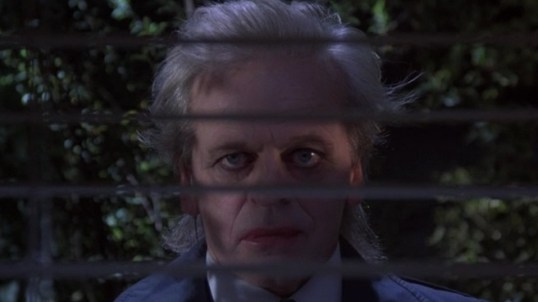
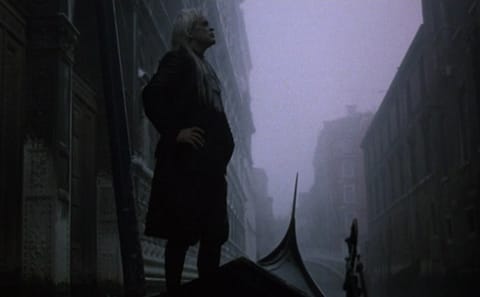
Nosferatu in Venice (1988, dir by Augusto Caminito and Klaus Kinski)

Horror on the Lens: Nosferatu (dir by F.W. Murnau)


Today’s Horror on the Lens is a classic film that really needs no introduction!  Released in 1922, the German silent film Nosferatu remains one of the greatest vampire films ever made.  It’s a film that we share every October and I’m happy to do so again this year!

Enjoy!

Horror Scenes That I Love: Nosferatu on the Death Ship


Since I seem to be in a bit of a vampiric mood tonight, how about a scene from the 1922 classic, Nosferatu, for today’s scene that I love?

This scene features the titular vampire taking over a boat and it proves that movies didn’t need to be scary.

Enjoy!

(As a reminder, if you like this scene, you can watch the whole movie by clicking here!)

International Horror Film Review: Nosferatu in Venice (dir by Augusto Caminito, Klaus Kinski, Luigi Cozzi, Mario Ciaino, and possibly others)


Nosferatu the vampyre is back!  Well, maybe.  It’s complicated,

This Italian production from 1988 was originally envisioned as being a semi-official sequel to Werner Herzog’s Nosferatu, which was itself a remake of F.W. Murnau’s silent classic.  The idea was that Klaus Kinski would reprise his role and this time, his feral version of Dracula would haunt Venice.  Kinski agreed, initially, to reprise his role.  However, after arriving on the set, Kinski lived up to his infamous reputation for being difficult.  He announced that he would, under no circumstances, don the famous make-up that he wore in Nosferatu.  And while Kinski was undoubtedly a good actor who was capable of giving performances that kept him employed despite reportedly being insane, Nosferatu without the makeup is not really Nosferatu.  He’s just another vampire.

Still, Kinski was a big enough star that he got his way about the makeup.  He also attempted to get his way during the first day of filming, when he refused to take any direction from director Mario Ciaino.  When Ciaino attempted to figure out why Kinski was being so difficult, Kinski declared that he had been promised, by producer Augusto Caminito, that he would be allowed to direct the film.  This led to Mario Ciaino quitting during the first day of production.  Producer Caminito took over as a director, though apparently Kinski did end up directing several of his own scenes.  Reportedly, other scenes were directed by Luigi Cozzi.

However, Kinski didn’t stop with getting the director replaced.  He also demanded that nearly the entire cast be replaced as well.  Kinski, in fact, was such a terror on the set that it was common for members of the crew to refuse to work with him, which perhaps explains why Kinski seems to spend so much of this film wandering around Venice by himself.
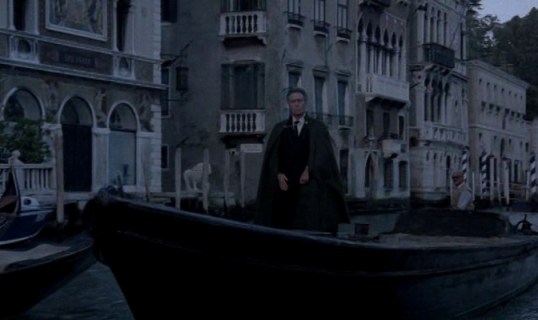
As for the film itself — well, yes, it’s exactly as big of a mess as it sounds like it would be.  Kinski plays a vampire who may or may not be Dracula.  Actually, very few of the traditional vampire rules seem to apply to him.  He wanders around in the daylight.  He looks at his reflection in a mirror.  He does, however, drink a lot of blood so I guess some things never change.  Because he refused to wear the vampire makeup or shave his head, Kinski spends the entire film looking like the aging lead singer of a 70s prog rock band.  At the same time, it must be said that Kinski actually does give a fairly good performance.  He’s a vampire who is desperate to find someone pure of heart who can end his ennui-stricken life.  Kinski’s screen presence is undeniably powerful and he looks appropriately miserable.

Christopher Plummer has the Van Helsing role and Donald Pleasence plays a priest who always seems to be somewhat nervous.  (In other words, a typical role for Donald Pleasence.)  Plummer is in Venice because, back in the 18th century, it was the last place that Kinski’s vampire was seen.  This leads to several confusing flashbacks, all of which are somewhat randomly sprinkled throughout the film.

There’s not really any story beyond Kinski walking around with a stricken-look on his face but, oddly, the film kind of works. Despite all of the directors who worked on it, the film is often visually stunning.  I think it’s the power of Venice.  No other city has quite the same atmosphere as Venice and it turns out to be the perfect location for a film about an ennui-stricken vampire.

(I know that when I visited Venice the summer after I graduated high school, I often found myself thinking about vampires.  That’s just the type of city it is.)

Anyway, the film will be best appreciated by Italian horror enthusiasts and Kinski completists.  Others will probably be bored out of their mind.  If you just want to see a good horror film set in Venice, I recommend Don’t Look Now.