4 Shots From 4 Films is just what it says it is, 4 shots from 4 of our favorite films. As opposed to the reviews and recaps that we usually post, 4 Shots From 4 Films lets the visuals do the talking!
Today would have been the birthday of Wings Hauser. It’s time for….
4 Shots From 4 Wings Hauser Films
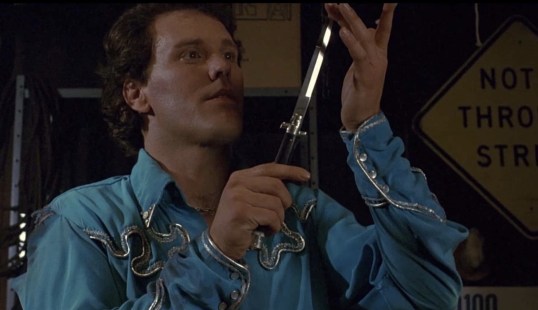
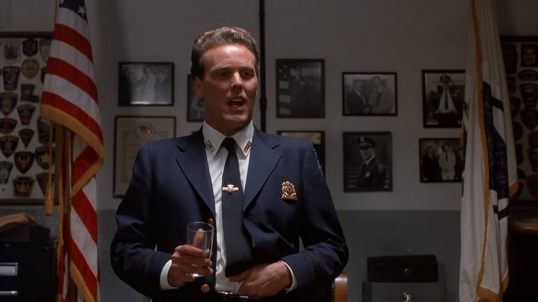
Vice Squad (1982, dir by Gary Sherman, DP: John Alcott)
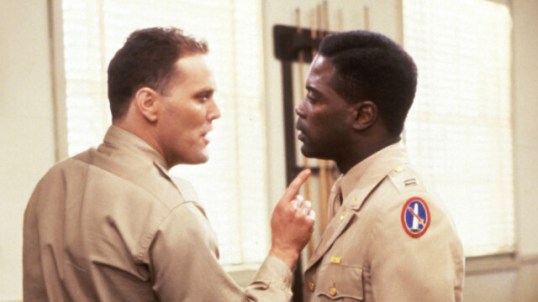
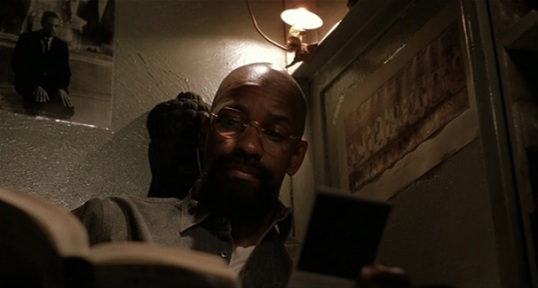
A Soldier’s Story (1984, dir by Norman Jewison, DP: Russell Boyd)
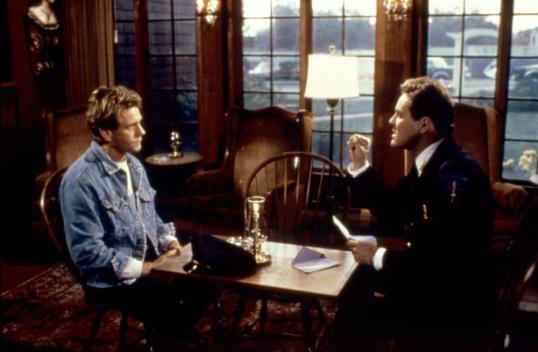
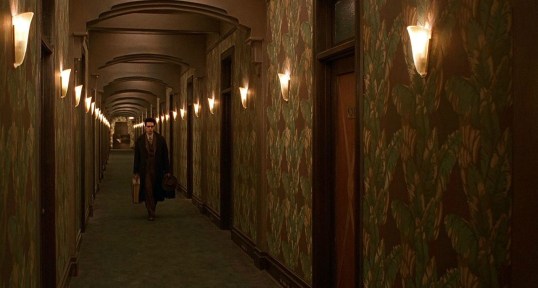
Tough Guys Don’t Dance (1987, dir by Norman Mailer, DP: Mike Moyer)
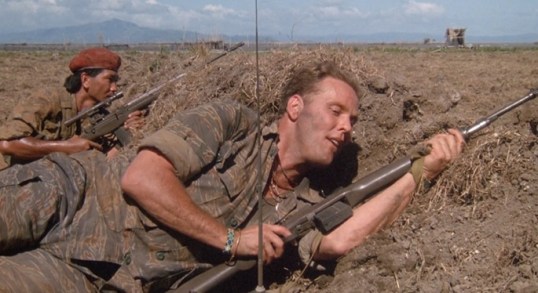
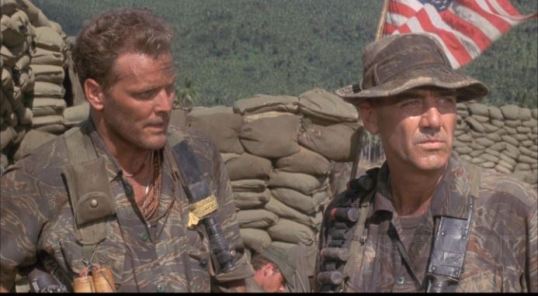
The Siege of Firebase Gloria (1989, dir by Brian Trenchard-Smith, DP: Kevin Lind)
In honor of the late Norman Jewison, today’s scene that I love comes from my favorite film to have been directed by him.
In this scene from 1973’sJesus Christ Superstar, Mary Magdalene (Yvonne Elliman) attempts to comfort Jesus (Ted Neeley) while Judas (Carl Anderson) tries to pull Jesus away from her. This scene showcases both Elliman’s angelic voice and Anderson’s ferocious intensity as Mary and Judas present two very different sides of a spiritual journey.
4 (or more) Shots From 4 (or more) Films is just what it says it is, 4 (or more) shots from 4 (or more) of our favorite films. As opposed to the reviews and recaps that we usually post, 4 (or more) Shots From 4 (or more) Films lets the visuals do the talking.
Today would have been Norman Jewison’s birthday. It’s time for….
4 Shots From 4 Norman Jewison Films
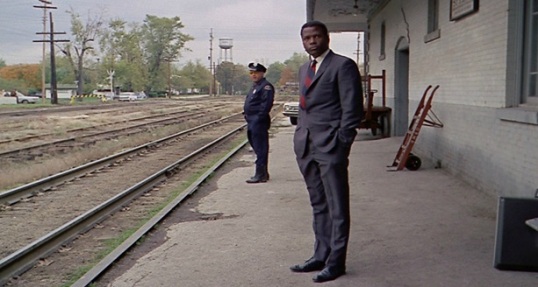
In The Heat of the Night (1967, dir by Norman Jewison, DP: Haskell Wexler)
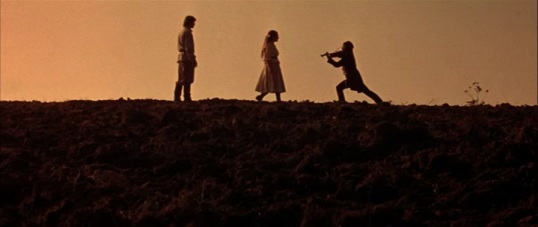
Fiddler on the Roof (1971, dir by Norman Jewison, DP: Oswald Morris)
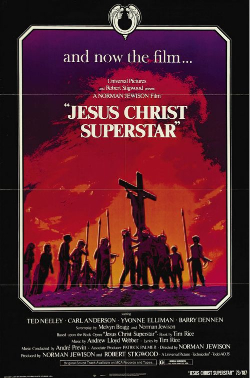
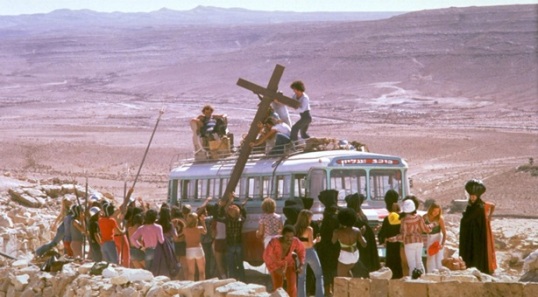
Jesus Christ Superstar (1973, dir by Norman Jewison, DP; Douglas Slocombe)
The Hurricane (1999. dir by Norman Jewison, DP: Roger Deakins)
4 Shots From 4 Films is just what it says it is, 4 shots from 4 of our favorite films. As opposed to the reviews and recaps that we usually post, 4 Shots From 4 Films lets the visuals do the talking!
Today is the birthday of our greatest living cinematographer, Roger Deakins! It’s time for….
4 Shots From 4 Roger Deakins Films
Barton Fink (1991, dir by the Coen Brothers, cinematography by Roger Deakins)
The Hurricane (1999. dir by Norman Jewison, DP: Roger Deakins)
Skyfall (2012, dir by Sam Mendes, cinematography by Roger Deakins)
Sicario (2015, dir by Denis Villeneuve, cinematography by Roger Deakins)
First released in 1979, ….And Justice For All will always be remembered for one scene.
Yell it with me, “YOU’RE OUT OF ORDER! THE WHOLE TRIAL IS OUT OF ORDER! THEY’RE OUT OF ORDER!”
When attorney Arthur Kirkland (Al Pacino) starts screaming in the middle of the courtroom, it’s a cathartic moment. We’ve spent nearly two hours watching as Arthur deals with one insane situation after another. One of Arthur’s partners, Warren (Larry Bryggman), cares more about his car than actually delivering the right documents to a judge. Another of Arthur’s partners, Jay (Jeffrey Tambor), has a nervous breakdown and, after shaving his head, ends up throwing cafeteria plates at people in the courthouse. Arthur has three clients, one of whom is indigent, one of whom is innocent, and one of whom is a wealthy and despised judge (John Forsythe) who has been accused of a rape that Arthur suspects he committed. The system offers no mercy for Arthur’s innocent (or, at the very least, harmless) clients while going out of it’s way to defend the judge. Meanwhile, another judge (Jack Warden), is driven to take suicidal risks, like flying a helicopter until it runs out of fuel and comes down in a nearby harbor. The assistant district attorney (Craig T. Nelson) only cares about his political ambitions and finally, after one incident after another, Arthur snaps. And it’s cathartic because we’re all on the verge of snapping as well.
That final moment, with its signature Al Pacino rant, is such a strong and iconic scene that it’s easy to forget that the film itself is actually rather uneven. The script, by Barry Levinson and Valerie Curtin, owes a good deal to the work of Paddy Chayefsky. Just as Chayefsky often wrote about men being driven mad by institutional failure, ….And Justice For All features character after character snapping when faced with the screwed-up realities of the American justice system. The final “out of order” speech is obviously meant to be this film’s version of Howard Beale’s “I’m as mad as Hell and I’m not going to take it!” speech from Network and, much like George C. Scott in the Chayefsky-written The Hospital, Arthur spends a lot of time talking about what he doesn’t like about his job. The thing that sets ….And Justice For All apart from the best works of Chayefsky is that Levinson, Curtin, and director Norman Jewison all take Arthur Kirkland at his word while one gets the feeling that Chayefsky would have been a bit more willing to call out Arthur on his self-righteousness. Arthur has every right to be angry when Warren forgets to give a judge an important document while Warren is substituting for him in court. At the same time, Arthur is the one who trusted Warren to do it. In the end, the document was not about one of Warren’s client. In fact, Warren knew absolutely nothing about the case or Arthur’s client. The document was about Arthur’s client and Arthur was the one who decided trust someone who had consistently shown himself to not be particularly detailed-orientated. One gets the feeling that Chayefsky would not have let Arthur off the hook as easily as Levinson, Curtin, and Jewison do. Arthur’s perpetual indignation can sometimes be a little hard to take.
It’s a very episodic film. Arthur goes from one crisis to another and sometimes, you do have to wonder if Arthur has ever had any human or legal interactions that haven’t ended with someone either going insane or dying. There’s no gradual build-up to the film’s insanity, it’s right there from the beginning. And while this means the narrative often feels heavy-handed, it also makes that final speech all the more cathartic. It’s an uneven film and, of all of the characters that Pacino played in the 70s, Arthur is probably the least interesting. But that final rant makes up for a lot and, fortunately, Pacino was just the actor to make it memorable. For all it’s flaws, the final few minutes of ….And Justice For All make the film unforgettable.
4 Shots From 4 Films is just what it says it is, 4 shots from 4 of our favorite films. As opposed to the reviews and recaps that we usually post, 4 Shots From 4 Films lets the visuals do the talking!
Today, it’s time for….
4 Shots From 4 Wings Hauser Films
Vice Squad (1982, dir by Gary Sherman, DP: John Alcott)
A Soldier’s Story (1984, dir by Norman Jewison, DP: Russell Boyd)
Tough Guys Don’t Dance (1987, dir by Norman Mailer, DP: Mike Moyer)
The Siege of Firebase Gloria (1989, dir by Brian Trenchard-Smith, DP: Kevin Lind)
4 Shots From 4 Films is just what it says it is, 4 shots from 4 of our favorite films. As opposed to the reviews and recaps that we usually post, 4 Shots From 4 Films lets the visuals do the talking!
Nominated for Best Picture of 1987, Moonstruck is a film about love, romance, New York City, and being Italian.
Loretta Castorini (Cher) is a widow and a bookkeeper who lives with her parents, Cosmo (Vincent Gardenia) and Rose (Olympia Dukakis) in Brooklyn. When her boyfriend, Johnny (Danny Aiello), asks Loretta to marry him, Loretta says yes even though she knows that, while she likes him, she’s not really in love with him. After he proposes, Johnny reveals that he has to go to Sicily to see his “dying” mother. He asks Loretta to pay a visit to his estranged brother, Ronny (Nicolas Cage), and invite him to the wedding. Loretta, a strong believer in family and the importance of following tradition, agrees.
Loretta finds Ronny working in the bakery that he owns. Ronny is not thrilled to learn that his brother has gotten engaged. Ronny reveals that he has a wooden hand. He lost his real hand when he accidentally placed it in a bread slicer while having a conversation with Johnny. After he lost his hand, Ronny’s then-fiancée left him. Ronny has never forgiven Johnny for the loss of his hand. “I lost my hand! I lost my bride!” Ronny yells to the heavens. Loretta, however, immediately understands that Johnny actually hurt his hand to get his fiancée to break up with him. A conversation at Ronny’s apartment leads to the two of them impulsively sleeping with each other. The next day, Ronny promises to never bother Loretta again if she agrees to go the opera with him.
What the guilt-stricken Loretta doesn’t know is that her father is having an affair himself and it turns out that Cosmo and Mona (Rose Gilette) enjoy the opera as well. Meanwhile, Rose finds herself tempted by a lecherous college professor named Perry (John Mahoney).
There’s a lot of stereotypes to be found in Moonstruck. Of course, passionate Ronny loves the opera. Of course, the simple but well-intentioned Johnny abandons his fiancée so that he can rush to Sicily to be with his “dying” mother who, it turns out, isn’t dying at all. Of course, Loretta slaps Ronny and tells him to snap out of it. (I should note that I’m a fourth Italian myself so I could definitely relate to some of this film. I’ve never liked opera, though.) Fortunately, the film’s cast is so perfectly chosen and John Patrick Shanley’s script so adroitly maintains the balance between the broad comedy and the small dramatic moments that it doesn’t matter that all of the characters are a bit stereotypical. The film comes to a wonderful life. It’s impossible not love these characters, flaws and all. Cher and Olympia Dukakis deserved the Oscars that they both won for this film. Vincent Gardenia deserved the nomination that he received. Nicolas Cage, Danny Aiello, and John Mahoney were not nominated but they should have been. In particular, John Mahoney is heart-breaking in his small role, playing the type of lecherous character that most films would have just portrayed as being a cardboard buffoon. As for Nicolas Cage, Moonstruck is a film that features both his trademark eccentricity and his ability to show the real and vulnerable human being underneath all of the bluster. Moonstruck is a film about the search for love and the glory of finding it. It’s a wonderfully romantic film, even if almost all of that love seems to involve infidelity. As directed by Norman Jewison, Moonstruck not only celebrates falling in love but also celebrates being lucky enough to do so in New York City. It’s a love letter not just to its characters but to the city as well.
Moonstruck was nominated for Best Picture but it lost to a far more epic production, The Last Emperor.



 Through the Shattered Lens