The dream has to end somewhere. Science fiction seems to agree on that. Futuristic technology produces what biology could not: logic-based systems so functional and adept at survival that humanity becomes obsolete. Whether we assimilate into a borg colony or a zerg hive mind, imagination is pretty screwed. Our best bet might be something like The Matrix. Perhaps some utility will compel our robot overlords to spare the sheep who spawned them. Yay!
I cannot say what it must feel like to be enslaved by a post-human species, but I fancy it would sound a lot like the 777 trilogy by Blut Aus Nord. Between 2011 and 2012, these French black metal legends offered up a journey through a world that was beyond dystopian. Discordant melodies and unorthodox rhythms taken to the extreme are usually a recipe for disaster–the tools of technically proficient but creatively deprived math rock and avant-garde musicians I would only listen to under duress. Blut Aus Nord masterfully avoided that pitfall by envisioning a coherent aesthetic framework and driving the music forward as a consistent conceptual progression across 18 tracks. Radical experimentation joins forces with dark industrial grooves to place the listener in a futuristic, post-human world where mechanical gods rule apathetic over mortals bred in gestation crates.
The trilogy does not actually offer any textual insight into what its world is supposed to be. The minimal lyrics are highly esoteric, and Blut Aus Nord ultimately leave it to the instrumentation to tell their tale. You might not experience it as a futuristic world at all, but rather as some bleak corner of hell from which a lost soul digs through the madness and witnesses his overlord. But as far as it speaks to me, the 777 trilogy is the vision of a feckless human slave awakening from his dream into terrifying, incomprehensible world. He slowly comes to understand his master and, perhaps, ultimately assimilates into the hive mind. The final track, “Epitome XVIII”, is a grim, cold trance in which a soulless machine reigns on triumphant.
I can’t say that any entertainment franchise has given me more cause to think than Ghost in the Shell. It presents a mid-21st century post-apocalyptic earth in which society has more or less stabilized. Events revolve around Public Security Section 9, a counter-terrorism agency focused on investigating cyberterrorism, which is rather interesting because the original manga by Masamune Shirow launched in 1989, before cyberterrorism actually existed (or the modern internet, for that matter). Throughout their investigations, the team deals with the social and philosophical issues that arise in an age where society is fully integrated across a world-wide network and technology has been integrated directly into the body, rendering people intimately vulnerable to hacks and computer viruses.
I am as guilty as most of having never read the original manga. I became acquainted with Shirow’s world through Ghost in the Shell (1995) and Ghost in the Shell 2: Innocence (2004), both directed by Mamoru Oshii, and the 2002 anime series Ghost in the Shell: Stand Alone Complex, by Kenji Kamiyama. While the two directors take rather different aesthetic approaches–the movies present Section 9 as a harsh, disenchanted unit in a somewhat dystopian world, whereas the television series is lively and a bit cartoonish–both remain dedicated to questioning the impact of highly integrated technology.
Stand Alone Complex lies much closer to the root of my music series, because some of the key issues it tackles have since arisen online in the real world. Everyone is well familiar with the use of V for Vendetta-styled Guy Fawkes masks in protests originating from the internet, but there is a decent chance you have also caught a glimpse of an odd blue smiley face among the rabble. The Laughing Man image originates from Stand Alone Complex, where it functions as a mask employed anonymously by individuals taking public action independently of each other. At first, an advocate for social justice uses it to disguise himself while committing a ‘terrorist’ act, but the image quickly overreaches his motives. Others commit unrelated political sabotage under the guise. Corporations employ it to discredit their competitors. Pranksters use it as a sort of meme, forming the shape with chairs on a rooftop and cutting it into a field as a crop circle, for instance. The image has no concrete meaning, and everyone who uses it essentially ‘stands alone’, but the public perceive the Laughing Man as a single individual.
The actual anime gives a fairly shallow interpretation of this. The creator of the image, Aoi, explains that he never intended the mask to become a social phenomenon, and that its arbitrary usage dislodged the image from its original meaning. He sums this up by asking “Who knew that copies could still be produced despite the absence of an originator?” The ‘profoundness’ of this ties back to a long history of bad philosophy which assumes that signs have universal objective meaning in some sort of fundamental way which mystically transcends subjectivity of the mind. Basically, certain Greek ideas saw a resurgence of popularity in the late 19th and early 20th centuries, probably as a consequence of high society’s fascination with antiquities at the time. The plethora of ready-at-hand counterexamples to these archaic notions provided easy meat for countless grad students to earn their PhDs, so long as they did not throw the baby out with the bath water and ruin the game for everybody else.
But I digress. While the intended idea behind “Stand Alone Complex” is a bit naive, the Laughing Man does represent a unique sort of game that can only be played in the information age. To the public, the Laughing Man was a single individual, or at most a closely coordinated group, but the participants knew better. They knew that there was no real ‘Laughing Man’, but their independent actions were performed under the expectation that they would be written into ‘his’ public profile. The game was exclusive; you had to be aware of the mask in order to dawn it. The game also had rules; an action totally out of line with the Laughing Man’s pattern of behavior would be perceived as a fraud. (You could not, for instance, reveal the truth behind the Laughing Man.) By playing, you added a little piece of yourself to the puzzle, and it might slowly assimilate you in turn.
Ghost in the Shell has remained a uniquely relevant franchise in science fiction because it got so many ideas right. In 1989, at a time when internet was still a novelty of college libraries, the manga offered a world of total connectivity, where every human and device belonged to a global network. In 2002, Stand Alone Complex introduced the Laughing Man, and shortly afterwards the real world knew an equivalent. Whether this bodes well for the franchise’s dabblings into cyborg technology, only time can tell, but history has certainly made an inherently fascinating fictional world all the more compelling. In the Ghost in the Shell universe, science has fully bridged the gap between computers and neural systems, allowing electronic implants to directly convert wireless digital information into stimuli compatible with the senses. The average citizen possesses visual augmentations which allow them to directly browse the internet via voice command. More complex technology delves deeper, creating a sort of sixth sense whereby users can engage a network through thought command. Some individuals, especially accident victims with the means to afford it, might have their entire bodies replaced by neurally triggered machine components.
The 1995 Ghost in the Shell film gets especially creative in tackling this–enough that it became the chief inspiration for The Matrix four years later. It revolves around brain-mapping technology and its implications regarding sentience and identity. From the start of the film, the ability to copy and read brain data appears to be common. Presumably, these digital copies would remain stagnant until encoded back into a neural network, but as the government develops better software for interpreting and editing the massive content at its disposal, funny things start to happen. The software gains a sort of temporary sentience while performing its complex tasks, and eventually it uploads itself to a cyborg body in an act of self-preservation. This new entity possesses the capacity to read other augmented brains and incorporate them into its internal network. At least, that is how I’ve interpreted it. The movie does leave a lot to the imagination. Perhaps it is recycled from earlier science fiction, and far-fetched besides–I wouldn’t really know–but Ghost in the Shell presents it all as if it were right around the corner, not lost in a distant galaxy of Star Trek.
Ghost in the Shell is so steeped in ideas that it’s a wonder I don’t forget it is a collection of animations, not a book series. Stand Alone Complex is presented as rather typical–and relatively forgettable–anime, but the 1995 movie definitely denies dismissal. It is a real work of art. The city is dirty and a bit washed-out without feeling downright destitute; the masses still lead normal lives. Emptiness expands upward; the characters are perpetually surrounded by massive, sort of dusty-looking structures that feel vacant despite signs of life. The music is simultaneously vast and minimalistic. Generally, the artistic direction projects a feeling that the protagonists are isolated–cut off from the massive world surrounding them–perhaps by the knowledge they possess.
The score Kenji Kawai (川井憲次) crafted for Ghost in the Shell ranks among the best soundtracks I’ve ever encountered. Without it, the film might easily unravel. The plot really does take a lot of creative liberties. What amount of entertainment value could convince people to open up their brains to potential hacking? Or, if they are doing it to maintain memory backups, why is a brain hack so devastating? Can’t you just resume from your last save? Why would a hacker go to the trouble of replacing an entire memory system in the first place, if they could just encode an impulse into an existing one? To these questions, I say “shhhh!”, because Kawai has so utterly convinced me that my cyborg brain will be shipping in from Japan any day now. The music shrouds the film in imminent mystery. It is a moment of quiet awe, before the very foundations of human experience become uprooted and replaced by a higher state of computer-enhanced perception.
‘Interesting’ nerd note on Kawai: while the majority of his discography appears in anime and film, he is credited with arranging the TurboGrafx-16 port of Sorcerian, one of Yuzo Koshiro and Takahito Abe’s better 1980s NEC PC-8801 projects. I am pretty excited to dig that one up. Aren’t you? …Bueller?
If you are looking for a careful plot showcasing the new challenges of a technologically advanced, post-apocalyptic earth, then Katsuhiro Otomo’s 1988 classic Akira is not a great option. The film does not try to raise any questions, the story is vague, and it revolves around characters who are empowered supernaturally, not enhanced through technology. Akira‘s legacy lies in its music, art, and shock value.
Set in a dystopian Neo-Tokyo in 2019, 31 years after the ubiquitous cataclysm uproots every tenet of modern society, Akira displays a violent, futuristic world where law and order amounts to little more than brute force. The military police force is ruthless. Suspects are executed in public spaces with no concern for who might get caught in the cross-fire. When protests turn to riots, machine guns and tanks bulldoze down all opposition to the state. In one memorable scene, a group of protesters is bombarded with tear gas, and a choking helpless civilian staggers into an unclouded space that happens to be occupied by a policeman. After a moment’s pause, he blasts him in the stomach with a smoke grenade at point blank range. The incessant violence permeates everything. Within the first ten minutes, the hero, Kaneda, has murdered a half dozen members of a rival gang for entering his turf. The antagonist, Tetsuo, while certainly not evil, does not think twice about slaughtering the millenarian following attracted to his psychic powers.
Akira keeps you attentive with an endless escalation of weirdness and destruction. At every turn, events outpace your expectations, culminating in a transformation sequence that is not even worth trying to explain. I suppose it does raise one question, and only one: “What the fuck did I just watch?” It only works, though, because the art is so distinct that it leaves little to the imagination. Akira is a visual tour through everything that the most dystopian, vulgar cyberpunk city is supposed to be.
The soundtrack, composed by Tsutomu Ōhashi of Geinoh Yamashirogumi (芸能山城組), is inescapable throughout the film. It’s a bit of a counterbalance to the grim, futuristic visuals, relying heavily on Japanese and Indonesian traditional instrumentation and avant-garde vocals. It focuses more on capturing Akira‘s supernatural side, both in style and in strangeness. The opening track, “Kaneda”, does this while racing full speed into the heart of a towering metropolis.
I will never summon ethereal fire spirits to rend my foes, and unless the unknown reaches of physics politely comply with Hollywood, I will never receive a post card from the dark side of the Milky Way. I will also never applaud a director’s effective use of taste and smell, or upload a backup of my memory to external storage in between breakfast and a morning shower, but there is a difference here…
Nearly every cyberpunk story I have encountered begins with an apocalypse shortly after its publication. I guarantee you someone is writing one right now in which, in 2020, either Putin or radical Islamists nuke the shit out of everybody. Now it is 2060, and all of a sudden everyone is rocking cybernetic implants, babies grow in artificial wombs, and Lunar Colony Beta just declared independence. It’s not an absurdity. It’s not as if people just go “it’s the future; of course it will be futuristic!” and ignore the context. The assumption is that a cataclysmic act of destruction will somehow propel technology towards radical progress.
This makes sense, if you think about the forces that drive technology forward. In capitalism, there is always an incentive to stagnate. The longer you can milk a product, pumping out new models with superficial “upgrades”, the less you have to invest into research and development. Especially in oligopolies like America, once you establish a monopoly you can dig in your heels for years, even decades, before competition on other fronts undermines your turf. Technology is also hardballed by the western world’s incoherent, slapped-together code of ethics. Since the 1980s, our society has been pretty thoroughly convinced that free will is an endangered species preservable only in captivity. Half of the potential at our fingertips is illegal to research let alone implement, on the grounds that it somehow violates our sanctity.
The post-apocalyptic setting washes us clean of our old ethics and oligarchs. The society that emerges might be a terrible place to live, but it may well be a technocracy. When capitalism undermined the old aristocracy, revolution created bourgeois democracy. The First World War birthed all sorts of hyper-industrial dictatorships, even at the far fringes of the Industrial Revolution’s sphere. A catastrophic event in the information age should, if the trend holds, generate Google empires. How long can conventionally mechanized warlords withstand against soldiers modified to receive live satellite imagery of their terrain and fully regenerate major wounds in a matter of months? Is 45 years too soon for all this? Mother Russia went from de facto feudalism to Sputnik in fewer. And we have to make some allowances for fiction…
There is nothing fundamental preventing massive progress towards biological enhancement–at least nothing we are commonly aware of. The Cyborg Age won’t emerge in our lifetimes, realistically, but only because of entrenched social, political, and economic conditions. The fictional cataclysm is compelling for a lot of bigger reasons, but plausibility still hangs in the air. Our cozy modern lives won’t take us anywhere, but maybe a little pandemonium will usher in the paradigm shift to a society which praises integration of digital technology into our biological systems.
Kinski are a post-rock band from Seattle that formed in 1998. “Semaphore” appears on their 2003 Sub Pop release, Airs Above Your Station. I am pretty sure that the opening two minutes contains a formula to reconcile quantum mechanics with general relativity, but I am too old to do acid. At any rate, I hear it as some sort of major shift in perspective inaugurating an era of progression.
The Album Leaf is an electronic-oriented post-rock band headed by Jimmy LaValle. While the project has been around since 1998, LaValle made it onto most post-rock radars with his third album, In a Safe Place. Released in 2004, is was LaValle’s first album on Sub Pop, and it featured most of Sigur Rós as studio musicians. The album was significant, I think, for affirming that great post-rock did not have to conform to the structure and instrumentation standards that were beginning to overwhelm the genre.
For me though, it filled a very different role. I was pretty obsessed with Lost in Translation at the time, and that soundtrack had a bit of a love affair with Rhodes piano and similar tones. That sound happened to be The Album Leaf’s trademark, and it fit in beautifully, especially with Brian Reitzell’s contributions and “Tommib” by Squarepusher. I ended up inserting my favorite track off In a Safe Place into the middle of my Lost in Translation playlist, and that’s how a song called “The Outer Banks” came to make me think of Japan.
Sofia Coppola’s Lost in Translation left a strange impression on me. In a way I can only really compare to Casablanca, it burrowed into my memory like an actual personal experience. I don’t review movies, and I am ill equipped to explain what made it such a special film for me, but the bond that Bob Harris (Bill Murray) and Charlotte (Scarlett Johansson) forge over a few days in Tokyo is something I’ll always carry with me and look back on fondly. That’s pretty weird, but I’m not complaining.
Music was essential to Lost in Translation, embedded into scenes as a part of what Bob and Charlotte actually experience. The hotel lounge has a live jazz band. “The State We’re In” by The Chemical Brothers plays in the club they visit. Phoenix’s “Too Young” pumps over the stereo when they go to a friend’s apartment. A woman dances to Peaches’ “Fuck the Pain Away” at the strip club. The actors aren’t just seen singing karaoke; they perform it at length. Coppola was pretty clever about extending this integration to the more traditionally situated background music. Happy End’s “Kaze wo Atsumete” enhances the feeling that Bob and Charlotte are winding down from an exhausting night, but it drifts faintly into the hallway, as if playing from the karaoke room. Charlotte is wearing headphones when we first hear Air’s “Alone in Kyoto”. The Jesus and Mary Chain’s “Just Like Honey” kicks off as Bob enters his cab. The encore of “Kaze wo Atsumete” in the credits could easily be playing in Bob’s head. Almost every song in the movie functions within the environment, not just as a peripheral enhancement.
Garden State tried something like this a year later, though I don’t recall the extent of it beyond the awkward Shins sequence. The effect was a sort of garish, in-your-face endorsement of director Zach Braff’s favorite tunes. It didn’t really cut it for me, in spite of the soundtrack’s impressive cast. In Lost in Translation, Coppola was a lot more attentive to creating continuity between songs and bringing musicians on board with the film’s atmosphere. She didn’t stop at using “Sometimes” by My Bloody Valentine; she dug founder Kevin Shields out of relative obscurity to compose four original pieces. A lot of the other artists formed a pre-existing community of sorts, suited to engage the project as art rather than a quick paycheck. Soundtrack supervisor Brian Reitzell performed drums for Air on their 2001 album 10 000 Hz Legend. Both Air and Roger Joseph Manning Jr, a fellow studio musician on that album, contribute original music to Lost in Translation. Phoenix previously performed with Air, and Sofia Coppola ultimately married their singer. While their contribution was recycled (“Too Young” appears in the context of young adults who would have been familiar with obscure but up and coming artists; using Phoenix’s first single made sense), the band was still involved in Coppola’s social sphere of musicians.
“Alone in Kyoto” plays as Charlotte travels through the classic side of Japan, visiting shrines and observing ancient customs. While that could possibly put it at odds with my theme, Air’s approach keeps the feeling modern, casting tradition as a subtle, delicate element of the present rather than as a form of escapism. It also occurs in a sequence without character interaction, permitting a pure sense of exploration. Within Lost in Translation‘s soundtrack, “Alone in Kyoto” reaches closest to that Japanese dream that still permeated a lot of American subcultures in 2003. The movie itself brought many of us the closest we would ever come to actually living that dream.
I had a really neat experience once in Monterey. I had never been to California before, I didn’t have a car, and I didn’t get to see much of anything getting there, so I had no idea what existed outside of the town itself. I volunteered to help in the Big Sur marathon, and we loaded up at 4am to drive to the starting point. I knew we were going around a lot of twists and turns, but it was dark and I didn’t think much of it. When the sun came up, we were in a forest, so I figured we must have traveled inland. On the way back, I realized that we’d been dangling on the edge of a cliff dropping into the Pacific ocean the whole way. We were so high up and it was so foggy that sometimes I couldn’t see the ocean at all, and it looked like we were on some floating island in the sky.
An inner city doesn’t work like that. At night, your senses are distorted by a thousand lights shining at you from every direction. Mile-high offices dot the sky like stars. Roads expand to accommodate a vast matrix where red and white atoms shift about chaotically. Black holes surround floating portals into the dimensions of designer makeup and investment banking. Nothing really ends; it just blurs into an electric haze in the distance. The daylight shrinks it all back down into something you can swallow. The cars are just cars. The billboards abandon their depth. The towers have their peaks. Without distinct points of light, they fade from your awareness. No matter how vast the sun-lit scene may be, something about it feels just a bit smaller. It’s quaint, really–a return to a simpler world where buildings are merely a thousand feet tall and bodies line the streets in self-propelled steel boxes, listlessly nodding their heads to music beamed in from outer space.
“Flim”, by the venerable Aphex Twin, appears on the 1997 Come to Daddy EP. It has the sense about it, to me at least, of opening blinds at the top of a highrise hotel and staring across a city in its mid-day bustle.
There is a common quip you’re likely to find if you read comments on Konami’s Snatcher: of all the games that I have never played, this one is my favorite. The game was ported and rehashed for much of the late 80s and 90s, appearing on the PC-8801, MSX2, PC-Engine, Sega Mega-CD, Sony Playstation, and Sega Saturn. The highly censored Sega CD port was the only English translation, and given how horribly that system flopped, you have almost certainly never played this game. That’s no fault of Konami’s. America and Europe are not exactly hot markets for menu-based graphic adventure games.
But Snatcher has a cult following of western fans regardless. Magazines reviewing the Sega CD port praised it across the board. It’s one of the earliest highly successful (in Japan at least) cyberpunk video games, and it merges this with a detective story, grasping the genre’s affinity with film noir. Its original 1988 score captured the essence of cyberpunk aesthetics, filled with jazzy melodies driven by futuristic beats where it could have easily gotten away with generic action music instead. And the game is deliciously dated: its post-apocalyptic earth–set in the oh-so-distant future of 2042–comes about as a consequence of the Soviet Union unleashing a devastating biological weapon. All of these factors make its obscurity a bit enticing. It’s not like you’ve never heard of the game because no one liked it. It’s more of a lost treasure.
The game’s western obscurity plays directly into the appeal of its genre. Learning about it, I felt like I was excavating a modern ruin from a digital trash heap, diving into long forgotten file-sharing archives and posting anonymous requests in dark corners of the internet for sources beyond Wikipedia. One of the most enjoyable stretches of my long-winded videogame music series in 2012 was the process of piecing together fragments of information to arrive at a fairly accurate break-down of the original score. It was a Konami Kukeiha Club project, which can often be a lost cause to dissect, but I dug until I found that the original PC-8801 version’s credits listed each track by individual composer. This was already complicated by the fact that it incorporated changes in the simultaneously released MSX2 port, awkwardly intermixing the staff who converted the sound. You can read my two-part entry on Snatcher below, if you’re curious:
“One Night in Neo Kobe City”, not to be confused with “Twilight of Neo Kobe City”–I had a lot of fun dealing with those sorts of naming conventions through a bad Japanese to English translator–is not original to the 1988 version of Snatcher. Motoaki Furukawa (古川もとあき) first composed it for the 1992 PC-Engine port, when greatly improved audio technology made a track like this possible. (Honestly, think about the sound quality in games you were playing in ’92. This was pretty advanced.) The song really sets the stage for the cyberpunk tech noir experience that follows. I suppose it’s not dark or foreboding, really, but when you connect this sort of sax-driven jazz to a futuristic city, the relation feels natural. When you connect it to Snatcher, it becomes cyberpunk to the core.
Hats off to Konami for letting Snatcher thrive on Youtube when so many other game producers routinely scour the net of their antiquities. (I personally had my account banned by Taito for posting some music to an obscure 80s arcade game.) I don’t know why cease and desist orders are particularly popular in the world of videogame music, but at least in my experience Konami seem to avoid that nonsense. It’s pretty cool, since the Konami Kukeiha Club doesn’t rate far behind Square-Enix’s illustrious list of composers.
식료품groceries definitely takes one of the more unique approaches to vaporwave that I have heard so far. The name and imagery place you in a location I rather doubt any other album has ever centered around: a fresh produce market. The new age, jazz, and softened traditional Asian (Korean?) folk melodies are a lot more naturally pleasing than what most of vaporwave samples from. I might have enjoyed some of this music in its original form. 식료품groceries colors it with 80s beats and a low-volume haze that take you to a supermarket from another world. It is futuristic, in a sense, but the 80s vibe places it firmly in the past. It is, perhaps, a nostalgic reminder of how the future used to be perceived. On 슈퍼마켓Yes! We’re Open, you relive the experience of visiting a supermarket when they were still new and novel. What other genre of music can give you that?
Listening to this, it strikes me just how different 20th century trash music is compared to what we hear in retail stores and restaurants today. Much of it was certainly contrived, copying sounds once believed to place consumers in a purchasing state of mind. Easy listening with a bit of pep, always subliminal, it was meant to make you feel empowered to buy anything that caught your eye without care for the cost. Whether that approach actually worked, eh, it’s hard to say. The Muzak corporation certainly made a lot of money pitching it. But beyond serving a capitalist agenda, the music did have inborn qualities. If it really was pure trash, it would not have been very effective. What it might lead you to buy–that was the garbage.
If you walk into pretty much any business but Panera Bread in America today, you won’t hear anything like it. You will instead catch the same 20-track rotation regardless of the store, all songs conceptualized in corporate offices and performed by talentless beauty queens. The music has become itself a product. The idea is to craft music so mind-numbing that the melody will stick in your head all the way to the check-out, where the albums are conveniently on display for you to purchase if you haven’t found them on your smart phone yet. Since most people can’t differentiate infestation from fascination and buy on impulse, it’s not a bad scheme. When the practice becomes so universal that I can’t even choose my retailers based on their lack of painfully bad audio, it’s a great scheme. (By the way, I eat at Panera Bread a lot, and not so much for their average food.) Modern society’s further descent renders classic “shopping music” an art, and vaporwave artists are reviving it as such. In a round-about way, 식료품groceries might be one of the bleaker artists I feature here. By taking what was once considered trite and revealing its relative quality compared to retail music today, it reminds us just how much more vapid and commercial our world has become.
Of the vaporwave I’ve heard so far, no individual song has struck me more than “Airglider”, the opening track on フライトを楽しむ (Enjoy Your Flight!) by 日本航空株式会社 ✈ Japan Airlines. Expanding on the sort of feathery easy listening you might hear while boarding an airplane, the song lifts you up into the sunlit skies above an Asian metropolis in a way that the original sampled tunes could never realistically accomplish. The guitar is totally contrived–the sort of thing that a washed-up rock star might produce under contract from a commercial director–but 日本航空株式会社 ✈ Japan Airlines manages to twist it into this dreamy ride. The hyper-generic solo becomes stimulating–a vision of soaring through the clouds aboard a wonder of no-longer-so-modern technology. You feel like you are experiencing a commercial flight in the 70s or 80s, when it was not such a common affair. The very brief, unintelligible vocal line carries a sense of style. You are in the very least a first class customer. You might be taking off on your own private jet after a long day of insider trading on the Tokyo Stock Exchange.
Well, no, that’s just what the airline wants you to believe. You’re sitting in coach. Everything about this presentation is over the top in a clumsy, reckless sort of way. The song cuts in a moment too late, missing a split second of the opening note. The artist’s name is outrageous, going so far as to visually remind you that you are on a plane. (It has since been reduced to simply AIR Japan.) The song is bombastic, slamming its product down your throat. The video shows an attendant passionately spoon-feeding you information dumbed down to a child’s level in that uniquely artificial, condescending Japanese way. It’s pseudo-class for the middling mass consumer. It is everything vaporwave was initially intended to reflect, made all the more poignant through a careful, precise effort to capture the aesthetic. A lot of vaporwave has its go at cheap marketing by being intentionally careless. This one crafts the carelessness with a keen awareness, and the result is a lot more revealing. It feels more authentic than the real deal. It creates in the listener the sort of sales-minded artificial experience that real commercial music is usually too shallow to achieve. You will fly Japan Airlines again.
 Stand Alone Complex lies much closer to the root of my music series, because some of the key issues it tackles have since arisen online in the real world. Everyone is well familiar with the use of V for Vendetta-styled Guy Fawkes masks in protests originating from the internet, but there is a decent chance you have also caught a glimpse of an odd blue smiley face among the rabble. The Laughing Man image originates from Stand Alone Complex, where it functions as a mask employed anonymously by individuals taking public action independently of each other. At first, an advocate for social justice uses it to disguise himself while committing a ‘terrorist’ act, but the image quickly overreaches his motives. Others commit unrelated political sabotage under the guise. Corporations employ it to discredit their competitors. Pranksters use it as a sort of meme, forming the shape with chairs on a rooftop and cutting it into a field as a crop circle, for instance. The image has no concrete meaning, and everyone who uses it essentially ‘stands alone’, but the public perceive the Laughing Man as a single individual.
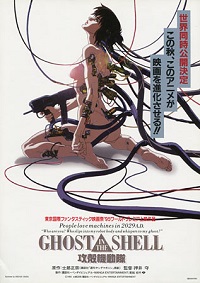 Ghost in the Shell has remained a uniquely relevant franchise in science fiction because it got so many ideas right. In 1989, at a time when internet was still a novelty of college libraries, the manga offered a world of total connectivity, where every human and device belonged to a global network. In 2002, Stand Alone Complex introduced the Laughing Man, and shortly afterwards the real world knew an equivalent. Whether this bodes well for the franchise’s dabblings into cyborg technology, only time can tell, but history has certainly made an inherently fascinating fictional world all the more compelling. In the Ghost in the Shell universe, science has fully bridged the gap between computers and neural systems, allowing electronic implants to directly convert wireless digital information into stimuli compatible with the senses. The average citizen possesses visual augmentations which allow them to directly browse the internet via voice command. More complex technology delves deeper, creating a sort of sixth sense whereby users can engage a network through thought command. Some individuals, especially accident victims with the means to afford it, might have their entire bodies replaced by neurally triggered machine components.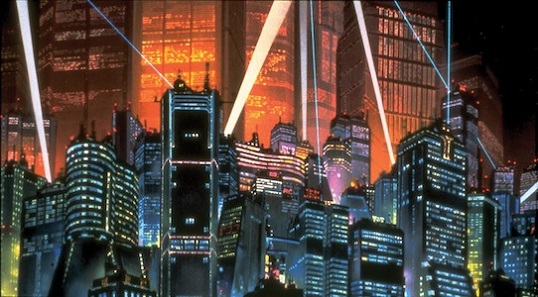
 Through the Shattered Lens