Suspense Film Review: Rope (dir by Alfred Hitchcock)


Rope, an odd little 1948 experiment from Alfred Hitchcock, opens with a murder.

Two wealthy young men, Brandon (John Dall) and Philip (Farley Granger), invite their friend, David Kentley (Dick Hogan), up to their apartment.  When David arrives, they strangle him and hide his body in a wooden chest.  As quickly becomes obvious, Brandon and Philip killed David largely to see if they could pull off the perfect murder.  Brandon is sure that they did and, that by doing so, they proved the concept of Nietzsche’s Übermensch,  The alcoholic Philip is less sure and starts drinking.

Brandon and Philip don’t just have murder planned for the day.  They’re also planning on throwing a little dinner party and, among those on the guest list, are David’s parents, his girlfriend, and his girlfriend’s former boyfriend.  Also attending will be Brandon and Philip’s former teacher and housemaster, Rupert Cadell (James Stewart).  In fact, Brandon regularly claims that he got the idea to commit the perfect murder as a result of discussing philosophy with Rupert.  Apparently, Rupert turned Brandon onto Nietzsche….

AGCK!  JIMMY STEWART LEADING YOUNG MEN TO FASCISM!?  SAY IT’S NOT SO!

Well, fortunately, the dinner party conversations reveals that Brandon and Philip misunderstood what Rupert was trying to tell them.  They assumed, using the same type of logic that currently fuels most debate today, that just because Rupert mentioned something that meant that he approved of it.  As it becomes clear that Rupert would not approve of what his students have done and as Rupert himself starts to suspect that something bad has happened at the apartment, Brandon and Philip start to plot against their former mentor….

Now, it can be argued that Rope is not a horror movie.  And indeed, if your definition of horror is ghosts, vampires, werewolves, or any other type of paranormal creature than yes, Rope has none of those.  Instead, the horror of Rope is the horror of human cruelty.  It’s the horror of two privileged young men who have so twisted the words of their mentor that they’ve become monsters.  The horror in Rope comes from the fact that, in 1948, Brandon and Philip have embraced the same philosophy that, only a few years earlier, had plunged the entire world into war.  While families mourned their dead and Europe struggled to rebuild, Brandon and Philip showed that they had no understanding of or concern for the trauma that humanity had just suffered.  And making it even more disturbing is that they found the justification for their crimes in the lessons taught by the epitome of American decency, Jimmy Stewart.  The idea of that is more terrifying than any Hammer vampire flick.

Of course, Rope is best known for being a bit of an experiment.  Hitchcock edited the film to make it appear as if it was all shot in one take and events, therefore, played out in real time.  It’s an interesting idea and, as always, you have to admire Hitchcock’s ingenuity and, even in a film as grim as this one, his playfulness.  At the same time, Hitchcock’s technique makes an already stagey story feel even stagier.  Some of the actors — like James Stewart, John Dall, and Cedric Hardwicke in the role of David’s father — are able to give naturalistic and convincing performances despite the staginess of the material. Others, like poor Farley Granger, find themselves overshadowed by the film’s one-shot gimmick.

Rope is an experiment that doesn’t quite work but flawed Hitchcock is still a pleasure to watch.  The final few minutes, with Stewart and Dall finally confronting each other, are among the best that Hitchcock ever put together.  I appreciate Rope, even if it doesn’t quite succeed.

Horror on the Lens: The Lodger (dir by Alfred Hitchcock)


A serial killer known as “The Avenger” is murdering blonde women in London (which, once again, proves that its better to be a redhead).  And while nobody knows the identity of the Avenger, they do know that the enigmatic stranger  (Ivor Novello), who has just recently rented a room at boarding house, happens to fit his description.  They also know that the lodger’s landlord’s daughter happens to be a blonde…

Released in 1927, the silent The Lodger was Alfred Hitchcock’s third film but, according to the director, this was the first true “Hitchcock film.”  Certainly it shows that even at the start of his career, Hitchcock’s famous obsessions were already present — the stranger accused of a crime, the blonde victims, and the link between sex and violence.

Also of note, the credited assistant director — Alma Reville — would become Alma Hitchcock shortly before The Lodger was released.

What Lisa Watched Last Night #216: The Danger Next Door (dir by Bill Corcoran)


Last night, I watched the latest Lifetime film, The Danger Next Door!

Why Was I Watching It?

Because it was on Lifetime, of course!  It’s been a while since I’ve gotten a chance to watch a Lifetime film on the night that it aired.  Seriously, my DVR is full of Lifetime films right now and waiting for me to dig into them come November.

What Was It About?

After getting mugged, pregnant Robin (Hannah Emily Anderson) and her husband, Ben (Jake Epstein) move to a small town.  At first, the town seems perfect but it’s hard not to notice that their next door neighbors, Guy (David Ferry) and Sharon (Kyra Harper), are a little bit too friendly.  Anyone who has watched a Lifetime film knows that no one that nice can be trusted and that’s certainly the case here.

What Worked?

I always love a good “small towns are evil” Lifetime film so, in that regard, The Danger Next Door delivered exactly what I wanted.  The town was pretty, the houses were big, and the melodrama was embraced.  Yay!

The film also featured Jake Epstein, playing a sympathetic character for once!  Epstein previously played Craig Manning on Degrassi.  I’ve seen him in a lot of other movies and shows since then but he’ll always be Craig to me!  Craig was one of the best characters on Degrassi, a bipolar musician with drug problems and a habit of breaking everyone’s heart.  I always hoped that Craig and Ellie would get together, though I do think Ashley was Craig’s soul mate.  Anyway, where was I?  Oh yeah, Jake Epstein was in this movie and it was good to see him!

What Did Not Work?

Towards the end of the movie, there were a few plot twists that demanded a lot of suspension of disbelief, even for a Lifetime film.

“Oh my God!  Just like me!” Moments

I have never been mugged but, when I was 16 years old, the house that I was living in was burglarized.  My mom, my sisters, and I woke up one morning to discover that the garage door was open, the microwave was missing, and someone had emptied out my mom’s purse.  Even more than that, though, they stole our feeling of being secure in our home.  I had nightmares for weeks afterwards and I even took to sleeping with a baseball bat next to my bed.  However, the bat was a bit heavy so, after a few days, I switched it out for a golf club.

One night, I thought I heard someone creeping outside my bedroom door at 3 in the morning.  I got up, grabbed my golf club, and creeped over to the door.  I took a deep breath, raised the club over my head, threw the door open, and swung at the first dark shadow that I saw.

“What the Hell, Lisa Marie!?” Erin exclaimed, as she (rather easily) avoided the club.

Looking back at it, I’m glad that I didn’t hit my sister in the face with a golf club.  I would have felt bad about that.  But there’s no worse feeling than having some stranger invade your personal safe place.  All these years later, I’m still a fanatic when it comes to locking all the doors, checking all the windows, and making sure I’ve got a golf club near the bed.

The movie did a good job of capturing that trauma.  I could definitely relate to Robin’s fears.

Lessons Learned

Never move to a small town.  No matter how bad and scary the city gets, it’s still safer than living in a small town.

The Island of Dr. Moreau (1977, directed by Don Taylor)


After the ship that he’s working on sinks, engineer Andrew Braddock (Michael York) washes up on an uncharted island. It’s a beautiful island but it quickly proves dangerous as another survivor of the sinking is killed by wild animals. The injured Braddock passes out and when he wakes up, he’s being cared for by a mysterious scientist named Moreau (Burt Lancaster).

Braddock discovers that the island is populated by creatures that are half-human and half-animal. Led by the Sayer of the Law (Richard Basehart), these creatures are the results of experiments conducted by Moreau and his assistant, Montgomery (Nigel Davenport).  Moreau’s experiments are expected to obey Moreau’s laws.  Should they fail, they will be taken to the House of Pain and punished.  When Baddock objects to Moreau playing God, Moreau plots to reverse the experiment on Braddock and turn him into an animal. Even as he falls in love with a former cheetah (played by Barbara Carrera), Braddock realizes that he must escape the Island of Dr. Moeau.

This is the forgotten adaptation of H.G. Wells’s classic novel, as well as being the most faithful. The Island of Lost Souls, from 1932, is considered to be a classic. The third version, directed by John Frankenheimer and starring Marlon Brando and Val Kilmer, is a legendary disaster. This version, though, is usually overlooked. It’s also my favorite of the three but that might be because it was the first version that I ever saw. It’s a straight-forward version of H.G. Wells’s story of science gone mad with director Don Taylor not wasting any time getting the action started. Michael York, always an underrated actor, convincingly portrays Braddock’s outrage and his struggle to maintain his humanity after Moreau starts to experiment on him while Carrera is beautiful and mysterious as Maria. Probably the film’s biggest surprise is Burt Lancaster, who turns out to be ideally cast as Moreau. More subdued than either Charles Laughton or Marlon Brando, Lancaster plays Moreau as a brilliant but callous man who is too arrogant to realize that he’s become as much of an animal as those he claims to be perfecting.  What makes Lancaster’s Moreau so disturbing is that he doesn’t have the excuse of being insane.  Instead, he’s just too stubborn to admit that he’s potentially made a huge mistake.

It may be forgotten but this still the version of The Island of Dr, Moreau that I would recommend.

(Trailer courtesy of Classic Movie Reviews)

Horror Scenes That I Love: The Silver Shamrock Commercial for Halloween 3: The Season of the Witch


Only 8 more days to Halloween!

That, of course, is from 1982’s Halloween 3: The Season of the Witch. The makers of the new Halloween films might not care for the original sequels but just try to get that Silver Shamrock song out of your head! Even more importantly, just try to listen to it without thinking about the mask melting into your face and turning into a bunch of spiders and snakes. It can’t be done. That’s the sign of an effective horror movie. An effective horror movie is all scaring the audience and not about worrying about whether or not the critics are going to get it.

Speaking of horror, just 8 more days til Halloween Halloween! Just 8 more days til Hallowen! Silver Shamrock!

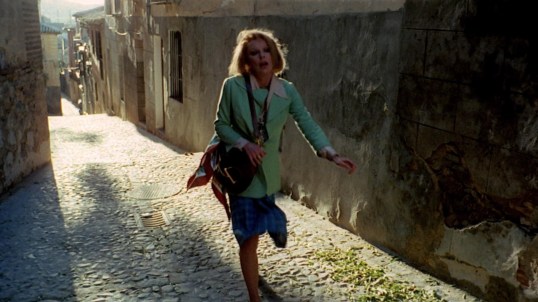
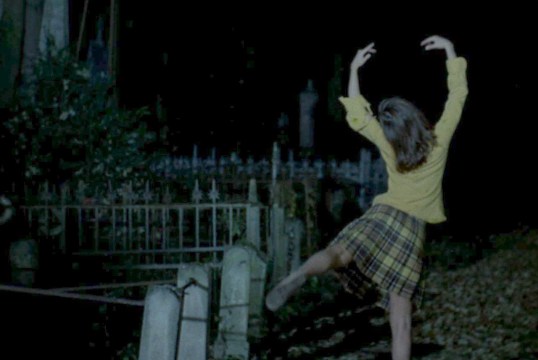
4 Shots from 4 Jean Rollin Films


4 Shots From 4 Films is just what it says it is, 4 shots from 4 of our favorite films. As opposed to the reviews and recaps that we usually post, 4 Shots From 4 Films lets the visuals do the talking.

With only a week to go until the big day, now is a good time for me to honor one of my favorite horror directors, the French surrealist Jean Rollin.  Now is the time for….

4 Shots From 4 Jean Rollin Films

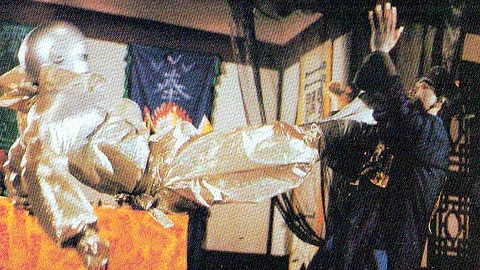
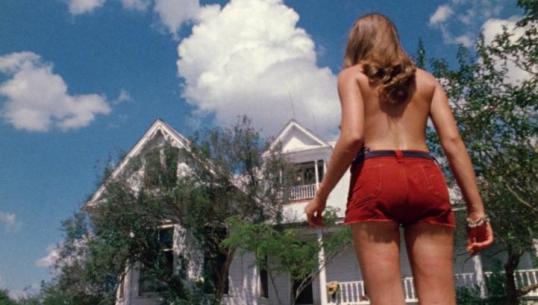
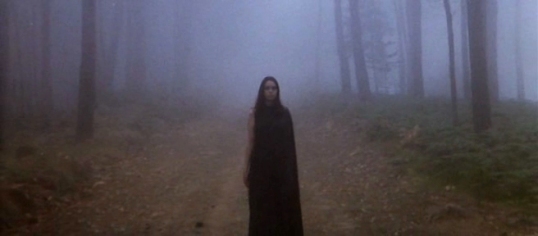
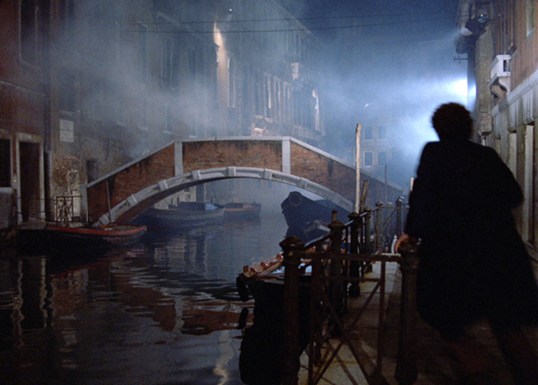
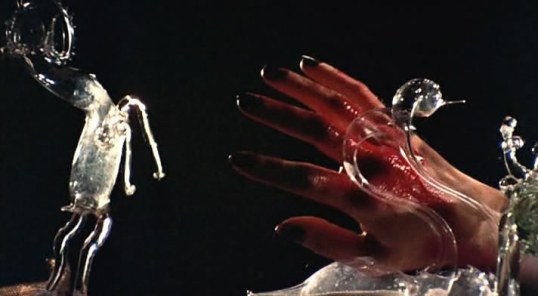
The Iron Rose (1973, dir by Jean Rollin)

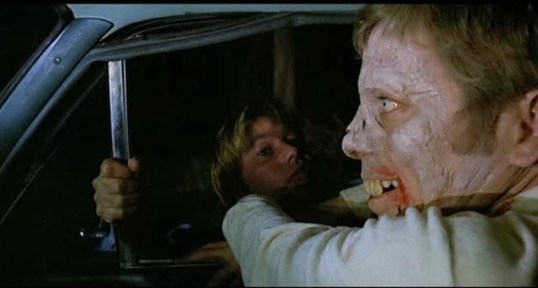
The Grapes of Death (1978, dir by Jean Rollin)

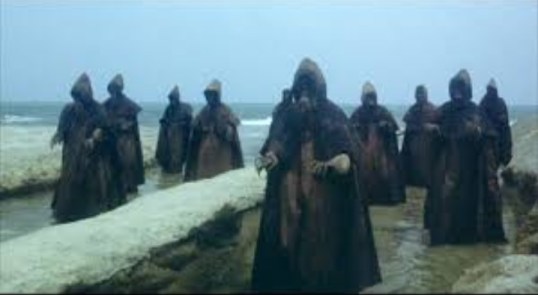
Fascination (1979, dir by Jean Rollin)

Night of the Hunted (1980, dir by Jean Rollin)

Thank you, Jean Rollin, for the dreams.

Horror on the Lens: Samson vs. The Vampire Women (dir by Alfonso Corona Blake)


If a group of vampires are determined to ruin your night, what should you do?  Well, according to the classic Mexican film Santo vs. las Mujeres Vampiro, your first move should be to call a wrestler.

What to know more?  Well, you can read my full review of the film by clicking here!

And you can watch the movie below because it’s today’s horror on the lens!

The TSL’s Grindhouse: Parents (dir by Bob Balaban)


An odd little film, 1989’s Parents is.

It takes place in the 50s of the pop cultural imagination, with neatly laid out suburban neighborhoods and perfectly mowed lawns and big cars driving down the street.  Nick (Randy Quaid) and Lily (Mary Beth Hurt) seem like the perfect couple.  Lily stays at home and spends a lot of time in the kitchen.  Nick is an engineer who works for a company called Toxico and who is helping to develop what will become known, during the Vietnam War, as Agent Orange.  Nick and Lily are friendly, well-mannered, and they love to eat meat.  Lily explains, at one point, that she didn’t really love to eat meat until she married Nick and he showed her how wonderful it could be.

Their son, ten year-old Michael (Bryan Madorsky), is a bit less conventional.  He’s a quiet boy who never smiles and who, when asked to draw a picture of his family, freaks out his school’s guidance counselor (played by Sandy Dennis).  Michael has frequent nightmares.  Michael doesn’t like to eat meat and, in fact, it’s hard to think of a single scene in the movie where Michael is seen eating anything.  Michael is haunted by the sight of his parents making love in the living room.  He’s also haunted by a growing suspicion that his parents are cannibals.

Are they?  Perhaps.  It’s hard to say.  The first time you watch the movie, it seems deceptively obvious that Nick and Lily are exactly what Michael says they are.  The second time, you start to notice a few odd things.  For one thing, we never see Michael actually going from one location to another.  Instead, he just seems to magically show up wherever he needs to be to hear something that will confirm his suspicions.  When his teacher and his guidance counselor discuss his home life, Michael just happens to be in a nearby closet.  When his mother is preparing something that looks like it might be a human organ, Michael just happens to be standing in the pantry.  Are we seeing reality or are we just seeing what Michael thinks is reality?  When Nick starts to threaten Michael and later claims that there’s no way Michael is his son, is he really saying that or is Michael just imagining his fatherr confirming all of Michael’s insecurities?  How much of the film is real and how much of it is in Michael’s head?

It’s an odd film, Parents.  It’s also the directorial debut of character actor Bob Balaban.  Balaban has spent the majority of his career playing shy, slightly repressed characters.  Parents, with the withdrawn Michael as the main character, is a film that feels autobiographical.  That’s not to say that Balaban’s parents were cannibals but the scenes where Nick goes from being a loving father to an abusive monster are too intense and suffused with too much pain for them to be anything other than personal.  Balaban’s direction is heavily stylized.  At times, it’s a bit too stylized but ultimately, it works.  The final 30 minutes of the film feel like a nightmare that has somehow been filmed.

A satire of conformity and suburbia, Parents is also a portrait of an alienated child struggling to figure out where he fits into his family.  He’s given the choice of either indulging in his family’s sins or living life alone.  Except, of course, it really isn’t a choice.  Nick expects Michael to do what he’s been told, no matter what.  Randy Quaid and Mary Beth Hurt are both terrifying as the parents but, at the same time, Balaban makes good use of the fact that both of those performers — at least at the time this movie was made — were naturally likable.  You want Nick to be the perfect father that he pretends to be and you share Michael’s anger and disillusionment when he turns out to be something very different.

Parents may be a strange film but it’s not one that you’re going to forget.

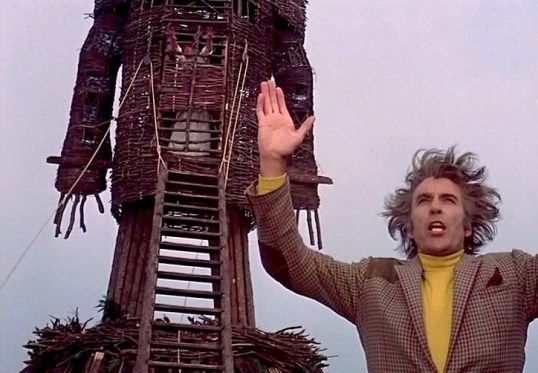
Scenes That I Love: Christopher Lee as Lord Summerisle in The Wicker Man


Over the course of his long career, Christopher Lee often cited his performance as the charismatic but ultimately sinister Lord Summerisle in 1973’s The Wicker Man as one of his personal favorites.  It’s easy to see why.  The role not only showcased Lee’s ability to be menacing but it was also one of the few films that allowed him to be witty as well.  Lord Summerisle may be a pagan who maintains his power by sacrificing virgins but he’s still quite charming.  With his longish hair, sideburns, and turtleneck, Lord Summerisle is the perfectly aristocratic 70s rogue.

Today’s scene that I love comes from the original The Wicker Man.  (Sorry, the Nicole Cage “bees” scene from the remake will have to wait for next year’s horrorthon.)  In this scene, Lord Summerisle expalins the ways of the island to a skeptical police detective.  Little does the detective know that he’s already been selected to be the next sacrifice.  Lee’s avuncular performance holds up wonderully.